A local agriculture business is sponsoring a photo contest that will feature cattle, goats and sheep.
“We are starting our annual photography contest today and wanted to make sure residents of Fort Scott had the opportunity to participate as well,” said Sam Raney, Marketing Coordinator at ReproLogix.
Include in your email: your name, age, address, and phone number.
Limit one (1) entry per person, per category.
(You can submit one Small Ruminant and one Cattle picture.)
Contest begins April 29th, 2022 and ends May 13th , 2022
1 like = 1 vote. Images will be posted The winners will be announced on Friday August 27th.
First place winner will receive a $1000 Visa Gift Card.
Second place winner will receive a $500.00 Visa Gift Card.
Third place winner will receive a $250.00 Visa Gift Card.
All entries become the property of Reprologix and may be used or reproduced in any manner and for any purpose by Reprologix without additional consent or compensation, and will not be acknowledged or returned.
Fort Scott Pioneers Kiwanis Club will host a prayer walk for the National Day of Prayer on May 5 at Riverfront Park on North National Avenue near the Marmaton River.
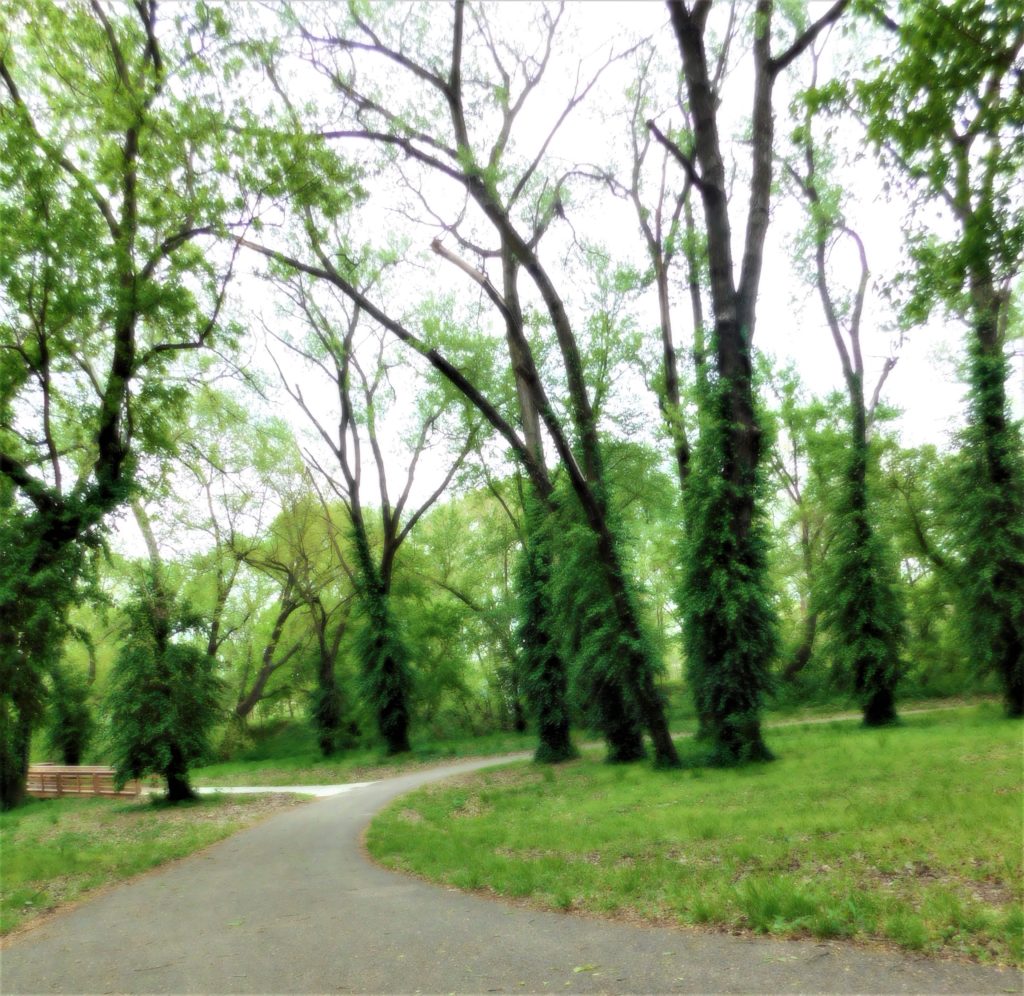
The tall deciduous trees give shade to walkers on the Belltown Trail in Riverfront Park.
“It worked so well last year during (the) COVID-19 (Pandemic),” said Marlene Braker, treasurer for the group. “When COVID hit we couldn’t host the annual breakfast event (which is held) at Fort Scott Community Collge.”
This year when they began planning the event, there were still COVID constraints, so they decided to do the prayer walk again, which allows for small groups in the open air.
The walk will take place between 4:30 – 6 p.m. The public is invited to stroll the loop and stop at each of four designated reflection points to pray.
“It’s a nice level path, with benches to sit and pray,” Braker said.
Unless there are storm warnings out, the event will take place, she said.
Parking near the trailhead is limited but overflow parking is available at Twister Trailers across the street.
2022 NATIONAL DAY OF PRAYER THEME
Graphic taken from the National Day of Prayer website.
The theme for the 2022 National Day of Prayer is a call to praise in prayer:
‘EXALT THE LORD, WHO HAS ESTABLISHED US’ based on Colossians 2:6-7 NASB
“This theme is set against the backdrop of an inspiring painting created exclusively for the National Day of Prayer by renowned Christian artist, Ron DiCianni. The image illustrates God’s people joining His angels in EXALTING Him as we pray, because He is God Almighty. We have bold access to His throne and passionate confidence as we pray – because HE HAS ESTABLISHED US in this nation and is working in the heavenlies to accomplish all that He has purposed – as we PRAY FOR AMERICA!, according to the National Day of Prayer website.
On May 5th, Americans from all walks of life will unite to lift up our country in prayer for the National Day of Prayer. Our nation has endured tragedy and pain, but we know prayer has carried us through these days and the hand of God will move us into a brighterfuture”.
About Pioneer Kiwanis
The Fort Scott Pioneer Kiwanis is a service organization helping the children of Bourbon County
The group meets on Thursdays at noon at the First United Methodist Church,Third Street and National Avenue, in fellowship hall.
The current officers and board of directors are as follows:
Elizabeth Schafer, President
Diane Spencer, Immediate Past President
Millie Karleskint, President Elect
Kelley Collins, Secretary
Marlene Braker, Treasurer
Cheryl Basore, Director
Vickie Chaplin, Director
Nancy Hart, Director
Gayle Sackett, Director
Judy Wallis, Director
Other members include:
Marlene Arndt
Dee Ann Davis
Sally Eckles
Tammy Helm
Bernita Hill
Carol Clyde Gallagher
Aileen Pollock
Gina Staudinger
Sylvia Trujillo
“In 1952, President Harry Truman signed a bill into law establishing a National Day of Prayer, ” Collins said. “It is a day set aside for prayer and meditation and recognizes the role of religion in our country.”
“The Kiwanis Pioneers have held a public activity on the National Day of Prayer for over 25 years.,” Collins said.
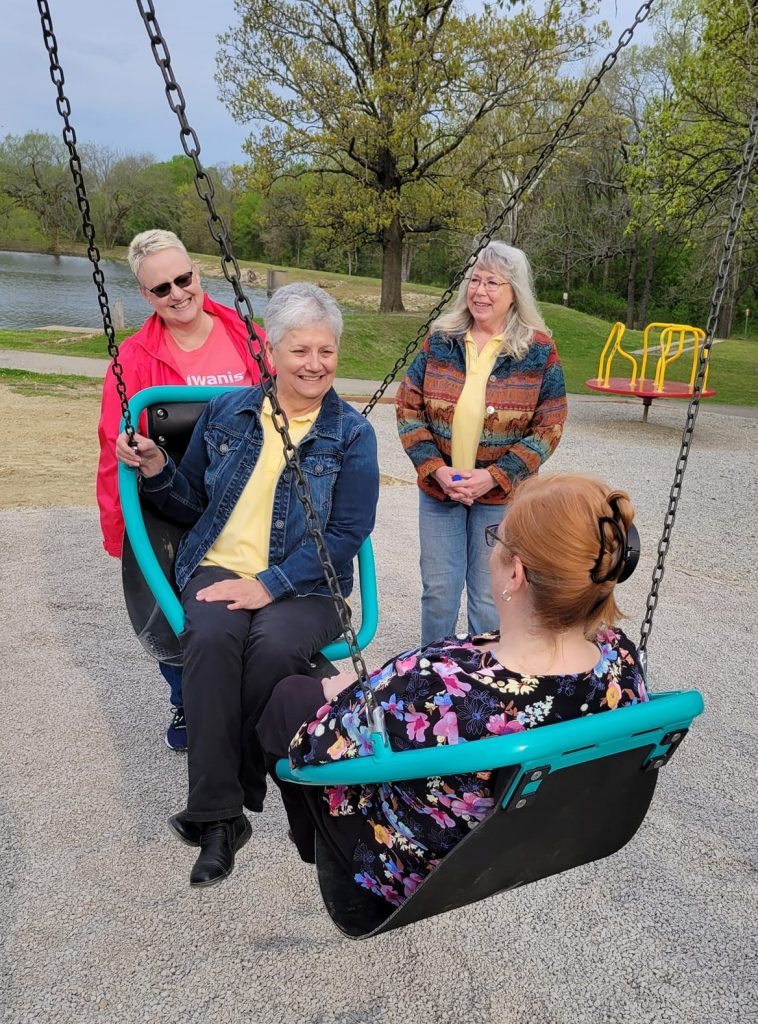
Recently in honor of a Joyce True, a friendship swing was installed at Gunn Park by the group.
On Thursday the Fort Scott Pioneers Kiwanis Club presented a friendship swing at Gunn Park to the community. Marlene Braker and Judy Wallis are standing, and Vickie Chaplin and Dee Ann Davis are in the swing. Taken from the organization’s Facebook page.
A public relation’s nightmare unfolded in the White House.
Barak Obama, the U.S. President from two terms previous to Joe Biden, was invited to speak to a group of selected Democrats applauding the 10th anniversary of Obama Care, a universal health care program unearthed under Obama’s tutelage.
Following the charismatic Obama’s talk, those in attendance encircled him, fawning over this opportunity to be near their political hero.
The cameras caught a rejection tragedy live, for President Joe Biden looked like a lost soul, struggling to find someone to pay attention to him. Biden meandered on the outskirts of the celebratory Obama swarm, reminding me of middle schoolers sitting alone at a cafeteria table, desperate to be noticed.
The airways played that tape ad nauseum.
One doesn’t have to be a Biden fan (but everyone should respect the position of President) to imagine what those few moments of feeling like a “nobody” had to be like. I mean, I’ve known rejection, but never in view of the entire world. Here he was, the president of the most powerful nation in the world, and no one cared.
A week later, someone sent out a musical version of President Biden first trying to get Obama’s attention, only to finally give up, wander aimlessly in the background and ultimately reach for the hand of some woman in the audience. The song “All By Myself” played in the background, and I thought, this scene by itself is tragic enough; addinga musical score truly compounds the humiliation.
But then I realized something. If Jesus—whose humanity was a picture of rejection– wasn’t above such shaming, why should any human, no matter how powerful, be different? And yes, I know that Jesus had no music accompanying his tortuous death, but he did have celebratory Roman guards competing for his clothing and mocking his pain. More tragically, on the cross he endured the ultimate rejection. Matthew 27:45 tells us that at the ninth hour Jesus cried out, “My God, My God, why hast Thou forsaken Me?” God Himself had turned His back on His son, the one representing the sins of the world—us! —for which he willingly gave up his life. Rejection hurts, so if we felt sorry for President Biden when Obama turned his back on him, I get it. But maybe it needs only to point us to the rejection we deserved but never endured.
The Starlite FCE meet April 21st at the Yeager building on the Bourbon County Fairgrounds. The meeting was called to order by Vice President Joyce Allen. She also led the club in reciting the Pledge of Allegiance and the Club Collect. Ten members and one guest were in attendance. The members reported 24 hours of volunteer work and that they had recycled 545 pounds.
The minutes of the previous meeting were read and corrected. Doris Ericson presented the Treasurer’s report. There was no council report. Deb Woods reported that she had attended the Healthy Bourbon County meeting.
Joyce announced that Glenda Miller was our only Birthday for the Month of April.
Old business consisted of a report from Joyce Allen that the Easter items had been delivered to Tri-Valley.
Under new business it was announced that Aging with Attitude will be April 29th at FSCC starting at 9:00, and that the Spring Tea will be May 3rd at the Bronson Community Center. Eight members present signed up to attend. The Area Recognition Day will be May 17th at Fort Scott’s First Southern Baptist Church. The cost to attend is $10 and can be given to Doris Ericson. The speaker for the Recognition Day will be from the Lowell Milken Center.
Deb Lust moved that the Club present the lesson Last Wishes at the fair, Deb Woods second the motion, motion carried.
Deb Woods moved that the meeting be adjourned, Helen Carson second the motion, meeting adjourned. After the meeting the lessons of More Plants on the Plate and Show me the Power of Healing Foods was presented to the members by Terri Williams as they enjoyed refreshments of fruit parfaits and assorted vegetables and dips, with water provided by Deb Lust and Terri Williams.
April 19, 2022Tuesday 9:00 am The Bourbon County Commission met in open session with Jim Harris, Lynne Oharah and the County Clerk present. Anne Dare, Clint Walker, Don Coffman, Matt Crystal, Mark McCoy, Bill Michaud, Rob Harrington, Lora Holdridge, Annie Clarkson and Bill Martin were present for some or all of the meeting. Lynne made a motion to approve the previous meetings minutes. Jim seconded.All approved. Eric Bailey presented an entry permit at 2500 Tomahawk for William Pope. Lynne made a motion to approve the entry permit for William Pope.Jim seconded.All approved.Eric stated the federal fund exchange amount is $110,072.57.If we do the buyback through KDOT at 90 cents on the dollar it will be $99,065.32.Jim Harris signed the agreement. Eric reminded everyone that Thursday is the District 4 meeting at Chanute at 9am.Eric and Dustin Hall will be going.The punch list for Jayhawk Wind’s Road Use Agreement is complete with punch list. We are in the final stages of finishing the RUA.Eric said we should have our roads back in our possession very soon.There is an Open House for Jayhawk Wind for the commissioners to come meet the operators on Thursday from 3pm to 6pm at the Operations & Maintenance building.Eric gave a breakdown of the asphalt meeting broke down by district.Gave a handout of what cost would be.District 3 has no asphalt but would like to do some preventative maintenance.Lynne asked if it could be cut down between Native & maple.Dustin stated possibly a little but they wanted to get around both curves as there is breakdown in the section.Jim stated all districts are important.If money runs out you have to stop.Justin Meeks stated that Clifton is forgoing asphalt in District 3 to try to help out the other two districts.Justin also stated that he and Eric and Susan have discussed the need for a new crusher.Susan stated there is some federal funding we could go after.Susan had some information on the crusher that was handed out.Susan stated we would need some monies from the PILOT fund until some other debt is paid off.We have two years that we have to work with other funds to pay the note. Justin asked how much of this year’s proposed would have to be cut to buy the crusher?Dustin stated between $100,000.00 to $150,000.00 depending on what total price is.Susan stated the other thing we need to think about is so far we have done 3 blasts which is about $120,000.00.To do 4 blasts it’s going to be $160,000.00.That will be $40,000.00 per year for blast #4.You’re going to have $80,000.00 for 2 additional blasts so that we can make enough rock.There is going to be about $136,000.00 per year in expenses to make enough rock and pay for the blasts.Jim asked Eric about federal funding.Eric stated $60,000.00 has to go for the bridge on Fern Rd. Susan stated that there are some projects we can after for funding.The project at Elm Creek dam would qualify so we need to dig into some of the grants.Lynne made a motion to move Eric Bailey to the end of the meeting after commissioner comments giving them time to come up with hard numbers on crusher. Jim seconded.All approved.
Lora Holdridge stated that Caleb Chaplin and they are going to request a road closing at Pawnee.We noticed there is another land owner that owns all the other land to the south and they own everything.Could we contact Mr. Callow who owns the property and ask if we could vacate to save money?Jim said yes. Bill Martin stated they are part of the Federal Forfeiture group and they are required to send in an annual certification report to make sure that the funds we get from Federal Forfeiture Funds are reported properly.The report states no money has been spent as of now.Lynne Oharah made a motion to allow Jim Harris to sign this agreement.Jim seconded.All approved. Justin Meeks requested an executive session for attorney client privilege.Lynne made a motion for an executive session for KSA 75-4319(b)(2) for consultation with an attorney for the public body or agency which would be deemed privileged in the attorney-client relationship including 2 commissioners, Susan Bancroft, Justin Meeks for 4 minutes returning at 9:43am.Jim seconded.All approved.Lynne made a motion to return to normal session at 9:43am with no action.Jim seconded.All approved. Justin Meeks stated that 2 weeks ago there was discussion regarding Elm Creek Lake with regards to a public/private partnership. We have some ground work to do on getting bids to fix up the exterior of the 3 structures – The main lodge and two cabins. The idea of the public/private partnership is to have help being the managers of like an Airbnb.Eric is planning to drain the lake in early fall and it will be empty for quite some time in order to repair the dam.This would be the perfect time to explore the partnership.Now that we have Rob and Susan on board and with Shane’s expertise with historical preservation we can maybe at the end of May to go out for bid to see who would be interested in helping us with this public/private partnership.Looking at having canoe rentals, RV hookups, getting water to the three structures.The public/private partnership would manage it. There would be a 60/40 split of profits– 40% to the county and 60% to them.Discuss next week the bid process. Susan did a 5 year comparison and a 2021 year in review for Public Works.We are going to start implementing this into our budget document for every department.To show people where we have been and what we have accomplished.We are going to add projected projects for 2023.One of the things I want to highlight is the fueling station.We are getting our gas about 40 cents cheaper.Most of the departments are taking advantage of that.I want to praise those who are trying to keep costs down as much as we can and that’s where departments are working together to do that.We had a problem in the landfill last year but have recovered.Susan stated that financials aren’t balanced and we are working through that this week.I’ve notified the treasurer that we have about $20,000.00 variance and so we are working through that.Susan requested an executive session for proprietary.Lynne made a motion for an executive session KSA 75-4319(b)(4) to discuss data relating to financial affairs or trade secrets of corporations, partnerships, trust, and individual proprietorships for
10 minutes including Rob Harrington, Shane Walker, Justin Meeks, Susan Bancroft and 2 commissioners returning at 10:10am.Jim seconded.All approved.Lynne made a motion to return to normal session at 10:10am with no action.Jim seconded.All approved. Public Comment: Bill Michaud requested that the county consider a transient guest tax in the county.Anne Dare asked if Elm Creek Lake was a WPA project?Lynne stated that the entirety of Elm Creek Lake was a WPA project.She wants to make certain that research is done so that we are in compliance as this project is ongoing. Susan stated that we have aCFAP program out there.We’ve got to make sure we are standing up to that agreement.Anne asked about the crusher and grants that will be requested for other Road & Bridge projects.The county was turned down for a base grant and it’s been on the newsthat several cities in the area did receive one. What’s going to change that will give usa better chance of getting one?Is there anything in the works to give us a better chance?Susan stated that yes from the financial perspective. There is oversight and we are doing better in meeting our deadlines.We can’t change past violations and when we submit a grant application we are asked to submit our audit from previous years.It will take us two or three years to get out of that cycle.Not all grants ask for that information, most federal grants do.Anne asked if it is helpful that we are implementing internal controls? Susan stated yes.Anne asked if there have been internal controls in the past?Susan stated yes.Rob Harrington called to ask about the base grant that we didn’t receive. There were several grant requests within Bourbon County and none of them were granted.Twenty grants got a perfect score and underneath that 33 grants tied for sub-perfect scores.They stated we were very close.There is an opportunity to write a letter and ask that a second round of base grants be opened.A lot of the grants went to Johnson and Sedgwick County.Those grants will touch a lot more people being larger counties. One was a $10 million dollar grant in Johnson County for a development up there.The Topeka Zoo got 3 million.Another project received 7.9 million.Tie breakers on grants are usually letters of support.If you think it’s a great project to write a letter of support.Jim responded toAnne’s comments on Elm Creek that there would be a lot of discussion and public involvement before anything is done.Mark McCoy stated that he is no longer a city employee.While employed by the city I made a personal commitment to the city commissioners that I was 100% committed to them and would limit my contact with the county.I am once again in a volunteer capacity at the county working with Emergency Management.He said that he would like to reiterate what Bill Michaud said in that he would like to see a county- wide transient tax.Mark also stated that he would not be in alignment to renting the Elm Creek cabins for a month.I don’t think you want to do a long term stay.Susan stated that after a certain period of time the transient tax runs out.Mark stated he believed it to be at 28 days.Bill Michaud confirmed that to be correct.Mark mentioned that the county website needed to be updated.Ashley stated that Shane Walker has been working with Mat Casner to update the site and changes will be coming.Mark stated that he has been asked to come onboard with Bourbon County REDI as the Small Business Coordinator and have accepted.I’m happy to volunteer. It’s the right thing to do.Mark stated this is a very busy week for Bourbon County.
There is a bicycle race, a mud race and civil war reenactment and ball games are starting up.St. Mary’s Gala is this weekend as well.Don Coffman stated Old 69 North (215th) is in bad shape.Jim stated that it is on Clifton’s list.Don stated that it might just need a surface coat.Jim stated that it is on Eric’s maintenance list. Elected Official Comment: Ashley stated that she and Doretta would be going to Election training the next two days.We hope to learn a lot.No cost for the session. She stated that she is looking into new election equipment. Commission Comment: Jim asked Susan to look into what it would take to implement the transient tax in the county. Eric reported on information that he received on the crusher.He got a hard number for the price of the crusher.He checked with another company and it would be a year before we could get what we needed.A new crusher would be far more than what we were projecting.Susan stated that Sourcewell, for equipment and services, will do their competitive bidding.They get the best possible lowest dollar product so that cities and counties are not having to spend all their time doing requests for quotes.Susan asked if the commission chooses to go down this road is for her to have permission to get with the local banks for lease purchase agreements and have them bid on that.Lynne made a motion to purchase the used crusher MR130 Crusher and 953 Screen Plant for $1.356 million which will be paid for with a combination of Road & Bridge Funds, Hard Surface Road funds and PILOT money for down payments and Susan will reach out to local banks for financing of remainder of the balance.Jim seconded.All approved.Susan stated this is a 10-year lease purchase.Anne Dare asked where the machine would be coming from.Dustin Hall responded from Murphy Tractor.Jim stated that 215thoff Indian going south to 39thneeds to be completed. The lake road needs some work.Do what you can.Dustin Hall stated they are hoping sales tax will be high again this year and maybe will have enough to care of all of it. Lynne Oharah made a motion to approve the asphalt program Eric provided as well as use Onyx for 5 miles as a test.Eric has discretion to trim projects to lower cost to get new crusher.Jim stated to be very selective where they trim.Jim seconded.All approved. Lynne made a motion to adjourn at 10:57am.Jim seconded.All approved.
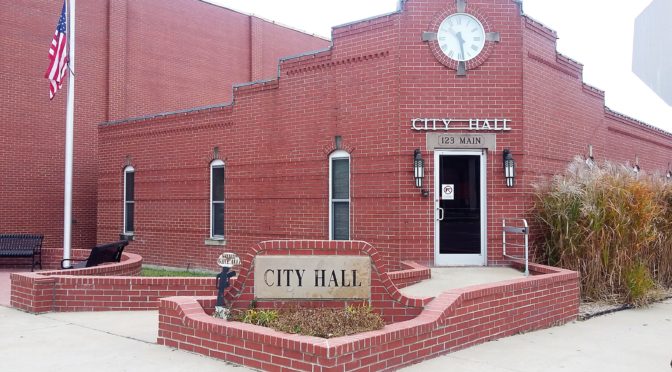
There will be a Special Meeting of the Fort Scott City Commission held at 5:00 p.m. on Thursday, April 28th, 2022. This meeting will be held for the City Commission to recess into Executive Session.
This meeting will be held at 123 S. Main Street in the City Commission meeting room and will be broadcast on the City’s you tube channel. This meeting is open to the public. The Executive Session is not open to the public.
In early 2020, Teri and Michael Hamilton were looking for a move to a home so they could be a one income family. They lived in the Kansas City area.
“We were looking farther out of the Kansas City area, because it is so expensive to live there,” Teri said. “We were looking for a house to buy, we wanted to live on one income.”
They had friends in the Fort Scott area and fell in love with Fort Scott, she said.
“Both of our moms, a nephew and a sister have moved here,” since their move, she said.
They began the process of opening a bakery from their home, with sourdough bread as their first product.
“I grew up in a bakery,” she said. “But we never did sour dough bread.”
She has been developing the technique of making the specialty bread.
“The process is different from yeasted bread,” Hamilton said. “It’s 30 to 48 hours to get a loaf of bread from start to finish. But it’s so good!”
They opened a new home-based business venture this month.
“Our main product is a really nice loaf of artisan sourdough bread,” she said.
Marketing their product
“We are going to Fort Scott Farmer’s Market, and doing orders online,” Hamilton said.
Farmer’s Market meets at Skubitz Plaza on Saturday mornings from 8 a.m. to noon and Tuesday evenings from 4 to 6 p.m from the first weekend in May, this year it’s May 7, until the last weekend in October.
“We will be there Saturday mornings and Tuesday evenings until we sell out,” she said.
To order, send a message to them on their Facebook page:
The Hamilton’s Bakery.
The Hamilton’s Bakery produces artisan sourdough bread. Submitted photo.
Pick-up System
“We have a max capacity of two dozen loaves per day, so sales are limited,” she said.
Here’s how it all works:
Order and pay by noon Sunday for Tuesday pick up.
Order and pay by noon Wednesday for Saturday pick up.
The pick up location is the Fort Scott Farmer’s Market area on Skubitz Plaza.
They currently accept CashApp and cash.
A large loaf of sourdough bread is $8. medium is $7.
On the horizon
On the horizon for the business is new products which they are developing.
“We want to grow as we go,” she said. “Not get in over our heads. We want to do one thing at a time and do it well, then do something else.”
“We would love to have a storefront bakery in the town,” she said. “But for the time being, we are doing it in our kitchen.”
Recommends HBCAT
The Hamilton’s have been aided in the business start-up by the Healthy Bourbon County Action Team.
“They have been so incredibly supportive, I highly recommend them.”
The regular Bourbon County Coalition meeting will be on Wednesday, May 4, in the Conference Room at the Scottview Apartments, 315 S. Scott, at 1:00 p.m.
Bourbon County Inter-Agency Coalition
General Membership Meeting Agenda
May 4, 2022
Welcome: Swim Pass recap
Member Introductions and Announcements:
Program: Gabby Gire, CHC, “Bourbon County Tackles Tobacco.”
Open Forum:
Adjournment: Next General Membership meeting will be June 1, 2022, at 1:00 p.m.
Kevin Strecker to lead Ascension Via Christi; Don King to transition to leading Ascension Florida and Gulf Coast
Scott City, Kansas, native Kevin Strecker has been named Ascension Kansas ministry market executive and senior vice president for Ascension, bringing more than two decades of healthcare leadership experience to his new role.
Strecker, currently hospital president and chief operating officer for Ascension Via Christi, will be assuming the rolefilled by Don King, who as of July 1 will lead Ascension’s Florida and Gulf Coast ministry market.
“Kevin’s experience, education, and commitment to our Mission and Catholic healthcare make him the right person to lead our Kansas ministry going forward,” said Craig Cordola, MBA, MHA, FACHE, Ascension executive vice president and chief operating officer.
Strecker joined Ascension Via Christi in 1994, serving at what today is Ascension Via Christi Rehabilitation Hospital. In 1997, he and his wife, Karen, moved to Chicago, where he worked as a regional administrator for Health South’s imaging division. In 2002, the Streckers moved back to Wichita and he rejoined Ascension Via Christi as director of Radiology. He subsequently was promoted to vice president of Imaging and Laboratory Services.
In 2009, he was named vice president of Operations for Ascension Via Christi’s Wichita hospitals and the following year was selected to lead newly constructed Ascension Via Christi St. Teresa. In 2016, he took on the role of senior administrator for Ascension Medical Group Via Christi. Two years later, he was chosen to serve as interim regional hospital president and in 2019 he moved to his current role as the operational leader for Ascension Via Christi’s Kansas hospitals.
Strecker earned a Bachelor of Science degree in Communications from Kansas State University. He later went on to earn a Master of Business Administration degree from Webster University and a master’s degree in Management and Leadership.
Strecker is a graduate of the Ascension Executive Ministry Leadership formation program and serves as a board member for the Wichita Cancer Foundation, Catholic Care Center and Kansas Surgery and Recovery Center. ### About Ascension Via Christi In Kansas, Ascension Via Christi operates seven hospitals and 75 other sites of care and employs nearly 6,400 associates. Across the state, Ascension Via Christi provided nearly $89 million in community benefit and care of persons living in poverty infiscal year 2021. Serving Kansas for more than 135 years, Ascension is a faith-based healthcare organization committed to delivering compassionate, personalized care to all, with special attention to persons living in poverty and those most vulnerable. Ascension is the leading non-profit and Catholic health system in the U.S., operating more than 2,600 sites of care – including 145 hospitals and more than 40 senior living facilities – in 19 states.

 Email a picture of your entry to [email protected].