The Kansas Department of Transportation has continued to improve enhancements to its KanDrive road and weather website/mobile app. KanDrive is a one-stop gateway for current highway and weather conditions that are available 24/7.
“Informed drivers can make better decisions about which routes are best for them,” said Shari Hilliard, KDOT Project Manager. “Upgrades to the KanDrive app, such as sending and receiving alerts hands-free, are timely and useful benefits for travelers as we head into winter and the holiday season.”
The KanDrive features were first introduced in 2024 and have been fine-tuned for a better user experience. They were developed as part of the U.S. 83 Advanced Technology Project, which extends from the southern Finney County line to the northern Thomas County line. While some KanDrive enhancements are corridor-specific to U.S. 83, most are available for use statewide.
Some of the new features include:
Ability to report incidents in Apple CarPlay and Android Auto
Hands-free voice incident reporting through Apple CarPlay
The KanDrive website has served motorists since 2009. It provides real-time travel information such as road conditions, closures, construction updates, camera/video feeds and detour information.
Since the first round of enhancements were released in December of 2024, KanDrive has logged 3.7 million sessions and nearly 75,000 app downloads on iOS and Android.
KDOT encourages motorists to plan ahead and “know before you go,” by visiting the KanDrive website at KanDrive.gov or downloading the app in the App Store or Google Play.
Leadership books and boardrooms spend an enormous amount of time talking about strategy: five-year plans, organizational charts, metrics, and benchmarks. Ask anyone who has truly led a family, a college, a business, or a team, and they’ll tell you the same truth: culture defeats strategy every single time. Strategy may write the script, but culture performs the show.
Every organization, whether a Fortune 500 company, a community college, a small-town high school, a football team, or even a household, is “culturized.” They all project an image to the public, a polished face meant to inspire confidence. The real culture isn’t found in the mission statement or the social-media post. It shows up in daily habits, quiet interactions, and in how the people inside that group treat others when no one is watching.
Families are the clearest example. You can dress up for church on Sunday, take a perfect Christmas picture, and speak politely in public. The true culture of a family shows itself in how members support one another during a crisis, how they speak to each other at home, and how they treat guests, or strangers. Love, patience, generosity, and respect can’t be faked for long. The real culture always rises to the surface.
Businesses and teams operate the same way. Leaders can talk about excellence, teamwork, and service all day long, but the organization’s actual behavior will reveal whether those values are real or just words on a wall. Employees know when leadership is authentic, just as players know when a coach’s message is consistent. If the team’s actions contradict the message, the culture cracks, and once culture cracks, strategy collapses with it.
Yet even in strong organizations, there are always a few team members, especially ones in leadership positions, who quietly work against the mission. They stir emotions, whisper how they would have done things differently, and try to present themselves as the “real” supporter of their coworkers. On the surface, they appear helpful, but beneath it, they are promoting themselves at the expense of the team’s unity. These back-door critics rarely rise to the top of their profession, not because they lack talent, but because they fail to understand that leadership requires loyalty, humility, and alignment. When someone spends more time undermining others than supporting the direction of the organization, they reveal why they have never advanced to their desired position. Culture exposes the truth about people just as clearly as it exposes the truth about teams.
For a college, business, family, or team to earn respect, it’s not enough to build a great strategic plan. Respect is built through how people act, how they serve others, and how well they follow through on the values they preach. A strategy may outline where an organization wants to go, but culture determines whether the people inside it actually want to take the journey together.
That’s the leadership challenge: Are you building a culture where the majority is committed to the mission? If you aren’t, even the most polished plan will fail. If you are, if you create a culture of trust, service, and shared purpose, then even an imperfect strategy can succeed.
Thought for the week, “In leadership, strategy may guide the path, but culture decides whether you ever reach the destination.” Wade Phillips, Former Head Coach of the Dallas Cowboys and San Antonio Brahmas.
Dr. Jack Welch serves as President of Fort Scott Community College. With a career spanning professional sports, public education, and rural community development, he brings a servant-leader mindset and a passion for building trust-driven cultures that empower people to thrive in the classroom, on the field, and in life. He is also the author of Foundations of Coaching: The Total Coaching Manual.

In October, I wrote a piece about how the commissioners had passed a resolution to ban running a particular computer program. Ostensibly, they were trying to make it illegal to run loud generators, but instead of writing an ordinance about generators or sound, they issued an ordinance that would include three silent computers that can fit in the palm of your hand without saying a single thing about what they claimed they were trying to address.
Despite having full access to paid legal counsel, despite technologically savvy citizens who are happy to provide advice for free, despite knowing that the issue with a loud generator is, well, the loud generator, the commissioners managed to pass an ordinance that was completely divorced from the actual sound problem. It was written to ban what a tech- and business-savvy middle schooler might run in their bedroom, while being useless when it comes to preventing another identical generator-run installation that uses a different algorithm.
If the commissioners, in an effort to prevent loud, noisy generators, accidentally ended up banning things so trivial, we should be very concerned that when they spend your taxpayer money in lobbing their nuclear bomb of zoning at solar and wind installations, it might not only miss what they say is the mark, but do significant collateral damage. That was my concern back in October. What happened since that silly moratorium made me realize that I severely underestimated just how bad that blast radius could be.
There is a planning committee created by the commissioners to make recommendations on zoning. As usual, this committee contains people who were not elected. They also didn’t go through the normal process of having citizens submit letters of interest. Instead, the members were hand-selected by the commissioners. This isn’t necessarily a bad way to select people and it has a distinct advantage for anyone trying to figure out where the commissioners are trying to take the county. This hand selection means that when the committee passes a resolution, it is being made by the people the commissioners felt most represented their goals for the future.
So with that background, residents should be paying very close attention when the planning committee votes on a resolution. We got a very insightful glimpse on page 7 of the agenda packet for the commissioners meeting on 11/17. There was a resolution, passed unanimously by the planning committee, that said:
The Planning Committee, passes unanimously. recommends that the Bourbon County Board of Commissioners enact a moratorium, effective immediately, requiring that any new business—specifically, commercial or industrial—that is not agricultural in nature and located in unincorporated areas of the county, be required to obtain a special use permit prior to commencing operations. This moratorium should reference the existing Bourbon County zoning (taxation) map as the basis for determining current land use designations.
The purpose of this moratorium is to protect the county and its residents while the Planning Committee continues the process of developing more detailed and comprehensive zoning regulations.
There were some legal issues with the recommendation, so the commissioners didn’t end up discussing it, but even if they couldn’t put a moratorium on all businesses worded in this way, it doesn’t diminish the desired goal. We can clearly see what the committee (and the commissioners who appointed them) see as a desired future. The planning committee, that hand-selected group the commissioners thought were the best people in the county to accomplish their zoning goals, unanimously resolved to recommend a moratorium on all new non-agricultural businesses in the county. It didn’t pass by a small margin; it wasn’t just discussed. They unanimously passed a resolution to make this recommendation, and that is a very big deal.
Some might say it was just the political back and forth and doesn’t really mean anything, that some of the people voting for it didn’t think it would pass, etc. But consider the actual implications: If you want to start a commercial lawn mowing business and you are outside the city limits, they want you to have to get special permission from the commissioners. If you want to start a business doing small manufacturing of high-end telescopes, the resolution recommends that your business should be illegal until the commissioners give it their blessing. If you want to start exercising your skills as a mechanic, start a printing company, create an LLC to make furniture, or anything else in the rural county areas, every single person on this committee voted that you should be required to come hat in hand to the commissioners and answer all their questions about your business and beg them to make an exception to the moratorium to allow you to pursue your business idea.
This desired change by the planning committee is a fundamental shift. We currently live in a county where the default position is that you are allowed to start any legal business and move forward with it. You might have a good idea and do well. You might have a bad idea and go bankrupt. Either way, you are free to pursue your capitalistic endeavors without being subject to the whims, biases, and the sometimes general confusion of the commissioners.
For an average member of the community, voting for a resolution to recommend such an action would have come with a huge reputational risk. Would you really want to be on the record as having voted to move from a default of saying yes to business to a default of saying, “you have to get permission from the commissioners first”? Somehow, not a single person on the committee, who I might remind you, were hand-selected by the commissioners, looked at the resolution and said, “I’m not sure I want my name on something that does this to our local economy.” Instead, everysingleone voted for it.
As I’ve said before, the issue with zoning is not whether there is a hypothetical way to implement it that would do no or only minimal harm. The question is how likely we are to get a future where the damage from zoning isn’t egregiously worse than whatever the commissioners think they are trying to attack by this massive expansion of their powers. This unanimous resolution from the planning committee gives us a peek into the future we are headed toward, a future that further increases the probability that the “cure” of zoning will turn out to be worse than the “disease.”
Mark Shead
Note: FortScott.biz publishes opinion pieces with a variety of perspectives. If you would like to share a perspective or opinion, please send a letter to [email protected].
Clarice E. Russell, formerly of Redfield, KS, passed away on December 5, 2025, at the age of 90, in Fort Scott, Kansas, due to natural causes. Born on October 19, 1935, in Mapleton, Kansas, Clarice was the embodiment of a life well-lived, filled with love, laughter, and unwavering faith.
Clarice was the daughter of Alvin and Lucy Needham. She attended Blue Mound High School. After graduation, Clarice worked as a dental assistant for Dr. C.M. Cooper before her marriage.
In her personal life, Clarice married her late husband, Paul V. Russell, on June 9, 1957. They shared 61 years together before Paul’s death in 2018, most of those years spent on their farm near Redfield. She transitioned gracefully into her role as a farm homemaker, a title she wore with pride and joy. Clarice was a loving mother to Curtis Russell and his wife Susan of Sugar City, Colorado, and to Marsha Tucker and her husband Ken of Terre Haute, Indiana. She was grandma to Jason Russell of Caddo Valley, Arkansas, Chad Russell of Lincoln, Nebraska, and Russell Tucker of Indiana, as well as two great grandchildren.
Clarice was preceded in death by her parents, her husband Paul, her brothers Arthur and Keith Needham, and her sister Patty Williamson. She is survived by her sisters Hazel Kuhn of Raymore, Missouri, and Helen Long of Fort Scott, Kansas, as well as numerous nieces and nephews.
A lifelong Christian, Clarice’s faith was the cornerstone of her existence. She served as a Sunday School and Vacation Bible School teacher since her high school years. Her commitment to her faith extended to her deep involvement with the Mt. Orum Baptist Church.
Known for her angel food cakes, Clarice’s baking was a staple at church events and family gatherings. Clarice’s passion for gardening was evident in the large vegetable garden she tended annually, with much of the excess produce shared with family, friends and neighbors. She was also a 4-H leader for the Hiattville 4-H Club and a member of the Family and Community Education (FCE) organization.
Her legacy of love, service, and faith will continue to live on in the hearts of her family and the many lives she touched.
Pastor Waylon Ingle will conduct funeral services at 2:00 P.M. Monday, December 15th at the Mount Orum Baptist Church. Burial will follow in the Mount Orum Cemetery. The family will receive friends from 3 to 5 P.M. Sunday at the Cheney Witt Chapel. Memorials are suggested to the Mount Orum Baptist Church and may be left in care of the Cheney Witt Chapel, 201 S. Main, P.O. Box 347, Ft. Scott, KS 66701. Words of remembrance may be submitted to the online guestbook at cheneywitt.com
Commissioners heard public comment from Michael Hoyt about the appointment for the 3rd district when Commissioner Milburn resigns to take her oath for District 5
Minutes of Nov 17and 18 of 2025 were approved by all commissioners
Commissioner Milburn discussed charges and funds during AP discussion and approval that were not approved Commissioners will collect additional information and discuss what account to pay invoices in question from.
In Department Updates Dr. Cohen made recommendation that the commission fill a position for the Administrative Position of the Commission. Commissioners Agreed. Dr. Cohen also covered Longevity and standard practices surrounding recommending if there were to be longevity figured it be figured from Most recent Hire Date. Commissioner Beerbower made a motion to approve Commissioner Administrative position to assume duties outlined by Dr. Cohen within our statutory authority pending funding Commissioner Milburn second. All approved.
Commissioners discussed job openings in maint/sanitation, em management with ideas of partnership with other counties
Tim with Emmerson and Co. Spoke with commission about standard practices and recommendations for deduction of employee contributions, also went over has, fsa, cobra paperwork commissioners discussed the burden to the budget that the recommendations would bring would be approximately $8,836 and would be recouped the next pay period, Commissioner Milburn made a motion to take Mr. Emmerson’s recommendation to make deduction in real time Commissioner Tran second All approved Commissioners also discussed the waiting period for insurance for new hires which eliminate more special circumstances in payroll and would go into the new handbook.
Clerk went over lines of communications and reminded Commissioners that all need to be available to answer phone. Clerk was instructed to reach out to Vice Chair Milburn if no answer for Chairman Beerbower.
Commissioner Beerbower covered talking points sent by our Attorney Jacob. Resolutions covering these changes will come to the commission in Resolution at the Dec 8 meeting. Resolutions were sent to the clerk to publish to the public.
Commissioner Tran made a motion to amend the agenda for our Attorney Bob to talk about Craw-Kan Contract Commissioner Milburn second all approved
Bob let the commission know he was able to reach craw-Kan and believes they will work with the commission on a year-to-year agreement.
Bob recommended the commission to hire a professional to lead the planning commission through the process of a comprehensive plan.
Bob went over the vacancy that will occur when Commissioner Milburn takes the oath for District 5 Bob and Commissioner Milburn Presented a resolution utilizing statutes, recommendations from General Counsel for the Kansas Secretary of state and recommendations by County Counsel, to appoint from New District 3. Commissioner Milburn made a motion to sign resolution 37-25 regarding the appointment of District 3 Commissioner Beerbower second all approved.
Commissioner Tran made a motion to resend motion form 11/18 meeting that would have moved 305,000 from Jail sales tax to Sheriff, Milburn Second all approved.
Commissioner Tran made a motion to move all of inmate money to general fund commissioner Milburn second with the request of discussion Commissioner Tran made the motion to amend the motion on the floor to move 200,000 from Inmate fund to general fund Commissioner Milburn second Commissioner Milburn and Tran voted in favor of the motion Commissioner Beerbower was opposed.
Commissioner Tran made a motion to pay longevity to all years of service combined Commissioner Beerbower second Commissioner Tran and Beerbower voted in favor of the motion Commissioner Milburn opposed. (I opposed as I was in favor of taking the recommendation of Dr.Cohen to adopt standard practice for longevity.)
Commissioner Milburn made a motion to sign the contract with Schwab Eaton for the Bridge Grant Project on Jayhawk Road that we have discussed several times. Commissioner Tran Second all approved
Commissioners discussed briefly the stop signs that have had removal requests commissioner Tran expressed hesitation due to lack of historical information
Commissioners discussed a posted speed sign on a piece of roadway that is posted at 30 mph the discussion will be brought back to the 12/8 meeting.
Commissioner Milburn spoke with Citizen Daniels about the road closure application. The application was resubmitted to complete all signatures of all affected landowners, with this; Commissioner Milburn made a motion to move forward with the publication of road closure process Commissioner Beerbower second all approved.
Commissioners discussed a sewer code violation Commissioner Milburn was instructed by the commission to reach out to the appraiser’s office to address, in follow up with appraisers office; Appraiser sent action items to commissioner Milburn, and after a discussion with the county attorney Commission will be working with county counselor to send case up to county attorney.
Commissioners will be finalizing handbook and hope to have it in circulation before first of next year.
Commissioner Milburn discussed creation of accounts for incoming commissioners; with this commissioner Milburn made a motion to allow Commissioner Milburn the authority to create accounts for incoming commissioners Commissioner Tran Second all approved.
Commissioner Tran made a motion to make Commissioner Milburn full Admin of Verizon and Give Sheriff access to his portion of the account and to give Amber a bill view only account for ap purposes Commissioner Beerbower second all approved
Commissioners discussed next steps of moving forward with the sale of 108 w 2nd Commissioner Milburn was tasked to draft a letter to send to local realtors with a invitation to bring a market analysis and presentation to the commission with the commission offering 6% commission to the sale. Commissioner Milburn will not be a part of the vote to hire.
Commissioner Milburn presented a resolution to the commission for the 6th Judicial space and rent (resolution 38-25) Commissioner Milburn made a motion to pass resolution Commissioner Tran second all approved. Resolution will come to the 12/8 meeting to be signed.
Two wonderfully-talented ladies made two beautiful songs very popular many years ago. In 1959, Ella Fitzgerald recorded “Someone to Watch over Me” written by brothers George Gershwin and Ira Gershwin. This sublime song was also performed in one of my favorite movies, “Mr. Holland’s Opus.” And Ethel Waters was best known and loved for singing “His Eye is on the Sparrow” composed by Civilla Martin and Charles H. Gabriel in 1905. She began singing as a guest vocalist at the Billy Graham crusades in 1957 and continued for nearly 20 years. I remember intently watching and listening to her ad lib with the biggest smile and soulful expressions. The last line of the song was impressive to me then, and it’s still impressive: “For His eye is on…the spar-row…and I know…He wa-tches…me.“
I recently came across this quote by pastor/evangelist and Revivaltime radio broadcast speaker C. M. Ward in one of my old journals: “None of us can make it through without God’s help. I need an abiding sense of God’s presence. I need a ’cloud’ by day and a ’pillar of fire’ by night. In the gloomiest hour, when the lights of this world have gone out, I need to know that He is there watching over me.”
One of my favorite scriptures is 1 Peter 5:7 AMPC: “Casting the whole of your care [all your anxieties, all your worries, all your concerns, once and for all] on Him, for He cares for you affectionately and cares about you watchfully.” The key words in this verse that are especially comforting to me are “all, affectionately, and watchfully.” God knows all about our circumstances, our emotions, our thoughts, our fears, and our faith.
Jesus’ disciples had spent years following, learning, assisting, and witnessing miracles. The storm on the Sea of Galilee was a test of the disciples’ faith. This situation was an opportunity to practice using their faith. I don’t think Jesus was impressed with their faith because, “He replied, ‘Your faith is so small! Why are you so afraid?’ Then Jesus got up and ordered the winds and the waves to stop. It became completely calm” (Matthew 8:26 NIRV). I don’t think He’s impressed with our faith when we act like we don’t have a heavenly Father to take care of us.
God is aware and cares about the smallest, insignificant things and events. “Not a single sparrow can fall to the ground without your Father knowing it. And the very hairs on your head are all numbered. So don’t be afraid; you are more valuable to God than a whole flock of sparrows” (Matthew 10:29-31 NLT). Believers can find assurance in knowing God is unlimited in taking care of the big or small stuff — it‘s all the same to Him!
“The Lord sees what happens everywhere, He is watching us, whether we do good or evil” (Proverbs 15:3 GNT). This reminds me of the story about a man who was burglarizing a home as the parrot excitedly watched. In fact, the parrot repeatedly kept saying, “Jesus is watching you.“ The man couldn’t have cared less. But after several minutes the burglar noticed a vicious Dobermann standing nearby staring at him and baring his teeth. About that time the parrot screeched, “Sic ’em, Jesus!”
The Key: Believers can rest assured that God is on 24-7 watch duty because He cares.
Looking for a college that gives you options? At Fort Scott Community College, students can choose from associate degrees in Arts, Science, Applied Science, and General Studies, along with a variety of certificates that lead straight to rewarding careers. Whether you’re interested in healthcare fields like Certified Medication Aide, Nurse Aide, EMT, Home Health Aide, Manicuring, or Phlebotomy, or want to take on a technical challenge with certificates in Ag Technology (John Deere), Construction, Cosmetology, Criminal Justice, Environmental Water Tech, Farm & Ranch Management, Harley-Davidson Technology, Heavy Equipment Operation, HVAC, Masonry, or Welding we’ve got you covered!

But college isn’t just about the classroom. FSCC offers plenty of ways to get involved through music and performance opportunities (band, choir, theater), student clubs and organizations (like Collegiate Farm Bureau, Phi Theta Kappa, SkillsUSA, STEAM Club, FSCC Media Team, and more), and even competitive judging teams in livestock and meat.

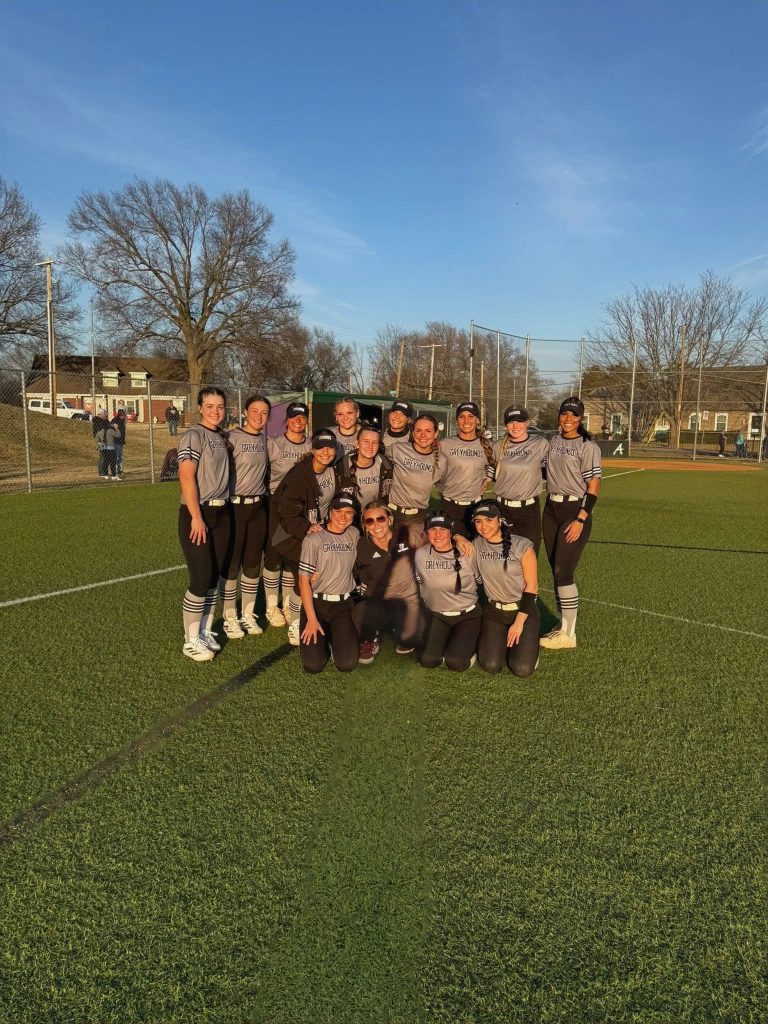
If athletics is more your thing, FSCC is home to intercollegiate sports for both men and women. Compete in basketball, baseball, softball, volleyball, rodeo, track & field, or cross country, all while building friendships and representing the Greyhounds.
And the best part? We’re still growing. New programs, degrees, certifications, and athletic opportunities are on the horizon! There’s never been a better time to join FSCC!
Bourbon County Commission Agenda Bourbon County Commission Chambers, 210 S National Ave. Monday, December 08, 2025, 5:30 PM
I. Call Meeting to Order
Roll Call
Pledge of Allegiance
Prayer
II. Approval of Agenda
III. Approval of Minutes
12.01.25 (unofficial until approved)
IV. St. Luke’s Award – EMS
V. Consent Agenda
Approval of 12.05.25 Accounts Payable & Longevity Payroll ($289,244.53, sent 12.3.25)
Tax Corrections
VI. Public Comments
VII. Department Updates
Bill Martin – Sheriff
Invoice for Craw-Kan
Dustin Hall/Kenny Allen
Culvert Permit-2222 35th Street
Lora Holdridge – Register of Deeds
Equipment Space & Employee Access
Administrative Access & License Keys
Susan Walker – County Clerk
December 22nd Meeting
VIII. Old Business
October 2025 Financials
Sale of Real Property
Jayhawk 240th Speed Limit
IX. New Business
Real Property Relief Application – Herman & Darlene Leihsing/Avis Bosley
Resolution 39-25 – Contribution Agreement Hinton Creek
Resolution 40-25 – Contribution Agreement Tennyson Creek
Resolution 41-25 – Tennyson Creek exemption from Moratorium
Hinton Creek First Amendment
Tennyson Creek First Amendment
Tennyson Creek Contribution Agreement
Settlement and Release Agreement Tennyson Creek
Settlement and Release Agreement Hinton Creek
Resolution 42-25 – Transfer of Funds
X. Build Agenda for following meeting
XI. Commission Comments
XII. Adjournment
Detailed Summary of Information Packet
Prior Meeting Minutes – December 1, 2025 (Pages 3-5)
The minutes summarize key discussions and decisions from the previous meeting:
Financial and Personnel Decisions (Page 4):
The Commission approved collecting employee insurance premiums “in arrears” (in real-time) rather than in advance. New hires will receive benefits the first of the month following a 30-day waiting period.
The creation of an Administrative Assistant position for the Commission was approved, pending identification of funding.
A motion passed to transfer $200,000 from the Inmate Fees Fund (120) to the General Fund (001) (Page 4).
Longevity pay for 2025 was approved to be funded in the same manner as 2024, acknowledging all years of service (Page 5).
The Commission approved soliciting proposals from local real estate brokers to list the 108 West 2nd Street property for sale (Page 4).
Resolution 37-25 was adopted regarding the process for appointing a replacement for the District 3 Commissioner in January (Page 5).
Resolution 38-25 was approved for the 6th Judicial facility space, waiving monthly rental fees (Page 5).
Future Planning (Page 3): Discussions included switching from 3 to 5 commissioner districts, generating revenue through solar energy agreements, and considering a new space for the County Clerk’s office.
Financial and Tax Information
Total Accounts Payable & Longevity Payroll for 12.05.25 is $289,244.53 (Page 7, 34).
Largest Expenditures by Fund/Department from the Accounts Payable Report (Pages 32-34):
Longevity Pay (County Miscellaneous / Fund 001/99): $58,300.00
Road and Bridge (Fund 220): $70,386.77
Road & Bridge Sales Tax Fund (Fund 222): $50,498.73
County Sheriff/Correctional (Fund 120): $46,131.29
Employee Benefit (Fund 064): $11,775.59
Bank Reconciliation as of October 31, 2025 (Page 38):
Total Bourbon County Cash Balance (All Accounts): $7,258,130.82
Total Certificates of Deposits: $1,550,000.00
Key Fund Status Report Balances (as of October 31, 2025):
General Fund (001): $505,910.25 (Page 39)
County Sheriff/Correctional (120): $245,713.78 (Page 39)
BOND SALES TAX – COUNTY JAIL (370): $2,106,277.34 (Page 40)
Employee Benefit (064): $747,999.92 (Page 39)
Ambulance Service (375): $27,184.61 (Page 40)
Sales/Use Tax Comparison (Page 46):
October 2025 Total Tax: $298,831.11
Year-to-Date (YTD) Total Tax for 2025 (through October): $3,176,311.93
Other Packet Documents
Culvert Report (Page 35): A report from 12-4-2025 regarding a Culvert Permit application from Dennis & Janna Saiz for property at 2222 35th Street, indicating a plan for a Plastic 15″ x 30 foot roll-in culvert.
Executive Session Details (Page 2): The document includes the standard form outlining potential legal reasons for executive sessions, citing KSA 75-4319 for discussing personnel, attorney-client privilege, negotiations, financial/trade secrets, real estate acquisition, or security measures.
John Sargent “Shadow” Farr, Jr., age 56, a resident of Ft. Scott, Kansas, passed away Tuesday, December 2, 2025, at his home. He was born May 7, 1969, in Orange County, California, the son of John Sargent Farr, Sr. and Lonnie Kay Kieffaver Farr. John lived in California until the age of twelve when the family packed up and moved to Alabama. He served for a time with the United States Marine Corps and later moved to Ft. Scott to be close to his family. He had worked as a cook in California and he had also worked for National Tire in Kansas City and Wal-Mart in Butler, Missouri; however, the job he enjoyed the most was when he was working as a fugitive recovery agent for the State of Kansas. “Shadow” as he was called by his friends had a knack for electronics and spent much of his spare time repairing cell phones, computers and gaming systems. For a time, he operated Shadow Car Audio installing car stereo systems. He will be remembered for his willingness to always help others who were in need, no matter when or where they might be in need.
Survivors include his mother, Lonnie Day, of Ft. Scott and his children, Krystal Wisdom, Trevor Stroud, Isaac Farr, Nicholas Farr, Raven Farr, David Farr, Taylor Henderson, Angel Farr, Kassandra Farr, Tiara Farr and Haley Henley as well as numerous grandchildren. Also surviving are two sisters, Felicia and Angella and an adopted brother, Donald Stump.
Cremation was handled by Cheney Witt Chapel, and no services are planned at this time. Memorials are suggested to the John “Shadow” Farr, Jr. Memorial Fund and may be left in care of the Cheney Witt Chapel, 201 S. Main, P.O. Box 347, Ft. Scott, KS 66701. Words of remembrance may be submitted to the online guestbook at cheneywitt.com.
50 Years of Herbicide Resistance in Kansas: How We Got Here and What’s Next
By Lonnie Mengarelli Ag and Natural Resources Agent – Southwind District
This year marks 50 years since Kansas documented its first herbicide-resistant weed. That 1976 discovery—triazine-resistant kochia along railroad rights-of-way—seemed like an isolated case at the time. Today, herbicide resistance is one of the most serious challenges facing Kansas farmers. As we recognize this anniversary, it’s worth looking back at how resistance evolved, where we stand now, and what it will take to manage it moving forward.
Herbicide resistance is the ability of a weed population to survive an herbicide dose that would normally kill it. This is different from herbicide tolerance, which is a weed’s natural, built-in ability to withstand a certain herbicide.
Resistance develops when herbicide use selects for rare genetic traits that allow certain plants to survive and reproduce. Over time, those traits become more common in the field.
Kochia set the stage for herbicide resistance problems in Kansas. After atrazine-resistant kochia was identified in 1976, resistance spread rapidly thanks to the plant’s tumbling growth habit and widespread use of triazine herbicides in crop fields.
Another milestone came in 1987, when kochia populations resistant to ALS-inhibiting herbicides (Group 2) were confirmed. Since then, kochia has added resistance to dicamba and fluroxypyr (Group 4) and glyphosate (Group 9), making it one of the most challenging weeds in the High Plains.
Palmer amaranth and waterhemp—two aggressive pigweed species—have become the state’s most notorious resistant weeds.
Palmer amaranth resistance to Group 2 herbicides was identified in 1993, and the species has since developed resistance to at least six herbicide groups. Palmer amaranth is the only Kansas weed with documented resistance to HPPD herbicides (Group 27), and resistance to Group 15 herbicides has been confirmed just south of the Kansas border. More recently, dicamba-resistant Palmer amaranth was identified for the first time.
Waterhemp has a similar story. By 1995, Kansas populations were already resistant to both Group 2 and Group 5 herbicides, and glyphosate resistance followed in 2006. Both Palmer amaranth and waterhemp are dioecious, meaning they cross-pollinate readily—and that genetic shuffling speeds up the spread of resistance traits.
As of 2025, 16 weed species in Kansas have confirmed herbicide resistance. Thirteen of these are broadleaf weeds; three are grasses. Many are winter annuals that emerge in the fall and cause problems the following spring.
The largest number of resistant species—13—is associated with Group 2 herbicides. Glyphosate resistance (Group 9) ranks second, with six resistant species identified.
The busiest years for new resistance confirmations were 2013 and 2021, each with six new cases. Only two new cases have been added since 2021, but researchers caution that this does not signal a slowdown—only that resistance often goes undetected for several years before being confirmed.
Herbicide resistance will continue to evolve. It is a natural biological process, but it is accelerated when the same herbicide modes of action are used repeatedly. Kansas farmers have faced this steady march for five decades, and the path forward will require more than relying on new chemistry.
The most effective long-term strategy is integrated weed management—diversifying herbicide programs, incorporating cultural and mechanical practices, and reducing seed production by surviving weeds. More details on these strategies will be covered in a follow-up article.
Lonnie Mengarelli is a K-State Research and Extension Agriculture agent assigned to Southwind District. He may be reached at [email protected] or 620-223-3720
K-State Research and Extension is an equal opportunity provider and employer.
Reference:
Heap, I. 2025. International Herbicide-Resistant Weed Database.
For additional information, see the 2025 Chemical Weed Control for Field Crops, Pastures, and Noncropland or contact your local K-State Research and Extension office.
Patrick Geier, Weed Scientist, Garden City
Yasir Parrey, Assistant Scientist, Weed Extension Lab
Sarah Lancaster, Extension Weed Management Specialist