|
| Stay Connected with Kansas Office of the Governor: |
    |
|
| Stay Connected with Kansas Office of the Governor: |
| |
Nick Graham recently wrote that Bourbon County will never get another Western Insurance company. On first reading, I mentally nodded my head in agreement, but then paused. While on one level, he is right—the probability of a large insurance company wanting to come to Bourbon County and employ 1,000 people is extraordinarily close to zero—the actual history of the Western illustrates his point of the need for business investments and an environment that allows growth.
The Western didn’t just “come to Fort Scott” and start employing a thousand people. The idea for what became The Western Automobile Indemnity Association was dreamed up in 1910 and it started business the next year. It survived the Great Depression due to careful financial management and grew into a holding company that owned a variety of businesses. By the 1950s a 20-year-old Warren Buffett discovered the company’s stock could be had for $16 a share, while it was producing profits of $20 per share. It became one of his earliest investments and a model for the type of value investing that grew his fortunes.
In 1967 the Western built what amounted to a tiny skyscraper downtown with an investment of over $11 million in today’s dollars because they were outgrowing the space they had in the Scottish Rite Temple building.
In 1981, the Tribune ran a story saying that the city had agreed to annex property south of Fort Scott where the Western planned to put an 80,000-square-foot building. This space would be used to house their computers and other offices. The city approved industrial revenue bonds of up to $22 million (in 2026 dollars). Since industrial bonds would make the building free from property taxes while the bonds were being repaid, the Western said they intended to make “payments in lieu of taxes.”
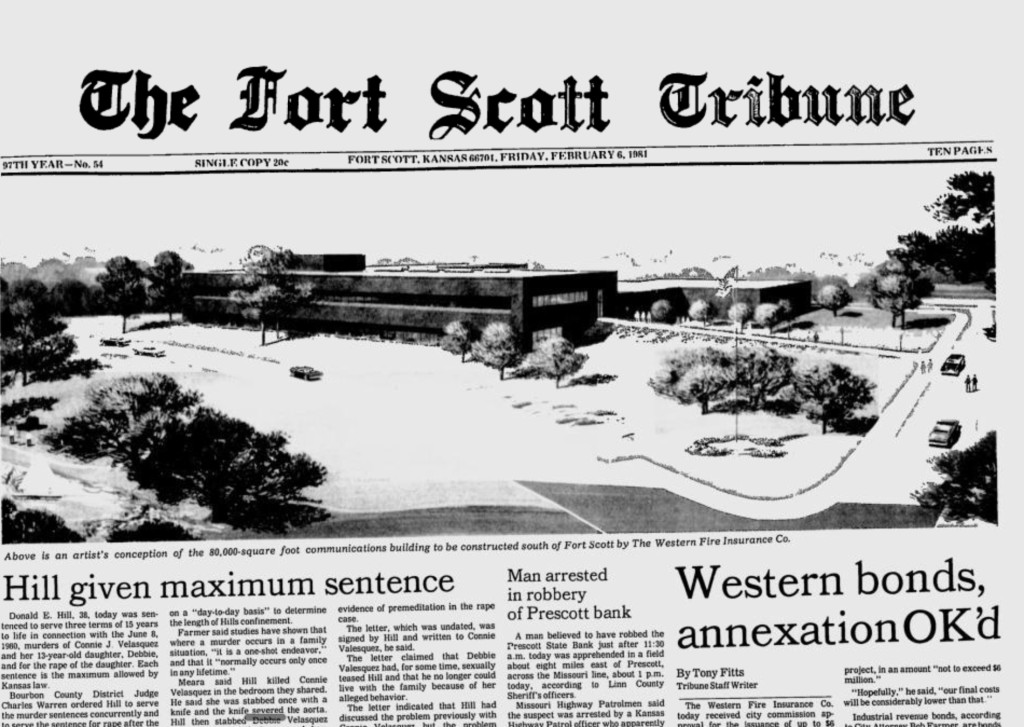
I remember being at the picnic on the grounds of that building after it was built. They had stocked the pond and I caught what, to an 8-year-old, seemed like the biggest catfish in the world. My father worked at the Western as a programmer and would occasionally get called in at night to fix an errant computer job that needed to get a clean run before the morning. I remember going with him, pulling up to the property gate in the dark and dealing with the security process to open the gate, walking from the parking lot to the door where more security verified we were supposed to be there and then entering the massive dark building. We made our way to the computer bunker where the bright lights made it feel like we had just stepped into daytime again. The room had a raised floor that hid miles of cable and pushed the constantly running air-conditioning into the giant computers. The light was a good thing. It made it easy to avoid the gaping holes in the floor where an occasional large tile had been removed to help cool a particular work area for some of the operators. The inefficient (by today’s standards) electronics put out a tremendous amount of heat and required a massive battery installation and huge generators to guarantee they wouldn’t crash if the power went out.
Our family, like many others, depended on the Western’s ability to provide what the market needed. The Western was very good at doing this and the demand for what the Western provided created the demand for my father’s programming skills and created the job that put food on our table just like so many others in the area.
The Western had a huge economic impact on the city and county. It wasn’t just the people who got a paycheck from the Western either. Those paychecks funded many of the other jobs, and the paycheck from those jobs funded others. The company paid taxes that helped fund the government. With the large real-estate holdings it made up a not insignificant portion of the Bourbon County tax base. But 75 years of growth culminated in a $270 million deal selling the company to Lincoln National. Over time it was rebranded as American States, and later sold to Safeco. By the end of the millennium all the jobs were gone. One of the downtown structures was torn down and the other sold for $1 and converted to apartments.
The nature of business in 1910, 1967, and 1981 is very different than it is in 2026. It does seem unlikely that any company is going to give the county the type of investment in office real estate that creates a taxable footprint bringing in the $1 million to $2 million that the Western would have likely been paying in today’s dollars. There aren’t a lot of probable futures where a company heavily invests in an existing downtown office building, runs out of space, puts in an $11 million mini-skyscraper and later follows up with another $22 million expansion on property it asks to be annexed to the city.
The massive inefficient computers used a tremendous amount of electricity in their operation and cooling. The entire setup with the rest of the equipment in the tornado-proof bunker wasn’t technology that was well understood by many of the people in the town who weren’t actively working on the computers. The process of writing code using flow charts and diagrams and then going over to a shared terminal to type in code that ran against the miles of black magnetic tape stored on large spools probably looked like a lot of black magic to people of a time when home computers were just beginning to hit the market. But it all represented a free market where technology was being used to rapidly move forward to solve the problems of the time.
The world is different now, the entire bunker of computing power I visited as a child, could all be replaced with an inexpensive laptop or even your phone. And the work done by all the people in those rows of cubicles has been replaced by a few individuals with more efficient tools today. But at the time, all the infrastructure, all the investment in buildings and human capital was exactly what was required to support the national need for insurance. Meeting that need brought millions of dollars from the nation into Bourbon County.
The world’s needs are different today. There is no massive funnel of money waiting to come to the area if we just build a new building and fill it with 1,000 people trying to mimic the way work was done 50 years ago. So in that sense Nick is right. You couldn’t grow the Western today, but you also couldn’t have grown the Western if they had tried to start the same thing in 1810. It was the right solution for the needs of the time and that particular solution is entirely unfit for the unique needs of any other time.
For this area to thrive from the type of economic growth that came from the Western in the past, we can’t continue to focus on how our county met the needs of the past—needs that don’t exist anymore. We need to be focused on how we can meet the needs that exist today—the needs where there is growing demand going forward.
If we are unable or unwilling to do this, the county will die. Not right away, but it will fade away through hundreds of small losses with no wins of any significance. As businesses close, they won’t be replaced. As the tax base shrinks, everyone will have to pay more and get less. As taxes go up, it will be harder to justify moving to the area and harder for those who are here to justify staying. (And the idea of being unwilling to do this isn’t hypothetical, it is definitely happening.)
But, if we do follow the model of the Western by focusing on what the market needs today, our kids and grandkids will look back on the coming years the same way we look back on the apogee of the Western. With a fondness for the past, but with determination to follow the tradition they saw clearly modeled for them on how to move forward, adapt, and change in meeting the new needs of the nation and world, needs that we probably can’t even imagine today.
Mark Shead
Note: FortScott.biz publishes opinion pieces with a variety of perspectives. If you would like to share your opinion, please send a letter to [email protected].
Harry Hynes Memorial Hospice invites caregivers to a monthly Caregiver Support Group meeting at Credo Senior Living in Fort Scott.
Join us to connect, share, and find encouragement. This welcoming space offers peer support, helpful resources, and practical guidance to help you navigate the challenges of caregiving while caring for your own well-being.
All caregivers welcome!
Light snacks and beverages will be provided.
For more information, contact Chaplain Jeff Feagins at [email protected] or by calling 620-231-7223.
Documents:

Keys to the Kingdom By Carolyn Tucker
No Fainting
We’re used to reading prohibition signs – No smoking; No spitting; No swimming; No horn honking; No parking; No entry; No bare feet; No running; No Exit, etc. I’ve never seen a sign in a medical facility that reads, “No fainting.” I’ve never passed out in a dead faint but, as a kid in the 1960s, I witnessed this phenomenon at a family funeral in Greenfield, Missouri. A lady flat-out fainted and crumpled to the floor. I watched like a hawk as the funeral director used smelling salts to bring her around. That intense episode was a valuable learning moment for me. From then on, I’ve had plenty of opportunities to faint. But I learned how to prevent fainting by being keenly aware of my physical warning signs. When my hearing begins to go and my eyes start to see in gray tones, I put my head down…way down. The last thing I want to do is keel over in the doctor’s office.
The last time I had symptoms of fainting was over 20 years ago when the ENT doctor cauterized a blood vessel in my nostril. Dr. “B” was kind and told me that feeling woozy was a common occurrence with this procedure. I felt proud and honored to be assured I was normal – even though that’s just a setting on your dryer.
As Christ followers, we must pay attention when we feel a “faint coming on.” Like Smokey the Bear said, “Only you can prevent forest fires.” Only you can take charge of your schedule to prevent spiritual fainting. If you continually choose to burn the candle at both ends, beware of an oncoming fainting spell. For the last 40 years, the following scripture has been one of my favorites: “And let us not lose heart and grow weary and faint in acting nobly and doing right, for in due time and at the appointed season we shall reap, if we do not loosen and relax our courage and faint” (Galatians 6:9 AMP).
We need to do everything possible to prevent us from spiritually fainting. As we work in our own unique way to be an exemplary person of Jesus’ love and light, we must continually seek for proper balance. If we do succumb to fainting, surely a brother or sister in Christ will come by with some smelling salts and get us back up on our feet. Just stand up, make any necessary changes to your too-busy schedule, and tenaciously keep doing the right thing in a balanced manner.
Galatians 6:9 jumped off the page of my Bible when I was experiencing church burnout many years ago. The verse was a prohibition sign and an encouragement all tied up together. We don’t want to keel over and just lay on the floor the rest of our lives. There’s work to be done — seeds of kindness to be sown and a harvest of souls to be gathered. We can’t do anything to promote the kingdom of God if we’ve given up acting nobly and doing right. There may be times when we land our face flat on the floor (because we’re human) but, for crying out loud, don’t stay down! Get up and get going again. Someone out there is watching you. Someone out there needs you. Show ‘em how it’s done — not how it’s not done.
However, if hardworking believers should faint on the job, through Christ Jesus we can get up and stand on our feet with joyful hope and determination to keep moving up. Apostle Paul encourages us with hope: “I pray that your hearts will be flooded with light so that you can understand the confident hope He has given to those He called – His holy people who are His rich and glorious inheritance” (Ephesians 1:18 NLT).
The Key: Don’t faint. Don’t even think about it. Just don’t do it!
The Uniontown Unified School District No. 235 Board of Education will hold its regular meeting at 7:30 p.m. on Monday, July 13, 2026, in the UJHS/UHS Commons Area, Uniontown, Kansas.
Next regular board meeting date is Monday, August 10, 2026 at 7:30 p.m.
Documents:
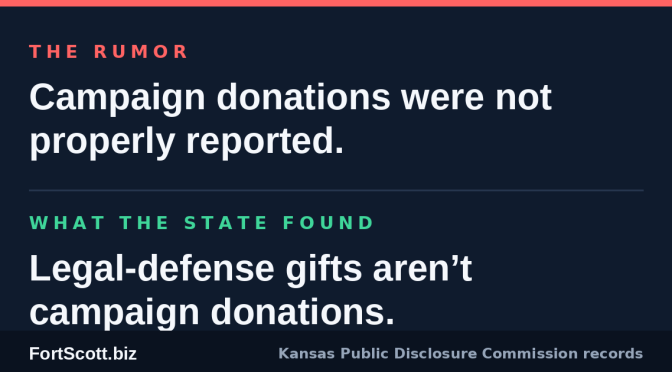
As Bourbon County Commissioner Mika Milburn-Kee fights criminal charges brought by the Kansas Attorney General, some residents have asked whether the money being donated to help pay her legal bills should it count as campaign contributions.
FortScott.biz filed an open-records request with the state agency that oversees campaign finance in Kansas, and the records show it took up that exact question earlier this year. An investigator for the agency told Milburn-Kee that money given specifically to cover her legal defense is not a campaign contribution as defined by the Kansas Campaign Finance Act, and does not have to be reported as one.
The situation stems from charges related to an Oct. 25, 2025 incident when the county commission room while it was being used for early-voting. For the full history, see State of Kansas vs. Mika Milburn-Kee and Judge Rejects Late Felony Charge; State Will Refile All Counts. Lawyers to defend against the charges costs money. As supporters discussed raising funds to help, questions circulated about whether those donations should have been reported as campaign contributions.
The records show that on April 13, Milburn-Kee emailed the agency herself “to request guidance regarding transparency and reporting requirements.” She asked whether “financial assistance for personal legal defense from family members or friends” is “subject to reporting requirements under Kansas ethics or campaign finance,” and said she wanted to “remain fully transparent and compliant with all legal and ethical obligations.”
Two days later, investigator Scott Smith responded with the agency’s written guidance:
“Funds donated or gifted to you for the purpose of paying for your legal defense of the criminal charges against you are not campaign contributions as defined by the Kansas Campaign Finance Act (CFA) and therefore do not need to be reported on any report required by the CFA.”
Smith added two points. First, Milburn-Kee cannot use her commissioner campaign contributions to pay for this defense. Second, he wrote that the donor’s intent for the money is what matters, and suggested she and anyone helping her raise funds make that purpose clear:
“It is the donator’s intent for the use of the funds that is key. Accordingly, I suggest that you, and anybody assisting you with raising funds for your legal defense, make it clear that you are not soliciting or accepting the funds as campaign contributions and that the funds will be used for your legal defense costs.”
The same guidance applies regardless of how the money is collected: “The foregoing applies to funds raised on the GoFundMe platform or by any other means.”
The agency is the Kansas Public Disclosure Commission (KPDC), formerly the Kansas Governmental Ethics Commission. It enforces the Kansas Campaign Finance Act along with state lobbying laws and conflict-of-interest and financial-disclosure laws for state-level officials. It is important to note that the KPDC oversees state-level campaign finance, not every ethics question about local officials. When a resident’s complaint about the fundraising reached the agency, it said so plainly:
“We do not enforce any ethics / conflicts of interest laws applicable to local political officers, including county commissioners. You may wish to consult with your county attorney or county counselor to determine if there are any local ethics / conflicts of interest laws that may be implicated.”
So the guidance answers the campaign-finance question she raised, but the commission was clear it does not decide whether any local county rule might apply.
The records also show the concern was formally raised when a resident sent a complaint about the fundraising to the Attorney General’s office, which forwarded it to the KPDC. Responding, investigator Smith gave the agency’s bottom line:
“Based on the information and allegations in your complaint, there is no apparent violation of any of the laws enforced by our office. However, if you have specific, verifiable information that may constitute a violation of the Kansas Campaign Finance Act, such as the commissioner using her campaign funds for her legal defense, then please let us know.”
The question behind the rumor was whether Milburn-Kee should have reported these donations as campaign contributions. Since the state says the donations for her defense are not campaign contributions, the Campaign Finance Act doesn’t specify any reporting requirement for them. However, that guidance only considers the relevance of Kansas campaign contributions laws. The commission specifically noted it does not decide any separate local ethics or legal questions regarding such donations.
FortScott.biz obtained these documents through a Kansas Open Records Act request. The commission released four responsive records and withheld one internal staff email chain under a KORA exemption for agency deliberations. The released records are posted in full below.
KPDC records on legal-defense donations for Commissioner Milburn-Kee (KORA response)
Commissioner Milburn-Kee was contacted for comment but had not replied by the time this story was scheduled.
It’s county fair time and this means that 4-H’ers have the opportunity to showcase all of their hard work learned on projects throughout the 4-H year. For many, this time of year is a highlight of the 4-H program.
Have you ever wondered what the different colored ribbons attached to exhibits mean? Well, I would like to tell you how 4-H exhibits are evaluated at the local county fair.
At the local county fair, most exhibits are judged on a conference or interview basis. This is where the judge interviews the participant as he or she evaluates the product against a set of standards rather than against other exhibits. The purpose of this judging is to determine what the 4-H’er learned while completing the project. Judges may consider skill level based on age and circumstance, and expect a higher performance from older 4-H’ers, so there is some variance within the standard. Comments are generally provided verbally and sometimes written. After the exhibit is evaluated, the judge then awards a ribbon placing to the exhibit.
In 4-H, we use the Danish Ribbon System where exhibits are placed into four different ribbon groups. A purple ribbon means outstanding on all standards, a blue ribbon exceeds the minimum standards but may have some minor flaws where improvements can be made, a red ribbon meets all minimum standards and may have some visible signs of needed improvement and finally a white ribbon fails to meet the minimum standard for the project. Of the purple ribbons, the judge can select a Champion and Reserve Champion.
In 4-H, we believe that using the Danish Ribbon System gives every 4-H member the recognition deserved for the work that was done and encourage them to follow the motto “to make the best better.” While no evaluation system is perfect, this system helps 4-H develop top quality youth instead of focusing on purple ribbon projects.
I encourage you to visit your local county fair and see all of the amazing work 4-H’ers have on display. And as you walk around, pay close attention to the different ribbon placings attached to projects. You will notice there will be any number of purples, blues, reds, or whites in each of the departments. This is the Danish Ribbon System, where 4-H’ers are encouraged to challenge themselves, set goals, and receive constructive criticism. All things to help young people build essential life skills to thrive.
For more information about 4-H Youth Development, reach out to Jennifer Terrell, District Extension Agent for K-State Research and Extension – Southwind District at [email protected] or 620-223-3720.

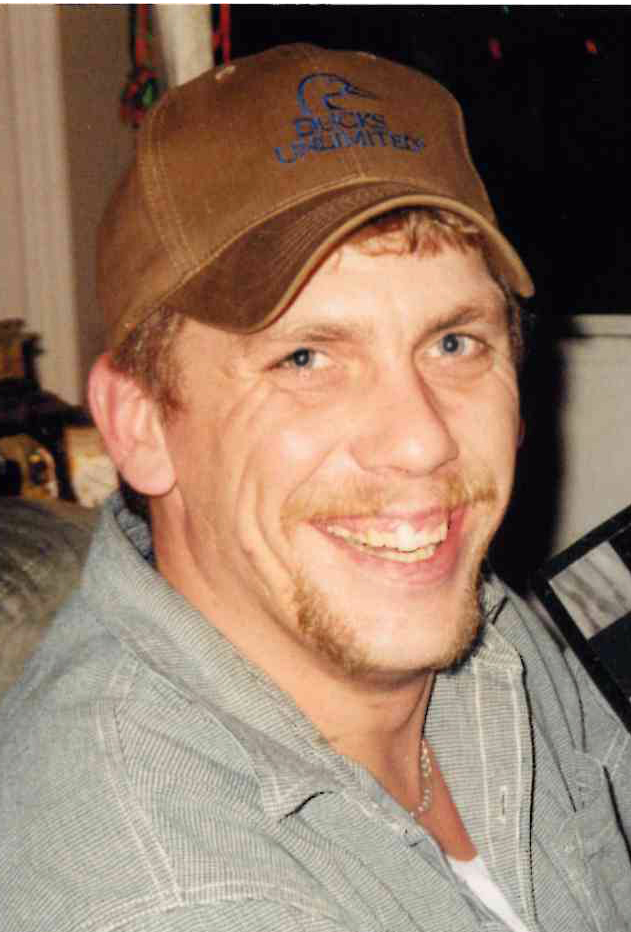
Steven Jay Schultz, age 50, passed away Wednesday, July 8, 2026, in Wichita, KS. He was born August 22, 1975, in Grand Forks, ND, the son of Michael and Sherrie Sather Schultz. Steve enjoyed fishing and cooking. He worked for several restaurants, and did restoration work with MTS and Mid-Continental Restoration.
Survivors include his father; his mother Sherrie Clark (Ronald Bainum) Fort Scott, KS; stepfather Kevin Clark Humboldt, KS; grandmother Donna Sather, Fort Scott, KS; daughter Danyelle Daly (Bryce) Fort Scott, KS; brother Jerry Schultz (Lisa) Fort Scott, KS; sister Amanda Ostrander (John) Humboldt, KS; 3 grandchildren, Bryelle, Colson, and Winne Daly; and numerous nieces and nephews.
There was cremation. The family will receive friends from 4:00 to 6:00 PM Monday, July 13th, at the Cheney Witt Chapel. Memorials are suggested to the Steven Schultz Memorial Fund and may be left in care of the Cheney Witt Chapel, PO Box 347, 201 S. Main St., Fort Scott, KS 66701. Words of remembrance may be submitted online at cheneywitt.com.

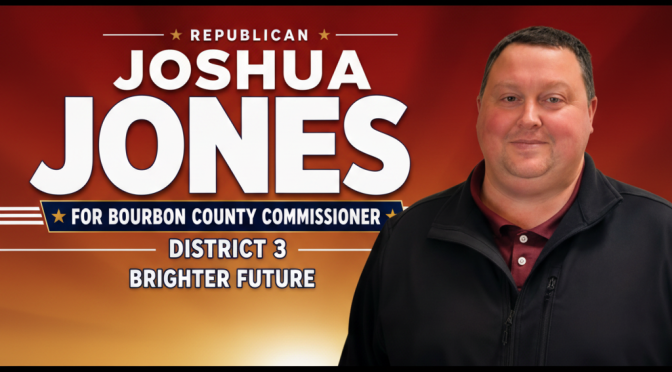
I’m Josh Jones, a lifelong resident and small-business owner, and I’m running for Bourbon County Commissioner, District 3.
Most candidates ask you to imagine how they’d govern. I can just show you. For nearly three years I served on the Fort Scott City Commission — chosen by my fellow commissioners as mayor, and later as commission president. My whole time there is on the public record: the votes, the debates, all of it.
So you don’t have to wonder what kind of commissioner I’d be:
That last one matters. I’ve cast hard votes that didn’t go the easy way for the people closest to me, because the job is to do what’s right for the citizens, not what’s comfortable. A record holds everyone accountable, including me — and in a county where trust is running thin, a track record you can actually check is worth a lot.
Don’t take my word for it. Watch the record for yourself — then vote.
Vote Josh Jones — Bourbon County Commissioner, District 3. A record you can check.
Paid for by Joshua Jones for County Commissioner, Josh Jones, Treasurer.
Learn more and get in touch: Josh Jones on Facebook
Freeman Health System Provides Update on One Call Patient Access Initiative
Joplin, MO – Freeman Health System is providing an update on its recently launched One Call patient access initiative, a centralized scheduling and call center model designed to simplify how patients, providers, and community partners connect with Freeman services.
Serving patients throughout the Joplin and Neosho communities, One Call was established to create a single point of contact for appointment scheduling, referral coordination, and access to services across the health system. The new model simplifies access to healthcare by reducing the need to navigate multiple phone numbers, departments, and scheduling processes. Launched on July 1, One Call is intended to improve consistency, streamline communication, and enhance the overall patient experience.
“One Call represents another important step in Freeman’s commitment to delivering exceptional care and service,” said Renee Denton, President of Freeman’s Missouri and Kansas Markets. “By centralizing scheduling and call center operations, we are making it easier for patients to access are while improving efficiently and consistency across our organization.”
The implementation of One Call also serves as a foundational step in Freeman Health System’s ongoing preparation for the future launch of Epic, the organization’s new electronic medical record (EMR) platform set to go live October 2026.
Freeman has received feedback regarding longer-than-expected wait times and call routing challenges experienced by some patients and provider offices. As with any significant operational change, however, refinements are being made based on real-world use and stakeholder feedback. The organization acknowledges those concerns and is actively implementing improvements.
“We understand some patients and referring providers have experienced frustration during the early stages of this transition, and we take that feedback seriously,” shared Denton. “We are listening, evaluating what we’ve learned, and making adjustments to improve the experience. Our goal is to ensure patients can access care as efficiently as possible.”
Freeman teams continue to review call volumes, routing patterns, staffing levels, and system performance to identify opportunities for improvement and ensure the service meets the needs of patients, providers, and community partners.
“Our commitment is, and always will be, providing exceptional care and service,” Denton said. “We appreciate the patience and feedback we’ve received as we continue strengthening this process. Every comment helps us build a better experience for the people who rely on us for care.”
Several improvements have already been implemented, and additional enhancements are underway as Freeman continues to refine the process and improve response times.
While transitions of this scale can present challenges, One Call remains an important investment in improving access, coordination, and communication across the health system. Freeman remains committed to listening, learning, and making the adjustments necessary to deliver the level of service patients and providers expect.
###
About Freeman Health System
Locally owned and nationally recognized, Freeman Health System is a not-for-profit health system serving communities across Missouri, Arkansas, Oklahoma, and Kansas through a network of hospitals, physician clinics, outpatient locations, and specialty services. The system includes Freeman Hospital West, Freeman Hospital East, Freeman Neosho Hospital, and the Freeman Health System facilities in Bentonville, Springdale, Willow Creek, and Siloam Springs. Freeman Health System also operates Ozark Center—the region’s largest provider of behavioral health services, and offers comprehensive cancer, cardiology, neurology and neurosurgery, orthopedics, and women’s and children’s services. The system is supported by more than 7,000 employees and is the only Children’s Miracle Network Hospital in a 70-mile radius. For more information, visit Freeman Health System
Expands options for individuals with I/DD to live independently in their communities
TOPEKA – Governor Laura Kelly and The Kansas Department for Aging and Disability Services (KDADS), in partnership with the Kansas Department of Health and Environment (KDHE), announced today that the Centers for Medicare & Medicaid Services (CMS) has approved Kansas’ new Community Supports Waiver.
CMS approved the initial 1915(c) Home and Community-Based Services (HCBS) waiver on July 1, 2026. It will operate concurrently with an amendment to Kansas’ 1915(b) KanCare managed care waiver. Both the new waiver and the KanCare amendment become effective on October 1, 2026. CMS has approved a projected enrollment of 500 individuals for the first waiver year (October 1, 2026, through September 30, 2027).
“The Centers for Medicare & Medicaid Services’ approval of Kansas’ Community Supports Waiver represents what is possible through collaboration, forward-thinking, and putting the needs of Kansans first,” Governor Laura Kelly said. “This is a monumental step that will empower individuals and families across Kansas to live full lives by ensuring they can access the care they need, when they need it.”
The waiver will provide targeted HCBS to Kansans ages 5 and older with intellectual and/or developmental disabilities (I/DD) who do not require 24-hour support but would otherwise need services in an Intermediate Care Facility for Individuals with Intellectual Disabilities (ICF/IID). Developed with the recommendations of the Kansas Legislature’s 2022 Special Committee on Intellectual and Developmental Disability Waiver Modernization in mind, the waiver offers more flexible, right-sized supports that help individuals live more independently at home and in their communities and promote competitive integrated employment.
The Community Supports Waiver includes services such as:
Services under the waiver are subject to an annual cap of $20,000 per participant.
KDADS and KDHE will now begin final implementation activities, including system updates, provider enrollment and training, policy development, and outreach. Individuals and families interested in learning more can visit www.kdads.ks.gov/kansascsw.
What They’re Saying:
“This approval marks a major milestone for Kansas and for the thousands of individuals and families who have waited for more flexible, person-centered options. The Community Supports Waiver is the result of years of collaboration among self-advocates, families, providers, community developmental disabilities organizations (CDDO), and other stakeholders. It will expand access to services, ease pressure on the I/DD waiver waitlist, and give Kansans with I/DD greater choice and control over their lives.”
– Secretary Laura Howard, Kansas Department for Aging and Disability Services
“Giving Kansans access to the Community Supports Waiver through Medicaid is a much-needed enhancement to the services we have worked so hard to provide our all of our members. It not only will help individuals live more independently at home and in the community, but it will offer many more opportunities for them to choose and direct their own services. This is great news for Kansas.”
– Secretary Janet Stanek, Kansas Department of Health and Environment
“Approval of the Community Supports Waiver is a major milestone for Kansas and for Kansans with Intellectual and Developmental Disabilities. It will help individuals who need lower-level supports access services more quickly and reduce the waiting list for the comprehensive I/DD Waiver. I’m proud to have helped guide the development and funding of this new Home & Community Supports Waiver through the Legislature in my roles on Senate Ways & Means, Senate Public Health & Welfare, and the Bob Bethell Joint Committee on HCBS & KanCare Oversight. I remain committed to supporting the resources and alignment needed to ensure this waiver meets the needs of Kansans with I/DD.”
– Senator Pat Pettey, District 6
“It’s great to see the Community Supports Waiver finally up and running. I believe it will make an incredible difference for folks in the I/DD community and their families. As I’ve said many times, I believe it could take half the folks off the wait list.
“A special thanks to the many legislators, staff, and other advocates who also saw the vision and helped along the way and put up with my constant pushing in support of the Community Supports Waiver.
“Today is a great day for the I/DD community in Kansas.”
– Representative Will Carpenter, District 75
“The Kansas Council on Developmental Disabilities (KCDD) is proud to celebrate this historic milestone for Kansans with intellectual and developmental disabilities and their families. As the state’s largest organization dedicated exclusively to advancing opportunities for people with I/DD, KCDD has long advocated for the creation of the Community Supports Waiver because we believe it represents an important new pathway to services while strengthening Kansas’ broader commitment to ending the longstanding I/DD waiver waitlist.
“For far too many Kansans, waiting years for critical supports has become the norm. This new waiver creates an important bridge—providing earlier access to meaningful services and helping individuals receive support while they await comprehensive waiver services. It reflects a shared commitment to building a more responsive, person-centered disability system.
“We appreciate the leadership of the Kansas Department for Aging and Disability Services, the Kansas Legislature, self-advocates, families, providers, and our many partners who worked together to make this vision a reality. KCDD looks forward to continuing our partnership to ensure every Kansan with I/DD has the opportunity to live, work, and thrive in the community of their choice.”
– Sara Hart Weir, Executive Director, Kansas Council on Developmental Disabilities
|
||||||||||||||||||||||||||||||||||||||||||
|
||||||||||||||||||||||||||||||||||||||||||
|