TOPEKA – Governor Laura Kelly has signed the state’s budget, Senate Bill 125, which allocates funding for Fiscal Years 2025, 2026, 2027, and 2028.
“While I appreciate the bipartisan effort that went into crafting this bill, I remain concerned about the long-term fiscal impact this budget will have on our ability to invest in programs and services that Kansas families rely on, given that this budget will put the state in the red by Fiscal Year 2028,” Governor Laura Kelly said. “I am also concerned that the Legislature will adjourn before the release of Consensus Revenue Estimates, meaning we won’t fully understand the fiscal impact of this budget until after the Legislature has left town.
“Despite my overall concerns, I appreciate that this budget includes funding for programs that improve state resources for Kansans. I will continue to prioritize fiscal responsibility and look forward to working with the Legislature to make commonsense investments that provide Kansans the resources they need to prosper without risking the future of our state.”
The budget:
Invests in Kansas’ Water Quality and Quantity: Senate Bill 125 adds another $6 million annual investment to safeguard Kansas’ water supply. It includes $1.75 million to increase state matching dollars to local conservation districts, $1 million for sorghum research, and $3 million for a pilot project to manage sedimentation in the John Redmond Reservoir and secure that critical water source.
Invests in Early Childhood and K-12 Education: The budget, as signed by Governor Kelly, fully funds K-12 education for a seventh consecutive year, providing additional funds for public schools across the state. Senate Bill 125 also invests an additional $10 million in special education state aid and $1.25 million to expand rural child care access.
Advances Kansas’ Economy: The budget includes nearly $50 million to support Kansas’ aviation industry, providing opportunities to continue the state’s historic success in economic development. The budget also includes funding attract innovative businesses in the cybersecurity and biotechnology industries to Kansas. Additionally, it allocates $1 million for rural remote workplaces to support our rural workforce.
Supports Higher Education: The budget includes more than $16 million to support student success and retention initiatives, more than $34 million in additional funding for community and technical colleges, and continues the state’s commitment to lowering costs for students through investments in need-based financial aid.
Bolsters Intellectual and Developmental Disability Services Funding: The bill increases funding for the Intellectual and Developmental Disability (I/DD) waiver by allocating $14 million to offer services to 200 individuals and allocating $10.5 million to increase reimbursement rates for I/DD waiver providers in Fiscal Year 2026.
Governor Kelly also line-item vetoed aspects of the budget. Find more information and her veto messages here.
TOPEKA – Governor Laura Kelly has vetoed Senate Bill 269, Senate Substitute for House Bill 2228, House Bill 2062, Senate Substitute for House Bill 2240, Senate Substitute for House Bill 2382, House Bill 2028, and Senate Bill 18. Governor Kelly also allowed House Bill 2056, Senate Bill 250, and House Bill 2263 to become law without her signature.
The following veto message is from Governor Kelly regarding her veto of Senate Bill 269:
“I have proposed and supported tax cuts when they are implemented responsibly and benefit the people of Kansas, especially those who need it most. This bill ignores Kansas families at a time of rising costs and inflation in favor of hundreds of millions of dollars in giveaways to corporations and the wealthy.
“Make no mistake, should this bill become law, it will put the state back on the path toward the failed Brownback tax experiment: the four-day school weeks, the budget cuts, and the crumbling roads and bridges that came with it.
“The income tax cuts made possible by this bill could cost the state up to $1.3 billion annually. The triggers for those tax cuts are such that as soon as the state sees an uptick in revenue, taxes will be automatically cut regardless of any other economic factors or policy and budgetary considerations.
“We’ve been down this road before, and we can’t afford to go back to failed tax experiments and policies that will stifle economic opportunity for everyday Kansans and thwart efforts to ensure a sustainable water supply essential to our rural communities. I sincerely hope the Legislature listens to the people of Kansas and rethinks priorities on tax policy.
“Therefore, under Article 2, Section 14(a) of the Constitution, I hereby veto Senate Bill 269.”
The following veto message is from Governor Kelly regarding her veto of Senate Substitute for House Bill 2228:
“As a strong supporter of local control, I believe that decisions around legal services should be handled by the local elected leaders who are on the ground and best know their communities’ needs. I do also believe there are times when the attorney general must work to safeguard the state’s interest in issues that cannot be adequately litigated by a local entity on behalf of the entire state.
“There should be additional work on this legislation to develop clearer language around the attorney general’s engagement. Also, the retroactivity language should be removed to eliminate the perception that this bill is targeted at a specific action rather than sound policy. Until those issues are addressed, I cannot sign this legislation.
“Therefore, under Article 2, Section 14(a) of the Constitution, I hereby veto Senate Substitute for House Bill 2228.”
The following veto message is from Governor Kelly regarding her veto of House Bill 2062:
“At first glance, this bill may appear to be a proposal to support pregnant women and families.
“However, this bill is yet another attempt by special interest groups and extremist lawmakers to ignore the will of Kansans and insert themselves into the lives of those making private medical decisions. It is a place where this Legislature has become all too comfortable — particularly for those who espouse freedom from government overreach.
“The motives behind this bill are clear. Instead of helping pregnant women and families, the Legislature chose to pass a bill that connects the issue to a woman’s constitutional rights. This bill is a dismissal of the will of the majority of Kansans who voted overwhelmingly in 2022 to keep politicians out of the private medical decisions made between a woman and her doctor.
“Furthermore, the provisions of this bill are questionable, and it is surprising it has been put forward. There are legitimate worries surrounding its implications, and I encourage special interest groups and their legislative supporters to reflect on the broader impact of their actions.
“Therefore, under Article 2, Section 14(a) of the Constitution, I hereby veto House Bill 2062.”
The following veto message is from Governor Kelly regarding her veto of Senate Substitute for House Bill 2240:
“Senate Substitute for House Bill 2240 is an unconstitutional overreach by the Legislature into the executive branch attempting to create an unlawful administration of the state’s Medicaid program with the legislative branch.
“Our doctrine of independent governmental branches is firmly entrenched in the United States and Kansas constitutional law and significant intrusion by one branch into the duties of another has been held to be unlawful. There is little question in my mind that this represents such an intrusion.
“Additionally, we estimate that the process established in this bill would require hundreds of hours of taxpayer-funded work and research by legislative staff to implement even the most basic of changes. Since the federal government issues various administrative changes almost daily, it jeopardizes the very functioning of the underlying programs.
“Thousands of Kansans rely on these programs, including children, pregnant women, individuals with disabilities, and low-income seniors. This bill and the subsequent backlog that it would create threatens food and medical assistance benefits for our most vulnerable Kansans at a time of increased inflation and overall financial uncertainty.
“Kansas already has very strict eligibility rules and significant verification requirements for these programs. For these reasons and many more, I cannot and will not support this bill.
“Therefore, under Article 2, Section 14(a) of the Constitution, I hereby veto Senate Substitute for House Bill 2240.”
The following veto message is from Governor Kelly regarding her veto of Senate Substitute for House Bill 2382:
“This bill is convoluted, manipulative, and wrong for a number of reasons.
“It undermines the authority of the Kansas State Board of Education and local school boards, who are vested with the duty and responsibility to set and enforce curricula for our schools, no matter the subject.
“The Board, teachers, and administrators put in significant effort to create curricula and lesson plans. This legislation undermines their autonomy and replaces the expertise of trained professionals with the desires of special interest groups and the politicians that enable them.
“Additionally, this bill fails to establish standards to ensure the information included in the program is evidence-based. But it is not surprising, as the goal of this bill is not to educate developing and impressionable young minds – it is to push a specific agenda without proper research to back it up.
“As policy makers and parents, we should demand that our children are provided with high-quality, relevant, researched, and age-appropriate educational experiences free from ideological prejudice. Senate Substitute for House Bill 2382 falls short of that goal. For these reasons, I cannot and will not support this bill.
“Therefore, under Article 2, Section 14(a) of the Constitution, I hereby veto Senate Substitute for House Bill 2382.”
The following veto message is from Governor Kelly regarding her veto of House Bill 2028:
“While this bill touches on a variety of hunting and fishing issues, I am particularly concerned with how this bill severely limits non-Kansas residents from hunting waterfowl on public lands. More specifically, this prohibition could have a detrimental impact on the prosperity of our communities and businesses by denying the many positive outcomes from the economic activity generated by non-residents coming into our state for hunting purposes.
“I will not support a bill that could harm the economic vitality of rural Kansas communities across the state.
“Therefore, under Article 2, Section 14(a) of the Constitution, I hereby veto House Bill 2028.”
The following veto message is from Governor Kelly regarding her veto of Senate Bill 18:
“While the issuance of specialty state license plates for nonprofit organizations rarely produces controversy, Senate Bill 18 was amended to funnel revenue generated by the royalties from these license plates to a 501(c)(4) entity that engages in political and state legislative campaigns.
“Official government-issued license plates should not be used by organizations to generate revenue that can be redirected by organizations for political purposes. Individuals are free to donate to any candidate or cause they choose, but using government-issued license plates for that purpose creates a dangerous precedent and does not serve a valid, justifiable public service. Simply put, it doesn’t pass the smell test, which is why I cannot and will not support it.
“Therefore, under Article 2, Section 14(a) of the Constitution, I hereby veto Senate Bill 18.”
The following statement is from Governor Kelly regarding allowing House Bill 2056 to become law without her signature:
“While this bill cleans up some of the ambiguity and uncertainty regarding the crime of impersonating an election official, it is still unclear about what actions are prohibited. It uses the term “engaging in conduct” but only provides one specific example, making it still difficult to discern what is allowed and what could lead to criminal charges.
“Kansans should be given every opportunity to exercise their constitutional right to vote, and I have concerns this bill would have a chilling effect on organizations that support voter engagement. This is an ambiguity either the courts or the Legislature need to fix.
“This bill will become law without my signature, and I hope in the future the Legislature can provide greater clarity to protect Kansans’ constitutional right to vote.”
The following statement is from Governor Kelly regarding allowing Senate Bill 250 to become law without her signature:
“This bill gives Kansans with debilitating disease the option to make choices about their medical care. Now I think it’s time for the Legislature to finally legalize medical Marijuana, giving the Kansans suffering from chronic pain or Post Traumatic Stress Disorder, and children suffering with Dravet’s Syndrome (epilepsy) the choice of the treatment they and their doctors determine best suits their needs.”
Governor Kelly also allowed House Bill 2263 to become law without her signature.
Governor Kelly Signs Bipartisan Bill Enacting Licensure Compacts, Strengthening Commitment to Workforce Development
TOPEKA – Governor Laura Kelly has signed House Bill 2069, which enacts compacts for school psychologists, dietitians, cosmetologists, and physician assistants to enable interstate practice privileges.
“I have consistently supported reducing barriers for qualified professionals to practice in Kansas,” Governor Laura Kelly said. “This legislation is crucial for strengthening our workforce and creates an environment that attracts talent and fosters economic development.”
The purpose of these compacts is to facilitate the portability of licenses across state lines, benefiting professionals and consumers alike, especially in fields like health care. The passage of this legislation makes Kansas among the first states to enact these compacts. It will go into effect once more states join the compacts.
“House Bill 2069 is an example of the Legislature acting in the best interest of Kansans,” said Representative for House District 10 Suzanne Wikle. “These interstate compact acts will allow professionals, including military spouses, to quickly gain employment when they relocate to Kansas.”
The compacts also reduce administrative burdens while increasing availability of licensed professionals as well as cooperation among member state licensing bodies. The compacts would preserve regulatory authority of states, while also providing license portability for qualifying professionals.
The school psychologist, dietitian, cosmetologist, and physician assistant compacts would also ease the transition of relocating military members and their spouses and would give them privileges by having an unrestricted license when in good standing from a participating state.
“House Bill 2069 is commonsense legislation that will reduce barriers for employment for school psychologists, cosmetologists, physician’s assistants, and dieticians,” said Representative for House District 40 David Buehler. “This is especially important for military family members coming to Kansas, making the state more military-friendly and boosting employment opportunities in our state. I am proud to have supported the passage of this bill.”
In addition to House Bill 2069, Governor Kelly also signed the following bipartisan bills:
Senate Bill 227: Provides for different credit percentages for the tax credit for the restoration and preservation of historic structures based on city populations and the amount of the expenditures.
House Bill 2022: Requires special elections be held on the first Tuesday after the first Monday in March or on the same day as a primary or general election.
House Bill 2039: Adds maternity center to the definition of health care provider for purposes of the Health Care Provider Insurance Availability Act, amends definitions in the Kansas Credentialing Act, and makes changes to emergency medical services statutes
House Bill 2075: Requires law enforcement to explore options to ensure a child’s safety prior to taking the child into custody. It also specifies that the secretary must provide support to these officers. Additionally, it mandates that the court review the child’s involvement in permanency planning, and a permanency hearing must be held within nine months of the child’s removal. Subsequent hearings should take place every six months thereafter.
House Substitute for Senate Bill 9: Establishes protections to ensure the security of Kansas military installations by limiting the ability of foreign adversaries to acquire land in proximity to those installations. The bill also ensures drone technology used in Kansas does not originate from a foreign adversary.
Senate Bill 35: Reduces state property tax for Kansans by discontinuing the mill levies for the Kansas educational building fund and the state institutions building fund.
House Bill 2088: Enacts the Fast Track Permits Act, which will establish standards to ensure the timely review of permits for building single-family residences, helping lower costs for developers and homeowners alike by limiting delays in the permit application process.
House Bill 2155: Specifies that sheriffs have liability for official acts related to charge and custody of jails.
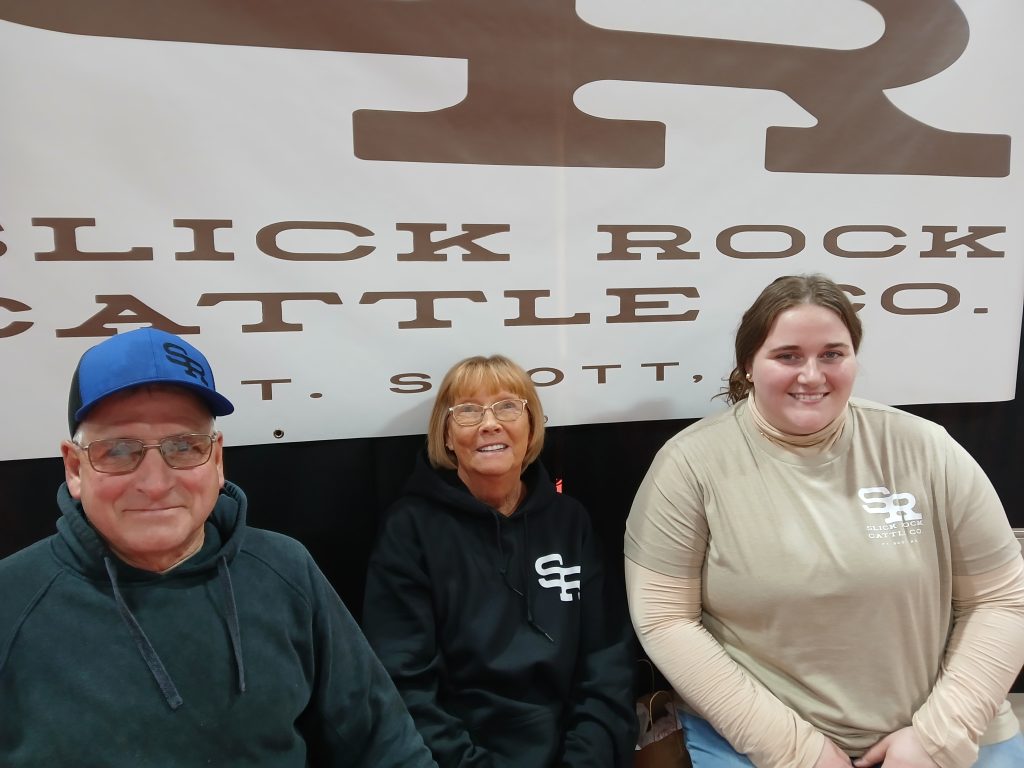
John Erie, Terri Erie-his wife, and Mia Bryant-his granddaughter, man the Slick Rock Cattle Co. booth at the Fort Scott Home and Farm Show on April 4 at Fort Scott Community College.
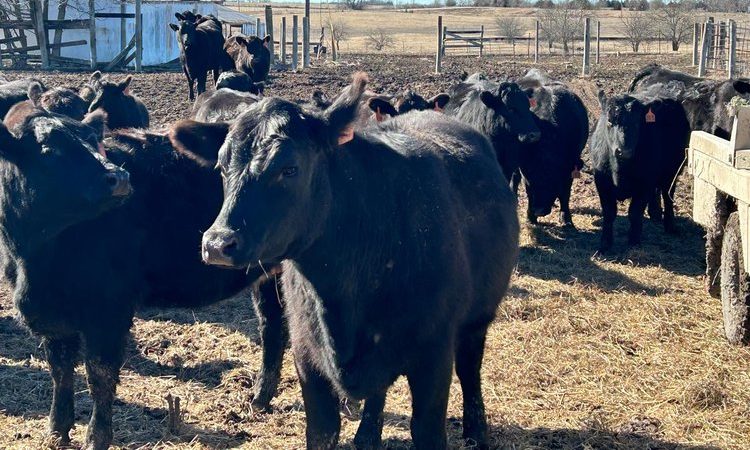
Slick Rock Cattle Co., Fort Scott, has recently started delivering beef products in a strategy to market their product from farm to table.
“In the last three months, we have started delivering to Fort Scott, Overland Park, Girard, and Chanute at designated sites for pick up,” said John Erie, who is co-owner with Kevin Stark, of the cattle company.
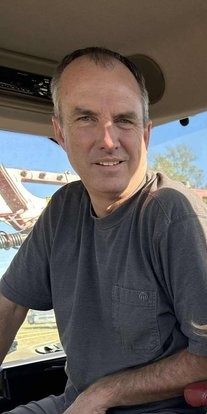
Kevin Stark, co-owner of Slick Rock Cattle Company from the business website.
Erie has been in the cattle business since childhood, working outside jobs, he said. Stark had a farming operation. They both attend the same church and one day started a conversation that ended in a cattle company partnership that has lasted 11 years.
“We had sold one-quarter beef, one-half or whole, and still do. Some people were wanting to buy certain cuts. Enough people asked, so we are going down that road,” Erie said. “Seems like people are wanting to help local farmers that produce hormone-free, grass-fed, grain-finished on-the-farm beef.”
“We reduced the number of cattle to specialize in a farm-to-table operation.”
They sell 12-month subscriptions, with the option of $125 per month over the years time. “Different cuts each month with ground beef. People can make their own bundle and it’s for people with not a lot of freezer space and not a lot of money at one time.”
“We can do 1/4, 1/2, or whole or all rib eye or all ground beef… a custom order,” he said.
The cattle are raised locally in northeast Bourbon County, and butchered and packaged locally at the Bronson Locker, in western Bourbon County, a U.S. Dept. of Agriculture-certified business.
This reduces the environmental impact (lower fuel cost) because of the lower mileage needed to reach the customer.
The business employs Erie, Stark, and Erie’s granddaughter Mia Bryant along with some high school employees at times.
The cattle company has an office at the Hammond Elevator, northeast of Fort Scott, and can be reached at 620.224.8033 or slickrockcattlecollc.com
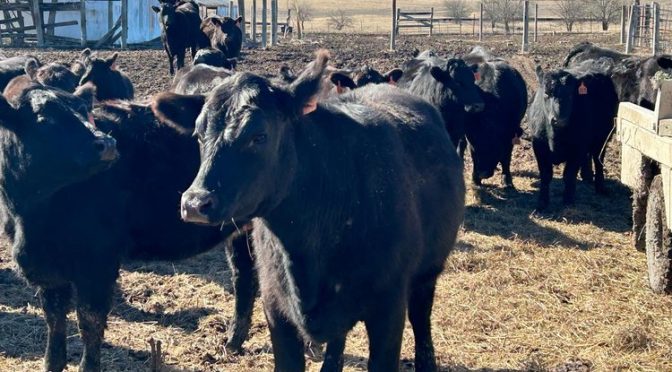
Black Angus cattle are the basis of the business, from their website.
The north wing, east side of the Bourbon County Courthouse.
Bourbon County Commissioner Brandon Whisenhunt began the meeting by reading and signing the Bourbon County Proclamation of National Health Week, April 7-13.
The commission decided to postpone discussion of the county’s budget for the Southeast Kansas Mental Health Center. Allen County Commissioner David Lee is planning a multi-county meeting to discuss SEK Mental Health, the time of which will be determined. Beerbower asked to attend on behalf of Bourbon County. The Commission then agreed to put the SEK Mental Health budget discussion back on the Bourbon County Commission agenda after the multi-county meeting.
Hay Bid Openings
The county received three hay bids from Joe Tirri: 255th Radio Tower Property for $30; Elm Creek East Side for $1000; and Elm Creek West Side for $2050. All bids were accepted.
The old landfill property on Native Road received no bids. The commission opted to mow it, rather than resubmit for bids.
Old Business
Tax Sale Redaction and correction of the motion made on 3/27/2025
The original motion by Whisenhunt included the land bank, which was an error. A new motion to use the firm of Klenda Austerman for county tax sale properties only was made and approved.
Public Comments for Items Not on the Agenda
Mary Pimperton regarding roads
Mary Pimperton requested that the county pave the half-mile section of Maple Road that runs from 3 Highway to 75th Street. It is a main road through Uniontown, frequently traveled by buses. “It’s in extremely poor condition,” she said. For the past several years the city has been patching it, but it’s beyond patching now. During the work session following the meeting, the commission asked public works to do a cost assessment on paving that section of road.
New Business
Commissioner Comments
Beerbower read a statement about zoning, to clarify comments he made at the last commission meeting.
Based on the comments he saw on Facebook and the texts and phone calls he had received, one would believe that zoning was always a bad thing. Beerbower went on to explain the history of zoning in Bourbon County and the previous commissioners’ naming lack of zoning in the county as the reason citizens have no way to defend their property from their neighbor’s actions. “Those that hold on to the outdated ideology that zoning somehow robs their freedom and right to do whatever on their land are shortsighted,” said Beerbower.
He explained the validity of zoning as a way to protect rural property from industrial encroachment and pointed to the efforts of companies looking to come to Bourbon County as a second industrial revolution that is looking for land instead of labor. Beerbower said, “Let me reiterate, it is not a matter of if we will zone. It is a matter of what zoning will look like.” He ended his speech with an appeal to citizens who are interested to submit letters of interest to join the advisory committee that the commission voted to form at last week’s meeting so their voices can shape the future zoning of Bourbon County.
There were questions and comments from those in attendance asking if adjacent counties have zoning. Whisenhunt said Allen County has minimal zoning, while Crawford and Lynn County both have zoning. Parts of Crawford aren’t zoned yet, but the zoning they do have is “pretty strict.”
Southeast Kansas Mental Health Center
Jeff Fischer and Marty Dewitt spoke to the commission about the role of SEK Mental Health in Bourbon County. Fischer said that behavioral health is an area of great need and not many organizations are capable of an integrated care model. Throughout all the healthcare provider changes that Bourbon County has undergone in the past several years, the SEK Mental Health Center has been a stabilizing force, he said.
Fischer and Dewitt both gave the commissioners their contact information and asked that they be contacted with any questions the commission may have so they can provide truthful answers.
Work Session for 2025 roads and equipment plan for public works
Eric Bailey, director of public works, showed a video of his department doing a blast, running it through the crusher, making and laying asphalt, and chip and seal road maintenance, to inform the commission of the procedures his department goes through.
Annually, after the winter freezes and thaws, public works workers drive around the county and rate the condition of the roads based on the Pacer Asphalt Roads Manual, rating from 0-9. The higher the number, the better the road’s condition.
He also reported the asphalt produced and laid by the county: 9336 tons laid in 2024. Reduced sales tax numbers and flooding reduced the amount laid from previous years: 14,302 in 2023: 11,474 in 2022; and 23,600 in 2021.
2025 plan based on analysis of the roads
District 1
Hackberry on 120th to Kansas. Major road failure there that the county has been battling for some time. It needs to be taken back down to gravel, re-work the sub-base and look at asphalting it in the next few years.
Yale Road: asphalt from Mapleton to 95th this year to get a good base coat down on the road.
Chip and seal is everything asphalted in 2021 in the district.
District 2
State Line Road: Vernon County owns half, and has expressed that they would pay for the asphalt if Bourbon County will lay it.
Eagle Road from RR tracks in Garland to State Line needs a 2-inch seal coat on it. Should have been done last year, but they ran out of funding.
Chip and seal the remainder of the asphalt laid in 2021.
District 3
215th from Xavier to Yale damaged by flooding last year, needs to be relayed.
Soldier Road from 215th to 225th didn’t get finished in 2023 and it needs to be finished to prevent losing the work done on it from that year.
Chip and seal the roads asphalted in 2021.
Bailey also provided a list of all the roads that could be done if the commission chooses to. It would take $3.3 million to do every road in Bourbon County that could use improvement and maintenance, based on the current analysis.
Bailey has goal to get started laying asphalt on the smaller areas in May and June, chip and seal in July and August, then spend the remainder of the sales tax funds on Yale and go as far as they can.
His recommended order is Garland, Soldier, 215th, then chip and seal.
“We can only do what sales tax money we have,” said Bailey.
Bailey emphasized the need to improve preventative maintenance (chip and seal).
Whisenhunt said the commission should have a decision for the road maintenance plan by the first meeting in May.
Chamber members and the community are invited to hear 7-minute updates by the following entities: City of Fort Scott, Bourbon County, Fort Scott Community College, and the USD-234 and USD-235 School Districts.
The event is free to attend but registration is requested. Box lunches are available by pre-order for $10.
Those planning to attend may RSVP here. (lunch orders being accepted online thru 12pm, Monday the 7th.)
Moderator for the event will be Chamber Board Member Colleen Quick of Labconco.
Contact the Fort Scott Area Chamber of Commerce at 620-223-3566 for more information or visit fortscott.com.
A SPECIAL THANK YOU TO OUR EVENT SPONSORS:
DAVIS ACCOUNTING
&
LYONS REALTY GROUP
Thank you to our Chamber Champion members below!
Fort Scott Area Chamber of Commerce | 231 E. Wall Street | Fort Scott, KS 66701 US
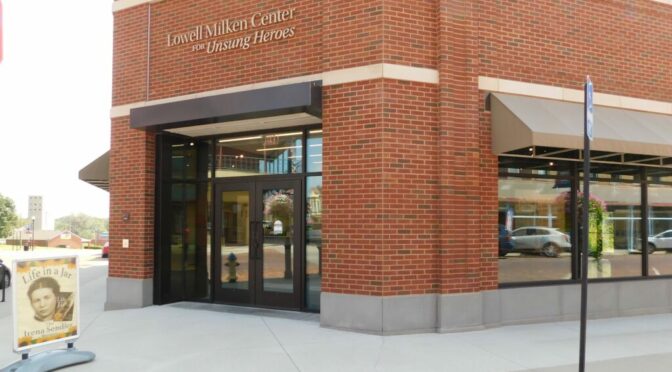
In Step 2, students create an original work of art. Artworks visually interpret the stories of LMC Unsung Heroes as role models. For their artworks, students may wish to explore the Unsung Heroes’ character traits and actions, the consequences of their events and decisions, their impact on the course of history—past or present, or other approaches.
Take time to review the judging rubric for the artworks, which includes 40% for creative interpretation of the Unsung Hero’s story.
Artworks in a variety of 2D and 3D media are eligible for submission. Students submitting digital art will be asked to answer 3 short questions on the application about their selection of media and their creative process. Students submitting 3D artworks are required to upload 4 images of their artwork.
RESOURCE: Thumbnail sketches are great for idea generation. Use this worksheet to explore various compositions: Thumbnail Sketch Worksheet
Awardees from 2024 Dyne Kim (Left) and Vanessa Hoyt (Right). Click the images to learn more about the students and their chosen Unsung Heroes.
Step-by-Step Competition Submission Guide
Attention teachers and students! Follow this 10-Step Submission Guide to submit projects for the 2025 ARTEFFECT competition. Allow at least 30 minutes to complete your submission using the online portal once you have gathered all the required information and materials on the Submission Checklist. There is no fee to enter the competition.
The Submission deadline for the 2025 Competition is April 27, 11:59 PM (Pacific Time). For more information and to submit, visit the ARTEFFECT Competition.
2025 ARTEFFECT Competition –
Certificate of Participation!
Making a complete submission to the ARTEFFECT 2025 Competition is an achievement unto itself! ARTEFFECT honors the teaching and learning of all participating students with a Certificate of Participation.
Students: If you would like to request a Certificate of Participation, please email arteffect@lowellmilken.org upon completion of your submission.
Educators: If you would like to request a Certificate of Participation template for your students, or to confirm submissions for your students’ participation, email arteffect@lowellmilken.org.
Stay connected with ARTEFFECT through our expanding social media channels on Instagram, Facebook, X, and YouTube.
Governor Kelly Signs Bipartisan Bill Establishing Task Force to Tackle Kansas’ Water Challenges
TOPEKA – Governor Laura Kelly has signed Senate Substitute for House Bill 2172, creating the water program task force to create a long-term investment program for water with a dedicated revenue source, similar to the state’s rolling 10-year transportation programs. The task force will also evaluate current funding for water and the state’s water planning statutes, submitting reports detailing its findings to the governor and the Kansas Legislature in 2026 and 2027.
“Developing a comprehensive, long-term, and sustainable water program is long overdue and a significant step forward in ensuring Kansas’ water supply is preserved for generations to come,” Governor Laura Kelly said. “Thanks to this legislation, there will now be a bipartisan strategic plan with a dedicated funding source to tackle Kansas’ most pressing water challenges. I commend the Legislature for advancing my proposal and acting on this critical issue.”
The task force will include 13 voting members spearheaded by a bipartisan group of legislators. Of those 13 voting members, six members will be Kansans appointed by legislative leadership. The task force also includes a five-member water planning work group, which is tasked with reviewing and modernizing the State Water Resources Planning Act.
“Water is truly vital to Kansas agriculture, business, and communities throughout the state,” said Speaker of the Kansas House of Representatives Dan Hawkins. “I commend Chairs Minnix and Rahjes, along with the members of the House Water and Agriculture and Natural Resources Committees, for their leadership in forming the Water Task Force, an essential step toward maintaining our precious water resources.”
The task force is charged with evaluating major risks to Kansas’ water quality and quantity, including any impact on current and future economic growth. It will also examine current funding for water and determine whether this funding is sufficient to address the water issues included in the State Water Plan, including Kansas’ current and future water infrastructure needs. The task force will represent every corner of Kansas by including at least one member from each of the five conservation regions of the state.
“This is a critical step forward in addressing Kansas’ water challenges by establishing a dedicated task force and work group to guide our state’s water policy and funding decisions,” said Kansas Senate President Ty Masterson. “This bill reflects a bipartisan legislative commitment to ensuring sustainable water resources for future generations, and I’m proud to see it move forward with the governor’s support.”
The task force will prepare and submit a preliminary report to the governor and Legislature on or before Jan. 31, 2026, and a final report on Jan. 31, 2027. The report will include recommendations on the water program’s long-term structure to address Kansas’ current and future water needs, the roles and responsibilities of the state, municipalities, and regional entities, and identifying a dedicated funding source for the State Water Plan fund.
“Establishing a task force that is dedicated to making progress on Kansas’ water issues is critical to the success of our agriculture industry and economy,” said Representative for House District 110 Ken Rahjes. “This bill will allow us to take steps so our agriculture communities and rural areas can thrive. It’s crucial we secure Kansas’ water supply now, so our state remains an agricultural and economic powerhouse for decades to come.”
Governor Kelly encouraged the Legislature to form the task force during her State of the State address in January. The Kelly Administration and Kansas Water Authority also conducted 14 public meetings across the state in 2024 to gather feedback from Kansans on local priorities and needs for a long-term program. The results of these meetings were published in the Strategic Implementation Framework for water, which can serve as a blueprint for the task force’s work in constructing a long-term, well-resourced water program.
“Protecting Kansas’ water is paramount for our generation and future generations of Kansans,” said Representative for House District 22 Lindsey Vaughn. “In passing this legislation, the Legislature and Governor Kelly are taking a critical step to ensuring we have a long-term strategic plan for a safe and secure water supply. I’m proud to support this groundbreaking bill and look forward to seeing everything the task force accomplishes.”
In addition to Senate Substitute for House Bill 2172, Governor Kelly also signed the following bipartisan bills:
Substitute for Senate Bill 54: Enhances transparency by creating a process for judicial review of third-party funding agreements in court proceedings.
House Bill 2016: Ensures that active military members, their spouses, and dependents that are stationed in Kansas but have maintained residency in another state are able to serve as poll workers for Kansas elections. The bill also allows county election officers to remove the name of a registered voter from the registration books when an obituary for such voter is published online, as well as clarifying technical requirements for advanced ballot applications.
House Bill 2030: Excludes dealers and manufacturers of non-motorized trailers from certain provisions of the Vehicle Dealers and Manufacturers Licensing Act.
House Bill 2118: Provides new protections for Kansas consumers by requiring any private entity that solicits a fee for filing or retrieving certain government documents to provide disclaimers to consumers that said solicitations are not made by or on behalf of a government agency.
House Bill 2122: Increases the annual license fees of electric and hybrid vehicles, ensuring that electric vehicle drivers pay their fair share to maintain Kansas highways. The bill also aligns quarterly truck payment statutes for interstate and intrastate motor carriers.
House Bill 2168: Extends the amount of time required for certain reports to be filed by public land surveys from 30 to 90 days, aligning Kansas with industry standards.
House Bill 2242: Authorizes the governor to accept requests of concurrent jurisdiction from the federal government in certain circumstances, allowing juvenile incidents that occur on federal military installations to be adjudicated with state resources and in state juvenile courts which are better equipped to address such matters than federal courts.
Judith Ann (Franklin) Beasley was born in Chanute, Kansas on June 3, 1951, to Robert Lee Franklin and Frances Ilene (Tripp) Franklin. As the oldest of four children and as her mother battled sickness, she learned early on to take care of those around her.
She graduated from Ruskin High School in 1969, got married and had two beautiful daughters with John Ronald Burch.
Somewhat of a nomad after losing her mother, she moved a lot to try new jobs, always searching for the one that would provide the best for her and her family.
In Colorado, she found her love of police work and became a Sherriff Deputy. She worked in many other lines of business from secretary to EMT to dispatch, and after planting roots in Fort Scott, Kansas, she found her favorite job as a corrections officer from which she retired.
Her hobbies included soaking in a hot bubble bath and cross-stitching. She made beautiful creations that she gave as gifts and donated to the local hospital after her husband, Delbert passed away.
One of her favorites showed devotion to Jesus, depicting The Last Supper. This piece won the purple grand champion ribbon at the Kincaid Farmers Fair which she was very proud of.
She was a loving sister, mother and grandmother who was not afraid to say anything that came to mind. She enjoyed cracking jokes that would sometimes make people blush and she would giggle when she knew she caught them off guard. She never knew a stranger and loved so much that if you were a friend, you knew you were also family.
She was preceded in death by her mother, Frances, father, Robert, brother, Robert Eugene “Gene” Franklin, and her husband, Delbert Lee Beasley, Jr.
She will be greatly missed by her sister, Linda Diana Langley and husband, Brad, brother, Howard Russell “Rusty” Franklin and girlfriend, Sonji Clary, daughter, Deanna Ilene (Burch) Maiseroulle and husband, Paul, daughter Holly Jeanette (Burch) Welton and boyfriend, Brandon Graham; two bonus children, Susan (Beasley) Crews and Tim Beasley; grandchildren Jordan Woods and wife, Haley, D.J. Blethen and wife Angela, Logan Woods and wife, Jordan, Kimberlee Blethen, Brock Johanning, Blake Johanning, Brenna (Johanning) Whittington and Cameron Johanning; five great-grandchildren, Olivia, Copelan, Bryson, Beau and Isaiah, three nephews, Robbie, Danny and William, one niece, Alyssa and numerous other family members.
A celebration of life service will be held at 11:00 A.M. Monday, April 14th at the Cheney Witt Chapel.
Memorials are suggested to the Judy Beasley Memorial Fund and may be left in care of the Cheney Witt Chapel, 201 S. Main, P.O, Box 347, Ft. Scott, KS 66701. Words of remembrance may be submitted to the online guestbook at cheneywitt.com.
Linda Ann Pruitt, age 71, resident of Fort Scott, KS passed away Monday, April 7, 2025, at Centerpoint Medical Center in Independence, MO. She was born May 8, 1953, in Fort Scott, the daughter of Walton “Walt” and Evelyn Vest Ham. She attended Prescott, KS grade school, Pleasanton, KS high school, and Fort Scott Community College.
She married Urvy Pruitt on February 14, 1991, in Fort Scott. Linda worked for the Prescott State Bank and later as City Clerk in Prescott.
Her many interests included crocheting, crafts, jewelry, homemaking, and visiting the casino.
She formerly attended the Prescott Baptist Church.
Survivors include her husband Urvy of the home; 3 sons, Jeff Fugate (Robin) of Greeley, Co, Derek Fugate (Michelle) of Kearney, MO, and James Pruitt (Megan) of Wichita, KS; a daughter, Aleah Stice (Jacob) of Emporia, KS; a brother, Larry Ham (Pam) of Fort Scott, KS; a cousin Debbie Taylor of Fort Scott, KS; and numerous grandchildren.
She was preceded in death by her parents, mother-in-law Francis Pruitt, and a grandson, Johnathan Wane Fugate.
There was cremation. No services are planned.
In lieu of flowers memorial donations are suggested to the Linda Pruitt Memorial Fund and may be left in care of the Cheney Witt Chapel, PO Box 347, 201 S. Main St., Fort Scott, KS 66701. Words of remembrance may be submitted online at cheneywitt.com.