Click below:
https://www.coronavirus.kdheks.gov/DocumentCenter/View/1050/5-1-20-update-numbers
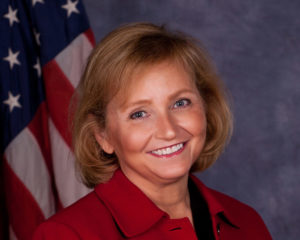
Caryn Tyson for Kansas Senate
(PARKER, KS) – Caryn Tyson, Kansas Senator, has filed for re-election and released the following statement:
“I am greatly encouraged by the very positive response I have received encouraging me to run for re-election. With increasing threats of massive tax increases and threats on our personal freedoms, my experience and problem solving skills in technology, business, agriculture, and in the legislature is needed in Topeka now more than ever.”
Caryn is a senator of the people – someone who will truly listen, someone who represents their values and someone who has the real-world experience necessary to get the job done.
Tyson said, “I am not a career politician. They’re the problem. Politicians pretend to be something they’re not. Leaders have a record that demonstrates who they are. I am a leader with proven results who shares your Kansas values.”
Caryn Tyson has math and computer science degrees from Kansas State and an engineering management degree from KU. After graduating K-State she began working in the Information Technology industry and continued working in this field for more than 25 years. Caryn’s work included space shuttle support for NASA where she received awards for achievement and teamwork.
Caryn is serving her second term in the Kansas Senate. She served one term in the Kansas House and is presently the Chair of the Tax Committee, one of most important committees in the Kansas Senate. As one of the leading freedom fighters in the Senate, Tyson, works diligently for smaller, smarter government.
Caryn and her husband, Tim – both fifth generation Kansans – own and operate Tyson Ranch in Linn County, established in 1871 by Tim’s great-great grandfather.
Kansas is on target with revised estimates; down 51.4% compared to last April
TOPEKA – As predicted, the State of Kansas saw a decrease in total tax collections when compared to April of Fiscal Year 2019. These reductions are largely due to announced tax date extensions, which gave relief to Kansans while moving collections into the Fiscal Year 2021.
On April 20, the Consensus Revenue Estimating Group, comprised of the Department of Revenue, Division of Budget, Kansas Legislative Research Department, and economists from the University of Kansas, Kansas State University, and Wichita State University, met to review the fall estimates and make revisions. These revisions take into consideration the changes in tax deadlines, consumer purchasing behaviors, and employer withholdings.
The state’s total tax collections for April were $578.1 million. Compared to April last fiscal year that is down $610.7 million or 51.4%. However, the state is in line with the revised estimates as those collections are 0.10% or $360,655 more than the estimate.
Individual income tax collections were $282.5 million; $1.2 million or 0.4% more than the new estimate. Corporate income tax collections were $37.8 million; 2.3% or $888,372 below the estimate.
Retail sales tax collections were $184.1 million; $2.3 million or 1.2% below the estimate. Compensating use tax collections were 2.4% higher than estimated with $41.5 million collected.
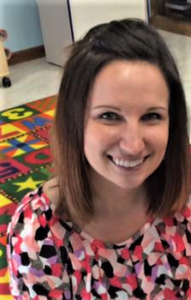
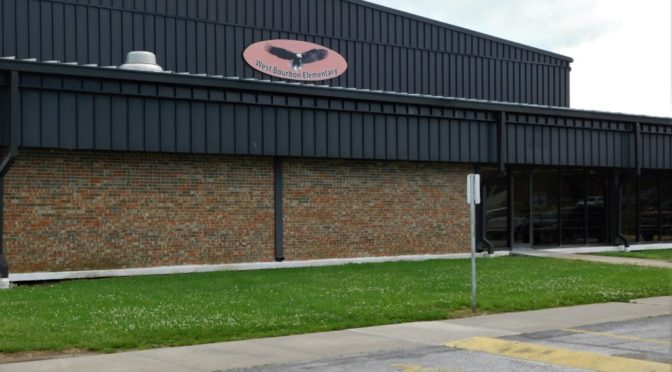
Haley Troutman, 27, is the new kindergarten teacher at West Bourbon Elementary school in Uniontown for 2020-2021.
She has two years of experience teaching at Precious Lambs Preschool and two years teaching at Eugene Ware Elementary School in Fort Scott in Grades 3 and 4.
Troutman completed a Bachelor of Science in Psychology from KSU in 2014, then took a position with Precious Lambs Preschool as their director/lead teacher.
“To gain more experience in childhood behaviors, I worked for a year at SEK Mental Health as a children’s case manager,” she said.
“In 2018, I began Kansas State University’s Master of Arts in Teaching Program (MAT program). I have spent the last two years as a 3rd and 4th-grade teacher at Eugene Ware Elementary. It has been a wonderful journey, but I am beyond excited to settle in my hometown.”
Troutman’s hometown is Uniontown, Kansas.
“I am so excited to be an Eagle again,” she said. “The staff has been so welcoming and wonderful to me already.”
She is married to Stuart and has three children, Molly (age 8), Sadie (age 5), Jett (age 2).
What is the best part of teaching for you?
“I love building relationships with students and their families. It is also rewarding to see the gains that children make throughout the course of a school year, both socially and academically.”
What are the greatest challenges?
“I would say, ensuring that every student is challenged at his/her academic level while meeting the needs of the whole group. I love the challenge of differentiation. Additionally, being a responsive teacher can be challenging; being able to notice what is working and change what isn’t.”
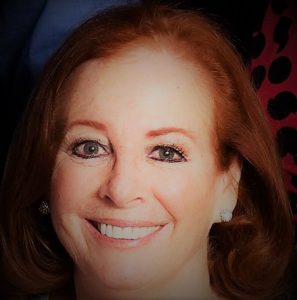
When I read that 10,000 New York Covid-19 victims had died, I could not stop thinking about who logs the names of the deceased and tries to find their relatives. About how long the bodies could be stored in semi-truck freezer vaults. About what kind of burial they would receive. To think that this was playing out 1200 miles from where we live in the Midwest seemed unfathomable. A little research led me to Hart Island, the largest municipal cemetery in the United States and burial ground for over one-million deceased.
Since New York law does not allow for the cremation of unclaimed human remains, the mass-grave site near the Bronx is where “indigent,” Coronavirus New Yorkers (who were not claimed from a morgue within 15 days of their death) are now being buried. City officials hope that when this virus ends, families will retrieve their bodies.
Fresh trenches for the deceased are dug with backhoes in a large pit holding 150 pine boxes that are stacked three-high in two long rows. Hazmat-suited workers lift coffins, some with a name and others with “unknown” written in permanent marker and a carved grave number on the lid.
After April 3rd, paid landscaping contractors buried the bodies. For years before then, jail inmates had the unenviable job. What I found most inspiring was that these inmates, themselves knowing the stigma of being “indigents,” had found ways to honor the dead when they asked correction officers to switch the portable speaker from drum and bass to Mozart.
According to the “Washington Post,” Saxon Palmer, a former inmate who spent four months at the end of 2019 burying bodies on Hart Island, shared how he and his fellow grave diggers dignified the bodies they were burying. “As they moved the coffins out of the coroner’s truck, they’d say ‘rest in peace’ or draw a cross on the pine box, or say goodbye. We’d say, ‘Mr. Rothman, this is going to be your last trip here, we’re going to make it easy for you, nice and slow,’” Palmer said. “We just had a conversation with the coffins in a kind of gentle way.”
I admit, up to that point, I had been rankled that several articles used the word “indigent” to describe the dead, knowing that in God’s kingdom, there is no such thing. No one deserves that label. But then I thought, maybe that’s why the inmates showed such compassion. They knew, first-hand, what it was like to be rejected. They knew, first-hand, what it was like to be treated with no dignity. Perhaps some of them even knew what it was like to be innocent yet be victimized by things out of their control. For some of the deceased, it might have been the first time they had been shown that kind of respect.
So, what do we take from this? We need to see others as God does, He who has “crowned us with glory and honor” (Psalm 8:5), in spite of how we all are sinners and fall short of His glory. (Ro. 3:23) If He can dignify us (yes, you and me), the undignified, maybe it’s time we learn from the “indigent” inmates. Saxon Palmer gave us a great place to start. Maybe we just need to “make it easy” for others less fortunate than us by striking up a conversation “in a kind of gentle way.”
Before it’s too late.
Fort Scott American Legion Post 25 is recruiting baseball players for the 2020 summer season. Male students from Fort Scott High School or Fort Scott Christian Heights who are between the ages of 13-19 before January 1 are eligible to play Legion baseball. For more information contact Bryan Smith at [email protected] or at 360-720-1569.
Click below:

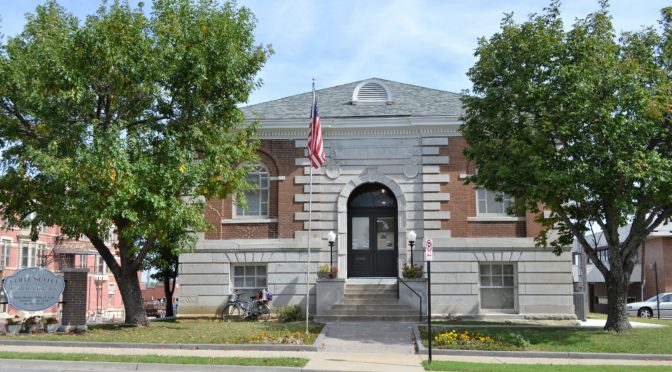
Message Fort Scott Public Library through Facebook or email Miss Val at [email protected] before the start (10 am Tuesday) of storytime, and they will send you the link. The same link will be used for all future Zoom storytimes.
AD ASTRA: A PLAN TO REOPEN KANSAS | APRIL 30, 2020 PHASE OUT
TRAVEL
Unrestricted.
GATHERINGS
Maintain social distance where applicable.
INDIVIDUALS
Adhere to personal hygiene guidelines.
Remain home if you feel sick.
EMPLOYERS
Follow any additional guidance for businesses and employees that is
released.
BEGINS NO EARLIER THAN JUNE 15, 2020
At a date determined by the Governor based on the overall progress of the State on outlined health metrics.
The Governor will issue an Executive Order to move the State into this phase.
AD ASTRA: A PLAN TO REOPEN KANSAS | APRIL 30, 2020 PHASE OUT
AD ASTRA: A PLAN TO REOPEN KANSAS | APRIL 30, 2020 PHASE THREE
BUSINESS AND ACTIVITY RESTRICTIONS
All education, activities, venues and establishments
may operate pursuant to mass gathering guidelines.
PHASE THREE
TRAVEL
Nonessential travel may resume.
GATHERINGS
Mass gatherings of no more than 90 individuals allowed.
EMPLOYERS
On-site staffing is unrestricted.
INDIVIDUALS
Adhere to personal hygiene guidelines.
Remain home if you feel sick.
BEGINS NO EARLIER THAN JUNE 1, 2020
At a date determined by the Governor based on the overall progress of the State on outlined health metrics.
The Governor will issue an Executive Order to move the State into this phase.
AD ASTRA: A PLAN TO REOPEN KANSAS | APRIL 30, 2020 PHASE THREE