There will be a special meeting for the board of county commissioners on April 15, 2025 at 4:00 PM in the commission chambers.
Susan E. Walker
Bourbon County Clerk
There will be a special meeting for the board of county commissioners on April 15, 2025 at 4:00 PM in the commission chambers.
Susan E. Walker
Bourbon County Clerk
~ Governor Kelly sends letter to secretary of education requesting
restoration of $22.6 million in funding for Kansas students and educators ~
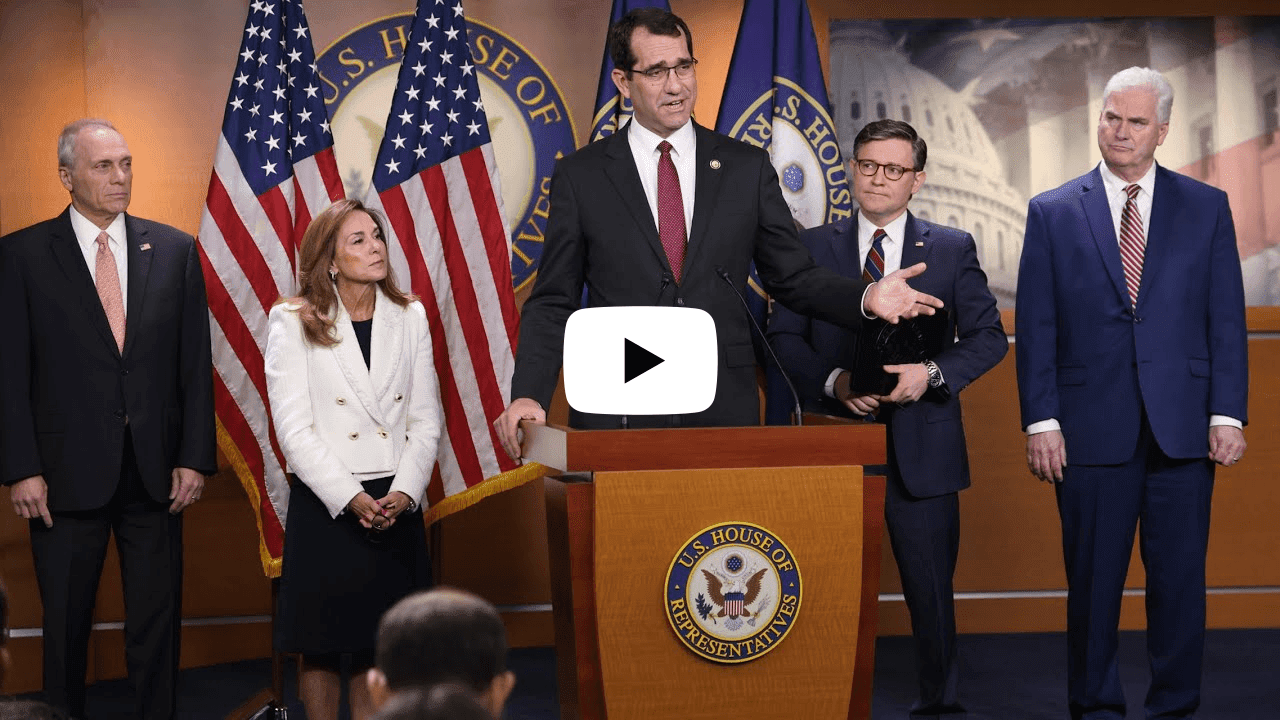
TOPEKA— Governor Laura Kelly announced Tuesday she has sent a letter to United States Secretary of Education Linda McMahon, requesting reinstatement of $22.6 million in federal pandemic relief funds. The United States Department of Education announced in late March that the federal government was recouping nearly $3 billion in pandemic relief funds from states. Many states, including Kansas, had already obligated these funds for programs and services benefiting students and educators.
“Abruptly stripping this funding is a disservice to the Kansas students and teachers who rely on it to excel in the classroom,” Governor Laura Kelly said. “This funding is critical for our schools to continue setting Kansas children up for a strong start to life. I urge the Trump administration to reinstate this funding to ensure our students can continue to access these key resources they need to succeed.”
In Kansas, these funds have been critical for supporting student learning recovery and ensuring the education workforce is prepared to assist those students in their academic needs. Funds have been used to retrain teachers in the science of reading and other evidence-based interventions to support student learning, career and postsecondary exploration experiences for students, and to lower start-up costs for child care providers.
On April 3, 2025, the Kansas State Department of Education (KSDE) requested the Trump administration restore Kansas’ funding and allow for KSDE to continue using these funds toward its intended purposes. That request continues to be under consideration by the secretary of education.
In October 2024, Governor Kelly announced the state would cover the cost of licensure, fingerprinting, and background check fees for early childhood educators using these federal education funds. The Kelly administration began waiving these fees using federal and state funds in 2021.
Since 2021, these efforts have saved child care providers $3.34 million in fees and covered application costs of over 15,500 providers and background checks for over 39,400 providers. These fees will be reinstated until the Trump administration restores Kansas’ funding allocation.
Governor Kelly’s full letter to Secretary McMahon can be found here.
###
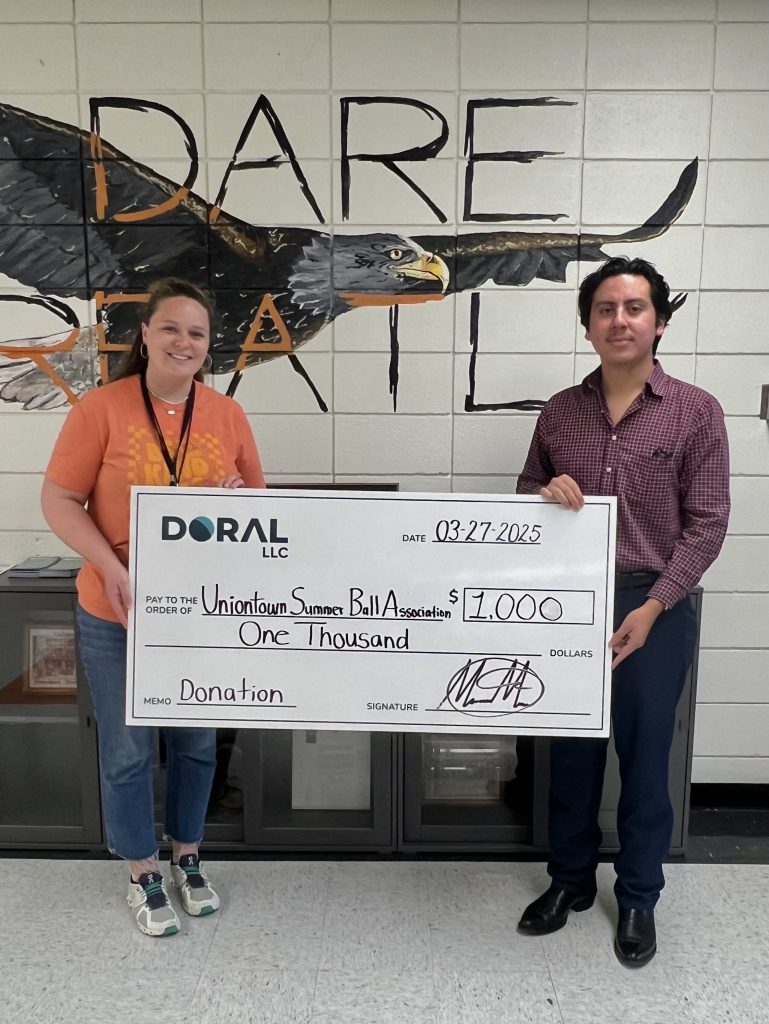
 Tennyson Creek Solar donated to Uniontown Ball Association to support youth development and remains committed to local education through SunPowered Student Challenge.
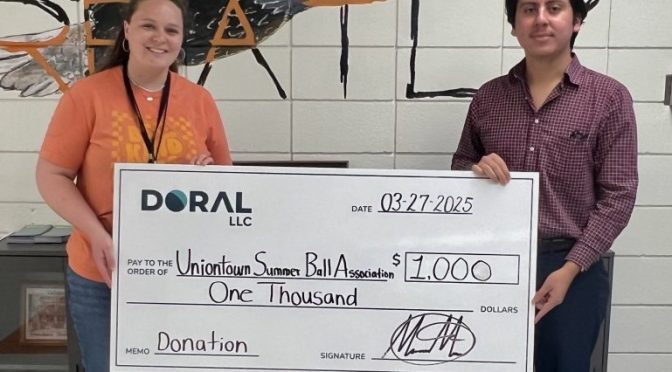
Tennyson Creek Solar, a project by Doral Renewables LLC, today announced a donation of $1,000 to the Uniontown Summer Ball Association as part of their commitment to improving the communities they operate in and to promote inclusivity. The donation will help provide participation for those in need in the community.
“Our aim is to foster a love of the game of baseball as well as provide an inclusive environment where youth can go to feel part of a team and develop their confidence and interpersonal skills,” said Jacy Walker, with the Uniontown Summer Ball Association.
The Uniontown Summer Ball Association is a community organization based in Uniontown, Kansas, dedicated to providing youth baseball, softball, and T-ball programs during the summer months. They offer opportunities for children to engage in team sports, develop their skills, and enjoy recreational activities.
In addition to this recent donation, students sponsored by Tennyson Creek Solar recently participated in the SunPowered Student Challenge, where students across Kansas came together for an exciting event focused on the future of solar energy. Through hands-on activities, creative projects, and innovative presentations, participants explored how solar power can shape a more sustainable world.
The Uniontown Eagles presented their project and competed in a variety of technical and social competitions to test their knowledge and problem-solving related to the application of solar in different contexts. In the end, the Eagles were able to win the Curb Appeal Award and take home fifth in the overall competition. This was their first year of competition and the students report excitement and lofty goals for competing next year. Mr. Vance Eden, USD 235 Superintendent shared, “I’m really proud of our team. We were probably the youngest and least experienced group there, but the kids made up for it in effort and passion. I look forward to seeing what they accomplish in the future.”
“Congratulations to the Uniontown Eagles for their involvement in the SunPowered Challenge,” said Cliff Williams, Vice President of Development at Doral Renewables. “We are honored to have been a part of the next generation learning more about the solar industry and the future of energy.”
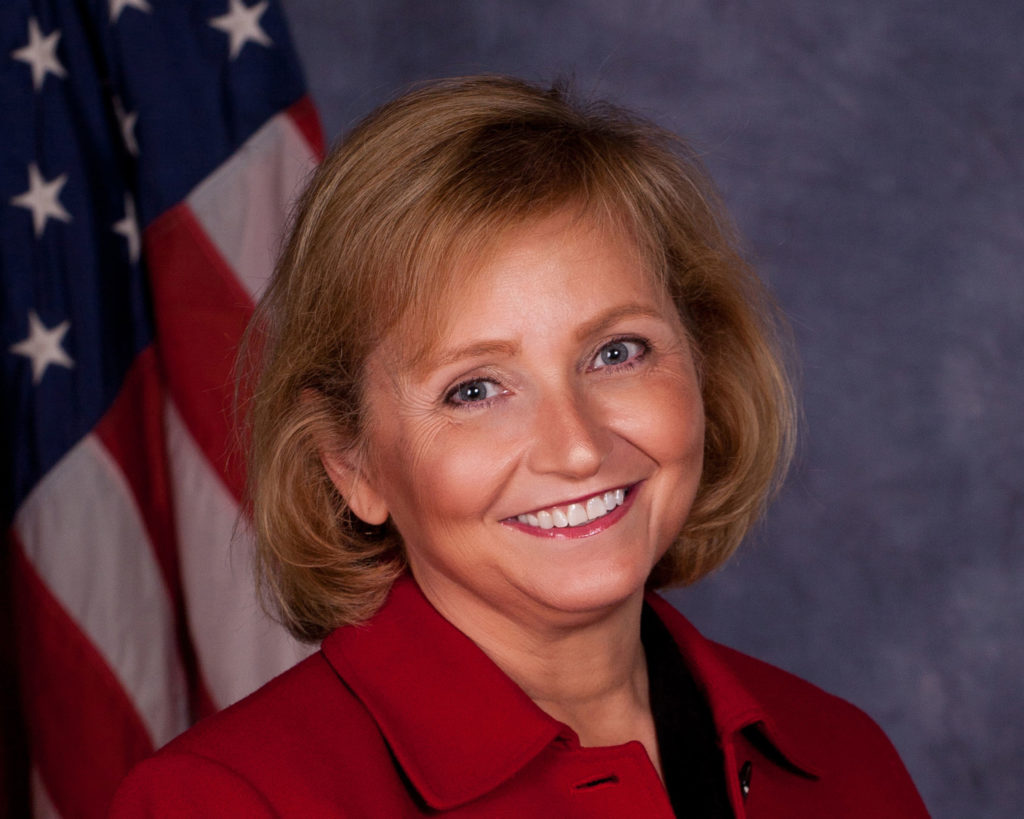
The individuals in the Uniontown ball donation are photo are as follows from left to right:
Jacy Walker and Marlon Merida, representing Tennyson Creek Solar
Bourbon County Courthouse
210 S. National Ave
Fort Scott, KS 66701
Phone: 620-223-3800
Fax: 620-223-5832
Bourbon County, Kansas
Brandon Whisenhunt, Chairman
1st District Commissioner
David Beerbower, Vice-Chairman
2nd District Commissioner
Vacant
3rd District Commissioner
Bourbon County Commission Agenda
Bourbon County Commission Room 210 S National Ave.
April 14, 2025, 5:30 PM
I. Call Meeting to Order
a. Roll Call
b. Pledge of Allegiance
c. Prayer – David Beerbower
II. Approval of Agenda
III. Approval of Minutes from 03.31.25
IV. Consent Agenda
a. Approval of 04.11.25 Accounts Payable Totaling $308,360.48
b. February Financials
c. Tax Roll Corrections
V. SEK Health Department 2026 Budget Request – Rebecca Johnson
VI. Old Business
a. Hay Bid Letter – Pat Murphy
b. Letters of Interest Zoning Committee
VII. Public Comments for Items Not on The Agenda
VIII. New Business
a. Letter of Support for SEK-CAP
b. Department Updates
i. Eric Bailey
c. Executive Session K.S.A. 75-4319 (b)(1) M. Hoyt (15 minutes)
d. Executive Session K.S.A. 75-4319 (b)(1) Job Performance
e. Executive Session K.S.A. 75-4319 (b)(2) Ongoing Litigation
f. Commissioner Comments
IX. Adjournment
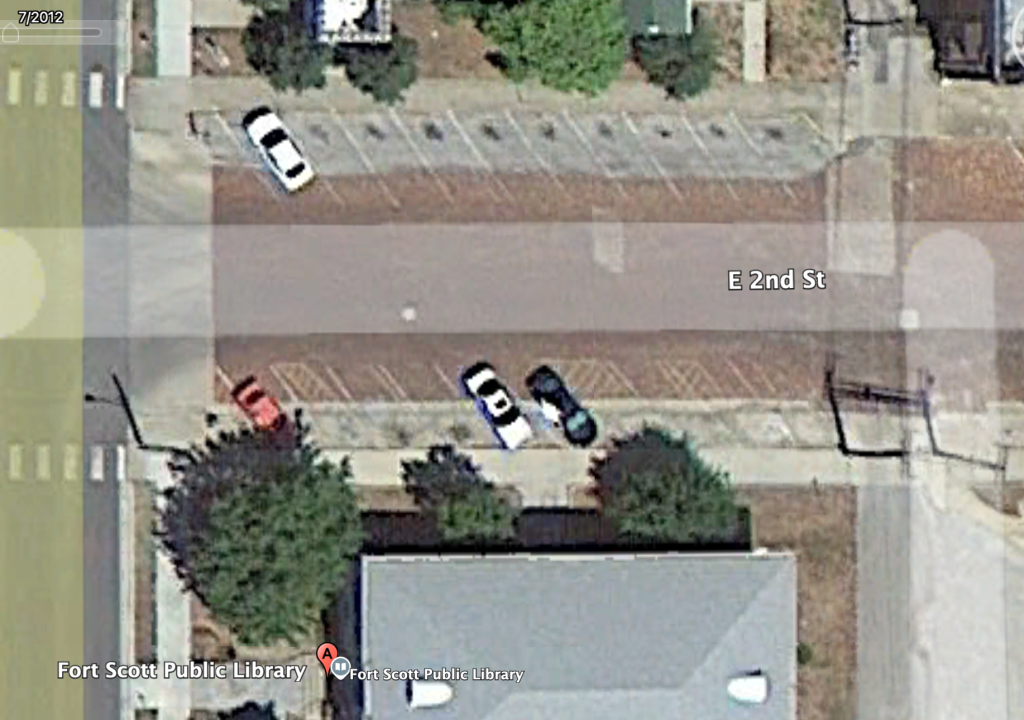
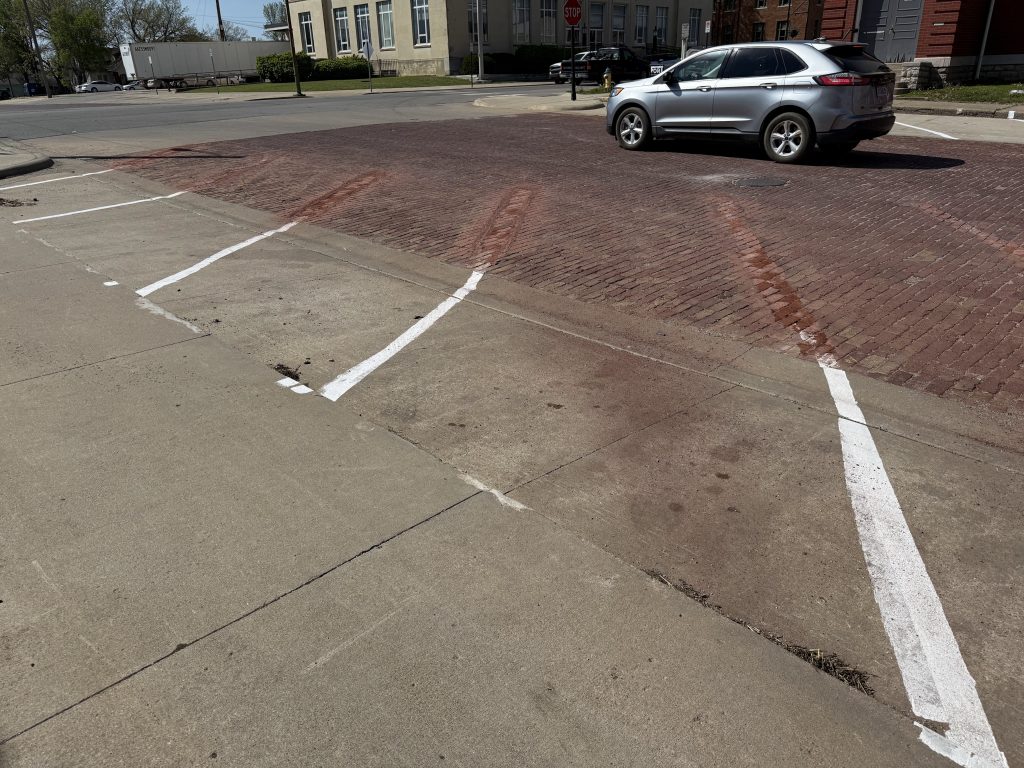
Last week, Christie Thomas posted an image to Facebook taken from the Post Office building of the lines being repainted at the library. The lines weren’t parallel and changed angles when they got off the concrete onto the brick. The photo caused quite a stir on Facebook, with people laughing at the inability of the workers to paint straight lines.
Here are a few observations: As far as I know, those parking lines have been like that for years, owing to how things evolve when redoing curbs and replacing sections of the parking area.
Let’s go back to 2012, before the parking area and curbs were reworked on both sides of the street. It is a little harder to see on the library side of the street, but if you notice the lines for parking in front of the old Episcopal church, they look like what you’d expect.
Now, let’s jump forward to 2022. There have been some major improvements to the curbs on both sides of the streets, and the parking area between the sidewalk and the brick looks like it has been updated from asphalt to concrete.
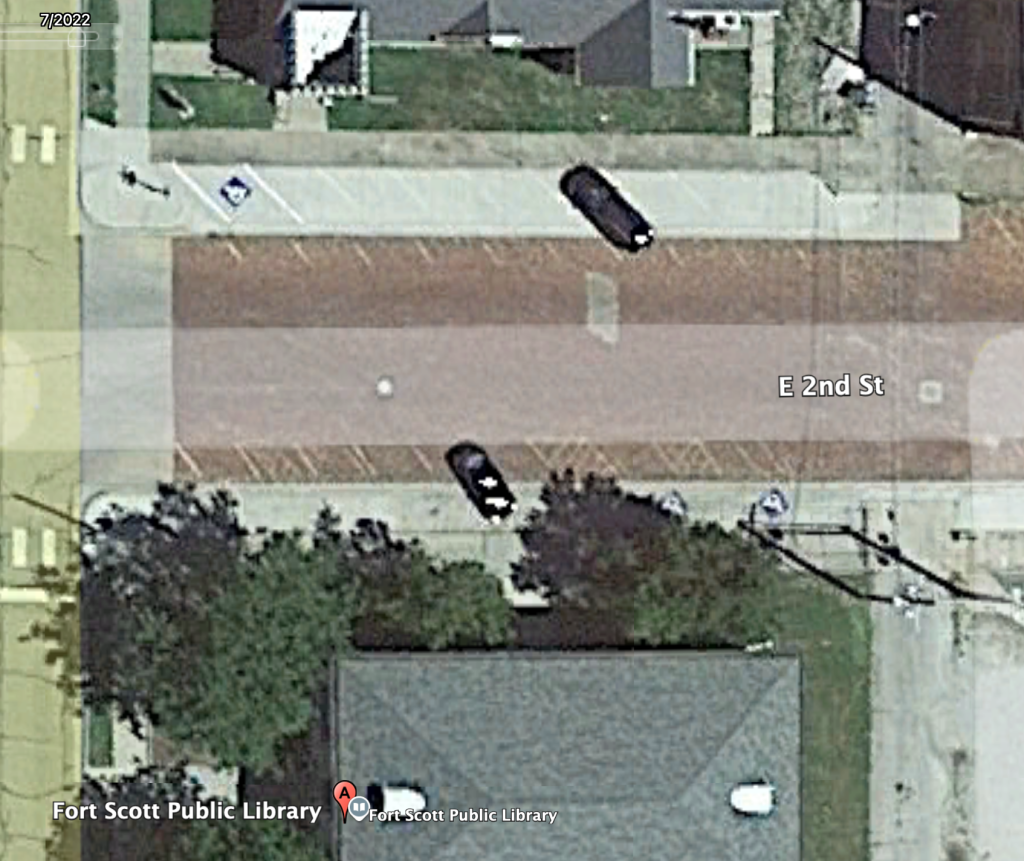
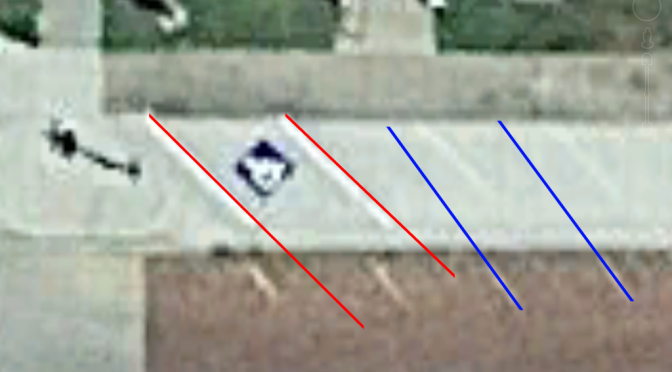
Once again, the angle is harder to see on the library side of the street, but on the North side, you can see that the lines on the concrete no longer line up with the old lines on the bricks. Is this because the people who painted them can’t match up lines? Well one could make that assumption, but if you look at the angle of the curb, the lines on the new concrete are designed to line up with the curb which is angled in a way to require an easier to navigate 45 degree turn (red lines) to park instead of the previous 60 degree turn (blue lines).
 With the changes to the parking spaces, you can still see the white lines from the old parking spaces. Would it have looked nicer and neater if the old lines were somehow removed from the brick? Probably. Should the city have removed the old lines from the bricks? Probably not.
There are thousands of things the city could be working on at any given time, and not everything has the same value and priority. If the old lines didn’t cause any confusion or safety issues for people parking, then it makes perfect sense to leave it as is and move on to other higher-priority work that represents a better investment of taxpayer dollars.
Each day, hundreds of decisions are made about how much time and work should be invested in a particular aspect of a project before it becomes counterproductive in terms of diminishing returns. Those vestigal lines on the bricks are probably a conscious decision in how your tax dollars were spent that day. Yes, they could have spent extra hours removing the unnecessary faded lines, but someone decided to invest somewhere else instead. If you’ve ever parked in one of these spaces without any trouble, it indicates that their decision was sound.
The lines on the brick may look a bit messy as the paint fades over the years, but they are by-products of healthy evolution as the city changes and adapts and all the individuals working for the city do their best to make good decisions and optimal trade-offs on our behalf.
What about the lines on the library side of the street in Christie Thomas’ photos? For a number of historical reasons, many of which are likely lost to time, the lines on the library side evolved slightly differently. Where the North side of the street left the disconnected old lines on the bricks to fade away, the lines in front of the library were different. When the newly installed concrete was painted sometime between 2017 and 2020, the new line sections appear to have been connected to the old lines on the brick. They weren’t completely straight, but they were perfectly functional and probably represented someone’s best decision of how to get the parking spaces back up and usable as quickly as possible. The fact that it has been working just fine for most people for quite a few years now shows that the decision wasn’t unreasonable. Sure, it might have looked better to remove all the old lines somehow and start over. Maybe you personally would even prefer that approach, but the extra time spent on that would have come at the expense of something else that was very likely more important.
So, now fast forward to last week. Imagine you get sent out to apply a new coat of paint to the parking lines in front of the library. The existing lines are clearly not perfect, but they have been working just fine for library patrons for the past 5 or 8 years. What would be the best use of taxpayers’ money? Should you try to redo each parking slot by stripping off all the paint and redoing them? Or should you just paint what is there and has been working for more than half a decade?
I want to submit that repainting what has been working was not an unreasonable decision. The city came back later and, likely due to the tempest on Facebook, removed the lines that were on the older part on the bricks.
The purpose of this post is to point out three things. First, the evolution of the things we easily take for granted in our town and county often doesn’t happen in a nice tidy sequence. Over the years things grow in different ways and what might appear baffling can very easily be the result of a series of optimal decisions about how to prioritize the many competing priorities and invest enough time to achieve the goal while trying not to let a job expand in a way that takes resources away from other more pressing needs.
Second, I want to remind everyone that there are real people behind all the work that gets done every day in our community. Even if they are making completely reasonable or even fully optimal choices, it may not look that way without knowing more of the details and history. Even if they make a decision that turns out to need a change, they are still people with real feelings and are likely making the best decisions with the current information and situation they find themselves in.
I’m talking to myself here as much as anyone. In the past, I’ve found it amusing that when severe weather warnings on Facebook end up getting tagged with “violence.” So when I saw someone had tagged a photograph of parking lines being painted as “harassment,” I commented on the fact with a smiley face. After seeing some of the other things people were saying, I regretted and reverted my comment. I apologize to anyone whose feelings I might have hurt with that.
Finally, I want to say a word to the people who keep our county and city operating by doing everything from fixing fences taken out by drunk drivers to keeping the parking lines visible to keeping the accounts balanced to doing the safety patrols at the lake. Thank you. I’m sure anything someone thinks you could have done differently gets 100 times more attention than it should, and all your work that everyone depends on each day gets 100 times less thanks than you actually deserve.
Mark Shead
Note: FortScott.biz publishes opinion pieces with a variety of perspectives. If you would like to share your opinion, please send a letter to [email protected].
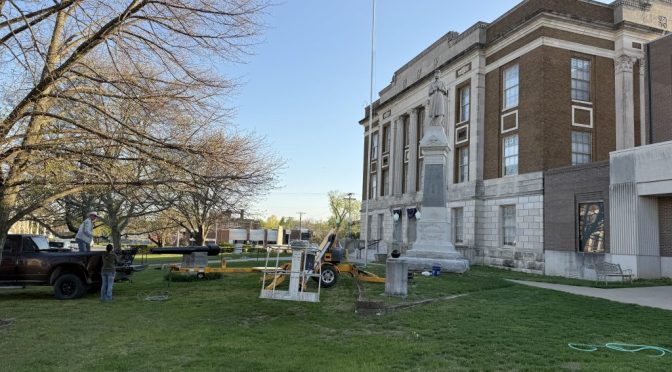
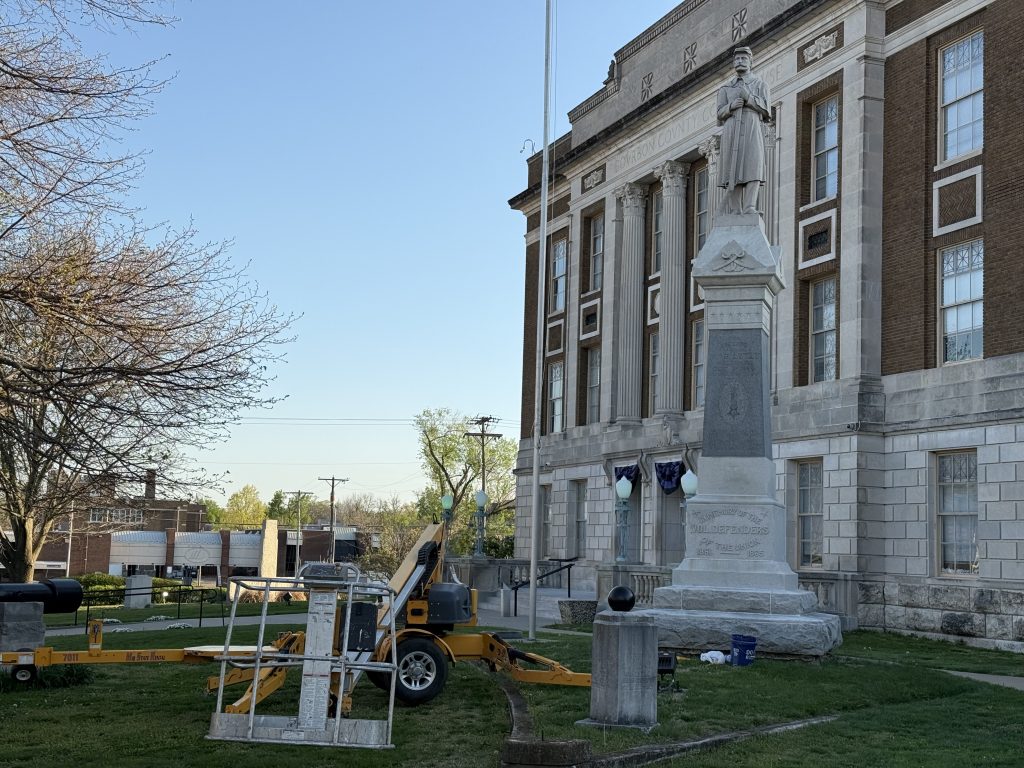
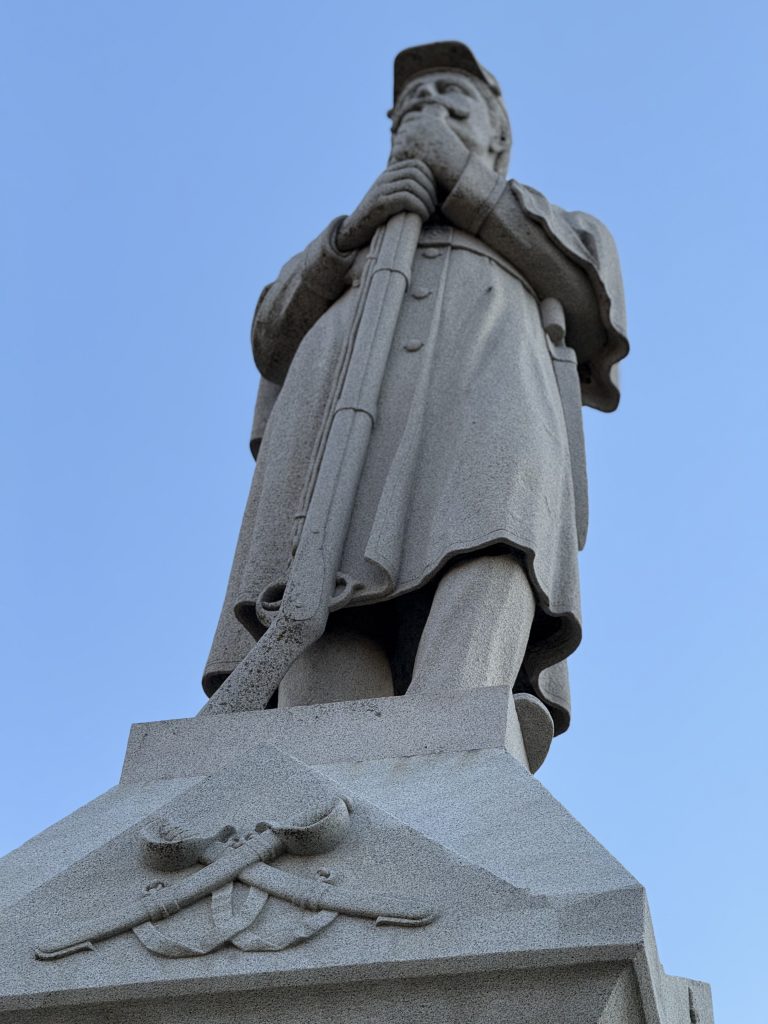
Next time you happen to be down by the courthouse, be sure to glance up at the Union Soldier Statue. You’ll find a cleaner version of the tribute to volunteer soldiers who fought in the Civil War than the last time you looked his way. Workers used a lift and pressure washer to give him a bath on Friday evening.

Keys to the Kingdom By Carolyn Tucker
Birdbrains Fly Smart
As I was driving to church one Sunday, I noticed a flock of migratory birds flying in a V formation. I was impressed with their precision and strength. Once again, nature reminded me that there’s a Creator God who instills instincts and intelligence into all His creatures. The brilliant brains of these migratory birds demonstrated impressive abilities in navigation, memory, and communication. So I don’t know how it got started that calling someone a “birdbrain” would mean the person lacked intelligence or made stupid decisions. Where I come from we’re more apt to call a silly person one of these colloquialisms: nincompoop, idiot, halfwit, moron, ignoramus, dimwit, nitwit, dum-dum, numbskull, knucklehead, lamebrain, dingbat, goofus, airhead, dipstick, ding-dong, goofball, ding-a-ling, or harebrain. I can just hear my dad using every one of these names.
I did some research on migratory birds and discovered comparative spiritual lessons. Here are nine interesting points: (1) When flying in a V formation, the birds save energy by drafting off each other while following the leader. [We need one another.] (2) In order to fly 1,000 miles, birds cannot fly alone. [Some jobs are too big to accomplish alone.] (3) Scientists have proven that all the birds contribute almost equally in the job of leading the flock. [Help your pastor share the load of the flock.] (4) Flying in a V formation reduces fatigue in the flock. [Flying by the seat of your pants is exhausting.]
(5) A large or strong bird will take the lead. [Church leaders must be strong in the Lord.] (6) If the leader becomes tired it will rotate back into formation and another bird will take the lead. [Do whatever you can to protect your pastor from burnout.] (7) When the flock changes direction, a new leader will take the helm. [Change is inevitable. Moses handed the Israelites over to Joshua so he could lead them into the Promised Land.] (8) A sick bird will drop out of formation and one other bird will follow it until it recovers or dies. [Keep tabs on one another and do what’s necessary.] (9) If a bird falls out of formation it will notice the extra resistance and immediately get back in line. [If you get discouraged, don’t stop attending church — it‘ll just make things worse.]
Let’s face the facts — people need people. We need one another. It’s a given that believers have God watching over us, Jesus interceding for us, and the Holy Spirit abiding in us. But God designed us to need and thrive on close relationships with fellow believers. Sometimes life is too hard or too fun to do it alone.
I love the incident in the Old Testament when the Amalekites attacked the Israelites: “Moses, Aaron, and Hur climbed to the top of a nearby hill. As long as Moses held up the staff in his hand, the Israelites had the advantage. But whenever he dropped his hand, the Amalekites gained the advantage. Moses’ arms soon became so tired he could no longer hold them up. So Aaron and Hur found a stone for him to sit on. Then they stood on each side of Moses, holding up his hands. So his hands held steady until sunset” (Exodus 17:10-12 NLT). As a result, the Israelites overwhelmed the Amalekites and won the victory. Moses was a strong leader, but he was human and when his strength gave out he needed two faithful men to stand on either side of him to hold up his arms. We are no different from Moses.
The Key: Even birdbrains know they aren’t supposed to fly alone.
|
|