Governor Laura Kelly orders flags to be flown at half-staff in honor of Victims of the Novel Coronavirus Pandemic
In accordance with Executive Order 20-30, and following the proclamation of President Donald J. Trump, Governor Laura Kelly has ordered flags throughout the State of Kansas to be flown at half-staff, from Friday, May 22, 2020, to sunset on Sunday, May 24, 2020 in honor of the Victims of the Novel Coronavirus Pandemic.
“The death toll due to coronavirus is devastating in Kansas and beyond,” Kelly said. “We all have an obligation to honor those lost to the virus, to include courageous frontline workers who literally gave their lives to help and protect others during this pandemic.”
To receive email alerts when the governor orders flags to half-staff, please visit:
The following statement is from the Office of the Governor:
Governor Kelly welcomes an honest conversation about the Kansas Emergency Management Act.
The Act has been in place for nearly 45 years and has served the state well for more common emergencies like fires, floods and tornadoes.
In fact, not since the Spanish Flu hit our state more than 100 years ago has any governor been forced to take the steps Governor Kelly has taken to protect the safety and health of all Kansans.
Ironically, KEMA was the modernization of several earlier emergency powers granted to the governor, by the Legislature, following the 1918 pandemic.
Unfortunately, this is not an honest conversation about reviewing and modernizing KEMA.
If it were, the Attorney General would not have released his legal opinion in the middle of the night right before the last day of the legislative session, and the Legislature would not be trying to cram multiple pieces of legislation – many of which have not been thoroughly vetted by the public – into what is traditionally a ceremonial end of the legislative session.
Governor Kelly welcomes the conversation about KEMA, but in a thoughtful manner that allows stakeholders like local government officials and emergency managers to weigh in on this important subject.
For her part, the Governor will bring the same bipartisan approach she has shown – which received praise yesterday from President Trump – to the conversation and to ultimately finding a non-political solution that works for all Kansans.
COVID-19 Update: Museum Re-Opening with Safety Protective Measures
The Gordon Parks Museum will re-open to the public with normal business hours.
Safety measures will be implemented for the safety of our visitors, students, community members, and employees effective Wednesday, May 27, 2020.
The following safety protective measures are as follows:
•Any visitor that has a fever or exhibits any signs of COVID-19, please do not enter the museum.
•At this time, the maximum amount of 15 visitors or less at a time will be allowed in the museum to practice safe social distancing under the covid.ks.gov. This may change according to each phase that is issued. Visitors will maintain six feet between patrons throughout the museum.
•Interactive touch-free exhibits and play areas are closed to help maintain best practices for health and safety.
•Hand sanitizer will be available
.•Staff will use PPE as deemed necessary and will continue to clean extensively and frequently in the high-touch areas within the museum.
Thank you for your continued support and patience during this time. Please feel free to contact us with any questions or concerns, 620-223-2700 ext. 5850 or email [email protected].
Fort Scott American Legion Thompson-Harkey Post 25 will host a Memorial Day Service on the Bourbon County Courthouse grounds at 10 AM, Monday May 25. The ceremony will last about 15 – 20 minutes and takes the place of the memorial service normally held at the Fort Scott National Cemetery.
You are cordially invited to attend this event honoring all of America’s Veterans. It will be an open-air ceremony and in keeping with government guidelines, use current social distancing recommendations of SIX FEET between nonfamily members.
Limited seating will be available for those in attendance with mobility issues.
Please don’t hesitate to contact me if you have any questions about the program.
KCC orders utilities to offer payment plans, waive late fees through 2020
TOPEKA – An order issued by the Kansas Corporation Commission this morning requires utilities under its jurisdiction to offer 12-month payment plans and waive late fees through the end of the year to help residential and small business customers avoid disconnection.
The Commission’s earlier order suspending disconnections is set to expire on May 31. Today’s order will help customers, struggling with the economic effects of COVID-19, pay off past due balances gradually while avoiding disconnection of service. Customers are also encouraged to apply for available utility assistance programs. Information is posted on the KCC website (https://kcc.ks.gov/consumer-information/utility-assistance-programs).
KCC staff filed a report with the Commission on May 6 recommending baseline customer protections prior to the end of the disconnect suspension order. Utilities had the opportunity to respond to the recommendations prior to today’s order. Several utilities have advised they plan to offer protections in excess of the minimums required.
The order states utilities may defer any extraordinary bad debt expense and lost fee revenue that arises from the required customer protections into a regulatory asset for accounting purposes only. Any recovery requests will be considered in a utility’s next rate case or rate recovery filing.
The Commission may extend the consumer protections outlined in today’s order if the COVID-19 pandemic stretches into 2021.
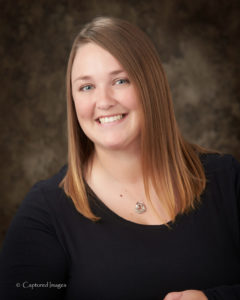
Reyna Valenzuela, 21, was hired as a Fort Scott High School English Teacher for 2020-21.
She graduated from Pittsburg High School in 2016 and from Pittsburg State University with a Bachelor’s Degree in English Education in May 2020 and will be starting a Master’s in English Literature in the fall.
“I worked at St. Mary’s Colgan as a YES Tutor for a year and a half, following that I worked for two years on campus as a writing center consultant,” she said. “I also did my internship through PSU at Northeast High School as well as completed my student teaching at Northeast.”
Valenzuela was born in Fort Hood, Texas and has lived in Arma, KS since she was three-years-old.
Her interests include reading, Greek Mythology, British Literature, watching YouTube, and Netflix, her cat, and hanging out with her family.
In addition, she loves softball, baseball, and football.
“So I look forward to cheering students on at their games in the future,” she said.
Becoming a teacher was a realization for Valenzuela.
” I wasn’t always sure what I wanted to do, I switched my dream career a lot when I was younger,” she said. “Eventually though, after watching my mom become a teacher and having an amazing AP Literature teacher during my senior year of high school, I realized that this was the field for me. I wanted to have the chance to make a difference in a student’s life as my mom, Tina Valenzuela, and my AP Literature teacher, Mrs. Johnson, did in mine. Because of this, I’ve worked hard through college to learn as much as I could so I could become a successful educator who makes a difference and helps her students in positive ways.”
“Seeing how much they both loved to teach and how they put everything they had into the classroom was incredibly inspiring and I don’t think I would have come this far without them,” she said.
The best part of teaching for her are the students, she said.
“Getting to know them, watching them grow, and succeed, they are the reason I want to teach so I guess it only makes sense they are the best part of teaching.”
Some of the challenges of teaching is continuing to learn and grow as a teacher “so that you are still providing students the most effective methods of learning is what I would consider one of the greatest challenges in teaching; because as humans we like routine, and so making sure that you’re constantly changing and evolving is something that can be a struggle, but it’s worth it, in the end, to watch students grow,” she said.
Did you find a rock at the park and don’t know what kind it is? What about fossils? If you would like to learn more about rocks, minerals and fossils, then dive into the geology project! Discover the types of minerals, rocks and fossils that can be found where you live. Learn about geological formations across the state and in other states.
There is 4-H Curriculum that can be purchased for anyone interested in the geology project. Here is a breakdown of what youth can learn at different levels:
Ages 7-8:
Learn how the earth was formed and its three main parts
Learn the difference between a rock and a fossil
Collect, clean, identify and label rocks, minerals and fossils found in Kansas
Learn the types and impacts of erosion
Ages 9-11:
Use different tests to identify minerals by hardness and color
Find out what rock types occur in Kansas
Learn how to identify fossils
Learn to display and evaluate geology exhibits
Ages 12-14:
Learn how mountains are formed
Discover the impact of glaciers
Learn to measure specific gravity
Read and use a topographic map
Ages 15 and Older:
Measure formation thickness
Test to determine chemical properties of minerals
Locate sites on a plat map
How to prepare for geology careers
In addition to the curriculum, youth are also offered the opportunity to attend project meetings held by volunteers. Each year, youth are able to demonstrate their hard work locally at the county fair and depending on age and placing, the Kansas State Fair.
The geology project is a great opportunity for youth to learn important life skills. For more information about this project, contact Jennifer K. Terrell, 4-H Youth Development for K-State Research and Extension – Southwind District at [email protected] or 620-244-3826.