Applications for New Commodities Accepted Beginning July 13

Additional Commodities Eligible for Coronavirus Food Assistance Program

Applications for New Commodities Accepted Beginning July 13

WASHINGTON, July 9, 2020 – Today, U.S. Secretary of Agriculture Sonny Perdue announced an initial list of additional commodities that have been added to the Coronavirus Food Assistance Program (CFAP), and that the U.S. Department of Agriculture (USDA) made other adjustments to the program based on comments received from agricultural producers and organizations and review of market data. Producers will be able to submit applications that include these commodities on Monday, July 13, 2020.  USDA’s Farm Service Agency (FSA) is accepting through Aug. 28, 2020, applications for CFAP, which helps offset price declines and additional marketing costs because of the coronavirus pandemic. USDA expects additional eligible commodities to be announced in the coming weeks.


During this time of national crisis, President Trump and USDA have stood with our farmers, ranchers, and all citizens to make sure they are taken care of,” said Secretary Perdue. “When we announced this program earlier this year, we asked for public input and received a good response. After reviewing the comments received and analyzing our USDA Market News data, we are adding new commodities, as well as making updates to the program for existing eligible commodities. This is an example of government working for the people – we asked for input and we updated the program based on the comments we received.”

USDA collected comments and supporting data for consideration of additional commodities through June 22, 2020.

Changes to CFAP include:

  • Adding the following commodities: alfalfa sprouts, anise, arugula, basil, bean sprouts, beets, blackberries, Brussels sprouts, celeriac (celery root), chives, cilantro, coconuts, collard greens, dandelion greens, greens (others not listed separately), guava, kale greens, lettuce – including Boston, green leaf, Lolla Rossa, oak leaf green, oak leaf red and red leaf – marjoram, mint, mustard, okra, oregano, parsnips, passion fruit, peas (green), pineapple, pistachios, radicchio, rosemary, sage, savory, sorrel, fresh sugarcane, Swiss chard, thyme and turnip top greens.
  • Expanding for seven currently eligible commodities – apples, blueberries, garlic, potatoes, raspberries, tangerines and taro – CARES Act funding for sales losses because USDA found these commodities had a 5 percent or greater price decline between mid-January and mid-April as a result of the COVID-19 pandemic. Originally, these commodities were only eligible for marketing adjustments.
  • Determining that peaches and rhubarb no longer qualify for payment under the CARES Act sales loss category.
  • Correcting payment rates for apples, artichokes, asparagus, blueberries, cantaloupes, cucumbers, garlic, kiwifruit, mushrooms, papaya, peaches, potatoes, raspberries, rhubarb, tangerines and taro.

Additional details can be found in the Federal Register in the Notice of Funding Availability (NOFA) and Final Rule Correction and at www.farmers.gov/cfap.

Producers have several options for applying to the CFAP program:

  1. Using an online portal, accessible at farmers.gov/cfap, allows producers with secure USDA login credentials—known as eAuthentication—to certify eligible commodities online, digitally sign applications and submit directly to the local USDA Service Center.  New commodities will be available in the system on July 13, 2020.
  2. Completing the application form using our CFAP Application Generator and Payment Calculator found at farmers.gov/cfap. This Excel workbook allows customers to input information specific to their operation to determine estimated payments and populate the application form, which can be printed, then signed and submitted to their local USDA Service Center.  An updated version with the new commodities will be available on the website on July 13, 2020.
  3. Downloading the AD-3114 application form from farmers.gov/cfap and manually completing the form to submit to the local USDA Service Center by mail, electronically or by hand delivery to an office drop box. In some limited cases, the office may be open for in-person business by appointment. Visit farmers.gov/coronavirus/service-center-status to check the status of your local office.


USDA Service Centers can also work with producers to complete and securely transmit digitally signed applications through two commercially available tools: Box and OneSpan. Producers who are interested in digitally signing their applications should notify their local service centers when calling to discuss the CFAP application process. You can learn more about these solutions at farmers.gov/mydocs.


Getting Help from FSA

New customers seeking one-on-one support with the CFAP application process can call 877-508-8364 to speak directly with a USDA employee ready to offer general assistance. This is a recommended first step before a producer engages the team at the FSA county office at their local USDA Service Center.


All other eligibility forms, such as those related to adjusted gross income and payment information, can be downloaded from farmers.gov/cfap. For existing FSA customers, these documents are likely already on file.


All USDA Service Centers are open for business, including some that are open to visitors to conduct business in person by appointment only. All Service Center visitors wishing to conduct business with FSA, Natural Resources Conservation Service or any other Service Center agency should call ahead and schedule an appointment. Service Centers that are open for appointments will pre-screen visitors based on health concerns or recent travel, and visitors must adhere to social distancing guidelines. Visitors may also be required to wear a face covering during their appointment. Field work will continue with appropriate social distancing. Our program delivery staff will be in the office, and they will be working with our producers in office, by phone and using online tools. More information can be found at farmers.gov/coronavirus.  


#

USDA is an equal opportunity provider, employer, and lender.
Payments For Dairy Producers

May Margin Triggers Dairy Margin Coverage Program Payment

Income-over-feed margin for May triggers third payment for 2020


WASHINGTON, July 7, 2020 – The U.S. Department of Agriculture’s Farm Service Agency (FSA) today announced that the May 2020 income over feed cost margin was $5.37 per hundredweight (cwt.), triggering the third payment of 2020 for dairy producers who purchased the appropriate level of coverage under the Dairy Margin Coverage (DMC) program.

This payment comes at a critical time for many dairy producers,” said FSA Administrator Richard Fordyce. “DMC has proved to be a worthwhile risk management tool, providing dairy producers with much- needed financial support when markets are most volatile.”

To date, FSA has issued more than $176 million in program benefits to dairy producers who purchased DMC coverage for 2020. 

Authorized by the 2018 Farm Bill, DMC is a voluntary risk management program that offers protection to dairy producers when the difference between the all-milk price and the average feed price (the margin) falls below a certain dollar amount selected by the producer. Over 13,000 operations enrolled in the program for the 2020 calendar year.

Although DMC enrollment for 2020 coverage has closed, signup for 2021 coverage will begin October 13 and will run through December 11, 2020.

All USDA Service Centers are open for business, including some that are open to visitors to conduct business in person by appointment only. All Service Center visitors wishing to conduct business with the FSA, Natural Resources Conservation Service, or any other Service Center agency should call ahead and schedule an appointment. Service Centers that are open for appointments will pre-screen visitors based on health concerns or recent travel and visitors must adhere to social distancing guidelines. Visitors may also be required to wear a face covering during their appointment. Field work will continue with appropriate social distancing. Our program delivery staff will be in the office, and they will be working with our producers in office, by phone, and using online tools. More information can be found at farmers.gov/coronavirus.  

For more information, visit farmers.gov DMC webpage or contact your local USDA Service Center. To locate your local FSA office, visit farmers.gov/service-center-locator.


#

USDA is an equal opportunity provider, employer and lender.

Housing For COVID 19 Cases

Update on Non-Congregate Housing for COVID-19 Response

Facilities also used for Kansans who work in congregate settings


The Kansas Department for Children and Families continues to operate non-congregate housing facilities across the state to host individuals currently working in, exposed to, or living in congregate settings, COVID-19 positive, exposed or high-risk individuals. DCF is currently managing sites in Dodge City, Emporia, Gardner, Leavenworth, Liberal, and Manhattan. The agency previously managed sites in Garden City and Junction City. Those facilities have since been closed.


Shelters are established to prevent the spread of the virus and maintain operations within critical and essential businesses or services. A request for non-congregate sheltering may be made to the state by a county emergency manager. In addition, the local or state health officer may make a recommendation for a non-congregate shelter if an identified need exists. The Kansas Division of Emergency Management in cooperation with counties, the Kansas Department of Health and Environment and Department for Children and Families contracts with local hotels to establish the sites. Contracts to date have been for entire hotel facilities with no other guests present.


Not all residents are in the facility due to illness. Some may live in congregate settings, or work in congregate settings or at essential locations and be concerned about returning home due to exposure risk for COVID-19.


Examples include:


  • Individuals unable to quarantine at home due to a high-risk person at home
  • Individuals who work in a congregate setting
  • Immunocompromised individuals
  • Adults over 65 years of age
  • Comorbidities
  • Chronic lung disease
  • Moderate to severe asthma
  • Serious heart conditions
  • Cancer treatments
  • Unable to financially cover independent quarantine
  • Or other health issues


Individuals are not required to stay in the facility, however if they leave, the county health officer is notified.


The Department for Children and Families manages the day-to-day operations of each site. Responsibilities include making sure residents receive meals and laundry service, as well as ensuring the facility is cleaned daily and receives a deep cleaning before returning the hotel to normal operations.


The first non-congregate sites were opened in April and sites were added as counties asked for support. Each site will remain open if there is a continued need in the community. Additional sites also may be opened as counties address the continued spread of COVID-19.


Due to HIPAA laws, the exact locations of each site are not made public to protect the privacy of Kansas residents. There is currently a total of 43 people staying in non-congregate housing.

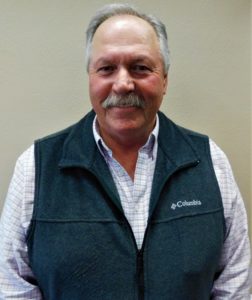
Jim Harris: Candidate For Bourbon County Commission

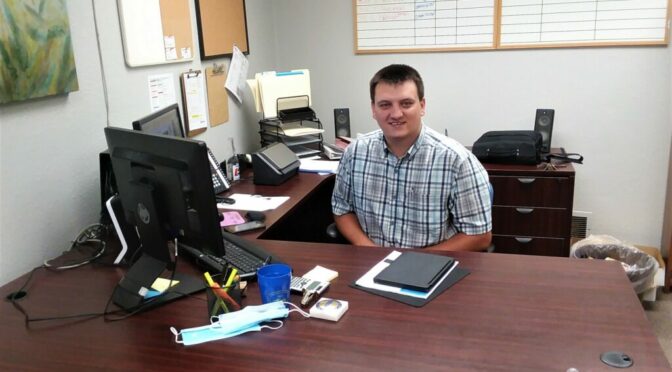
Jim Harris..

This is part of a series of features on the candidates running for offices in Bourbon County.  The Bourbon County Primary Election will be held, Tuesday, August 4, 2020.

Monday, July 20, is the candidate forum at Ellis Fine Arts Center, on the campus of Fort Scott Community College, 2108 S. Horton.  Doors open at 5:30  p.m. for a meet and greet with candidates. The forum starts at 6 p.m. in the order of federal, state, then local  candidates.

Jim Harris, 65, is a candidate for Bourbon County Commissioner District 2.

He has eighteen years of public leadership experience, he said.

“For seven years, I served for the City of Fort Scott as the codes director, planning and zoning administrator and was in charge of special public works projects for the city,” Harris said.

More recently he has worked for Bourbon County.

“I have served for eleven years as the Bourbon County Public Works Director,” he said. ” Over my eleven years with the county, my responsibilities have included emergency preparedness director, sanitation inspector, road and bridge and landfill director, implementing a 10-year equipment replacement program, and a 10-year road improvement program. I have experience in grant writing and grant administration.”

“Also, I have thirteen years of experience as a territory manager working with cities and counties and their budgets in the areas of equipment planning, equipment purchases, budgeting and financing,” Harris said.

What is your priority on day one, if elected?

“The greatest challenges for Bourbon County are efficient and responsible spending, economic growth, and health care,” he said.  “Good decisions made today can propel Bourbon County into a path of success for years to come. If elected I would work with all departments to assure tax dollars are being spent in a responsible manner. Partnerships need to be formed between the cities, county, and local school districts to try and work together to save tax dollars. The cities and county need to come together and make sure the citizens of Bourbon County have access to good health care services such as a hospital.”

Harris attended Fort Scott Community College.

The following is information provided on the Bourbon County Kansas website.

Not sure if you’re registered to vote or where to vote?

You may register to vote online, through the Kansas Secretary of State’s website.

Check your voter registration status, the location of your polling place and view a sample ballot at VoterView by the Secretary of State.

Advance Voting is available prior to each election.  You may advance vote in one of two ways:  By mail, by filing an application for a ballot to be mailed to you   OR   in-person, beginning at least one week prior to any election.

New FS City Engineer: Nate Stansberry

Nate Stansberry, 32, is the Fort Scott City Engineer
as of June 29, 2020.
Stansberry received a  Bachelor of Science in Engineering, Civil Emphasis, from Marshall University, Huntington, WV.
He worked two years in the Springfield, MO Public Works Stormwater Division as an engineer in training; five years in the Rutland, VT Department of Public Works as an associate and assistant city engineer; two and one-half years with the Asian Development Bank in the Republic of the Marshall Islands as a Technical Advisor—Water and Sewer Operations Engineer for the Majuro Water and Sewer Company.
The following is from an interview with Stansberry.
Why did you pursue a degree in civil engineering?
“I’ve always enjoyed construction and water-related activities and felt civil engineering was a natural fit,” Stansberry said. “I credit my time working under Errin Kemper at the City of Springfield for helping me see the vision of being a municipal engineer and Dr. John Bailey in an interview with the City of Pittsburg, KS on a position I didn’t get, for showing me how fulfilling being a city engineer in a smaller, full-service city could be. I also credit Alan Shelvey and Pete Kelley in Rutland, Vermont, for their mentorship and example and tutelage of what it means to be a public servant and how we can make an impact each day on the well being of those around us. Each day I get to go work and try to make where I live a little bit better with co-workers striving to do the same. Professionally—I haven’t found anything more fulfilling, yet.”
What are your duties for the City of Fort Scott?
“Fort Scott has not had a city engineer in thirty-plus years so I’m not walking into an established role. On a day to day basis, I’m looking to support our public works divisions in their day-to-day activities and short and long-term capital replacement planning. I’m also looking to provide support and design services to other city groups as time allows. I also see record keeping as an important part of my job and will look to prepare a repository of city works for future reference and hopefully the engineer that comes after me. Most of all, I’m here to serve the public and maintain an open-door policy and can be found at the Code’s Department in Memorial Hall from 8 am-5 pm.”
Stansberry and his wife, Victoria, who is a native of Rolla, KS,  have been married 10 years.
“She last taught Spanish as a school teacher but has stayed home with our daughter since her birth,” Stansberry said.  “Our daughter, aptly named Kansas, will be three this upcoming August.”
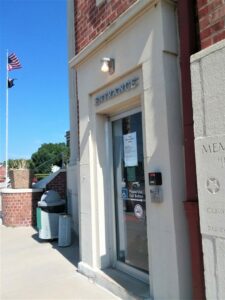
The Fort Scott Codes Enforcement Office is located in the lower level of Memorial Hall on East Third Street and National Avenue. Stansberry’s office is located here.

Obituary of Verlee Logue

Verlee Ann Logue, age 82, resident of Ashland, MO, died Wednesday, July 8, 2020, at Ashland Villa, Ashland, MO.

She was born April 6, 1938, in Shelby County, IA, the daughter of Adolph and Celma Rassamen Breining.

She married Veral Dean Sorensen in 1955. They later divorced. She married Edwin Logue on December 31, 1977, in Atlantic, IA.

Ed preceded her in death on June 26, 2005.

Verlee ran the KOA Campground in Ft. Scott. She later worked at Best Western Inn.

She greatly enjoyed visiting with people traveling and getting reacquainted when they returned. She loved flowers, dogs, kids, and relaxing at the lake. She watched her hummingbird feeders and wren houses every day. Verlee relished her time visiting with friends.

Survivors include five sons, Kendall Logue, Ft. Scott; Winn Logue, Kimballton, IA; Dale Sorensen, Portsmith, IA; Randy Sorensen, Irwin, IA; and Scott Sorensen, Centralia, MO; two daughters, Terri Jensen, Kimballton, IA;  and Laurie Uehling, Harrisburg, MO.; 12 grandchildren; 12 great-grandchildren with one on the way; and numerous nieces and nephews.

Besides her husband Ed, she was preceded in death by a brother, Jim Breining; a sister, Velma “Tootie” Book; and her parents.

Rev. Chuck Russell will conduct funeral services at 10:00 AM Friday, July 10th, at the Cheney Witt Chapel.

A private family burial will take place in the U. S. National Cemetery, Ft. Scott. Memorials as suggested to the Shriner’s Hospital and may be left in the care of the Cheney Witt Chapel, PO Box 347, 201 S. Main St., Ft. Scott, KS 66701. Words of remembrance may be submitted to the online guestbook at cheneywitt.com.

Bourbon County Health Department Gives Recommendations


SEK MultiCounty Health Departments 

Allen, Anderson, Bourbon, and Woodson Counties 

Coronavirus (COVID19) Update 

July 8, 2020

The Bourbon County Order of the Local Health Officer goes through the end of the day today and then will end.

The Governor and Kansas Department of Health and Environment have strongly suggested that Kansans follow the Ad Astra plan and remain in Phase 3 for the time being.

With Bourbon County‘s amount of increase in positive COVID-19 cases recently, I as the Bourbon County Local Health Officer, also strongly suggest that Bourbon County follow the Ad Astra plan and remain in Phase 3, as well as follow the Governor’s Executive Order 20-52 to require masks or other face coverings in public. I strongly suggest this as well for my other counties, Allen, Anderson and Woodson.

Submitted by:

Rebecca Jan Bowen

Rebecca Johnson BSN, RN

Allen, Anderson, Bourbon, Woodson County Local Health Officer

Chamber Coffee Venue Changed To Common Ground on July 9

The Chamber Coffee will be hosted by
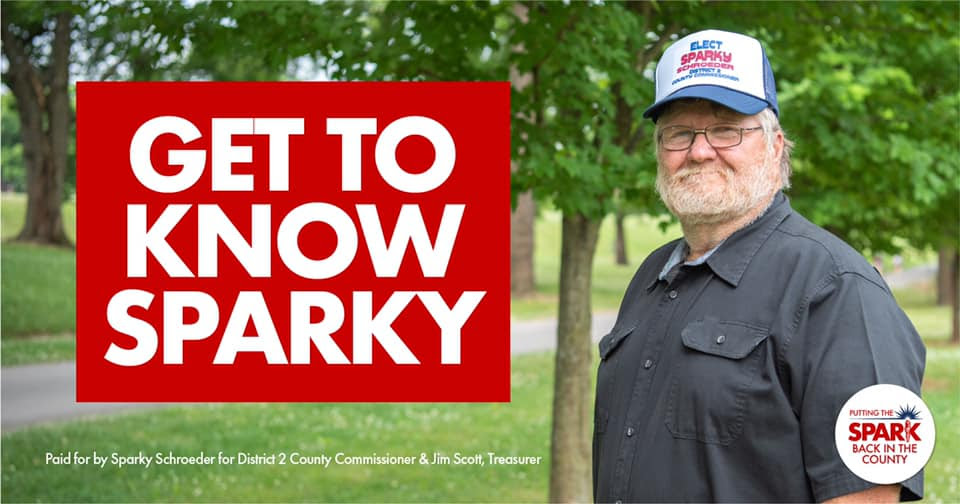
Don Schroeder “Sparky”
Candidate for Bourbon County Commissioner
July 9, 2020
8 am
Revised Location
Being held at theCommon Grounds Coffee Shop inside the Loading Dock Venue
All Attendees are encouraged to wear a mask in social gatherings. Thank you!
Click the “SPARKY” button to learn more!
Chamber Members & Guests are welcome
to make any announcement for $1 to the Chamber about their business or organization including events, new products, promotions, or any other specials!
Upcoming Chamber Coffee Schedule:
  1. Bourbon County Fair – 7/16
  2. Old Fort Auto – 7/23
  3. Up Dog Yoga – 7/30
SCHEDULE YOUR NEXT CHAMBER COFFEE! AVAILABLE DATES ARE AS FOLLOWED:
  • August: 6th, 20th & 27th
  • September: 3rd, 17th & 24th
  • October: 15th & 29th
  • November: 19th
  • December: 10th

Bourbon County Has Another COVID 19 Case

“Allen, Anderson, and Bourbon Counties all have a new positive COVID-19 case this afternoon,” said Rebecca Johnson, health officer for Bourbon County. “These Public Health Departments are diligently working to complete the investigations.

Please stay home if sick, wear a mask in public, practice social distancing and good hygiene.”


Submitted by:

Rebecca Johnson, SEK Multi-County Health Departments Administrator

*411 N. Washington

Iola, KS 66749

*524 S. Lowman

Ft. Scott, KS 66701

(620)223-4464 work

(620)223-1686 fax

[email protected]

Bobby Reed: Candidate for Bourbon County Clerk

Bobby Reed.

This is part of a series of features on the candidates running for offices in Bourbon County.  The Bourbon County Primary Election will be held, Tuesday, August 4, 2020.

Monday, July 20, is the candidate forum at Ellis Fine Arts Center, on the campus of Fort Scott Community College, 2108 S. Horton.  Doors open at 5:30  p.m. for a meet and greet with candidates. The forum starts at 6 p.m. in the order of the federal, state, then local candidates.

Bobby “Bob” Reed, 45, is running for Bourbon County Clerk.

Reed graduated from Wichita North High,  and also from Fort Scott Community College with an Associates of Science Degree in 1995. He also served in the Kansas Army National Guard for nine years with the 891st Engineer Battalion.

Reed’s experience:

“I have been a department head for Bourbon County for the past seven years,” he said.   “I have prepared and managed a budget for all of the seven years.  I have been recognized by past and current commissioners on open record as doing a very good job on budgets.”

“I am currently in charge of 18 employees, 74 inmates, and a 1.2 million dollar budget.” Reed is a major in the Bourbon County Sheriff’s Office.

He believes he brings an open mind to the table, he said. Also,  “I’m willing to work hard, as most of my adult career I have had multiple jobs.  I feel that I am a good boss, as many of my current and past employees would say the same.  I am willing to help solve problems.  I am pro-employee and have them as a top priority.  I am a people person and have had 25 years of talking to the taxpayers of Bourbon County.”

Another priority for Reed is getting to know  the county clerk’s employees “and gather ideas from them on ways to make their jobs easier, making a visit to the clerk’s office easier for the taxpayers of Bourbon County and learning, as it will be a new job for me.”

The following is information provided on the Bourbon County Kansas website.
Not sure if you’re registered to vote or where to vote?

You may register to vote online, through the Kansas Secretary of State’s website.

Check your voter registration status, the location of your polling place and view a sample ballot at VoterView by the Secretary of State.

The County Clerk is elected in November of Presidential Election years to a term of four years.  There are no term limits to this elected office.

The Bourbon County Clerk/Election Officer is responsible for a wide range of things under Kansas Law.  Some of those are listed here.

Advance Voting is available prior to each election.  You may advance vote in one of two ways:  By mail, by filing an application for a ballot to be mailed to you   OR   in-person, beginning at least one week prior to any election.


Bourbon County Local News