Click below:
U234 BOE Minutes of July 27
Members of the USD 234 Board of Education met in the Fort Scott Middle School Commons on Monday, July 27, for a special meeting.
President David Stewart opened the meeting. Gina Shelton, Business Manager, presented budget workshop information. Board members approved the 2020-21 Negotiated Agreement and the Coronavirus Relief Fund Memorandum of Understanding.
The board went into executive session to discuss personnel matters for nonelected personnel and returned to open meeting.
The board approved the following employment matters:
A. Resignation of Jessica Reichard, Winfield Scott paraprofessional, effective at the end of the 2019-20 school year
B. Employment of Hannah Dunn as a central office accounts payable/secretary for the 2020-21 school year
Superintendent Ted Hessong discussed the 2020-21 school year. Administrators from individual buildings presented learning options. The board approved September 9, 2020, as a start day for school with teachers reporting on August 14, 2020.
The board adjourned.
Chamber Coffee At Empress Center, 7 N. Main July 30
The July 30th Chamber Coffee
will be hosted by
The Fort Scott Chamber
of Commerce!
7 N. Main Street in the
Downtown Historic District held at the Empress Event Center
Attendees may wear mask at their own Discretion
Let’s talk about: SPARK FUNDING
The Bourbon County Commission received $2.9M in CARES Act funds through the State of Kansas SPARK funding. This funding is designed to help the county with the health and economic emergency of the COVID-19 pandemic. For more information about the funding, visit https://www.bourboncountyks.org/spark/.
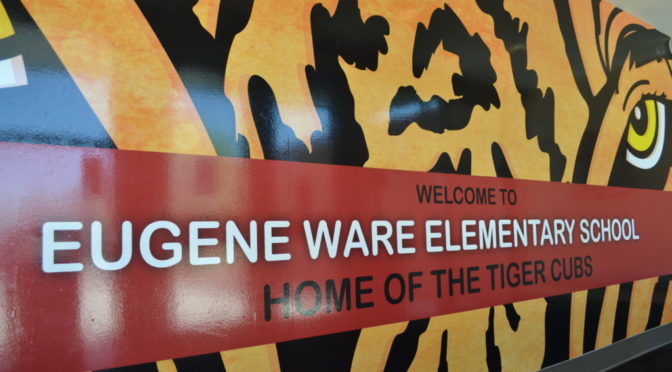
Danny Larsen: New Eugene Ware Elementary School P.E.Teacher
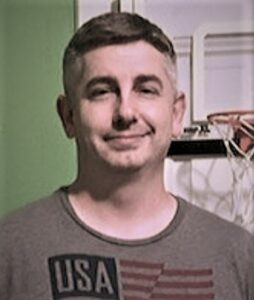
Danny Larsen is the new physical education teacher at Eugene Ware Elementary School.
Larsen earned his bachelor of science in education with a strength and conditioning emphasis; and a bachelor of arts in psychology.
He has two years of experience teaching as an At-Risk Teacher, this is his first physical education position, he said.
Larsen’s hometown is Fort Scott and is married to Jamie Larsen. They have three children: Noah who will be a senior, Malachi an 8th-grader, and Madeline a 5th- grader.
What are your hobbies/interests/community involvements?
“I love spending time with my family as much as possible. I also like to coach, work in my shop (woodworking), and play basketball.”
How did you become an educator?
“I’ve always enjoyed working with kids and being a mentor, either through coaching sports or volunteering at school or church.”
Is there someone who inspired you to teach?
“There were so many teachers who played a big role in my decision to pursue teaching as a career. These include teachers I had while I was in school and those who have taught my kids.”
What is the best part of teaching for you?
“For me, the best part of teaching is connecting with a kid who has struggled either academically, emotionally, or in some way that makes their life and school more difficult. Once you see that tension disappear from their face and it’s replaced by a smile, there’s nothing else like it!”
What are the greatest challenges?
“Right now, the great challenge is being a new teacher where kids are looking for familiarity and normalcy. Fortunately, I do well in those situations and look forward to teaching in Fort Scott.”
The Bourbon County Sheriff’s Office Daily Reports July 29
KDHE receives grant for suicide care
TOPEKA – The Kansas Department of Health and Environment (KDHE) has been awarded a grant to support safer suicide care in behavioral health and healthcare systems in Kansas. The grant, from the Substance Abuse and Mental Health Services Administration, a branch of the U.S. Department of Health and Human Services, is for implementation of Zero Suicide in Health Systems.
Zero Suicide is a model and framework that believes suicide deaths for individuals under the care of health and behavioral health systems are preventable. For systems dedicated to improving patient safety, Zero Suicide presents a framework for system-wide transformation toward safer suicide care.
KDHE will work with key partners across the state, including Veterans Affairs and the 26 licensed Community Mental Health Care Systems that have more than 4,500 staff providing mental health services in every county (120+ locations) to more than 140,000 Kansans annually. Besides the policies, protocols and practices the Zero Suicide model supports, objectives include providing evidence-based trainings and practices to support a prepared, competent and confident mental health workforce and coordinated suicide prevention efforts across the state. This award will bring $700,000 per year for five years.
Suicide is a serious public health problem that has far reaching medical, economical and psychosocial implications for Kansas. Between 1999 and 2018, the rate of suicide deaths in Kansas increased 70% from 11.3 to 19.2 per 100,000 persons. The 2018 suicide rate was the highest in the last 20 years & is higher than the national rate (14.2 per 100,000 persons) which increased 35% during the same time period. In 2018, suicide was the 9th leading cause of death among all ages and the second leading cause of death following unintentional injuries for those age 15-34 years in Kansas. From 2016 to 2018, emergency department visit and hospitalization rates increased for suicide ideation-related injuries.
Obituary of Wesley Gress
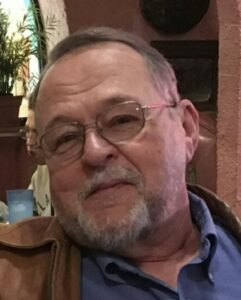
Wesley Allan Gress, 68, of Fort Scott, passed away late Sunday night July 19, 2020, at Via Christi Ascension in Fort Scott, Kansas. Wes was born March 22, 1952, in Kansas City, Kansas, the son of Warren Wesley and Dorothy Mae (Snyder) Gress. He married Colene Janette Summers August 24, 1975, in Kansas City, Kansas, and she preceded him in death January 15, 2020.
Wes attended Devry Institute of Electronics in Chicago, Illinois, and was an electrician for Niece Industries. He was a hands-on person that could fix anything. He played golf, loved gardening, was a master on the grill and loved to cook. He was an avid Chiefs and Royals fan. He loved listening to music.
Wes is survived by his daughters, Andrea Weak of Pocahontas, Illinois, and Stephanie King, of Pittsburg, Kansas; a sister, Sherry Sugg, of Lakewood, Colorado; and two grandsons, Levi Weak and Kyran Weak. In addition to his wife Colene, he was also preceded in death by his parents, and a daughter, Renea Lynn Gress.
Following cremation, memorial services will be held 11:00 a.m. Saturday, August 1, 2020, at the Konantz-Cheney Funeral Home. The family suggests memorial contributions to the American Diabetes Association and may be left in the care of the Konantz-Cheney Funeral Home, 15 West Wall Street, P.O. Box 309, Fort Scott, KS 66701. Condolences may be submitted to the online guestbook at konantz-cheney.com.
Uniontown City-Wide Yard Sale: Saturday, August 22
The Uniontown City Clerk and Council are sponsoring a city-wide yard sale on Saturday, August 22 starting at 7 a.m.
Sign up by August 17 and your sale address will be added to a list on a map of yard sales. A list of sales and a map will be posted at the Post Office and Union Station Convenience store by August 21.
Interviews For KDA Executive Director/Division of Conservation Aug. 6-7
Division of Conservation Director Candidates to Share Public Presentations
MANHATTAN, Kansas — The Kansas Department of Agriculture will hold interviews for the position of Executive Director of the Division of Conservation on August 6 and 7, and the selection process will include an opportunity for public participation. The public portion will consist of a presentation and questions, which will be available to watch live online.
The public presentations for the six candidates will take place in three separate online meetings: August 6 from 11:15 a.m.–12:00 noon, August 6 from 1:00 p.m.–1:45 p.m., and August 7 from 8:15 a.m.–9:00 a.m. Individuals who would like to observe and provide input for the public presentations should contact Brittney Grother at 785-564-6797 or [email protected].

Benefits of Youth Livestock Projects
With county fair season behind us, it may appear youth livestock exhibitors in the Southwind District may have wrapped up their livestock projects for 2020. However, many are still working at home to prepare for the Kansas State Fair and Kansas Junior Livestock Show – which are still options to them despite the many event cancellations across the country. Not only are they practicing to drive their hogs, brace their sheep and goats and set up their cattle, they are working hard to keep them cool and on feed while managing summer temperatures and navigating a back-to-school schedule.
Lots of Southwind District 4-H members sold animals at their livestock premium sales, knowing they still had work to do at home. Youth who exhibit cattle care for and own their animals for about 280 days, and youth with sheep, meat goats and hogs care for and own their livestock for about 130 days. The time spent with animals teaches basic life skills and eventually help them develop into better citizens.
Following are some life skills that youth livestock project members can gain:
- How to get along with people. A large number of people in society quit or lose their jobs because they cannot get along with others. 4-H members who show livestock are around people they have never met but have similar interests. They learn to communicate with these people.
- Sportsmanship. At a livestock show, there is only one Grand Champion. However, there are many winners. Most 4-H members who show livestock for any period of time usually experience the extreme high feeling of an exceptional effort and the extreme disappointment of a project that didn’t turn out as well as was expected. Normally, win or lose, the competitors in the show can be seen after the show talking and enjoying life together.
- Responsibility. Feeding and daily chores in a 4-H livestock project teach responsibility. Top feeders follow the time clock in their daily efforts. This is a good habit to start at a young age and may reap youngster’s substantial benefits in a career later in their lives.
- Attend to details. Most young people take care of major items in a 4-H livestock projectlike fencing, feeding, etc. However many times it’s the little things that make a different: keeping water tanks and feed troughs clean, working on grooming and showmanship several months before the show, keeping pens clean and close observation for sickness and disease. Paying attention to details is beneficial in almost everything we do in life.
- Decision making. Decision making is never easy at any point in our lives. 4-H livestock projects require several key decisions be made: selection of project animals, selection of feeding method, care and management decisions, fitting and grooming techniques, etc.
- Goal setting. For every successful 4-H livestock project, there is usually a good plan. Most details and plans for the project on selection, feeding and management of the project have been planned well in advance. Goal setting is important for everyone regardless of future endeavors.
Next time you are at a livestock show, study the kids instead of the animals. Their 2020 projects may be far more diverse and advanced than the few animals taken to the County Fair, and plans are already underway to purchase stock for 2021 when we can hopefully return to normal.
For full results of your local County Fair in the Southwind District, visit www.Southwind.k-state.edu
Carla Nemecek
Southwind Extension District
Director & Agent
[email protected]
620-365-2242
1 North Washington, Iola, KS 66749
Kansas Water Authority Virtual Meeting July 30
The Kansas Water Authority (KWA) will have their meeting by Webinar on Thursday, July 30 starting at 9 a.m.
For additional meeting information or how to access the meeting, visit the Kansas Water Office website, www.kwo.ks.gov or call (785) 296-3185.
The KWA is responsible for advising the Governor, Legislature and Director of the Kansas Water Office on water policy issues. They also ensure that water policies and programs address the needs of all Kansans as well as serve as advisors of the Kansas Water Vision and Kansas Water Plan. The KWA was established in 1981 and consists of 13 voting members who are appointed by the Governor or Legislative leadership. State agency directors serve as ex-officio members.
Note to Editor: The Americans with Disabilities Act, (42 U.S.C. 12101), requires the Kansas Water Office to print the reasonable accommodations messages.
KDHE amends travel quarantine list
TOPEKA – The Kansas Department of Health and Environment (KDHE) has amended its travel quarantine list. Florida as well as those countries with a CDC Level 3 Travel Health Notice with restrictions remain, but Arizona, Bahrain and French Guiana are removed effective today. Those traveling internationally are subject to CDC re-entry guidance and protocols.
This list is effective for all persons returning to or entering Kansas on the effective dates. The state will review/update this list every two weeks. A comprehensive list of those individuals needing to quarantine for 14 days includes visitors and Kansans who have:
Traveled to:
- Florida on or after June 29.
- Arizona between June 17 – July 27.
- Been on a cruise ship or river cruise on or after March 15.
- International travel to Bahrain or French Guiana July 14 – July 26.
- International travel on or after July 14 to countries with a CDC Level 3 Travel Health Notice, including China, Iran, European Schengen area, United Kingdom, Republic of Ireland and Brazil. International travelers must follow CDC guidance and protocols.
Others needing to continue quarantining:
- Anyone subject to a travel-related quarantine for a state or country previously on the travel-related quarantine list must complete their 14-day quarantine period.
- Received notification from public health officials (state or local) that you are a close contact of a laboratory-confirmed case of COVID-19.
“It’s important to remember that traveling comes with risks,” Dr. Lee Norman, KDHE Secretary said. “We encourage those thinking about traveling to review their options, determine its necessity and if choosing to go, remember to still take precautions: wear a mask, socially distance and avoid mass gatherings.”
States added to this list are determined by evaluating new cases in states over a two-week period, then adjusting for population size, giving a case per 100,000 population which can then be compared to the rate in Kansas. States with significantly higher rates (approximately three times higher) are added to the list. Kansas’ rate was 223 cases per 100,000 population; whereas Florida’s is currently 717 cases per 100,000 population.
Travel quarantines do not prohibit travel through Kansas. People from these locations may still travel through Kansas. If this is done, KDHE recommends limited stops, wearing a mask at rest stops or when getting gas and being six feet from others when doing so. If the destination is Kansas, they would be required to quarantine upon arrival to their destination.
Critical infrastructure sector employees who have travelled to these destinations should contact their local health department regarding instructions for application of these quarantine orders while working. Critical infrastructure employees, such as public health, law enforcement, food supply, etc., need to have the staffing resources to continue serving Kansans so the local health department may allow a modified quarantine. Please note the only exemption for these quarantine mandates for critical infrastructure sector employees is work – they are not to go any other locations outside of work.
For more information on COVID-19, please visit the KDHE website at www.kdhe.ks.gov/coronavirus.