Category Archives: Uncategorized

Ft. Scott City Commission approves letter of support for house-building grant by FSCC

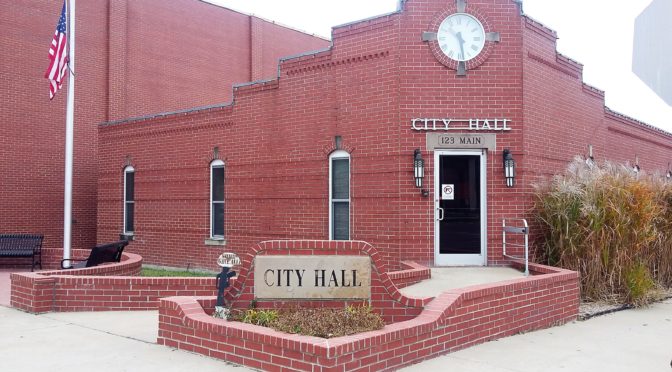
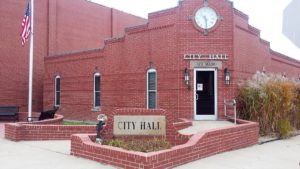
Fort Scott City Hall.

Ft. Scott Community College came to Fort Scott City Commission last week to obtain a letter of support for a house-building grant they are applying for. The application is due February 14, 2025.

Sonia Gugnani, Vice President of Academic Affairs and Rory Chaplain, Associate Dean of CTE and workforce development spoke to the commissioners on Feb. 13 in a special meeting.

Gugnani told the commission that Fort Scott Community College is applying for the Frame grant through the Department of Commerce for community and technical colleges in Kansas. It’s a construction trade grant. The total amount available is $2million, with awards ranging from $250,000 to $1 million per award for those who qualify. This grant is to be used to build 4 houses in the next 2 years, with the first 2 either being renovated or built in the first year and proceeds from the sale of those properties used to build another 2 houses in the next year.

However, the grant money cannot be used buy the land or create the infrastructure needed for the houses.

Gugnani told the commissioners that FSCC wants to collaborate with the city to benefit students and residents of Bourbon County. She asked the city to donate land to build houses on. These houses would be 1100 to 1500 square feet with 3 bedrooms, 2 baths. The Bourbon County Housing Assessment study by Regional Economic Development Inc. (REDI) in 2022 showed there is a need for these kind of houses in Fort Scott.

It would give our students work alongside the contractor and give them an opportunity to give back to their community, said Gugnani.

Chaplain explained that their aim is to build houses in the $185,000 to $225,000 range, so they “feel like it kind of needs to be more of a subdivision, rather than infill,” because the goal is to perpetuate the grant by continuing to build and sell homes. This will give students the ongoing opportunity to learn building skills. Homes must be sold within 180 days of completion.

They are hoping to build a neighborhood, according to Gugnani. The problem with using the renovation option of the grant, is that the department of commerce says they (the homes) must be uninhabitable to qualify.

Commissioner Katheryn Salsbury asked if the school could work with the land bank, which keeps the city from having to build all the infrastructure on a neighborhood plot of land. “It seems to me like that would be a better route,” she said.

Chaplain explained that the issue with using land bank properties is the difficulty of getting a clear title. “The Frame grant allows us to do more, as far as scale. We want to get a bigger return up front before working infill lots.”

Regarding the need to add infrastructure, he said if the land has water and sewer, that could spur on other builds from other contractors.

Gugnani also pointed out that the lots need to be adjacent to facilitate student’s working, as they are bussed over from their schools.

Commissioner Tim Vanhoeke verified that the school does not already have a parcel in mind, and asked how much FSCC is putting into the purchase.

City Manager Brad Matkin explained that the city would purchase the land and gift it to FSCC. As for infrastructure, the city would do it. He said that committing to a certain dollar amount of land purchase money is all the grant application requires.

Commissioner Tracey Dancer said he is not supportive of the city being a land holder or of city tax payers paying to supplement another taxing entity’s acquisition. FSCC already taxes residents of the city and, “the idea that the city tax payers would then pay again, more, to then supplement the community college’s budget. I can’t support it.”

Chaplain responded that FSCC is not asking for more taxes. “The point of the grant is to bolster housing and then also the training for the skills gap…and then also the economic development.”

Gugnani said it’s about whether or not they can include the city’s support in their grant application.

Commissioner Matthew Wells said, “You gotta look at the benefits vs. the cost. One of the benefits that this would bring, specifically to the school, is that if they can get this grant and invest in it now, then in the third and fourth year, they’re going to have the money….this is something that allows them to sow in to doing the land bank properties later.” If they go after the land bank properties right now, they’re not going to make enough of a return to make this particular grant viable for the long-term probability of the program to be able to benefit the city.19:14

Matkin suggested the city buy a 10 acre plot, give 4 to the school to build on and sell the rest to developers to recoup the costs of the city’s initial investment.

Katheryn Salsbury mentioned that at the last city commission meeting they discussed the need for properties in the $60,000-$70,000 range. “I wish that’s what we were doing here….are there enough people in the area who can afford housing these houses that are $125,000 plus?”

Chaplain said that based on housing study and realtors they’ve spoken with, the range they are aiming for is the most popular ask.

Vanhoeke asked what number FSCC wants the city to commit to.

Chaplain replied they are looking at property in the $10,000-$15,000 per acre range.

Matkin said that while the city doesn’t have a 5-10 acre plot within city limits, but there are properties owned by others.

Dancer said he could support working with land bank properties. But reiterated his unwillingness to help another taxing entity (FSCC) by spending taxpayer dollars to buy property.

Matkin replied that FSCC isn’t asking for the city to help them with their budget, they are asking for a grant to give kids the opportunity to build houses. The grant provides material and tools.

Chaplain asked about the city’s economic development dollars.

Dancer said it was already designated. Wells disagreed, saying they had “over $100,000,” and Matkin mentioned land bank money as well.

“We are not looking for 8-10 acres, that was just an idea for the city to recoup the costs,” said Gugnani.

Commissioner Dyllan Olson said the city has to grow. “If your saying investing $100,000 to get more than $2 million in return is a bad investment, I would have to disagree with that.”

Wells pointed out that at the end of the day the city would get 4 taxable properties that would pay back into the city coffers in the form of property taxes for the foreseeable future. He said that by spending $30,000 for 2 acres for the school to build houses on, at current tax rates, the city would recoup their investment in less than 10 years.

Olson said the land bank lacks properties with clear titles that would be viable for the school’s project. Title insurance won’t be available for at least 10 or 15 more years, while the land bank works to clear up the titles.

“We need to make sure were are building the place that we able to sell it so we can recoup the money so that we can continue this project…Building is one part of it. Sustaining is a bigger part of it,” pointed out Gugnani. She said that all the profits of the sale of the houses are rolled into building the next house. FSCC cannot keep any of the money.

Vanhoeke said he was opposed to putting any monetary support in a letter of support from the city.

The City of Fort Scott, REDI, Bourbon County Foundation, and USD234 have all been asked for a letter of support, per Gugnani.

Wells made motion: Because it’s Fort Smith Community College and would provide benefit to our city, provide employees that know how to build,  “I’d be willing to offer up at least $30,000 from the economic development fund to be able to purchase land to donate to the school in order to get this program going, just based on the return that we’re going to see.”

Motion was seconded by Olson.

It failed to carry due to Dancer, Vanhoeke, and Salsbury voting against it.

Dancer then made a motion for a letter of the support to include infrastructure, but with no dollar amount or acquisition of property.

Olson asked if the city manager could then look for properties.

Dancer then retracted his motion.

“We have 25 years of not having new housing,” a concerned citizen addressed the commission, saying that the community serious has housing issues and has voiced that they are desperately looking for new housing. “All I ask is that you take the time to consider… that they [community] are looking for some new options to be able to stay here in Ft. Scott. Our population is continually declining. If we don’t make some sort of a move in some direction, I’m afraid that that decline will still continue.”

Salsbury tried to bring the commission to a decision saying they want to support FSCC, but without a dollar amount.

Vanhoeke said dollars should be used to incentivize contractors to rehab or build infills, not fund FSCC’s plan.

Matkin asked what the difference is between giving financial help to a developer (which he predicted would be asked for in a future commission meeting) and buying land for FSCC to build houses on, because it’s a grant they are going after, it’s not benefiting FSCC, but the tax payers by putting houses on the tax rolls.

It’s beneficial to the people who live here and attracting people who commute here. The students who live here in the county, help the community, take pride in it, will be building the houses, pointed out Gugnani.

Wells said there are more than 2,800 commuters to Fort Scott who want to live here, but they want new homes, so they buy them in other cities.

Dancer said that due to the short notice, he is disinclined to commit to support in a monetary amount. “The public has not had a chance to consider this, to contact their representatives…”

Chaplain apologized for the last-minute nature of their meeting, but said regarding helping FSCC and developing housing in Fort Scott, “I don’t think that should be anything new as far as what the idea is.”52:08

Wells made the motion, “that the city write a letter of support saying that we will donate land for the building of the four houses and help with the infrastructure that is needed in order to get the grant.”

Olson seconded.

Dancer wanted to clarify that the city is committing to donate the land by the Aug. 1, 2025 grant start date, “whether we have it currently or not. So sometime in the next 5 months we would have to find the land, or acquire the land, or have it donated.” He expressed concern about urgency driving prices of the land up.

Vanhoeke and Dancer voted no.

Wells and Olson voted yes.

Salsbury broke the tie with her “yes” vote.
Election Business at Feb. 3 County Commissioner Meeting

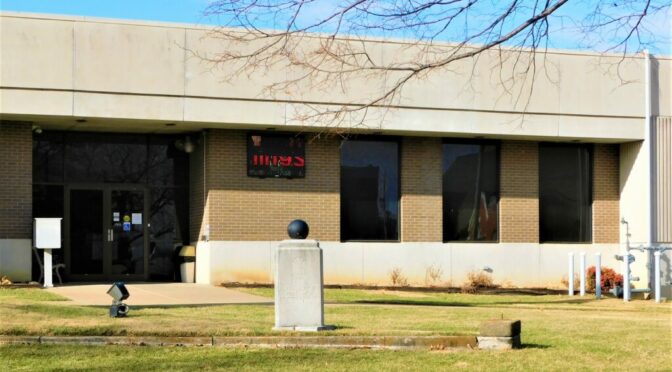
The north wing, east side of the Bourbon County Courthouse.

County Commissioners received input from Michael Hoyt and Shane Walker on how to conduct the election of new commissioners for the new districts in Bourbon County.

Michael Hoyt began the public comments portion of the meeting by asking the commissioners what they are planning to do about the resolution made by the previous commission to hold elections for the added districts on April 18, 2025.

Commissioner Brandon Whisenhunt responded by saying that after talks with the Kansas governor’s office, they were told no special election is allowed allowed to fill the two new commissioner district position.

Hoyt claimed it may be possible to hold the election in April by a commission resolution. He mentioned that Jay Hall believes that the county could.

Shane Walker, Bourbon County Chief Operating Officer, commented from the audience that that was not the case, causing Hoyt to tell him he was there to address the commission, not Walker. Hoyt then left the table and ended his comments.

Walker came to the commissioners’ table to address the issue saying, “I’ll explain it so you guys can do it right so we don’t have this problem.”

He explained that in a meeting with the governor’s chief of staff and legal counsel, he learned that a law was passed in 2023 due to Potowatomie and Douglas county’s plans to have a special election to fill their new commission district seats.

Jay Hall, Shalenberger, and attorneys met with county officials. They told county officials that if they go by the letter of the law, the election will hold up in a court case, but that holding a special election with candidates chosen by the leaders of the Republican and Democrat parties would render the election invalid and open the county up to being sued. Because there are no current commissioners for the two new districts, they are not considered vacated positions.

“We don’t need sued. We do things legal for a reason….The old law doesn’t get struck, but this [new law] supersedes it,” Walker said. “The recommendation from the highest offices at the state absolutely say that we need to do it as a standard election.”

With current election situation, the new commissioners would enter their positions in 2026 and hold office for one year, terming out at the same time as Whisenhunt. However, the commission could choose to have one of the new commissioners hold a three year term that would coincide with the two commissioners elected in 2024, Dave Beerbower and Leroy Kruger, while the other new commissioner’s term would end with Whisenhunt’s. The purpose of this law is to keep the commission from having a super-majority of four commissioners running for office every four years and only one commissioner on the opposite two years.

If commissioners are elected contrary to current state law, and the county is sued and looses the suit, all the actions taken by those commissioners would be subject to that lawsuit.

Walker agreed with Hoyt that a special election would be good, so the new offices are filled quickly, but state law does not allow for that.

The commission took no action at the meeting, but acknowledged the need to change the previous commission’s resolution for an April 18, 2025 election as well as look further into the matter before making another decision about the election.

Kruger, referring to the interruption and outburst between Hoyt and Walker, “We’re not going to go back to the old ways of the old commission…I want to do a good job of getting away from the negativity and get back on board with having these meetings done correctly.”

Talking about how to conduct a meeting according to the rules of order, Beerbower pointed out that when someone fails to follow those rules, a point of order should be called to rectify it and the chairman (Whisenhunt). Whisenhunt agreed and apologized for not keeping order. Beerbower acknowledges that this is only the commission’s fourth meeting and everyone is still learning.

Public Works Report

Eric Bailey, Public Works Director, came to the commission with a department update including monthly culvert reports.

“We have developed a safety committee at public works with a chairman, vice-chairman and secretary as well and then all of our lead people are on the Safety Committee at this time,” he said.

His department is in contact with KWorks, awaiting the return of the contact person there to continue with the committee’s work and get answers about OSHA training.

The committee has a book they are following to get some safety policies and procedures started as well as some training. The committee will meet the first Wednesday of each month at 7:30 at the public works building. However, the February meeting will be on Feb. 12,  due to a conflict with other training regarding working at the quarry, which the public works employees will be doing Feb. 5.

Bailey also told of the Southeast Kansas Regional Planning Commission creating a comprehensive safety action plan for several counties in the area, including Bourbon County. The purpose of the plan is to identifying solutions along the region’s street system to eliminate fatalities and serious injury crashes. They are holding an open house Wednesday Feb. 19 from 4-7 p.m. at Buck Run Community Center.

“I encourage everyone to swing by. There will be no presentation, it’s just kind of come in and look at what they have so far.”

He also encouraged everyone to fill out the survey on the SEKRPC website at https://sekrpc.org/ .

Bailey also said that his department will have a meeting with FEMA on Feb. 7 at 11 a.m. and he is working on getting quotes for roof replacements on Elm Creek Lake shelters.

Beerbower asked for a list of what’s needed to repair that area of the lake for the two volunteers who have contacted him to work on it.

Bailey also suggested using individuals sentenced with community service could help as well.

He said that crews are now picking up limbs felled by recent storms as well as grading gravel roads damaged after all the freezes and thaws. The ditch north of Tomahawk on 125th being repaired after the rains.

Hospital equipment disposal

Kruger, who is the commissioners’ contact for Freeman Hospital said that Freeman wants to know what the county would like to do with the equipment they have no use for. Freeman has a contact for donating it to third world nations that cannot afford to purchase new equipment.

Beerbower and Whisenhunt agreed that donating it would be a good solution. Since it’s taxpayer owned, they need to dispose of it properly. Most of it outdated or not in good working order.

Whisenhunt asked Kruger to get a list of the equipment.

County Clerk Susan Walker mentioned there is a state statute which addresses the disposal of county property, but that a memorandum of understanding to be reviewed by the county’s counsel is also in order.

The issue was tabled for now.

Commissioner comments

Kruger reminded all that the meeting with city commissioners will be at The Empress Center at 5:30 on Feb. 6, 2025. No county business will be conducted, but it is a work session.

Beerbower said Elm Creek Lake has some great potential. His only reservation is having a rock quarry out there too. He wants to study efficiency of the county owning a rock quarry.

Whisenhunt choked up a bit and said he had a request from youngest daughter due to tragedy at school last week. “She wanted me to remind everybody to stay off the frozen water.”

“Amen!” was the response of several folks present.

Letter to the Editor – The Problem With Pay Raises – Nick Graham

I left this past Monday’s Commission meeting feeling something I did not expect to feel when I first entered the Courthouse that evening – depressed.  A meeting that started out feeling hopeful and optimistic at the beginning by the end had descended into the same feeling of anger and discontent that has marked pretty much every meeting for at least the last two years, all due to the mother of all political hot potatoes – pay raises. 
In my experience, City and County Commissioners really don’t like talking about or dealing with pay raises. It’s a subject that makes politicians squirm, because it inevitably makes people mad, and people whose top priority is re-election don’t want to make anyone mad.  This of course inevitably leads them to making LOTS of people mad and hurting their chances of re-election, but that’s another topic for another time.

First a little primer – every year Kansas County Commissioners vote on a salary schedule for the new year.  Some do it as a resolution, others as a regular vote, but they all do it….well, everyone except Bourbon County, I’ve discovered.  Up until this past Monday night, the Bourbon County Commission hasn’t passed a Salary Schedule since August of 2021.  This didn’t really surprise me – pay raises are something many local politicians have played kick the can with for many years in this area, and I suspect we’re not alone.  That said, not voting on a salary schedule is a violation of state statute, and does get flagged in audits.

Further complicating things is the issue of job responsibilities.  Kansas state law has specific responsibilities set in stone for certain elected offices like Treasurer and Clerk, but in almost all cases those holding those offices are given several responsibilities that they are not statutorily required to do.  A good example is Human Resources – most counties I spoke to over the last week have the County Clerk’s office handle Human Resources.  A few, like Cherokee, have an actual HR Director.  Another sort of obscure one I learned about when running for County Clerk in 2020 is Road Records.  Bourbon County (and I imagine many other counties like ours) have TONS of paper road records that need to be digitized and organized, on top of keeping current records of roads.  Several years ago this responsibility went from the Clerk’s office to the Register of Deeds office here in Bourbon County, but as you can imagine, it’s a pretty time intensive job for a busy office of only three people.  These responsibilities more often than not come with no extreme compensation or manpower even if they are time and labor intensive. 

In some cases, elected offices have special state mandated responsibilities that they do get paid above their base pay for.  For instance, County Clerks get $10,000 a year for being the County Election Officer, and County Treasurer’s get a sizable chunk (generally around $10,000, sometimes more) for being the Investment Officer and running their Motor Vehicle offices – these are all dictated by KSA 8-145, which is separate from the statutes dictating the responsibilities of the Clerk and Treasurer (state law is weird like that).

After the less than jubilant meeting on Monday night, on Tuesday I began emailing the County Clerks of neighboring counties to get their salary schedules.  These schedules are all public record, so they’re pretty easy to get (well, except for Neosho County, which I never heard back from even after sending a KORA request).  What I found surprised me – I figured we were behind our neighbors on salaries, but I was not aware just HOW behind we are.  Before we go further, I want to state that I’m not writing this article as an endorsement for any set salary for any set office.  If I were to guess, the resolution passed on Monday night is very likely to be reconfigured, because that’s just political reality…but, I’m willing to take some heat here and say that it’s not as crazy as it seems when you compare it to what our neighboring counties, including smaller ones, are paying.  What I think everyone who reads this will agree on is that we have people who have served this County well for years, some for over a decade, who are WAAAAY underpaid, particularly when ALL of their positions require special skills and experience that are in short supply in rural America.  These are not jobs you want to fill using the same labor pool as fast food and retail.  The fact that many of them are incredibly specialized and yet 1) have no real education or experience requirements and 2) are determined by what amounts to a popularity contest is pretty insane, but that’s another topic for another article.

For this article I’m gonna stick with the five elected positions of Clerk, Treasurer, Register of Deeds, Sheriff, and County Attorney.  I’ve thrown in Commissioner salaries largely just for fun..but I do think we underpay our Commissioners.  I’ve combined Bourbon County’s old and new salary schedules with the new salary schedules from Allen, Cherokee, Labette, and Linn Counties into what I hope is an easy to read graph HERE. 

If you take a look, you might be surprised by what you find – I certainly was.  If you want to look at the individual salary schedules I received from the counties, you can go here. Again, I may lose some of my “clout” as the kids call it these days by saying this, but looking at it in context, I don’t think the new Bourbon County salary schedule is as crazy as it first appeared.  Should it be stair-stepped across a couple of years given the cash reserve crunch we’re currently experiencing (if you watched Monday night’s meeting, it was clear that we are still in a tight spot cash reserves-wise), or should we just tear the band-aid off now and get it over with, maybe with a few nips and tucks?  I can see an argument for both.  What I do know from my own political experience is that our elected officials’ pay will continue to get further behind the more it is dragged out.  There is also the almost certainty that if our Sheriff, Treasurer, Clerk and Register of Deeds are this behind, how likely is it that many of our un-elected employees are ALSO that behind, or further, victims of a can kicked down the road in some cases for many, many years?

These are questions that make me glad I’m not currently a County Commissioner, nor eligible to run for another four years due to the recent redistricting.  I wanted to close by saying this – knowing all of them, and having worked with most of them, I don’t think we have a single elected official that isn’t worthy of a substantial pay raise, and who have unfortunately found themselves the victims of a long line of politicians playing kick the can when it came to their incomes.  They all have long, difficult, and often thankless jobs that few people have the education, training, or experience to do,and they deserve our respect for that.


Now, you can stop reading this article now and pretty much have the full story, but I just realized I didn’t cover the whole Department of Labor Salary Rules part of this controversy, so if you’d like, stick around a bit longer and I’ll run through that.

Epilogue: That Whole Department of Labor Rule Deal
If you watched the County’s budget process last summer, you’ll know that the reason (if we’re being honest, almost certainly the only reason) sizable salary raises were being discussed was because it appeared the federal government was going to force those salaries to be raised.  A new rule enacted by the Biden Department of Labor, would have bumped the minimum salary for executive, administrative, and professional (EAP) exemptions (aka salaried folks) to a base salary of $58,656 on January 1st, 2025.  This would have by default been a substantial and in my opinion needed increase to the salaries of many of our full-time Bourbon County officials.  With this rule scheduled to go into effect on January 1st, 2025, extra money for the increased salaries had to be budgeted for 2025 to ensure compliance with the rule.  However, two things happened late in the year, well after the budget process for every county in the country was completed, that threw a wrinkle into things. 

First, the State of Texas sued the Department of Labor over the rule, and the rule was overturned in mid November.  Now the Department of Labor appealed the decision, but that appeal will now be in front of one of the most conservative appeals courts in the country.  The double whammy is that even if the appeal is granted, by that time Donald Trump will be in office, and a Trump Department of Labor is unlikely to pick up a baton from the Biden Department of Labor and run with it.  So yes, the federal mandate was real, right up until it got upended at the end of the year, and the Presidential election was likely the final nail in its coffin.  That being said, I’m glad it all happened, as it forced our former County Commission to tackle an issue most County Commissions would just as turn a blind eye to, at a time when it was long overdue.

Nick Graham
Uniontown, Kansas

Kansas State Park Annual Permits and 2025 Campsite Reservations Coming Soon  


TOPEKA – Are you eyeing a cozy cabin by the water, aiming to complete your Kansas State Park bucket list, or breaking in a new tent? Mark these important dates for purchasing annual park permits and reserving campsites at Kansas State Parks on your calendar.

Starting December 9, 2024, annual permits for visiting and camping at Kansas State Parks will be available for purchase online and at state park offices.

  • Annual State Park Vehicle Permits that cover unlimited entry to all Kansas State Parks through December 31, 2025, at a cost of:
  • $25 for a standard annual vehicle permit, available for residents and non-residents
  • $13.75 for senior/disabled Kansas residents
  • Unconventional Vehicle Permit: $52.50 (for UTVs and golf carts, allowed on improved roads and parking areas only, and available only at state park offices)
  • Annual State Park Camping Permits that cover all daily camping fees (utility fees still apply) at all Kansas State Parks through December 31, 2025*, at a cost of:
  • $202.50 if purchased before April 1 or after September 30
  • $252.50 if purchased between April 1 and September 30
  • 14-Night State Park Camping Permits that cover daily camping fees (utility fees still apply) on a total of 14 nights at Kansas State Parks for $112.50.

Camping permits do not cover additional daily utility fees or prime site fees, and valid state park vehicle permits are also required. You must be 18 or older to rent a campsite or cabin at Kansas State Parks.

*All campers are limited to 14 consecutive days and a five-day absence is required before returning to the park to camp again.

In addition to these state park permits, reservations for campsites during the prime season (April 1 through October 31) at Kansas State Parks will open on:

  • December 13, 2024, at 12 p.m. CST for: Cedar Bluff, Cheney, Clinton, Eisenhower, Hillsdale, Kanopolis, Meade, Milford, Pomona, Perry, Sandhills, and Tuttle Creek state parks.
  • December 20, 2024, at 12 p.m. CST for: Crawford, Cross Timbers, El Dorado, Elk City, Fall River, Glen Elder, Historic Lake Scott, Lovewell, Prairie Dog, Webster, and Wilson state parks.

For those planning to visit Kansas State Parks during holiday weekends, please note these minimum stay requirements for campsite and cabin reservations:

  • Campsites:
    • Memorial Day Weekend: 4-night minimum including May 22-25, 2025
    • July 4th Weekend: 3-night minimum including July 3-5, 2025
    • Labor Day Weekend: 3-night minimum including August 29-31, 2025
  • Cabins:
    • Memorial Day Weekend: 3-night minimum including May 23-25, 2025
    • July 4th Weekend: 2-night minimum including July 4-5, 2025
    • Labor Day Weekend: 3-night minimum including August 29-31, 2025

To improve your chances of reserving a campsite on your preferred dates, the Kansas Department of Wildlife and Parks recommends the following tips:

  1. Familiarize yourself with CampItKS.com or ReserveAmerica.com in advance of the December opening dates.
  2. Ensure your login information is current, with a complete profile, or create an account if you’re new to these platforms.
  3. Download the CampItKS mobile app for easy access on the go.
  4. Set reminders for state park permit sales and campsite reservation dates.

For a complete list of Kansas State Parks, including maps and available amenities, visit ksoutdoors.com/State-Parks.

###

Alvin Elwood Pellett Obituary

Alvin Elwood Pellett, aged 94, passed away on September 6, 2024, in Decatur, Texas. Born on July 25, 1930, Alvin affectionately known as Al, was raised on a farm, and learned the value of hard work early in life.

His strength and determination were evident when he played football at Ft. Scott Junior College. His athletic prowess continued in the Air Force, where he also served in Vietnam as a reconnaissance analyst. His commitment to his country was a significant part of his identity and remained a source of pride throughout his life. Al was not only a veteran but also an avid sports fan, often spending time with fellow veterans at the VFW, where he forged many lasting friendships.

In retirement, he and his beloved wife, Brenda, settled in Rhome, Texas, enjoying a quieter life together.

Alvin is survived by his wife, Brenda Pellett, his son, Daniel Pellett, and his daughter, Bari Gaylor.

He was preceded in death by his parents, Henry Pellett Jr. and Bertha Pellett, his brothers Harlan and Loren Pellett, and his sister Eloyce Parker.

A service to honor Alvin’s life will be held at 10:00 A.M. Thursday, September 26th at the Cheney Witt Funeral Chapel.

Burial will follow in the U. S. National Cemetery where the United States Air Force Honor Guard will provide military honors.

Instead of flowers, contributions may be made to the V.F.W., an organization that was very dear to Alvin’s heart. Donations may be left in care of the Cheney Witt Chapel, 201 S. Main, P.O. Box 347, Ft. Scott, KS 66701. Words of remembrance may be submitted to the online guestbook at cheneywitt.com.

FRIENDS OF FSNHS ANNUAL MEETING AND PROGRAM OPEN TO ALL


The public is invited to attend the 2024 Annual Meeting of the Friends of Fort Scott National Historic Site (FSNHS) being held Monday, September 16 at the Herbert House, 512 S Judson in Fort Scott, KS.  The meeting will feature a program “The Greatest Test of Courage: A Story of WWII and the Philippines”, presented by Ronda Hassig.  It begins at 6 pm.  Light appetizer refreshments will be served.

Ronda Hassig.Submitted photo.

Join us to learn about the Friends work on behalf of FSNHS and a little known WWII story in one of Fort Scott premier historic homes.

The Friends of Fort Scott National Historic Site is a non-profit organization established in partnership with the National Park Service to support and promote the preservation and interpretation of FSNHS.

The Herbert House, is now owned by Ronda and Rob Hassig. Submitted photo.

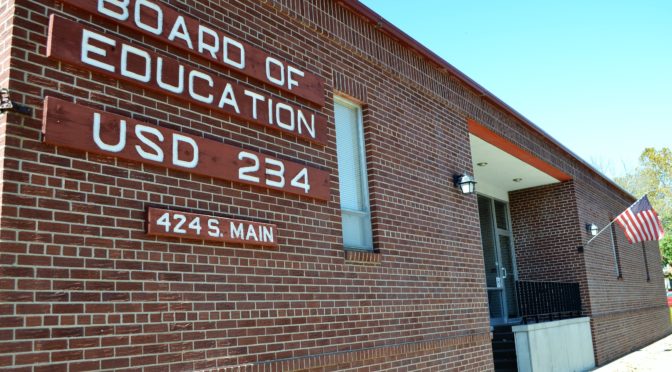
U234 Board of Education Met Last Evening

Unified School District 234

424 South Main

Fort Scott, KS 66701-2697

www.usd234.org

620-223-0800   Fax 620-223-2760


DESTRY BROWN                                                                                                                                                        


Superintendent                                                                                                                                            


BOARD OF EDUCATION REGULAR MEETING

NEWS RELEASE

Monday, September 09, 2024


Members of the USD 234 Board of Education met at 5:30 p.m. on Monday, September 09, 2024, for their regular monthly meeting at the board office.

President David Stewart opened the meeting.


The Revenue Neutral Hearing was held at 5:30 PM, none were present during public forum.

The Budget Hearing was held at 5:45 PM, none were present during public forum.

The Board approved –

Resolution 24-08- Exceeding the Revenue Neutral Tax Rate

Resolution 24-09- Make a local option percentage in an among of 33% for the 24-25 school year.

The Board approved the 2024-25 Budget with consideration of the Needs Assessment.


The board approved the official agenda and the consent agenda as follows:

Board Minutes

  1.       08/12/24 Minutes

Financials – Cash Flow Report

Check Register

Payroll – August 20, 2024 – $1,872,640.99

Activity Funds Accounts

USD 234 Gifts

KASB August Update

KASB Voting Delegate 2024-25 – David Stewart

MOU with SEK Mental Health for Mental Health Intervention Program

MOU with Community Health Center of SEK for random drug screening of students


The Board went into an executive session for personnel matters.


Tiger of Members of the month were Jannah Farrington and Billi Jo Shoemaker. Jannah is in her 14th year of teaching and Billi Jo is in her second with SPED and 23rd year with the district. Both were recognized for their hard work during the ESY summer program. Jannah was the coordinator and Billi Jo helped with the elementary students. Both were a key part in the success of this summer program in which the children had a wonderful experience.


Superintendent Destry Brown reported on an upcoming Board Member training to be held later this month.


Assistant Superintendent Terry Mayfield provided the Board with a shared sheet.


Tonya Barnes, Special Education Director, updated the Board on several training opportunities that will be coming soon. She also commended the SPED staff for their accomplishment with Indicator 11 and informed about the evaluations last year and number of IEP placements.


Danny Brown, Board Member, adjourned the meeting.


PERSONNEL REPORT – APPROVED

September 09, 2024


RESIGNATIONS/TERMINATIONS/RETIREMENTS:

Craig, Alicia – Van Driver Resignation

Hensley, Charlie – Resignation – Transportation Director

Lopp, Kylie – Resignation – Paraprofessional – Eugene Ware

Mishler, Kelsei – Resignation – Paraprofessional – Middle School

Stepps, Abby – Supplemental Resignation – Leadership Club


LEAVE OF ABSENCE:


Mills, Lacy


EMPLOYMENT:


Classified Recommendations for the 2024-25 school year:


Heenan, Kristen – Paraprofessional – High School

Newman, Ronna – Substitute Paraprofessional – High School

Skaggs, Gwen – Paraprofessional – Middle School


Supplemental Recommendations for the 2024-25 school year:


Corbitt, Cheyenne – Intramural Supplemental

Dennigan, Dennis – Morning Gym Supervision

Jones, Taylor – Musical Music Director

Nelson, Andrew – Guided Coalition

Oxholm, Chris – Assistant Wrestling

Spears, Tiffinie – Leadership Club