Category Archives: Opinion

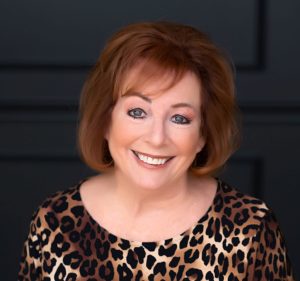
Mom’s Mini Messages by Carolyn Tucker


Keys to the Kingdom

By Carolyn Tucker

Mom’s Mini Messages


It’s been said that no matter how old we are, we never outgrow our need for a mother. I’m in my 60s and I wholeheartedly concur with that statement. Nearly every day I remember some type of wisdom that Mom shared with me. She was a stay-at-home mother so I spent a lot of time with her and I‘m so grateful. She was an excellent role model because she taught me by words and example. Even though we haven’t had a conversation for ten years now, the tape recorder in my memory replays her good and encouraging words quite often. I’m very thankful for her love and voice that I continue to hold in my heart. In 1996, I spoke at a Mother-Daughter Banquet where Mom was presented with the “Exemplary Mother” award. I’d never thought of describing my mom with that adjective. But when she flew away to Heaven in 2015, we had “An Exemplary Life” engraved on her headstone.


I think the first scripture Mom began to drill into my head was Numbers 32:23. I can’t remember if I’d done something specific, but all during my childhood she would say to me, “Be sure your sin will find you out.” I figured that if I did something bad, my parents or God or both would find out and the fur would fly.


Here‘s another vital scripture Mom quoted to me: “If your enemy is hungry, feed him; if he is thirsty, give him a drink; for in so doing you will heap coals of fire on his head” (Romans 12:20 NKJV). I didn’t understand the part about putting hot coals on someone’s head; that didn‘t sound like a good thing to do. Nevertheless, Mom wanted me to learn the lesson of  being nice and doing good things for people who weren’t nice to me.


She often quoted Proverbs 17:22, “A merry heart doeth good like a medicine.” She did an outstanding job of practicing this. She always had a big smile, a big laugh, and sometimes she’d even “cackle” when she got really tickled. Mom wasn’t a storyteller or a joke teller, but she sure got a kick out of everyone else’s funny stories. It’s been scientifically proven that laughter improves our mood and overall well-being. It reduces stress and tension, and also helps in bonding with others. I think a lifestyle of having a merry heart and laughing with family and friends is kinda’ like the glue that sticks us together. The ability to laugh together is bound to be a gift from God.


One time Mom and I were in the kitchen and, I don’t know what prompted this scripture, but she quoted, “A soft answer turneth away wrath” (Proverbs 15:1 KJV). You just can’t have an argument when someone has a smile and kind response. Mom was the first to show mercy and the last to pass judgment. She power-walked in her faith and she never wavered. She studied her Bible and practiced what she read. Her life was well lived and she was well loved.


Mothers are so important in how their children begin life and how they end life, and everything in between. “Hats off” to mothers in their constant efforts to nurture, teach, train, and love their off-spring. Mothers should be celebrated every day because they’re loving, relentless, valuable, selfless, beautiful, funny, and tough as nails.


The Key:  Exemplary mothers never go out of style. Keep up the good work!

Unselfishness by Patty LaRoche

Patty LaRoche. 2023.
Author: A Little Faith Lift…Finding Joy Beyond Rejection
www.alittlefaithlift.com
AWSA (Advanced Writers & Speakers Assoc.)

Last night, I attended a T-ball game to watch Joey, a four-year-old, swing away at a rubber ball placed chest-high on a batting tee.  The rest of the time, he stood at attention in the infield, moving only when a ball landed between his feet and the coach told him to pick it up and throw it to first.  His mother is a childhood friend of my granddaughter, and I went to play “grandparent” since her parents live several hours away.

Joey isn’t fond of the game.  He is the shortest player on the Grasshoppers’ team and rarely has a ball hit his direction.  This night was different.  “Did you see me, Mom? Did you see me, Dad?  I caught the ball and threw it.” A first for the little guy.

From that point on, Joey covered the entire field.  From left field to center field to third base, if the ball was hit, he sprinted to be part of the group that tackled each other to come up with the prize.  I remember with great fondness our sons doing the same, and last night, I could not stop smiling.

But what really caught my attention was another teammate of Joey who was a head taller than all the other players and clearly had some baseball skills.  Instead of showing off his arm, however, he would catch the ball and hand it to one of the smaller Grasshoppers to throw it to first.  His parents had to be proud.

Unselfishness is in short supply.  Two weeks ago, I watched a video of an Easter egg hunt at a Florida beach where my four-year-old granddaughter, Paige, placed plastic eggs in her younger sister’s basket.  Other hunters were not so kind. They scooped up as many eggs as they could to fill their baskets, with no regard for much smaller kids reaching for just one.

What makes some people share (like that Grasshopper and Paige) and others be all about themselves? One such story in the Bible addresses what happens when we seek to serve ourselves.  Abraham and his nephew Lot had accumulated great wealth in livestock and possessions, and soon there was an argument amongst their servants about rights to the springs of water.                                                                                                                                                                Deciding it was time to part company, Abraham gave Lot the choice of which parcel of land he wanted.  Lot chose the richer, greener acreage of the Jordan River and settled near Sodom (Gen. 13:10-12) having no idea the sins of its citizens would result in his family and him running for their lives.

Ignoring God’s warning not to look back, Lot’s wife disobeyed and was turned into a statue of salt (Gen. 19:26).  The end was not good for Lot and his daughters.  Once safe (if living in a cave is “safe”), the daughters got their father drunk, had sexual relations with him, and birthed the beginning of Israel’s enemies, the Moabites and the Ammonites.

I wonder if Philippians 2:3 was written with Lot in mind. Do nothing from selfish ambition or conceit, but in humility count others more significant than yourselves. That little Grasshopper and my granddaughter offer lessons for all of us.


Opinion: Zoning – The Question To Ask Yourself

Several weeks ago, there was a reasonably cordial exchange between David Foster, who opposes zoning, and Mika Milburn, who supports it. County Commissioner Mika made a very good point about zoning that is worth considering:

I understand your fear, but I have fear as well that bourbon county will some day be primarily owned by out of state or even out of county people that do not care nor respect our county and the people that call it home, so many counties in Kansas are zoned and it did not kill them! Although I disagree with you that this will kill our county David I certainly respect your opinion and agree with you on many other things.

At a high level, I believe Mika is saying that there is a way to do zoning that is good for the long-term interests of Bourbon County. This is a perfectly reasonable position, and I completely agree with her. Zoning done perfectly and administered perfectly could potentially have some benefits for the county over not being zoned.

However, we shouldn’t be comparing a utopian execution of zoning with no-zoning. We should be comparing the zoning we will actually get with the lack of county zoning we have today. What makes it difficult is that it is hard to predict exactly what we will get, and it is impossible to say how it will actually be used by current and future commissioners. So, while Mika may be optimistic about her goals for zoning from the commission she sits on, residents should be weighing the risks and rewards of zoning under both the current and future commissioners. It is less of a question of whether good things could come from the decisions made by the best commissioners and more a question of the harm that might result under the worst commissioners in the future. People will evaluate these risks in different ways and will likely come to different conclusions.

So that is thinking about the way zoning might be administered in the future, but what about the way it is enacted today? In other words, what type of zoning are we likely to actually get? Well, let’s look at the current zoning advisory board. This board consists of Brian Wade, Christine Farbo, Brian Ashworth II, James L. Banworth Jr., Mary Pemberton, Jason Yaunt, Amanda Spicer, Pete Owensby, and Mike Houston. They are meeting in the commission room at the courthouse on Thursdays at 5 p.m. starting April 17th and running for 5 weeks. Hop on over to the county’s YouTube channel where all the county meetings are streamed and archived, to see how the process is going.  What’s that? You say you can’t find any of the meetings? Are you sure you looked hard enough? Does that seem strange?

Even though the advisory board meetings under previous commissioners were streamed, the current commissioners have inexplicably broken with this tradition and made the peculiar decision to leave the streaming turned off for these meetings. It isn’t just past commissions that make these types of meetings accessible to the public. A similar advisory board at the city streams their meetings in order to maintain transparency. The commissioners have also decided to forgo taking minutes at the meetings, so there is no official record of what is discussed.

Multiple requests by citizens asking the commissioners to stream these meetings have been denied. In a recent poll, every participating voter except one asked that the meetings be streamed. The sole exception was a vote by Commissioner Beerbower, who voted that the meetings should not be streamed.

Since the evidence suggests that the commissioners think their goals are better served by making these advisory meetings less transparent to the broad population than what has been done in the past, how likely is it that those goals are in the best interest of the broad population of Bourbon County?

That isn’t a rhetorical question. Apparently, Mika feels confident that this process will produce zoning that will be used in a way that will be better than no zoning in the county. This isn’t an unreasonable position, and I’m sure she is not alone. Others may see the downsides of zoning outweighing any potential benefits. The important thing is to look at the process, ask yourself the above question, and then let your commissioner know what you think.

Mark Shead

Additional note: After the meeting ended on Wednesday, Brian Wade indicated that he was unhappy with this piece because it wasn’t the truth. He was walking out the door, so I may not have caught everything, but it seemed he felt that the decision to not make the meetings available in the way that past commissioners have done with past advisory commission meetings was made by the advisory committee, not the commissioners. I would suggest that, since the advisory committee is appointed and directed by the commissioners, the decision is ultimately that of the commissioners, and if the commissioners wanted to make sure the meeting was conducted with the same level of transparency as similar meetings, they could have done so. However, it is worth noting that Mr. Wade felt the committee had the option to make the meetings accessible but chose not to. He mentioned several times that he didn’t want people to be able to see the meetings unless they came in person.

Rat-Killing Machine by Carolyn Tucker

Keys to the Kingdom

By Carolyn Tucker


Rat-killing Machine


When my son Aaron was in high school, his sister Mariam talked me into buying a Boston Terrier puppy for him. (It didn’t take much convincing since I’d had three spunky   Boston’s before.) Aaron named her Chloe and when she was old enough he began to train her to hunt rats. He’d grab his gun and off they’d go into the fields and woods. After a few training sessions, Chloe quickly caught on and was finding and killing rats right and left — a literal rat-killing machine. One day they came upon a huge packrat’s nest of sticks and twigs and Chloe went into action. As she headed full-throttle into the nest, Aaron saw something black and white in there. He immediately took off running for dear life and watched from a distance as Chloe excitedly backed out of the nest with a skunk in her powerful jaws. Up close and personal, the varmint sprayed Chloe smack-dab in the face. This time she didn’t kill her prey and she stank for weeks.


Apostle Peter didn’t beat around the rat‘s nest when he wrote: “So get rid of all evil behavior. Be done with all deceit, hypocrisy, jealousy, and all unkind speech” (1 Peter 2:24 NLT). Christ followers can be a sin-killing machine if we want to do what‘s right and please God to boot.  Sin is a choice.


“Remember, it is sin to know what you ought to do and then not do it” (James 4:17 NLT)

We’ll never go wrong by doin’ what’s right. But we could go wrong by doin’ nothin‘.   We know that Moses’ faith enabled him to choose God’s will and lead the Children of Israel out of Egypt. He chose to obey God rather than the momentary enjoyment of sin’s pleasures. Sin is a choice. And sin will always stink after the dust settles.


“Jesus said to the people who believed in Him, ‘You are truly My disciples if you remain faithful to My teachings. And you will know the truth, and the truth will set you free.’ Jesus replied, ’I tell you the truth, everyone who sins is a slave of sin‘” (John 8:31,32,34 NLT). The only way to know the truth is to read God’s Word for ourselves. The answers to all of life’s questions are found in black and white. Not sure you believe that? Keep reading, keep studying, and keep asking God to reveal His Word to you.


Apostle Paul shoots straight when he writes to the church of Galatia:  “So I say, let the Holy Spirit guide your lives. Then you won’t be doing what your sinful nature craves. The sinful nature wants to do evil, which is just the opposite of what the Spirit wants. And the Spirit gives us desires that are opposite of what the sinful nature desires. Since we are living by the Spirit, let us follow the Spirit’s leading in every part of our lives” (Galatians 5:16,17,25 NLT). Sin is a choice, so let the Holy Spirit lead you away from it.


John the Beloved encourages believers to hold fast to Christ Jesus. His teachings encourage us to go deeper into the truth and ways of God and deeper into our devotion to  Jesus. “If we freely admit our sins when His light uncovers them, He will be faithful to forgive us every time. God is just to forgive us our sins because of Christ, and He will continue to cleanse us from all unrighteousness” (1 John 1:9 TPT).


The Key: Keep walkin’ in the Light ’cause you’ll never go wrong by doin’ what’s right.

When God Nudges by Patty LaRoche


Patty LaRoche. 2023.
Author: A Little Faith Lift…Finding Joy Beyond Rejection
www.alittlefaithlift.com
AWSA (Advanced Writers & Speakers Assoc.)


God tried to get my attention last Saturday evening.  I was having too much fun to listen.  Six of us were having dinner at one of the couple’s houses, and I had a quick thought: Did you turn off the stove before you left home? Answer: Of course I did.  I put the lid on the pan that held the chicken and turned off the stove.                                                                                                          

I didn’t give it a second thought.

I should have.

When Dave and I walked into our house five hours later, the smell made me gag.  Sure enough, resting atop the flame was a charred pan with no evidence chicken had ever been cooking in it.  For days afterwards, we did everything to rid our home of the horrific odors.  Everything had to be washed.  Pine-sol and candles did little to help.

When I shared my story with a friend, she told me about an Amazon product that I could place in strategic areas of my house, and it would absorb all the residual smells. And then Nanette, Dave’s daughter, told me to boil vinegar.  How simple! Here I had labored for days, burned every candle, laid baking soda in different rooms and washed all the cabinets and rugs, and there were simple products that would absorb the residue?  Nice to know.

Of course, this never would have happened had I listened to God’s nudging and run home to double-check my chicken.  Enjoying myself took precedence.  I wonder if anyone can complicate their life the way I can.

There are times I work my tail off to do something for the Lord, only to realize that all He wanted me to do was to pray about it and then sit back and watch Him work. I keep busy doing whatever I think is important instead of paying attention to how He is trying to direct me.  Last Saturday, I was having too much fun to hear His prodding.

I’m always amazed by friends who pause to listen to God’s voice, relying completely on His guidance. For example, should they be laboring to make a dinner for 80 and some needy person calls, craving counsel, they put everything on hold (i.e., turn off their stove) to share spiritual advice with them.

Not me.  I bulldoze my way through life, rarely having a calm demeanor when I have large tasks to accomplish. I do few things gently. I can’t even sneeze gently.  Mine is a tsunami kind of sneeze that makes people jump instead of a sweet, almost inaudible “achoo” like some people I know.  I eat fast.  Really fast.  Not like Nancy Reagan (size 2) recommended to stay slim: “Chew each piece of food 20 times.”  I waste much less time when I jam 20 pieces of food in my mouth and chew once.


Psalm 143:10 gives great instruction on what really matters: Teach me to do your will, for you are my God; may your good Spirit lead me on level ground. When God gives a nudge, I need to budge. When He presents before me others looking angry or sad, He gives me an opportunity to ask if I can pray for them.  When they struggle to pay for their groceries, I can recognize His push to help them financially.  When God stirs my heart to donate my time for a needy cause, I can set aside my excuses and help.

And when He asks if I turned off my stove, I must, must, must listen.


Opinion: Example of Zoning Decisions & Commisioner Alignment

On April 23rd, the Fort Scott Planning Commission met to hear from Garrett Knight. Mr. Knight runs an auto repair business and has an agreement to purchase 922 E. Wall from the land bank if the city rezones it from mixed use to commercial. This would allow him to build a garage with the back wall facing Wall Street, an entrance on Little Street, and a wall around the rest of the property.

Patrick Wood owns the property across the street on 11 S. Little and says he doesn’t want people on his land to have to look at cars at a mechanic shop.

The Planning Commission voted 3 to 3 not to recommend changing the zoning. The way the motion was worded made it hard to figure out exactly what a 3 to 3 vote means, but without a zoning change, Mr. Knight is prohibited from putting his business there. As an advisory board, he can still present his case to the City Commission for the zoning change. (video here)

Now whether you support Mr. Knight in wanting to put a business in that empty lot or you support Mr. Woods who doesn’t want people on his property to be looking out toward it, the process offers a good example of the process of getting permission for land use on property that is zoned vs. the process in the county where land is not zoned.

In particular, it is fascinating to see how difficult it can be to get people who can make zoning decisions without having any competing interests with the people who are asking for those zoning changes. For example, one of the people who voted against Mr. Knight’s request appears to be related to the owners of another building in another part of town that houses an auto repair business. My purpose isn’t to say that this individual was voting based on their self-interest. I’m just pointing out that situations where you have to ask for permission to use land in a particular way get very complicated very quickly. That doesn’t mean zoning is good. It doesn’t mean zoning is bad. But it is a lot more complicated than the current system in the county, where you can do anything legal as long as it doesn’t damage your neighbor’s property.

So what would zoning look like for the county if it is implemented as Commissioner Beerbower claims they intend to do? Well, citizens who have asked Beerbower have been told that a farmer wanting to make commercial use of their land would have to get the commissioners’ permission first. Mr. Eden says Commissioner Beerbower told him that if a farmer wanted to put in a shooting range, the farmer would have to get permission. That isn’t necessarily good or bad. It is just different than what we have today. As I mentioned previously, a lot of it depends on whether you think the current commissioners and all commissioners in the future will act in a way that you feel is in the best interest of the county.

A good deal of that will be determined whether or not you think the commissioners are aligned with people who want you to be able to do whatever it is you may want to do with your land or whether you think they are aligned with people who may have different ideas about what they want you to be able to do with your land.

For example, a few weeks after being elected to their office, two of the current commissioners launched a lawsuit against their office along with several local citizens who all banded together to try to prevent landowners from moving forward with leasing to solar companies. So after being elected, what are the ideas and goals of the people the commissioners aligned themselves with? Well, some of the people on the commissioners’ lawsuit have made some pretty strong statements about how they think other people should be able to use their land. For example, one claimed that they wouldn’t even be satisfied if they were able to force their neighbor to create a half-mile setback.

It is completely inexplicable why the commissioners would file a lawsuit against their office weeks after being elected. This is a lawsuit that they were funding with their own money as plaintiffs and, once they took office, defending with your taxpayer money.  It is even more baffling why they chose to remain on the lawsuit despite people pointing out the clear conflict of interest and asking them to drop off. Despite voices expressing concern, they went on to move from a potential conflict to an actual conflict by instructing their county defense lawyer to do something that was completely counter to the interests of the taxpayers of Bourbon County. They had the lawyer ask the judge to continue the case, even if the judge knew the plaintiffs had no way to win regardless of what they proved. However, there is a silver lining.

Beerbower and Whisenhunt have resisted numerous common-sense suggestions to drop off the lawsuit and let the non-commissioners continue it on their own. They have put an extraordinary amount of effort into staying aligned with their handful of co-plaintiffs in suing themselves.  Those citizens feel that their property rights should extend to what you are allowed to do with half a mile of your land—and even then, they say that is not sufficient control. The silver lining is that you don’t have to guess how zoning is likely to turn out in Bourbon County. Just look at the ideas the commissioners are aligned with. If those ideas look like the level of control you want current and future commissioners exercising over landowners in the county, then you may be happy with zoning as a means to realize that control. If the ideas the commissioners are working hard to align themselves with are of concern to you, then you should probably also be concerned about zoning that would give them a way to execute on those ideas.

Mark Shead

Note: FortScott.biz publishes opinion pieces with a variety of perspectives. If you would like to share your opinion, please send a letter to [email protected]

On High Alert by Carolyn Tucker


Keys to the Kingdom

By Carolyn Tucker

On High Alert

When severe winter weather is predicted, we go on high alert and begin making appropriate preparations. We make sure we have plenty of groceries, fuel for the generator, ensure foundation vents are closed, charge the flashlights, etc. When we’ve done all we know to do, we simply hunker down and wait it out. I read about a World War II Army Ranger’s four-year experience on the front lines in Germany. This Missouri sharpshooter told about how the Rangers were highly trained and knew what to do in tight and unexpected situations. He mentions how every fiber of his being was always on high alert as his unit traveled on foot. They advanced cautiously, always watching and listening. The words, “retreat” or “quit” were not in their vocabulary. I was impressed with this war hero’s amazing bravery and strong tenacity.


There are ample reasons to be on high alert as we do life. Believers engage in spiritual warfare with the enemy of our souls every day. However, if we’re not paying close  attention, we won’t even realize the danger that’s lurking in the bushes. This Ranger’s memoir reminded me of Apostle Peter’s teaching to the Christians then and now.


After we experience the new birth in Christ and a new way of living, that’s not all there is. Peter wants to encourage and caution believers to take heart and stay on high alert. “Be well balanced (temperate, sober of mind), be vigilant and cautious at all times; for that enemy of yours, the devil, roams around like a lion roaring [in fierce hunger], seeking someone to seize upon and devour. Withstand him; be firm in faith [against his onset — rooted, established, strong, immovable, and determined], knowing that the same (identical) sufferings are appointed to your brotherhood (the whole body of Christians) throughout the world“ (1 Peter 5:8-9 AMP).


The devil will use depression, hopelessness, isolation, fear, unforgiveness, and lies to devour any Christian that’s asleep while on guard duty. There’s never a good time to be lazy in our Christian walk because that’s exactly what the devil is looking for. He’s patiently waiting for someone he can grab and destroy — but it doesn’t have to be you or me! Through Christ, we must take a decisive stand against Satan and resist his every attack with strong faith. If believers don’t know they have what it takes to overcome the devil, then there’s a good chance they’ll retreat.


Like Army Rangers, Christians need to be highly trained to know how to get the jump on the enemy. We need to read, study, understand, and put into practice the manual (Bible) regarding spiritual warfare. Here’s a key verse: “So humble yourselves before God. Resist the devil, and he will flee from you” (James 4:7 NLT). As God’s children, we have the authority to stand our ground and send the devil packing. We can’t allow the enemy to pull the wool over our eyes and let him yell his filthy rotten lies at us.


Believers are to, “Put on all of God’s armor so that you will be able to stand firm against all strategies of the devil. …Therefore, put on every piece of God’s armor so you will be able to resist the enemy in the time of evil. Then after the battle you will still be standing firm. Stand your ground…“ (Ephesians 6:11,13-14 NLT).


The Key: Stay on high alert 24-7, so you can stand your ground and defeat the enemy.

Negativity by Patty LaRoche

Patty LaRoche. 2023.
Author: A Little Faith Lift…Finding Joy Beyond Rejection
www.alittlefaithlift.com
AWSA (Advanced Writers & Speakers Assoc.)


“We write our sorrows in the marble, our mercies in the dust.”  Pastor Greg Groeshel spoke those words, and he is right.  For too many people (Christians included), thinking about what is wrong is so much easier than thinking about their blessings.  A recent posting caused me to pause and question if any of these describe me.  Read it slowly.

“Someone is taking their last breath in a hospital bed today, and you’re frustrated sitting in traffic.

Someone is spending their first night alone after years of love, and you’re annoyed your partner left dishes in the sink.

Someone is burying their baby they carried for nine months, and you’re upset your child spilled milk on the couch.

Someone is burying their mom who created them, and you’re annoyed your mom called you twice this morning.

Someone is wishing for just one more conversation with their dad, and you’re rolling your eyes at his advice.

Perspective is everything.  Appreciate the little things because, one day, they’ll be the big things.”

Something is terribly wrong with God’s children.  We are consumed with whatever goes against our wants/needs/desires. Scripture calls us to hope, yet we are terrible hopers.  We expect the worst, so we won’t be disappointed.   “Why is life hard?  Why do others have it so much easier than I do?  They sin more, yet they have more. Nothing has turned out like I expected, so I don’t expect anything different.”

The average person has 10,000 thoughts each day.  That works out to be 3.5 million thoughts a year. If you were to categorize those as “+” or “-”, how many thoughts would be under each heading?  Think of it this way: if someone gave you $10,000 this morning and said, “Spend it any way you like as long as you spend it all before you go to bed tonight.” Hopefully, you wouldn’t just pilfer it away on meaningless junk.

So, why do we do that with our whacky thoughts that aren’t even worth thinking?  We need to focus on the abundant life God has called us to.  We can engage in either self-pity, blame, stubbornness and bitterness, or we can follow the directive of Phil. 4:8.  Finally, brothers, whatever is true, whatever is noble, whatever is right, whatever is pure, whatever is lovely, whatever is admirable—if anything is excellent or praiseworthy—think about such things.                  

How do we do that?  We put our mercies in marble and our sorrows in the dust.


Opinion: Zoning requires trust. Do we have it?

In my first article about zoning, we examined Beerbower’s statement, “Those that hold on to the outdated ideology that zoning somehow robs their freedom and right to do whatever on their land are shortsighted.” (source) We looked at whether zoning actually does nothing as he claimed or if it does change what you are allowed to do with your land. In my second article, we examine why rational people might be both for and against zoning and how, even if everyone were to assume that the current commissioners were incredibly competent and would fully represent their interests, some people may still side with Jefferson’s core principles regarding government. Commissioner Beerbower may consider Jefferson to have “outdated ideology” and be “shortsighted,” but, just like there are rational reasons to want zoning, it isn’t unreasonable for someone to agree with Jefferson.

Given we’ve considered zoning with a premise of the commissioners acting in the very best interest of the county, it is worth considering whether or not that premise holds.

In November, the three commissioners-elect, David Beerbower, Leroy Kruger, and Brandon Whisenhunt joined local citizens  Bob Casper, Katie Casper, Timothy Emerson, Samuel Tran, Karen Tran, and Michael Wunderly in suing the county commissioners and the solar companies to try to undo the actions of the then-current commission. The details of the case are interesting, though for the sake of this discussion, it shouldn’t matter too much what you think of the merits of the case. What we are going to look at is how you are being represented as a citizen of Bourbon County.

On 12/30/24, the lawyer representing the county made a motion asking the judge to dismiss the case because the lawsuit (filed by the three incoming commissioners and some local citizens) “fails to state any cause of action or set forth facts sufficient to support any claim under Kansas law.” The way that a motion to dismiss is handled is that the judge has to “pretend” that the plaintiffs can prove every single thing they have claimed in their lawsuit. If in this “pretend” scenario, the plaintiff still wouldn’t win, then the case is dismissed. If there is some possible scenario where one of the plaintiffs’ claims could win, then the case is not dismissed.

So when the commissioners Beerbower, Kruger, and Whisenhunt took office in January of 2025, the county found itself in the absolutely ridiculous position where every sitting commissioner was paying with their own money to fund a lawsuit against themselves and then using taxpayer money to defend against that lawsuit. I’ve heard people argue that they didn’t know they were going to be elected when they filed the lawsuit, but since the election was November 5th and the lawsuit was filed November 20th, fifteen days had elapsed when the commissioners-elect could have recognized the gross conflict of interest and asked to be removed from the lawsuit. Even if they were sympathetic to the cause of the other plaintiffs on the lawsuit, it is clear that they couldn’t play both sides at the same time without either behaving unethically to the other citizens who were plaintiffs or choosing to act against the best interest of the county as a whole.

Instead of defending the lawsuit with their recently hired county lawyer (who cost $110,000 per year), they retained outside counsel to defend the county. If they believed that outside counsel could reduce the costs of defending a lawsuit more quickly and at less expense than the recently hired county attorney, then it would have been their duty to the taxpayers to do so. However, their next action made it clear that wasn’t the plan.

Remember, there was an open motion asking the judge to dismiss the case if there was no way the plaintiffs could win, even if they proved every one of their claims. Every taxpayer in the county has a vested interest in making sure that the county doesn’t spend thousands of dollars of tax money on defending against a lawsuit that a judge knows the county will win ahead of time, no matter what the plaintiffs prove in court.

On March 3rd, 2025, the commissioner’s lawyer withdrew their motion to dismiss. This meant that they told the judge, “Never mind. Even if you know that we will win the lawsuit, we want the lawsuit to continue.”  Why would commissioners do this? Why would they want to continue paying the outside lawyer to continue the case? Why would they ask the judge to NOT consider if there was any legal basis for the lawsuit? It clearly is not in the best interest of Bourbon County to drag out the lawsuit if it is clear what the end result will be.  However, there are a few people who might want to drag out a lawsuit that the judge knows they can’t win. Those are the people paying for the lawsuit against the county in the first place, including the three commissioners-elect when it was filed.

The fact that the commissioners intentionally filed a lawsuit, knowing they would use their own money to sue themselves and then use your taxpayer money to defend against that suit, is unexplainable. The most gracious explanation is that they didn’t fully realize what type of situation that was going to create, but the fact is that they refused to drop off despite calls to do so on ethical grounds. The fact that they have hired an additional lawyer with your taxpayer money only to instruct him to ask the judge not to give an early ruling on the merits of the case appears to me to be completely unconscionable.

Given the clear preference for undermining the county’s defense of the lawsuit by withdrawing the request for the judge to rule on the merits of the plaintiffs’ case, it is hard to imagine any way that the commissioners on the lawsuit could be said to be operating in the best interest of the county.

Bringing this back around to the original point. In my previous piece, we assumed that you have no doubt that the current commissioners are acting completely and 100% in your best interest as a citizen and taxpayer of the county. That allowed us to look at zoning in a best-case scenario. But now you should consider the facts of the decision to file a lawsuit, knowing they would soon be in office and have to use your taxpayer money to defend against it. Consider that they hired an outside lawyer, not to expedite the end of the lawsuit, but to prolong it. Consider that the commissioners on the lawsuit have refused to drop off to avoid the clear conflict of interest.

Next, consider whether or not that track record gives you confidence in their ability to fairly represent your interests and the longterm interests of the county in implementing zoning. If it does and you support the idea of zoning, then by all means, give them your full support. However, if it raises concerns, then even if you support the idea of zoning, you should consider the track record of the two (originally three) commissioners who chose to file a lawsuit against themselves with their money and pay to defend it with yours.

Mark Shead

Note: FortScott.biz publishes opinion pieces with a variety of perspectives. If you would like to share your opinion, please send a letter to [email protected].

BB-2024-CV-000075 – Motion to Dismiss

BB-2024-CV-000075 – Original Petition

BB-2024-CV-000075 – Withdrawal of Board of County Commissioners Motion to Dismiss

Opinion: Zoning, Core Principles & Rationality

In my last piece, we looked at the commission’s stated position that people who don’t want zoning have an “outdated ideology” and are “shortsighted.” (source) We looked at reasons that a person might agree with implementing zoning in Bourbon County, and also some reasons why someone might disagree.  There are rational reasons for both sides. Some, if not most, of the people I know who oppose zoning do so on the grounds of core principles and a long view of the different viewpoints and quality of leadership that they expect to cycle through the commissioner seats over the coming years.

Months before George Washington was elected President for the first time, Jefferson wrote, “The natural progress of things is for liberty to yield, and government to gain ground.” He was commenting on the need for limits to the government’s power—especially in how long someone could stay President. While he agreed that the presumed President, George Washington, would make a good leader, he felt that our system of government should be designed to work well with a good President, but also work with a bad one that we may not yet anticipate. Jefferson felt that the amount of authority given to the government becomes the starting point from which it will continue to “gain ground” and the way to preserve liberty is to make sure you don’t give the government more control when you had a good leader than what you’d want if you happen to get a bad one.

Many people who oppose zoning share a similar core principle that leads them to approach any growth of government with the same concerns as Jefferson.  The establishment of a framework where landowners must obtain permission from the commissioners to use their land in ways that are otherwise lawful is a long-term concern. Even if they have full faith and trust in the current commissioners, looking to the future means realizing that other commissioners will come, just as Jefferson recognized about the Presidency.

Zoning enables the county to designate specific land uses that require commissioner approval.  If you have a core principle that believes that the county commissioners today and in the future are going to make these approvals in your best interest, then zoning is a great way to make sure that if your neighbor has to get permission from the commissioners in order to make sure their use is more in keeping with what you will find acceptable. (According to Johnathan Eden Commissioner Beerbower has said a shooting range would require this permission.)

On the other hand, some people have a core principle that reflects Jefferson’s concerns.  Even if they would like to see their neighbors have to ask the commissioners for permission for everything the current commissioners propose today, they recognize the natural tendency of government to “gain ground” and believe that the potential inconvenience of their neighbor using their land as they see fit is a much lower risk than the cumulative ordinances that will be enacted by current and future commissioners if given the authority provided by zoning.

It is easy to see why people might rationally support zoning. It is equally easy to see why they might rationally be opposed to this. For the sake of argument, let’s assume that the current commissioners are Washington-level leaders and no one in the entire county has any concerns that they would make any decision that isn’t in the best interest of the county as a whole. Jefferson tells us the authority that we give to our government should be constrained in a way that handles the worst leadership we can imagine, along with the best. Whether you support zoning or not, you should be wary of political rhetoric that dismisses the core principles that embody Jefferson’s concerns as “outdated ideology” and labels those who hold these principles as “shortsighted.”

Mark Shead

Note: FortScott.biz publishes opinion pieces with a variety of perspectives. If you would like to share your opinion, please send a letter to [email protected]

Famous Rolling Stone by Carolyn Tucker


Keys to the Kingdom By Carolyn Tucker

Famous Rolling Stone

I have cherished photos of my immediate family when I was 14 months old. The year was 1959 in Covina, California. Mom was wearing a hat, dress with a thin belt, a corsage,  white gloves, and black patent-leather heels. Dad wore a white dress shirt, necktie, white suit jacket with a handkerchief in the breast pocket, black slacks, and black leather dress shoes. My 11-year-old brother was outfitted in a white shirt, bow tie, suit jacket, and dark slacks. I was wearing a ruffled bonnet with a matching dress, and white walking shoes. I wouldn’t part with these sentimental photos for love nor money. We were on our way to church to celebrate the resurrection of Jesus Christ, the Savior of the world!


Matthew’s account tells us how the extremely-massive stone at the door of the tomb was  rolled away. “For an angel of the Lord came down from heaven, rolled aside the stone, and sat on it“ (Matthew 28:2 NLT). On this first Resurrection Sunday, the rolling-stone angel scared the living daylights out of the four Roman soldiers assigned to guard Jesus’  tomb. “His face shone like lightning, and his clothing was as white as snow. The guards shook with fear when they saw him, and they fell into a dead faint“ (Matthew 28:3-4 NLT). The soldiers were so terrified at the immense size, power, and brilliance of this angel that they fell to the ground, violently trembling and so paralyzed with fear that they couldn’t move! When they somewhat revived, they got up and ran away like little girls. The Bible doesn’t say that they screamed…but I wonder.


“After the Sabbath, as the first day of the week was dawning, Mary Magdalene and the other Mary went to view the tomb“ (Matthew 28:1 CSB). According to Luke 24:10, there were also other women with the two Mary’s. When the women came to the tomb (which had been officially sealed shut by Roman soldiers), they found that the enormous stone had been rolled away! A massive earthquake had occurred simultaneously at the moment of Jesus’ resurrection sometime before the women arrived at the garden. Just as the earth shook when the Son of God died on the cross, now the earth had exploded with jubilation at the resurrection of Jesus!


“The angel told the women, ‘Don’t be afraid, because I know you are looking for Jesus who was crucified. He is not here. For He has risen, just as He said. Come and see the place where He lay. Then go quickly and tell His disciples, ‘He has risen from the dead and indeed He is going ahead of you to Galilee; you will see Him there.’” (Matthew 28:5-7 CSB).  These brave ladies were instructed to “go and see” and then “go and tell.”


When it comes to telling a story, it’s been said that women describe all the details and men just basically tell the headlines. Maybe that’s why the angel told women, and not men, to look inside the tomb and then “go and tell” what they saw. Even though they were perplexed and astonished, they obeyed the angel’s instructions.


I guess we can say that Jesus was the inventor of “show and tell.” A few days after  Resurrection Sunday, Jesus appeared to His disciples a second time. (The first time,  Thomas was absent so he didn’t believe that Jesus was alive.) The risen Savior spoke directly to Thomas and said, “Put your finger here, and look at My hands. Put your hand into the wound in My side. Don’t be faithless any longer. Believe!“ (John 20:27 NLT). Christ followers cannot be faithless and do the Kingdom of God any real good.

The Key: The most-famous rolling stone is the one that couldn’t keep Jesus entombed.

Opinion: Zoning, “outdated ideology,” and “shortsighted” people

On April 7th, the Bourbon County Commissioners discussed zoning. Commissioner Beerbower read some prepared remarks and said, “Let me reiterate, it is not a matter of if we will zone. It is a matter of what zoning will look like.” (source) He further addressed people who don’t want zoning in the county, saying,  “Those that hold on to the outdated ideology that zoning somehow robs their freedom and right to do whatever on their land are shortsighted.” (source)

I can definitely see some reasons zoning might be valuable as well as some reasons it might not. But let’s take an imaginary person named Fred who fits Commissioner Beerbower’s description. Fred believes that if zoning is implemented, it will place some type of limits on what he can do with his land. Commissioner Beerbower calls Fred’s belief an “outdated ideology.” But is it? If we were to enumerate all the things Fred might possibly do with his land without zoning, and then do the same thing with everything he might do with his land after zoning, are those two lists the same? If they are, then zoning does nothing.

If they aren’t the same, then zoning does remove some of the freedoms of what he can do to his land versus what he could do with it before. Now, that might not matter to Fred. If Fred wants to put a shooting range on his property, he’d need to get permission from the county commissioners. If Fred’s neighbors decide they want to prevent Fred from doing this, it isn’t a matter of working with their neighbor to create a compromise. They can now go to the commissioners and try to convince them to stop Fred. Now, whether you see that is a good or bad thing probably depends on whether you are Fred or the neighbor trying to determine what Fred is allowed to do.

(Note: The shooting range example comes from Mr. Eden’s comment about a conversation with Commissioner Beerbower.)

Commissioner Beerbower may call Fred’s view “outdated ideology,” but there are definitely some things that Fred can do without zoning that he cannot do with zoning. That’s kind of the point of zoning.

Now try to see Beerbower’s statement about zoning not taking away anyone’s freedom from his point of view. He might think he would never deny Fred’s request and it is just a matter of making sure it is safe. So from that perspective, Fred can still do what he wants with his land, it is just a matter of the commissioners making sure he does it in a way that makes his neighbors happy. So maybe the neighbors say they would be fine with the shooting range as long as it had a berm of a particular height. Fred may say, “Sure, we were going to do 6 feet, but if you feel more comfortable with 7, I can do that.” Everyone works together. Everyone is happy.
But what if everyone isn’t going to be happy? Maybe what would make Fred’s neighbors happy isn’t something Fred wants or can do. Well then it becomes a matter for the commissioners to tell Fred what he can or can’t do.

This isn’t necessarily good or bad, but it introduces a step in the way that Fred uses his land that wasn’t there before. Without zoning, Fred is the one who decides whether he wants to put in a shooting range. Zoning would give the commissioners the authority to say yes, no, or ask for changes.

When it comes to me personally, Commissioner Beerbower is right that zoning isn’t going to “rob [my] freedom and right to do whatever on [my] land.” But that is because I have no intention of doing anything on my property that anyone is going to want to control with zoning. Other people who actually make a living off their land are much more likely to want to do something with their land that would require commissioner approval. 

Zoning requires you to take on the burden of getting permission for things that are otherwise legal uses of your property, but it also gives you a greater say in what your neighbor is allowed to do with their property. If you think the commissioners are going to endorse the plans you want on your land, but oppose the ones you don’t want on your neighbor’s, then maybe you’ll retain your “freedom and right to do whatever on your land” for anything you might want to do and the extra step of getting permission will be just a formality. Once again, this isn’t necessarily good or bad, it is just a tradeoff.

It makes perfect sense why some people might support making this tradeoff and some people might be against it. It isn’t an irrational position to think that the current laws are sufficient, nor is it an irrational position for someone to be willing to take on more oversight in what they are allowed to do if it means they can have a greater voice in what their neighbor is allowed to do.

A lot of how people weigh the tradeoffs has to do with core principles, what someone thinks they might want to do with their property in the future, and how much they trust current and future commissioners. Since those three things vary wildly between individuals, we should expect to see people on both sides of the fence when it comes to zoning. We’ll look at some of those issues in the future, but if someone has a position different than yours, it might not be because of an “outdated ideology” and being “short-sighted.”

Mark Shead

Note: FortScott.biz publishes opinion pieces with a variety of perspectives. If you would like to share your opinion, please send a letter to [email protected]