|
|
|
|

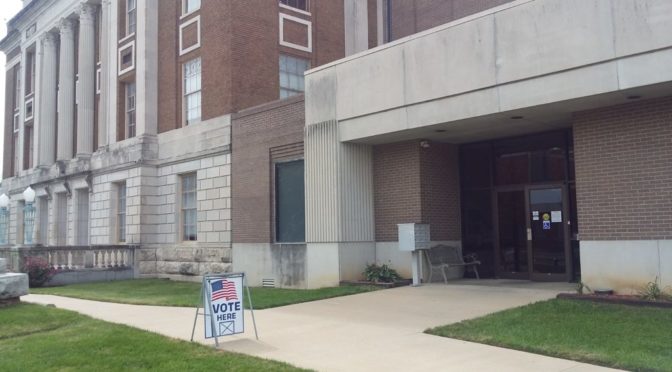
The general election will be November 8, but those who wish to, may vote earlier.
Early voting will begin Wednesday, October 26th and will be open Monday through Saturday from 8:30 a.m.-4:30 p.m. and will end on Monday, November 7th at noon.
People may vote at the Bourbon County Courthouse, 210 S. National Ave. in the commission room.
To view the sample ballot:
“We provide early voting to allow everyone the opportunity to vote, which is why we started offering Saturday voting,” said Ashley Shelton, Bourbon County Clerk. “We had a good turnout in the primary for early voting and a lot of positive comments regarding Saturday voting. We will continue to offer Saturday voting as an option if people continue to utilize it.”
In addition to selecting candidates, there will be two questions on this ballot, one about the election of sheriffs and one about Kansas legislative oversight.
Taken from the ballot:
County Sheriff Question
This amendment would preserve the
right of citizens of each county
that elected a county sheriff to continue
electing the county sheriff. The
amendment would also provide
that a county sheriff only may be
involuntarily removed from office
pursuant to either a recall election
or a writ of quo warranto initiated
by the attorney general.
A writ of quo warranto is a common law remedy which is used to challenge a person’s right to hold a public or corporate office, according to https://www.law.cornell.edu/wex/quo_warranto
A yes vote for this proposition would
preserve the right of citizens of
each county, to
continue electing the county sheriff
via popular vote. The amendment
would also direct that a county
sheriff only may be involuntarily
removed from office pursuant to
either a recall election or a writ
of quo warranto initiated by the
attorney general.
A no vote against this proposition
would not make any changes to
the constitution and would retain
current law concerning the election
of a sheriff and the procedures for
involuntary removal of a sheriff from
office.
The amendment states:
County and township
officers. (a) Except as provided
in subsection (b), each county
shall elect a sheriff for a term of
four years by a majority of the
qualified electors of the county
voting thereon at the time of voting
designated for such office pursuant
to law in effect on January 11, 2022,
and every four years thereafter.
(b) The provisions of subsection
(a) shall not apply to a county
that abolished the office of sheriff
prior to January 11, 2022. Such
county may restore the office of
sheriff as provided by law and such
restoration shall be irrevocable.
A county that restores the office
of sheriff shall elect a sheriff by a
majority of the qualified electors
of the county voting thereon for a
term of four years. Such sheriff shall
have such qualifications and duties
as provided by law. The time of
voting for the office of sheriff may
be provided for by the legislature
pursuant to section 18 of article 2 of
this constitution.
(c) The filling of vacancies and the
qualifications and duties of the
office of sheriff shall be as provided
by law.
(d) The legislature shall provide for
such other county and township
officers as may be necessary.
§ 5. Removal of officers. (a) Except
as provided in subsection (b), all
county and township officers may
be removed from office, in such
manner and for such cause, as shall
be prescribed by law.
(b) A county sheriff only may be
involuntarily removed from office by
recall election pursuant to section 3
of article 4 of this constitution or a
writ of quo warranto initiated by the
attorney general.
From Bourbon County Counselor Justin Meeks,
“A yes vote would require counties to maintain a sheriff as an elected official,”
The Question of Legislative Oversight
The purpose of this amendment is
to provide the legislature with
oversight of state executive branch
agencies and officials by providing
the legislature authority to establish
procedures to revoke or suspend
rules and regulations.
A yes vote for this proposition would
allow the legislature to establish
procedures to revoke or suspend
rules and regulations that are
adopted by state executive branch
agencies and officials that have the
force and effect of law.
A no vote against this proposition
would allow state executive branch
agencies and officials to continue
adopting rules and regulations
that have the force and effect
of law without any opportunity
for the legislature to directly
revoke or suspend such rules and regulations.
Legislative oversight of administrative rules and
regulations.
Whenever the legislature by law has
authorized any officer or agency
within the executive branch of
government to adopt rules and
regulations that have the force and
effect of law, the legislature may
provide by law for the revocation
or suspension of any such rule and
regulation, or any portion thereof,
upon a vote of a majority of the
members then elected or appointed
and qualified in each house.
From Bourbon County Counselor Justin Meeks,
“This will basically allow the legislature to overturn regulations created by agencies, environmental agency for example,” Meeks said. “It would take away some of the governor’s administrative powers.”
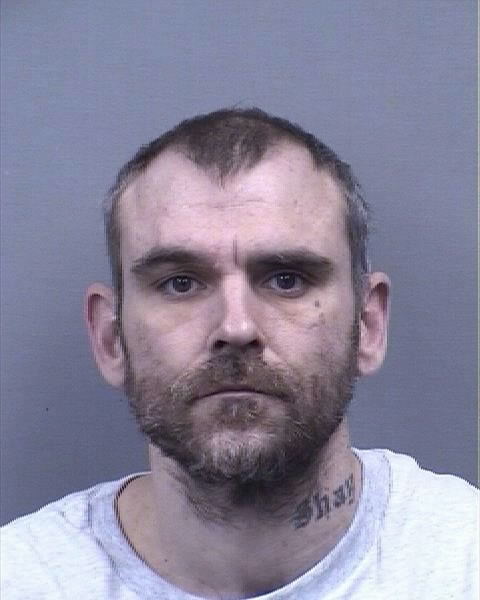
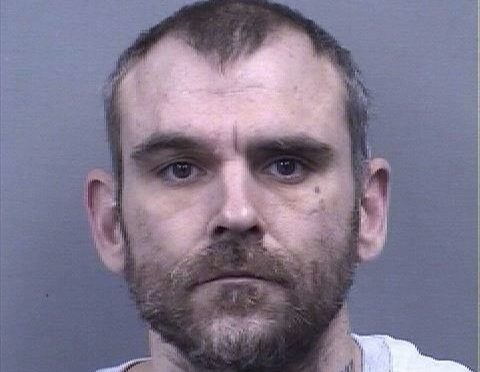
Minimum-custody resident Joshua W. Renfro walked away from Lansing Correctional Facility
TOPEKA, Kansas. – Minimum-custody resident Joshua W. Renfro was placed on escape status at approximately 9:00 p.m. after it was reported that he walked away from Lansing Correctional Facility on Sunday, October 23, 2022.
Renfro, a 39-year-old white male, was reported missing when the resident could not be located at the minimum-security unit. This walkaway does not impact the security or operations of the medium-maximum secure compound.
Renfro is serving a 30-month sentence for a 2020 Violation of an extended protection order conviction in Allen County. Renfro has four prior convictions dating back to 2001.
Renfro is 6 feet 1 inches tall, 175 pounds with Hazel eyes and brown hair. He has tattoos on his torso, neck, hands, arms and legs.
Anyone with information on Stroede can call the Kansas Department of Corrections at 913-727-3235 ext. 58224, the Kansas Bureau of Investigation at (800) 572-7463 or local law enforcement at 911.
The walk-away is currently being investigated. New information will be released as it becomes available.
The Lansing Correctional Facility, formerly the Kansas State Penitentiary, opened in 1867. Serving only males, the facility maintains maximum and medium units totaling 1,920 beds and a 512-bed minimum security unit.
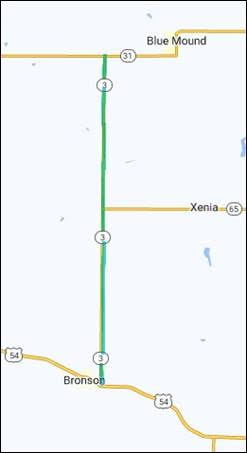
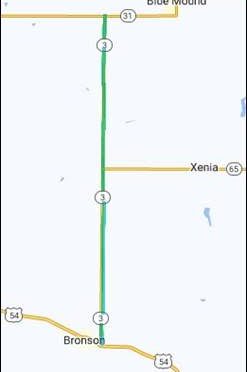
The week of Oct. 24 the Kansas Department of Transportation (KDOT) plans to start a resurfacing project on K-3 between K-31 and U.S. 54 (see map).
Project activity includes a mill and inlay with rock edge wedge. Flaggers and a pilot car will guide one-lane traffic through the work zone during daylight hours. Expect delays of 15 minutes or less. Weather permitting, the road work will be finished in one month.
KDOT awarded Pearson Construction, LLC, of Wichita the project contract of $2 million. Persons with questions may contact KDOT Area Engineer Troy Howard at (620) 901-6557 or Public Affairs Manager Priscilla Petersen, (620) 902-6433. Check KDOT’s updated traveler information website, www.Kandrive.org, for more road condition and construction details.
The plan addresses water issues facing stakeholders throughout the state
The Kansas Water Office (KWO) released the finalized 2022 Kansas Water Plan (KWP) this week. This is the first comprehensive water plan for the state of Kansas to be released since 2009 and provides a roadmap for navigating the vast array of water issues throughout the state.
The water plan provides an outline for management, conservation and development of the state’s water resources. To do so, it names five guiding principles – conserve and extend the High Plains Aquifer; secure, protect and restore our Kansas reservoirs; improve the state’s water quality; reduce our vulnerability to extreme events; and increase awareness of Kansas water resources.
The KWP is created by the Kansas Water Office with input from partner agencies and Regional Advisory Committees (RACs). The draft is offered for public comment before being reviewed, finalized and approved by the Kansas Water Authority.
The finalization of the plan leads into the implementation phase, where the Kansas Water Office will work with other state agencies and Regional Advisory Committees across the state to address the principles outlined in the KWP. Implementation is supported by the State Water Plan Fund, a statutory mechanism created to pay for the projects and programs identified in the KWP. This year, two statutory transfers into the fund were fully provided for the first time since 2008.
“The drought conditions throughout the state drive home the importance of having a comprehensive plan,” said KWO Director Connie Owen. “Water is the most valuable resources we have, and we must manage it strategically to ensure a safe and secure supply now and for the future.”
|
|
|
|
Nonpartisan Scorecard Ranks Kelly Highest in Kansas,
Second-Highest Governor in US
TOPEKA – Governor Laura Kelly has been named a “Common Ground Champion” for her bipartisan leadership and commitment to working across the aisle to deliver results for Kansans. This recognition comes from the Common Ground Committee (CGC), a nonpartisan organization devoted to improving public discourse in politics, as part of their Common Ground Scorecard of elected officials. She is the highest-ranking elected official in Kansas and the second highest-ranking governor in the country.
In her first term, Governor Kelly signed 286 bipartisan bills into law.
“I have worked with Kansans of all political stripes to balance the budget, fully fund our schools, build a record-breaking economy, axe taxes, and invest in our law enforcement and infrastructure,” said Governor Kelly. “I am proud that my record reflects my commitment to working across the aisle to find common-sense solutions, and I thank the Common Ground Committee for this recognition.”
The scorecard assesses the degree to which elected officials and candidates for office seek points of agreement on social and political issues through listening and productive conversation. Governor Kelly has affirmed the “Common Ground Attributes,” which include listening first, staying respectful, and seeking progress.
“Americans are divided over the direction of the country and how to solve many issues we currently face. To make progress, leaders must be committed to working across the aisle and finding solutions that address all our citizens’ concerns,” said Erik Olsen, co-founder of CGC. “But while they are divided on issues, Americans agree that they want to see their representatives work together and solve problems. We hope that more lawmakers follow Gov. Kelly’s lead and make a commitment to finding common ground.”
Governor Kelly’s score of 80 out of 100 is 51 points higher than the national average score of 29 and 48 points higher than the Kansas average score of 32.
Click here For more information on the Common Ground Scorecard and Governor Kelly’s score.
For more information about the Common Ground Committee, contact Jim Luetkemeyer at jim@commongroundcommittee.org.
|
|
|
FORT SCOTT – Governor Laura Kelly announced today that 34 cities across Kansas have been selected to receive a total of $28.65 million for improvements to the State Highway System located within city boundaries. The funds will be directed to preserve and improve pavement, add turn lanes, and modify intersections along essential roadways in both rural and urban areas throughout the state.
The grants are administered through the Kansas Department of Transportation’s City Connecting Link Improvement Program (CCLIP). The program is an important component of the state’s bipartisan transportation program, IKE, passed under the Kelly Administration.
“By making this investment, we’re improving the safety and accessibility of Kansas roadways that are local centers of community life,” Governor Laura Kelly said. “Through these grants, we’re delivering economic opportunities throughout rural and urban Kansas.”
Governor Kelly and Transportation Secretary Julie Lorenz announced the CCLIP awards in Fort Scott, where $1.5 million in CCLIP funds will be directed to improvements on U.S. 54, also known as Wall Street.
KDOT was able to increase CCLIP funding level for this selection cycle by more than $10 million over previous years due to additional federal funds coming to Kansas as part of the Bipartisan Infrastructure Legislation (BIL). Both federal and state funds are designated for the CCLIP program and local matching funds are required based on city population.
“With the Connecting Link program, KDOT partners with communities to find solutions to support local transportation priorities,” Transportation Secretary Lorenz said. “I very much appreciate the power of the state and communities pooling funds to make improvements.”
A City Connecting Link is defined as any routing of the State Highway System located with the corporate limits of a city, not including the Interstate System. For this CCLIP cycle applying to state fiscal years 2024-2025, KDOT received 54 applications requesting $38 million.
There are three categories of CCLIP projects: Surface Preservation (SP), which extends the life of the driving surface; Pavement Restoration (PR), which rehabilitates or replaces pavement; and Geometric Improvement (GI), which addresses safety or capacity by improving roadway turn lanes, intersections, or modifying lane configurations.
For each project – the category, city, highway, and amount awarded include:
|
Category |
City |
Highway |
CCLIP Funds |
|
Northeast Kansas |
|||
|
SP |
Atchison |
US-59 |
$400,000 |
|
SP |
Bonner Springs |
K-32 |
$400,000 |
|
SP |
Emporia |
US-50 |
$400,000 |
|
SP |
Kansas City |
US-169 |
$400,000 |
|
SP |
Lawrence |
US-59 |
$400,000 |
|
PR |
Marysville |
US-77 |
$1,250,000 |
|
North Central Kansas |
|||
|
SP |
Clay Center |
K-15 |
$400,000 |
|
SP |
Concordia |
K-9 |
$400,000 |
|
PR |
Herington |
US-56B |
$1,250,000 |
|
PR |
Moundridge |
K-260 |
$800,000 |
|
PR |
White City |
K-4 |
$1,250,000 |
|
Northwest Kansas |
|||
|
SP |
Colby |
K-25 |
$400,000 |
|
PR |
Smith Center |
K-204 |
$1,300,000 |
|
PR |
Smith Center |
K-204 |
$1,300,000 |
|
PR |
Stockton |
US-24 |
$1,100,000 |
|
Southeast Kansas |
|||
|
PR |
Baxter Springs |
US-69A |
$1,000,000 |
|
GI |
Fort Scott |
US-54 |
$1,500,000 |
|
SP |
Independence |
US-160 |
$400,000 |
|
SP |
Independence |
US-160 |
$400,000 |
|
GI |
Madison |
K-58 |
$1,500,000 |
|
PR |
Parsons |
US-59 |
$1,250,000 |
|
South Central Kansas |
|||
|
PR |
Anthony |
K-44 |
$900,000 |
|
SP |
El Dorado |
US-77 |
$400,000 |
|
SP |
Great Bend |
US-281/US-56 |
$400,000 |
|
PR |
Hoisington |
K-4 |
$1,250,000 |
|
PR |
Kingman |
US-54 |
$1,250,000 |
|
SP |
Larned |
US-56 |
$400,000 |
|
PR |
Pratt |
US-281 |
$750,000 |
|
PR |
Wellington |
US-81 |
$1,250,000 |
|
SP |
Winfield |
US-160 |
$400,000 |
|
Southwest Kansas |
|||
|
SP |
Dodge City |
US-50 |
$400,000 |
|
PR |
Lakin |
K-25 |
$1,250,000 |
|
PR |
Ness City |
K-96 |
$1,000,000 |
|
GI |
Ulysses |
US-160 |
$1,500,000 |
|
TOTAL: |
$28,650,000 |