Category Archives: Kansas

KDR Helps Military Transfer Credentials

Kansas Dept. of Revenue helps current and discharged military transfer valuable credentials

TOPEKA – The Kansas Department of Revenue is working in partnership with the Federal Motor Carrier Safety Administration (FMCSA) to help military personnel bridge a possible licensing gap with its Military Commercial Driver’s License (CDL) Even Exchange Program. The program is open to current Kansas National Guard, Kansas Reserves, or discharged military personnel who have a valid military CDL credential convert over to a civilian CDL.

“We recognize our military men and women with a CDL acquired during their service are valuable to the Kansas workforce,” Department of Revenue Secretary Mark Burghart said. “The safety training received during service goes above and beyond the requirements of the civilian CDL and it only makes sense to be part of the Military Even Exchange Program.”


“Kansans serving in the military have been some of the most devoted public servants, with a strong sense of commitment to making our communities, state and nation better,” Governor Laura Kelly said. “It’s important that they have employment opportunities to transition to civilian life in a way best for them and their families. Reintegration programs and the Military Even Exchange CDL Program are among ways we can offer that vital assistance.”


Kansas is the fifth state to be part of this program. Being ahead of other states makes the program valuable to both veterans and businesses needing highly skilled CDL credentialed drivers.


Military personnel discharged with the military credential have up to a year from their discharge date to be eligible for the conversion. If a hazardous materials credential is needed in addition to the CDL, an applicant must take the additional test. All applicants must provide a medical clearance card from an FMCSA certified physician.

For more information about the program, please contact Brian Brunt at 785-213-9157.

Been To Lyon State Fishing Lake Recently?

ZEBRA MUSSELS FOUND IN LYON STATE FISHING LAKE


TOPEKA – The Kansas Department of Wildlife, Parks and Tourism (KDWPT) has confirmed the presence of invasive zebra mussels in Lyon State Fishing Lake in Lyon County. Routine samples collected by KDWPT Aquatic Nuisance Species staff to detect zebra mussels were found to contain zebra mussel larvae (also called veligers). Upon finding the veligers, staff returned to the lake and located an established population of adult zebra mussels. Similar sampling is conducted by KDWPT at more than 100 waterbodies across the state.


The 135-acre lake is located 12 miles north and two miles east of Emporia on Rd 270. Lyon State Fishing Lake is owned and operated by KDWPT. The lake and surrounding wildlife area are popular destinations for fishing, hunting, hiking, and a variety of other outdoor-related activities.


While the zebra mussel population is currently small, there is no known method to completely rid a lake of this invasive species. The zebra mussels were likely introduced by “hitchhiking” with un-suspecting lake-goers. Adults are able to attach to boats or other equipment and the microscopic zebra mussel veligers may be present in any water originating from an infested lake or stream. Densities as high as 1,000 veligers per gallon have been recorded in Kansas waters.


“This is the first new population of zebra mussels found in the state in 18 months, which is the longest period of time between new lake infestations since 2006. While it is unfortunate that zebra mussels have been spread to a new lake, I remain hopeful that these occurrences will be less frequent as more people have become aware of zebra mussels, their impacts, and how to prevent moving them,” said Chris Steffen, aquatic nuisance species coordinator for KDWPT.


Lyon State Fishing Lake will be added to the list of ANS-designated waters in Kansas, and notices will be posted at various locations around the waterbody. Live fish may not be transported from ANS-designated waters. The sharp-shelled zebra mussels attach to solid objects, so lake-goers should be careful when handling mussel-encrusted objects and when grabbing an underwater object when they can’t see what their hands may be grasping. Visitors should protect their feet when walking on underwater or shoreline rocks.


Zebra mussels are just one of the non-native aquatic species that threaten our waters and native wildlife. After using any body of water, people must remember to follow regulations and precautions that will prevent their spread:

  • Clean, drain and dry boats and equipment between uses
  • Use wild-caught bait only in the lake or pool where it was caught
  • Do not move live fish from waters infested with zebra mussels or other aquatic nuisance species
  • Drain livewells and bilges and remove drain plugs from all vessels prior to transport from any Kansas water on a public highway.

For more information about aquatic nuisance species in Kansas, report a possible ANS, or see a list of ANS-designated waters, visit ProtectKSWaters.org.

ABOUT ZEBRA MUSSELS

Zebra mussels are dime-sized mollusks with striped, sharp-edged, two-part shells. They can produce huge populations in a short time and do not require a host fish to reproduce. A large female zebra mussel can produce 1 million eggs, and then fertilized eggs develop into microscopic veligers that are invisible to the naked eye. Veligers drift in the water for at least two weeks before they settle out as young mussels which quickly grow to adult size and reproduce within a few months.

After settling, zebra mussels develop byssal threads that attach their shells to submerged hard surfaces such as rocks, piers, and flooded timber. They also attach to pipes, water intake structures, boat hulls, propellers, and submerged parts of outboard motors. As populations increase, they can clog intake pipes and prevent water treatment and electrical generating plants from drawing water. In 2012, two Kansas communities, Council Grove and Osage City, experienced temporary water shortages from zebra mussel infestations before water intake structures could be cleaned up. Removing large numbers of zebra mussels to ensure adequate water flow can be labor-intensive and costly.

Zebra mussels are native to the Black and Caspian seas of western Asia and eastern Europe and   were spread around the world in the ballast water of cargo ships. They were discovered in Lake St. Clair and the Detroit River in 1988 and quickly spread throughout the Great Lakes and other rivers including the Mississippi, Illinois, Ohio, Tennessee, Arkansas and Hudson. They were first discovered in Kansas in 2003 at El Dorado Reservoir. Despite public education efforts to alert boaters about the dangers of zebra mussels and how to prevent spreading them, the species continues to show up in new lakes every year. Moving water in boats and bait buckets has been identified as a likely vector.

For information about Lyon State Fishing Lake, visit KSOutdoors.com, click on Fishing, then Where to Fish and select the Northeast region.

–30—


Editors: the attached image depicts an adult zebra mussel collected from Lyon State Fishing Lake. Credit:

Kansas Dept. of Wildlife, Parks and Tourism


Ron Kaufman

Director of Information Services

Kansas Department of Wildlife, Parks and Tourism

1020 S. Kansas Ave., 2nd Fl.

Topeka, KS 66612


Phone 785-296-2870

Fax     785-296-6953

Tax Receipts Increase

State closes out FY 2019 $440.5 million ahead of previous year’s total tax receipts


TOPEKA – The state is closing out Fiscal Year 2019 (FY) at $7.5 billion, or 2.62% above estimates, for total tax collections. This is a $440.5 million increase in tax revenue, compared to FY2018.

In June, the state collected $781.8 million, or 4.36% above the estimate for total tax receipts.


Retail sales tax receipts are 0.45% below monthly estimates, totaling $199.1 million, and are $5.4 million below the same month in 2018. Individual income tax receipts are at $388.0 million, or 12.47% above the estimate of $345.0 million.


“The numbers attributed to the growth in individual income tax receipts for the fiscal year are due to a combination of factors including continued growth, federal and Kansas tax law changes, and non-recurring capital-gain transactions,” Secretary Mark Burghart said. “Sales tax has been fairly flat for the year, decreasing by 0.27% compared to the previous fiscal year.”

To view the report:


12_June_Revenue_FY19_07-01-19_Final


New Latino Director Appointed

Governor appoints executive director to Hispanic and Latino American Affairs Commission


Governor Laura Kelly today announced the appointment of Audé Amelia Negrete of Overland Park as executive director of the Hispanic and Latino American Affairs Commission.


The Kansas Hispanic and Latino American Affairs Commission serves as a liaison for the Kansas Hispanic and Latino community and the Office of the Governor, with the goal of serving needs of Hispanic and Latino residents in areas of culture, education, employment, health, housing, welfare, and recreation.


“Audé’s own life experience and desire to address challenges faced by Hispanic and Latino residents of our state made her an ideal choice to lead this commission,” Governor Laura Kelly said. “She’ll be a valuable contributor, just as she’s been over the years in her successful efforts surrounding social justice and civic engagement.”


Born in Mexico City, Negrete was 14 when her family left Mexico for to the United States and Kansas. During her career, she’s been involved in numerous initiatives designed to provide educational, social and economic services for Hispanic and Latino families in Kansas.


The seven-member Hispanic and Latino American Affairs Commission includes four members representing each of the state’s congressional districts, and three at-large members.


Negrete will fill the executive director position previously held by Richard Martinez.

Governor Supports Supreme Court Ruling

Statement on U.S. Supreme Court ruling on Census citizenship question


“I support today’s Supreme Court ruling,” Governor Laura Kelly said. “The goal is to make sure every person is counted. At stake is federal funding distributed to communities for schools, roads, public safety, parks and other programs, so Kansas cannot afford to be shortchanged in this important process. The Census also determines how many seats states have in the U.S. House, and Kansas deserves fair representation.

“The citizenship question would have done more to deter participation than encourage everyone to be counted,” the governor said. “Our Complete Count Committee is working across Kansas to raise awareness of the Census and address related challenges. If people living in Kansas aren’t counted, it will cost our state and local communities – especially our rural communities – thousands of dollars, per person, every year for the next decade. I want to remind all Kansans of the need to be counted.”


DCF Expands Access to Child Care

Kansas Department for Children and Families Expands Access to Child Care Program

Policy changes designed to help parents maintain employment


In a move to help Kansans find work and stay employed, Governor Laura Kelly today announced a new Kansas Department for Children and Families initiative that will expand access to child care assistance for Kansas families.


“Having access to quality child care is essential for parents to maintain employment,” Kelly said. “Those with lower incomes often struggle to afford quality child care. By expanding access to the program, more Kansas families can sustain employment or participate in meaningful training programs.”


DCF is making several policy changes to the program that will go into effect July 1. They include:


  • Reducing the minimum work hours per week to be eligible from 28 to 20, which will expand child-care access to more working  parents.
  • Expanding the program to participants of the GOALS employment and training program allowing families to access child-care assistance for job search activities. GOALS is specifically for parents who participate in the state’s food assistance program.
  • Using Child Care Development Funds (CCDF) to pay child-care costs for foster children. This new program will provide foster parents the added convenience of using an EBT card to pay for child care.


“We know that child-care costs can be an obstacle to employment for many of our low-income families,” DCF Secretary Laura Howard said. “In Topeka for example, affordable child care is 21 percent of a family’s income for those at the top of the eligibility threshold (185% of federal poverty level). Our expectation is that families will actually be able to increase their earnings while having peace of mind knowing their children are being cared for in healthy environments.”


DCF estimates more than 3,000 Kansas children will benefit from these policy changes. The agency estimates spending more than $9 million in FY 2020 and nearly $14 million in FY2021 based on current caseload data.


“Helping our fellow Kansans find work, stay employed and receive a quality education are universal values,” Kelly said. “This is a first step in repairing the safety net that was pulled from vulnerable Kansans during the previous eight years.”


Frances Gorman Graves Nominated to Kansas Supreme Court

Governor makes appointment to Supreme Court Nominating Commission


Governor Laura Kelly today announced the appointment of Frances Gorman Graves to the Supreme Court Nominating Commission.


“Frances’ leadership experience and years of involvement in communications, along with her rural Kansas perspective, will be valuable as the Supreme Court Nominating Commission does its work,” Kelly said. “We appreciate her willingness to serve and be part of this important process.”


The nine-member Supreme Court Nominating Commission is responsible for recommending qualified individuals for appointment to the Kansas Supreme Court and Kansas Court of Appeals. Four of the members are non-attorneys appointed by the governor. The four appointees selected by the sitting governor each represent one congressional district in the state. Four others are attorneys selected by fellow attorneys in each of the congressional districts, with the chair of the commission an attorney elected by attorneys statewide.


Graves was appointed to a four-year term as one of the board’s four non-attorney members, and will serve starting on June 30. She’s currently the Assistant to the Director of Parsons Area Community Foundation. Previously, Graves was the Senior Media Researcher for Synoptos from 2012 to 2015, Adjunct Instructor at Labette Community College in Parsons from 2009 to 2012, Communications Coordinator at KU’s School of Business from 2008 to 2009, and Director of Strategic Communications for the Kansas Attorney General’s Office from 2007 to 2008. She and her family are farmers and ranchers in southeast Kansas.


Graves will assume the commission seat currently held by 2nd Congressional District non-attorney member Felita Kahrs of Topeka, who was appointed by Governor Sam Brownback.


Kelly will continue filling a significant number of vacancies in the coming months in her effort to rebuild Kansas, including new vacancies and other positions left unfilled by previous administrations.


Bourbon County Portion of 69 Hwy. Complete

Governor Laura Kelly, Secretary of Transportation Julie Lorenz and numerous officials and highway advocates prepare to cut the ribbon. A view of Hwy. 69 is in the background.

Supporters of the continued U.S. Hwy. 69 expansion efforts gathered Monday morning for a celebration and ribbon-cutting ceremony.

The event was held in the yard of the Cherry Grove Baptist Church, which lies at the crossroads of Hwy. 69 and Cavalry Roads in Bourbon County.


The project expanded six miles of U.S. 69 south of Fort Scott to a four-lane upgradable expressway.


“Kansas Department Of Transportation will let the six-mile Arma Connection (in Crawford County) this fall and plans to let the remaining 5.5-mile Crawford County Expansion in the fall of 2020,” Priscilla Petersen, KDOT Southeast Kansas District Public Affairs Manager, said. “Once completed those two projects will (provide) four-lane U.S. 69 from Kansas City to Pittsburg.”

“Hwy. 69 beyond south of Pittsburg, remains in the study phase,” Petersen said.


Transgender: Kansas Amending Sex Designations on Birth Certificates

Governor applauds action that clears way for transgender Kansans to amend sex designation


Gov. Laura Kelly applauded action Friday that cleared the way for transgender Kansans to amend the sex designation on their birth certificates.


The Kansas Department of Health and Environment (KDHE) entered into a consent decision Friday, resolving a federal case filed in October 2018 regarding the amendment of Kansas birth certificates.


The plaintiffs had argued the KDHE denied Kansans an accurate birth certificate in violation of Equal Protection and Due Process clauses of the U.S. Constitution. In addition, the suit said, forcing transgender individuals to identify with a sex “that is not who they are” violated free speech rights.


Kansas was among just three states, along with Tennessee and Ohio, that blocked modification of birth certificates to reflect a person’s sex consistent with their gender identity.


“It was time for Kansas to move past its outdated and discriminatory anti-transgender policy,” Governor Kelly said. “This decision acknowledges that transgender people have the same rights as anyone else, including the right to easily obtain a birth certificate that reflects who they are.


Stephanie Mott, known for her work on transgender issues, sued the KDHE so she could change the gender on her birth certificate to female. While Mott eventually dropped her lawsuit, the Kansas Statewide Transgender Equality Project was a plaintiff in the 2018 federal lawsuit filed on behalf of transgender Kansans seeking to change their birth certificates.


Mott died in March.


“Her advocacy to make Kansas better is remembered in this important decision and in other progress she achieved for transgender people,” Governor Kelly said.


As a result of Friday’s consent decision, the Office of Vital Statistics under KDHE now will allow a transgender person born in Kansas to obtain a certified copy of his/her amended birth certificate reflecting a change in sex designation.


In order to request a certificate, the individual will need to submit a sworn statement requesting the change and accompanied by one of three things:

  • A passport that reflects the person’s true sex; or
  • A driver’s license that reflects the person’s true sex; or
  • A certification issued by a healthcare professional or mental health professional with whom the person has a doctor-patient relationship. The certification must state, based on his or her professional opinion: 1) the true gender identity of the applicant; and 2) that it is expected that this will continue to be the gender with which the applicant will identify in the future.

For media questions, please call either (785) 296-5795 or (785) 296-1317. For questions on amending your birth certificates, please contact the Office of Vital Statistics at (785) 296-1438.

Flags Lowered for Jan Meyers

Governor orders flags lowered honoring Congresswoman Jan Meyers

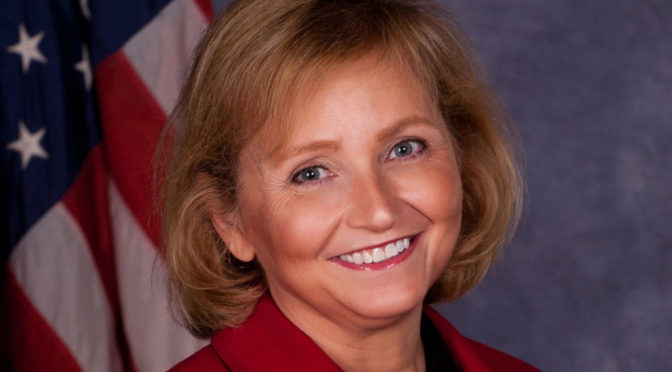
Governor Laura Kelly has ordered flags to be flown at half-staff Monday, June 24, at the Kansas State Capitol complex in honor of former Congresswoman Jan Meyers, who passed away Friday. Meyers served Kansas from 1985 to 1997 in the U.S. House of Representatives.


“I was deeply saddened to hear of the passing of Congresswoman Jan Meyers, whom I respected and admired. As the first Republican woman elected to the U.S. House from Kansas, she was a groundbreaking public servant in many ways, and a role model for all.


“Her dedication to Kansas as a member of Congress will be forever remembered,” the governor said. “Lt. Governor Lynn Rogers and I, along with our families, extend our heartfelt condolences to Congresswoman Meyers’ family.”


To receive email alerts when the governor orders flags to half-staff, please visit https://governor.kansas.gov/newsroom/kansas-flag-honors.


U.S. 69 expansion in Bourbon County celebrated June 24


A ribbon-cutting ceremony to celebrate the completion of the U.S. 69 expansion in Bourbon County will take place at 10:30 a.m. Monday, June 24, at the Cherry Grove Baptist Church, south of Fort Scott. The church is on the east side of the U.S. 69 and Cavalry Road intersection.


Governor Laura Kelly, Secretary of Transportation Julie Lorenz and Highway 69 Association President Ken Brock will speak prior to the ribbon-cutting ceremony. Blake Benson of the Highway 69 Association is master of ceremonies.


Construction on U.S. 69 began in the spring of 2017. The project, part of the T-WORKS transportation program, expanded six miles of the highway to a four-lane upgradable expressway from south of Fort Scott to the Bourbon-Crawford county line.


The event is open to the public.

Bourbon County Not Approved Yet For Major Disaster Declaration

President Approves Major Disaster Declaration for Kansas


President Donald Trump approved a request from Governor Laura Kelly today for a major presidential declaration which will help supplement state and local recovery efforts in the areas affected by severe storms, straight-line winds, tornadoes, flooding, landslides and mudslides.


“It was important for the president to approve our Major Disaster Declaration,” Kelly said. “The Major Disaster Declaration will assist jurisdictions with rebuilding damaged infrastructure and put our state back on the path to recovery.”

The President’s action makes federal funding available to state, eligible local governments and certain private nonprofit organizations on a cost-sharing basis for emergency work and repair or replacement of facilities.

Counties included are Allen, Anderson, Atchison, Barber, Barton, Butler, Chase, Chautauqua, Cherokee, Clark, Clay, Cloud, Coffey, Cowley, Doniphan, Elk, Ellsworth, Franklin, Geary, Greenwood, Harper, Harvey, Hodgeman, Jefferson, Kingman, Leavenworth, Lincoln, Linn, Lyon, Marion, Marshall, McPherson, Meade, Montgomery, Morris, Nemaha, Neosho, Osage, Ottawa, Pawnee, Phillips, Pottawatomie, Pratt, Reno, Rice, Rush, Russell, Saline, Sumner, Wabaunsee, Washington, Wilson, and Woodson counties.

Counties listed in the Governor Kelly’s request to President Trump were:  Allen, Anderson, Atchison, Barber, Barton, Bourbon, Butler, Chase, Chautauqua, Cherokee, Clark, Clay, Cloud, Coffey, Comanche, Cowley, Crawford, Dickinson, Doniphan, Douglas, Edwards, Elk, Ellsworth, Ford, Franklin, Geary, Gray, Greenwood, Harper, Harvey, Hodgeman, Jefferson, Kingman, Leavenworth, Lincoln, Linn, Lyon, Marion, Marshall, McPherson, Meade, Montgomery, Morris, Nemaha, Neosho, Norton, Osage, Ottawa, Pawnee, Phillips, Pottawatomie, Pratt, Reno, Rice, Riley, Rush, Russell, Saline, Sumner, Wabaunsee, Washington, Wilson, and Woodson; however damage verification and validation has not occurred in all of the counties requested by the Governor, so additional counties will be approved based on damages being validated by FEMA.

Federal funding for the hazard mitigation grant program is also available on a cost-sharing basis for actions taken to prevent or reduce long-term risk from natural hazards statewide.

The request was made under the provisions of Section 401 of the Robert T. Stafford Disaster Relief and Emergency Assistance Act, 42 U.S.C. §§ 5121-5208 (Stafford Act), and implemented by 44 CFR § 206.35.