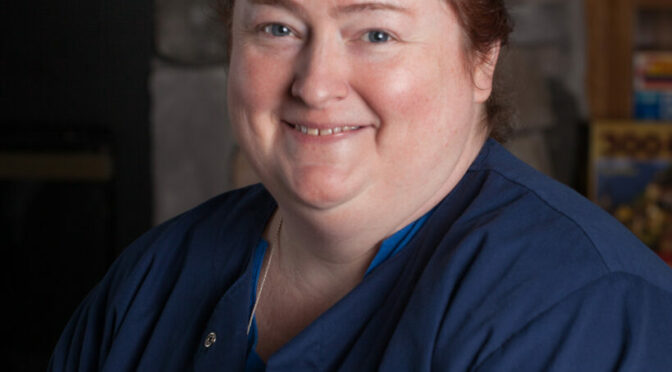
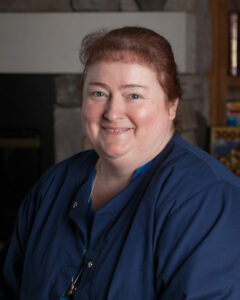
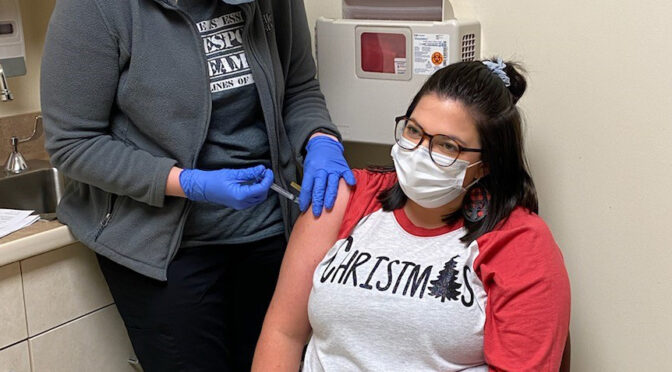
Heather Geiger: New FSMS Nurse


Kansas has had 103,553 cases, with 4,138 hospitalizations and 1,181 deaths.
To see all the latest statistics on Kansas COVID-19

Previously, $9,975 was received for personal protection equipment (PPE) and cleaning expenses the city incurred since the pandemic began in March 2020, Susan Bancroft, the city’s finance director said.

In addition, the city received $142,000 on October 9, 2020 to cover the following categories, according to Bancroft.
PPE-$31,500 and Public Health Expenses-$15,000.
“Public Safety will receive funding to protect essential workers during the pandemic, as well as address disinfecting several community facilities,” Bancroft said. “The City of Fort Scott will be purchasing MSA self-contained breathing apparatus (SCBA) for our firefighters, rechargeable Gen Eon Misters to disinfect public areas, air purifiers for several locations, PPE and additional janitorial services.”
Economic Support $6,500:
“The Coronavirus Pandemic has created a completely different landscape for tourism,” Bancroft said. ” No longer are people interested in going to big cities with crowded venues. Instead, they are looking to visit towns like Fort Scott where they can get away from those crowded areas. Specifically, they are interested in getting outdoors. Fort Scott and Bourbon County are uniquely positioned for this type of activity. We have a plethora of agritourism businesses that people have greatly enjoyed visiting over the years, such as the Lavender Patch, Black Dogs Farm, Gunn Park Trails, T&C Wildlife, Anderson Elk Ranch and more. The funds received for economic support will be used for direct mailings, professional photos, drone video, agritourism postcards and brochures and pay per click advertising.”
Technology costs $89,000:
“Travel has become very limited due to COVID-19,” Bancroft said. “Furthermore, public safety workers need to continue educational training for certification. These technology funds will enable a training area to be created for this purpose. Computers for telework, a projector, tables and chairs and a whiteboard will be purchased to create this learning environment. In addition, in order to reduce the contact when officers are out patrolling, mobile dispatch units, additional computers for telework, and an Ecitation program with printers for records management will be purchased.”

Work is underway for the Uniontown Health Clinic located on the campus of USD 235.
The clinic is a collaboration of the school district, Uniontown Ruritan, Girard Medical Center and Bourbon County.
They recently received a SPARK Grant from the government and a Jayhawk Wind (wind energy company) grant to move forward with repurposing the building south of the high school football/track field into a health clinic for the community.
To view a recent story on the clinic:
Uniontown Health Clinic Moving Forward To Open in 2021


Nevada Regional Medical Center (NRMC) has been supporting an investigation and response to an outbreak of COVID-19 at Moore-Few Care Center that began last week.
The first case was discovered through routine testing of the staff on Oct 20th. Since then 39 residents and 23 staff have tested positive. Family members of all residents have been contacted and close contacts identified and contacted as well.
The administration and staff of Moore-Few are working closely with federal and state health departments to contain the spread of the virus and are following all recommendations to protect every individual on the premises. Residents have been separated, with all COVID-19 positive cases moved to rooms in one wing of the building. Unless symptomatic, employees are being tested twice a week and residents are tested weekly. Visitation continues to be prohibited.
“This is a situation we take very seriously,” said Holly Bush, Chief Quality Officer at NRMC. “The health and well-being of our long-term care residents, and everyone in our health system, is our top priority. That is why we need everyone to follow the public health guidelines to stop the spread of COVID-19 and protect the people in our community who are vulnerable to severe illness from the virus.”
###
About Nevada Regional Medical Center
Serving a six-county area since 1937, Nevada Regional Medical Center is a 71-bed acute, intensive and skilled care hospital. Nevada Regional Medical Center has earned recognition as a respected regional medical center for its comprehensive health care services, skilled and caring employees and state-of-the-art medical technology. Staff represent more than a dozen medical specialties, including family practice, women’s services, neurology, urology, psychiatry, orthopedics, wound care services, and general, vascular, thoracic and oncological surgery. Additionally, consultation clinics are held regularly by specialists in oncology, pulmonology, podiatry, ear, nose, and throat and cardiology.
KS Dept. of Health and Environment Guidance for Celebrating Halloween, September 2020
This document outlines guidance and considerations for celebrating Halloween during the COVID-19 pandemic. As typical Halloween celebrations do not allow for minimizing contact with non-household members, it is important to plan early and identify safer alternatives. Refer also to any specific city or county guidance in your community which may be more restrictive than what is outlined below.
Halloween Activities Not Recommended
• Gatherings, events, or parties with non-household members
• Carnivals, festivals, live entertainment, and haunted house attractions
• Door to door trick or treating – It is very difficult to maintain proper social distancing on porches and at front doors, ensure everyone (trick or treaters and residents of homes being visited) are properly wearing face coverings, and because food sharing is risky.
• “Trunk or treating” – It is difficult to avoid crowding and sharing food at such events.
• Traveling to a rural fall festival that is not in your community if you live in an area with community spread of COVID-19.
Recommended
• Online parties or contests (e.g., costume contests, pumpkin carving)
• Car parades
o Drive by events or contests where individuals dress up or decorate vehicles and drive by judges that are appropriately physically distanced
o Drive through events where individuals remain in vehicles and drive through an area with Halloween displays
o Drive in events where individuals receive a treat bag (with commercially packaged, non-perishable treats) or take away item from an organizer while the participants remain in their vehicle
• Halloween movie nights at drive in theaters
• Halloween themed meals at outdoor restaurants, complying with restaurant protocol
• Halloween themed art installations at an outdoor museum, complying with museum protocol
• Dressing up homes and yards with Halloween themed decorations
Personal Protection Measures
Regardless of how you celebrate, there are important recommendations for how to keep yourself and your household members safe.
• Correctly wear a cloth face covering to prevent disease spread when outside your home and around others who are not part of your household.
• Avoid confined spaces, including indoor spaces that don’t allow for easy distancing of at least 6-feet between you and others.
• Practice physical distancing – place at least 6-feet between yourself and other people who are not part of your household.
• Practice routine hand hygiene – wash your hands often, for at least 20 seconds with soap and water. If soap and water are not available, use hand sanitizer with at least 60% alcohol.
• Clean frequently touched items regularly.
Safer Trick or Treating and “Trunk or Treating”
Although KDHE does not recommend trick or treating or “Trunk or Treat” events as ways to celebrate Halloween, there are some recommendations and guidance to consider if you make these choices for yourself or members of your household.
• Correctly wear a cloth face covering to prevent disease spread when outside your home.
o Incorporate face coverings into costumes.
o Face coverings should not be worn by children younger than 2 years old, anyone who has trouble breathing, and anyone who is otherwise unable to remove their cloth face covering without assistance.
• Carry hand sanitizer with at least 60% alcohol and use at regular intervals while outside your home.
• Consider carrying sanitizing wipes to disinfect candy or other items accepted from homes. Or, sanitize items individually when you get home before consumption. Remember to also examine treats for choking hazards or tampering before eating them.
• Accept only commercially packaged, non-perishable items.
• Practice physical distancing.
o Always leave at least 6-feet of space between yourself and people not in your household.
o Do not crowd sidewalks, driveways, or porches.
o Wait until a porch or doorway is empty before approaching a home.
o Move aside on sidewalks and driveways to allow space between yourself and other trick or treaters.
o Keep a safe distance from cars – do not walk in the street.
• For “Trunk or Treat” events, follow all guidelines above while also considering:
o Maintain at least 6-feet of distance between yourself and other attendees as you walk around.
o Wait for others to depart a car/trunk before approaching. Do not congregate at a car/trunk with other attendees unless they are members of your household.
Guidance for Homes Accepting Trick or Treaters
• When answering the door or coming into contact with trick or treaters, correctly wear a cloth face covering.
• Wash hands with soap and water for at least 20 seconds at regular intervals; hand sanitizer with at least 60% alcohol can be substituted if soap and water are not available.
• Regularly clean and sanitize frequently touched items such as door handles, door bells, and door knockers. Consider having sanitizing wipes by the door for quick access between trick or treaters.
• Distribute only commercially produced, non-perishable items to trick or treaters.
• Do not use “grab bowls”, where trick or treaters reach into a communal bowl to retrieve candy.
• Practice one-way trick or treating
o Consider spacing items 6-feet apart on your porch, in your yard or on a table in your driveway with a sign advising trick or treaters to “Take 1”. Watch from a safe distance and replenish items as needed.
o Alternatively, make individual goodie bags for trick or treaters to pick up as they walk by. If your home has a fence, consider hanging individual goodie bags on the fence for trick or treaters to take as they walk by.
• For “Trunk or Treat” events, also consider:
o Participating cars should be parked at least 6-feet apart.
o Make individual goodie bags and place them in your trunk so they are not touching. Maintain a distance of at least 6-feet from other attendees and replenish bags or items as needed.
o Carry hand sanitizer with at least 60% alcohol and use at regular intervals.
o Sanitize high-touch areas at regular intervals. Consider having sanitizing wipes on hand.
Halloween Parties
Although KDHE does not recommend hosting or attending parties as a way to celebrate Halloween, there are some recommendations and guidance to consider if you make this choice for yourself or members of your household.
• Remind potential guests who are sick or waiting on results of a COVID-19 test to stay home.
• Host activities with only people from your local area as much as possible.
• Correctly wear a cloth face covering around others who are not part of your household.
• Practice routine hand hygiene – wash your hands often, for at least 20 seconds with soap and water. If soap and water are not available, use hand sanitizer with at least 60% alcohol.
• Consider only hosting or attending parties hosted in large, outdoor spaces that allow for physical distancing of at least 6-feet between attendees. If an event must be hosted indoors, make sure the space is well-ventilated (for example, open windows and doors).
• Maintain at least 6-feet between yourself and people who are not members of your household, especially when cloth face coverings are removed for eating and drinking.
• When setting up tables and chairs, create individual seating areas of various sizes spaced 6-feet apart to be utilized by individual family or household units. Encourage guests to sit only with those who are members of their household, especially for eating and drinking when cloth face coverings will be removed.
• Avoid activities that require guests to be in close contact or to share items, such as games or food.
• Encourage guests to bring their own food and drinks.
• Limit people going in and out of areas where food is being prepared, such as kitchens or grills.
• Clean and disinfect commonly touched surfaces and any shared items between use when feasible.
General Halloween Health and Safety Tips
In addition to modifications to Halloween activities to reduce the spread of COVID-19, remember the following general Halloween health and safety tips to keep you and members of your household safe.
• Avoid trick or treating alone. Walk in groups or with a trusted adult.
• Fasten reflective tape to costumes and bags to help drivers see you.
• Examine all treats for choking hazards and tampering before eating them.
• Hold a flashlight while trick or treating to help you see and others see you.
• Walk, don’t run, from house to house.
• Look both ways before crossing the street. Use crosswalks whenever possible.
• Only walk on sidewalks whenever possible. Avoid walking in streets and roadways. If there is no sidewalk, walk along the far edge of the road facing traffic in order to stay safe.
• Wear well-fitting costumes to avoid blocked vision, trips, and falls.
• Eat only commercially produced, non-perishable treats. Avoid eating homemade treats made by strangers.
• Do not enter homes unless you are with a trusted adult.
• Only visit well-lit homes.
• Never accept rides from strangers.
• Never walk near candles or luminaries. Wear flame-resistant costumes.
References
1. Los Angeles County Department of Public Health. Guidance for Celebrating Halloween. Retrieved September 2020 from http://publichealth.lacounty.gov/media/coronavirus/docs/community/GuidanceHalloween.pdf.
2. Centers for Disease Control and Prevention. Halloween Health and Safety Tips. Retrieved September 2020 from https://www.cdc.gov/family/halloween/index.htm.
3. Centers for Disease Control and Prevention. Personal and Social Activities. Retrieved September 2020 from https://www.cdc.gov/coronavirus/2019-ncov/daily-life-coping/personal-social-activities.html#gatherings.
4. Centers for Disease Control and Prevention. Holiday Celebrations. Retrieved September 2020 from
https://www.cdc.gov/coronavirus/2019-ncov/daily-life-coping/holidays.html.

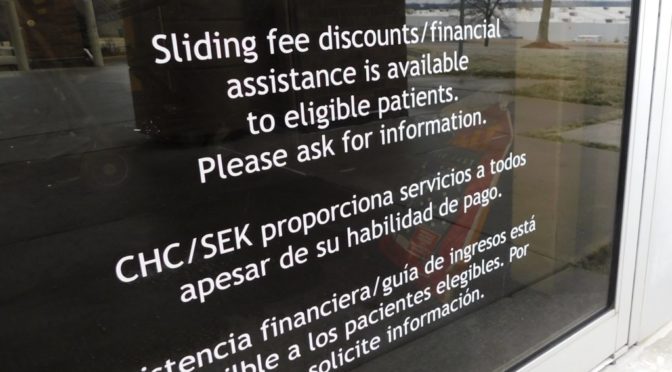
Community Health Center of Southeast Kansas in Fort Scott now offers rapid testing for the COVID-19 virus for those with symptoms.
On October 9, 2020, the Bourbon County Law Enforcement Center announced there were 33 who tested positive for COVID-19 at the jail, the biggest spike in the county since the pandemic started in March 2020.
As of October 20, there have been 303 people who have tested positive for the virus in Bourbon County, according to the Southeast Kansas Multi-County Health Department.
To see the latest COVID-19 updates, click below:
Kansashttps://www.coronavirus.kdheks.gov/160/COVID-19-in-Kansas
“I can confirm we have finally received the test kits to now do rapid testing in Fort Scott for COVID-19,” Krista Postai, CHC/SEK CEO, said. “Because of the limited supply, we have allocated these for those individuals with symptoms.”

Because of the limited amount of tests, it is at the discretion of the health care provider and the availability of the test, according to a spokeswoman at CHC.
“We have standing orders to cover the testing,” Postai said.
COVID-19 testing takes about 20 minutes in total.
The test is done with nasal swabs.
The cost is $100 and covered by insurance and/or a government program for those with symptoms, Postai said.
“For those without symptoms, an alternative rapid test is available for $50 cash and is not covered by insurance,” she said. “However, if the test comes up positive we are required to send it off for confirmatory testing which costs another $100 cash and takes another couple of days.”
Jayhawk Wind Provides Key Funding for Uniontown Health Clinic:
Grant to Uniontown Ruritan Club Closes Remaining Funding Gap
Uniontown, KS – October 22, 2020 – Jayhawk Wind announces the award of a $20,000 community grant to support the completion of a new health clinic for the western part of Bourbon County and surrounding communities. The new facility will be located at the old USD 235 Uniontown Board of Education Office building and operated by the Girard Medical Center. The new facility will help serve local residents who have previously had to travel outside of the immediate area for medical care, and it will be located in close proximity to assisted living apartment complexes and local schools.
“We are excited to have the support of Jayhawk Wind in the form of a community grant,” said Ruth Duling, CEO of the Girard Medical Center. “A health clinic in Uniontown has been a mission for the Uniontown community for a number of years. Their dream is about to become a reality and Girard Medical Center couldn’t be happier to help along with the collaboration of USD 235 and the Uniontown Ruritan Club. We know that local access to health care will be a huge benefit for the folks that live in and around Uniontown. It means a lot to have the support of Jayhawk Wind and we thank them for their confidence and generosity.”
“Having locally based healthcare and healthcare choices for the residents in the western half of Bourbon County and surrounding areas, especially at this time, has been a goal of this community for a number of years,” stated Mark Warren, Middle America Ruritan District Governor #37 and Uniontown Ruritan Member. “The Uniontown Ruritan Club is pleased to have the cooperation of USD 235 and the Girard Medical Center in making this dream a reality. We are pleased and appreciate the support of Jayhawk Wind for their generous gift to the residents of the area. Thank you, Jayhawk Wind, for partnering with us and making this investment in our community!”
Bret Howard, USD 235 Superintendent, said, “Uniontown USD 235 is excited to partner with other organizations to bring health care options to our district communities. This grant will allow a current building to be leased to Girard Medical Center while being able to construct a separate building for bathrooms and concession stand areas. We are pleased that Jayhawk Wind has partnered with Uniontown USD 235, Girard Medical Center, and Uniontown Ruritan Club in making this dream a reality.”
“2020 has been a very challenging year, especially when it comes to community health,” said Julianna Pianelli, development manager for Jayhawk Wind. “We are so glad that we can help contribute to this critical need here in Bourbon County, and we are grateful for the community partners who helped make us aware of how we could support this worthy cause.”
The Jayhawk Wind community grant will complement the great work USD 235, the Uniontown Ruritan Club, and Girard Medical Center have already done to make this project a reality. This grant will supplement the funds earmarked for this project from state SPARK funding and other generous donations, providing the final portion of funding needed to complete the project.
For more information about the Jayhawk Wind community grant program, please visit http://www.jayhawkwind.com/grant.
About Jayhawk Wind
Jayhawk Wind is a proposed 195-megawatt wind energy facility located in Bourbon and Crawford Counties. The project is anticipated to provide enough clean, renewable energy to the grid to power about 70,260 homes per year. Construction is anticipated to begin in 2021.
About Apex Clean Energy
Apex Clean Energy develops, constructs, and operates utility-scale wind and solar power facilities across North America. Our mission-driven team of more than 200 renewable energy experts uses a data-focused approach and an unrivaled portfolio of projects to create solutions for the world’s most innovative and forward-thinking customers. For more information on how Apex is leading the transition to a clean energy future, visit apexcleanenergy.com.

Uniontown will soon have a health clinic.
The small town in western Bourbon County, population approximately 300, is 20 miles away from health care in Fort Scott and 25 miles from Iola, the two largest towns with clinics nearby.
Spearheaded by Uniontown Ruritan, and the vision of several members of the community, the Uniontown health clinic is a collaboration of Ruritan, USD 235 School District, the Bourbon County Commission, the City of Uniontown and Girard Medical Center.
To see a prior fortscott.biz story on the clinic, click below:
Uniontown Collaboration: New Health Clinic Coming

“We at GMC want to partner with the local community there in Uniontown to offer primary care services for an area where it is difficult to access those services currently,” Ruth Duling, Girard Medical Center CEO said.
The project is moving forward quicker since receiving U.S. coronavirus emergency funds which is distributed locally through the Bourbon County SPARK program. That program is to spur on the Kansas economy following the devastating effects of the COVID-19 Pandemic.
The Strengthening People and Revitalizing Kansas (SPARK) grant was applied for by Uniontown’s school district, which owns the property for the health clinic. The building is the former superintendent’s office.

“The school district applied for SPARK funding because the property to be renovated for use as the clinic, belongs to the school,” Duling said.
“Completion will be after the first of the year,” Duling said. ” I don’t have any idea yet on a date when the clinic will be fully operational. Since the renovation stage is being completed by mostly volunteer work and the availability of that workforce, it’s just difficult to say until we get further in the process…the renovation is in the very early stages.”
Uniontown Ruritan MemberJoe George has taken the lead on the renovation project with input from Girard Medical Center Engineering staff Judd Pride and Pat Holt and its’ Director of Clinic Operations Candi Adams, Duling said.
History The Clinic
Southeast Kansas Multi-County Health Department will no longer be sending out a weekly update, but will be referring those interested in COVID-19 case counts to: https://www.coronavirus.kdheks.gov/160/COVID-19-in-Kansas
If you are interested in the active case count for your county, you can always call your local health department for those details. We are open Monday-Thursday.
We will be updating our Facebook page and website within the next month or so. So, be looking for changes there regarding COVID-19 and other updates.
Thank you,
Rebecca Johnson
SEK Multi-County Health Departments
Administrator
KS Dept. of Health and Environment Guidance for Celebrating Halloween, September 2020
This document outlines guidance and considerations for celebrating Halloween during the COVID-19 pandemic. As typical Halloween celebrations do not allow for minimizing contact with non-household members, it is important to plan early and identify safer alternatives. Refer also to any specific city or county guidance in your community which may be more restrictive than what is outlined below.
Halloween Activities Not Recommended
• Gatherings, events, or parties with non-household members
• Carnivals, festivals, live entertainment, and haunted house attractions
• Door to door trick or treating – It is very difficult to maintain proper social distancing on porches and at front doors, ensure everyone (trick or treaters and residents of homes being visited) are properly wearing face coverings, and because food sharing is risky.
• “Trunk or treating” – It is difficult to avoid crowding and sharing food at such events.
• Traveling to a rural fall festival that is not in your community if you live in an area with community spread of COVID-19.
Recommended
• Online parties or contests (e.g., costume contests, pumpkin carving)
• Car parades
o Drive by events or contests where individuals dress up or decorate vehicles and drive by judges that are appropriately physically distanced
o Drive through events where individuals remain in vehicles and drive through an area with Halloween displays
o Drive in events where individuals receive a treat bag (with commercially packaged, non-perishable treats) or take away item from an organizer while the participants remain in their vehicle
• Halloween movie nights at drive in theaters
• Halloween themed meals at outdoor restaurants, complying with restaurant protocol
• Halloween themed art installations at an outdoor museum, complying with museum protocol
• Dressing up homes and yards with Halloween themed decorations
Personal Protection Measures
Regardless of how you celebrate, there are important recommendations for how to keep yourself and your household members safe.
• Correctly wear a cloth face covering to prevent disease spread when outside your home and around others who are not part of your household.
• Avoid confined spaces, including indoor spaces that don’t allow for easy distancing of at least 6-feet between you and others.
• Practice physical distancing – place at least 6-feet between yourself and other people who are not part of your household.
• Practice routine hand hygiene – wash your hands often, for at least 20 seconds with soap and water. If soap and water are not available, use hand sanitizer with at least 60% alcohol.
• Clean frequently touched items regularly.
Safer Trick or Treating and “Trunk or Treating”
Although KDHE does not recommend trick or treating or “Trunk or Treat” events as ways to celebrate Halloween, there are some recommendations and guidance to consider if you make these choices for yourself or members of your household.
• Correctly wear a cloth face covering to prevent disease spread when outside your home.
o Incorporate face coverings into costumes.
o Face coverings should not be worn by children younger than 2 years old, anyone who has trouble breathing, and anyone who is otherwise unable to remove their cloth face covering without assistance.
• Carry hand sanitizer with at least 60% alcohol and use at regular intervals while outside your home.
• Consider carrying sanitizing wipes to disinfect candy or other items accepted from homes. Or, sanitize items individually when you get home before consumption. Remember to also examine treats for choking hazards or tampering before eating them.
• Accept only commercially packaged, non-perishable items.
• Practice physical distancing.
o Always leave at least 6-feet of space between yourself and people not in your household.
o Do not crowd sidewalks, driveways, or porches.
o Wait until a porch or doorway is empty before approaching a home.
o Move aside on sidewalks and driveways to allow space between yourself and other trick or treaters.
o Keep a safe distance from cars – do not walk in the street.
• For “Trunk or Treat” events, follow all guidelines above while also considering:
o Maintain at least 6-feet of distance between yourself and other attendees as you walk around.
o Wait for others to depart a car/trunk before approaching. Do not congregate at a car/trunk with other attendees unless they are members of your household.
Guidance for Homes Accepting Trick or Treaters
• When answering the door or coming into contact with trick or treaters, correctly wear a cloth face covering.
• Wash hands with soap and water for at least 20 seconds at regular intervals; hand sanitizer with at least 60% alcohol can be substituted if soap and water are not available.
• Regularly clean and sanitize frequently touched items such as door handles, door bells, and door knockers. Consider having sanitizing wipes by the door for quick access between trick or treaters.
• Distribute only commercially produced, non-perishable items to trick or treaters.
• Do not use “grab bowls”, where trick or treaters reach into a communal bowl to retrieve candy.
• Practice one-way trick or treating
o Consider spacing items 6-feet apart on your porch, in your yard or on a table in your driveway with a sign advising trick or treaters to “Take 1”. Watch from a safe distance and replenish items as needed.
o Alternatively, make individual goodie bags for trick or treaters to pick up as they walk by. If your home has a fence, consider hanging individual goodie bags on the fence for trick or treaters to take as they walk by.
• For “Trunk or Treat” events, also consider:
o Participating cars should be parked at least 6-feet apart.
o Make individual goodie bags and place them in your trunk so they are not touching. Maintain a distance of at least 6-feet from other attendees and replenish bags or items as needed.
o Carry hand sanitizer with at least 60% alcohol and use at regular intervals.
o Sanitize high-touch areas at regular intervals. Consider having sanitizing wipes on hand.
Halloween Parties
Although KDHE does not recommend hosting or attending parties as a way to celebrate Halloween, there are some recommendations and guidance to consider if you make this choice for yourself or members of your household.
• Remind potential guests who are sick or waiting on results of a COVID-19 test to stay home.
• Host activities with only people from your local area as much as possible.
• Correctly wear a cloth face covering around others who are not part of your household.
• Practice routine hand hygiene – wash your hands often, for at least 20 seconds with soap and water. If soap and water are not available, use hand sanitizer with at least 60% alcohol.
• Consider only hosting or attending parties hosted in large, outdoor spaces that allow for physical distancing of at least 6-feet between attendees. If an event must be hosted indoors, make sure the space is well-ventilated (for example, open windows and doors).
• Maintain at least 6-feet between yourself and people who are not members of your household, especially when cloth face coverings are removed for eating and drinking.
• When setting up tables and chairs, create individual seating areas of various sizes spaced 6-feet apart to be utilized by individual family or household units. Encourage guests to sit only with those who are members of their household, especially for eating and drinking when cloth face coverings will be removed.
• Avoid activities that require guests to be in close contact or to share items, such as games or food.
• Encourage guests to bring their own food and drinks.
• Limit people going in and out of areas where food is being prepared, such as kitchens or grills.
• Clean and disinfect commonly touched surfaces and any shared items between use when feasible.
General Halloween Health and Safety Tips
In addition to modifications to Halloween activities to reduce the spread of COVID-19, remember the following general Halloween health and safety tips to keep you and members of your household safe.
• Avoid trick or treating alone. Walk in groups or with a trusted adult.
• Fasten reflective tape to costumes and bags to help drivers see you.
• Examine all treats for choking hazards and tampering before eating them.
• Hold a flashlight while trick or treating to help you see and others see you.
• Walk, don’t run, from house to house.
• Look both ways before crossing the street. Use crosswalks whenever possible.
• Only walk on sidewalks whenever possible. Avoid walking in streets and roadways. If there is no sidewalk, walk along the far edge of the road facing traffic in order to stay safe.
• Wear well-fitting costumes to avoid blocked vision, trips, and falls.
• Eat only commercially produced, non-perishable treats. Avoid eating homemade treats made by strangers.
• Do not enter homes unless you are with a trusted adult.
• Only visit well-lit homes.
• Never accept rides from strangers.
• Never walk near candles or luminaries. Wear flame-resistant costumes.
References
1. Los Angeles County Department of Public Health. Guidance for Celebrating Halloween. Retrieved September 2020 from http://publichealth.lacounty.gov/media/coronavirus/docs/community/GuidanceHalloween.pdf.
2. Centers for Disease Control and Prevention. Halloween Health and Safety Tips. Retrieved September 2020 from https://www.cdc.gov/family/halloween/index.htm.
3. Centers for Disease Control and Prevention. Personal and Social Activities. Retrieved September 2020 from https://www.cdc.gov/coronavirus/2019-ncov/daily-life-coping/personal-social-activities.html#gatherings.
4. Centers for Disease Control and Prevention. Holiday Celebrations. Retrieved September 2020 from
https://www.cdc.gov/coronavirus/2019-ncov/daily-life-coping/holidays.html.
SEK Multi-County Health Departments
Allen, Anderson, Bourbon, and Woodson Counties
Coronavirus (COVID-19) Update
October 20, 2020
Please call your local health department if you would like a further breakdown of cases.
Allen County
| Current Active Cases | 8 |
| Total Hospitalizations | 5-0 in hospital |
| Current Recovered Cases | 103 |
| Total Cases Since Testing | 112 |
| Deaths | 1 |
Anderson County
| Current Active Cases | 37 |
| Total Hospitalizations | 3-0 in hospital |
| Current Recovered Cases | 130 |
| Total Cases Since Testing | 167 |
| Deaths | 0 |
Bourbon County
| Current Active Cases | 34 |
| Total Hospitalizations | 15- 3 in hospital |
| Current Recovered Cases | 266 |
| Total Cases Since Testing | 303 |
| Deaths | 3 |
Woodson County
| Current Active Cases | 2 |
| Total Hospitalizations | 3-1 in hospital |
| Current Recovered Cases | 25 |
| Total Cases Since Testing | 27 |
| Deaths | 0 |