Category Archives: Health Care

Ascension Via Christi Wound Center receives Center of Distinction recognition

Acsension Via Christi. Submitted photo.

The Wound Center at Ascension Via Christi Hospital in Pittsburg has been recognized as a Healogics Center of Distinction based on its outstanding clinical and operational results in 2021 despite the
extraordinary circumstances presented by the pandemic.

To earn this recognition, centers must achieve or exceed a 92 percent patient satisfaction rate and 75 percent wound adjusted comprehensive healing rate and have an outlier rate of less than 16 percent; Pittsburg’s wound center numbers were 95 percent, 80 percent and 12 percent.

“I am so proud of the work this team does,” says Charlotte Russell, director of Physician Services, noting how well they work with each other on patients’ behalf. “In addition to being clinically proficient, they are all so kind and accommodating. They truly are a blessing to our Mission.”

Rachel Stevens, MD, serves as the wound center’s medical director and Tammie Caves as its clinical
program director.
To learn more about the Wound Center, call (620) 235-7522.

###
About Ascension Via Christi
In Kansas, Ascension Via Christi operates seven hospitals and 75 other sites of care and employs nearly 6,400 associates. Across
the state, Ascension Via Christi provided nearly $89 million in community benefit and care of persons living in poverty in fiscal year
2021. Serving Kansas for more than 135 years, Ascension is a faith-based healthcare organization committed to delivering
compassionate, personalized care to all, with special attention to persons living in poverty and those most vulnerable. Ascension is
the leading non-profit and Catholic health system in the U.S., operating more than 2,600 sites of care – including 145 hospitals and
more than 40 senior living facilities – in 19 states and the District of Columbia. Visit www.ascension.org,

CHC/SEK continues testing, vaccine for uninsured

Community Health Center of Southeast Kansas (CHC/SEK) will continue to test and vaccinate under-insured, or patients without insurance for COVID-19 even though the federal program that reimburses hospitals, clinics, doctors and other service providers for COVID-19 care for uninsured people is coming to a close.

“COVID-19 is still with us,” said Jason Wesco, President & Chief Strategy Officer at CHC/SEK. “If uninsured individuals in our communities hesitate to get care because of the cost, we’ll likely see more cases, and the consequences those cases might cause.”

With lack of additional funding, the Health Resources and Services Administration (HRSA) announced this week that the program that reimburses hospitals, clinics, doctors and other service providers for COVID-19 care for uninsured people is ending. “The lack of funding for COVID-19 needs is having real consequences,” Martin Kramer, a spokesman for the Health Resources and Services Administration, said in a statement. “We have begun an orderly shutdown of the program.”

COVID-19 cases, hospitalizations and deaths are down dramatically across most parts of the country, however with another Omicron variant surging in Europe, some scientists are concerned that another US surge could be on its way.

Wesco says CHC/SEK wants anyone who thinks they might be ill to be tested and treated.

“It’s important not only for your health, but for the health of your family, friends and neighbors,” he said. “Continued testing and vaccination are the right thing to do, and the key to putting this pandemic behind us.”

Input Sought in Health and Wellness Assessment

The Healthy Bourbon County Action Team staff are looking for up to 12 participants to give information to a community health and wellness assessment in eight separate sectors in the community, according to Jody Hoener, President and CEO of the HBCAT.

“Please take a look below and consider providing your input either online or in person,” she said. “Eight different dates with 24 time slots!! We are hoping you can find a time that fits your schedule!”

HBCAT is located at 104 N. National Avenue, Fort Scott.

Update on Ascension Via Christi Fort Scott: Staying and Expanding

Drew Talbott. Submitted photo.
The closing of Mercy Hospital Fort Scott in 2018, left the community lacking emergency care.  The community was apprehensive about the closure because the nearest emergency care facilities are in hospitals in Pittsburg, which is 30 miles south or Iola, which is 47 miles west.
History
In 2018, leaders in Bourbon County approached Ascension Via Christi Hospital leaders in Pittsburg to provide continued access to emergency care in the former Mercy Hospital Emergency Room.
After careful deliberation,  Ascension determined they would play a role, President Drew Talbot of Ascension Via Christi Hospital said.
Mercy Hospital kept the ER open after the hospital closed on Dec. 31, 2018, until the Ascension Via Christi Fort Scott Emergency Department could get the approval to operate under the Pittsburg hospital licensure.  Then Ascension filled the hole in services and saw its first patient on Feb. 28, 2019.
Ascension Via Christi Hospital has imaging and laboratory services at 401 Woodland Hills, Fort Scott.
Services
 Since that date, the emergency department has seen more than 16,000 emergency room patients, performed more than 20,000 imaging studies, and processed more than 54,000 lab tests, according to Talbot in an interview.
And they have expanded services.
109 S.Main is the location of Ascension Via Christi’s Medical Clinic in downtown Fort Scott. The photo was taken in January 2020.
“We subsequently opened a primary care and prenatal clinic with a local provider and later added a second provider to meet the community need,” Talbot said. “When our hospital in Pittsburg successfully recruited David Robbins, MD, and Justin Ogden, MD, we further expanded the services offered at our Fort Scott clinic to include cardiology and orthopedics.”
“We utilize the same laboratory used by our Ascension Via Christi hospitals throughout Kansas,” Talbot said. “We have on-site diagnostic imaging capabilities, including CT, digital X-ray, ultrasound, and most recently-cardiac echo ultrasound. As part of Ascension Via Christi, these images are read by a Kansas group of 30 board-certified radiologists with advanced training in a variety of areas, providing our Fort Scott ER and Pittsburg hospital with diagnostic capabilities on par with those of a large metro-area hospital.”
They currently have 35 associates serving in Fort Scott, he said.
Future
“We have an agreement with Bourbon County (Commissioners)that will take us to February 2023 and we hope to continue to offer our services in Fort Scott for as long as there is an unmet need,” Talbot said.
“We are proud of the sustainable model of care that we have established,” Talbot said.
“While we understand Bourbon County leaders’ desire to explore the viability of returning to a community hospital model,  (see: Noble Health Announces Reopening a Hospital in Fort Scott) our lived experience as the community’s emergency care provider indicates that the volumes are too low to do so without federal or local taxpayer funding,” he said.
“However, as a department of our hospital in Pittsburg, we have demonstrated that we can operate an ER and supporting services in a financially sustainable manner,” he said. “We have an essentially self-supporting model of care and we are proud of our caregivers’ contribution to patients and families and to Fort Scott’s growth and development.”
Via Christi is working on securing a  facility to continue to expand its services once the Feb. 2023 agreement is completed.
“We recognize and appreciate the need for patients and families to receive close-to-home care whenever there is sufficient demand to support services,” he said. “That’s what led us to respond to the community’s needs when Mercy closed its doors. Our clinics have received tremendous community support. We are already looking to expand the availability and types of services being offered. With that in mind, we are working on securing a long-term home where we can offer these and potentially other needed services under one roof.”
Precedent
 
“We accepted the community’s invitation to serve because ensuring Kansans’ access to care is in keeping with our mission as a non-profit Catholic healthcare system,” Talbot said. “It also has historical precedent,  given that Ascension Via Christi Hospital in Pittsburg was founded by the Sisters of St. Joseph nearly 120 years ago at the request of Mt. Carmel Coal Mining Co. founder Charles Devlin, who recognized miners’ need for close-to-home care.”


Highly Pathogenic Bird Flu: Check Your Flocks

Photos by Gary Palmer.

Highly pathogenic bird influenza has come to Kansas and families who have backyard birds should examine their flocks, according to both state and federal press releases.

The U.S. Department of Agriculture’s Animal and Plant Health Inspection Service confirmed a highly pathogenic avian influenza (HPAI) in Franklin, Dickenson, and Sedgwick Counties recently according to recent press releases https://agriculture.ks.gov/news-events/news-releases/2022/03/12/usda-confirms-highly-pathogenic-avian-influenza-in-backyard-flock-in-kansas.

Highly pathogenic avian influenza (HPAI) is a contagious viral disease that can infect chickens, turkeys, and other birds.

The Kansas Department of Agriculture officials have quarantined the affected areas, and birds on the property are destroyed to prevent the spread of the disease.

All who are involved- from a small backyard chicken flock to a large commercial producer- should look at their flocks for signs of the flu.

“Coughing, sneezing, discharge around the eyes, lack of energy, not moving around, not making noise,” are some of the signs, Heather Lansdowne, Kansas Dept. of Agriculture Director of Communications said.

Other signs are decreased egg production and/or soft-shelled, misshapen eggs; incoordination; and diarrhea, according to the KDA press release. Avian influenza can also cause sudden death in birds even if they aren’t showing other symptoms.

If these symptoms are observed in your birds, immediately contact your veterinarian, according to a press release. If you don’t have a regular veterinarian, contact KDA’s Division of Animal Health office toll-free at 833-765-2006.

There are procedures intended to protect humans or animals against disease or harmful biological agents, which are called biosecurity measures that can be done to help stop the spread of the flu.

Find guidance on biosecurity on the KDA Division of Animal Health webpage at agriculture.ks.gov/AvianInfluenza. More biosecurity resources as well as updates on the current HPAI status nationwide can be found on the APHIS website at: https://www.aphis.usda.gov/aphis/ourfocus/animalhealth/animal-disease-information/avian/avian-influenza/2022-hpai.

According to the U.S. Centers for Disease Control and Prevention, the recent HPAI detections do not present an immediate public health concern. No human cases of these avian influenza viruses have been detected in the United States.

Proper handling and cooking of all poultry and eggs to an internal temperature of 165 ˚F are recommended as a general food safety precaution.

For more information about HPAI, including the current status of the confirmed cases in other states as well as more information about biosecurity for flocks, go to KDA’s avian influenza webpage at agriculture.ks.gov/AvianInfluenza or call KDA at 833-765-2006.

 https://www.agriculture.ks.gov/divisions-programs/division-of-animal-health/animal-diseases/avian-influenza

Basic Facts of HPAI

What is avian influenza?
• Avian influenza is a rapidly spreading viral disease that mainly affects birds.

Is it contagious, who is susceptible and how is it transmitted?
• Yes, it is contagious.
• Although rare, humans and other mammals can be vulnerable to the disease.
• The disease may spread through contact with infected birds or ingestion of infected food or water.
• Birds are the most susceptible animal.
• Exists naturally in wild birds.

What are the symptoms?
• Cough
• Sneezing
• Respiratory distress
• Decrease in egg production
• Sudden death

How do I avoid it or stop it from spreading?
• Notify veterinarian of any suspected disease.
• Stay informed about the health of neighboring birds.
• Do not move animals from farm to farm.
• Keep flock away from wild birds.
• Be sure your birds have no contact with contaminated birds.
• Isolate new birds.
• Restrict unauthorized people and vehicles from the farm
• Disinfect tires, equipment, and clothing going on and off the farm
• Quarantine contaminated areas and birds immediately
• Dispose of all dead birds properly

How is it treated?
• At this time there is no known treatment

Are there public health risks?
• Although rare, humans and other mammals can be vulnerable to the disease. If you have come in
contact with the disease and are showing symptoms, report it to your physician immediately
• There have been no reported cases due to consumption of infected, cooked meat.

Ascension Via Christi Clinic in Fort Scott expands services to include echocardiograms, ultrasound

Ascension Via Christi Clinic in Fort Scott is now offering ultrasound and echocardiogram services, making it possible for patients to receive these services in the best possible place: Close to home and family.

“We continue to invest in and grow our outpatient services in both Fort Scott and Pittsburg,” says Drew Talbott,
president of Ascension Via Christi Hospital in Pittsburg, under whose umbrella the Fort Scott ER and associated clinic
and diagnostic services operate. “Physicians and specialists in both geographic markets will have access to the
diagnostic imaging they need to provide seamless, well-coordinated care, which is particularly important for heart care
patients and expectant mothers.”

The newly added imaging services, which require a physician referral, are being provided every Thursday at Ascension
Via Christi’s Fort Scott clinic.

Josh Seaver, who lives in Fort Scott and has served as an sonography technologist at Ascension Via Christi Hospital in
Pittsburg for 2.5 years, says he is excited to play a role in making these services more readily accessible to his
neighbors.

“As someone who commutes to work daily, I am happy to eliminate patients’ need to drive to either Pittsburg or Joplin
whenever possible,” says Seaver. “Having the services available is a benefit to them and to me as it is one less day on
the road.”

###
About Ascension Via Christi
In Kansas, Ascension Via Christi operates seven hospitals and 75 other sites of care and employs nearly 6,400 associates. Across the state,
Ascension Via Christi provided nearly $89 million in community benefit and care of persons living in poverty in fiscal year 2021. Serving Kansas for
more than 135 years, Ascension is a faith-based healthcare organization committed to delivering compassionate, personalized care to all, with
special attention to persons living in poverty and those most vulnerable. Ascension is the leading non-profit and Catholic health system in the U.S.,
operating more than 2,600 sites of care – including 145 hospitals and more than 40 senior living facilities – in 19 states and the District of Columbia.
Visit www.ascension.org.

CHC/SEK Update: $8 million Reno Has Begun

Community Health Center of Southeast Kansas has begun the renovation of the old Price Chopper store at 2322 S. Main, which will be fully operational by December 31, 2022.

“We have completed the interior design of our new clinic in the Price Chopper building and renovation started,” CHC/SEK  Cheif Executive Officer Krista Postai, said.

Krista Postai, President and CEO of Community Health Center of Southeast Kansas. Submitted photo.
A graphic floor plan of the new CHC/SEK Fort Scott Clinic. Submitted.


Postai sent a graphic on the reconfigured building and explained the color designations.

In the above graphic the entrance is shaded pink, with the CHC Walk-In Care area in the space where the Price Chopper Donut Shop was, she said. Walk-In Care has its own entrance and waiting area.

Behind the walk-in area is the Wellness Center, which will have offices for staff including a chiropractor.

“That space will also have a shower,” Postai said. “Walk-In staff will also be able to exit the building for drive-in testing and vaccinations with dedicated parking for this purpose, should it still be needed in the future.”

“The main entrance will remain where it currently is with a spacious waiting area with a receptionist and check-in area,” Postai said. “The lab (blue shaded area on the graphic) is immediately inside next to the entrance for those coming in just for lab work.”

“The yellow space will be dedicated to the imaging ( department), including our new 64-slice CT Scanner, 3-D mammography, ultrasound and x-ray,” Postai said. “Our bone density unit will also be housed here. Centrally located it will be easily accessible from Walk-In Care, as well as the main medical clinic, which is the lighter purple shaded area in the graphic. This portion is laid out in pods with exam rooms plus a nursing station for each. There is space for current staff, plus extra pods have been created for the recruitment of additional medical providers.”

The pharmacy (at the bottom) –  will have a large space for over-the-counter items and a drive-through. It will be accessible from the lobby and from an exterior entrance.

“The green area off the lobby will be dedicated to behavioral health services and the blue area behind that for telemedicine/specialty services.”

“To the far right (in light blue) is the back of the building which includes the staff entrance, break room, administrative offices, conference and classrooms, which will be available to Fort Scott Community College Nursing Students,  and storage space,” she said.

“While this is our design, it may be modified as we go if we encounter something unexpected which almost always happens during renovation,” Postai said.

The renovation of the building is still on schedule and is expected to be fully operational by December 31, 2022, she said.

“The estimated cost of the project is $8 million, including the building,  which CHC/SEK is funding itself,” Postai said. “A portion of the equipment has been purchased with American Rescue Act funds which CHC/SEK received in 2021. This is the single largest investment in our history which we feel is critical to adequately handle the needs of our Bourbon County patients.”

The new clinic will be in the former Price Chopper building that left the building empty after a year’s business in Fort Scott failed to produce the income needed to sustain it.


FORT SCOTT PRICE CHOPPER TO CLOSE DOORS

The Price Chopper building, 2322 S. Main.


Renovation began Feb. 2022 on the future CHC/SEK Fort Scott Clinic in the former Price Chopper building on South Main Street.

On Feb. 23 there were several work crews inside the building at 2322 S. Main.

Jason Nutter, president of Nutter Electric, one of the crews, said his workers were “doing some demo work. Some electric stuff is being disconnected in preparation for walls being built.”

He said his crew will be there for approximately two weeks.

Others working simultaneously are framers, plumber and heating/ventilation/airconditioning crews, he said.

All together Nutter estimated about 16 people were working inside the building that day.

Wound Care Clinic Will Open In March

“The Wound Care Clinic is opening later this month in Ft. Scott,” Postai said. “We are pleased we could bring this service back.”

The current location of the Community Health Center of Southeast Kansas is 401 Woodland Hills Blvd.

About CHC/SEK Fort Scott

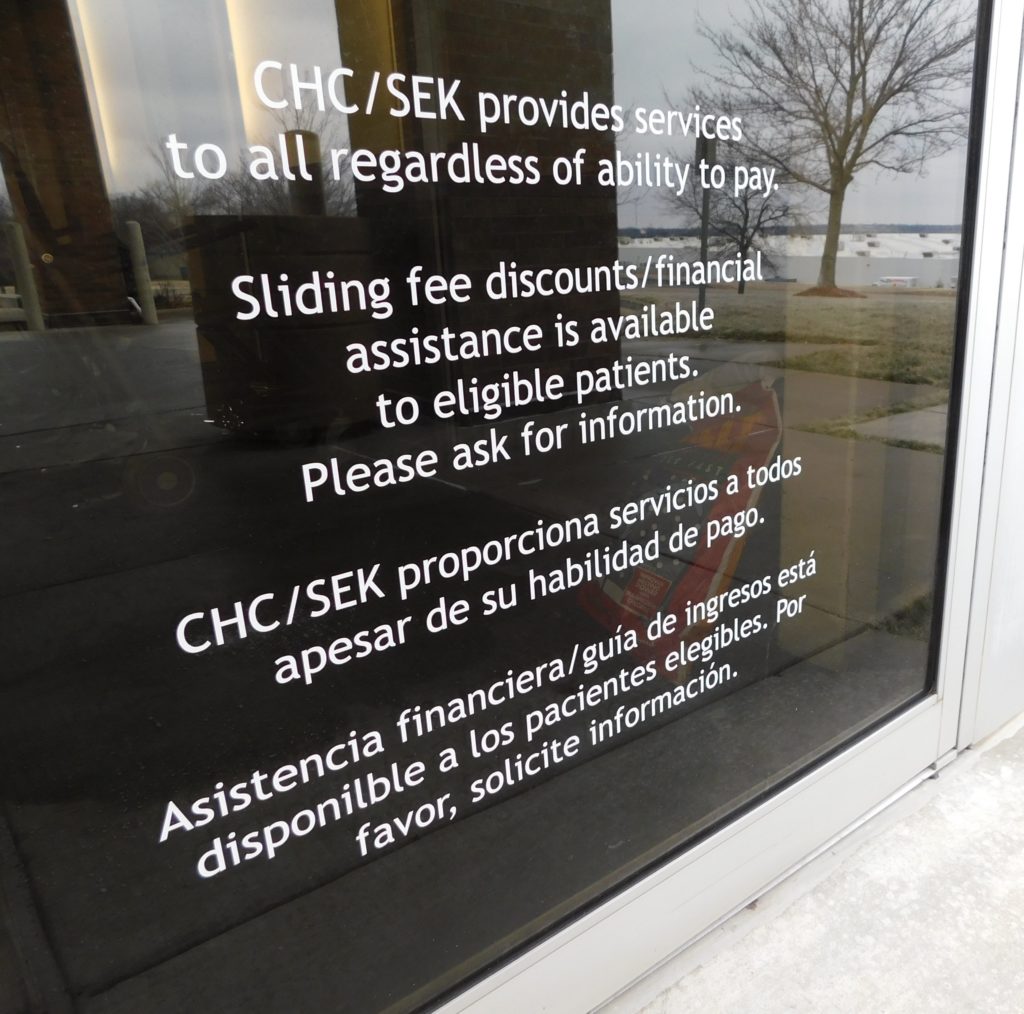
CHC/SEK Fort Scott provides healthcare to anyone, regardless of their insurance or financial circumstance, according to information received from CHC.

In 2021 they had 71,000 patient visits in their Fort Scott clinics, have provided 1,400 mammograms, filled 57,700 prescriptions, given 8,769 COVID-19 tests and 7,972 COVID-19 vaccines.

They are investing $8 million dollars to create a modern clinic for everyone in Fort Scott.

More than 100 people are employed who live and work in Bourbon County, and have invested $6.3 million in the community in 2021.


Vaccine Mandate For Healthcare Workers Blocked

PASSED: Sen. Marshall Resolution to Block Vaccine Mandate for Healthcare Workers 

(Washington, D.C., March 2, 2022) – U.S. Senator Roger Marshall, M.D. released the following statement after the U.S. Senate passed his legislation to halt President Biden’s COVID-19 vaccine mandate for healthcare workers. Senator Marshall delivered remarks on the Senate floor prior to the vote. You may click HERE or on the image below to view the Senator’s speech.

“Make no mistake, this federal vaccine mandate is not about public health or science – it’s about Joe Biden fulfilling his desire to control every aspect of our lives, and it’s a slap in the face to the hard-working men and women who never took a day off on the frontline fight against COVID-19,” said Senator Marshall. “Today is a huge victory for all the healthcare workers who ran to the sound of the COVID battle as Senate Republicans joined forces taking us one step closer to invalidating President Biden’s overreaching and harmful CMS vaccine mandate. These workers are the true heroes of the pandemic and deserve our best fight and utmost respect.”


You may click HERE to view Senator Marshall’s remarks as prepared.

Background:

Senator Marshall’s resolution stops the COVID-19 vaccine mandate for virtually all healthcare employees and prevents any similar rule from being proposed in the future. The resolution now heads to the U.S. House of Representatives. Companion legislation was introduced by Representatives Jeff Duncan (SC) and has the support from over 168 members.

President Biden’s mandate would exacerbate staffing shortages and impose burdensome costs at health care facilities. According to CMS, the unfunded mandate will cost over $158 million to health care facilities to implement. For nursing homes and rural health providers, which already face staff shortages, losing even one percent of staff is catastrophic in their field. These providers would be forced to limit available services or close their doors for not meeting minimum staffing requirements. The rule also does not take into account infection-acquired immunity or the fact that vaccines do not prevent the transmission of the now dominant Omicron variant.

The CMS vaccine mandate was previously prohibited from taking effect by two federal courts in Louisiana and Missouri. While the Supreme Court ruled in January that the CMS has the statutory authority to impose conditions upon health care facilities participating in Medicare and Medicaid, it harms access to care for rural and underserved communities. Kansas Attorney General Derek Schmidt and nine other Attorneys General have asked a separate federal court to reopen litigation to lift the stay on further district proceedings.

The Congressional Review Act is a legal tool whereby Congress can overturn rules issued by federal agencies, once it has been properly noticed. “Proper notice” occurs once a regulation is printed in the Federal Register and received by the Clerks of the House and Senate.  The CMS vaccine mandate regulation was printed in the Federal Register on November 5, 2021. With more than 36 original cosponsors, the resolution received privilege in the Senate and allowed the body to vote on it.

Flint Hills Burning Season Starts

Health Advisory, Safety Tips Issued During Flint Hills Burning Season
Smoke Modeling Tool to be activated on March 1

TOPEKA – The Kansas Department of Health and Environment (KDHE) reminds Kansans that March and April are the months when large areas of the state’s Flint Hills rangeland are burned. These burns help preserve the tallgrass prairie, control invasive species, reduce woody encroachment from species such as Eastern Red Cedar and Sumac and provide better forage for cattle. Prescribed burning minimizes risk of wildfires and is effective in managing rangeland resources. Smoke from the burns can influence the air quality of downwind areas. The use of smoke management techniques is vital to reduce air quality and health impacts.

KDHE will activate the Kansas smoke modeling tool on March 1, prior to widespread burning in the Flint Hills. The computer models use fire data and current weather conditions to predict the potential contribution of smoke to downwind air quality problems. There are approximately 2.2 million acres burned on average in the Flint Hills of Kansas and Oklahoma each year.

“For the twelfth-consecutive year, we are proud to have the opportunity to provide this important tool for the prescribed fire community,” said Douglas Watson, meteorologist at the KDHE Bureau of Air. “We continue to encourage ranchers and land managers to take advantage of this smoke modeling resource to spread out their burns more effectively and mitigate potential air quality impacts.”

Prescribed burns release large amounts of particulate matter and other pollutants that can form ozone. Particulate matter and ozone can cause health problems, even in healthy individuals. Common health problems include burning eyes, runny nose, coughing and illnesses such as bronchitis. Individuals with respiratory issues, pre-existing heart or lung diseases, children and elderly are more vulnerable to experience symptoms.

Steps to protect your health on days when smoke is present in your community include:

  • Healthy people should limit or avoid strenuous outdoor
  • More vulnerable people should remain
  • Help keep indoor air clean by closing doors and windows and running air conditioners with air
  • Stay hydrated by drinking lots of
  • Contact your doctor if you have symptoms such as chest pain, chest tightness, shortness of breath or severe

For more information about the burning in the Flint Hills, the Flint Hills Smoke Management Plan, the April burn restrictions and the smoke modeling tool, please visit http://www.ksfire.org.

KDHE Amends Travel Related Quarantine List


TOPEKA – The Kansas Department of Health and Environment (KDHE) has amended its travel quarantine list to add the countries of Denmark, Georgia, Iceland, Latvia, Netherlands, Reunion and Slovenia. The countries on the travel quarantine list will expire on March 3, 2022. KDHE will not release a travel quarantine list after March 3, individuals should now refer to the Centers for Disease Control and Prevention travel advisory page.

An unvaccinated individual who has not had COVID-19 within the last 90 days or those that have not received all the recommended vaccine doses, including boosters and additional primary shots, should quarantine if they meet the following criteria:

  • Traveled on or after Feb. 4 to Faroe Islands.
  • Traveled on or after Feb. 17 to Denmark, Georgia, Iceland, Latvia, Netherlands, Reunion and Slovenia.
  • Attendance at any out-of-state or in-state mass gatherings of 500 or more where individuals do not socially distance (6 feet) and wear a mask.
  • Been on a cruise ship or river cruise on or after March 15, 2020.

The length of a travel-related at home quarantine is 5 days after your last exposure with an additional requirement to wear a well-fitting mask indoors and outdoors when around others for an additional 5 days. If you cannot mask, at-home quarantine is recommended for 10 days. Quarantine would start the day after you return to Kansas or from the mass gathering. If yo­­u do not develop symptoms of COVID-19 during your quarantine period, then you are released from quarantine. Regularly check this list to stay up to date on travel-related guidance. Please refer to the KDHE Isolation and Quarantine FAQ for additional information.

For those traveling internationally, the Centers for Disease Control and Prevention (CDC) is requiring testing within three days of flights into the U.S. For further information on this and other requirements, visit their website.

For those who meet the following criteria do NOT need to quarantine:

  • You are up to date with your COVID-19 vaccines. This means that you are ages 5 or older and have received all recommended vaccine doses, including boosters and additional primary shots for some immunocompromised people when eligible.
  • You had confirmed COVID-19 within the last 90 days (meaning you tested positive using a viral test).

Persons who do not meet the above criteria should continue to follow current quarantine guidance for travel or mass gatherings.

The travel quarantine list is determined using a formula to evaluate new cases over a two-week period, then adjusted for population size to provide a case rate per 100,000 population. This provides a number that can then be compared to the rate in Kansas. Locations with significantly higher rates — approximately 3x higher — are added to the list.

For more information on COVID-19, please visit the KDHE website at www.kdhe.ks.gov/coronavirus.