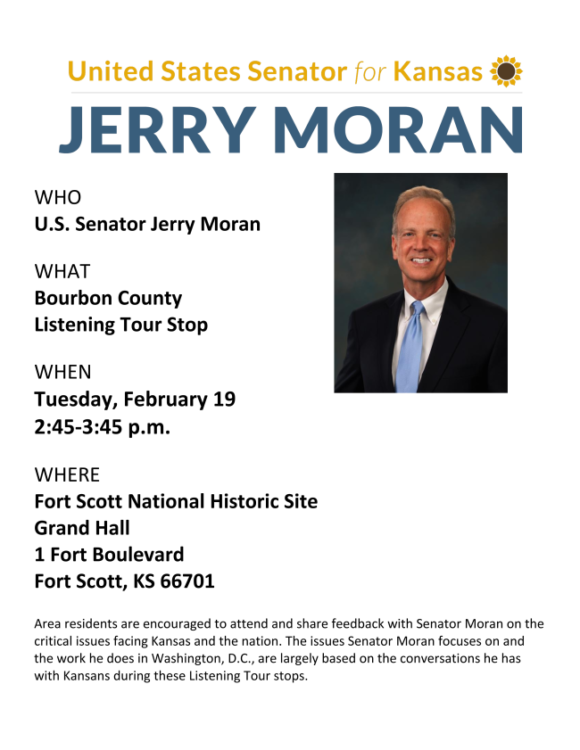
There will be a meeting of the Fort Scott Land Bank held on Tuesday, March 5th, 2019 at 5:00 p.m. in the City Commission meeting room at 123 S. Main Street. This meeting will be held to continue the discussion on the policies of the Land Bank. There will be a majority of the City Commissioners present, but no City Commission business will be conducted.
Category Archives: Government
Redfield City Council Changes Election Ordinance
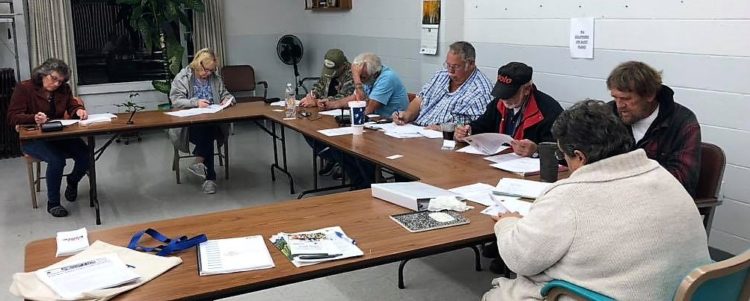
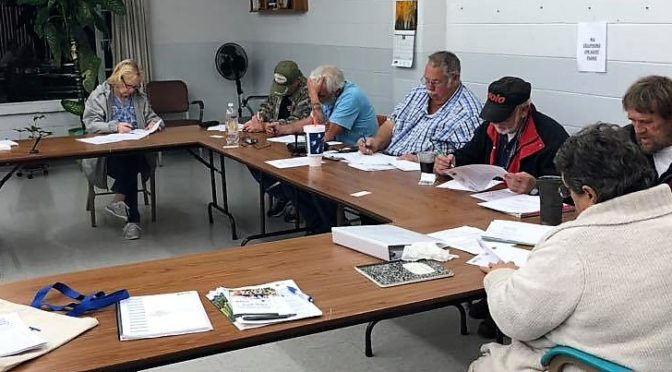
Redfield’s City Council is working to improve their town.
One of the ways to improve is the way the council is elected.
“We will have elections every two years, like everyone, but not everybody running for office at the same time,” said Beth Guss, acting Redfield City Clerk.
“When my husband (Ed Guss) took office, everyone but Wilma Graham was new, and nobody had known what to do,” she said.
They visited with neighboring Uniontown Mayor Larry Jurgensen and City Clerk Sally Johnson about the issue and were told about staggering the election so all are not new members at the same time, she said.
Following protocol, the City of Redfield published the proposed changes in the Fort Scott Tribune on Feb. 9 and 16.
This ordinance will take effect 61 days following the final publication.
An election of city council members will take place this November 2019, with succeeding elections every two years for the positions of those whose terms have expired.
This year Wilma Graham and L.D. Morrison will be up for re-election.
“Anyone can register to run,” Guss said.
Other members of the council in addition to these two are Clarence (Ed) Guss, Kirby Martin, and Michael Beerbower.
Beth Guss said she is the acting city clerk until a replacement can be found.
It is difficult to find citizens who will serve in a community of Redfield’s size, 157 people, “not counting the dogs,” she said with a laugh. The town is located in the middle of Bourbon County.
“We’ve got small-town issues, like all small towns,” she said. “We are working to make our town better.”
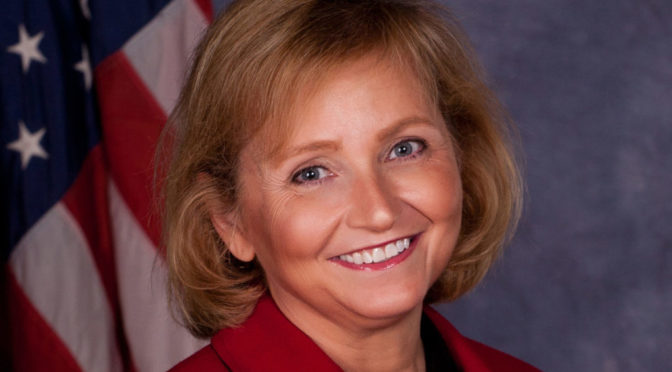
Legislative Update By State Senator Caryn Tyson
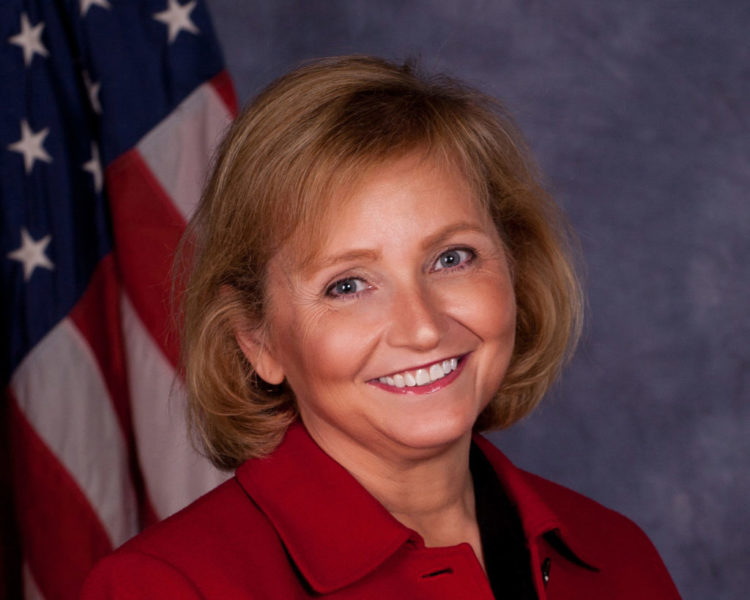
February 22, 2019
Kansas Farm Bureau Option for Medical Coverage resulted in an ardent senate floor debate. Senate Bill (SB) 32 would allow KS Farm Bureau to establish and offer medical coverage for KS Farm Bureau members. Healthcare costs are skyrocketing and not everyone can afford insurance. It has been reported that since Obama-care became law, insurance premium costs have increased an average of 12% each year for persons who are non-Medicaid eligible. SB 32 would provide another option for KS Farm Bureau members who cannot afford the rising cost of health insurance. The KS Farm Bureau program would not have all of the benefits of health-insurance, for example –a person would have to qualify for the coverage and not all health-care would be covered. The program is modeled after Tennessee Farm Bureau’s program, which has been in existence for approximately 70 years. The bill passed 28 Yes to 11 No. I voted Yes.
Stop the Fraud and Waste: In 2015, I offered an amendment on a bill to require an electronic identity check when a person applies for government assistance. It was signed into law. A couple of weeks ago I requested information on how the statute was implemented and what the results have been in stopping fraudulent applications. The response I got was that the electronic identity check has still not been implemented. It is things like this that result in little to no confidence in government.
Kansas sales tax and sales tax on food is some of the highest in the nation. According to the Tax Foundation, combining the average county and city sales tax with the state sales tax puts Kansas at the 8th highest sales tax rate in the nation. Kansas is 11th highest for state sales tax and 15th highest for average local sales tax which results in the 8th highest for combined sales tax. These tax rates result in Kansas having among some of the highest sales tax rates on food. Some Kansans can apply for a food sales tax credit when they file their KS income tax return. There are a few ways a person may qualify. One way is a person must be 55 years of age or older, have a federal adjusted gross income less than $30,615.01, and have a Kansas income tax liability to qualify.
The Senate Tax Committee had a hearing on SB 76. The bill is an attempt to decrease the State sales tax on food by 3% in the next three years (1% per year decrease). If passed, it would be a step in the right direction.
Seat belt violations: Current statute is ambiguous and has resulted in varied opinions as to rather a seat belt violation is a traffic infraction or a misdemeanor. SB 41 would make it clear that a seat belt violation is a traffic infraction. Fines would not change. A fine is $30 if age 18 or older, $60 for anyone 17 or younger and not properly fastened in the appropriate restraining system.
It is an honor and a privilege to serve as your 12th District State Senator.
Caryn
Bourbon County Commission Meeting Agenda Feb. 26
Agenda
Bourbon County Commission Room
1st Floor, County Courthouse
210 S. National Avenue
Fort Scott, KS 66701
Tuesdays starting at 9:00
Date: February 26th, 2019
1st District-Lynne Oharah Minutes: Approved: _______________
2nd District-Jeff Fischer Corrected: _______________
3rd District-Nick Ruhl Adjourned at: _______________
County Clerk-Kendell Mason
9:00-9:45 – Jim Harris
10:30 – Jody Hoener & Justin Meeks – EMS Crew Requirements
11:00-11:10 – Justin Meeks – Executive Session – Attorney Client
11:10 -11:20 – Justin Meeks – Executive Session – Personnel Matters
11:20 – 12:00-Justin Meeks
12:00 – 1:30-Commissioners gone to lunch
2:00 – 4:00 – Commissioners to have a 2019 hard surface road planning session
Justifications for Executive Session:
Personnel matters of individual non-elected personnel
Consultation with an attorney for the body or agency which would be deemed privileged in the attorney-client relationship
Matters relating to employer-employee negotiations whether or not in consultation with the representative(s) of the body or agency
Confidential data relating to financial affairs or trade secrets of corporations, partnerships, trusts and individual proprietorships
Preliminary discussions relating to the acquisition of real property
Matters relating to the security of a public body or agency, public building or facility or the information system of a public body or agency, if the discussion of such matters at an open meeting would jeopardize the security of such public body, agency, building, facility or information system
|
|
Senator Hilderbrand’s Weekly Newsletter Feb. 22
|
||||||||||||||||||

 |
|
Governor Kelly on KPERS
Governor’s statement on the passage of Senate Bill 9
The following statement is from Governor Laura Kelly on the passage of Senate Bill 9, a $115 million payment to KPERS to make up for years of delayed and eliminated payments:
“After years of delayed, reduced and eliminated pension payments to prop up a failed tax experiment, it is encouraging to see lawmakers act responsibly to fix past mistakes. However, Senate Bill 9 does little to address ballooning KPERS payments in future years, and it does nothing to stabilize state finances as a whole. In January, I put forward a commonsense, structurally balanced budget that tackled our most urgent priorities, paid down debt, rebuilt our state savings, all without raising taxes.
“While I’m eager to compromise with Republican leadership on policy proposals, I will not compromise Kansans’ commitment to fiscal responsibility and balanced budgets. I’m hopeful that Republican leadership will join me in that effort and come to the table to offer reasonable ideas so we can avoid the mistakes that made Senate Bill 9 necessary in the first place.”
#
Definition of A Weapon Considered by Kansas Senate
Department of Corrections Secretary Cautions Lawmakers to Consider Costs of Their Decisions During Testimony
Topeka, Kan. — During his neutral testimony to the Senate Judiciary Committee this week regarding Senate Bill 80, which would expand the definition of weapon, Department of Corrections Secretary Roger Werholtz reminded lawmakers to consider a series of questions and its subsequent impact on the Kansas Department of Corrections. The proposed change would add the word “ammunition” to law thus raising the severity level of the penalty resulting in lengthening prison sentences for criminals. On the surface the change may seem to impose relatively little impact for the Kansas Department of Corrections, however, he offered another perspective with a series of questions.
Those questions included:
- What is the purpose of the legislation and the change in penalty? Is it to deter people from committing this offense? Is it simply to incapacitate them for a longer period of time?
- If the goal is deterrence, I would ask you to consider how many convicted felons will be aware of this legislation or will know that someone with a criminal history of two non-person felonies will move from presumptive probation with an underlying prison sentence of 11 to 13 months to a presumptive prison sentence of 25 to 29 months. I would argue that these folks will not do a cost benefit analysis of possible penalties and decide not to commit the crime because of the new sentences proposed. The fact is, these offenders don’t think they will be caught or simply don’t think at all.
- If the goal is incapacitation, how much more public safety will we buy by increasing prison time by 14 to 16 months, especially if the department does not have the program capacity to address the criminal behaviors that resulted in incarceration? We can certainly prevent offenders from doing much harm while imprisoned, but incapacitation is a very expensive strategy to pursue.
Werholtz cited legislative research requested by Rep. Ward Loyd in the past to determine how many changes were made to sentencing law for a multi-year period beginning in 2005. It was found that 108 changes to sentencing statutes were made. Of those 108 changes, 97 increased penalties.
“When considered independently, each of those decisions may seem to have insignificant impact on the Department of Corrections. However, the cumulative effect has considerable impact on our operations,” Werholtz said in his written testimony. “I chose to highlight this issue, with this legislation, because I think it is a good example of what can happen if we don’t look at the long-term consequences of a change.”
Secretary Werholtz provided a parallel of a truck that continued to have its cargo area loaded with more items. As more and more content is loaded into the truck it could seemingly handle the additional load, but eventually, he hypothesized, the load becomes too much and the truck’s chassis breaks and the truck is unable to be operated anymore. Similarly, the prison system, which is over its capacity will exceed its tipping point too.
“You are no doubt aware by now that we have insufficient space to house our population, insufficient staff to properly supervise them, and insufficient programming to effectively treat them,” Werholtz said in his written testimony. “My request is that, when considering all legislation impacting the size of KDOC’s inmate population, please be prepared to provide the necessary resources to safely house and treat them. Our current trajectory is unsustainable. Your careful consideration of this request is appreciated.”
KDOT requesting comments on Transportation Improvement Amendment
KDOT requesting comments on STIP amendment
The Kansas Department of Transportation (KDOT) requests comments on an amendment to the FFY 2019-2022 Statewide Transportation Improvement Program (STIP) document.
The STIP is a project specific publication that lists all KDOT administered projects, regardless of funding source, and includes projects for counties and cities as well as projects on the State Highway System. The list of projects being amended to the STIP can be viewed at http://www.ksdot.org/bureaus/burProgProjMgmt/stip/stip.asp
The approval of the STIP amendment requires a public comment period, which concludes March 6. To make comments on the amendment, contact KDOT’s Bureau of Program and Project Management at (785) 296-2252.
This information is available in alternative accessible formats. To obtain an alternative format, contact the KDOT Office of Public Affairs, (785) 296-3585 (Voice/Hearing Impaired-711).
###
Fort Scott Planning Commission Meets Feb. 25
The Fort Scott Planning Commission will meet on Monday, February 25th, 2019 at 4:00 p.m. at City Hall, 123 S. Main Street, Fort Scott, Kansas. This meeting will be held to consider a Conditional Use Permit for the property at 18-20-22 S. Main Street to allow residential living on the first floor of this building.
This meeting is open to the public.
Bourbon County Commission Special Meeting Feb. 21
Agenda
Bourbon County Commission Room
1st Floor, County Courthouse
210 S. National Avenue
Fort Scott, KS 66701
Tuesdays starting at 9:00
Date: February 21st, 2019
1st District-Lynne Oharah Minutes: Approved: _______________
2nd District-Jeff Fischer Corrected: _______________
3rd District-Nick Ruhl Adjourned at: _______________
County Clerk-Kendell Mason
Special Meeting
4:00- Commissioners to discuss Ambulance.
Justifications for Executive Session:
Personnel matters of individual non-elected personnel
Consultation with an attorney for the body or agency which would be deemed privileged in the attorney-client relationship
Matters relating to employer-employee negotiations whether or not in consultation with the representative(s) of the body or agency
Confidential data relating to financial affairs or trade secrets of corporations, partnerships, trusts and individual proprietorships
Preliminary discussions relating to the acquisition of real property
Matters relating to the security of a public body or agency, public building or facility or the information system of a public body or agency, if the discussion of such matters at an open meeting would jeopardize the security of such public body, agency, building, facility or information system
Updated Agenda For Tonight’s Fort Scott City Commission Meeting
.
The agenda for the Fort Scott City Commission meeting at city hall, 123 S. Main, February 19 at 6 p.m.
I. ROLL CALL:
ADAMSON BARTELSMEYER MITCHELL NICHOLS PARKER
II. FLAG SALUTE
III. INVOCATION: Pastor Paul Rooks, Grace Baptist Tabernacle
IV. PROCLAMATIONS/RECOGNITIONS:
V. CONSENT AGENDA:
-
Approval of minutes of the regular meeting of February 5th, 2019.
-
Approval of Appropriation Ordinance 1232-A totaling $505,644.58.
VI. APPEARANCE/COMMENTS/PUBLIC HEARING:
-
APPEARANCE: None
B. CITIZEN COMMENTS (Concerning Items Not on Agenda – 3 minute limit per citizen) –
-
PUBLIC HEARINGS/COMMENTS:
6:00 p.m. Final Closeout Public Hearing – 124 E Wall – CDBG Grant – Approval for Mayor to sign closing documents
VII. CONSIDERATION:
-
Discussion on Fire Trucks
-
Consideration to solicit RFP’s for new life insurance benefit offering
VIII. COMMENTS:
- Director Updates:
Ambulance Update: Dave Bruner
Consideration of Bids – 16 Self Contained Breathing Apparatus
Health Care Update: Dave Martin
Finance Update: Rhonda Dunn
Legislative Update: Robert Uhler
- Commission:
- City Attorney:
- City Manager:
EXECUTIVE SESSION:
I MOVE THAT THE CITY COMMISSION RECESS INTO EXECUTIVE
SESSION FOR ________________________________ IN ORDER TO
(see below justification)
DISCUSS ______________________________________. THE
EXECUTIVE SESSION WILL BE ___________ MINUTES AND THE OPEN
MEETING TO RESUME AT ________________.
Justifications for Executive Sessions:
-
Personnel matters of non-elected personnel
-
Consultation with an attorney for the body or agency which would be deemed privileged in the attorney-client relationship
-
Matters relating to employer-employee negotiations whether or not in consultation with the representative or representatives of the body or agency
-
Confidential data relating to financial affairs or trade secrets of corporations, partnerships, trusts and individual proprietorships
-
Preliminary discussions relating to the acquisition of real property
X. MOTION FOR ADJOURNMENT: ROLL CALL
U.S. Senator Moran Listening Tour Today