Category Archives: Government

Medicaid Expansion: Lt. Gov. Rogers

Lt. Governor highlights importance of Medicaid expansion to rural prosperity


The following remarks are from Lt. Governor Lynn Rogers regarding the results of his Rural Healthcare Tour:


Since launching the Office of Rural Prosperity’s Rural Healthcare tour in February, Governor Kelly, KDHE Secretary Lee Norman and I have collectively toured more than 25 healthcare facilities. We’ve met with chambers of commerce, healthcare providers, business owners, faith leaders, families and community members across the state – from Liberal to Marysville and Pittsburg to Atwood.


During this tour, there was a consistent and resounding message no matter where we traveled — Medicaid expansion would absolutely help each of their communities.


It would create new jobs, invest new money into the local economy, and would reimburse healthcare facilities for care they already provide that would otherwise be uncompensated.


Expansion would give healthcare facilities the necessary resources to upgrade diagnostic equipment to provide better local healthcare. And it would allow them to more competitively recruit and retain quality healthcare staff.


In Council Grove, hospital administrators at Morris County told me they had just lost a doctor, and that they’re afraid that if the state doesn’t expand Medicaid they could lose more.


The fear of providers leaving for higher paying jobs in nearby expansion states like Nebraska or Colorado is very real to communities on the state’s border. Goodland Regional Medical Center is just a short 30-minute drive from the hospital in Burlington, Colorado.


And Healthcare facilities in Southwest Kansas – like Garden City and Dodge City – told me about wanting to invest in educational facilities to address their provider shortfall but said it was a challenge while being burdened with millions in unreimbursed care.


The Governor shared a story from her tour of Horizon’s Mental Health Center in Hutchinson. The services they are providing– in their local schools, correctional facilities, and across their communities – could all be enhanced if the legislature expanded Medicaid. And you’ll get a chance to hear that first-hand from their CEO Mike Garrett here shortly.


I don’t have to remind you that four rural hospitals have closed in the past three years – each citing the state’s failure to expand Medicaid as being partially responsible for their closing. And while we cannot guarantee that Medicaid expansion will save every rural hospital, we are certain that it has the most positive and immediate benefit of anything the state can do.


The economic impact of a hospital closure is greater than a cursory glance would expect. In a rural community, healthcare accounts for 20% of a local economy, and just one physician generates 26 jobs.


Given the economic impact of healthcare, the fact that 30% of our state’s rural hospitals are considered financially vulnerable is cause for concern. Across the state over 85% of our hospitals currently have a negative operating margin.


And in the five years that Kansas has gone without expansion we have lost over $3 billion dollars in tax revenue – money Kansans have paid to the federal government, that should have been used here but has gone to other states.


We not only have an economic imperative to expand Medicaid, we have a moral imperative as well.


Nearly 150,000 Kansans fall in the coverage gap. They are hardworking – often underemployed – Kansans who don’t make enough money to afford quality health insurance but have incomes that are too high to qualify for Medicaid. And many of them live in rural Kansas.


Unfortunately, two members of Senate Leadership – both in majority urban districts I should add – are blocking a vote on expansion despite it being supported by 77% of Kansans. They are suggesting that now is the time to study the issue, and that discussion can begin next year. But after five years of discussion in Kansas and more than 300 national studies showing its effectiveness, the time for discussion is over. It is time for Kansas to join the 36 other states who have already expanded their Medicaid Programs.


This should not be a partisan fight or a means to keep a political score. It is about people’s lives.


The Senate will be back tomorrow for the annual wrap-up session.


The Governor and I are calling on the Senate to hold a vote on Medicaid expansion.


Since rolling out our plan to expand Medicaid nearly 100 days ago, we talked to Kansans — Republicans, Democrats, and Independents alike – and they’ve told us that Medicaid expansion can’t wait until next year. It simply costs Kansas too much money and too many lives.


They’ve contacted their legislators, they’ve gotten engaged in the process, and they’ve said they are done waiting. It is time for the Legislature to listen to the people.


On behalf of rural Kansans, I’m asking Senate leaders to show compassion for their constituents.


KDOT announces Kansas airport improvement projects


Topeka – Forty-one projects totaling a combined award of $5 million have been granted for the Kansas Airport Improvement Program (KAIP) funding for planning, constructing or rehabilitating public use general aviation airports.

The aviation industry represents $20.6 billion economic impact and employs more than 92,000 Kansans. In addition, 94 percent of the state’s population is within 30 minutes of air ambulance operations.

“We are proud of the collaboration between our department and airport sponsors to increase safety, enhance economic development and support the transportation needs of Kansans,” said Secretary of Transportation Julie Lorenz.

The KAIP program requires airport sponsors to share in project costs by paying a portion of the total project. The KDOT Division of Aviation, which manages the program, considered 119 project applications this year with a combined total value of more than $29 million.

“KAIP has not only funded key improvements at local airports, it has helped create a statewide aviation network that enhances both the health and economic wellbeing of the entire state,” said Bob Brock, KDOT Director of Aviation.

Communities selected for funding and the amount requested include:

Anthony – Airports Geographic Information Systems (AGIS) survey and flight check – $52,250

Atchison – Surface seal of runway – $56,925

Atwood – Update fuel card reader – $17,000

Augusta – Reconstruct apron access to community hangar – $76,500

Beloit – Airfield maintenance equipment – $16,250

Benton – 17/35 runway preservation – $321,867

Elkhart – Airports Geographic Information Systems (AGIS) Study – $76,000

Emporia – 1/19 runway sealcoat and preservation –$411,500

Fort Scott – Airports Geographic Information Systems (AGIS) updates and runway extension design – $152,000

Gardner – 8/26 runway/apron/taxilane pavement preservation – $90,000

Garnett – 1/19 runway seal and repair high severity cracks – $40,500

Hiawatha – 10/28 runway edge lighting design – $19,000; 17/35 runway edge lighting design – $19,000; taxilane renovation design and construction – $61,890

Hoxie – Phase II: runway rehab – $303,440

Independence – South apron runup area renovation – $721,500; fuel systems – $36,335

Kingman – Precision approach path indicator (PAPI) replacement – $182,963

Kinsley – construct tiedowns – $10,949

La Crosse – Operations support equipment – $45,000

Lakin – Automated Weather Observing System (AWOS) III – $176,250; 14/32 runway mill and overlay design and construction – $303,250

Liberal – Runway marking removal and replacement – $248,500

Oberlin – Height and hazard survey – $38,000

Ottawa – Pavement preservation on parallel and connection taxiway system – $173,250

Pittsburg –Replace Automated Weather Observing System (AWOS) ceilometer –$43,200; remove obstructing trees – $18,000

Quinter – Install Automated Weather Observing System (AWOS) III – $135,000

Rose Hill – Crack seal– $16,200; upgrade fuel credit card terminal – $14,875; mill and overlay runway 17/35 – $174,600

Salina – Phase II: ramp reconstruction – $720,000

St. Francis – Extend SE taxiway – $133,200

Kansas Water Authority Membership Drive

Kansas Water Authority Regional Advisory Committee Membership Drive

Be a Vital Voice for Kansas Water Resources


For more than 30 years, citizen advisors have been a vital voice for water resource issues in Kansas. The Kansas Water Office is currently accepting applications from those who would like to participate as a member of one of the 14 Regional Advisory Committees (RACs) which are established by the Kansas Water Authority (KWA).


These committees play a key role in advising the KWA on implementation of each region’s water supply priorities as part of the Kansas Water Vision and the Kansas water planning process as a whole. Regional advisory members will have the opportunity to evaluate the past five years of the Vision implementation and provide input and advice to the KWA for previously identified regional water resource-related goals and associated action plans.


In addition, members help identify and provide input on other emerging water resource related issues and concerns. They serve as important local links to the public in their regions through interactions with various groups and individuals as well as communicate information on concerns and issues to citizens in their respective regions. The KWA, through the committee selection process, works to establish RACs which represent diverse groups of water users and interests within regions are represented.


Kansans can have a definite lasting impact on the future of water resources through RAC membership. Interested persons can apply at www.kwo.ks.gov. The application deadline is May 31, 2019.


Note to Editor: The Americans with Disabilities Act, (42 U.S.C. 12101) requires the Kansas Water Office to print the reasonable accommodations messages.


# # #


As the state’s water office, KWO conducts water planning, policy coordination and water marketing as well as facilitates public input throughout the state.


The agency prepares the KANSAS WATER PLAN, a plan for water resources development, management and conservation.


Katie Patterson-Ingels
Communications Director
Kansas Water Office

785-296-3185

900 SW Jackson Street, Ste. 404

Topeka, KS 66612

www.kwo.ks.gov

Bourbon County Commission Agenda April 30

Agenda

Bourbon County Commission Room

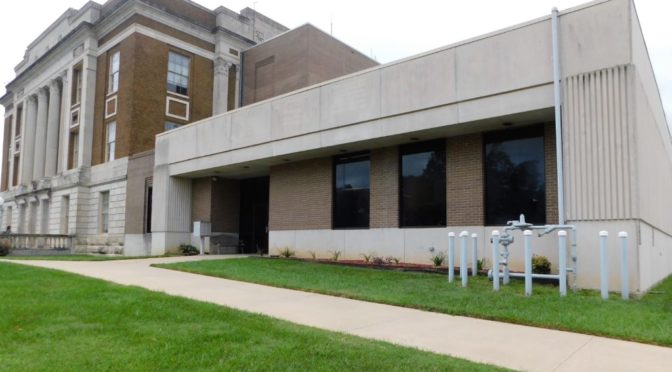
1st Floor, County Courthouse

210 S. National Avenue

Fort Scott, KS 66701

Tuesdays starting at 9:00

Date: April 30th, 2019

1st District-Lynne Oharah Minutes: Approved: _______________

2nd District-Jeff Fischer Corrected: _______________

3rd District-Nick Ruhl Adjourned at: _______________

County Clerk-Kendell Mason

9:00-9:45-Jim Harris

9:30-10:00-Executive Session-Attorney Client Privilege with Shane Walker, Jim Harris, Jerad Heckman, Lora Holdridge and Jody Hoener

10:00-10:15-Don George- Contract-KDWP

10:45-11:00-Cathy Cooper-6th Judicial District

11:00-12:00-Justin Meeks

11:00-11:20-Executive Session-Attorney Client Privilege

11:20-11:25-Executive Session-Personnel matters of individual non-elected personnel

12:00-1:30-Commissioners gone to lunch

1:30-2:00-Carla Nemecek-Southwind Extension update

2:00-3:00-Clint Anderson

Uniontown Spruces Up

Uniontown is located 17 miles west of Fort Scott.

Spring cleaning is the time to clean up your yards, attics, garage and closets.

Next weekend, a small town in the area will be renting huge trash hauling bins to helps its citizens to do just that.

Uniontown City Council helps provide the town’s citizens a way to get rid of unwanted, unsightly items.

The city council rents huge trash hauling bins twice a year,  once before Uniontown High School graduation in May and again before Old Settlers Picnic weekend, in August, this year May 3-5 and August 23-25.

The bins are located on city property near the corner of First and Clay Streets.

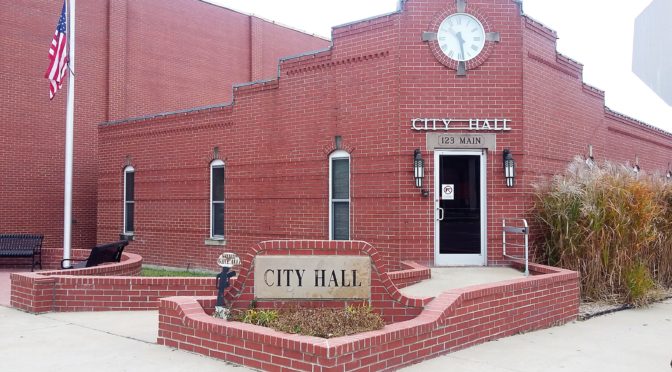
The city property where the trash bins will be located for the clean up day.

“This assists our residents with the clean up of their property and to keep our town clean and appealing to visitors,” Sally Johnson, Uniontown City Clerk, said.

Absolutely no tires, batteries, or freon are allowed in the city’s trash hauling bins.

The city will recycle metal.

“There will be an area to the side (of the bins) for metal objects that are then taken for recycling,” Johnson said.


The town-wide clean up is for Uniontown residents only.


Bourbon County Commission Minutes From April 16

April 16, 2019                                                 Tuesday 9:00 am

The Bourbon County Commission met in open session with all three Commissioners, the County Counselor and the County Clerk present.

Tammy Helm with the Fort Scott Tribune and Nancy Van Etten were also present.

Jim Harris presented 1 application for 2 permits for Pioneer LLC to install pipes under the road to water cattle from a pond across the road; one location is at 40th south of Cavalry (2” water line) the second is at 50th south of Eagle (3” water line). Jeff made a motion to approve the permit, Nick seconded and all approved.

Jim Harris presented the Paser Asphalt Road Manual to the Commissioners; he said this could be used to rate the condition of the roads.

Jim Harris said he had found two used tractors for sale; a 2011 New Holland with 1754 hours with no warranty for $39,900 and a 2017 John Deere for $53,950 this is a demo model with 30 hours and a 1 ½ year warranty. Jim Harris suggested that Road & Bridge, Landfill and the Sales Tax fund could pay for the tractor. After discussion; Jeff made a motion to approve purchasing the 2017 John Deere for $53,950, Nick seconded and all approved.

Jesse Walker met with the Commissioners; he asked that the County maintain a portion of 95th & Unique. He said he had found a 1977 survey that shows this is a County road. Lynne said he discussed this road with Lora Holdridge, she said this road is still on the map; Jim said that Shane Walker said this road did not appear on the maps. Jim Harris said if it is a County road then he felt the County should build a road all the way through to 85th. Lynne said he would continue to research this road.

Jim Harris reported that the Noxious Weed department will be moved from Uniontown to the Road & Bridge barn in Fort Scott at the end of this week. Jim said it will be open for chemical sales on Monday mornings, Wednesday afternoons & Friday mornings as well as by appointment. The Commissioners discussed the soon to be vacant Noxious Weed building in Uniontown; Lynne made a motion to give Jim Harris the authority to list the building for sale, there was not a 2nd on the motion. Jeff suggested that the County find out the value of the property and to explore alternative uses for the building.

Jim Harris said they will be patching on 215th, will be covering the Landfill, finishing up a Timberhill culvert, moving the excavator to install a culvert, doing ditching northwest of Fort Scott, using the excavator on Soldier, will be drilling next week at the Blake Quarry to prepare for a blast and said they have 20 driveway culverts to replace on Condensory Road before overlaying the road.

Jeff questioned who maintained the roads around Rock Creek; Jim Harris said this was the City of Fort Scott’s property.

Lynne made a motion to go into a 5 minute executive session for consultation with an attorney for the body or agency which would be deemed privileged in the attorney-client relationship, Jeff seconded and all approved, (the session included the Commissioners, Justin Meeks and Jim Harris). No action was taken.

Nick made a motion to have free dump days at the Landfill on May 17th & May 18th for Bourbon County residents including tires, no commercial businesses, Jeff seconded and all approved the motion.

The Commissioners held a 2019 budget amendment hearing for the Ambulance fund; the budget amendment allows for a total of $1,020,000 of expenditures, $316,020 had already been budgeted, this amendment allows for an additional $703,980 of expenditures. Lynne made a motion to approve the 2019 budget amendment for the ambulance fund, Nick seconded and all approved and signed the budget amendment. The Commissioners are responsible for the ambulance budget.

Nancy Van Etten questioned housing conditions and regulations in the County; the Commissioners said the only codes the County has are septic tank regulations and that there are no codes in the County.

Jeff made a motion to move the April 23rd Commission meeting to April 22nd, Nick seconded and all approved.

Dale Arnold met with the Commissioners; he discussed trees that were trimmed near the Sale Barn, he said the tree trunks are still there and said you can’t see around the corner when the trees have leaves on them. Jeff reported this to Jim Harris.

Jeff made a motion to go into a 20 minute executive session for Consultation with an attorney for the body or agency which would be deemed privileged in the attorney-client relationship, Nick seconded and all approved, (the session included the Commissioners and Justin Meeks). No action was taken.

Jeff made a motion to go into a 10 minute executive session for Consultation with an attorney for the body or agency which would be deemed privileged in the attorney-client relationship, Nick seconded and all approved, (the session included the Commissioners and Justin Meeks). No action was taken.

At 11:44, Lynne made a motion to adjourn, Jeff seconded and all approved.

THE BOARD OF COMMISSIONERS

OF BOURBON COUNTY, KANSAS

(ss) Lynne Oharah, Chairman

(ss) Jeff Fischer, Commissioner

(ss) Nick Ruhl, Commissioner

ATTEST:

Kendell Mason, Bourbon County Clerk

04/22/2019, Approved Date


Kansas Gov. Kelly’s First 100 Days

See the source image

Governor Kelly’s first 100 days rebuilding Kansas
Outlines accomplishments, addresses the unfinished business of Medicaid Expansion

One hundred days into her tenure as the 48th Governor of Kansas, Laura Kelly is reflecting on her accomplishments, highlighting successes and addressing the unfinished business of passing Medicaid expansion.

“When I gave my inaugural address on January 14, I stood in front of three banners with the words: equality, education and opportunity,” Kelly said. “These are the principles that have guided my first 100 days in office. And they are the principles that will guide us as we work to invest in our future and grow our economy. ”

In addition to the accomplishments outlined below, Kelly followed through on her promise to appoint a highly-qualified, bipartisan cabinet of Kansas leaders focused on rebuilding state agencies decimated by previous administrations.


“I was elected to rebuild Kansas and we’re already making progress,” Kelly said. “My team has increased transparency and accountability in our government and restored responsible, commonsense leadership that addresses the priorities of Kansas families.”

Kelly has taken significant steps towards stabilizing the state’s budget and investing in key priorities, like schools and roads. However, one critical issue is left unfinished: Medicaid expansion. In her fifteenth consecutive Kansan to Kansan weekly video, shared on Facebook earlier today, she called on Senate leadership to stop blocking progress on Medicaid expansion.

“We’re halfway there – but that’s not good enough. When the legislature returns on May 1st, they need to vote on Medicaid expansion,” Kelly said. “Over 77 percent of Kansans want expansion to happen. The Senate President and Majority Leader need to stop playing games with taxpayers’ health care and get it done. Two of my biggest town halls were in their districts and the response was overwhelming and undeniably in favor of expansion. Kansans are counting on us.”

100 days rebuilding Kansas

Day 1:
On her first full day in office, Governor Kelly signed Executive Order 19-02, reinstating protections to state employees who are gay, lesbian, bisexual or transgender.

Day 4:
Kelly submitted a balanced budget to the Kansas Legislature nearly three weeks ahead of schedule; a budget that paid down debt, invested in key priorities like schools, highways and Medicaid expansion, and provided the state with the largest ending balance in twenty years – all without a tax increase.

Day 15:
Kelly introduced a bipartisan plan to expand Medicaid on Kansas Day.

Day 32:
Kelly joined Secretary of Transportation Julie Lorenz in announcing plans to invest $160 million in Kansas’ transportation system, as part of the Governor’s FY 2020 budget. This included four new projects from the T-Works program.

Day 39:
Lt. Governor Lynn Rogers launched the Rural Healthcare Tour, as part of building the Office of Rural Prosperity. As of today, he has visited seventeen communities across Kansas: Emporia, Marysville, Garden City, Hutchinson, McPherson, Dodge City, Hays, Russell, Ottawa, El Dorado, Council Grove, Goodland, Abilene, Leavenworth, Junction City, Chanute and Pittsburg.

Day 42:
Kelly announced new transparency initiatives at the Department for Children and Families, designed to improve the agency’s efforts to locate children who are absent or have run away.

Day 53:
Kelly signs Senate Bill 9 which repaid $115 million debt to our state retirement system.

Day 82:
Kelly squarely established herself as the ‘education governor’ by signing a bipartisan school funding plan into law. The education plan, if approved by the Kansas Supreme Court, could bring an end to decades of legislative debates and legal challenges surrounding education funding. This followed the signing of Executive Order 19-03 in January, establishing the Governor’s Council on Education and the restoration of the previous administration’s cuts to the Children’s Initiatives Fund.

Day 85:
Kelly completed four town hall discussions during the 2019 legislative session. In total, over 15,000 Kansans attended these town halls in-person or online via Facebook live.

Day 99:
Kelly signed Executive Order 19-07, establishing the Kansas Complete Count Committee, in support of a statewide strategy that ensures every Kansan is counted in the upcoming census. The data collected in the census will inform how the federal government distributed much-needed funding for Kansas roads, schools, hospitals, emergency services and much more.

Day 100:
As of this day, Kelly has signed over 100 proclamations and her constituent services team has opened nearly 2,000 cases on behalf of hardworking Kansans. Of those opened cases, 1,800 have been closed.

###

2020 Census is Important

Governor Kelly highlights importance of accurate 2020 Census
Creates Kansas Complete Count Committee, appoints co-chairs

This morning, through Executive Order 19-07, Governor Laura Kelly launched an initiative to make every Kansan count. She established the Kansas Complete Count Committee (CCC) to ensure that every Kansan is represented in the 2020 Census.

A CCC is a volunteer committee established by tribal, state and local governments and community leaders or organizations to increase awareness and motivate residents to respond to the 2020 Census.

“As Governor, I’m committed to ensuring the data we collect is as accurate as possible,” Kelly said. “The data collected in the Census informs how the federal government distributes funds to our state – through 55 different federal programs. And it’s these funds that help to pay for roads, schools, hospitals, emergency services and much more.”

Getting an accurate count in the Census is paramount. Census population totals determine the number of seats each state has in the United States House of Representatives. State totals are also used to redraw legislative and school districts.

For every person not counted in the Census, Kansas stands to lose $1,539 in federal funds per year for 10 years.

“The Census matters because it impacts everything from school lunches to libraries to wastewater systems,” Secretary of Commerce David Toland said. “It’s vital to Kansas businesses and communities that we have a full and accurate count in 2020, and Commerce is honored to work hand in hand with the Committee and local partners to make sure that happens.”

Brian McClendon of Lawrence and Joyce Warshaw of Dodge City will serve as co-chairs of the Kansas Complete Count Committee. McClendon is a professor at the University of Kansas and the former Vice President of Google and Uber. Warshaw serves on the Board of Directors for the Kansas League of Municipalities and is a Dodge City Commissioner.

CCCs already are operating in Sedgwick, Johnson, and Wyandotte counties, with others being formed across Kansas. Additional members of the Kansas CCC will be announced at a later date.

“Next year, on April 1, I encourage Kansans to respond to the Census, and be sure to count everyone living in your household,” Kelly said. “That includes children and newborn babies. Everyone needs to be counted.”

For more information, go to kansascommerce.gov/census.

Minority/Women Business Workshop May 15

New Minority/Women Business Development Workshop Aims to Help Businesses Grow


Topeka, Kan. – The Minority and Women Business Development Office of the Kansas Department of Commerce will host a Workshop for Minority, Woman and/or Disadvantaged Business Enterprise Certification Programs on May 15. Those interested in DBE/MBE/WBE Certification will be able to hear more about the application process and potential benefits of certification at the workshop.


DBE/MBE/WBE Certification Workshop

Wednesday, May 15, 2019

10:00am – 12:00pm

Kansas Department of Commerce

1000 SW Jackson, Ste. 100

Topeka, KS 66605

(Curtis State Office Building)

Attendance is FREE, but registration is REQUIRED. Space is limited so sign up early!


Click on the following link to register.

https://www.kansascommerce.gov/programs-services/minority-women-business-development/minority-and-women-business-certification-workshop/

(Deadline is Friday, Monday May 10, 2019)


Ryan Brinker

Public Information Officer

[email protected]


Kansas Department of Commerce

1000 SW Jackson St. Ste. 100

Topeka, KS 66612-1354

Phone: 785-296-4931

Cell: 785-276-9723

Charles Baker celebrates 40-year milestone at KDOT


Charles Baker has worked on the state highways in all kinds of adverse weather events, including tornadoes and snowstorms. He and his crew at the Kansas Department of Transportation (KDOT) Erie subarea shop have also dealt with heavy rains and major flooding – including a flood that destroyed the office, which was subsequently rebuilt – during Baker’s years with the agency.


Baker, who is supervisor at the Erie office, has achieved a career milestone and is celebrating 40 years of service to KDOT in May 2019. Beginning work as an equipment operator at Erie in May 1979, he was promoted to supervisor in 2006. The seven-member Erie shop performs operations such as fixing potholes, repairing signs and guardrail, mowing right-of-way, and blading shoulders on the state highway system in the area.


During winter months the removal of snow and ice from the highways is a high priority. “After a snowstorm there is the joy and gratitude you feel that no one got hurt,” said Baker. “We got the job done and there were no accidents.”


Baker lives in Hepler with his wife Janice. On April 28 the couple will celebrate their 40th wedding anniversary. They have two children and four grandchildren.


Fort Scott Community College Trustees Meeting Minutes of March 25

FORT SCOTT COMMUNITY COLLEGE
Minutes of the Board of Trustees Training
March 25, 2019

PRESENT: John Bartelsmeyer, Bernita Hill, Liz Meyer, and Robert Nelson

ALSO PRESENT: Alysia Johnston, President, Juley McDaniel, Board Clerk, faculty, staff, and community members.

Chairman John Bartelsmeyer called the meeting to order at 5:35 pm. The meeting was opened with the Pledge of Allegiance.

COMMENTS FROM THE CHAIR: Chairman Bartelsmeyer reported that FSCC has processed $4,644,126.69 in federal financial aid for the academic year, 51.8% of which was dispersed directly to students.

HOUNDS OF THE WEEK UPDATE: Head football coach Kale Pick summarized the football program’s Hounds of the Week program that encourages academic success of team members. Coaches do academic checks and recognize four players each week to students who are excelling in academic representation of the team.

CONSENT AGENDA: A motion was made by Nelson, seconded by Hill, and carried by unanimous vote to move item E (Approval of Gordon Parks Museum Foundation by-laws) to the Action Items section of the agenda and replace item E of the consent agenda with Approval to Proceed with the Culinary Arts Certificate Program. A motion was made by Meyer, seconded by Hill, and carried by unanimous vote to approve the Consent Agenda as revised.

ACTION/DISCUSSION ITEMS:

  1. Adam Borth and Russ Souza reviewed details of FSCC’s retention project. They and their committee have spent a year gathering data about why students stay at FSCC and why students leave FSCC. The data has revealed some patterns and provided insight that the committee is eager to address. They will be introducing a pilot Accelerated Learning Program (ALP) in English in the fall, including the cost of the Hawkes software in the course fees, and revising the late enrollment period, offer pro-active tutoring, and revamp the college orientation class, all in hopes of addressing the barriers to student retention. The next step in the project is to develop a strategic initiative.
  2. A motion was made by Nelson, seconded by Hill, and carried by unanimous vote to approve the presented tuition and fee schedule for academic year 2019/2020, including additional fees provided the night of the meeting.
  3. A motion was made by Hill, seconded by Meyer, and carried by unanimous vote to approve the base bid of $877,000 from Crossland Construction to complete the addition to Burris Hall.
  4. A motion was made by Hill, seconded by Meyer, and carried by unanimous vote to appoint Jim Fewins to fill the Board vacancy.
  5. A motion was made by Nelson, seconded by Hill, and carried by unanimous vote to approve the Gordon Parks Foundation By-Laws as revised. The phrase “Board of Trustees” shall be replaced with “Gordon Parks Museum Foundation Board every place it appears in Article III, IV, and V, and in the last sentence of Article II.

REPORTS:

  1. ADMINISTRATIVE UPDATES: The Board reviewed and heard reports from Miami County Campus, Student Services, Finance and Operations, and the President.

Robert Nelson provided highlights and the pamphlet from the Phi Theta Kappa Luncheon held on March 7 in Topeka. He said the group heard a great speaker and a student speaker. FSCC had three students from main campus and three students from Miami County campus that were honored.

ADJOURNMENT: There being no further business to come before the Trustees, a motion to adjourn was made at 6:44 p.m. by Nelson, seconded by Hill, and carried by unanimous vote.

Chairman Clerk

To see the agenda and other documents sent with the monthly trustees packet click below:

4.20.19 Consent Agenda(2)