CITY OF FORT SCOTT
CITY COMMISSION MEETING
Minutes of January 5th, 2021 Regular Meeting #1
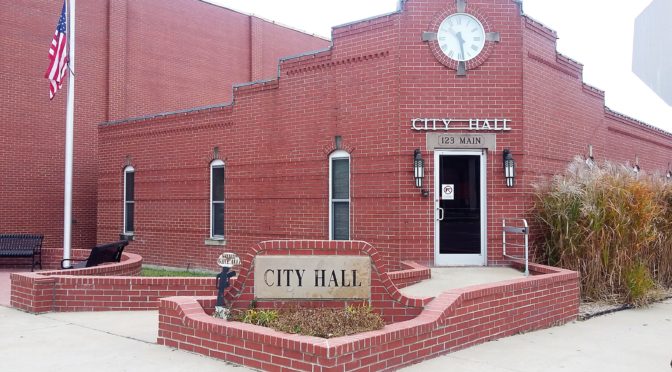
The regular meeting of the Fort Scott City Commission was held January 5th, 2021 at 6:00 p.m. in the City Commission Meeting Room at City Hall, 123 S. Main Street, Fort Scott, Kansas.
ROLL CALL:
Commissioners P. Allen, K. Allen, J. Jones and L. Watts were present with President of the Commission L. Watts presiding. R. Nichols attended via Zoom.
INVOCATION: Pastor Paul Rooks, Grace Baptist Tabernacle, said a prayer asking God for guidance for the City, our Government and City officials.
AUDIENCE IN ATTENDANCE: Travis Shelton, Russell Lingerfelt, Paul Rooks, Janice Allen, Michael Hoyt, Anne Rawlins, Lindsay Madison, Max Fanning, Allyson Turvey, Jeff Hancock, Rachel Pruitt, Deb Needleman and Lynette Westhoff.
PROCLAMATIONS/RECOGNITIONS: None
ADDITIONS TO AGENDA: Mayor asked to add Item J – Approval of Appropriation Ordinance 1279-A totaling $19,147.36.
CONSENT AGENDA:
-
Approval of minutes of the regular meeting of December 15th, 2020, and special meeting minutes of December 14th, 2020 and December 29th, 2020.
-
Approval of Appropriation Ordinance 1278-A totaling $699,215.47.
-
Resolution 1-2021 designating the official City newspaper.
-
Resolution 2-2021 designating the official City depositories for public funds.
-
Resolution 3-2021 designating exemption from Generally Accepted Accounting Principles under KSA 75-1120(a).
-
Request to Pay – Olsson Associates – Airport Runway Extension Project – Engineering – $1,062.50
-
Request to Pay – Suez Treatment Solutions, Inc – $15,450.30 – Ozone Generator Convertor due to fire
-
Request to Pay – Suez Treatment Solutions, Inc. – $169,062.30 – SCADA Upgrade
-
Request to Pay – 3RK – MIH Housing Grant – $13,534.97
-
Approval of Appropriation Ordinance 1279-A totaling $19,147.36.
K. Allen questioned Item F and the engineering costs.
Susan Bancroft explained that this is for the engineering for the Airport Expansion Project and part of the public hearing process of the contract.
J. Jones moved to approve the Consent Agenda. R. Nichols seconded. J. Jones, R. Nichols, and L. Watts voted aye. P. Allen and K. Allen voted no. Motion carried 3-2.
APPROVED CONSENT AGENDA.
REORGANIZATION OF CITY COMMISSION AND ELECTION OF MAYOR, COMMISSION PRESIDENT, B.C.E.D.C.I. REPRESENTATIVE, AND FORT SCOTT HOUSING AUTHORITY DELEGATE.
-
-
Election of Mayor
L. Watts moved to nominate Josh Jones as Mayor of the City of Fort Scott. Randy Nichols seconded.
P. Allen said that he likes Josh, but he is not an elected official. He was appointed by the Commission. He doesn’t think that he has the experience to run the Commission.
K. Allen said that he thinks Josh would make a great Mayor. He said that he thinks there is fear that the wrong person’s name may be called, as quickly as the motion was made.
L. Watts said that her decision to nominate Josh was based on how much work and dedication he has shown even prior to being appointed to this Commission. He is able to look at both sides impartially and help determine the best way possible.
R. Nichols said that he thinks that Josh has lots of great ideas that he brings forward.
Josh said that he would accept the Mayor position only if he has the majority of the votes.
Roll call was taken.
L. Watts moved to nominate Josh Jones as Mayor of the City of Fort Scott. Randy Nichols seconded. K. Allen, R. Nichols and L. Watts voted aye. P. Allen voted no. J. Jones abstained. Motion carried 3-1-1.
APPOINTED JOSH JONES AS MAYOR OF THE CITY OF FORT SCOTT.
-
-
Election of Commission President
P. Allen moved to nominate Kevin Allen as President of the City Commission. J. Jones seconded. P. Allen, L. Watts, and J. Jones all voted aye. R. Nichols voted no. K. Allen abstained. Motion carried 3-1-1.
APPOINTED KEVIN ALLEN AS PRESIDENT OF THE FORT SCOTT CITY COMMISSION.
-
-
Election of Bourbon County Economic Development Council Inc. Representative
P. Allen moved to nominate Josh Jones to the Bourbon County Economic Development Council, Inc. Board. L. Watts seconded. All voted aye.
APPOINTED JOSH JONES AS THE CITY’S REPRESENTATIVE TO THE BOURBON COUNTY ECONOMIC DEVELOPMENT COUNCIL, INC.
-
-
Election of Fort Scott Housing Authority Delegate
P. Allen moved to nominate Lindsey Watts as the Fort Scott Housing Authority Delegate. J. Jones seconded. All voted aye.
APPOINTED LINDSEY WATTS AS THE CITY’S REPRESENTATIVE TO THE FORT SCOTT HOUSING AUTHORITY BOARD.
Public Comment:
(Sign up required. Comments on any topic not on the agenda and limited to 5 minutes per person, at Commission discretion)
Scott Johnson – Mr. Johnson said that he is the owner of the building at 10 N. National. It is in the name Earthalways, LLC. There were two individuals that entered the property this last weekend. He has a video of it via snapchat. They are driving a big Ford gray truck and were taking stuff out of the property. He has not allowed anybody in the property since it is red tagged. He wanted to make sure that the City has not allowed access to the property. He spoke with an officer and will make a report because no one should be in that property. He wanted to make it known that when he said he was donating, he was donating a large percentage of the property. He had mentioned either a land swap, a tax credit, and/or to buy his interest out of the property. He wanted on public record that he has only had one communication with the Economic Development Department of the City of Fort Scott. He has worked with a third party and wants to know if there is an interested investor in the property. He has not been made privy to that information and he is the property owner. He feels like he should be aware of this. He would also like to know if this is a one-time occurrence or if this is something that has happened in the future. This property did not need to get to this state. He talked to the Department of Agriculture and a couple of senators and there is money available. This is a nationally historic property that is right across from the Fort. Why there has been no interaction, he feels like if there is an interested party he should be involved. An elected or appointed government official should work for the taxpayer. He would like to know who did go into his property and with the heavy snow, the interested party that would like to fix up the building and secure it. His name cannot be attached to it, so he is looking at other opportunities. Any process is going to take some time, so we have to get something going.
Rachel Pruitt, Economic Development Director, informed Mr. Johnson and the Commission that the interested investor or the people that she has spoke to about the property, are not interested in the property in its current state. They are interested if the building would be stabilized like Mr. Halsey has recommended and/or offered. They may be interested then. There is no commitment. They have not said that they would not take the property, but not in the current condition the building is currently in.
Jeff Hancock said that he has had conversations with Scott Johnson and his father. He has checked with everyone in the City and no one has a key to his property. He will cover this topic more in his report with an update on this building.
Scott said that he doesn’t know of too many investors that will invest in the building in the condition it is in. He has looked into insurance. He has a rough idea dealing with local people. It’s going to be $80,000 to demo the building. He has talked to Skitch’s and he will help cover the insurance and take a silent partner since the roof collapsed. Everyone he has talked to at U.S.D.A. tells him he has to have local government cooperation. This property is important, and he doesn’t want to pick apart City government.
Josh said that some of these things take a little time and encouraged him to keep communicating with Jeff Hancock.
Michael Hoyt – Mr. Hoyt informed Mr. Jeff Deane that if he would go back to the minutes of special meeting #15, it was very right of you tonight to point out that a majority vote is needed. On that date you didn’t have a majority vote. A motion was made to elect Deb McCoy to the Commission, and it was voted 2-2 and we left saying it failed. He said he has several questions to ask.
Jeff Deane said that he was aware that at any time he could have been called on to cast the deciding vote. He was ready to beg off.
Mr. Hoyt asked about the special meeting on December 29th. He addressed Mr. Hancock and said he not only said in that meeting, but in a previous City Commission meeting he said that we don’t need to have a special meeting to take these quit claims deeds. We can do it. Three times you made that threat. Taking a quit claim deed was a very risky proposition, when we had the opportunity to get a warranty deed, but we did not. We keep going back to this verbal contract that we knew ten months ago was not kosher. Why did we not reduce that to writing at some point – any part of it. We are relying totally upon someone’s recollection upon what happened. Ms. Pruitt said in the meeting that we are fulfilling the commitment made by the previous City Commission. He never read the previous City Commission commitment. Who has in here? Why did this have to be done so quickly? Why did it have to be done by the end of the year? Mr. Nichols said why would we put it off. We didn’t have all the answers at the time. Why didn’t you get all those answers before you voted on it and accepted the quit claim deeds from that limiter liability corporation. The whole thing was riddled with errors. What does this do for us? Josh, you made verbal edits and changed all directions. This is day #5 of my KORA request to see this signed, and he hasn’t got it. Do you know if this was recorded? Were these quit claim deeds recorded with the limiter liability company? With cross-outs? These are as good as the oral agreements that you did the day you did the real estate deal in the first place. Let’s take assurances from him. Take assurances from Tony. Just believe he doesn’t have back taxes encumbered and liens from suppliers. If we go and do a title search, they’re just going to have quit claim deeds. We are stuck with this for the rest of our lives. His last comment is that you are going to waive GAAP.
There are a lot of reasons that you need not to waive GAAP.
Interim City Manager Report and Comments: Mr. Hancock said that as requested we are having rotation for department directors to appear before the Commission. He provided them with the excavation form and it is in your packet. They are planning to have a meeting with plumbers also. There was a comment on student representation, and he provided documentation on that. Now that school is back in session, we will reach out to the High School to determine a representative. He gave an update on 10 N. National. He had a conversation with Mr. Johnson’s father last Thursday. He previously provided a donation list to them but has learned that there are some costs that they wish to obtain. The problem is we don’t know what that amount is so we can move forward. We have contacted two real estate brokers who will get a rough idea of that amount. Mr. Johnson can also get an appraisal if he desires. He can’t be in the blind. We have to know where we are going. Mr. Halsey indicated that he has a group that can stabilize the building and potentially raise some funds and there is an estimate of what that would cost. He nor anyone else wants to take ownership until we understand about the liability. That’s where the LandBank situation comes in. We are proposing to move ahead and establish the LandBank and have a formal meeting this month. It will be a risk, but we will have to obtain the property from Mr. Johnson and his LLC. We don’t know the costs of the building. At that time, we will use all of our resources to see what potential economic development can take place. We plan to have a meeting for the LandBank the third week in January.
Scott Johnson said that he is still willing to go with a silent partner and cover the insurance.
Pete asked about the excavation ordinance.
Jeff Hancock said that he didn’t get all of his specifications and documents in their handout. He discussed the $2,000 bond.
Jeff Deane said that he would like to review this.
Director Reports: Allyson Turvey, Community Development/Tourism/Zoning Administrator – Ally informed the Commission that even though it was a difficult year for the tourism industry as a whole, there have been some notable bright spots in Fort Scott. Earlier this year, the Convention and Visitors Bureau had the opportunity to host the American Legion Mid-Winter Forum. For the first time, the LaRoche Baseball Complex was utilized for fall tournaments which created an estimated economic impact of $333,757. This next summer we were awarded the D-II World Series Baseball Tournament which will create an estimated economic impact of $418,830. She informed them that she works closely with the Chamber and Lindsay Madison.
In her position as Community Development Manager, which she took over from Robert Uhler, she wanted to give a brief synopsis.
She has also been given the Codes/Zoning Administrator position. She is learning a lot in this position.
Discussion was held regarding Codes, the hiring of a Codes Manager, and if Police and Fire could assist in helping Codes.
Jeff Hancock said that he has discovered that our Codes ordinances need updated and some changes need made.
Pete said that he would like to see a Spring and Fall Cleanup in town.
Kevin said that we could visit with the County about waiving fees when the City and County meet on January 14th. Kevin said that he would like to see a City-wide tree limb pickup if residents would place their limbs at the curb.
Discussion was held regarding costs of the cleanup.
Josh asked about Smart Growth and who was overseeing it.
Ally said that she and Rachel are working together on this. They are picking people from different sectors: health care, education, community leaders, downtown, and industry. They reached out to Craig Campbell for assistance. There will be a steering committee that will be formed, and other committees may grow from this.
Pete asked about the K.D.O.T. Cost Sharing Grant for Horton Street and where we were on this.
Susan said that we have been denied twice on this project. We will apply again. It is a very competitive grant.
Jeff Hancock recommended the next work session for January 12th be held on streets and street projects with Horton being one of them.
Pete said that he believes that the sanitary sewers should be addressed first. He referenced the sewer backup that went into Buck Run creek.
Jeff Hancock said that we are still waiting on the report from the company that has reviewed our storm sewers.
Discussion was held on the storm sewer backup incident and the reporting of it.
Jeff Hancock assured them that this has been repaired and was reported to the State properly also.
Old Business: None
Appearances: None
New Business:
-
Peerless Annexation – Approval of Ordinance No. 3571 – (Approval from Bourbon County Commission meetings attached) – Rachel Pruitt, Economic Development Director, informed the Commission that this is exciting news to share. The passage of this ordinance will annex this property into the City limits. This started with the approval of a resolution which notified the County of the City’s intent to annex this property. The Bourbon County Commission approved the annexation of which their minutes were attached in the agenda packet. This is the final step to approve the annexation.
L. Watts moved to approve Ordinance No. 3571 annexing a section of property at Peerless Products into the City limits. R. Nichols seconded. All voted aye.
APPROVED ORDINANCE NO. 3571 INCLUDING AND INCORPORATING CERTAIN LAND WITHIN THE LIMITS AND BOUNDARIES OF THE CITY OF FORT SCOTT, BOURBON COUNTY, KANSAS. – PEERLESS PRODUCTS, INC. (LAND SOUTH OF 2403 SOUTH MAIN STREET).
-
Zoning Change – Peerless – 2 tracts – Approval of Ordinance No. 3572 – Rachel Pruitt, Economic Development Director, informed the Commission that this ordinance changes the zoning classification from C-2 (Commercial) to I-2 (Industrial). The Planning Commission met twice on these two parcels and it was recommended to be approved at both meetings. There was also the required 1,000-foot property search which notified all property owners in that area of the proposed change. There were no comments from anyone in that search area. This will allow for a 50,000 square foot building expansion which will include highly advanced aluminum equipment. They are in the process of selecting a supplier. They are working with an architect and look to have this completed by the end of year 2022.
L. Watts moved to approve Ordinance No. 3572 which changes the zoning on two parcels of property at Peerless Products. R. Nichols seconded. All voted aye.
APPROVED ORDINANCE NO. 3572 CHANGING THE ZONING CLASSIFICATIONS OR DISTRICTS OF CERTAIN LANDS LOCATED IN THE CITY OF FORT SCOTT, KANSAS UNDER THE AUTHORITY GRANTED BY K.S.A. 1973 SUPP. 12-708 – PEERLESS PRODUCTS, INC. – C-2 (COMMERCIAL) TO I-2 (INDUSTRIAL). LAND SOUTH OF 2403 SOUTH MAIN
EXECUTIVE SESSION:
L. Watts moved that the City Commission recess into Executive Session for the purpose of economic development pursuant to the financial affairs or trade secrets of corporations, partnerships, trusts, and individual proprietorships exception in K.S.A. 75-4319(b)(4). This will be for ten (10) minutes. The open meeting will resume in the Commission meeting room at City Hall at 7:34 p.m. J. Jones seconded. All voted aye. This included the City Commission, City Attorney, Interim City Manager, Director of Finance, Economic Development Director, Community Development Manager, and Chamber of Commerce Director Lindsay Madison. J. Jones seconded. All voted aye.
L. Watts moved that the City Commission come out of Executive Session at 7:35 p.m. J. Jones seconded. All voted aye.
-
Consideration of Appointments to Design Review Board (3) – Diane Clay, City Clerk, informed the Commission that the Design Review Board met on December 18, 2020 and reviewed the submitted letters/emails of interest. The letters/emails of interest were from Peggy Cummings, Shane Walker, Denise Brezik, Darren Crays and Martha Jane Gentry. The Board recommended the reappointments of Peggy Cummings and Shane Walker. They also reviewed Ordinance No. 3016 that states that six members can serve on this board and then recommended the appointment of Martha Jane Gentry to the Design Review Board.
R. Nichols moved to approve the reappointments of Peggy Cummings and Shane Walker and the new appointment of Martha Jane Gentry to the Design Review Board. L. Watts seconded. All voted aye.
APPROVED THE REAPPOINTMENTS OF PEGGY CUMMINGS AND SHANE WALKER AND THE NEW APPOINTMENT OF MARTHA JANE GENTRY TO THE DESIGN REVIEW BOARD.
-
Consideration of Appointments to Tourism Board (2) – Diane Clay, City Clerk, informed the Commission that the Tourism Board met recently and recommended approval of Kirk Sharp and Laura Agee to the Tourism Board.
L. Watts moved to approve the appointments of Kirk Sharp and Laura Agee to the Tourism Board. R. Nichols seconded. All voted aye.
APPROVED THE APPOINTMENTS OF KIRK SHARP AND LAURA AGEE TO THE TOURISM BOARD.
-
Consideration of Fuel Flow Fee Agreement – Heinan Brothers Ag Company – Fort Scott Municipal Airport – Rachel Pruitt, Economic Development Director, informed the Commission that Jeff Deane will explain this agreement to them.
Jeff Deane, City Attorney, said that Aaron Phillips AG spraying operation at the Airport has sold to Heinan Brothers which has 30 locations over five states. Under the F.A.A. authority that we operate under, we are required to allow self-fueling of airplanes. Heinan Brothers wants to sell fuel as they do at their other locations. This is a fuel flow agreement that was worked on between attorneys. This agreement allows for the City to collect $.12 per gallon. The company is required for maintenance of their own tanks. This is a two-year agreement.
Discussion was held regarding the agreement, the hangar lease, and the required notification.
Jeff Deane said that the City needs to make sure they in compliance with the agreement and send the required notifications.
L. Watts moved to approve the Fuel Flow Fee Agreement between the City of Fort Scott and Heinan Brothers at the cost of $.12 per gallon. R. Nichols seconded. All voted aye.
APPROVED THE FUEL FLOW FEE AGREEMENT BETWEEN THE CITY OF FORT SCOTT AND HEINAN BROTHERS AT THE COST OF $.12 PER GALLON.
Kevin Allen left the meeting room at 7:51 p.m.
-
Skitch’s Hauling & Excavation, Inc. – October – $2,266.00 – November $2,538.00 – Port-A-Potties – Mayor Jones said that the invoice for Skitch’s Hauling is before them for approval.
L. Watts moved to approve the Skitch’s Hauling & Excavation invoice in the amount of $2,266.00 for October and $2,538.00 for November. J. Jones seconded. All voted aye.
APPROVED SKITCH’S HAULING & EXCAVATION INVOICE IN THE AMOUNT OF $2,266.00 FOR OCTOBER AND $2,538.00 FOR NOVEMBER OF 2020.
Kevin Allen returned at 7:52 p.m.
-
Consideration of Tail Insurance Coverage – Deb Needleman, Human Resource Director, informed the Commission that this was discussed at their work session a couple of weeks ago. This supplemental extended coverage is for one year from KCAMP and will cover gaps in coverage that present liability risk to the City due to moving from a claims made basis to a claims incurred basis when the coverage moves to EMC from KCAMP on January 1st, 2021. The cost of the supplement extended coverage is $52,463.00.
Deb gave the breakdown of the coverage:
Law Enforcement Liability $28,674
Public Officials’ Liability $23,771
Employee Benefits Liability $ 18
Cyber Included
L. Watts approve to purchase the Supplemental Extended Coverage from KCAMP in the amount of $52,463.00. R. Nichols seconded. All voted aye.
APPROVED THE SUPPLEMENTAL EXTENDED COVERAGE FROM KCAMP IN THE AMOUNT OF $52,463.00.
-
Extension of Flood Permit at 520 E. Wall Street – Greg Schick – Allyson Turvey, Zoning Administrator, informed the Commission that this has been ongoing since 2016. That is when their first permit was issued. There has been progress since the last extension. Greg informed her he has torn down one of the metal buildings, got rid of the foundation and also hauled out gravel, and laid 2,500 yards of dirt. He believes he has about 3,000 more yards of dirt to bring in and then demolish the final building. He believes he can have this done in four months. This would be in April weather permitting. She said that there was discussion that this project be completed by the all school reunion in June. She thinks with the progress he has made, he should be granted a 90 day extension on this permit.
P. Allen made a motion to extend the flood permit for a 90 day extension. L. Watts seconded.
Discussion was held on how many times this project has been extended and an acceptable time frame.
R. Nichols said that this project needs to be completed and finalized.
J. Jones asked Pete to amend his motion to a five (5) month extension or until June 1st, 2021. L. Watts seconded his motion. All voted aye.
APPROVED TO ALLOW A FIVE (5) MONTH EXTENSION OR UNTIL JUNE 1ST, 2021 FOR THE FLOOD PERMIT EXTENSION FOR 520 EAST WALL.
Reports and Comments:
-
Commissioner Reports and Comments:
R. Nichols – Randy said that he talked to Don Osenbaugh, the consulting firm that is assisting with the City Manager search, and the interviews are scheduled to begin at 9:00 a.m. Don would like us to be here by 8:45 a.m. Each interview will be held to one hour. He wants to go over the process with us before the interviews begin. Diane will be sending out information from Don later in the week. Also, Nancy Swanwick called him and was very complimentary about the crews picking up brush out of the street.
K. Allen – Kevin asked about the expansion for Municipal Court and where it is at currently.
Chief Shelton said that meetings have been held with the Judge and Prosecutor. There are some items that need to be in place before we can start the expansion. He will get an update to them. Covid has slowed this process down also.
Kevin reported that there are street lights at 1st & Main that are broken out.
Kevin showed a map of Lake Fort Scott and showed four lots that could be sold. He would like any lots that are sold to be put into a Lake fund and invested back into the Lake. There needs to be a handicapped dock installed at the swimming area, and the public boat docks need repaired. He would like to see 10 to 20 concrete pads poured so camping is available along with water and sewer installed. This could bring in a lot of revenue. He would like to see the shelters repaired at the Lake.
Kevin said he wanted to talk about potholes again. He asked where the City was on putting a pothole crew together. He has complained for the last ten years on potholes on Wall Street. He said that other people from other departments can be used.
Jeff Hancock said that he and Kevin and Chad will meet and discuss the potholes and a pothole crew tomorrow.
Kevin said that he recently met a man named Jose that is moving to Fort Scott and opening a barber shop at 118 E. Wall. This is exciting for Fort Scott. He looks to open in the spring.
P. Allen – Pete said that he is very frustrated and disappointed with the performance of this City Commission. We have not put forth the direction that we were charged to do by the public. We have spent tons of time and energy on frivolous items and basically zero time on how to fix our infrastructure. He made a statement that it is time for action. The time for talking and discussing and planning is over, it’s time to stick a shovel in the ground and go to work. He proposed that we start with the budget. The budget has to change to recognize the fact that we are in dire need of improvements. There have been zero improvements on our streets this past year. It took us a year to do one block. This is not acceptable. He feels that there has been a conspiracy in the Commission to hold back any street improvements that he and Kevin have proposed. They promised their constituents when they ran for Commission that they would see improvements. They have been hindered, harassed, and bullied and he is tired of it. He thinks that it is time for us as a Commission to start doing the things that the people want. It is our responsibility to make that happen through direction with City staff. He thinks that we must put some crews together and go to work. We have annihilated our street crew and our sewer crew, and we have no water department crew. We have people we use for maintenance and that’s it. Our budget needs to reflect our commitment to improve our infrastructure. That’s what the people of Fort Scott want that he hears. For us to sit here with zero discussion on sewers or waters or streets. We are talking about everything else, but our biggest need. We did three blocks of sewer replacement this last year. We committed money and hopefully it is still there. We should have done three miles. He thinks that he and Kevin can shed some light on this. He presented a plan back in February and was shut down on it. He knows we are waiting on engineer reports but a year ago he talked to the Utility Director who told him that our sewers are crumbling and falling apart. We have threats of breakage to buildings downtown. He showed him pictures. It hasn’t gotten any better. He called on the Commission to change this. He said that we need to double our budget for our infrastructure someway or another. He is open for suggestions if we can’t double it. He said he was embarrassed at our progress for 2020. He has worked for a lot of companies and ran a lot of companies and never has he spent a year doing so little as this Commission has done this past year and he wants to see this changed.
L. Watts – Lindsey said that she was very torn. She is absolutely exhausted with the constant backpedaling that she feels like this Commission has done since the moment they took office. She said she is disappointed and embarrassed by the lack of work our street crews and the City has been able to accomplish this last year. The biggest thing we did wrong is the reasons that led to that stagnant year. There was a plan proposed and she thought it was amazing. There are problems being able to fund this plan with money that we don’t have. If we could obtain grant funding through the State and implement this plan, we’d be in a whole different place. She said that when she has a plan of action for her business, it is step by step to get to that goal. We could have had a lot more work sessions by this Commission in the last year. There have been a lot of changes in the last few months. It is disheartening as someone elected to sit in this seat to be reminded over and over again what is wrong. She was told she doesn’t have any knowledge in this area. She hasn’t been spoke to about it again. It will be challenging to get any funding from the State. We all want to see improvements. We have a street department budget that is almost completely full due to indecision after indecision. We had suggestions brought to the table. We asked our City directors to make up a make shift crew to see if it would save for us to do the work versus contracting. Those numbers were given to us. It is astronomically different and far more expensive for us to put together a crew. It is challenging to hire someone in these departments. Do we want to hire people? Do we want to contract out? The job of this Commission is to come together with a plan and work together. There is a way to go about that conversation and a way not to go about that conversation. That was 2020 in a nutshell. She is embarrassed as well.
Kevin said that he did take Lindsey around and showed her some potholes and discussed the pothole crew. His plan is simple – use the people we have and do this. He thinks it is cheaper to have your own people do the work. He can’t believe we can’t find people to work. He has people beating his door down. We need to advertise and have job fairs, Facebook announcements, and TV commercials. He doesn’t mean to put anybody down in Public Works or any department.
J. Jones – Josh asked if there was a pothole report section on the City’s website.
Josh asked about the alley project behind Union Lofts and how it was going.
Jeff Hancock said that we are working on it.
Josh asked if the sewer and the streets have a five-year plan.
Jeff Hancock said that he talked to Chad today about this. This will be presented at the upcoming work session next week. We need to hit the ground running and get some streets completed. He is looking at Cooper Street and Horton Street.
Pete asked if paperwork has been done on Cooper Street.
Jeff Hancock said that AG Engineering is doing the survey work on this.
Pete said that on January 15th after our City/County meeting we should be working on this street.
Josh said that he would like Michael Mix and Chad Brown both here and discuss Cooper Street and he would like to see a one year, two year, and five-year plans for streets and sewers. Once we get the plans, we can decide on the funding.
Kevin asked again about the alley between Main and National on 1st Street. He asked what the difference in cost between asphalt and concrete were.
Jeff said he would get back with him on that.
Josh asked where the City was on having a LandBank meeting.
Jeff said that Ally is scheduling a meeting in January.
Josh said that he would like to see every two weeks an update from each director in paper form sent to the Commission.
Jeff said that he has asked each director to compile a yearly report for the Commission. He said it is important to work together to move this community forward.
City Attorney Report and Comments: Jeff Deane said that his firm will be conducting elected official training in LaCygne on February 19th and February 26th if you would like to attend.
EXECUTIVE SESSION:
J. Jones moved that the City Commission recess into Executive Session for the purpose of discussing non-elected personnel exception in K.S.A. 75-4319(b)(1). The open meeting will resume in the Commission meeting room at City Hall at 9:15 p.m. L. Watts seconded. All voted aye. This included the City Commission, City Attorney, City Manager, and Director of Finance.
J. Jones moved that the City Commission come out of Executive Session at 9:16 p.m. L. Watts seconded. All voted aye.
Adjournment:
J. Jones moved to adjourn the meeting at 9:16 p.m. R. Nichols seconded. All voted aye.
ADJOURNED MEETING AT 9:16 P.M.
Respectfully submitted,
Diane K. Clay, MMC
City Clerk