Minutes are unapproved until that meeting.
CITY OF FORT SCOTT
CITY COMMISSION MEETING
Minutes of March 2nd, 2021 Regular Meeting #5
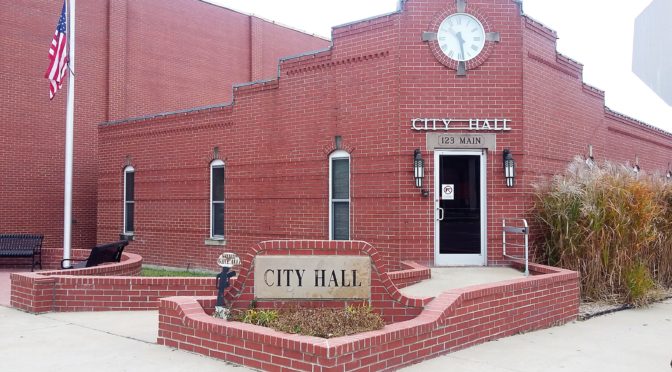
The regular meeting of the Fort Scott City Commission was held March 2nd, 2021 at 6:00 p.m. in the City Commission Meeting Room at City Hall, 123 S. Main Street, Fort Scott, Kansas.
ROLL CALL:
Commissioners P. Allen, K. Allen, R. Nichols, and L. Watts were present with Mayor J. Jones presiding.
INVOCATION: Pastor Paul Rooks, Grace Baptist Tabernacle, said a prayer asking God for guidance for the City, our Government and City officials.
AUDIENCE IN ATTENDANCE: Travis Shelton, Russell Lingerfelt, Rachel Pruitt, Paul Rooks, Michael Hoyt, Janice Allen, Anne Rawlins, Bill Martin, Traci Reed, Bobby Reed, Susan Bancroft, Devin Tally, Max Fanning, Sarah Long, Lou Howard, Kyah Goldsby, Linda Shinkle, and Liz Brittain.
PROCLAMATIONS/RECOGNITIONS:
ADDITIONS TO AGENDA: L. Watts moved to add Susan Bancroft to the Director update section. R. Nichols seconded. All voted aye.
ADDED SUSAN BANCROFT TO THE DIRECTOR UPDATE SECTION.
APPROVED AGENDA.
CONSENT AGENDA:
-
Approval of minutes of the regular meeting of February 16th, 2021 and special meeting minutes of February 12th, 2021 and February 23rd, 2021.
-
Approval of Appropriation Ordinance 1283-A totaling $335,746.84.
-
Request to Pay – HDR Engineering, Inc – $6,455.27 – River Intake Project
-
Request to Pay – Bourbon County Clerk – $8,047.48 – Charter Ordinance No. 31 Election costs
Discussion was held regarding the engineering fees on HDR Engineering.
Susan informed the Commission that these costs were approved by U.S.D.A. for the project.
Discussion was also held on the invoice from the Bourbon County Clerk for the special election.
P. Allen asked about the charge for ink pens and masks.
Susan said that the County Clerk refused to use our pens. They had everything they had asked for and wrapped in cellophane. The pens did say City of Fort Scott and the Clerk felt that could be swaying a voter’s way to vote. She talked to Jeremy and he said since we are wanting to work with the County, to move on and not pursue this.
Jeremy said that they did discuss this and he felt that with the direction we are trying to build with the County that he didn’t want to ruin any savings on ink pens.
Josh said that he was informed they were given free masks also and charged us for that.
Susan said that there is an invoice for the masks. She answered all of her questions. We can use the pens as giveaways at the Home Show and give them away up front when they come to pay utility bills.
L. Watts moved to approve the Consent Agenda. R. Nichols seconded. K. Allen, J. Jones, R. Nichols, and L. Watts voted aye. P. Allen voted no. Motion carried 4-1.
APPROVED CONSENT AGENDA.
Public Comment:
(Sign up required. Comments on any topic not on the agenda and limited to 5 minutes per person, at Commission discretion) – None
City Manager Report and Comments: Jeremy Frazier, City Manager, informed the Commission that he started meetings with Public Works and Public Utilities this last week. They will meet every Wednesday. He is excited to see how the vote will turn out today. He said that Ally is close to coming to them with a recommendation for software for the Codes Department. They are closing to having another person in the Codes Department. Jeremy said that Cooper Street will start this next week. He also said that 25th Street is close to being resolved. He said that he has been visiting with local organizations. He is building relationships with City staff.
Director Reports: Susan Bancroft: Susan informed the Commission that the City will begin their annual meter changeout program soon. There will be a purchase of $75,000 in meters soon to change out old meters. This is a budgeted item with a sole source vendor.
She said the other item is that she sent them an email about the amount of outstanding late utility payments that the City currently has. According to City Ordinance No. 3403, customer are required to pay their bill within 10 days of the due date. In the event the bill is not paid within the required due date and grace period, the City reserves the right to add a 10% penalty and disconnect the water/sewer service. Once a utility has been disconnected for non-payment, it will not be reconnected until all past-due bills for water/sewer services are paid in full. In addition, there is a $50.00 reconnection fee. She is proposing to send out a letter to all individuals in arrears that their account must be paid in full by April 15th, 2021 or their services will be disconnected for non-payment. In the past, there have been some that have been allowed to use a payment plan, but this has not worked out well for us. We have about 29 that could be shut off today and tell them that payment plans will not be accepted any longer. It is important for our water utility to be aggressive. We have about 900 accounts that are inactive and we don’t have enough information to send to the Kansas Setoff Program for collection.
Discussion was held how there no shutoffs during the COVID period.
Susan said that they could not shut off for almost a year period due to COVID. We need to follow our ordinance.
City Manager said that this is our business to run and we have costs associated with it. It costs the City to produce water and we are losing out on other opportunities due to lack of payment. He strongly encouraged them to follow the City ordinance.
Kevin brought up the Rural Water District and how they don’t have any way with their board for assistance when they have a leak. He asked if the City could work with them on this issue.
City Manager said that favorable treatment should not be shown from one person to another. We need to adhere to our policy.
Susan said that there is actually 67 on the list who owe over $200.00 in arrears which is a two or three month bill.
City Manager asked if there more than owed more than that amount.
Susan said yes. There is one that owes over $1,900. The house has a leak, and the landlord will not fix it.
Josh said he has some rental houses with water in his name as they can’t get water turned on in their name due to outstanding bills.
The Commission asked her what her recommendation was.
Susan said to send the letter out. She also said that she had some older ordinances she wanted to bring before them at a later date that need updating.
Old Business: None
Appearances: None
New Business:
-
Resolution No. 5-2021 – Resolution in reference to the levying of a 1% Countywide Sales Tax allocation – Susan Bancroft, Director of Finance informed the Commission that on October 6th, 2020, the City Commission approved the allocation on how you would use the 1% Countywide Sales Tax. It was approved at that meeting that 90% of the sales tax proceeds would be directly applied to pay for streets and highways operations and maintenance, and 10% would be applied to pay for public services.
Pete said that isn’t how he remembered it. He said the 90% would go for street improvements.
Susan said that is not how it was presented. If you did that you would not be able to pay for the employees.
Pete said that isn’t how he believed it was.
Susan said that before that vote you were transferring $500,000 out of the general fund into the street and highway fund. Those dollars paid for maintenance, people and any kind of commodities and supplies. She increased that by $87,000 for this year since it was half a year and that was to go towards more support for the street fund. If you meant something different, you would have to cut massive funds out of your budget in other areas.
Josh said that he remembered this and the approval of hiring two more additional street employees.
Susan said that was correct.
Pete said that he thinks we need to go back and look at this again.
R. Nichols moved to table this to the next meeting. J. Jones seconded. All voted aye.
TABLED RESOLUTION NO. 5-2021 UNTIL THE NEXT MEETING.
-
Consideration of Bids – Brush Blasting & Pool Repainting – Aquatic Center – Dave Bruner, Fire Chief, informed the Commission that bids were received for the brush blasting and repainting of the Aquatic Center. There were four (4) bids received with the low bid from Insco Industries of Shawnee, Kansas in the amount of $32,750.
Discussion was held regarding how much linear foot and crack repair linear feet there was that would need repaired.
Dave informed the Commission that there is approximately 95 linear feet of joint repair which Insco Industries quoted at $5.50 per linear foot and the 80 to 85 foot crack repair possibly. He said that the amount should not exceed $35,000.00. This work would be done by May 1st, 2021. This is budgeted for 2021.
K. Allen moved to approve the bid with Insco Industries of Shawnee, Kansas at a cost not to exceed $35,000. L. Watts seconded. All voted aye.
APPROVED THE BID WITH INSCO INDUSTRIES OF SHAWNEE, KANSAS AT A COST NOT TO EXCEED $35,000 FOR THE BRUSH BLASTING AND REPAINTING OF THE AQUATIC CENTER.
-
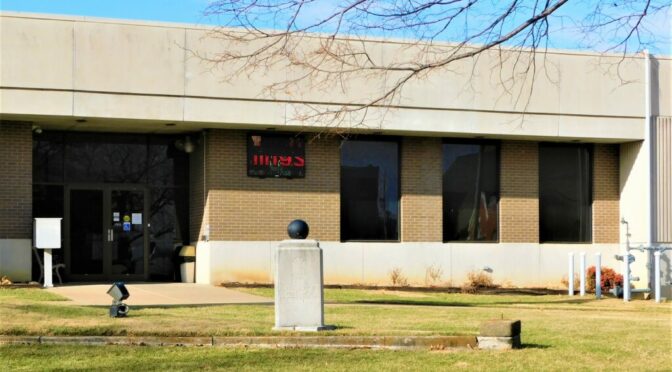
Consideration of move of Dispatch Center to 207 S. Judson (old Correctional facility) – Traci Reed, Dispatch Supervisor, informed the Commission that the City has been given the opportunity to move the 911 Dispatch Center to the previous Bourbon County jail location at 207 S. Judson Street. This move is very beneficial due to providing structural protection as well as security. The building that they are currently in houses the Police Department, Fire Department and Dispatch. At one time it also housed the Bourbon County EMS as well. They have outgrown the Hawkins Public Safety facility due to the ever-changing demands on public safety. For many years, the safety of our Dispatch has been of the upmost concern in the current building they are in if faced with a natural disaster such as a tornado. If that would occur, the Dispatch employees would have to physically leave their stations to take cover. Dispatch should never have to do this. They are the first line of protection in this community as well as the county. They should be located in a secure location and accessibility to Dispatch should be limited. The City has a 911 fund that has money distributed quarterly. Those dollars are not budgeted. There has been an amount that has accumulated over the years that can be used to update this new location and would take care of moving equipment. This would be a joint effort with the City and the County on the renovations. Traci said that they would be going from being in 365 square feet to 820 square feet.
Commissioners all agreed that this move is needed.
Susan said that this is a great way to spend those 911 funds. The phone system needs updated. The estimated cost is $86,220 for this move.
Pete asked about the new 988 number and if that will impact Dispatch.
City Manager said that they will get more information on this number.
City Manager asked Traci to introduce her dispatchers to the Commission that were present.
L. Watts moved to approve to relocate Dispatch to 207 S. Judson which is the old Correctional facility. K. Allen seconded. All voted aye.
APPROVED TO RELOCATE DISPATCH TO 207 S JUDSON AND USE 911 FUNDING FOR THIS MOVE AT AN ESTIMATED COST OF $86,220 .
(Kevin Allen left the room at 7:05 p.m.)
-
Consideration to Pay – Skitch’s Hauling & Excavation, Inc – $616.00 – January invoice – Josh Jones said that Skitch’s Hauling & Excavation invoice for January is before them for approval. It is for $616.00.
J. Jones moved to approve the January invoice for Skitch’s Hauling & Excavation in the amount of $616.00. P. Allen seconded. All voted aye.
APPROVED JANUARY INVOICE FOR SKITCH’S HAULING & EXCAVATION IN THE AMOUNT OF $616.00.
(K. Allen returned to the room at 7:08 p.m.)
-
Discussion of electric scooter company, Bird, establishing services in Fort Scott – Rachel Pruitt, Economic Development Director, informed the Commission that she has an exciting new proposal to bring to them tonight. We were approached by an electric scooter company called Bird. This company was started in 2017 and was based out of Los Angeles. She has reached out to some other communities where they are located. Pittsburg adopted an ordinance on undocked vehicles that she would recommend that we look at. There is no local funds needed. She asked for approval to move forward to find a partner for this operation. The local partner would be charged with picking up the scooters, charging the scooters and in charge of the local operation. This company has learned to get approval from the cities they want to locate in first. They are in 24 rural communities currently.
Josh said that his daughter is a student at Pitt State and that they utilize them a lot.
R. Nichols moved to authorize her to move forward with this electric scooter company locating in Fort Scott. L. Watts seconded. R. Nichols, L. Watts and J. Jones voted aye. K. Allen and P. Allen both abstained. Motion carried 3-2.
APPROVED TO AUTHORIZE THE ECONOMIC DEVELOPMENT DIRECTOR TO MOVE FORWARD WITH THE ELECTRIC SCOOTER COMPANY, BIRD, LOCATING IN FORT SCOTT.
-
Discussion of Potential Cost Sharing Joint Venture between the City and Bourbon County for the joint purchase of materials and equipment – City Manager informed the Commission that the City has an opportunity to partner with the County and explore a potential cost sharing relationship for the joint purchase of materials and equipment necessary to perform street and infrastructure improvements. The City could potentially save up to 40% in costs. He asked the Commission to take advantage of this opportunity and pursue this. This possible joint purchase of equipment and materials would be through an 80/20 split, whereby the County would be responsible for 80% and the City 20% of the costs. It would be beneficial to both parties.
The Commission all agreed this would be very beneficial to both entities.
K. Allen moved to approve to enter into this cost sharing joint venture between the City and the County for joint purchase of material and equipment. R. Nichols seconded. All voted aye.
APPROVED TO ENTER INTO THIS COST SHARING JOINT VENTURE BETWEEN THE CITY AND THE COUNTY FOR JOINT PURCHASE OF MATERIAL AND EQUIPMENT.
Reports and Comments:
-
Commissioner Reports and Comments:
R. Nichols – Thanked the new City Manager for his updates and all he has accomplished since he has been here.
P. Allen – Pete mentioned that he and Jeremy and Susan have talked about several items and one of those is the 2012 Stormwater Master Plan. We are seriously behind on implementing this plan. We do not have a stormwater utility set up nor any ordinances. If someone is in violation of this act, we can’t enforce it. He would like the Staff to pursue the stormwater ordinance and set up a separate utility for this and not have it tied to the sanitary sewer utility. It should stand on its own. He would like to make that a priority.
He asked that we ask as a Commission in the near future look at the Stormwater Master Plan and get that program started. We have the user charge fee that could get it started. He said that the E.P.A. has lots of grants and promotes them. We installed a bunch of catch basins but those need inspected now.
Kevin referenced the area in the 1700 block of Eddy Street and all the water that collects there and gets into their houses.
City Manager said that we can possibly get this in the budget for this next year.
Chad said that we have a stormwater utility employee getting ready to start also.
L. Watts – Nothing to report.
K. Allen – Kevin thanked the Public Works crews for all their assistance in unthawing people’s meters. He said that he knows that with the holes that have been created there have been issues with cold patch in filling the holes, and that the City is going to get some hot mix which will work better.
Kevin said that he is excited about the sales tax vote today. He hopes the public will trust them and let them show that we will prove ourselves.
Kevin said that we took down the stop sign at 1st and National and people are adjusting. He mentioned taking down the stop signs at 2nd and 3rd on National. He travels it also and he doesn’t know of any accidents that have occurred there. He referred to the accident at 12th and the bypass last week.
Josh asked Chad about installing a solar flashing light in the area of 12th and the bypass.
Kevin mentioned that there are some trees in that area that need removed. He doesn’t know if it is State property or City property.
Kevin said that the pedestrian crosswalks need to be repainted also and that way people will stop for pedestrians.
Kevin made a motion to remove the stop signs at 2nd and National to the north and south bound traffic. Pete Allen seconded.
Josh asked if there was anything we could do to alert traffic. He mentioned installing flags on the stop signs that are remaining.
Chad said he would look into it.
City Manager asked if a motion should be made to draft an ordinance to remove the stop sign?
Jeff Deane said that he will check into that.
Kevin amended his motion to draft an ordinance to remove the stop sign at 2nd and National to north and south bound traffic and bring back in two weeks for approval. Pete Allen seconded. All voted aye.
APPROVED TO HAVE THE CITY ATTORNEY DRAFT AN ORDINANCE TO REMOVE THE STOP SIGN AT 2ND AND NATIONAL TO NORTH AND SOUTH BOUND TRAFFIC AND BRING TO THE NEXT MEETING.
Chad said that he had some quick numbers to share. We have 91 total calls for service for no water. Forty-seven of those were frozen meters and fifteen meters needed replaced that were frozen and broke. There were nine complete frozen services and thirty-five calls for residents where their service line was broken.
Pete said that Ryan Coon went above and beyond and assisted in unthawing the generator at Buck Run Community Center. He also helped with the College Booster Station and North National generators.
Chad said that he thanked him and tried to get him to send the City a bill, but he didn’t want to. He just wanted to assist.
J. Jones – Josh asked about the cameras for the park and where we are on that.
Josh said that he would like to see the local plumbers called and asked about the 20 p.s.i versus the 12 p.s.i. on the gas permit test.
Josh said that he would like to see a free golf and pool day offered to those in our community.
Josh said the County just posted the unofficial results of the sales tax election and it passed 315 votes to 205 votes with provisional votes to be counted still.
Pete asked Josh since he is our Bedco representative if he could give us an update on what is going on.
Josh said that he went to a meeting a couple of weeks ago. There are two sub-committes of Bedco. One sub-committee was responsible for hiring a Bedco director and they should have an offer ready for someone very soon.
Executive Session:
J. Jones moved that the City Commission recess into Executive Session for the purpose of discussing non-elected personnel in K.S.A. 75-4319(b)(1). The open meeting will resume in the Commission meeting room at City Hall at 8:09 p.m. L. Watts seconded. All voted aye. This included the City Commission, City Manager, and City Attorney.
K. Allen moved that the City Commission come out of Executive Session at 8:09 p.m. P. Allen seconded. All voted aye. Motion carried.
Executive Session:
J. Jones moved that the City Commission recess into Executive Session for the purpose of discussing non-elected personnel in K.S.A. 75-4319(b)(1). The open meeting will resume in the Commission meeting room at City Hall at 8:20 p.m. K. Allen seconded. All voted aye. This included the City Commission, City Manager, and City Attorney.
J. Jones moved that the City Commission come out of Executive Session at 8:20 p.m. L. Watts seconded. All voted aye. Motion carried.
City Attorney Report and Comments: Nothing to report.
Josh said that we sent out for Request for Qualifications for a City Attorney. We received four RFQ’s.
Kevin said they were straight forward as far as pricing and gave their names:
Tiana McElroy $40,000 a year and she will perform City Attorney and City Prosecutor duties both
Bob Farmer $4,000 a month with unlimited hours.
Jeff Deane $175.00/an hour and $75.00 for paralegal work
Justin Meeks $78,000 a year and $75.00 for anything over 20 hours a week and then $100.00 an hour.
Josh said that there was confusion on who hires the City Attorney.
City Manager said that the City Attorney is an employee of the City Manager, but reports to the City Manager and City Commission.
Jeff Deane said that the City Attorney reports to both the City Manager and City Commission.
Discussion was held who would hire a City Attorney.
Jeff Deane said that the City Commission approves all contracts, and the City Attorney is a contract employee, so it is approved by the Commission.
Commission decided to have a special meeting on Thursday March 4th, 2021 and interview candidates if they are available.
The City Clerk will contact the candidates and get the meeting scheduled if they are available.
Adjournment:
K. Allen moved to adjourn the meeting at 8:38 p.m. L. Watts seconded. All voted aye.
ADJOURNED MEETING AT 8:38 P.M.
Respectfully submitted,
Diane K. Clay, MMC
City Clerk