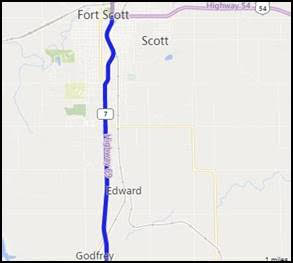
The Kansas Department of Transportation (KDOT) plans to begin work on a U.S. 69 resurfacing project at Fort Scott on Monday, March 29, according to a KDOT press release. The project starts at the south U.S. 54 junction and continues south for six miles, ending ½ mile south of K-7.
Project activity includes a cold mill, concrete patching, and a three-inch asphalt overlay, according to the press release. The contractor will start at Wall Street and work south. Traffic is reduced to one lane in each direction at the work zone, with a width restriction of 12 feet. Flaggers will direct traffic on side roads.
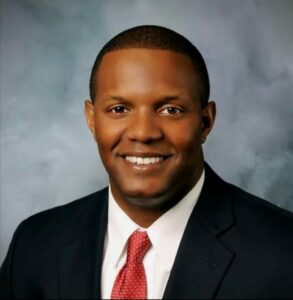
Fort Scott City ManagerJeremy Frazier couldn’t be more excited about this street resurfacing project, he said.
Jeremy Frazier. Submitted photo.
“I believe that passers-through, whether right or wrong, assume that the condition of this highway embodies an accurate depiction of the City of Fort Scott,” Frazier said. “Although this highway is a KDOT Highway, there may be an assumption that it is a city-maintained highway. This of course is not the case.”
“To have this highway repaired is great news for Fort Scott,” he said.
” I am ecstatic and believe that this highway repair project lays the groundwork for future plans that we believe will come together with perfect timing,” Frazier said. “We are a long way away from changing the image of this community, but I feel, as I hope that everyone does, that the energy and enthusiasm present in the community will result in turning the corner not only in the downtown area but throughout the community. I am also optimistic that years from now, the community will have progressed in many ways for the better. Thank you KDOT. Thanks to the citizens, Fort Scott City Commission, non-profits, and business community!
KDOT awarded the $2.9 million construction contract to Bettis Asphalt & Construction, Inc., Topeka, according to the press release. Weather permitting, the road work should be finished this summer.
Check KDOT’s updated traveler information website, www.Kandrive.org, for more road conditions and construction details. KDOT urges all motorists to be alert and obey the warning signs when approaching and driving through a work zone.
Persons with questions may contact Iola Area Engineer Troy Howard, (620) 901-6557, or Public Affairs Manager Priscilla Petersen, (620) 902-6433.
Possible Streetscape
“I am additionally excited as I recently began discussions with KDOT to explore resources that might assist in a possible streetscape of HWY 69,” Frazier said. “If this streetscape were designed and constructed after the highway was repaired, it would mean that HWY 69 could become one of the most attractive routes through the community.”
Governor Laura Kelly Announces KDADS Awarded $4 Million Grant to Strengthen Outpatient Treatment Services for Kansans with Serious Mental Illness
TOPEKA – Kansas Department for Aging and Disability Services (KDADS) Secretary Laura Howard announced today the agency has received a federal commitment of $4 million in grant funding to develop Assisted Outpatient Treatment (AOT) services that will enhance outpatient treatment services for people with serious mental illness (SMI) in Kansas. The grant will make $1 million available annually for four years. The funds will support five AOT pilot sites to reduce the incarceration and/or hospitalization of people with SMI in their communities through court ordered outpatient treatment.
“Since day one, my administration has focused on improving services for Kansans who would be better served by treatment than incarceration,” Governor Kelly said. “Using what we learn from these pilot sites, we’re ready to work with state and local partners to develop guidelines to protect Kansans statewide and reduce the number of individuals with mental illness in jails or in hospitals.”
“This grant enhances partnerships with law enforcement, mental health services, courts, hospitals and other community services within the pilot site communities to get Kansans with SMI the help they need in their own communities,” KDADS Secretary Howard said. “The results of the project will inform recommendation to the Kansas Legislature on ways to improve Assisted Outpatient Treatment in Kansas.”
The Substance Abuse and Mental Health Services Administration (SAMSHA), the agency within the U.S. Department of Health and Human Services that leads public health efforts to advance the behavioral health of the nation, awarded the grant to fund Kansas’ AOT pilot project in five regions and key communities across the state.
“KDADS is excited to be able to implement this grant in Kansas and expand opportunities for Kansans to receive community treatment instead of being admitted to state hospitals for institutional treatment,” KDADS Behavioral Health Services Commissioner Andy Brown said. “Our goals to work with local courts and CMHCs to reduce both incarcerations and involuntary hospitalizations for people with serious mental illness will be advanced with this funding from SAMHSA.”
This four-year SAMHSA program is intended to implement and evaluate new AOT programs and identify evidence-based practices in order to reduce the incidence and duration of psychiatric hospitalization, homelessness, incarcerations, and interactions with the criminal justice system while improving the health and social outcomes of individuals with an SMI. This program is designed to work with courts to allow these individuals to obtain treatment while continuing to live in the community and their homes.
The intent of the Kansas AOT Project is to create five pilot sites in Kansas to establish process and procedure in support of modification of involuntary commitment laws and transition to the AOT model. The pilot sites include the Kansas counties of Cowley, Douglas, Ellis, Ford and Riley. In a recent report card from the Treatment Advocacy Center, several gaps were identified in Kansas’s current laws – no explicit criteria for psychiatric deterioration, the treatment plan is not shared with the court, duration of initial order is not long enough, duration of continued order is not long enough, and there is no court monitoring of voluntary settlement agreements. These gaps will be addressed during the project through the pilot sites. The result of the pilot project will be recommendations to the Kansas Legislature to amend statutes to support a permanent AOT program in Kansas.
Submitted by Rebecca Johnson, Southeast Kansas Multi-County Health Department Administrator.
The state of disaster emergency declaration will be extended to May 28, 2021. Governor Kelly will re-issue the following order (among several others) and it will remain in effect until rescinded or until the statewide state of disaster emergency expires, whichever is earlier:
Governor Laura Kelly Announces Relaunch of Reemployment Services and Eligibility Assessment Program
~RESEA program will assist unemployed Kansans with job searches and provide career counseling~
TOPEKA – Today, Governor Laura Kelly announced the Reemployment Services and Eligibility Assessment (RESEA) program has relaunched to assist unemployed Kansans with job searches and career counseling.
“By connecting unemployed Kansans with the resources needed to secure a high-quality job, the RESEA program will improve our economy, communities, and the livelihoods of Kansans statewide,” said Governor Laura Kelly. “It’s not good enough to return to the days before the pandemic; instead, we must rebuild a healthier, stronger, more resilient workforce and economy.”
RESEA is a collaboration between the Kansas Department of Commerce and the Kansas Department of Labor to provide early-intervention job search assistance and career counseling to unemployment claimants deemed likely to exhaust their benefits. In order to continue receiving benefits, individuals who are selected are required to participate.
“We’re here to help the people of Kansas find meaningful, in-demand jobs in our state, and the RESEA program is a key resource to make that happen quickly,” Lieutenant Governor and Commerce Secretary David Toland said. “RESEA helps Kansans get jobs, and get them as soon as possible. We’ve experienced an unprecedented employment crisis, and we’re here to provide every resource possible to make sure affected Kansans can provide for themselves and their families.”
Due to the COVID-19 pandemic, appointments will be entirely virtual. If internet access is an issue, case managers will work with participants to find an alternative appointment method.
This program is being reinstated with the following objectives in mind:
Quickly assist unemployed Kansans in finding new, meaningful work in our state;
Strengthen the integrity of Kansas’ unemployment program;
Promote alignment with the vision of the Workforce Innovation and Opportunity Act (WIOA);
Establish RESEA as an entry point to other workforce system partners.
Kansans receiving unemployment who are selected to participate in the RESEA program will receive a letter soon with more information. They will also be assigned a Case Manager who will provide necessary documentation.
Appointment dates for RESEA program participants will begin on March 29.
About the Kansas Department of Commerce
As the state’s lead economic development agency, the Kansas Department of Commerce strives to empower individuals, businesses and communities to achieve prosperity in Kansas. Commerce accomplishes its mission by developing relationships with corporations, site location consultants and stakeholders in Kansas, the nation and world. Our strong partnerships allow us to help create an environment for existing Kansas businesses to grow and foster an innovative, competitive landscape for new businesses.
Governor Laura Kelly Signs Emergency Response Bill, Will Re-Issue Executive Orders to Protect COVID-19 Recovery
~Executive orders to be revoked on March 31st will be reissued on April 1st~
TOPEKA – Governor Laura Kelly today signed a bill to ensure Kansas can continue providing communities with resources and support critical to the state’s COVID-19 response and recovery efforts.
Among other provisions, Senate Bill 40 modifies the procedure for the declaration and extension of a state disaster emergency under the Kansas Emergency Management Act, and extends the current disaster declaration to May 28, 2021.
“This bipartisan compromise will extend the State of Disaster Emergency that allows us to provide hospitals with PPE, support food banks and pantries, and otherwise respond to the COVID-19 pandemic,” Governor Kelly said. “The bill includes provisions that I do not support and that could complicate our emergency response efforts. But I will continue to work with legislators and local leaders to keep Kansans safe and healthy during this pandemic.”
Several executive orders related to the COVID-19 pandemic were set to expire on March 31 in conjunction with the expiration of the state of disaster emergency. Senate Bill 40 includes a provision that revokes all current executive orders related to the COVID-19 pandemic, but the Governor retains the authority to re-issue orders under the new process imposed by the bill.
On April 1, the Governor will re-issue the following orders, which will remain in effect until rescinded or until the statewide state of disaster emergency expires, whichever is earlier:
Next week’s Johnson & Johnson vaccines to be smaller than anticipated
TOPEKA – The Kansas Department of Health and Environment (KDHE) has learned that the number of Johnson & Johnson (Janssen) COVID-19 vaccines slated for delivery next week will be smaller than expected. Approximately 16,500 doses are scheduled to arrive next week, rather than the estimated 100,000 that had initially been indicated.
According to national reports, the full supply of vaccine expected from J&J has been delayed due to production issues and may not be ready to ship until the second or third week of April. In an attempt to boost the J&J supply, Merck – another international pharmaceutical company – has agreed to help manufacture J&J’s COVID-19 vaccine.
In addition to the J&J vaccine, Kansas is receiving an increase in Pfizer Prime doses 47,970 and 38,100 Pfizer Boost along with 27,800 Moderna Prime and 27,800 Moderna Boost.
After Identifying Gaps in Previous Aid, USDA Announces ‘Pandemic Assistance for Producers’ to Distribute Resources More Equitably
USDA Reopens Program Sign-Up to a Larger Share of Producers with Plans to Expand Outreach and New Programming
Washington, D.C., March 24, 2021– Agriculture Secretary Tom Vilsack announced today that USDA is establishing new programs and efforts to bring financial assistance to farmers, ranchers and producers who felt the impact of COVID-19 market disruptions. The new initiative—USDA Pandemic Assistance for Producers—will reach a broader set of producers than in previous COVID-19 aid programs. USDA is dedicating at least $6 billion toward the new programs. The Department will also develop rules for new programs that will put a greater emphasis on outreach to small and socially disadvantaged producers, specialty crop and organic producers, timber harvesters, as well as provide support for the food supply chain and producers of renewable fuel, among others. Existing programs like the Coronavirus Food Assistance Program (CFAP) will fall within the new initiative and, where statutory authority allows, will be refined to better address the needs of producers.
USDA Pandemic Assistance for Producers was needed, said Vilsack, after a review of previous COVID-19 assistance programs targeting farmers identified a number of gaps and disparities in how assistance was distributed as well as inadequate outreach to underserved producers and smaller and medium operations.
“The pandemic affected all of agriculture, but many farmers did not benefit from previous rounds of pandemic-related assistance. The Biden-Harris Administration is committed to helping as many producers as possible, as equitably as possible,” said Vilsack. “Our new USDA Pandemic Assistance for Producers initiative will help get financial assistance to a broader set of producers, including to socially disadvantaged communities, small and medium sized producers, and farmers and producers of less traditional crops.”
USDA will reopen sign-up for CFAP 2 for at least 60 days beginning on April 5, 2021. The USDA Farm Service Agency (FSA) has committed at least $2.5 million to improve outreach for CFAP 2 and will establish partnerships with organizations with strong connections to socially disadvantaged communities to ensure they are informed and aware of the application process.
The payments announced today (under Part 3, below) will go out under the existing CFAP rules; however, future opportunities for USDA Pandemic Assistance will be reviewed for verified need and during the rulemaking process, USDA will look to make eligibility more consistent with the Farm Bill. Moving forward, USDA Pandemic Assistance for Producers will utilize existing programs, such as the Local Agricultural Marketing Program, Farming Opportunities Training and Outreach, and Specialty Crop Block Grant Program, and others to enhance educational and market opportunities for agricultural producers.
USDA Pandemic Assistance for Producers – 4 Parts Announced Today
Part 1: Investing $6 Billion to Expand Help & Assistance to More Producers
USDA will dedicate at least $6 billion to develop a number of new programs or modify existing proposals using discretionary funding from the Consolidated Appropriations Act and other coronavirus funding that went unspent by the previous administration. Where rulemaking is required, it will commence this spring. These efforts will include assistance for:
Dairy farmers through the Dairy Donation Program or other means:
Euthanized livestock and poultry;
Biofuels;
Specialty crops, beginning farmers, local, urban and organic farms;
Costs for organic certification or to continue or add conservation activities
Other possible expansion and corrections to CFAP that were not part of today’s announcement such as to support dairy or other livestock producers;
Timber harvesting and hauling;
Personal Protective Equipment (PPE) and other protective measures for food and farm workers and specialty crop and seafood producers, processors and distributors;
Improving the resilience of the food supply chain, including assistance to meat and poultry operations to facilitate interstate shipment;
Developing infrastructure to support donation and distribution of perishable commodities, including food donation and distribution through farm-to-school, restaurants or other community organizations; and
Reducing food waste.
Part 2: Adding $500 Million of New Funding to Existing Programs
USDA expects to begin investing approximately $500 million in expedited assistance through several existing programs this spring, with most by April 30. This new assistance includes:
$100 million in additional funding for the Specialty Crop Block Grant Program, administered by the Agricultural Marketing Service (AMS), which enhances the competitiveness of fruits, vegetables, tree nuts, dried fruits, horticulture, and nursery crops.
$75 million in additional funding for the Farmers Opportunities Training and Outreach program, administered by the National Institute of Food and Agriculture (NIFA) and the Office of Partnerships and Public Engagement, which encourages and assists socially disadvantaged, veteran, and beginning farmers and ranchers in the ownership and operation of farms and ranches.
$100 million in additional funding for the Local Agricultural Marketing Program, administered by the AMS and Rural Development, which supports the development, coordination and expansion of direct producer-to-consumer marketing, local and regional food markets and enterprises and value-added agricultural products.
$75 million in additional funding for the Gus Schumacher Nutrition Incentive Program, administered by the NIFA, which provides funding opportunities to conduct and evaluate projects providing incentives to increase the purchase of fruits and vegetables by low-income consumers
$20 million for the Animal and Plant Health Inspection Service to improve and maintain animal disease prevention and response capacity, including the National Animal Health Laboratory Network.
$20 million for the Agricultural Research Service to work collaboratively with Texas A&M on the critical intersection between responsive agriculture, food production, and human nutrition and health.
$28 million for NIFA to provide grants to state departments of agriculture to expand or sustain existing farm stress assistance programs.
Approximately $80 million in additional payments to domestic users of upland and extra-long staple cotton based on a formula set in the Consolidated Appropriations Act, 2021 that USDA plans to deliver through the Economic Adjustment Assistance for Textile Mills program.
Part 3: Carrying Out Formula Payments under CFAP 1, CFAP 2, CFAP AA
The Consolidated Appropriations Act, 2021, enacted December 2020 requires FSA to make certain payments to producers according to a mandated formula. USDA is now expediting these provisions because there is no discretion involved in interpreting such directives, they are self-enacting.
An increase in CFAP 1 payment rates for cattle. Cattle producers with approved CFAP 1 applications will automatically receive these payments beginning in April. Information on the additional payment rates for cattle can be found on farmers.gov/cfap. Eligible producers do not need to submit new applications, since payments are based on previously approved CFAP 1 applications. USDA estimates additional payments of more than $1.1 billion to more than 410,000 producers, according to the mandated formula.
Additional CFAP assistance of $20 per acre for producers of eligible crops identified as CFAP 2 flat-rate or price-trigger crops beginning in April. This includes alfalfa, corn, cotton, hemp, peanuts, rice, sorghum, soybeans, sugar beets and wheat, among other crops. FSA will automatically issue payments to eligible price trigger and flat-rate crop producers based on the eligible acres included on their CFAP 2 applications. Eligible producers do not need to submit a new CFAP 2 application. For a list of all eligible row-crops, visit farmers.gov/cfap. USDA estimates additional payments of more than $4.5 billion to more than 560,000 producers, according to the mandated formula.
USDA will finalize routine decisions and minor formula adjustments on applications and begin processing payments for certain applications filed as part of the CFAP Additional Assistance program in the following categories:
Applications filed for pullets and turfgrass sod;
A formula correction for row-crop producer applications to allow producers with a non-Actual Production History (APH) insurance policy to use 100% of the 2019 Agriculture Risk Coverage-County Option (ARC-CO) benchmark yield in the calculation;
Sales commodity applications revised to include insurance indemnities, Noninsured Crop Disaster Assistance Program payments, and Wildfire and Hurricane Indemnity Program Plus payments, as required by statute; and
Additional payments for swine producers and contract growers under CFAP Additional Assistance remain on hold and are likely to require modifications to the regulation as part of the broader evaluation and future assistance; however, FSA will continue to accept applications from interested producers.
Part 4: Reopening CFAP 2 Sign-Up to Improve Access & Outreach to Underserved Producers
As noted above, USDA will re-open sign-up for of CFAP 2 for at least 60 days beginning on April 5, 2021.
FSA has committed at least $2.5 million to establish partnerships and direct outreach efforts intended to improve outreach for CFAP 2 and will cooperate with grassroots organizations with strong connections to socially disadvantaged communities to ensure they are informed and aware of the application process.
Please stay tuned for additional information and announcements under the USDA Pandemic Assistance to Producers initiative, which will help to expand and more equitably distribute financial assistance to producers and farming operations during the COVID-19 national emergency. Please visit www.farmers.gov for more information on the details of today’s announcement.
USDA touches the lives of all Americans each day in so many positive ways. In the Biden-Harris administration, USDA is transforming America’s food system with a greater focus on more resilient local and regional food production, ensuring access to healthy and nutritious food in all communities, building new markets and streams of income for farmers and producers using climate-smart food and forestry practices, making historic investments in infrastructure and clean-energy capabilities in rural America, and committing to equity across the Department by removing systemic barriers and building a workforce more representative of America. To learn more, visit www.usda.gov.
USDA is an equal opportunity provider, employer, and lender.
MEETING WILL BE HELD IN THE COMMISSION ROOM. ANYONE ATTENDING THE MEETING WILL BE REQUIRED TO WEAR A MASK. MUST MAINTAIN SOCIAL DISTANCING.
2:30pm
Call to Order
Flag Salute
Executive Session – KSA 75-4319(b)(2) For consultation with an attorney for the public body or agency which would be deemed privileged in the attorney-client relationship, Possible Litigation
Justifications for Executive Session:
KSA 75-4319(b)(1) To discuss personnel matters of individual nonelected personnel to protect their privacy
KSA 75-4319(b)(2) For consultation with an attorney for the public body or agency which would be deemed privileged in the attorney-client relationship
KSA 75-4319(b)(3) To discuss matters relating to employer-employee negotiations whether or not in consultation with the representative(s) of the body or agency
KSA 75-4319(b)(4) To discuss data relating to financial affairs or trade secrets of corporations, partnerships, trust, and individual proprietorships
KSA 75-4319(b)(6) For the preliminary discussion of the acquisition of real property
KSA 75-4319(b)(12) To discuss matters relating to security measures, if the discussion of such matters at an open meeting would jeopardize such security measures.
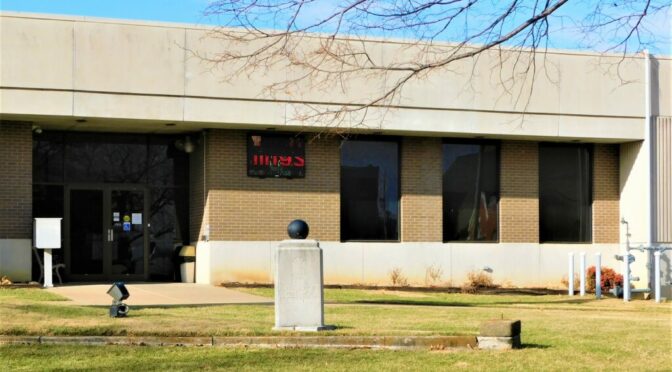
The Eagle Block building at 10-12 N. National Avenue. March 22, 2021.
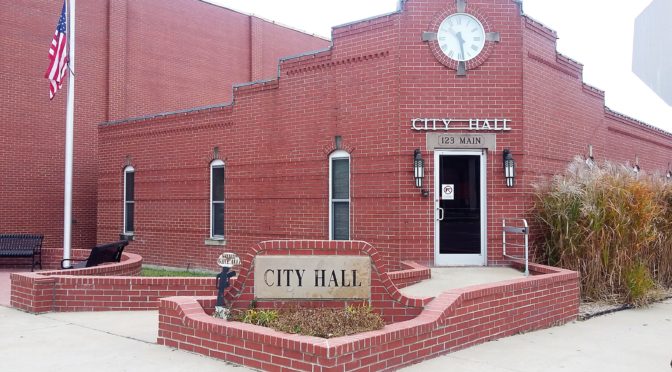
The Fort Scott LandBank members will meet at 4 p.m. on Tuesday, March 23,at City Hall, 123 Main, in the City Commission meeting room to discuss a grant project with another local entity and also a request for bids for the Eagle Block building at 10-12 N. National Avenue.
There will be an update on the Eagle Block Building, FS Landbank Manager AllysonTurvey, said. “This discussion will include a request to go out for a Request For Proposal for the interior demo work.”
Also at this meeting, the members will have a presentation from the Healthy Bourbon County Action Team, which has budgeted $4,000 for LandBank projects that tie in with HBCAT initiatives, according to Turvey.
Jody Hoener. Submitted photo.
“The HBCAT Board decided to include Landbank’s package in our Neighborhood and Physical Environment Pathway,” Jody Hoener, leader of the HBCAT, said. “We have allocated $4000 of our Blue Cross Blue Shield Pathways to Healthy Kansas Grant Funds towards it.”
Hoener provided the following information from Pathways to Healthy Kansas:
“LAND BANK Focus Area & Pathway:
“Activity Summary: Land banks acquire, hold, manage, and develop problem properties (e.g., vacant lots, abandoned buildings, tax-foreclosed) property and transition them to productive uses such as affordable housing developments, community-focused commercial buildings, community gardens or green spaces.
“Land banks can also demolish abandoned or unsafe buildings.
“State and local governments can support land banks by allowing low or no-cost purchases of tax foreclosured property, clearing titles and/or forgiving back taxes, holding land tax-free, or negotiating property transfers that address community needs.
“Land banks are generally governmental entities created and managed at the local or regional level.
“Land banks policies can be adapted to prioritize projects of nutrition, physical activity and other health promoting activities.
“Activities could include building support for a policy, exploring options necessary to pass policy changes or further expanding land bank policy to include health and equity priority goals related to the health focus areas. Local governments would be required to implement one of the following tracks:
1) pass a new policy
2) improve or expand existing policy
3) enforce an existing policy.”
Although there will be a majority of the city commissioners present, no city commission business will be conducted, according to a press release from the City of Fort Scott.
The meeting will be made available via the city’s Youtube channel at the City of Fort Scott.
Fort Scott City Commissioners are a part of the Landbank members and include Josh Jones, Kevin Allen, Pete Allen, Randy Nichols, and Lindsay Watts. Additional members are Jim Harris-a Bourbon County Commissioner, who was selected to be Vice-Chairperson of the group; Turvey-who is also the Fort Scott Tourism and Community Development Manager and Susan Bancroft-Fort Scott Finance Director, who is the treasurer of the Landbank, and Gregg Motley-Director of the Bourbon County Economic Development Board, Inc.
Josh Jones was selected to be the chairperson of the group.
Expanding Veteran Spouses and Caregivers’ Vaccine Eligibility
Bill to Expand the VA’s Vaccination Efforts Heads to President’s Desk
This week, the Senate and House passed my bipartisan legislation to expand COVID-19 vaccine eligibility to veterans, their spouses and their caregivers under the Department of Veterans Affairs (VA). I introduced the Strengthening and Amplifying Vaccination Efforts to Locally Immunize All Veterans and Every Spouse (SAVE LIVES) Act with my colleagues on the Senate Veterans’ Affairs Committee on March 11 and am pleased Congress moved quickly to send it to the President’s desk.
Currently, the VA is only able to vaccinate active VA Health Care System enrollees. While the VA will continue to prioritize vaccinating VHA enrolled veterans with its allocation of the COVID-19 vaccine, this legislation enables the VA to vaccinate non-enrolled veterans, veteran spouses, caregivers, overseas veterans and others with excess COVID-19 vaccine supply.
Military service is family service, and that is why the VA and this committee aim to care for both veterans and their families. I urge the President to quickly sign this legislation into law to make certain the VA has the freedom to vaccinate veteran spouses, non-enrolled veterans, caregivers, overseas veterans and others with excess COVID-19 vaccine supply. While the VA will continue to prioritize vaccinating VHA enrolled veterans with its allocation of the COVID-19 vaccine, this legislation will help further protect our veterans and their families
If you are a veteran, you can click here for more information about the VA’s COVID-19 testing and treatment resources. You can also sign up for updates about vaccine availability here.
Hearing from Veteran Service Organizations
This week the Senate and House Veterans’ Affairs Committees conducted our third and final joint veteran service organization (VSO) hearing. Though we were not able to meet in person, these virtual legislative proposals provided input that my colleagues and I benefit from each year, hearing directly from veterans and veteran advocates.
Throughout the hearing, we heard from VSOs, including Veterans of Foreign Wars, American Veterans, Fleet Reserve Association, Gold Star Wives, National Congress of American Indians and the National Association for Black Veterans. These joint hearings always provide a unique opportunity to interact with groups representing the many diverse corners of America’s veteran community, and I look forward to continuing to partner with veterans and their VSO advocates to craft solutions to problems like the harmful effects of toxic exposures, making certain veterans’ community care is robust and reliable, expanding vaccine access for veteran family members and caregivers, providing high-quality mental health care and suicide prevention services, ensuring VA’s educational benefits are best-suited to set up veterans for success after service and that our women and minority veterans have a VA that works for them. Oversight of VA’s implementation of recent legislation tackling these challenges will be crucial, and hearing from veterans on the ground is pivotal in that effort.
Calling on the VA to Expedite Vietnam Veterans’ Blue Water Navy Claims
This week I joined Chairman Jon Tester in a letter to VA Secretary McDonough to request that he renew the agency’s focus on the implementation of policy changes required by Public Law 116-23, the Blue Water Navy Vietnam Veterans Act, and Public Law 116-183, the William M. (Mac) Thornberry National Defense Authorization Act For Fiscal Year 2021 (FY21 NDAA), both of which grant long overdue health care and benefits to veterans of the Vietnam War and Korean Demilitarized Zone (Korean DMZ).
In some instances, these veterans have waited half a century for recognition that their service caused adverse health effects. As such, we asked that the Secretary provide an estimated timeline for when VA will complete initial processing of the anticipated claims under the Blue Water Navy Vietnam Veterans Act. For too long we have seen generations of veterans suffering from negative health outcomes due to hazards encountered during their service. Unfortunately, over the years and across several administrations, there continues to be a concern that VA does not take action quickly enough after research is conducted, which has led to Congress stepping in and legislating additional presumptions. I am committed to learning from veterans about the past and fixing the future process for all generations of veterans. Read the full letter here.
Examining and Combatting Veteran Homelessness
Each year, the Department of Housing & Urban Development (HUD) releases a Point-in-Time (PIT) count of unhoused people, including veterans. HUD conducted its annual count in January 2020, but never released its report—a major resource for Congress in making decisions about how to legislate and allocate resources to respond to veteran homelessness. Even before the onset of the COVID-19 pandemic, our veterans were facing increased challenges regarding homelessness.
After joining leaders of the House and Senate Veterans’ Affairs Committees in a letter to urge Acting HUD Secretary to release the report, HUD finally did so, releasing critical data covering veterans experiencing homelessness. This data is essential to understanding the veteran homeless population and how that number has risen over the past year. I am encouraged by the HUD and VA partnership to improve services for homeless veterans and those at-risk for becoming homeless. In order to effectively address barriers to access shelter, health care and benefits for this particularly vulnerable population, my SVAC colleagues and I must be provided with the most up-to-date information available. During the 116th Congress, I supported key provisions in the Johnny Isakson and David P. Roe, M.D. Veterans Health Care and Benefits Improvement Act of 2020, an end-of-year veterans’ package that would remove barriers to VA funding for organizations in need of critical upgrades to keep homeless veterans safe from the coronavirus. I am committed to conducting oversight to ensure these laws are implemented efficiently and provide services for homeless veterans and those at-risk of becoming homeless.
Opposing the Confirmation of HHS Secretary Xavier Becerra
This week, I voted against the confirmation of California Attorney General Xavier Becerra to be Secretary of the Department of Health and Human Services (HHS). In recovering from a once-in-a-lifetime public health emergency, Americans need to have confidence our HHS Secretary understands the intricacies of health care policy and has an eye to the future as we improve on our pre-pandemic vulnerabilities, protecting future generations from experiencing similar difficult situations.
While Attorney General Becerra served on a healthcare-focused subcommittee as a United States Representative, he has no further experience in public health or medicine. He also lacks the executive experience that would be useful in running a complex executive branch department like HHS, which is involved in the nationwide vaccine rollout and now the regulatory implementation of the recent $1.9 trillion package. Americans deserve to know their voices will be heard when it comes to conversations surrounding health care policy. Ideological or moral disagreements should not be met with legal challenges. Americans need to know their government is working together to find common-ground that will protect all strongly held personal and religious beliefs, including the belief in the sanctity of life.
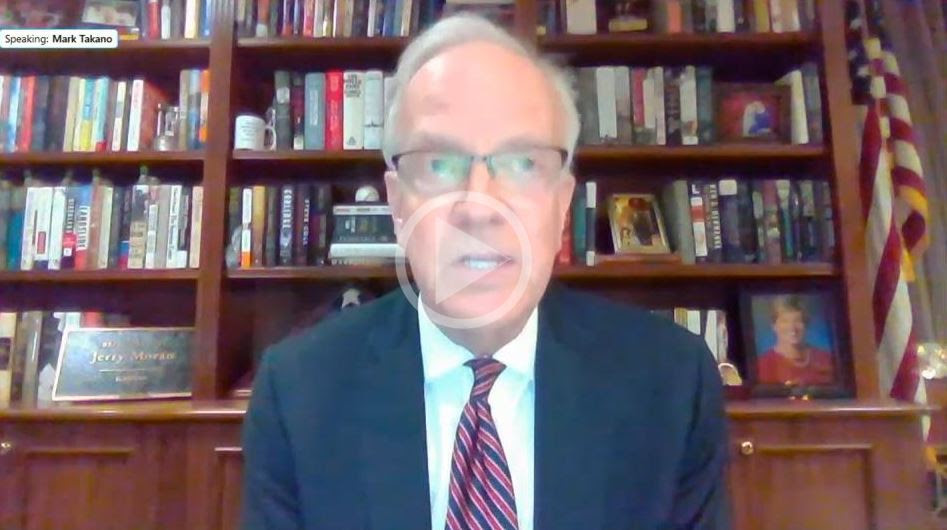
Prior to my vote, I spoke in opposition of Secretary Becerra’s nomination on the Senate floor. Watch my remarks here or below.
My Resolution Honoring Father Kapaun Passes the Senate
On March 5, I announced that the remains of the late Father Emil Kapaun had been identified by the Defense POW/MIA Accounting Agency, and this week, the resolution I introduced with Sen. Roger Marshall honoring Father Kapaun unanimously passed the Senate.
Father Kapaun is an American hero whose selfless actions inspired his fellow soldiers and continues to inspire generations of Kansans today. In 2011, I introduced legislation to bestow Father Kapaun with the Medal of Honor, and I am pleased to sponsor this resolution to further recognize his tremendous service to our country.
Questioning Top Health Officials Regarding America’s COVID-19 Response
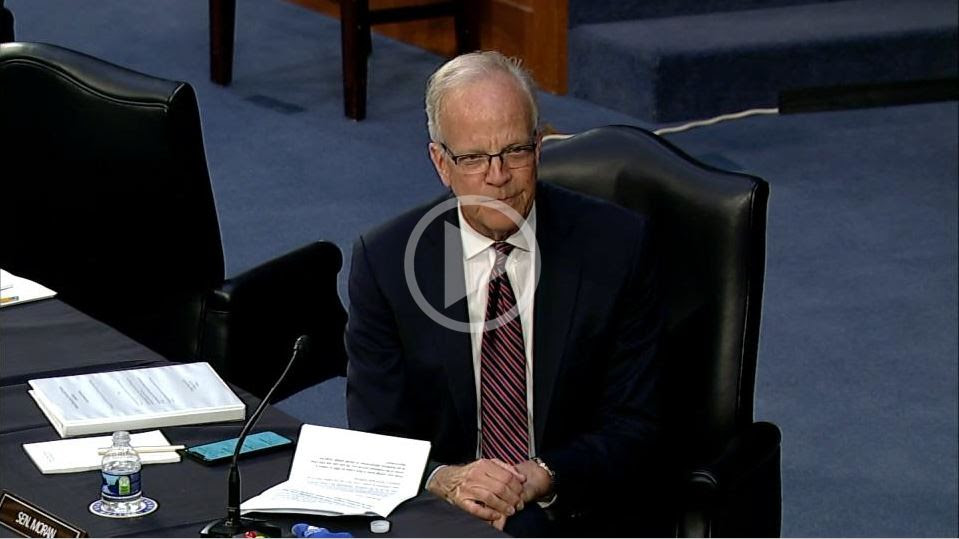
This week, during a Health, Education, Labor and Pensions (HELP) Committee hearing, I questioned top federal health officials from the Centers for Control and Disease Prevention (CDC), National Institute of Health (NIH), Department of Health and Human Services (HHS) and Food and Drug Administration (FDA) to examine America’s response to the COVID-19 pandemic.
I asked CDC Director Dr. Rochelle Walensky about the CDC’s guidelines for vaccinated individuals. Throughout this pandemic, we have seen inconsistencies and lags in updated health information surrounding public guidelines. I expressed my concern to Dr. Walensky regarding the need for current, consistent and timely safety guidelines from the CDC moving forward. As more and more Americans become vaccinated, it is important that vaccinated individuals are receiving updated and accurate information from the CDC so that friends, families and communities have a way to measure risk assessment as they decide how to adjust their lives post-vaccination and return to normal.
Additionally, NIH Director Dr. Anthony Fauci assured me that throughout this pandemic, medical research and health care falling outside of COVID-19 continue to function at their pre-pandemic levels. I look forward to assisting the NIH with this goal from my seat on the Labor-HHS Appropriations Subcommittee, which provides funding to the biomedical research department.
Opposing H.R. 5, The Equality Act
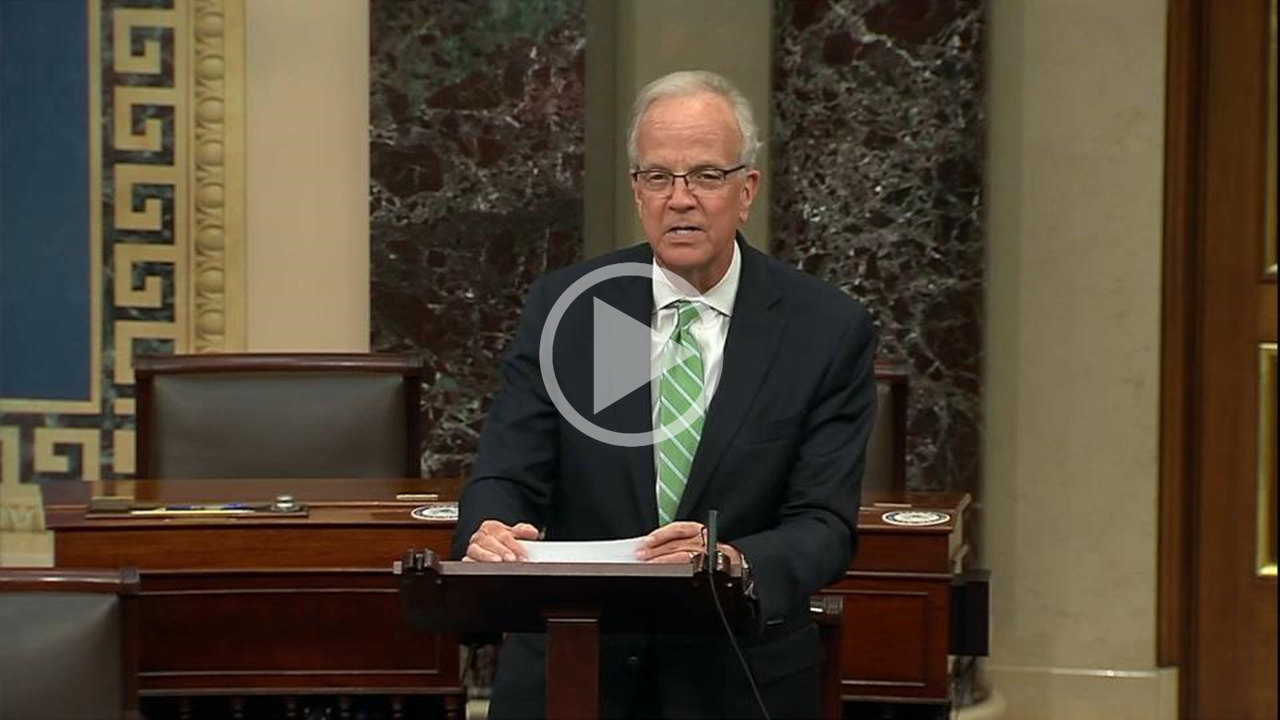
This week, I spoke on the Senate floor in opposition to the Equality Act, an infringement on the constitutional right to religious liberty. I support efforts to end unjust discrimination, but this legislation represents one of the most dramatic assaults against religious faith and conscience that I have seen in my time in Congress. If this bill is passed into law, the effects will be devastating to communities in Kansas and across the country. I will oppose the use of expansive federal power to infringe on matters of religious belief and conscience. Watch my remarks by clicking here or below.
Joining The University of Kansas Health System’s 250th Media Update
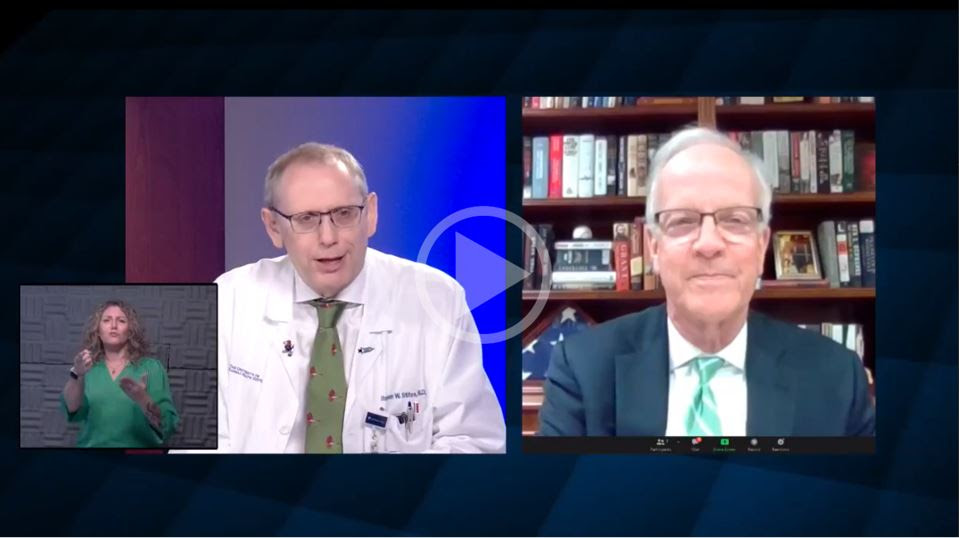
On Wednesday morning, I joined The University of Kansas Health System (TUKHS) for their 250th daily media update with Senator Roy Blunt of Missouri. I thanked the TUKHS team for their steady leadership throughout COVID-19 and their efforts to keep Kansans informed and updated throughout the pandemic.
I want to extend my sincere thanks to TUKHS Chief Medical Officer Dr. Steve Stites and TUKHS Medical Director for Infection Prevention and Control Dr. Dana Hawkinson for their dedicated work throughout the past year and for allowing me to join many of these updates to discuss the efforts I have taken at the federal level to help mitigate the effects of COVID-19 across Kansas. Watch our conversation by clicking here or below.
Supporting Kansas Manufacturers
In response to the Department of Health and Human Services’ (HHS) decision to draw down purchases of viral transport media being produced by Kansas and American manufacturers, I urged President Biden to renew the federal government’s commitment to supporting our domestic supply chain.
As the nation was in the midst of an unprecedented public health emergency last spring, Kansans stepped up, as they always do, to increase manufacturing of viral collection products necessary for widespread COVID-19 testing. Should the administration forget the lesson learned from just a year ago, Americans will pay the price for years to come as our supply chain returns to its pre-pandemic orientation. I urged the President to support American manufacturing capabilities in order to end our tenuous reliance on foreign suppliers and to abide by his promise to “Buy American” and to uphold his Made in America executive order to protect American livelihoods. The full letter can be found here.
Deploying Broadband Progress Across Rural America and Undeserved Communities
As a member of the Senate Commerce, Science, and Transportation Committee, I questioned witnesses this week about the progress of federal programs aimed at broadband deployment, including broadband mapping, the stability of the Universal Service Fund (USF) and oversight of the Rural Digital Opportunity Fund (RDOF).
Improving the maps that the Federal Communications Commission (FCC) uses when it allocates federal broadband deployment money is critical, as a lack of specific coverage information can lead to funds being misdirected and some Americans continuing to lack broadband access. Last year, I cosponsored the Broadband DATA Act, which requires the FCC to collect more accurate and precise data that will ensure that we know exactly what areas do not have broadband service, so federal deployment funds can go to areas most in need. President Trump signed this legislation into law last year, and I helped ensure that the program was fully funded as part of the Consolidated Appropriations Act passed in December 2020. During this hearing, one of the witnesses, former FCC Commissioner Michael O’Reilly, assured me that there are no legitimate reasons left to stop the commission from completing these important coverage maps and told me about his support for maps to be used for all federal broadband programs. I will continue to work with my Senate colleagues to ensure that federal broadband deployment funds are better directed to people and areas that need the funding the most.
Supporting Small Meatpackers during COVID-19
On Monday, I led my colleagues in urging Secretary of Agriculture Tom Vilsack to prioritize reducing U.S. Department of Agriculture Food Safety and Inspection Service (USDA-FSIS) overtime fees for very small and small meatpackers based off the provisions included in my legislation, the Small Packer Overtime and Holiday Fee Relief for COVID-19 Act. I introduced this legislation to support small meatpacking plants that are operating more than 40 hours per week during the COVID-19 pandemic to keep our nation’s food supply chain moving. It directs USDA-FSIS to reduce the fees charged to very small establishments by at least 75 percent and to small establishments by at least 30 percent.
These changes will help build greater resilience in our nation’s food supply chain by addressing the economic disincentive currently in place for small meatpackers to work longer hours. It will also help level the playing field between very small and small establishments versus large establishments capable of operating two full operating shifts and therefore able to avoid these inspection fees. Consumers will also benefit from greater access and more options for locally sourced meat products provided by small meatpackers and I will continue to work with Secretary Vilsack to continue to help local meatpackers and food processors. The full letter can be found here.
Supporting Law Enforcement in Kansas and Beyond
Introducing the Protect and Serve Act
Violence against law enforcement is unacceptable. That’s why this week, I introduced the Protect and Serve Act with my Senate colleagues to create federal penalties for attacks on law enforcement officers, whether a Capitol Police officer or a Kansas patrolman or patrolwoman. Being a law enforcement officer involves great risk, but the additional threat of ambushes and targeted attacks makes the job harder and more dangerous for our men and women in blue.
Our nation’s law enforcement professionals deserve our continued support and respect. I am grateful for all of the brave men and women who have pledged to protect our Kansas communities.
Addressing the Kansas Law Enforcement Training Center’s Graduating Class
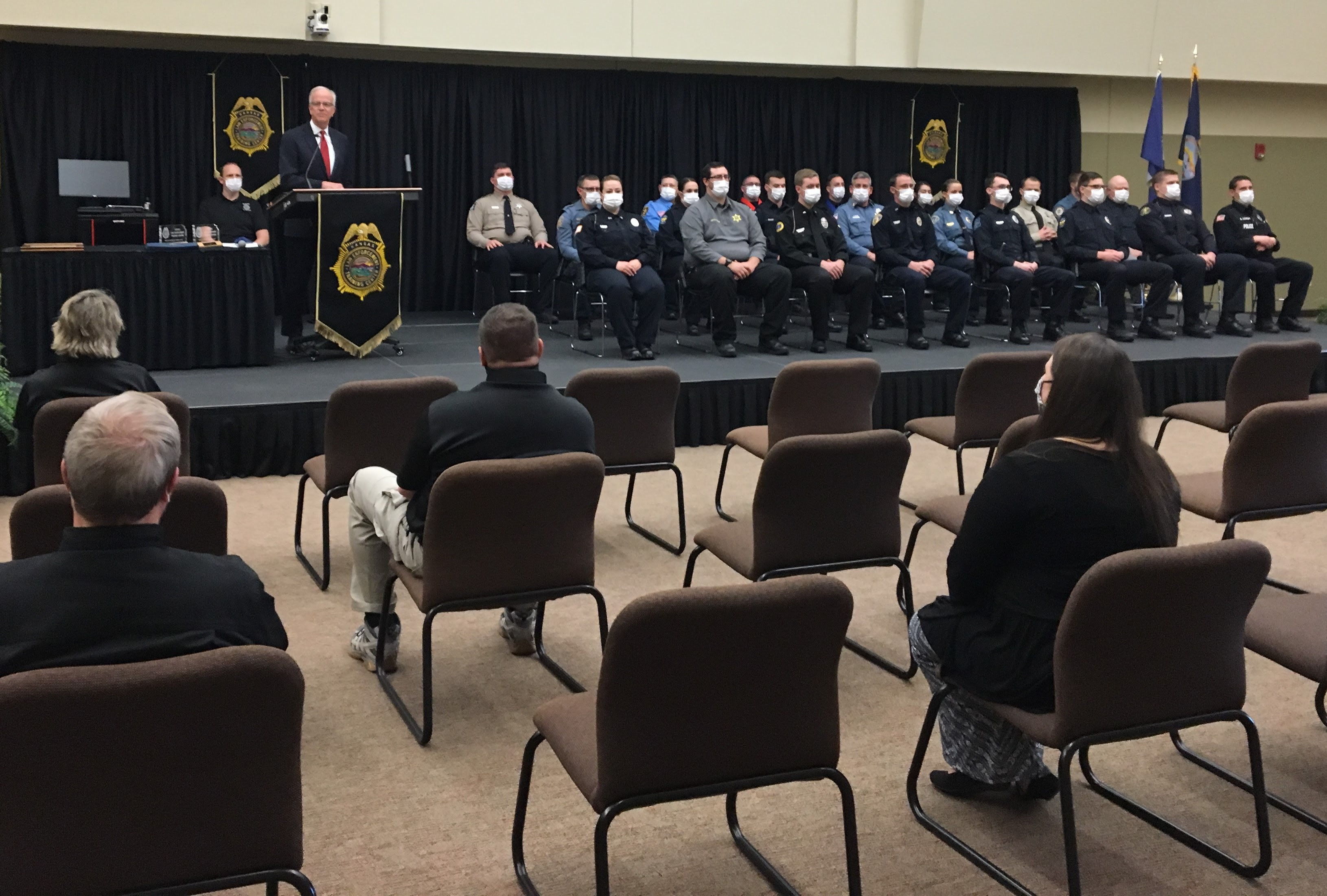
This week, I had the honor of addressing graduates of the Kansas Law Enforcement Training Center (KLETC) during its 275th graduation ceremony.
Very little about being a law enforcement officer today can be described as easy. America is facing an opioid and drug epidemic that is ripping families and communities apart and we’re seeing an increase in violent crime in cities across the country. These factors all indicate the need for individuals who are willing to step forward and meet the challenges of our time through service as a law enforcement officer. I am thankful for each and every graduate that has chosen to take on this great responsibility. I am confident many Kansas communities have gained dedicated public servants and was pleased to be able to see these graduates move into the next phase of their career protecting and serving communities in Kansas and beyond.
As the lead Republican on the Senate Appropriations Subcommittee that funds the U.S. Department of Justice, I will continue working to ensure KLETC and other law enforcement training programs have access to the tools necessary to train law enforcement officers that will strengthen engagement and trust with the communities they serve.
Thank you to KLETC Director Darin Beck for the kind invitation and to Officer Logan Grant who received a special certificate of commendation for helping save the lives of those involved in a car crash this past January while receiving his law enforcement training.
Meeting Kansas Health Officials in Lawrence and Hutchinson
Learning More about Lawrence’s West Campus Hospital
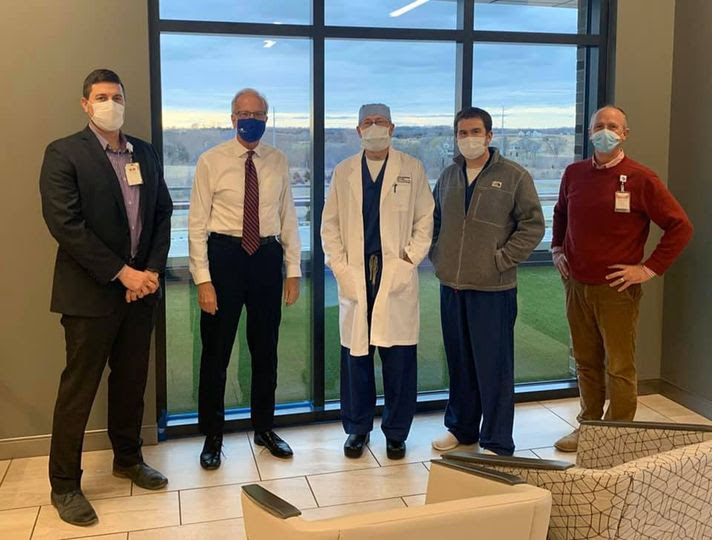
This week, I visited the Lawrence Memorial Health West Campus to tour the recently opened facility, including its orthopedic surgery and rehab wing. LMH West is a fully outpatient health center that focuses on integrated care across specialty areas that best serve Douglas county. I also enjoyed speaking with several orthopedic surgeons to discuss the facility’s partnership with OrthoKansas.
Thank you to LMH CEO Russ Johnson, Vice President of Service Lines Jared Abel, Dr. Neal Lintecum and Dr. Adam Goodyear for hosting me today and the informative discussion about the services offered, including their collaboration with the VA to offer care closer to home for veterans.
Touring Hutchinson Regional Medical Center
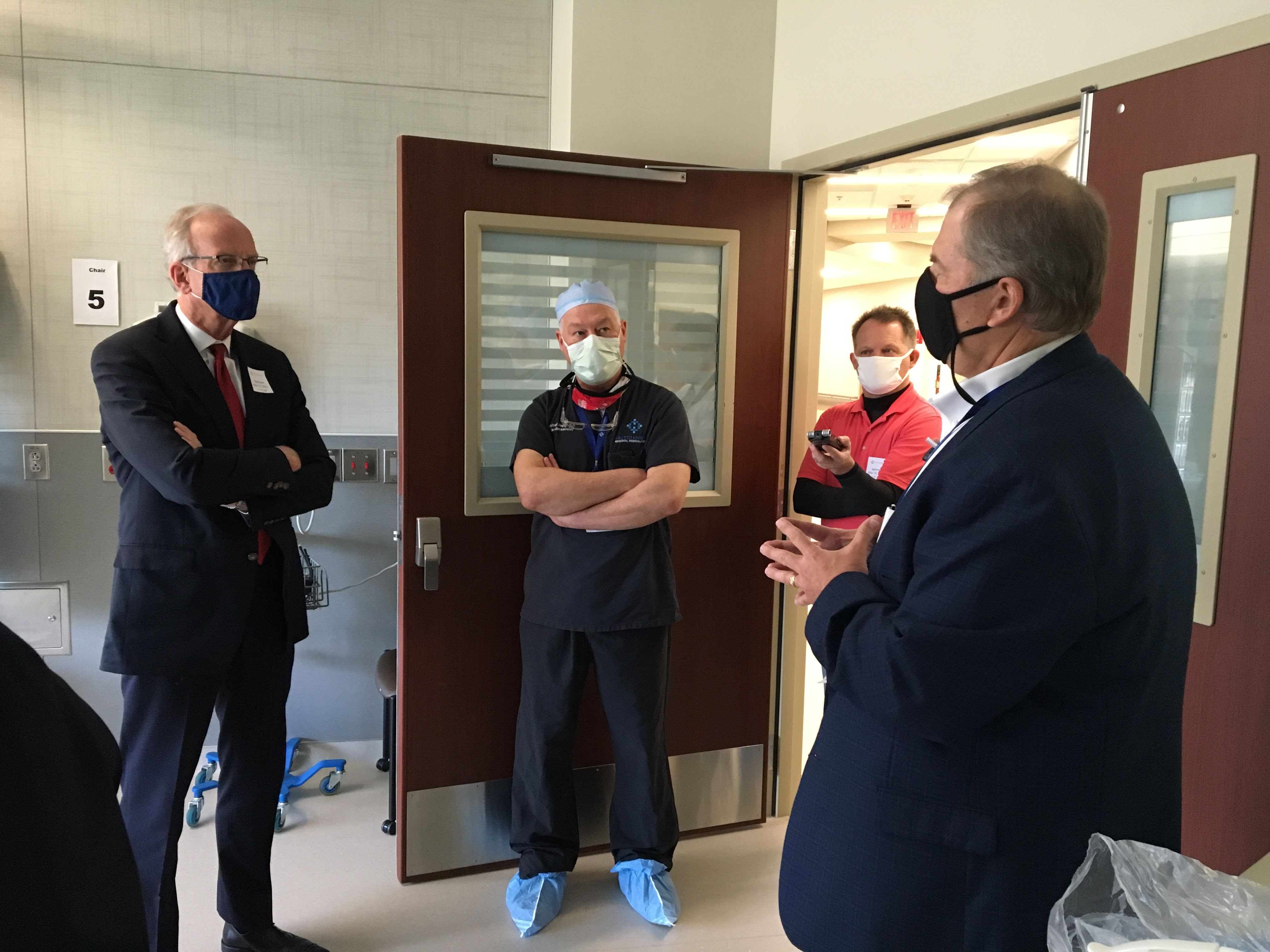
I also visited Hutchinson Regional Medical Center where I learned about their COVID-19 treatment options, as well as the facility’s vaccination process. In addition to their vaccination program, Hutchinson Regional Medical Center offers antibody infusions to patients testing positive for COVID-19. This successful process has helped reduce hospitalizations since they were first offered in November of last year. I was impressed by the skilled work of the health care professionals and was pleased to discuss more about the importance of having access to quality mental health care with hospital personnel.
Thank you to CEO Ken Johnson and Dr. Michael Hagley for their leadership, and to Director of External Affairs Richard Shank, RN and VP of Patient Care Services Amanda Hullet and CEO of Horizons Mental Health Center Michael Garrett for arranging this visit.
Meeting with Dairy Farmers of America
This week, I met with the Dairy Farmers of America (DFA) to hear about issues impacting dairy producers. We discussed how the recent disruptions in natural gas and other energy sources caused significant losses for dairies in Kansas, both in terms of raising energy costs and forcing dairies to dump milk when processing facilities shut down. We also discussed the importance of the Coronavirus Food Assistance Program (CFAP) payments in helping producers pull through the adverse impacts of COVID-19 on the dairy industry, as well as the importance of a strong farm labor workforce for agriculture. The DFA members updated me on the operations of their milk powder plant in Garden City that has helped support industry growth in southwest Kansas by receiving millions of gallons of milk from area producers. I look forward to continue working with DFA as a strong advocate for dairy farmers in Washington, D.C.
Discussing Impacts on Domestic Travel with U.S. Travel Association Members
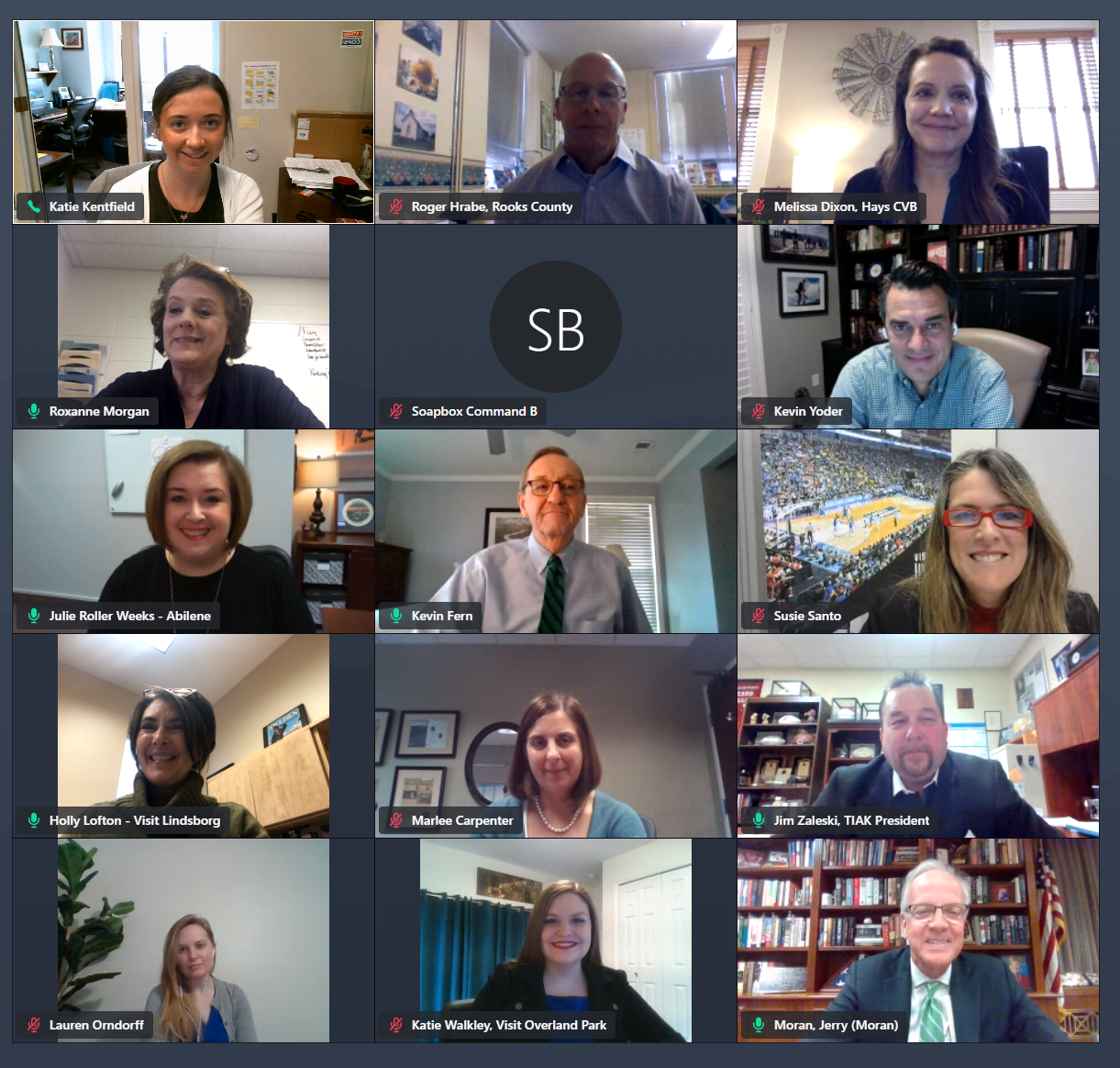
I met with Kansas members of the U.S. Travel Association to discuss the impact of COVID-19 on domestic travel and the industries supporting the tourism market. The Paycheck Protection Program (PPP) has been a lifeline for the travel industry, and I was pleased to support additional flexibility and support for PPP through the COVID-19 relief package passed into law in December.
A successful, encompassing vaccine roll out is the next step towards ensuring the prosperous return of the travel industry. As Kansas moves forward with vaccinations, I will continue to foster strong communication between federal, state and local entities, as well as greater transparency surrounding the amount of doses hospitals and counties receive each week. I look forward to continuing to advocate for our travel industry and assisting the return of Americans traveling safely once again.
Thank you to Suzan Barnes of the Grand Central Hotel in Cottonwood Falls; Natalie Bright, Executive Director of the Travel Industry of Kansas; Kevin Fern, Executive Director of Visit Shawnee; Roger Hrabe, Director of Rooks County Economic Development in Stockton; Holly Lofton, Director of the City of Lindsborg; Julie Roller Weeks, Director of Abilene CVB; and Jim Zaleski, Director of Parsons CVB for your time.
Discussing Middle Eastern Stability
I visited with Bonnie Siegel, Carol Katzman, and others from American Israel Public Affairs Committee (AIPAC) this week to discuss the U.S.-Israel relationship and how best to protect our shared interests in the Middle East. As a member of the Appropriations Committee, I am a strong supporter of the security assistance provided to Israel, which is necessary in a troubled region. In particular, Iran’s activities, whether through its nuclear program or its support for terrorist proxies, represent an existential threat for Israel and destabilizes the region as a whole, harming American interests. We talked about the positive development of the Abraham Accords negotiated last year and our shared hope that more Arab countries will follow in normalizing relations with Israel. Israel’s security is non-negotiable, and our own security is strengthened when we work together with Israel. I will continue to advocate for the relationship as the new Congress begins.
Announcing Water Conservation and Wastewater Management Grants for Northern Kansas
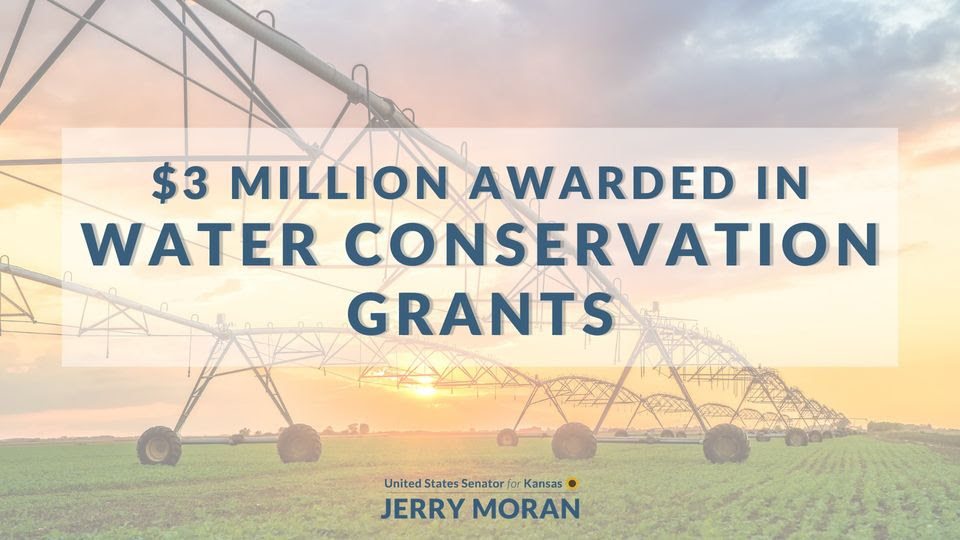
This week, I was pleased to announce that $3 million in water conservation grants and wastewater management are headed for northern Kansas to mitigate water loss across creeks and reservoirs that provide water for ranches, farms and communities in both states:
Almena Irrigation District will receive $227,345
Kansas Bostwick Irrigation District will receive $789,805
Nebraska Bostwick Irrigation District will receive $2,000,000
City of Miltonvale will receive $30,000
Water is the lifeblood of Kansas communities, and we need to do all we can to protect it for future generations. These investments will help conserve water for local communities to support their economies and a rural way of life.
Visiting Inman
I stopped in Inman this week where Harvest Cafe was the talk of the town. I was able to visit with Mayor Jim Toews and City Clerk Barb Tuxhorn to discuss the issues they face as a rural town and what I can do to help them in Washington. One of my priorities as a U.S. Senator is preserving Kansas’ rural lifestyle and the close-knit, community-based relationships of small towns across the state. Thank you to everyone who took time out of their day to speak with me while I was in town.
In Case You Missed It
Individual Tax Filing Deadline Extended
The IRS announced that it is delaying the tax filing and payment deadline for individuals from April 15, 2021 to May 17, 2021 for 2020 tax returns. The delay applies to individuals filing Forms 1040 and 1040-SR. It does not affect deadlines for corporate, partnership or nonprofit tax returns. For more information, click here.
Find Rental Assistance
The Kansas Emergency Rental Assistance program, funded through the bipartisan Coronavirus Response and Relief Supplemental Appropriations Act of 2021, provided the state of Kansas over $200 million in rental assistance funding. The program provides financial assistance for Kansans who have had difficulty paying or collecting rent, utility, and internet payments as a result of the COVID pandemic. The Kansas Housing Resources Corporation (KHRC) is serving as the primary administrator of these funds. For more information on eligibility criteria and how to apply, visit the Kansas KHRC website here.
The City of Wichita will initially administer its own rental assistance program and Wichita residents can find more information here.
Honored to Serve You in Washington It is an honor to serve you in Washington, D.C. Thank you to the many Kansans who have been calling and writing in to share their thoughts and opinions on the issues our state and country face. I appreciate the words of Kansans, whether in the form of a form of letter, a Facebook comment or a phone call, who wish to make their voice heard.
Please let me know how I can be of assistance. You can contact me by email by clicking here. You can also click here to contact me through one of my Kansas offices or my Washington, D.C. office.
Very truly yours,
Jerry
To unsubscribe from this newsletter, please click here.
Hays
1200 Main St.,
Suite 402
P.O. Box 249
Hays, KS 67601
Phone: (785) 628-6401
Thank you Mr. Attorney General for taking action against the federal administration for attempting to stop state tax cuts. The administration is trying to block any tax relief even though it was started before federal COVID-19 funds were made available. Myself and other Kansas legislators will continue to work on tax relief.
Emergency Powers
The House and Senate conference committee met to work out agreements on Senate Bill (SB) 40, the emergency powers bill – turning over legislative authority to the Governor and others during the declaration of an emergency. I voted for the Senate version of the bill. It wasn’t perfect but it made some good changes with legislative oversight during an emergency. However, the final version, gave up too many of those checks and balances. That is why I did not support the final version of SB 40. Disappointingly, a majority of Senators voted to support SB 40. It passed 28 to 8.
Fairness in Women’s Sports
The Senate debated SB 208, restricting biological males from playing women’s sports. The bill passed 24 to 10. I voted Yes. Who would have ever dreamed 10 years ago we would be debating such topics in the Kansas legislature?
Help for Military Members and Spouses
House Bill (HB) 2066 would help military members or their spouse by allowing their out-of-state licenses (teachers, realtors, nurse, to name a few) be recognized in Kansas. We passed legislation a few years ago on the same topic. This bill will expand the statute and encourage these individuals to make Kansas their home.
Budget
SB 267, as with any budget, had many reasons to vote no. However, there were some key items that we have never seen in a budget bill before that I wanted to support. Three amendments I offered passed on the senate floor. The first would require department and agencies to submit a performance based budget so the legislature can find duplicate programs and inefficiencies. It was a law passed in 2016 that has not been followed. The amendment would cut the departments budget by 2% next year if they do not submit a performance based budget. The second was to require the Governor to lift the Osawatomie State Hospital (OSH) moratorium. The moratorium was put on a few years ago restricting the number of beds available for mental health patients. Law enforcement and others know how important it is to increase the number of beds. The third amendment, was to reimburse scrap metal dealers who paid a $1,000 and were fingerprinted for a program that didn’t exist. If the House doesn’t take out the language, these business owners will be reimbursed as they should be. Another amendment, offered by a member of the ranking party, would require any state employee or contractor to be verified as a U.S. citizen. The citizenship amendment passed. I voted Yes for it and the budget. The budget passed 24 to 13.
It is an honor and a privilege to serve as your 12th District State Senator.
Updated – The City Commission will meet for a special meeting at 5:30 p.m. on Tuesday, March 23rd, 2021 at City Hall in the City Commission meeting room at 123 South Main Street, Fort Scott, Kansas. The City Commission will meet to approve an ordinance to hire Robert L. Farmer as City Attorney. They will also hear a request for the use of Gunn Park on April 9th. Also, to be heard will be approval to apply to the Fort Scott Community Foundation Grant for roller skates.
This meeting will be broadcast on the City’s You tube channel. This meeting is open to the public.