|
||||||||||||||||||||||||||||||||||||||||||||||||||||
|
Category Archives: Fort Scott Community College
FROM THE BLEACHERS-743 BY DR. JACK WELCH

FROM THE BLEACHERS-743
BY DR. JACK WELCH
Why most goals fade and the ones that don’t
This time of year, goal setting is as common as cold weather and gym memberships. New calendars, new planners, new promises. We tell ourselves this will be the year things change. We’ll get in shape. We’ll eat better. We’ll save more. We’ll be better.
Then, somewhere around mid-February, most of those goals quietly fade away. Why? Goals don’t fail due to lack of intention. They fail because they were never backed by habit, discipline, or passion. Wanting something is easy. Sustaining something is hard. Hard things require a change in lifestyle, not just a change in language.
Let’s be honest, most of us are out of shape not because we don’t know what to do, but because we’ve grown comfortable with how we live. Change only happens when discomfort outweighs comfort. There has to be a desperate shift in attitude before there’s a lasting shift in behavior. Until then, goals remain good ideas written on paper.
Scripture speaks directly to this struggle. “The heart of man plans his way, but the Lord establishes his steps” (Proverbs 16:9). Proverbs 16:1–9 reminds us that wise planning begins with surrender. Planning isn’t the problem. Pride is. When goals are built solely around our will, they tend to collapse under pressure. When they’re rooted in God’s purpose, they gain staying power.
Athletics gives us countless examples of this truth. One of the most well-known is Michael Jordan. As a sophomore, he was cut from his high school varsity basketball team. That moment could have defined him, or defeated him. Instead, it fueled him. Jordan didn’t just want to be better. He committed to daily discipline. Early mornings. Extra reps. Relentless effort. That determination, repeated day after day, turned disappointment into greatness. His goal wasn’t a wish, it became a way of life.
Great achievements, on the field or in life, don’t happen by accident. They happen because someone decided the goal mattered enough to suffer for it. They were willing to sacrifice time.
So, as you set goals this year, ask yourself: Is this just something I want, or something I’m willing to commit to? Have I invited God into it, or am I asking Him to bless something I’ve already decided?
Thought for the Week, “A goal without discipline is a wish. A goal surrendered to God becomes a calling.” R.B. Shoemaker, former iconic Baptist Minister
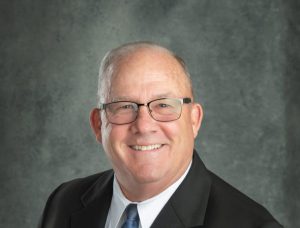
Dr. Jack Welch serves as President of Fort Scott Community College. With a career spanning professional sports, public education, and rural community development, he brings a servant-leader mindset and a passion for building trust-driven cultures that empower people to thrive in the classroom, on the field, and in life. He is also the author of Foundations of Coaching: The Total Coaching Manual.
FSCC Trustees May Be Present Basketball Game January 10
America’s Truck Driver Shortage Is a Workforce Crisis by Dr. Jack Welch

America’s Truck Driver Shortage Is a Workforce Crisis
From the bleachers, the game looks pretty simple. You can draw up all the fancy plays you want, but if you don’t have somebody willing and able to do the hard work in the trenches, you’re going to lose. Right now, one of the biggest problems facing our country isn’t in a boardroom or a tech lab, it’s on the highway.
America has a truck driver shortage, and it’s not just a workforce issue, it’s a supply-chain problem, an economic problem, and a common-sense problem. Nearly everything we use, food, medicine, building materials, fuel, gets to us because a truck driver hauled it there. When there aren’t enough drivers, shelves don’t get stocked, projects slow down, and communities feel it.
The American Trucking Associations tell us we’re already short tens of thousands of drivers, and that gap could grow to more than 160,000 by the end of the decade. A big part of the issue is age. A lot of experienced drivers are nearing retirement, and not enough young folks are stepping in behind them. Trucks move over 70 percent of the freight in this country. Take drivers out of the equation, and the whole offense stalls.
Now, trucking isn’t the only position we need to fill. We’re short in allied health, HVAC, electrical trades, computer technology, welding, you name it. These are all high-demand, good-paying careers that keep our communities running, but trucking is different. Trucking touches every one of those industries. If it can’t move, neither can they.
That’s where community colleges come in. Four-year universities aren’t built to solve every workforce need, and that’s okay. Community colleges, technical schools, and even high schools are. They can train people quickly, affordably, and locally for jobs that are open right now.
A CDL certificate doesn’t take four years. It takes weeks or months. It doesn’t bury students in debt. It puts them to work. For many folks, it’s a straight path to a solid living and a respected profession. Community colleges know their regions, know their employers, and know how to prepare students to be job-ready on day one.
Here’s the bottom line: truck driving isn’t going away. As long as America buys things, builds things, and eats things, we’ll need truck drivers. Investing in CDL programs isn’t flashy, but it’s smart. It’s the kind of investment that keeps the chains moving and the scoreboard lit up.
Thought for the Week, “Every winning team needs people willing to do essential work. When we build clear, affordable pathways into high-demand careers, everybody moves the ball forward.” Gary Welch
Community Colleges: The Open Door Our Communities Cannot Afford to Close by Jack Welch

FSCC Notice of Trustees Attendance at Events
More than three Fort Scott Community College (FSCC) Board of Trustees members may be present during a reception honoring outgoing board members on Monday, December 15, 2025 from 5:00 pm – 5:30 pm, but no official business will be conducted during that time. The regular board meeting begins at 5:30 pm.
More than three FSCC Board of Trustees members may be present during the end-of-semester employee dinner on Wednesday, December 17, 2025, from 6:00 pm – 8:00 pm, but no official business will be conducted during that time.
Juley McDaniel
Director of Human Resources
Fort Scott Community College
Agenda Packet of the FSCC Trustees Meeting on Dec. 15
To view the entire packet:
December 15, 2025
Board of Trustees
Fort Scott Community College
2108 S. Horton
Fort Scott, KS 66701
The Board of Trustees of Fort Scott Community College will meet in regular session on Monday,
December 15, 2025. The meeting will be held in Cleaver-Boileau-Burris Hall at Fort Scott
Community College.
5:30 p.m. Regular monthly Board meeting
THE AGENDA
5:30 ROLL CALL, 3
PLEDGE OF ALLEGIANCE
BOARD PRAYER
MISSION STATEMENT
Fort Scott Community College is an institution of higher learning with a long history of culture and diversity that
provides affordable academic, technical and occupational programs to meet student needs while fostering a
mutually supportive relationship between the college and its communities.
CALL TO ORDER, 4
A. Comments from the Chair, 4
B. Comments from the Public, 4
C. Recognitions and Retirements, 4
PROGRAM REVIEW AND ADMINISTRATIVE UPDATES, 4
CONSENT AGENDA, 8
A. Approval of Agenda, 8
Approval of Minutes of previous Regular Board Meeting conducted on November 17, 2025 and
Special Meeting conducted November 14, 2025, 9
B. Approval Treasurer’s Report, 12
C. Approval of Personnel Actions, 8
DISCUSSION ITEMS, 18
A. Inservice Agenda
B. Academic Advising Days on Calendar
C. Five-Year Enrollment Comparison
ACTION ITEMS, 21
CORRESPONDENCE AND TRUSTEE COMMENTS, 22
EXECUTIVE SESSION, 24
ADJOURNMENT, 25
UPCOMING CALENDAR DATES:
December 12, 2025 Board Workshop
December 15, 2025 Board Meeting
January 23, 2026 Board Workshop
January 26, 2026 (Changed from January 19 due to Dr. Martin Luther King, Jr. Day) Board Meeting
February 13, 2026 Board Workshop
February 16, 2026 Board Meeting
March 13, 2026* adjusted for spring break Board Workshop
March 23, 2026 (Changed from March 16 due to spring break) Board Meeting
April 17, 2026 Board Workshop
April 20, 2026 Board Meeting
May 14, 2026* adjusted for graduation Board Workshop
May 18, 2026 Board Meeting
June 11, 2026* adjusted for summer schedule Board Workshop
June 15, 2026 Board Meeting
Sincerely,
Bryan Holt, Chair
Dr. Jack Welch, President
FSCC’s vision for the future is to support “Students First, Community Always” through a
central focus on teaching and learning; advancing strong, innovative programs and
departments; maximizing and leveraging opportunities; initiating efficient and effective
processes; and developing the region’s workforce.
ROLL CALL
_____ Ronda Bailey
_____ John Bartelsmeyer
_____ Jim Fewins
_____ Bryan Holt
_____ Chad McKinnis
_____ Doug Ropp
CALL TO ORDER
A. COMMENTS FROM THE CHAIR
B. COMMENTS FROM THE PUBLIC
C. RECOGNITIONS AND RETIREMENTS
Outgoing Board Members
John Bartelsmeyer
Jim Fewins
Bryan Holt
PROGRAM REVIEW AND ADMINISTRATIVE UPDATES
A. JOHN DEERE PROGRAM
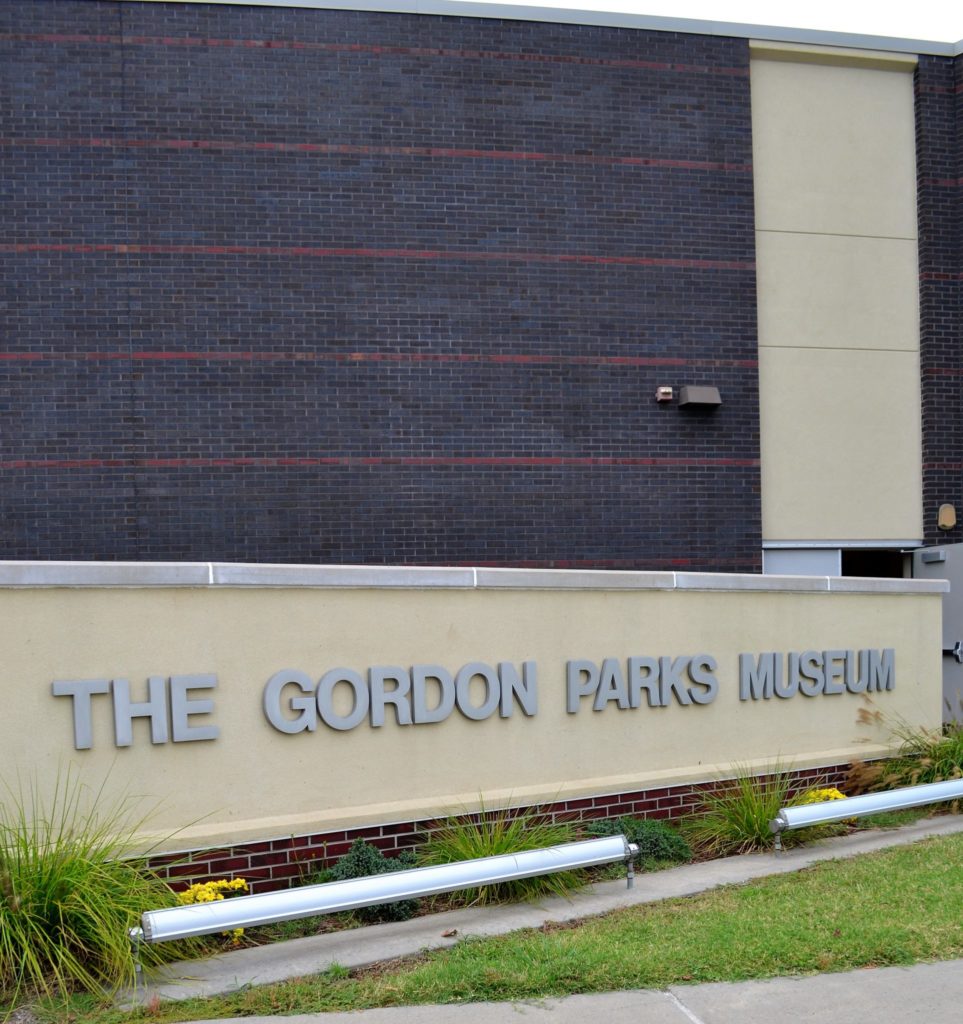
Gordon Parks Museum
Monthly Report Update/Events Sept 2025
Please Note: This report does not include all-current job duties, projects. meetings, and events.
• Work on Archives and Collections.
• Work on Planning for Gordon Parks Celebration, Oct 2-4, 2025. The honorees are Michael Cheers, Carol
Friedman and Jason Miccolo Johnson. The Learning Tree Award recipient is Robert Nelson.
• Gordon Parks Museum Board met on Sept 9, 2025.
• Worked on Kansas Arts Commission Mural Grant Project. Provided Presentation at the Design and
Review Board and City Commission
• Worked on the Commemorative Park at the Wayman AME Church property location and Kansas Grant.
The Park has had over 20 people visit this month.
• Worked on Gordon Parks Mural and Dedication Event
• Worked on Fort Scott Stories Project for a Book and full feature film documentary project with Prof.
Michael Cheers. Filming continues on Sept 28 – Oct 4, 2025.
• Working with Photographers for Photo Auction Fundraiser Event and Online Photo Sales.
• Provided a presentation with an updated of the Gordon Parks Museum Projects and the 2025 Annual
Celebration to Lady Kiwanis on Sept 4.
• Provided a presentation with an updated of the Gordon Parks Museum Projects and the 2025 Annual
Celebration to FSCC Board on Sept 22
• Completed new Museum Rack Card
*We had 54 visitors walk in and with a combination of tours, presentations, Wayman Chapel AME Commemorative Park
and any other events, we had 85 visitors from all over the nation and the world in September.
City and State where some of the Sept visitors come from
Fort Scott, KS
New York City, NY
Los Angeles, CA
Seneca, KS
Pittsburg, KS
Frontenac, KS
Milwaukee, WI
Olathe, KS
Monitoba, Canada `
Phillipines
Cattors, France
Nepaul
Harare. Zimbabwe
Perros Guinec, France
Hishiro, Japan
Lee Summit, MO
Saginaw, MI
Flora, IL
Altamont, KS
Conroe, TX
Phoenix, AZ
Wichita, KS
Others did not list where they were from.
Gordon Parks Museum
CONSENT AGENDA
A. APPROVAL OF AGENDA
B. APPROVAL OF MINUTES OF PREVIOUS MEETINGS
Attached are the minutes of the Regular Board Meeting conducted on November 17, 2025 and Special
Meeting conducted November 14, 2025
C. APPROVAL OF TREASURER’S REPORT AND CHECKS
Attached are the Treasurer’s Report, Financial Report, and Checks Written, Cleared, or Voided
D. APPROVAL OF PERSONNEL ACTIONS
Additions
1) Tayler Yackle, Nursing Instructor, effective January 5, 2026
Separations
1) Carolyn Smith, Foundation Administrative Assistant, effective November 20, 2025
RECOMMENDATION: It is recommended that the Consent Agenda items be approved as presented.
BOARD ACTION: MOTION _____ SECOND _____ VOTE _____
DISCUSSION:
VOTE: Bailey Bartelsmeyer Fewins
Holt McKinnis Ropp
FSCC’s Annual Breakfast with Santa: Saturday, December 13
|
|||||||||||||||||||||||||||||||||||||||||||||||||||||||
|
From the Bleachers by Dr. Jack Welch

Culture Always Tells the Truth
Leadership books and boardrooms spend an enormous amount of time talking about strategy: five-year plans, organizational charts, metrics, and benchmarks. Ask anyone who has truly led a family, a college, a business, or a team, and they’ll tell you the same truth: culture defeats strategy every single time. Strategy may write the script, but culture performs the show.
Every organization, whether a Fortune 500 company, a community college, a small-town high school, a football team, or even a household, is “culturized.” They all project an image to the public, a polished face meant to inspire confidence. The real culture isn’t found in the mission statement or the social-media post. It shows up in daily habits, quiet interactions, and in how the people inside that group treat others when no one is watching.
Families are the clearest example. You can dress up for church on Sunday, take a perfect Christmas picture, and speak politely in public. The true culture of a family shows itself in how members support one another during a crisis, how they speak to each other at home, and how they treat guests, or strangers. Love, patience, generosity, and respect can’t be faked for long. The real culture always rises to the surface.
Businesses and teams operate the same way. Leaders can talk about excellence, teamwork, and service all day long, but the organization’s actual behavior will reveal whether those values are real or just words on a wall. Employees know when leadership is authentic, just as players know when a coach’s message is consistent. If the team’s actions contradict the message, the culture cracks, and once culture cracks, strategy collapses with it.
Yet even in strong organizations, there are always a few team members, especially ones in leadership positions, who quietly work against the mission. They stir emotions, whisper how they would have done things differently, and try to present themselves as the “real” supporter of their coworkers. On the surface, they appear helpful, but beneath it, they are promoting themselves at the expense of the team’s unity. These back-door critics rarely rise to the top of their profession, not because they lack talent, but because they fail to understand that leadership requires loyalty, humility, and alignment. When someone spends more time undermining others than supporting the direction of the organization, they reveal why they have never advanced to their desired position. Culture exposes the truth about people just as clearly as it exposes the truth about teams.
For a college, business, family, or team to earn respect, it’s not enough to build a great strategic plan. Respect is built through how people act, how they serve others, and how well they follow through on the values they preach. A strategy may outline where an organization wants to go, but culture determines whether the people inside it actually want to take the journey together.
That’s the leadership challenge: Are you building a culture where the majority is committed to the mission? If you aren’t, even the most polished plan will fail. If you are, if you create a culture of trust, service, and shared purpose, then even an imperfect strategy can succeed.
Thought for the week, “In leadership, strategy may guide the path, but culture decides whether you ever reach the destination.” Wade Phillips, Former Head Coach of the Dallas Cowboys and San Antonio Brahmas.
Dr. Jack Welch serves as President of Fort Scott Community College. With a career spanning professional sports, public education, and rural community development, he brings a servant-leader mindset and a passion for building trust-driven cultures that empower people to thrive in the classroom, on the field, and in life. He is also the author of Foundations of Coaching: The Total Coaching Manual.
From the Bleachers by Dr. Jack Welch

Honor the Contract or Change the System?
In college athletics, few debates stir up as much passion as whether administrators should honor the full length of a coach’s contract. Every hire is a gamble. Some coaches arrive with little proven success at the level they’re stepping into. Others come with résumés full of championships, rebuilds, and turnarounds. Yet in every case, everyone, the administration made the choice. They believed the coach was the right person for the job, or they never would have signed their name on the contract.
A contract, after all, is not a suggestion. It’s a roadmap. When a coach is hired on a three-, five-, or seven-year deal, that length isn’t arbitrary. It represents the time needed to recruit players, build a system, implement a culture, and create the foundation for long-term success. No coach worth their whistle expects instant magic. They build a plan aligned with the years they were promised, or did they? Maybe the administration expected immediate results. Maybe the administration realizes they made a big mistake.
In today’s impatient sports world, many coaches never get the chance to finish what they started. A season and a half in, maybe two years at most, administrators decide that the win-loss record isn’t good enough, the crowd size isn’t big enough, or the social media noise is too loud. So, the coach is dismissed, sometimes with one, two, or even three years left on the contract. If both sides truly agreed on the plan from the start, shouldn’t the coach be allowed to execute it? Unless the coach is failing according to the agreed upon plan.
Legally, the structure is clear. Coaching contracts often include clauses allowing institutions to terminate the agreement without cause, if they pay the agreed-upon buyout. Contracts also outline “for-cause” conditions, major misconduct, violations, or ethical breaches, which allow a school to sever ties without further obligation. Most dismissals fall under the former, not the latter. Consequently, the college writes the check, honors the buyout, and moves on. Reassignment is another option.
Honoring the dollars isn’t the same as honoring the contract. Paying someone to go away may satisfy the legal requirement, but it doesn’t satisfy the ethical one. It raises a bigger question: If a school hires a coach based on a vision that supposedly takes years to fulfill, why abandon the vision before the time is up? Or did they have an agreement to produce immediate results?
Some argue that administrators must react quickly when things go poorly. Others say you can’t preach commitment, stability, and trust to student-athletes while modeling the opposite at the administrative level.
Colleges have every right to make a change if they believe it’s needed. They also have a responsibility to ensure they’ve done their part: reviewing the plan thoroughly on the front end, providing the promised time and resources, and allowing the coach a real chance to succeed. Otherwise, we don’t just fail the coach, we fail the process.
Thought for the Week, “Commitment loses its meaning the moment convenience replaces conviction.” Jack Welch
Aim for the Stars, Even If You Miss by Dr. Jack Welch

FROM THE BLEACHERS-736
BY DR. JACK WELCH
Aim for the Stars, Even If You Miss
As I was visiting with my friend David Bailiff last week, we started talking about energy in the workplace, specifically the kind that employees bring to their jobs and the expectations leaders place on them. Do employers truly want people who think creatively and go above and beyond, or do they only want individuals who follow the job description word for word?
David and I agreed: any employer would rather have employees you have to pull down out of the stars than those you have to kick in the tail just to get out of the chair. We’ve all heard the sayings: “Aim for the stars and you might reach the moon,” and the opposite, “Shoot low, Sheriff, I’m riding a Shetland.” Both philosophies exist in the workplace. One pushes people to innovate; the other encourages them to play it safe and avoid taking chances. The mindset employees adopt has everything to do with the culture employers create. Here’s the truth: playing it safe has never produced greatness.
Some employees make very few mistakes but never do anything extraordinary. Others slip up occasionally but bring creativity and fresh ideas. When both can handle the basic expectations of the job, any wise employer chooses the one who takes initiative, even if it means they fail sometimes. Failure is often proof that someone is trying.
At the same time, employers must lead with vision. They must evaluate what’s working, what’s not, and what needs to change. When results lag, doing the same thing over and over leads to stagnation. Progress requires new direction, calculated risks, and the courage to break old patterns.
I once served as a junior college head football coach and will never forget a conversation with one of my sophomore players. He shared his big goals, becoming All-Conference and earning a major college scholarship. At the time, he was a second-team guard. I told him his chances were slim, but encouraged him to work hard for his goals. He did much more than that.
When he returned for fall camp, he whipped every defensive lineman on our team. He earned the starting job, became All-Conference, and signed with a four-year university. What I later learned is that he had been discouraged after our meeting, but his position coach, Tracy Welch, talked to him and said, “Coach told you where you are, not what you can be. If you want those goals, shoot for the stars, and work to accomplish your dream.”
That’s exactly what he did. This is the kind of drive employees need and the kind of belief employers must cultivate. Let’s not limit each other by focusing on obstacles. Excellence requires effort, risk, and vision, from both sides of the relationship.
Thought for the week, “Greatness never comes from comfort. Aim high, take risks, and encourage others to do the same. Even if you miss the mark, the climb will make you stronger.” Joe Welch, Assistant Superintendent of Schools, Kingsville I.S.D.
Dr. Jack Welch serves as President of Fort Scott Community College. With a career spanning professional sports, public education, and rural community development, he brings a servant-leader mindset and a passion for building trust-driven cultures that empower people to thrive in the classroom, on the field, and in life. He is also the author of Foundations of Coaching: The Total Coaching Manual.
Kale Nelson/ State Farm: Holiday Food Drive To Benefit Fort Scott Community College Student Pantry
|
||||||||||||||||||||||||||||||||||||||||||||||||||||
|