
|
|
|||||||
|
|
Category Archives: Bourbon County
The Bourbon County Sheriff’s Office Daily Reports
Click below for the Bourbon County Sheriff’s Office daily reports.
They can be reached at (620) 223-2380.
Droughts Effect Livestock
Summer Droughts Have Lingering Effects for Cattle after Recent Rains
According to Bob Weaber, Kansas State University Extension Cow-calf Specialist, drought-stressed pasture issues linger after rain. For many producers in Kansas, the last couple of weeks have brought much-needed rain to our r rangeland and helped fill ponds on which we depend for watering livestock. Undoubtedly, the rain was welcomed by many and does much to relieve the short surface water supplies. The spring and summer of 2018 will be remembered by many cattle producers due to the hot and dry conditions that persisted. The lack of rain resulted in subpar forage production for both cool and warm season grasslands. As a result, cattle producers will face a wide range of lingering effects of the drought over the coming months and perhaps years.
The lingering effects of a drought can be broadly classified into cow nutritional effects, cow reproductive effects, calf performance effects and rangeland/forage effects. All will take time for recovery but in each case, careful management can hasten the progression of recovery.
In some cases, the reduced forage supply has resulted in cows losing substantial body condition after calving. If calves have not been weaned, consider weaning them to reduce nutritional demands of the lactating cows. Weaning calves will help extend feed resources in short supply and help stop the slide in body condition. Remember cows should be in BCS 5-6 at calving. The interval immediately following weaning of spring-born calves provides the best chance of correcting body condition in cows as inexpensively as possible. Spring-calving cows at this time are in their second or early third trimester and, without the demand of lactation, are at their lowest point of nutritional needs during the production cycle.
Each body condition score that needs to be replaced represents approximately 80 lb. of body weight. Getting cows to gain 2 lb. per day for 90 to 100 days is easy and can be done inexpensively. Seek out your local extension professional for assistance in developing a low-cost supplementation strategy. Two pounds per day gain for 90 days can improve flesh on a BCS 4 cow and account for the growth of the fetus. Neglecting recovery of BCS in the thinner cows will result in extended postpartum intervals and decreased lactation performance in 2019. Worse yet, if these cows don’t recover adequate condition by the 2019 breeding season, conception rates will suffer, and the 2018 drought effects will carry on into 2020. Correcting BCS in drought-affected cows should be a high priority.
The 2018 drought has resulted in reduced fertility or increased embryonic mortality in some cases. Several reports suggest the excessive heat in late June and early July many have stressed cows sufficiently to cause early embryonic losses. A timely preg check by your veterinarian can help uncover the effects of the drought on reproduction in your herd. Embryonic losses may have resulted in cows returning to estrus and settling late in the breeding season and shifting the expected calving distribution for 2019. Knowing that shift now may allow producers to adjust feed supplementation and labor needs for the coming calving season to more appropriately align with demands. The drought may result in a larger than typical number of open cows in your herd. The timely preg check can help find these open cows and assist in developing either a strategy for culling or shifting them to a fall calving system. If feed resources are extremely tight, culling opens can extend feed availability for the reproductive herd.
The substantial recent rains don’t alleviate the short supply of standing forage available for grazing in many areas or the short hay supply. Careful range management and rest following the recent rains can help the grass stands regenerate root resources preparing them for the next spring growing season. If producers have tillable crop acreage, winter annuals or cover crops can help take the burden off pastures. The recent rains should make for good planting and germination conditions. Hay prices are likely to remain high in many parts of Kansas so seeking alternative forage or energy sources for cows is worth exploring. Corn remains fairly inexpensive and can be used as an effective energy source for cows.
Cow-calf producers are encouraged to critically evaluate their cow herd and forage conditions over the next few weeks to devise strategies to mitigate the 2018 drought effects. The clock is ticking on the options available. Don’t let the recent rains and green up of pastures be an excuse for inaction.
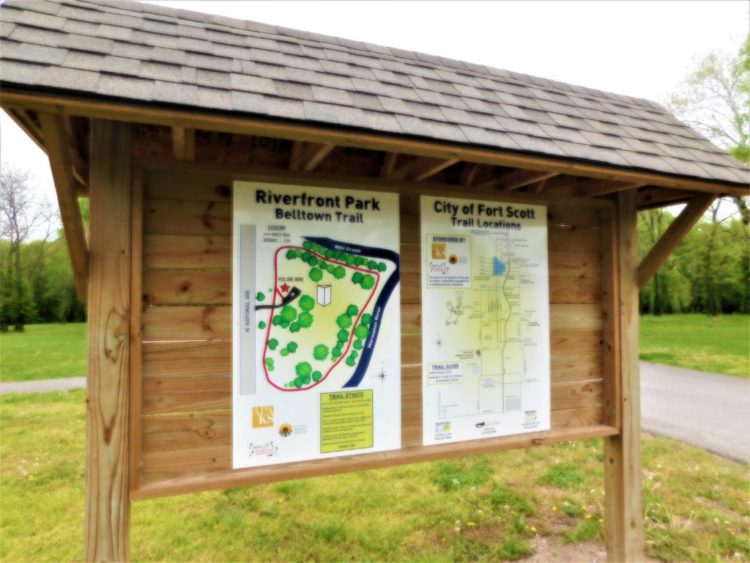
Overlook of the Marmaton River in Place at Riverfront Park
Editors note: The original feature did not have photos added, due to technical difficulties.

Two years of planning have come to fruition in the form of a boardwalk structure with seating in Riverside Park, the latest park improvement.
“It’s an overlook for educational purposes,” Jerry Witt, Chairman of the Fort Scott Riverfront Authority, which oversees the development of the park.
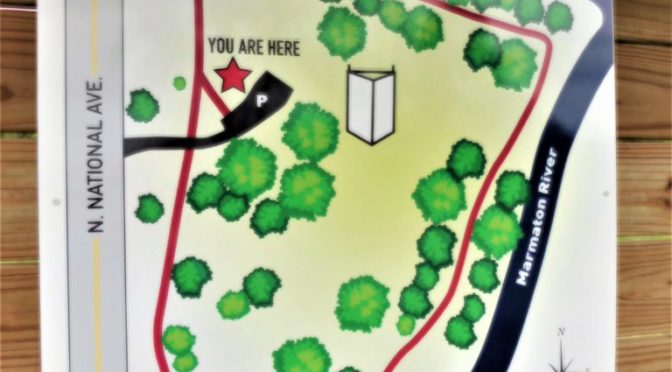
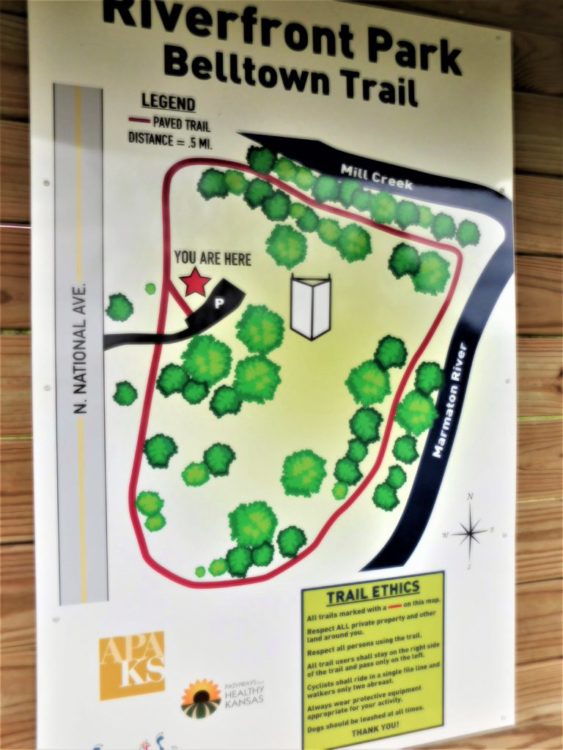
The structure has been built near the meeting place of the Marmaton River and Mill Creek, in the northeast section of the park.

In the future the structure will be used to “Teach kids about nature and our heritage,” Witt said. “About Belltown that was there. It was a residential area in years past. Named after Dr. Bell, a prominent doctor.”
Several people and entities have helped put this project in the park.
The structure was designed by Brian Leaders, an architect at the National Park Service.
Lumber was provided by the Westar Green Team.
“The Green Team provided old telephone poles that were milled at the Jeffery Power Plant, St. Mary’s, and from Garnett,” Witt said.
Witt and Allen Warren, another member of the Riverfront Authority board, drove to St. Mary’s to bring back one-half the lumber, then Warren and his wife, Jackie, went to Garnett to pick up the rest of the lumber.
The City of Fort Scott unloaded the lumber off the trailer and also will provide a concrete walk from the trail to the structure.

“Chad Brown (Fort Scott Public Works Director) thought they would pour the concrete this week,” Witt said.
West and Karleskint Construction, Fort Scott, built the structure.

Next for the park:
- A grant has been submitted to Kansas Wildlife, Parks and Tourism for a playground for children, with notification this fall of whether it was awarded the $62,000 asked for.
- A grant to Kansas Department of Transportation to move the historic 1902 ornate Long Shoals Bridge, currently located in northeast Bourbon County, to the park. The grant has been submitted with a request of $1, 364,000. Announcement of awards will be this fall.
- The Mercy Hospice Memorial is nearing completion on the south side of the park. Benches will be built and future memorial services will be held there.
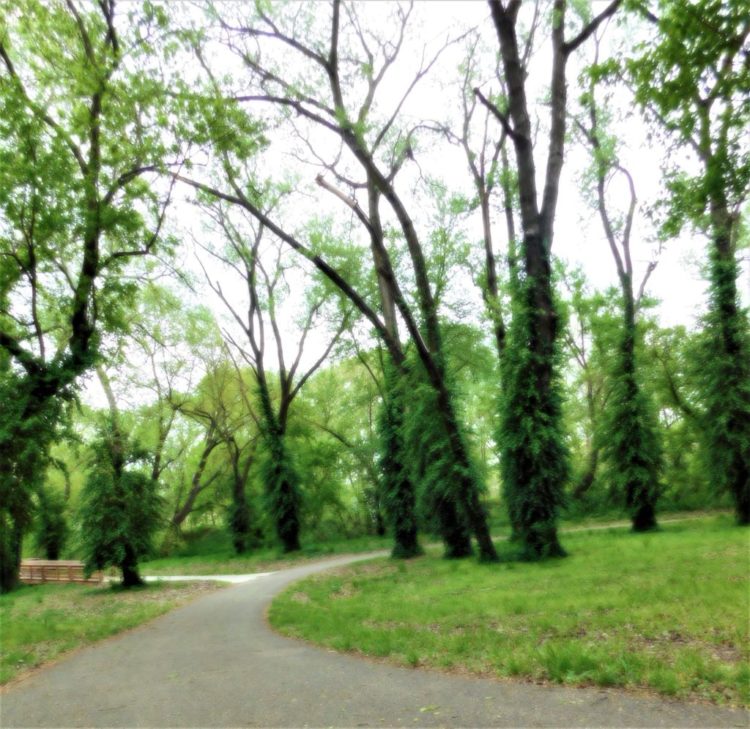
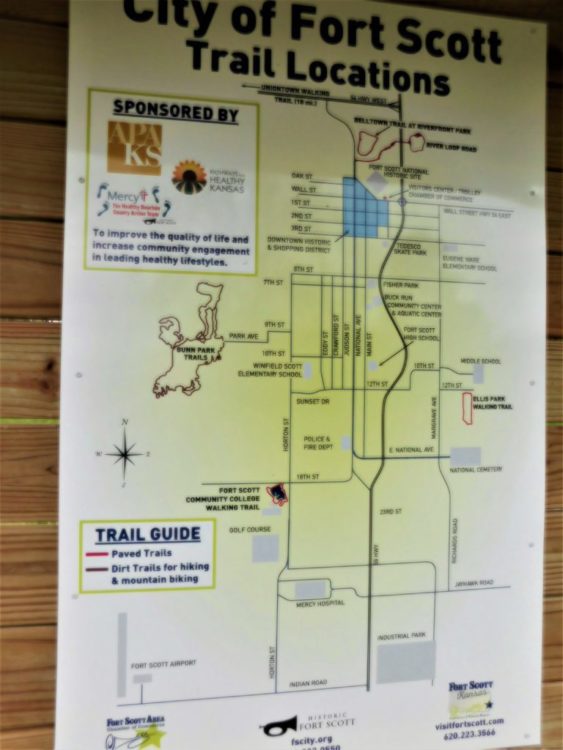
Already completed in Riverside Park is a walking trail, pavilion, and River Loop Road.
The Bourbon County Commission Agenda for Sept. 11
Agenda
Bourbon County Commission Room
2nd Floor, County Courthouse
210 S. National Avenue
Fort Scott, KS 66701
Tuesdays starting at 9:00
Date: September 11th, 2018
1st District-Lynne Oharah Minutes: Approved: _______________
2nd District-Jeff Fischer Corrected: _______________
3rd District-Nick Ruhl Adjourned at: _______________
County Clerk-Kendell Mason
9:00-9:45-Jim Harris
9:00-Jeremiah Hill-Roads-245th
10:00-10:15-2019 Budget Hearing
11:00-12:00-Justin Meeks
Executive Session-Privileged in the attorney-client relationship-10 min.
NRP-15 min.
12:00-1:30-Commissioners gone to lunch
1:30-2:00-Justin Meeks
2:00-2:30-Flu Shots
2:30-3:00-Bill Martin
3:00-3:15-Prayer Rally
3:15-David Neville-Flooring
Justifications for Executive Session:
Personnel matters of individual non-elected personnel
Consultation with an attorney for the body or agency which would be deemed privileged in the attorney-client relationship
Matters relating to employer-employee negotiations whether or not in consultation with the representative(s) of the body or agency
Confidential data relating to financial affairs or trade secrets of corporations, partnerships, trusts and individual proprietorships
Preliminary discussions relating to the acquisition of real property
Matters relating to the security of a public body or agency, public building or facility or the information system of a public body or agency, if the discussion of such matters at an open meeting would jeopardize the security of such public body, agency, building, facility or information system
Overseed Now To Improve Lawn Quality

Did you have unsightly bare spots in your lawn this year? If so, you may want to consider renovating your lawn. Renovating doesn’t have to be done by plowing under the current turf and starting from scratch. Instead, lawns can be thickened up by overseeding during September.
To start the overseeding process, mow the grass short (1-1.5 inches) and remove the clippings. This will make it easier to get good seed-soil contact and increase the amount of light that will reach the young seedlings. The success of overseeding is dependant on good seed-soil contact. Thatch can prevent the seed from reaching the soil and germinating. If the thatch layer is ¾ inch or more, use a sod cutter to remove it. A power rake can also be used to reduce a thatch layer.
Next, the soil should be prepared for the seed. Holes must be made into the soil for the seeds to fall into. A verticut machine can be used. It has solid vertical blades that can be set to cut furrows into the soil. Another option is to use a core aerator. This machine will punch holes into the soil and deposit the cores on the surface of the ground. Each hole will produce an excellent environment for seed germination and growth.
Fertilizer should then be applied at the rate suggested by a soil test or a starter fertilizer should be used at the rate suggested on the bag.
Seeding is the next step. For overseeding, use half the amount needed compared to seeding bare ground. For tall fescue, the normal rate for bare seeding is 6 to 8 pounds per 1000 square feet so the overseeding rate would be 3 to 4 pounds per 1000 square feet. You don’t necessarily have to overseed with the same variety you planted before. The quality of a lawn by can be raised by overseeding with a fescue with better characteristics. Many stores carry blends of several newer high-quality tall fescues.
Finally, water everything in and then keep the seedbed constantly moist to ensure rapid germination. Frequent light waterings are better than deeper, infrequent watering as the seedlings become established.
Fertilize with a high nitrogen fertilizer again 4 to 6 weeks after seeding to keep plants growing well and to build up food reserves.
On a side note, many homeowners often want to overseed bare spots under trees but have minimal luck. The turf will sprout as fall progresses and will get well established by winter. It continues to look good going into spring. However, the next summer it begins to die out again – despite any care it is given.
In many cases, this is due to too much shade or the type of turf planted isn’t a good fit for the location. Tall fescue is the only widely used lawn turf in Kansas that can survive some shade. All other cool and warm season turfs need more sunlight.
Instead of establishing grass under trees, consider underplanting the tree with shade tolerant ornamental plants. Examples include ground covers such as vinca minor vines, Boston ivy or liriope, or plants such as hostas or hardy ferns.
K-State Research and Extension is an equal opportunity provider and employer.
The Bourbon County Sheriff’s Office Daily Reports Sept. 10
The Bourbon County Sheriff’s Office Daily Reports Sept. 7
The Bourbon County Sheriff’s Office Daily Reports Sept. 6
The Bourbon County Sheriff’s Daily Reports Sept. 5
Free Band Concert Sept. 7 at Heritage Park Pavilion
The featured band this Friday night is the “Takin’ Notes Band”.
The concert is free and held at the Heritage Park Pavilion, First and Main Streets.
The band includes a variety of genre from old country, bluegrass gospel, and rock.
Terri Louk on lead vocals and guitar, Randy Maples lead guitar and vocals, Lane Steiner on drums and harmonica, David Shelby on vocals and guitar, Jeff Deal on bass, Brian Crites dulcimer, Bill Buck on mandolin and Dr. Larry Buck vocals and mandolin.
The program starts at 7 p.m. The audience is asked to bring lawn chairs, as seating is limited.
In the event of foul weather, the concert will be moved to the Common Grounds Coffee Shop, one-half block south of the pavilion.
Bourbon County Arts Council Patio Concert Sept. 15
|
Join us Saturday, September 15th at the Liberty Theatre Patio to watch EN Power & Light in concert!
Tickets for this event are $10 for BCAC member and $15 for non-member.
You may purchase tickets from Terri Floyd at 224-7221, Deb Anderson at 224-8650, or Bre Martin at 644-8703. You may also call the Fort Scott Area Chamber of Commerce at 223-3566
|
![]() |