|
|
|
|
|
|
|
|
|
|
|
|
|
|
|
|||||||||
|

|
|
|
|
|
|
|
|
|
|
|
|
|
|
|
|||||||||
|
WASHINGTON, May 27, 2025— The Trump Administration recently appointed David Schemm as the new State Executive Director (SED) for the USDA Farm Service Agency (FSA) in Kansas. Schemm joined the Kansas FSA team on May 5, 2025.
“When America’s farming communities prosper, the entire nation thrives. This new group of USDA appointees will ensure President Trump’s America First agenda is a reality in rural areas across the country. I am grateful for the leadership of these new state directors and look forward to their work reorienting the agency to put Farmers First again,” said Agriculture Secretary Brooke Rollins.
“FSA State Executive Directors serve in a critical role carrying out USDA’s mission at the state level — ensuring that our focus is on meeting the needs of local agricultural producers by putting farmers and ranchers first,” said FSA Administrator Bill Beam. “Rural communities need our support now more than ever. Our newly appointed state leaders bring a wealth of knowledge and expertise to their position as SED and they will play an integral role in shaping the future of agriculture in their state.”
Schemm returns to FSA where he previously served as the FSA State Executive Director for Kansas during President Trump’s first term. Before that, he served as Ag Advisor for U.S. Senator Roger Marshall for two years. He has a long history of involvement and leadership with the Kansas Association of Wheat Growers Board and the National Association of Wheat Growers. Schemm also served on the board for the United Sorghum Checkoff Program and served on the A-Team Innovation and Sustainability for United States Grains Council.
As SED, Schemm is responsible for overseeing the delivery of FSA programs to agricultural producers in Kansas. These commodity, conservation, credit, and disaster assistance programs ensure a safe, affordable, abundant and nutritious food, fiber, and fuel supply for all Americans. See USDA news release for full list of recent FSA and Rural Development appointees.
###
USDA is an equal opportunity provider, employer and lender.

|
|
|
|
|
|
|
|
|
|
|
|
|
|||||||||||||||
|

|
|
|
|
|
|
|
|
|
|
|
|
|
|
|
|
|
|
|
|
|||||||||||||||
|

|
|
|
|
|
|
|
|
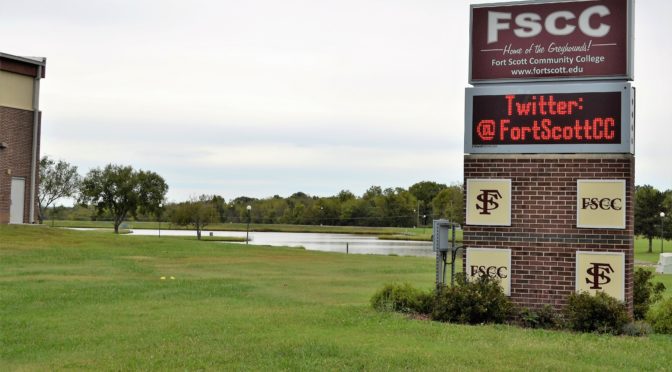
Marjorie Earline (Hildabrand) Wulz Foster, age 93, former resident of Fort Scott, KS passed away Thursday, May 22, 2025, at Arma Health and Rehab in Arma, KS. She was born August 13, 1931, in Hunter, OK, the daughter of Chester Austin and Clara Neil (Blanchard) Hildabrand. Earline graduated from Hunter High School in 1949. She then attended community college in Tonkawa, OK and graduated from Oklahoma State University in 1963 with a degree in dietetics and nutrition.
Earline served as director of food service at FSCC from 1972 to 1975, and as state school food service inspector for Kansas from 1975 to 1980, and as director of food service for Independence, KS schools from 1980 to 1990.
Earline was active in the Presbyterian Church. She also participated in the Airstream club in Kansas and traveled in her Airstream from Hudson Bay to Mexico City to Alaska. She was an avid quilter, won numerous awards in quilting and made over 50 quilts for her family and friends.
She married Charles Wulz in 1956. He preceded her in death. Earline then married Leon foster in 1976. He also preceded her in death. She was also preceded in death by her parents, her sister Lois Hatfield, her brothers Clifton and Homer Hildabrand, and her twin brother Marvin Earl Hildabrand.
Survivors include her three children, LuAnn Baker (Robert), Steven Wulz (Lauren), and Curtis Wulz; two stepchildren, Stephen Foster and Joan Foster; seven grandchildren; six great-grandchildren; and one great-great-grandchild.
Rev. Chuck Russell will conduct funeral services at 10:00 AM Thursday, May 29th at the Cheney Witt Chapel. Burial will follow in the U. S. National Cemetery.
The family will receive friends from 5:00 PM until 7:00 PM Wednesday, May 28th at the funeral home.
Memorials are suggested to Arbor Day Foundation and may be left in care of the Cheney Witt Chapel, PO Box 347, 201 S. Main St., Fort Scott, KS 66701. Words of remembrance may be submitted online at cheneywitt.com.

Keys to the Kingdom By Carolyn Tucker
Memorial Day is a day set apart to honor the sacrifice and loss of any man or woman who died while serving in the U.S. military, whether during deployment overseas or in training and service in the United States. Military organizations and bases nationwide honor all fallen military warriors on Memorial Day. The best way for us to pay respects to our military freedom fighters is to attend a Memorial Day ceremony at a veterans’ cemetery, or visit the grave of a loved one who gave the ultimate sacrifice of patriotism.
Patriotism means you love, respect, and are willing to serve your Country and, if need be, sacrifice your life to protect a fellow American. The American flag stirs a very proud patriotism when we see its stars and stripes waving majestically in the blue skies of liberty. Many of the best have bravely died for this flag. Military warriors have guts — and they’ve proven it by spilling them.
After viewing the 1998 film, “Saving Private Ryan” for the first time years ago, I emphatically said, “Everyone living in the United States of America needs to see this movie.” It’s a hard watch, but a necessary one if you want to get a true pulse of American heroism and patriotism. Politics and patriotism are not two peas in a pod. Although Saving Private Ryan was fictional, it was inspired by the true story of Frederick Niland, who was sent home after two of his brothers were killed in action during World War II. And if you want to read or watch a true September 11, 2012 account, I recommend “13 Hours: The Secret Soldiers of Benghazi.” Heroes don’t wear capes, they wear dog tags.
Saving Private Ryan’s historical accuracy in the opening sequence was praised by both WWII historians and actual survivors of the D-Day landings on June 6, 1944. Charlie Company’s horrific experiences in the early scenes of the film, including those seasick in the landing crafts, the catastrophic number of casualties as they exited the crafts, and the struggle in linking up with the nearby units on the shore are all true to history. Many minor details, including the sound of the bullets and the unique “ping” of the U.S. soldiers’ M1 rifles ejecting their clips, are accurately recreated. Even the correct code names for the different sectors of Omaha Beach were used in the film.
Never, ever shall we disregard the words of Jesus which perfectly describes all the brave hearts of our military men and women who have given their ultimate patriotism. “No one has greater love than this: to lay down his life for his friends” (John 15:13 CSB). I also appreciate the same scripture from The Passion Translation: “For the greatest love of all is a love that sacrifices all. And this great love is demonstrated when a person sacrifices his life for his friends.”
I was taught not to argue with God or His Word and, honestly, it would be ridiculous to try to do so. With the meaning of Memorial Day weighing heavily on my heart, the following scripture clearly illuminates an appropriate response to what Peter writes: “Show proper respect to everyone. Love the community of believers. Have respect for God. Honor the king” (1 Peter 2:17 NIRV). We should obey God’s Word and give proper regard to those who sacrificed all.
The Key: Believers have an ethical obligation to honor and properly respect our U.S. fallen heroes.


Soybean planting is well underway in Kansas with 43% planted, based on the USDA-NASS Crop Progress and Condition Report from May 19, 2024. However, heavy rainfall has occurred in many locations across the eastern half of Kansas, with some fields underwater and others with completely saturated soil. If you have been fortunate to get some early soybeans planted here are things to remember.
Wet soil conditions will slow emergence, make the soil more susceptible to compaction (limiting root growth), and cause poor plant-to-plant uniformity after emergence.
Sidewall compaction occurs when soybeans are planted when the soil is too wet, immediately followed by dry weather.
Soil surface crusting is another potential challenge for soybean emergence.
If soybean plants are submerged for less than 48 hours, there is a good chance they will survive. Plants can survive underwater longer in cool temperatures than in warm temperatures. Submerged soybean plants can survive for up to 7 days when temperatures are less than 80 degrees F.
To determine whether the soybeans are damaged after the water recedes, split the stem at the tip and examine the growing point. A healthy growing point will be firm and white or cream-colored. A soft, dark growing point indicates injury. In some cases, the silt coating the plant after short-term flooding can cause more injury than the water itself, possibly even plant death.
Even if the fields do not have standing water, and plants are not totally submerged, waterlogged soils can cause problems if the waterlogging lasts too long.
When soils are saturated for a prolonged period, a lack of oxygen in the roots can lead to the accumulation of lactic acid and other products of anaerobic respiration. This is the underlying cause of damage to plants in waterlogged soils where only the roots are flooded.
Injury can depend on variety, growth stage, duration of waterlogging, soil texture, fertility levels, and diseases present.
Interactions of these factors make it hard to predict how a given soybean field will react to waterlogged soils. Variety differences have been reported, and researchers have identified possible genes associated with tolerance to waterlogged conditions.
Scientists in Missouri have screened a number of soybean varieties, subjecting them to two periods of flooding, each two weeks in duration. The average yield reduction for all varieties was 61%. Yields were reduced by 39% for the most tolerant varieties and 77% for the least tolerant. Producers should check with their seed supplier regarding information about a particular variety.
As always if you are noticing issues in your fields feel free to contact me through your local K-State Extension Office to set up a consultation and field visit to asses and try and alleviate the problem.
If needed, I will work with you to send photos of the problem (close-up, seedling, field shot) and plant samples to the K-State Plant Disease Diagnostic Lab.
Lonnie Mengarelli is a K-State Research and Extension Agriculture agent assigned to Southwind District. He may be reached at [email protected] or 620-223-3720
Tina Sullivan, Northeast Area Agronomist
[email protected]
Rodrigo Onofre, Plant Pathology
[email protected]
Chandler Day, Associate Diagnostician, Plant Pathology
[email protected]