All posts by Submitted Story

Halloween Safety Tips

Protect Your Children from Scary Boo-Boos and Bumps in the Night
Safety Advocates Offer Tips to Keep Your Children Safe this Halloween Holiday

TOPEKA – On Halloween, injuries can be just as scary as ghosts and ghouls but are much more real. Pedestrian accidents, falls, burns and poisonings are just a few of the common injuries that occur on this particular night. The good news is they are preventable. Safe Kids Kansas, the Kansas Poison Center and the Office of the State Fire Marshal remind families to make safety part of your fall festivity planning.

On average, children are more than twice as likely to be hit by a vehicle and killed on Halloween than on any other day of the year. Drivers need to slow down and be extra alert, especially in neighborhoods, as there will be more children on the streets and sidewalks – and those kids may be focused on gathering candy and the excitement of the holiday rather than being careful while crossing streets.

Review safety rules with your kids before they leave the house. Trick-or-treaters are often out when it’s dark and more difficult for drivers to see them. Children younger than age 12 should not be crossing streets alone on Halloween without an adult or responsible teenager.

“While it’s a good idea for children to have a cell phone with them in case of an emergency, remind them to pay attention to their surroundings,” said Cherie Sage with Safe Kids Kansas. “Don’t be distracted from hazards because you are texting or talking on the phone.”

Remind children to be careful with candy. It’s hard to resist the temptation to dive right into treats, but it is best to check sweets before children are allowed to eat them. Only eat treats in original and unopened wrappers. Also, be aware kids are in a candy-seeking mode, so keep medicine locked up and away and keep the Poison Help number programmed into your phone: 800-222-1222.

According to the National Fire Protection Association, nearly half of home structure fires happened because decorations were too close to a heat source. Most of these incidents were started by candles. Play it safe and use battery powered candles or lights. Remember to make sure your family has working smoke alarms on every level of your home and inside and outside every sleeping room.

With Halloween just a week away, follow these tips to ensure everyone has a fun and safe holiday.

Costume Safety

  • Choose costumes and decorations that are flame-resistant or flame-retardant.
  • Decorate costumes and bags with reflective tape or stickers and have kids carry glow sticks and flashlights to help them see and be seen by drivers.
  • Prevent trips and falls by selecting a costume that is the right size and choose non-toxic face paint and makeup instead of masks, which can obstruct a child’s vision.

Decorate Safely

  • Keep flammable materials such as hay bales, corn stalks and paper decorations away from heat and flame sources, such as  candles, light bulbs and heaters.
  • Use battery-operated candles in jack-o-lanterns and when decorating pathways and yards.
  • Set a reminder to blow out any candles and unplug lights at the end of the evening.
  • If you are attending parties or haunted houses, look for the exits and have an escape in case of an emergency.
  • If using dry ice, make sure you use gloves or tongs when handling it and do not put it in cups where it could be swallowed and cause severe burns.

Walk Safely

  • Stick to sidewalks or paths. Don’t walk through neighbors’ yards, as there may be hazards you can’t see.
  • If there are no sidewalks along your street, walk on the road facing traffic as far to left as possible.
  • Only cross the street at corners and crosswalks; not between parked cars. Make eye contact and wave at drivers before crossing.
  • Watch out for cars that are turning or backing up.
  • Pay attention to your surroundings. Put away phones and other distracting electronics.

Trick or Treat Safely

  • Children under the age of 12 should not be alone at night without adult supervision. If kids are mature enough to be out without supervision, they should stick to familiar areas that are well lit, stick to a pre-planned route and trick-or-treat in groups.

Drive Safely

  • Slow down and be especially alert in residential neighborhoods. Children are excited on Halloween and may move in unpredictable ways.
  • Eliminate any distractions inside your car so you can concentrate on the road and your surroundings.
  • Watch out for pedestrians when turning at intersections. Enter and exit driveways and alleys slowly and carefully.
  • Popular trick-or-treating hours are 5:30 p.m. to 9:30 p.m. so be especially alert for kids during those hours.

For more tips on how to keep kids safe on Halloween and throughout the year, visit safekids.org.

###

About Safe Kids Kansas
Safe Kids Kansas works to prevent childhood injury, the leading cause of death and disability to children. Safe Kids Kansas is a member of Safe Kids Worldwide, a global network of organizations dedicated to preventing injuries in children. Coalition members include over 70 statewide organizations, agencies and businesses and a network of local coalitions across the state. The Kansas Department of Health and Environment serves as the Lead Agency for the coalition.

Visit us at safekidskansas.org, on Facebook and Instagram.

About the Office of the State Fire Marshal
The Office of the State Fire Marshal is dedicated to protecting the lives and property of the citizens of Kansas from the hazards of fire, explosion and hazardous materials. OSFM’s aim is to reduce the deaths, injuries, and property losses of Kansans through inspection, enforcement, regulation, investigation, hazardous material incident mitigation and public education.

Visit us at firemarshal.ks.gov, on Facebook or X/Twitter.

About the Kansas Poison Center
The Kansas Poison Control Center at The University of Kansas Health System serves the entire state of Kansas, including Kansas City. All calls are free and confidential. And the service is available 24/7. The Poison Helpline is 1-800-222-1222.

Visit us on Facebook or X/Twitter.

FS Skating Rink Is Seeking Donations

Fort Scott Skating Rink

Help us meet our goal for Fort Scott’s NEW Skating Rink!

Use the QR codes below to donate via PayPal, Venmo, GoFundMe.

Cash or Checks made to the Chamber Foundation also accepted. Mail or drop off to the Chamber at 231 E. Wall St. Fort Scott, KS 66701.

We appreciate everyone who has donated already to help us make this possible for our community!

Click the QR code below for a direct link to donate!

Call 620-223-3566 for questions. Click here for our Chamber Foundation page and more information.

A special thank you to our Champion Chamber members…

Fort Scott Area Chamber of Commerce | 231 E. Wall Street | Fort Scott, KS 66701 US
 

USDA Begins Issuing $2.14 Billion to Agricultural Producers through Key Conservation and Safety-Net Programs


An Additional $21 Million Awarded for Monitoring, Assessment and Evaluation Projects to Enhance the Delivery of the Conservation Reserve Program


Manhattan Kansas, Oct. 21, 2024 – The U.S. Department of Agriculture (USDA) today announced that it will begin issuing more than $2.14 billion in payments to eligible agricultural producers, and landowners—providing much needed support through key conservation and safety-net programs. Producers should soon receive payments from USDA’s Farm Service Agency (FSA) for their participation in these programs aimed to conserve natural resources and keep family farms economically viable.

Specifically, program participants are expected to receive more than $1.7 billion through the Conservation Reserve Program (CRP) and CRP Transition Incentive Program (CRP TIP) and more than $447 million through the Agriculture Risk Coverage and Prices Loss Coverage (ARC/PLC) programs. Additionally, FSA is announcing an investment of $21 million for projects to better measure the effectiveness of CRP.

“Conservation and safety net program payments are significant investments in preserving and protecting our valuable and vulnerable natural resources and they provide protection for producers impacted by market volatilities,” said Denis McKinney, FSA State Executive Director in Kansas. “These programs support voluntary land stewardship and provide agricultural producers with risk protection and production stability, keeping them in business and feeding the world.”

Conservation Reserve Program Payments

FSA is issuing more than $1.7 billion in annual rental payments to agricultural producers and private landowners through the Conservation Reserve Program and CRP Transition Incentive Program. These annual rental payments are made to eligible farmers and ranchers throughout the country who establish long-term, resource-conserving plant species, such as approved grasses or trees, to control soil erosion, improve water quality and enhance wildlife habitat on cropland taken out of production. The duration of CRP contracts is between 10 and 15 years.

FSA accepted offers for more than 2.2 million acres through this year’s Grassland, General, and Continuous CRP signups, bringing current enrollment to nearly 26 million acres.

These conservation-minded producers help provide invaluable benefits to the nation’s environment and economy.

Top five states for current acreage in CRP:

  • Colorado: 2,978,741
  • South Dakota: 2,626,430
  • Nebraska: 2,423,361
  • Texas: 2,225,310
  • Kansas: 2,040,412


Investments in CRP Monitoring, Assessment, and Evaluation

FSA invested $21 million in 15 projects to further the monitoring, assessment, and evaluation of the Conservation Reserve Program (CRP). Projects funded this year include the adoption of emerging technology to increase knowledge on subjects such as the benefits of wetland restoration to mitigate flooding, contributions of CRP to wildlife habitat, and role CRP plays in strengthening the resiliency of agricultural operations.


FSA originally committed $10 million to the Notice of Funding Opportunity in May, but due to the quality of project proposals submitted FSA awarded more than $20 million. Since 2021, FSA has invested over $70 million into monitoring, assessment, and evaluation efforts.

The monitoring, assessment, and evaluation projects are designed to produce information that enables USDA to better target CRP toward conservation outcomes by improving data, models, and planning tools while supporting USDA’s goal of putting American agriculture and forestry at the center of climate-smart solutions. The land currently enrolled in the program improve water quality, protect soil resources, provide critical wildlife habitat and aid to climate resiliency within agricultural systems. Further quantifying program benefits allows the USDA to better target CRP to achieve continued conservation wins across environmentally sensitive lands while strengthening the program’s modeling and conservation planning resources for all producers.

Signed into law in 1985, CRP is one of the largest voluntary private-lands conservation programs in the United States. It was originally intended to primarily control soil erosion and potentially stabilize commodity prices by taking marginal lands out of production. The program has evolved over the years, providing many conservation and economic benefits.

Agriculture Risk Coverage and Price Loss Coverage Programs

USDA has started to issue payments to producers of 2023 crops that are estimated at more than $447 million through the Agriculture Risk Coverage (ARC) and Price Loss Coverage (PLC) programs. ARC and PLC provide financial protections to farmers from substantial drops in crop prices or revenue and are vital economic safety nets for most American farms. ARC and PLC program and crop specific data is available online and through your local FSA county office.

Authorized by the 2014 farm bill they can provide a cushion for farmers during tough economic conditions and fluctuating market prices.

More Information

For more information on available FSA programs, contact your local USDA Service Center.

USDA touches the lives of all Americans each day in so many positive ways. In the Biden-Harris Administration, USDA is transforming America’s food system with a greater focus on more resilient local and regional food production, fairer markets for all producers, ensuring access to safe, healthy and nutritious food in all communities, building new markets and streams of income for farmers and producers using climate smart food and forestry practices, making historic investments in infrastructure and clean energy capabilities in rural America, and committing to equity across the Department by removing systemic barriers and building a workforce more representative of America. To learn more, visit usda.gov.

#


USDA is an equal opportunity provider, employer and lender.


USDA Makes Acreage Reporting Improvements to Allow Flexibility for Urban and Innovative Producers  


Acreage Reports are Eligibility Requirement for Many USDA Programs


WASHINGTON, Oct. 22, 2024 – Urban and innovative agriculture producers will be able to more easily participate in U.S. Department of Agriculture (USDA) programs as a result of acreage reporting improvements. These improvements, implemented by USDA’s Farm Service Agency, provide more flexibility for reporting acreage on a smaller scale and identifying innovative planting practices like multi-level planting or vertical farming practices.

An acreage report documents crops and where they are grown on a farm or ranch along with the intended use of the crop. Filing an accurate and timely acreage report for all crops and land uses, including failed acreage and prevented planted acreage, can prevent the loss of program benefits.

“Through USDA’s urban agriculture initiative and the opening of USDA offices within urban settings, our Farm Service Agency offices are more frequently engaging with urban and innovative producers,” said Zach Ducheneaux, FSA Administrator. “Filing an acreage report is an important requirement to receive many USDA program benefits, and our small-scale agricultural producers, including urban and innovative producers, will notice a simpler acreage reporting process that better reflects the scope of their unique operations.”

Acreage Reporting Improvements

FSA’s acreage reporting software previously allowed acreage to be reported down to .0001 acres, approximately a four-square foot area. Producers will now be able to report acreage-based crops at a minimum size of .000001 acre, approximately a 2.5-inch by 2.5-inch area.

Additional improvements will distinguish alternate growing methods such as crops grown within multiple levels of a building, or crops grown using multi-level or multi-layer growing structures such as panels or towers within a container system. This change allows the distinction of vertical farming practices. Urban and innovative producers will also have the option to report plant inventory along with their acreage-based report, allowing producers to better report the full scope of their operation.

Producers can contact FSA at their local USDA Service Center for acreage reporting deadlines that are specific to their county.

USDA Urban Service Centers

USDA is committed to working with farms of all sizes and in all locations, including those in urban areas. USDA works with agricultural producers through a network of more than 2,300 Service Centers nationwide. To better serve urban farmers, USDA is establishing 17 new Urban Service Centers.

The Urban Service Centers are staffed by FSA and Natural Resources Conservation Service (NRCS) employees and offer farm loan, conservation, disaster assistance and risk management programs.

To find exact locations and contact information for these Urban Service Centers or to learn how to prepare for a USDA Service Center appointment, producers can visit farmers.gov/your-business/urban-growers/urban-service-centers.

For questions, producers should call their FSA county office. Urban operations that are not located near one of the Urban Service Centers can contact one of the more than 2,300 Service Centers across the country by visiting farmers.gov/service-locator.

More Information

The new acreage reporting improvements and Urban Service Centers are part of a broad USDA investment in urban agriculture and innovative production. Other efforts include:

  • Investing $9 million in funding to local organizations that will conduct outreach, education and technical assistance to urban producers and support the urban service centers in 10 cities.
  • Organizing 27FSA urban county committees to make important decisions about how FSA farm programs are administered locally. Urban farmers who participate in USDA programs in the areas selected are encouraged to participate by nominating and voting for county committee members.
  • Investing $5.2 million for Urban Agriculture and Innovative Production (UAIP) competitive grants in fiscal year 2024
  • Administering the People’s Garden Initiative, which celebrates collaborative gardens across the country and worldwide that benefit their communities by growing fresh, healthy food and supporting resilient, local food systems using sustainable practices and providing greenspace.
  • Creating and managing a Federal Advisory Committee for Urban Agriculture and Innovative Production to advise the Secretary on the development of policies and outreach relating to urban agriculture. The committee will hold a virtual public meeting on Oct. 23. To learn more, register here.
  • Providing cooperative agreements that develop and test strategies for planning and implementing municipal compost plans and food waste reduction plans.
  • Investing in risk management education to broaden the reach of crop insurance among urban and innovative producers.
  • Partnering with the Vermont Law and Graduate School Center for Agriculture and Food Systems to develop resources that help growers understand and work through local policies.

Additional resources include:

FSA helps America’s farmers, ranchers and forest landowners invest in, improve, protect and expand their agricultural operations through the delivery of agricultural programs for all Americans. FSA implements agricultural policy, administers credit and loan programs, and manages conservation, commodity, disaster recovery and marketing programs through a national network of state and county offices and locally elected county committees. For more information, visit fsa.usda.gov.

USDA touches the lives of all Americans each day in so many positive ways. In the Biden-Harris administration, USDA is transforming America’s food system with a greater focus on more resilient local and regional food production, fairer markets for all producers, ensuring access to healthy and nutritious food in all communities, building new markets and streams of income for farmers and producers using climate smart food and forestry practices, making historic investments in infrastructure and clean energy capabilities in rural America and committing to equity across the department by removing systemic barriers and building a workforce more representative of America. To learn more, visit usda.gov.


#


USDA is an equal opportunity provider, employer and lender.


Chamber of Commerce After Hours Event This Thursday at The Artificers

Join us for an After-hours event! Hosted by Bourbon County Clay

This Thursday, October 24th

5:15-7pm, Remarks & Drawing 6pm

$2 admission for Chamber 50/50 Drawing

The Fort Scott Area Chamber of Commerce invites members and guests to an After-hours event hosted by Bourbon County Clay. The After-hours will take place Thursday, October 24th from 5:15pm-7pm at The Artificers, located at 8 N. National Ave. There will be a $2 admission for a Chamber half-and-half drawing. Appetizers and beverages will be provided. Remarks and the drawing will take place at 6pm.

Bourbon County Clay, a new woman-owned business started by Kate Freeman, officially launched as a new business in June of 2024. Located in the heart of Fort Scott, Kate has been active in the arts for nearly three decades. The studio is focused on producing quality, handcrafted pieces that are rooted in our county’s rich history. Bourbon County Clay is led by a team of artisans committed to creating work that reflects the heritage and natural beauty of Bourbon County. Proud of the connection to the region, they strive to honor it in every piece made. Visit their website bourboncountyclay.com for more details.

The Chamber encourages members and guests to attend to network and support new small business in our community. For more information, contact 620-223-3566 or email [email protected].

To RSVP for the event, click HERE, join the VIP list on the Bourbon County Clay website, and you will receive an email invitation!

Click here for the Facebook Event Page.

Click here for their Facebook Page

Click here for their website.

Contact the Chamber of Commerce at (620) 223-3566 for more information. Visit the Events Calendar on fortscott.com for this & other upcoming events.

Thank you to our Chamber Champion members shown below…

Facebook  Twitter  Pinterest
Fort Scott Area Chamber of Commerce | 231 E. Wall Street | Fort Scott, KS 66701 US

Letter to The Editor: Kyle and Sheena Parks

Kyle and Sheen Parks appeared at the October 14th U235 board meeting, representing a group of concerned patrons and gave the following address:


“We are appearing with concerns that have arisen from the appearance of U235 Superintendent, Vance Eden at the September 16, 2024 Bourbon County Commission meeting as well as a Letter to the Editor that he submitted to the Fort Scott Tribune, printed September 28, 2024.


In both his appearance and letter, Mr. Eden urges support of industrial solar development projects and justifies this support with an illustration of how he believes the potential developments will help U235.  It is our feeling as taxpayers and patrons of this district, that these representations are not in the best interest of the district for multiple reasons.


First:  Mr. Eden references facilities improvements that these unrealized funds could potentially finance.  He says in his statements that solar developments may be negative for a few people, but will help the district as a whole.  In November of 2023 the voters rejected the bond proposal to make these suggested improvements by an overwhelming majority of more than 60%.  The answer should not now be, “a few will be negatively impacted”: when the means to accomplish the improvements by way of payments from the majority, was so overwhelmingly overturned.


Secondly:  The “few negatively impacted” are still patrons of U235, some are teachers in the schools, and some are children in the halls.  The Superintendent’s statements are insensitive and create an uncomfortable environment for those who may oppose the issue.  They involve the district in politics unnecessarily.


Third:  A Conflict of Interest occurs when an individual’s personal interests – family, friendships, financial or social factors – could compromise his or her judgment, decisions, or actions in the workplace.


Mr. Eden’s parents have entered into leases with the solar developers. Leases of a length that could quite possibly outlast them.  These are publicly available at the Bourbon  County Courthouse, Register of Deeds.  The personal financial benefit is in the millions on an annual basis.  While Mr. Eden may feel that he is speaking individually, his title does not allow separation from the district.  He is not just a teacher or employee, he is THE Superintendent.  And while the headline may have been misleading, his words represented the district, inaccurately I may add, as all patrons are not in support of these projects.  He cannot lay aside his title any easier than he can lay aside his last name.  This action was unprofessional at best and unethical at worst.


We feel it would be appropriate for a reprimand for conduct unbecoming a superintendent, or at least to direct Mr. Eden to send a letter to the Tribune stating that his thoughts are not representative of the Board.


If these projects come to fruition, and the district stands to benefit, the superintendent’s involvement would be appropriate in determining logistics of fund distribution – anything before that is a political storm in which the district does not belong.”


The result of this presentation was simply a statement from the board that they do not have a stance on this issue.


Kyle and Sheena Parks

U.S.D.235 Patrons

Enduring Word Travel Museum This Weekend

Facebook  X  Instagram
Sending on behalf of Chamber member First Southern Baptist Church…
First Southern Baptist Church invites everyone of all ages!

October 25-27th


The Enduring Word Travel Museum

Teaching the History and Significance of the Bible

Non-denominational Exhibit & Programs

View the authentic historical artifacts dating back to 5000 years from the Holy Land, Middle East, and Asia Minor.

Ancient Torahs, Bibles, manuscripts, and pottery.

Plus, a working replica of the Gutenberg press.

Like used to print the first-ever Bible.

See the chart below for event times or click here for a printable copy:
A special thank you to our Chamber Champion members!
Fort Scott Area Chamber of Commerce | 231 E. Wall Street | Fort Scott, KS 66701 US

CATO CELEBRATES ITS PIONEER HISTORY WITH CATO DAYS Oct. 26


CATO CELEBRATES ITS PIONEER HISTORY WITH CATO DAYS


The annual Cato Days will be presented by the Cato Historical Preservation Association on Saturday, October 26th from 9 a.m. to 3 p.m.  Admission is free.


The annual Cato Days will be held on Saturday, October 26th from 9 a.m. to 3 p.m. in Cato, Kansas.  This free event is presented by the Cato Historical Preservation Association to promote Cato’s pioneer history, and starts with registration at 9 a.m.  This will be followed at 9:30 by music, and history presented by Matt Wells in the historic Cato Christian Church.  At 10:45, in the “Old Stone School,” Anna Portwood Swank, Elizabeth Portwood Thompson, and Jamie Thompson will talk about the school, followed by Jerry Lomshek who will discuss Cato’s early history, and its involvement in Bleeding Kansas, and the Civil War.  Musical entertainment will be presented outdoors at 12 noon, when drinks and “Cowboy Stew,” cooked by Shawn Pryer and friends, will be available.  Shawn will demonstrate chuck wagon and Dutch oven cooking.  At 12:45 there will be a raffle for a beautiful quilt donated by longtime member, Sue James of Texas.  The highlight of the event begins at 1 p.m. with a hayrack wagon ride, led by Joe Bournoville, to various local historical sites.  The ride will visit the site of the Buckhorn Tavern, a popular stop on the stage coach line from Fort Scott, the Coonrod Cemetery, which is the resting place of many Cato area pioneers, and finally, the site of the birthplace of Elisha Black, Jr., the first baby born to settlers in Crawford County.  The hayrack ride, and Cato Days ends at 3 p.m.  All times are approximate.

Booklets about the history of Cato, and the newly released booklet about the Cherokee Neutral Land (present day Crawford and Cherokee Counties) will be available for sale.  The Cato Store will also be selling other Cato-related merchandise, including t-shirts, sweatshirts, hats, and more.  All proceeds from the quilt raffle, “Cowboy Stew,” booklets, and merchandise go to the preservation of Cato’s historic buildings, and for history related educational activities.  Local fourth and fifth graders will have their own Cato Day on Thursday, October 24th.

Cato is in the northern part of Crawford County off Hwy 69.  From Hwy 69, turn west on 720th Avenue, and follow the signs to Cato.  Directions can be found at http://catoschool.com/ .  The Cato Historical Preservation Association is a nonprofit organization dedicated to preserving the buildings, and history of Cato, and the surrounding areas. These buildings include the “Old Stone School,” built in 1869, the Cato Christian Church, built in 1915, and a full-sized replica of a cabin the early settlers would have used in the 1860s.  A stone bridge, part of the “Old Wagon Road,” can also be seen on the property.  Cato is an open-air museum and its buildings are only open to the public a few times a year, so don’t miss this unique opportunity to spend an afternoon of entertainment and enlightenment in historic Cato.

The Cato Historical Preservation Association is a nonprofit organization dedicated to preserving the buildings and past of Cato, and surrounding areas.


Obituary of Alberta Weddle

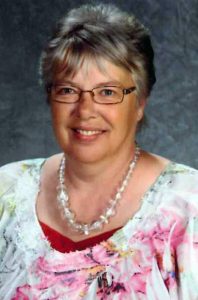
Alberta Grace Weddle, 90, formerly of Fort Scott, passed away Thursday morning, October 17, 2024, at Ascension St. John’s Hospital in Tulsa, Oklahoma. She was born on April 2, 1934, in Kansas City, Missouri, the daughter of Lars Huggins and Hazel Leona (Hawks) Huggins. She married Russell Marvin Weddle on July 21, 1949, in Kansas City, Missouri, and he preceded her in death May 26, 1994.


Alberta grew up in hard times as an only child, having lost an infant sister, Ilene, and a young brother, Freddy. She stayed with her Great-grandma McCoy and Grandma Grace most of the time, and because things were so hard, she often didn’t have much food to eat, toys, or the simple things that other children had. Alberta, however, was not defined by her circumstances, and instead chose who she would grow up to become.


Alberta found and fell in love with Russell Weddle, a career-military man, and in July of 1949, they began their lives together. She followed him from the East Coast to the West Coast as he served our great country first in WWII and then combat in Korea. Eventually, along came their children, Ray, Marie, Julie, and Morine. Russell wanted to stop having children at four, but Alberta always wanted seven children, having grown up an only child. Otherwise, Connie, Albert, and Carol, their children, and the children following them would not be on this planet.


Alberta treasured each and every one of her children, grandchildren, great-grandchildren. Everything centered around family for her. She “took care of business,” always giving, and touched the lives of everyone who entered her home and who she met. She was a doer, not a talker. She loved kids, no matter who they were: her own family, children she met in restaurants, especially babies. She was “Mom” to her children’s friends in many ways. Alberta was not a social butterfly, but instead spoke in a genuine way, conveying that she was listening and truly cared.


Alberta had beautiful, soul-piercing eyes, and loved shiny, sparkly, glittery everything! She loved red birds, flamingos, and flowers, and purple was her favorite color. She was not a complainer, instead she was always thankful and grateful. She was sweet and peaceful, and would wash your mouth out with soap if you even THOUGHT about the F-word! Alberta accepted and loved Jesus, and taught her family about the need to ask for forgiveness, and to just to talk to Him. Read John 3:16 and Romans 10:9-10, and believe in His Word. She built character into each of her children while still letting them be themselves. She gave them the power to choose who they could be.


Alberta is survived her children, Ray Weddle (Connie), Deerfield, Missouri, Morine Santmeyer (Jim), Tulsa, Oklahoma, Connie Snyder (Roger), Chelsea, Oklahoma, Albert Weddle (Susan), Fort Scott, Carol Carter (James), Owasso, Oklahoma, numerous grandchildren and great-grandchildren.

She was preceded in death by her parents and grandparents; infant sister Ilene, brother, Freddy; two daughters, Grace Weddle and Julie (Skaggs) Kantz; a grandson, Matthew Weddle, and great-granddaughter Cadence Marie Crumbly.


Matthew Kendrick will officiate funeral services at 11:00 a.m. on Thursday, October 24, 22024, at the Fort Scott Church of the Nazarene, with burial following at the Evergreen Cemetery, under the direction of the Konantz-Cheney Funeral Home.

A family visitation will be Wednesday evening, October 23, 2024, 6:00-7:00 p.m. at the funeral home.

Friends and family may sign the online guest book and share memories at www.konantzcheney.com.


Obituary of William Sampson, Jr.

William “Will/Bill” James Sampson, Jr., age 45, a native of Fort Scott, KS passed away Saturday, October 19, 2024.  He was born July 23, 1979, in Fort Scott, KS the son of William James Sampson, Sr. and Mary Lynn Wiggans Sampson, both Fort Scott natives.  He attended school in Fort Scott from kindergarten through high school.  Bill was married to Jennifer Leighty for 21 years.  They later divorced.  He worked at Ward Kraft for 13 years.  He later transitioned to BNSF Railroad where he worked for 12 years as a Union Signalman.

Bill enjoyed surrounding himself with family and friends, wind therapy, fixing things, working on cars, hunting, and exploring nature.


Bill was preceded in death by his parents; paternal grandparents Harry and Wilma Sampson; and maternal grandfather, Donald Wesley Wiggans.

He is survived by his daughter, Kaitlynn Sampson (Jonathan Harp); and son Dakota Wiley (Amelia); grandchildren Emmett and Hudson Harp, and Henry Wiley; girlfriend Catrina Canfield-Hurl and her children, Jarika and Preston, Johnny and Dora, and Jamison, and grandchildren Autumn, Mayleigh, and Rowan; maternal grandmother Betty Wiggans; cousin Patrick Earnest; and friend Doug Sinn.  Also surviving are his biker brothers, BNSF Union family, and many family and friends.


Funeral services will be held at 2:00 PM Monday, October 28th, at the Cheney Witt Chapel.

Cremation will follow.

The family will receive friends from 1:00 PM until service time Monday at the funeral home.

Memorials are suggested to Care to Share and may be left in care of the Cheney Witt Chapel, P.O. Box 347, 201 S. Main St., Fort Scott, KS 66701.  Words of remembrance may be submitted online at cheneywitt.com.