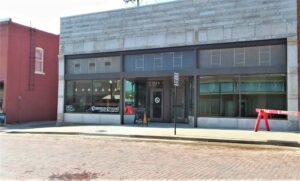
Kenny Felt Photography’s new studio is located next to the Common Ground Coffee shop location on East Wall.
Kenny Felt Photography’s new address is 10 E. Wall St.
He is moving from a small studio on Main Street, around the corner.
“When I moved into the old location, it was really only meant to last until I found a bigger space,” Felt said. “It worked well for newborns and seniors but I really needed more space.”
Having the larger space will allow Felt to accommodate large groups and families “as well as expand on what I can do creatively in the studio.”
Felt has memories of this particular building.
“I’ve loved this building on Wall Street since 2001 when I began working at the Fort Scott Tribune as a photographer,” he said. “
“I sort of grew up here as a college student. My first job out of high school was as a photojournalist for the paper even though I had barely any knowledge of how to work a camera. Through a lot of dumb luck, I fell into photography and have loved it ever since. Even after leaving the Tribune, I regularly photographed subjects throughout the various open areas in the building. it’s always had great light coming through the large windows. Now that it’s been given new life, I’m excited to see what happens! “
Kenny Felt’s new studio at 10 E. Wall. Submitted photo.
Felt is impressed with the renovation project of Jennifer LaRoche.
“When I heard about the plans for renovation I had high hopes for what it would turn into but never did I imagine it would’ve turned out as beautiful as it has,” he said. ” It’s unreal how beautiful everything is.”
Felt can be reached by phone a 620-719-0249. His website is www.kennyfelt.com OR he can be found on Facebook or Instagram @kennyfelt
Felt provides all sorts of photography services.
“I do all varieties of photography but specialize in seniors pictures, weddings and newborns,” he said.
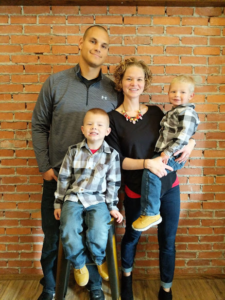
The Glades family: Matt, Alyssa and sons, Bishop and Maddox. Submitted photo.
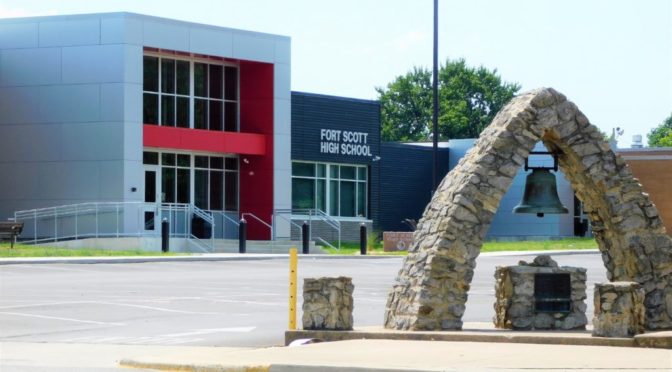
Matt Glades, 32, is the new Fort Scott High SchoolTechnology Teacher for 2020-21.
” I spent nine years at Fort Scott Community College,” Glades said. ” I worked as a coach, adjunct instructor, TRiO Counselor, Director of Admissions, and sponsor for the President’s Ambassador Program.”
Glades earned an Associate of Science Degree from Fort Scott Community College, a Bachelor’s Degree in Construction Engineering Technology from Missouri Western State University and a Masters Degree in Health, Human Performance, and Recreation from Pittsburg State University.
He is currently working towards a Master’s in Education at Fort Hayes State University.
His hometown is Galena, KS.
He is married to Alyssa, and they have two sons-Bishop and Maddox.
In his spare time he likes sports, coaching, movies, and spending time with friends and family, he said. He is a member of Community Christian Church and the USD 234 Mentor Program.
How did you become an educator?
“Education was not my first choice out of college. I honestly thought that I would never have the courage to be able to speak or teach in front of students. I worked for an engineering firm in Springfield, MO for almost a year. However, during that time I felt like I wasn’t in the right place. God was watching over me and changed my life forever. I would spend the next decade working with students at Fort Scott Community College. In the Fall of 2019, I was fortunate to coach for the FSHS football team and I felt that this is where I needed to be. I am very thankful and excited to be a part of USD 234.”
Is there someone who inspired you?
“I have been truly blessed to have had such amazing teachers and coaches in my life. I can only hope and pray that I can replicate their qualities and attributes to help students grow.”
What is the best part of teaching for you?
“To me, the best part of teaching is having the ability to have a positive impact on someone. Working at FSCC, I was able to see the difference one person can make in another person’s life. There’s nothing quite like having someone come back and thank you for helping them. “
What are the greatest challenges in teaching for you?
“I think the biggest challenge that I will face is trying to help students settle back into a school routine during my first year as a teacher.”
Uniontown Baptist Church is located on Hwy. 3 at the west edge of town. It is the site for emergency food distribution on April 29 for Uniontown, Redfield, and Bronson.
During this time of the pandemic when many have lost their jobs due to stay-at-home orders to slow the spread of the illness, the federal government has food coming to those in need.
Distribution points will be in Fort Scott for the Fort Scott area on May 1 and Uniontown , for western Bourbon County, April 29.
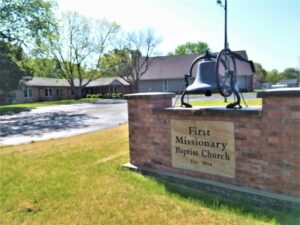
Frozen meats and fresh produce are part of the distribution, according to Rebecca Shinn, West Bourbon Food Program coordinator which is organized by the First Missionary Baptist Church.
” Anyone qualifies for Disaster Household Distribution (DHD) boxes however we highly encourage help to go to those families that might not otherwise qualify for TEFAP and who are affected by the COVID-19.”
The Emergency Food Assistance Program (TEFAP) is a federal program that helps supplement the diets of low-income Americans by providing them with emergency food assistance at no cost. USDA provides 100% American-grown USDA Foods and administrative funds to states to operate TEFAP, according to the TEFAP website.
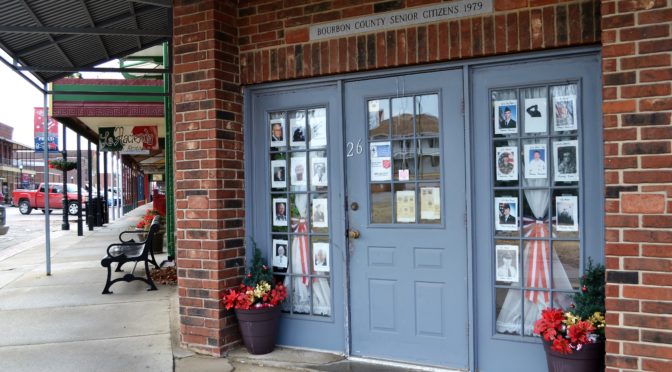
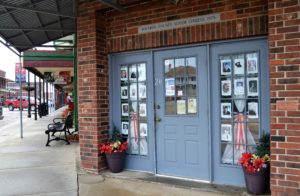
In Fort Scott, the disaster food distribution will be May 1 at the Bourbon County Senior Citizens Center, 26 N. Main.
Bourbon County Senior Citizens Center, 26 N. Main.
“It will be a drive-through,” Jackie Sellers, program coordinator said. “From 10 a.m. to 4 p.m. people drive by on the north side of the building, Old Fort Boulevard (for the boxes of food).”
Sellers can be reached at 620-223-0750 or 620-249-1440.
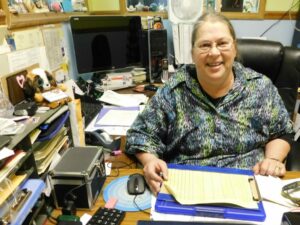
Jackie Sellers sits in her office at the Senior Citizens Center, 26 N. Main.
The Disaster Household Distribution will be on April 29, 2020, at the First Missionary Baptist Church from 4 p.m. – 6 p.m. This is for all people in the Uniontown, Redfield, Bronson area.
The church is located on Hwy. 3, on the west side of Uniontown.
“This program is to assist all that may not be working now due to COVID-19,” Shinn said. “Also for those who are high risk and can’t get to the store. At this time this program will be available April, May, and possibly June.”
Rebecca Shinn is the coordinator for the West Bourbon Food Program.
The program is offered curbside, she said.
” Honk and we will bring you a box of food. If you can’t come that evening and still want food please call me for another time for pick up,” Shinn said. She can be reached at (620) 223-9532.
Adelynn Nolan, left, and Katelyn Dancer perform their history presentation. Submitted photo.
Students are still working on school competitions, even in the pandemic.
For some local students, the work paid off with earning the right to go to nationals. However, the pandemic has stopped them from physically going to College Park, Maryland to the national competition.
“They were disappointed,” Fort Scott Junior High and High School Enrichment Teacher Angie Kemmerer said.
The Kansas History Day Competition was held online this year due to the COVID-19 outbreak.
Fort Scott Middle School had six students and Fort Scott High School had one student compete by submitting four projects in all.
Four students from this group took first and second in the junior group performance category.
“It’s unusual for one school to take first and second in the same category,” Angie Kemmerer said.
This year’s theme was “Breaking Barriers in History”.
“Students engaged in intense historical research using primary and secondary sources, visited the World War I Museum and the Edward Jones Historical Research Library, and conducted interviews to develop their projects,” Kemmerer said.
“Even though their time was cut short due to school closures from the epidemic, each of these students continued to work on their projects from home,” she said. “As the competition changed from an in-person to a virtual format, students adjusted to the new requirements for each of their chosen categories.”
FSMS seventh-graders Caroline Barnes and Madelyn Cook created a junior group exhibit titled “Fly Girls” featuring women that broke barriers by being the first Women Airforce Service Pilots (WASP). Jacqueline Cochran formed the WASPs, Ola Mildred Rexroat was the first and only Native American WASP, and Hazel Ying Lee was the first of two Asian women and died in service without military recognition. Deanie Parrish is one of the original WASP’s who is still alive. This groups of brave women inspired generations of women to follow in their footsteps like Nancy, Deanie’s daughter, who joined the military. The WASPs were part of the push for women to have equal rights as men, even if they didn’t realize it at the time, according to information provided by Kemmerer.
FSHS freshman Katelyn Leavell did a senior individual performance on unsung hero Anna Coleman Ladd titled: “Breaking the Barrier of Social Stigma: Anna Coleman Ladd and the First World War”.
“My project relates to this year’s theme because social stigma is one of the most prominent and hard to overcome barriers in society,” Leavell said. “My project focuses primarily on this barrier and the stigma of disabled WWI veterans. The barrier of social stigma based on physical disfigurements from combat was the hardest to break. Anna’s artistry and mask-making abilities covered the problem areas for a soldier so the world couldn’t see that part of them. With the newfound confidence, the men were able to find themselves and overcome that stigma. Though many were buried with their masks, they still had the confidence through their lives to go out into the world, unrestricted by physical barriers and social anxiety.”
Qualifying for the National History Day Competition in the junior group performance category are the two Fort Scott Middle School groups; eighth-graders Katelin Dancer/ Adelynn Nolan and Kaitlin Hardwick/ Regen Wells.
First place in the junior group performance category was Music to Everyone’s Ears: How Motown Broke Society’s Barriers by Katelyn Dancer and Adelynn Nolan.
The group knew they wanted to choose a topic that challenged the normal thought process and related to the theme in a creative way, according to information provided by Kemmerer. The group’s first ideas consisted of artists, scientists, and musicians- people who broke barriers on a smaller scale and within their career field. In the end, they decided on Motown because it included that artistic charm.
The most difficult aspect of the project was the script, and was rewritten four times before it was finalized.
Motown’s sound played an important role in demolishing the barrier of race that previously divided the country. Black and white audiences alike attended Motown concerts. Motown also had a significant influence on the music industry, bringing about modern forms of musical production, management, and style.
Second place in the junior group performance category: From Soldiers Heart to PTSD: Breaking the Barriers Around Mental Health by Kaitlin Hardwick and Regen Wells
Kaitlyn Hardwick, left, and Regen Wells perform their history day presentation. Submitted photos.
While doing research on disabled American veterans, the group found multiple articles pertaining to the topic of mental health within soldiers and veterans of WWI. After more research, they decided that they would choose the development and social acceptance of mental health, specifically Post Traumatic Stress Disorder, in soldiers and veterans of major wars.
The stigmatized barrier around the acceptance of PTSD in our society as a mental disorder was the topic chosen. People who had the disorder were shunned and undiagnosed and it was seen as a flaw.
The project was a performance about the journey to overcoming this stigma, highlighting several moments on the path to PTSD recognition. In the groups performance, they discussed the effect of PTSD on veterans of the Civil War, in WWI, WWII, the Vietnam War, and how it has evolved over time into what it is today.
PTSD has developed from an unknown mental illness that was not treated, to a treatable condition in not only veterans, but in survivors of trauma such as sexual assault, abuse, natural disasters and accidents.
It is estimated that 3.5 percent of U.S. adults have PTSD. Approximately, 1 in 11 people will be diagnosed with PTSD within their lifetime. So much has happened to bring PTSD into societal acceptance, and not just in America. All around the world the barrier has been diminished for getting help for mental illness.
About National History Day
The range of NHD topics encompasses all disciplines and all areas of the world, according to the information provided. These projects speak volumes on how this program promotes global awareness. But it also fosters self-awareness, and creative real-world problem solving that can lead students to understand how each one of us has the potential to positively impact our world.
“NHD allows students to experience the exhilaration that comes from being innovative thinkers and producers.” Kemmerer said.” As their teacher, I hope these experiences help them realize they have the potential to change the world for the better — and the skills to do it.
Kathi Hall teaches via a video to her Fort Scott Junior High students.. Submitted photos.
The pandemic has changed the way students are taught across the world and locally as well.
USD 234 in Fort Scott started its’ continuous learning plan on March 30.
Fort Scott Middle School Sixth-Grade Reading and Language Arts Teacher Kathi Hall said the teachers met for several days over Zoom during that week to select essential subjects to be taught.
There would be digital learners and paper packets offered to the students for at-home learning, it was decided.
“We contacted each parent and found out the best way for their continuous learning through our Tiger Dens,” she said. “We started sending lessons on April 6.”
Tiger Dens is a social and emotional learning class that all the students have in middle school, she said.
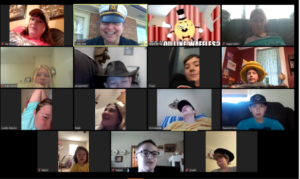
Hat Day for Kathi Hall’s Zoom Reading Class meeting on April 21. Submitted photos.
Students who needed paper packets were because of no internet service, no device nor wanting to borrow one from the school, or their parents wanting them to only have paper packets, she said.
” I think this was one of the most challenging aspects of continuous learning because we as teachers didn’t have the opportunity…. to contact that student through their school email,” Hall said. “We do contact them through their parent’s phone or email to check-in!”
Teachers at FSMS continue to collaborate weekly and plan.
“Our teachers meet several times in the week in Zoom to connect, discuss any concerns or celebrations, and just continue to collaborate,” she said.
Teachers are available for their students and parents through their email or cell phone.
“Most of our teachers are teaching from home through their digital platforms such as Google Classroom, Zoom, and other educational apps that our staff agreed would be the best for the students,” Hall said. “We have had one or two teachers who have spotty or glitchy internet services because of where they reside so they will use their classroom.”
“When I think about the good that comes from our Covid19 situation and continuous learning with students not being in classrooms, there isn’t a whole lot of specifics that I can list as good.” she said. ” However, in any situation, you can find the good. I will say that one of the things that comes to mind is the way our school and district has pulled together as a strong unit.”
“Our lunch and transportation staff made a plan, organized it, looked it over for improvements once it was implemented, and then made it a better plan for our community to receive lunches in a safe and functional way,” Hall said.
“Our teachers and staff have pulled together in a tight organized way to make a plan to reach out to students and connect in a way no one has had to do before.”
Hat Day during a Zoom meeting in Kathi Hall’s class at Fort Scott Middle School. Submitted photos.
“Our tech team has been working seamlessly in providing support, devices etc…for our district,” she said.
“For us at the middle school, our two principals have been on top of things supporting us and the parents/students in a way that feels amazing,” Hall said. “This is so different, new, and uncharted waters for everyone. Yet in a matter of days we begin to see the right decisions made and executed for everyone involved.”
“We definitely have challenges and I am speaking on behalf of our staff that this isn’t an ideal way to educate our students in a long term setting,” she said.
“One of the main challenges is student participation,” Hall said. “Students at the age that we teach, rely on accountability. Their young minds need interaction, sociability, and academic practice (sometimes guided practice).”
“As teachers, it is challenging not to see the faces of our students as well,” she said. “We love our jobs, we are in the profession to change children’s lives through academics, social, and emotional connections.”
“Another challenge we can’t overlook is there are fears and problems (concerning Covid19) in a student’s home with parents out of work, reduced hours, family sick or ill, etc,” Hall said. “The social and emotional well being of our students is a concern. For some students, the school was a safe haven to escape their home lives of whatever is going on that is out of the norm and their control.”
The district is providing learning opportunities for students, not focusing on grades.
“The students who are connected digitally are having feedback on their assignments,” she said. “The teachers are ‘grading the assignment’ and giving feedback through our Google Classroom or email. The paper packets will be looked at once they are turned in.”
USD 234 continues to distribute food in the district to its students during this time of the COVID 19 pandemic, and parents are encouraged to fill out applications for free and reduced meals for the next school year.
There will be a book distribution and the free and reduced food applications will be handed out in preparation for next school year on April 27 during the food distribution.
“We do have two items that will be in addition next week,” Gina Shelton, USD 234 Business Manager/Board Clerk, said.
“First, on Tuesday, weather permitting, we will be distributing to kids books donated by Hedgehog INK and the (Fort Scott) Kiwanis,” Shelton said. “We know the importance of kids continuing to read and this way they have a ‘new to them’ book to keep their interest. We will be encouraging parents to read with their kids. What a beautiful gift to our kids.”
“Second, also on Tuesday, we will be handing out free and reduced applications,” she said. ” The benefit to this school year is that sometimes there are programs where the agencies request a letter from the school of that status. The true benefit is next school year. The application includes a 30-day carry over to the next school year so if a parent’s financial status has changed, and we have seen those, they would start the next school year with that status. This might provide some help as it relates to paying for a child’s meal. Those that may not have qualified in the past may qualify now.”
FOOD SERVICE ROUTES REGISTRATION (UPDATED 04/23/20)
Help us Help You. We need our families to register to pick up meals. This provides us better information to help us prepare for the numbers being served. You will need to fill out a form for each day.
Where to Register?
www.usd234.org
Deadlines
For Monday, April 27th Meals – Deadline is noon, Friday, April 24th
For Tuesday, April 28th Meals – Deadline is noon, Monday, April 27th
For Wednesday, April 29th Meals – Deadline is noon, Tuesday, April 28th
Questions we will be asking:
1. Will you be picking up meals?
2. Where will you be picking up meals?
3. How many children aged 1-18 will you be picking up meals for?
4. Adult contact name?
5. Adult contact phone number?
This form should take you no longer than 1 minute to fill out. We need you to complete the form for each day you will be picking up meals.
Distribution Schedule
USD 234 will be doing three (3) distributions the week of April 27th. Children will receive the same amount of meals for the week but will pick them up over 3 days. We will need you to register for each day.
Monday – Child will receive 2 meals per child
Tuesday – Child will receive 4 meals per child
Wednesday – Child will receive 4 meals per child
Questions??
Call or email Kerrie at 620-223-0800 or kerrie.wilson@usd234.org
USD 234 FS Week of April 27th – Monday, Tuesday & Wednesday
FOOD SERVICE ROUTES (UPDATED 04/23/20)
BUSES WILL STOP AT THE FOLLOWING LOCATIONS.
BUSES WILL BE AT EACH-IN TOWN LOCATION FOR 10 MINUTES AND THEN MOVE TO THE NEXT LOCATION.
ROUTE D AND ROUTE E WILL DISTRIBUTE MEALS AT EACH STOP AND KEEP MOVING.
USD 234 will be doing three (3) distributions the week of April 27th
Children will receive the same amount of meals for the week but will pick them up over 3 days.
Monday – Child will receive 2 meals per child
Tuesday – Child will receive 4 meals per child
Wednesday – Child will receive 4 meals per child
ROUTE A
1. St. Mary’s– 10:00 am
2. 8th & Burke– 10:15 am
3. 4th & Couch– 10:30 am
4. 5th & Judson– 10:45 am
5. Wall & Judson– 11:00 am
ROUTE B
1. 8th & Wilson – 10:00 am
2. 5th & Wilson – 10:15 am
3. 2nd & Andrick – 10:30 am
4. 1st & Cameron – 10:45 am
5. Pine & Caldwell – 11:00 am
ROUTE C
1. Emmert & Beach– 10:00 am
2. 1900 Margrave (Church of Christ)– 10:15 am
3. 15th & Ransom– 10:30 am
4. 17th & Crawford– 10:45 am
5. 19th & Huntington (CCC)– 11:00 am
ROUTE D
1. Devon Fire Station – 10:05 am
2. Fulton Community Center – 10:30 am
3. Hammond Community Center – 10:45 am
ROUTE E
1. Indian & 187th Terr. (Airport)– 10:00 am
2. 69hwy & Deer (Faith Church)– 10:25 am
3. Jayhawk & 240th– 10:50 am
Register using Google Form: USD 234 COVID-19 Food Service.
Form can be found at www.usd234.org or call 620-223-0800. You must register for each day you want USD 234 to provide meals.
*There will be NO distributions on Thursday or Friday
*Please maintain social distancing recommendations of 6 feet between individuals.
SCHOOL DRIVE THRU PICK UP
10:00 am – 11:00 am
High school- 9th street*
Eugene Ware- 4th street*
*Please remain in your vehicle and maintain social distancing recommendations of 6 feet between individuals.
DROP OFF INCLUDES BREAKFAST AND LUNCH. CHILD MUST BE PRESENT TO RECEIVE MEALS. IF YOU HAVE DIETARY RESTICTIONS, PLEASE NOTIFY THE BUS ATTENDANT.
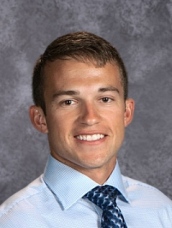
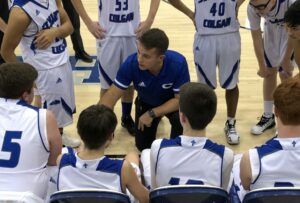
Clint Heffern, 26, was hired by Fort Scott High School to be the new head basketball coach, high school social studies, and physical education teacher.
Heffern has spent the last three years teaching and has been an assistant football, basketball, baseball coach at St. Mary’s Colgan in Pittsburg, KS.
He graduated from Iola High School in 2012, Allen Community College in 2014 where he played basketball and baseball, and then Pittsburg State University where he graduated in 2017.
Chuck and Linda Heffern are his parents. He has an older brother Chris, and a younger brother, Colton.
His interests are sports, being active, getting outdoors, and hunting.
How did you become an educator?
“My mother was my sixth-grade math teacher, so early on that kind of influenced me. Then, I had several great teachers and coaches along the way that were great role models for me and helped guide me into education.”
Is there someone who inspired you to teach?
“My mother and my coaches growing up. I knew that I wanted to stay involved with sports after high school and teaching/coaching seemed like a good platform to do what I love.”
What is the best part of teaching for you?
“The relationships with the kids. Being with the kids every day, you build some pretty solid relationships with them. It is really cool to experience the ups and downs of life with them and see how they grow into great young adults.”
Clint Heffern coaching St. Mary’s Colgan basketball. Submitted photo.
What are the greatest challenges?
“Being with the kids every day, oftentimes you do see the good along with the bad that they experience as high school kids. It is challenging to see them experience the bad times because some of those bad times can be very difficult for the kids to navigate as high school kids. But, ultimately, a lot of those bad times help shape them into quality young adults in the future.”
“The reason the number of cases went from 7 to 6 is because one of the positive cases was living in Bourbon County, but was actually a resident of Woodson County, KS. So, now Woodson County has 5, where they had 4 cases,” according to Rebecca Johnson, administrator of Southeast Kansas Multi-County Health Department.
Lauren Walker, a student in Mrs. Gauthier’s kindergarten class, works on an experiment at home. Submitted photos.
Uniontown’s school district began a continuous learning plan to allow students to learn from home during the nationwide closure of schools, due to the COVID 19 pandemic.
Last week, a parent’s story of how the learning plan was working was published on FortScott.Biz.
This feature is from a teacher’s view.
Rose Gauthier teaches kindergarten at West Bourbon Elementary School.
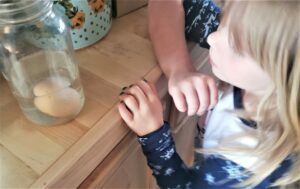
A.J. Vincent looks at her science experiment, following a lesson from WBE Kindergarten Teacher Rose Gauthier. Submitted photos.
Following is an interview by email from Gauthier.
When did the USD235 Continuous Learning Plan begin?
“We began Thursday, April 2nd with a practice run with the parents and students to work out kinks. We started our remote learning officially on Monday, April 6th. We will finish on Tuesday, May 19th.”
How much daily planning do you have for the classes?
“A lot. A teacher’s job has never been a 9:00 to 5:00 job, but even more so with this new way of teaching. It is hard to put a certain time frame on all the work the teachers, administration, and staff have put into it. From getting devices into student’s hands, the tech department working out tech issues for teachers and parents, and teachers creating different ways to teach their students with this new way of learning.”
Did you get together as a group of teachers and decide what the most important things to teach are?
“Yes. The school began with many “Zoom” meetings that included administration and teachers, with guidance from KSDE, to determine the best way to reach the kids.”
(Zoom provides users with a cloud (internet) platform for video and audio conferencing, collaboration, chat, and webinars across mobile devices, desktops, telephones, and room systems, according to the Zoom website).
“I create a meeting on Zoom and send the parents an invite.,” she said. “The students click on a link and have a password to log in.”
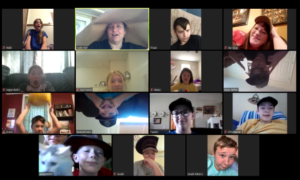
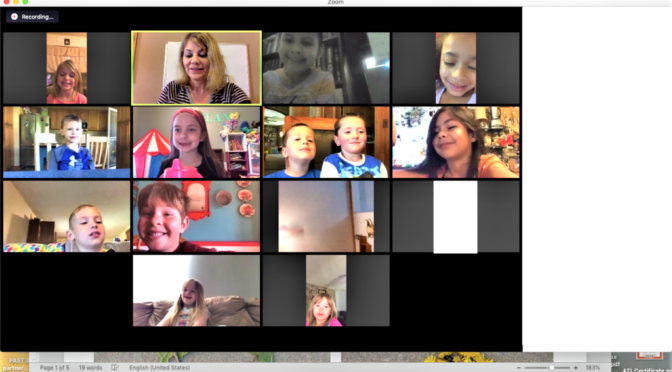
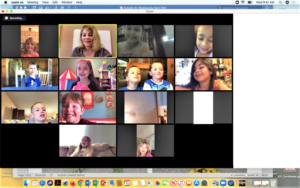
Rose Gauthier’s kindergarten class can view each other during lesson time. Submitted photo. Gauthier is shown on the top row, second from left.
“Our focus, as for many schools, is primarily the social and emotional spirit of the kids. This is a difficult and confusing time for them and many of the kids do not understand what is going on, especially at the primary levels. Letting them know that we are here for them, we miss and love them. Academically we are focusing on maintaining what the kids have already learned and limited new material to the essential outcomes that were agreed upon as a team”
Do you teach from home or do you go to school?
“Both, the less I need from my classroom the more I teach from home. I go in once or twice a week.”
Have you seen any good come out of this difficult situation of not having the students in a classroom?
“Out of every bad situation, something good always comes out of it. Nothing will replace the social and emotional aspects of being together in the learning environment. The hugs, the high fives, being right beside them to guide them in their learning.”
“This situation has given us the appreciation of each other, the parents an opportunity to be a bigger part of the learning experience, and for all of us to step back and remember what is really important in life. And mostly, we get reminded of what a great community we have. We couldn’t do this without the support of great parents.”
What are some of the challenges?
“The biggest challenge is not seeing the kids every day. Adjusting to remote learning and tech issues are some other challenges, which gets easier as we go along. Also, reaching those kids without internet access is a challenge.”
How do you grade the kindergartners in this new plan?
“In Kindergarten we don’t give a traditional letter grade. We use checklists to provide feedback to parents about where the students are academically. During this time, we will still focus on those checklist skills while understanding that we will need to be prepared to provide the needed remediation to students at the beginning of the 2020-21 school year.”
“The district has worked together to provide a similar learning experience for all students, but obviously this looks slightly different based on the grade, content, teaching style, etc.”
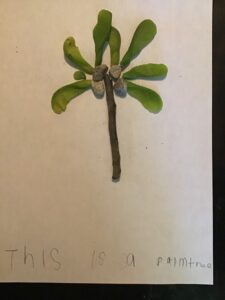
Outdoor art by Kinnis Shepard, from Rose Gauthier’s kindergarten class. Submitted photos.
Krista Harding District Extension Agent, Horticulture Southwind Extension District 111 S. Butler Erie, KS 66733 Office: 620-244-3826 Cell: 620-496-8786
Just like many of you, I’m having difficulty wrapping my mind around how quickly our lives have changed in a very short period of time. Seeing the panic and chaos that’s happening around us can be concerning. Now more than ever, it might be the time for folks to think about becoming more self-sufficient and grow some of their own food.
I have been in contact with a couple of our local suppliers and have seen social media posts that they are stocked with garden seed and supplies. Like many other local retailers, I know they are willing to work with you if you do not feel comfortable going inside the business. Just give them a call and arrange for outside pick-up.
If you are reading this and thinking to yourself that you have never grown anything in your life and just don’t think it’s possible, let me assure you that it is possible. Even for the most novice! You might be thinking that you don’t have space for a garden, or maybe you don’t have a tiller or other equipment. Don’t let that stop you because almost all vegetables can be grown in containers.
The containers don’t have to be anything fancy. Literally, anything that can hold soil and have drain holes drilled in the bottom can be used. Containers that are 16 to 24 inches in diameter work well. Containers less that 12 inches are probably too small – except for lettuces. The most important component of growing vegetables in a container is getting the right potting media. Potting mixes are ideal (instead of soil from your yard). The components are lightweight and hold water and oxygen much better. Make certain that you don’t forget to drill some drainage holes into the bottom of the container.
Fertilizer should be added at planting time and mixed into the soil. If you want to go the organic route, mix blood meal or bone meal into the soil before planting. If you use a synthetic fertilizer, add a slow-release type when preparing the container.
Another benefit to growing vegetables in containers – you don’t have to fight the weather quite as much. Right now, traditional garden soils are way too wet to even think about planting. But with the container system, you can keep them dry inside a garage until you are ready to plant.
Early spring is the ideal time to plant cool season vegetables such as lettuce, spinach, radish, onions, carrots and potatoes. All can be easily grown in containers, even potatoes!
Gardening is a great stress reliever. It also allows for good social distancing. If you have kids at home, gardening is the perfect activity to get them outside to enjoy some fresh air and sunshine, all while learning at the same time!
Here’s where I come in. I have lots of resource material to help you. In addition, I’m always available by phone, e-mail or social media to answer your questions. Don’t be afraid to ask! In Extension, we say there are no “dumb” questions! I am here to help you in any way that I can. The Extension mission continues. We are committed to being innovative to connect you with research-based resources and education. We appreciate your patience as we all navigate the challenges associated with this time.
Krista Harding is a K-State Research and Extension Agricultural agent assigned to Southwind District. She may be reached at kharding@ksu.edu or 620-244-3826.
K-State Research and Extension is an equal opportunity provider and employer.
Amelia Earhart Bridge is lit in orange during a past National Work Zone Awareness Week safety campaign. Submitted photo.
Highway construction projects are continuing across the state with modified work practices. And as always, work zone safety is a top priority for the Kansas Department of Transportation, Kansas Turnpike Authority and partner organizations. Unfortunately, there are oftentimes close calls in work zones.
KDOT Equipment Operator Specialist Kent Portenier, from the Phillipsburg office, realized a vehicle traveling through a work zone did not see him.
“I took off towards the ditch just as the driver hit the corner of the stopped pickup,” Portenier said. “The driver also swerved into the ditch and fortunately missed hitting me as I was running to safety.”
KTA Structures Worker Caleb Provo, from the Wichita office, was in a dump truck during a striping operation when he saw a semi traveling in the wrong lane.
“There was no way the driver could stop in time, and he tried to – unsuccessfully – squeeze between me and the barrier wall to avoid a collision,” Provo said. “Ultimately, the semi driver ended up crashing into the back end of my attenuator.”
Portenier, Provo and others are sharing their stories this week as part of a blog series to help illustrate the importance of work zone safety. Read all the blogs here –www.kansastransportation.blogspot.com.
“Close calls are all too common for highway workers, law enforcement and emergency responders who are serving the public,” said KDOT State Transportation Engineer Burt Morey. “It’s imperative that all drivers make paying attention and focusing on the road their main priorities every time they get in a vehicle.”
National Work Zone Awareness Week, which is April 20-24, raises awareness of the dangers highway workers and motorists face in work zones. Last year in Kansas, 1,420 work zone crashes occurred in which 437 people were injured and seven people were killed. A few locations around the state will be lit in orange to highway work zone safety, such as the Amelia Earhart Memorial bridge in Atchison.
For more information about work zone safety in Kansas, go to KDOT’s website, www.ksdot.org, and click on the work zone safety slide.
“The reason the number of cases went from 7 to 6 is because one of the positive cases was living in Bourbon County, but was actually a resident of Woodson County, KS. So, now Woodson County has 5, where they had 4 cases,” according to Rebecca Johnson, administrator of Southeast Kansas Multi-County Health Department.