Ethan Hill, a Christian Learning Center high school student, will present a solo piano recital on Saturday, May 17 at 1 p.m. in the sanctuary of the First United Methodist Church, 301 S. National Avenue. The recital will feature works by Bach, Mozart, Mendelssohn, Schubert, and other composers.
Hill’s piano teacher, Pat Harry, says he is not only a gifted piano student but a gifted academic student as well, and recommended him to be featured on fortscott.biz.
“It is an unusually advanced achievement to present an entire recital of masterworks from memory as a high school student,” she said.
The performance is the culmination of “a lot of years of playing them a lot,” Hill said. He will be using no sheet music during the 40 minutes of his recital performance.
Academically, Hill said he has “always been good at math and sciences, and problem solving.”
Hill has numerous math competition medals (most notably at the Pittsburg State University Math Relays), numerous medals from piano competitions, and two wins at the Sun Powered Student Challenge. He attended Boys State of Kansas, is a member of the National Society of High School Scholars, and was voted jr./sr.
high school president.
His extracurriculars included basketball, soccer, swimming, and track through the years.
In his sophomore year, he began looking at different fields of engineering as a career.
This led to his decision to major in biomedical engineering.
Following his graduation on May 15, Hill will head for the Missouri University of Science and Technology in Rolla, Mo., to major in biomedical engineering and minor in music.
Ethan is the son of Kaleigh and Garrett Hill.
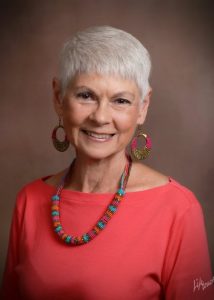
Pat Harry from the Kansas Music Educational Association Hall of Fame website.
Pat Harry Piano Studio’s owner taught vocal music in Fort Scott for 29 years and in public schools for 39 years.
Currently, she is privately teaching piano to 16 students, with the youngest in first grade and the oldest graduating this year.
The Bourbon County Commission addressed restructuring county administration, animal control, and public forums on zoning in their meeting this week.
The north wing, east side of the Bourbon County Courthouse.
Old Business
Policy and Procedures
Letter Head
Commissioner Mika Milburn brought examples of letterheads made with a smaller font than the current letterhead for use on all official county documents to make them uniform. She proposed two letterheads for Bourbon County, one for books, cover pages, and official documents, and the other for documents that will have the larger letterhead style, where feasible. She instructed that the county keep its current letterhead with the font changed to match the new, smaller letterhead the board chose.
Milburn moved to approve the letterhead per KSA 19-2126. The commission approved.
Dump Fees for Employees
“So that’s complicated,” said Milburn.
Commissioner David Beerbower said he had received emails about the policy of allowing county employees to dump for free as it pertains to the IRS definition of fringe benefits. “I’m not even sure why this has become such an urgent topic,” he said. This benefit has been in place longer than any of the commissioners have been alive, since before the current county landfill started. “It’s always been kind of an unwritten rule, but in today’s society we can’t do that,” he said. He talked about the need to get numbers from payroll as well as other information.
“I think we need to table it and figure it out…There’s more benefits than just the dump fees that we got to figure out. There’s just a lot to consider,” said Commissioner Brandon Whisenhunt.
They tabled it until June 9.
Separation of Public Works and Landfill Departments
Beerbower said the original idea came from Whisenhunt and has been a part of the commissioner’s discussion for a number of months.
“The landfill has its own budget,” said Whisenhunt, of about $800,000 for 2025. “There’s not any reason why it can’t stand on its own, be its own budget item, have its own supervision. And then that person reports directly to the commission,” he said.
“What’s driving us to make this choice?” asked Milburn. She said she would like a risk assessment, benefit analysis, and cost analysis before making the decision to separate the landfill from the Public Works Department. Beerbower said they end up “spinning our tires” when trying to get a cost analysis, due to the cost of getting a cost analysis.
“2025 is the perfect way to go because in 2026 we go to five commissioners, so if this experiment does not work with the 2025 budget as it stands, we can reverse this,” said Beerbower.
“I’m not willing to experiment with taxpayer money,” said Milburn. Pointing out that “everything costs.”
Someone in the audience asked what the benefit of the restructuring would be. Beerbower said that restructuring is needed because the county needs change, as continuing to do things the way they always have will not lead to improvement. “The advantage of it is that they’re smaller, more workable departments,” Beerbower said. It will be more economical in the long run to streamline things. However, he did not have numbers to share to support his position.
“The people that I was trying to work with to develop an overall plan…nobody wants to work out a possibility of change…it’s all about protecting what they’ve got,” said Beerbower.
Another person asked what the benefit to the public would be of making this change.
Whisenhunt explained that the landfill, as a government entity, is not allowed to make a profit, but if they can lower operating costs, they can pass those savings on to customers in the form of lower rates or fewer tax dollars being spent to operate the landfill.
One audience member said that Bourbon County charges more than surrounding counties for waste disposal.
Haulers in attendance expressed concern about landfills in the area increasing their rates and suggested up-charging for non-local dumping, since local businesses are already supporting the county through their taxes. They also expressed concern about giving free dumping to county employees and charging everyone else extra to make up the difference.
“We’re not changing anything from the operational standpoint other than the supervision of it,” said Beerbower. “That’s not a good enough reason to separate it,” said Milburn.
“It’s about the money. I think we need to do a cost analysis on everything,” said Milburn, addressing the issue of restructuring county departments.
Jennifer Hawkins, Deputy Clerk, talked about the budget reports, showing all the money that’s come in and gone out of the various funds, including the landfill. The report shows that in 2025, the landfill has incurred $229,724 in expenses while bringing in $178,175 in revenue. Whisenhunt pointed out that the negative balance is in part due to the large building payment made at the first of the year. “It should start coming back,” he said.
Whisenhunt said his experience in the trash business has shown him how much money it could make if it was prioritized. “I work for the biggest trash company in the world…and I just see how trash can make money.” It has to go from being a second thought to make that profit.
Whisenhunt made a motion that the county separate them but didn’t get seconded.
The commission voted to table the issue to June 16 to allow time to find and crunch the numbers to support their disparate claims.
Beerbower invited the vocal audience members to come back June 16 when the item will be brought up again.
New Business
Animal Control
The commissioners spoke over the phone with Ealyn Taylor about animal control issues in the county. She said she was coming to them on behalf of animals being dumped in the county. For the last three years, she’s been picking up, vetting, and re-homing animals dumped in the county. The change to the city’s animal control laws has led to an excessive amount of dumping, especially in the last two years. She’s at capacity and needs help or land to be able to keep doing the work she’s been doing. She asked the county if there is any land available to start housing animals that are being dumped.
“I do anything that I possibly can for the community as far as the animals go, but I’m at the point where I need some help on getting them some sort of temporary housing,” she said. The shelter here is a kill shelter, and she’s trying to keep the animals from dying.
“I have a plan for a self-sustaining sanctuary. I’ve been looking for acreage,” said Taylor.
Beerbower said The first step in this process is looking at the list of land that Bourbon County owns and then start chipping away at the process, including the legal ramifications. Taylor said she would apply for non-profit status if the county could offer her land for this purpose.
“I know we all care,” said Beerbower. Hopefully, others will get involved and offer assistance.
“I need a little boost up in the right direction from the community,” said Taylor, thanking the commissioners for their help.
Zoning Advisory Board
The citizen zoning advisory board is planning three public forums scheduled for May 14 at 6 p.m. in Uniontown, May 20, 6 p.m. in Fulton, May 21, 6 p.m. at Memorial Hall in Fort Scott.
Beerbower moved to extend the board’s deadline for presenting recommendations to the county commission to Monday, June 9, to allow them time to meet again after the public forums.
He also explained the board’s decision not to post their meetings to YouTube. The meetings are open to the public, which is all that is required by state statutes.
Freeman Timeline Extension
Freeman has asked to extend their deadline for opening the Emergency Room from June to September 1, 2025. Part of the reason is getting it up to the new ADA codes, particularly the fire monitoring equipment. The company that does that is backlogged.
Whisenhunt moved that the chairman sign the extension, and the commission approved.
County Cameras
The commission spoke with Public Works Director Eric Bailey and Brian Murphy, Advisory Deputy to the Sheriff’s Department about the cameras used throughout county facilities.
The purpose of the cameras is for supervisors to be able to monitor their departments when not on site, said Milburn.
Murphy advised that the county be sure supervisors can access the footage of their own department only for monitoring when they are off-site.
Beerbower expressed concern that the proper chain of evidence of footage be maintained in case of criminal activity being caught on camera.
Beerbower moved that all camera systems be placed under the operational control of the sheriff’s department and transfer all equipment and programs to be housed independently at the sheriff’s office. The motion died for lack of second.
Milburn moved to bring the discussion to a county work-session for further discussion on June 23.
Commissioner Comments
Milburn asked that commissioners not introduce motions in the commissioners’ comments section of the meeting, but add them to the agenda in the business section. She also apologized for the lengthy meeting at the beginning of her time in office and said she will make an effort not to overload the agenda in the future.
Whisenhunt agreed with Milburn. He said it’s important for the commissioners to be transparent with one another through the meeting agenda process, since they aren’t permitted to talk to one another outside of the meetings themselves.
Beerbower spoke of the election to add three new commissioners, saying that currently one candidate for District 4 and no candidates for District 5 have filed. The deadline to file is noon on June 2. He expressed concern that there be candidates for those seats. He was advised that many people wait to file for election until the last minute.
Whisenhunt said in his radio address he will mention the need for nurses and support staff at Freeman Hospital.
USDA to Open General and Continuous Conservation Reserve Program Enrollment for 2025
WASHINGTON, May 12, 2025 – The U.S. Department of Agriculture (USDA) today announced several Conservation Reserve Program (CRP) enrollment opportunities for agricultural producers and landowners. USDA’s Farm Service Agency (FSA) is accepting offers for both the General and Continuous CRP beginning today through June 6, 2025.
CRP, USDA’s flagship conservation program, celebrates its 40th anniversary this year. For four decades, CRP has provided financial and technical support to agricultural producers and landowners who place unproductive or marginal cropland under contract for 10-15 years and who agree to voluntarily convert the land to beneficial vegetative cover to improve water quality, prevent soil erosion and support wildlife habitat. The American Relief Act, 2025, extended provisions for CRP through Sept. 30, 2025.
“With 1.8 million acres available for all CRP enrollment this fiscal year, we are very aware that we are bumping up against the statutory 27-million-acre statutory cap,” said FSA Administrator Bill Beam. “Now more than ever, it’s important that the acres offered by landowners and those approved by USDA address our most critical natural resource concerns. With the limited number of acres that we have available, we’re not necessarily looking for the most acres offered but instead prioritizing mindful conservation efforts to ensure we maximize the return on our investment from both a conservation and economic perspective.”
General CRP (Signup 64)
Agricultural producers and landowners submit offers for General CRP through a competitive bid process. Offers are ranked and scored, by FSA, using nationally established environmental benefits criteria. USDA will announce accepted offers once ranking and scoring for all offers is completed. In addition to annual rental payments, approved General CRP participants may also be eligible for cost-share assistance to establish long-term, resource-conserving vegetative cover.
Continuous CRP (Signup 63)
Unlike General CRP, Continuous CRP offers are not subject to a competitive bid process. To ensure enrolled acres do not exceed the current statutory cap of 27 million acres, FSA is accepting Continuous CRP offers on a first-come, first-served basis through June 6. However, should allotted CRP acreage remain available following the June 6 deadline, FSA will accept continuous CRP offers from interested landowners through July 31, 2025, and may be subsequently considered for acceptance, in batches, if it’s determined that the offered acres support USDA’s conservation priorities.
Continuous CRP participants voluntarily offer environmentally sensitive lands, typically smaller parcels than offered through General CRP including wetlands, riparian buffers, and varying wildlife habitats. In return, they receive annual rental payments and cost-share assistance to establish long-term, resource-conserving vegetative cover.
Continuous CRP enrollment options include:
State Acres for Wildlife Enhancement Initiative: Restores vital habitat in order to meet high-priority state wildlife conservation goals.
Highly Erodible Land Initiative: Producers and landowners can enroll in CRP to establish long-term cover on highly erodible cropland that has a weighted erodibility index greater than or equal to 20.
Clean Lakes, Estuaries and Rivers (CLEAR) Initiative: Prioritizes water quality practices on the land that, if enrolled, will help reduce sediment loadings, nutrient loadings, and harmful algal blooms. The vegetative covers also contribute to increased wildlife populations.
CLEAR30 (a component of the CLEAR Initiative): Offers additional incentives for water quality practice adoption and can be accessed in 30-year contracts.
Conservation Reserve Enhancement Program: Addresses high priority conservation objectives of states and Tribal governments on agricultural lands in specific geographic areas.
Grassland and Expiring CRP Acres
FSA will announce dates for Grassland CRP signup in the near future.
Additionally, landowners with acres enrolled in CRP set to expire Sept. 30, 2025, can offer acres for re-enrollment beginning today. A producer can offer to enroll new acres into CRP and also offer to re-enroll any acres expiring Sept. 30, 2025.
For more information on CRP participant and land eligibility, approved conservation practices and detailed program fact sheets, visit FSA’s CRP webpage.
More Information
Interested producers should apply through the FSA at their local USDA Service Center.
Signed into law in 1985, CRP is one of the largest voluntary private-lands conservation programs in the United States. Originally intended to primarily control soil erosion and potentially stabilize commodity prices by taking marginal lands out of production, the program has evolved over the years, providing many conservation and economic benefits.
FSA helps America’s farmers, ranchers and forest landowners invest in, improve, protect and expand their agricultural operations through the delivery of agricultural programs for all Americans. FSA implements agricultural policy, administers credit and loan programs, and manages conservation, commodity, disaster recovery and marketing programs through a national network of state and county offices and locally elected county committees. For more information, visit fsa.usda.gov.
###
USDA is an equal opportunity provider, employer and lender.
Governor Kelly Updates Declaration of Drought Emergency, Warnings, and Watches for Kansas Counties
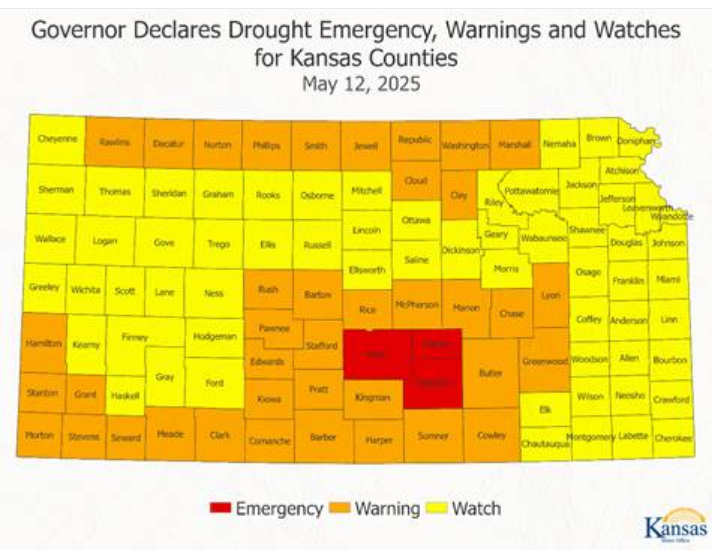
TOPEKA — Governor Laura Kelly has signed a proclamation approving updated drought declarations for Kansas counties.
“Drought conditions have persisted across Kansas through the winter and spring, and we must respond accordingly,” Governor Laura Kelly said. “As we head into the summer months, where we typically see drier conditions, I urge Kansans to consider their water usage and take extra care to prevent wildfires.”
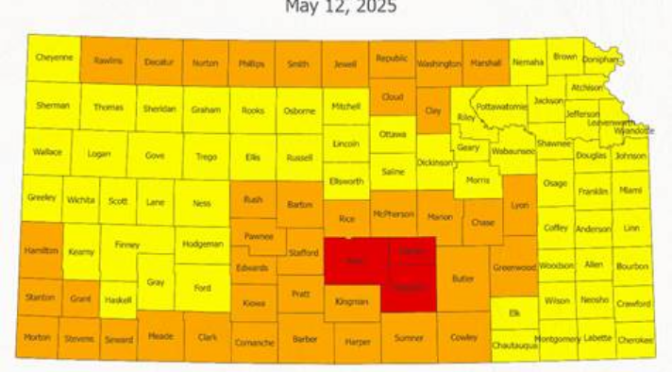
The drought declaration placed three counties into emergency status, 39 counties into warning status, and 63 counties into watch status. This action was recommended by Connie Owen, Director of the Kansas Water Office and Chair of the Governor’s Drought Response Team. Precipitation totals have varied widely across Kansas in recent weeks, with some eastern and southeastern counties receiving heavy rainfall that temporarily improved surface moisture, while central and western regions continue to experience worsening drought conditions. Despite these isolated rains, much of the state remains below average for cumulative precipitation, with ongoing deficits in soil moisture and declining streamflows.
“While we’ve seen precipitation in various regions of the state this spring, the long-term effects of drought have prevented improvements in the overall conditions,” said Connie Owen, Director of the Kansas Water Office and Chair of the Governor’s Drought Response Team. “The Governor’s Drought Response Team will continue to monitor the drought conditions across Kansas and make recommendations to Governor Kelly as conditions change.”
Through an interagency agreement between the Kansas Water Office, the Kansas Department of Wildlife and Parks, and the Kansas Division of Emergency Management, counties in the emergency stage are eligible for emergency water use from certain state fishing lakes and some federal reservoirs.
Individuals and communities must contact the Kansas Water Office for a water supply request before withdrawing water from lakes. These requests will, in turn, be referred to the appropriate office to obtain the necessary permits to withdraw the requested water.
This proclamation shall remain in effect for those counties identified until rescinded by a proclamation ending the declaration or revising the drought stage status of the affected counties.
Effective immediately, the proclamation:
Declares a Drought Emergency, Warning, or Watch for the counties as identified below;
Authorizes and directs all agencies under the jurisdiction of the governor to implement the appropriate watch, warning, or emergency-level drought response actions assigned in the Operations Plan of the Governor’s Drought Response Team.
The Governor’s Drought Response Team will continue to watch the situation closely and work to minimize the negative drought-induced effects on Kansans. Kansans are encouraged to report drought-related conditions and impacts in their region through the Condition Monitoring Observer Reports (CMOR) system.
For more detailed information about current conditions, visit the Climate and Drought webpage on the Kansas Water Office website at kwo.ks.gov.
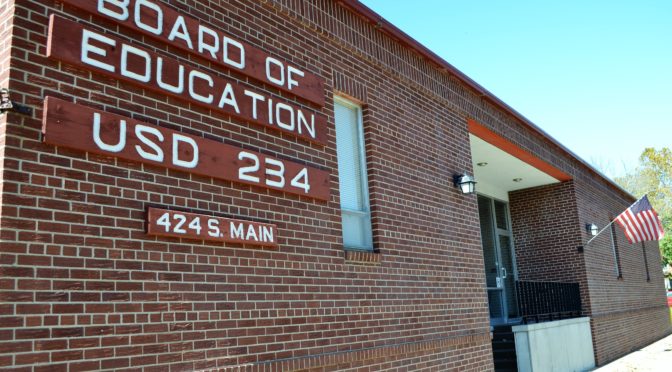
Members of the USD 234 Board of Education met at 5:30 p.m. on Monday, May 12, 2025, for their regular monthly meeting at 424 S Main.
President David Stewart opened the meeting.
The board approved the official agenda, and the consent agenda as follows:
Board Minutes
04-14-25
04-22-25
Financials – Cash Flow Report
Check Register
Payroll – April 18, 2025 – $1,686,779.39
Activity Funds Accounts
USD 234 Gifts
Middle School Student Council Fundraising
Washington Workshop Extended Trip
Alex VanBecelaere was recognized by Special Education Director Tonya Barnes via ZOOM. Alex works with the Occupational Therapy in the district. She has been a huge asset to the team and the students really enjoy collaborating with her.
Superintendent Destry Brown provided the Board with an update on enrollment for the end of the year.
Assistant Superintendent Terry Mayfield provided the Board with a shared update. He updated on each of the departments and plans for the summer months.
Special Education Director Tonya Barnes reported that our district reached the high status for district IDEA Level of Determination.
The Board Approved the following items:
Contract for Occupational Therapy Services with Outreach Therapy, LLC
KASB Membership Renewal
Set Capacity for Nonresident Student Enrollment
Greenbush Contract for Low-Incidence & Audiology
CHC School Based Health Care Service Contract
Satchel Pulse Social Emotional Learning Curriculum
Curriculum Resources & Materials for ELA & Foreign Language
There were none present for public forum.
The Board went into an executive session for personnel matters.
President David Stewart adjourned the meeting.
PERSONNEL REPORT – APPROVED
May 12, 2025
RESIGNATIONS/TERMINATIONS/RETIREMENTS:
Bailey, Ronda – Retirement – Accompanist – Music – High School/Middle School
Baublitz, Christina – Resignation – Paraprofessional – Winfield Scott
Dunivan, Sarah – Resignation – Music Teacher – Winfield Scott
Eichenberger, Justin – Resignation – Part Time Paraprofessional – High School
Hastings, Nicolette – Retirement – SPED Teacher – High School
Nelson, Andrew – Resignation – 6th Grade Science Teacher – Middle School
Certified Recommendations
Brown, DJ – Middle School Principal
Christy, Angela – 3rd Grade Teacher – Eugene Ware
Johnson, Kyenne – Occupational Therapist
Nelson, Andrew – Instructional Coach – Winfield Scott/Eugene Ware
Classified Recommendations for 2025-26 School year
Classified Staff
Supplemental Recommendations for the 2025-26 school year:
Hendricks, Caleb – Secondary Summer School Administrator
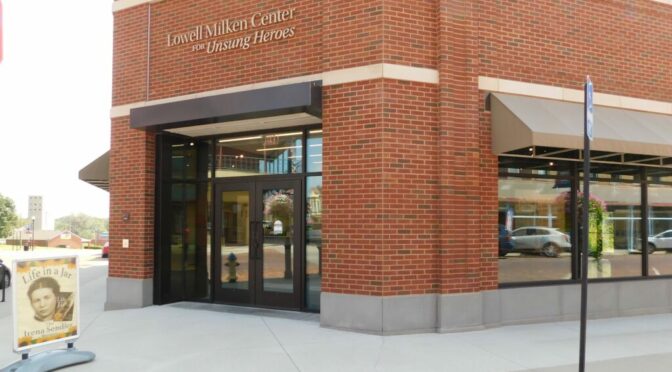
ARTEFFECT is pleased to announce the 2025 Competition Finalists! Congratulations to all students selected as 2025 Finalists and their teachers! The range of topics across these exceptional projects is notable.
The 115 projects encompass 64 Unsung Heroes stories, including all 7 Spotlight Unsung Heroes. These projects are presented by 16 middle school and 99 high school students from 24 states across the U.S. as well as 5 other countries around the world: Australia, Canada, Lithuania, South Korea, and United Arab Emirates. Take some time to explore the artworks and impact statement excerpts.
The 2025 Awardees will be announced on June 2. Stay tuned!
Stay connected with the expanding
ARTEFFECT network
ARTEFFECT is expanding its social media presence. Be sure to keep connected as part of our growing community of learners. Follow us on these platforms for announcements, news, and resources about the competition, Ambassadors fellowship, and more.
The veil was ripped last Wednesday when FortScott.biz streamed the meeting. Looking through the hole that had been torn in the opaqueness, those of us who couldn’t physically attend the meetings got our first look at the workings of that committee and the things being discussed that had formerly been obscured from the public view. So maybe that is a bit dramatic, but the point remains, the public was now able to see what was happening with the same level of transparency as city and previous county advisory committees.
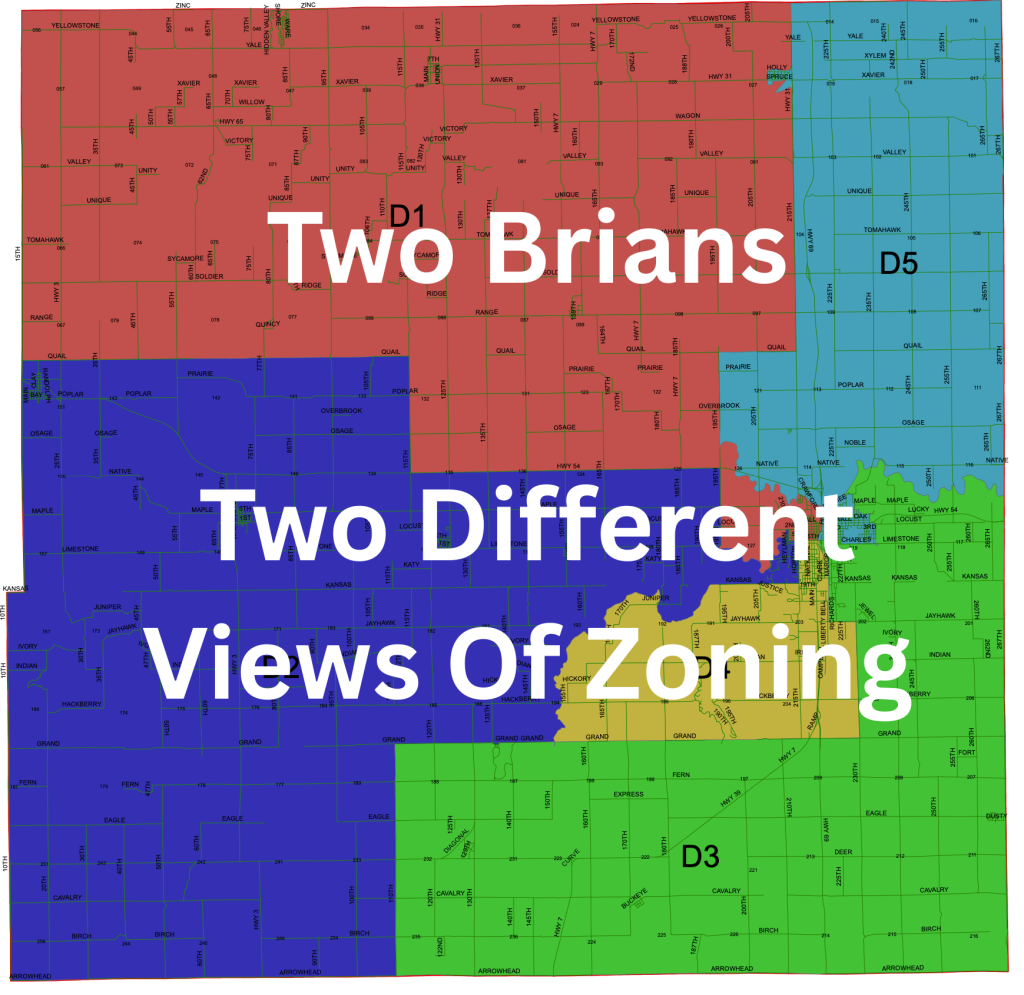
For me, the statements made by two people named Brian on the Zoning Advisory Committee (Brian Ashworth and Brian Wade) provide the best illustration of the fundamental disagreement between members of the committee (and possibly the public and commissioners) when it comes to zoning. Understanding these two views of people who support zoning is key in any thoughtful discussion of the benefits and drawbacks of implementing zoning, as Beerbower says, the commission has already established they will do.
Brian Ashworth stated that the goal of zoning is not to prevent anyone from doing what they want to with their land. He said the purpose of zoning is to make sure a landowner wanting to put in something commercial or industrial would need to follow some guidelines to be a good neighbor, but it wouldn’t stop them from using their land as they see fit.
This sounds completely reasonable and could mean things like, if a landowner is going to put in a field of solar panels, they might be asked to put a row of trees between the panels and their neighbor’s house. Or maybe it would mean asking the solar company to locate battery arrays 500 feet or more from neighboring property and make sure the fire department is comfortable with understanding what to do in the rare, but still possible, event of a fire from the electrical systems or the situation most of us have experience where a neighbor’s field being burned that gets out of control if it happens to threaten the solar field. Those types of suggestions probably fall into the common-sense type of things that would happen on their own among neighbors who are actually looking for reasonable accommodation. Maybe zoning helps make those conversations more likely. Sounds reasonable, right?
However, Brian Wade offered a different view of the purpose of the zoning committee. He talked with admiration about how Lynn County’s zoning was able to prevent landowners from renting their land out to solar companies. He didn’t talk about how the zoning laws allowed the county to guide installations with some best practices for fire preparedness. He didn’t talk about how zoning allowed some reasonable setbacks that gave neighbors some nice trees to look at. No, he talked about how great it was that zoning had been used as a tool to prevent the landowners from leasing their land.
Mr. Wade’s goals as presented in the meeting were completely different from Mr. Ashworth’s stated goals.
If you want zoning to be a tool to prohibit landowners from using their land in legal ways that you don’t want, then Mr. Wade’s goals probably match yours. If you want zoning to be a process that helps guarantee good communication and reasonable accommodations between neighbors, then Mr. Ashworth’s goals probably align with what you want.
However, the bigger question is this: If zoning is implemented, what will we actually get?
(Note: Commission Mika Milburn says she will have the meeting streamed on May 13th, so hopefully the process will be more transparent going forward & kudos to her for trying to bring the transparency of these meetings back to the same level of previous commissioners.)
The President and his administration are moving at an epic pace. This rapid implementation has reversed damaging actions by the previous administration and put our nation on a path to protect our borders, to cut wasteful spending (fraud and abuse), and to cut taxes.
President Trump and congress made considerable tax cuts in 2017 that will end this year. The cuts can be extended if legislation is passed, you may have heard the President talk about a “big, beautiful bill”. If the tax cuts are not extended it will be a major tax increase on over 80% of U.S. taxpayers. It will also be a major state income tax increase on Kansans. The federal Adjusted Gross Income (AGI) is the baseline for filing your state income taxes so if it increases your state income taxes increase. It’s a heavy lift for Congress to pass legislation so the 2017 tax cuts do not sunset, especially since they are attempting to pass more cuts like exempting Social Security, tips, and overtime from federal income taxes. “It is a paradoxical truth that tax rates are too high today and tax revenues are too low, and the soundest way to raise the revenues in the long run is to cut the tax rates.”–John F. Kennedy
Kansas Supreme Court justices are currently selected by a nominating commission (made up mainly of lawyers) that submit three names to the Governor, and the Governor picks one of the three to be a justice. The reason this process was put into effect for selecting state supreme court justices is that the powers that be felt that Kansas voters were not smart enough to select their supreme court justices and that it had to be handled by professional lawyers. This process has failed Kansans. You may have heard, the U.S. supreme court has allegedly overturned more Kansas Supreme Court rulings than any other state per capita.
This could change because on the August 4, 2026, ballot Kansas voters will have an option to keep the current process or change it to electing state supreme court justices. Why would Kansas consider changing the selection process of justices? To increase transparency and public trust. It has been argued that judicial activism is a “threat to democratic principles and the rule of law… by allowing unelected judges to make decisions that should be left to the people or their elected representatives.” U.S. Justice Scalia warned that judges who interpret the Constitution as a “living document” have crossed a line to effectively become policymakers. He also compared this “approach to the situation in the 1930’s Germany, where judges began interpreting laws to reflect the ‘spirit of the age,’ leading to disastrous consequences.”
For example, in the case Kansas versus Garcia, illegal immigrants who committed identity theft, the Kansas Supreme Court majority ruled that it was a federal issue, and the state didn’t have authority to prosecute even though identity theft is against Kansas law and the illegals used stolen identities on state and federal forms. Thankfully, this ruling was overturned by the U.S. Supreme Court. Justice Scalia wrote in response to the Kansas Supreme Court ruling that, “This interpretation is flatly contrary to standard English usage.”
Currently, there is a retention vote for justices on a six-year schedule. You vote yes or no on each justice – to retain or not. Some say that is an election of sorts. However, common sense tells us two or more candidates running for the position educating voters is more transparent and provides an opportunity to get to know the candidates. With the current retention vote, it is very difficult to be an informed voter. A super majority of legislators supported putting this change on the August 4, 2026, ballot and voters will get to have their voices heard.
Interim Committees are approved by the Legislative Coordinating Council (LCC), which is made up of eight legislators that are in House and Senate leadership. They approved several interim committees that will meet to take a deeper look at topics before the next session. A special interim committee on tax will meet and cover several topics. The House Tax Chairman and I requested a deeper dive on property valuations. The more I research that system and attempt to navigate it, the more convinced I am the system is broken. This is not just a Kansas issue; many states have the same problems. It will take innovative thinking to bring more accuracy and transparency to property taxes.
There will also be interim committees on KPERS, housing, crypto currency, campaign contributions/transparency (hopefully a look at stopping dark money) and several other topics.
It is an honor and a privilege to serve as your 12th District State Senator.
Governor Kelly Directs Flags be Flown at Half-Staff for Peace Officers Memorial Day
TOPEKA – Governor Laura Kelly, in accordance with Executive Order #20-30, on Tuesday, directed flags throughout the State of Kansas to be flown at half-staff from sunup to sundown on Thursday, May 15, 2025, in honor of Peace Officers Memorial Day. Peace Officers Memorial Day pays tribute to local, state, and federal peace officers who have died or been disabled in the line of duty.
“Every day, Kansas peace officers put their lives on the line in service to their communities and fellow Kansans,” Governor Laura Kelly said. “Peace Officers Memorial Day is a solemn reminder to acknowledge and appreciate their sacrifices and commitment.”