Miles W. Thompson, age 97, a resident of Manhattan Beach, California, passed away Monday, March 16, 2026. He was born August 25, 1928, in Ft. Scott, Kanas, the son of William M. Thompson and Eva Ruth Shannon Thompson. He served with the Signal Corps in United States Army from 1951 to 1953. He used the skills he learned in the military to further his education and became an electrical engineer. He worked for many years at Rockwell International. His hobbies included old cars, model airplane, amateur radio and high-fidelity sound equipment.
Survivors include his three children, Miles Joseph Thompson and his wife, Brenda, Robert Thompson and Patricia Thompson; six grandsons and twelve great-grandchildren. Miles was preceded in death by his parents and a brother, Fritz Thompson.
Graveside services will be held at 10:00 A.M. Wednesday, April 1st at the U. S. National Cemetery in Ft. Scott, Kansas where military honors will be provided by the U. S. Army Honor Guard. Family and friends may meet at the Cheney Witt Chapel prior to leaving for the cemetery at 9:45 A.M. on Wednesday. Arrangements are under the direction of the Cheney Witt Chapel, 201 S. Main, P.O. Box 347, Ft. Scott, KS 66701. Words of remembrance may be submitted to the online guestbook at cheneywitt.com.
Victor Johnnie Snow Jr., of Pittsburg, Kansas, passed away on March 23, 2026.
A man of deep faith, Victor lived with sincere devotion to God’s word and a generous spirit toward his community. He was a dedicated father who cherished his children and held them close to his heart. Victor was known for his kindness, fairness, and willingness to help anyone in need.
He was preceded in death by his parents, Victor Snow and Frances Snow; his sister, Edith Boeding; his former wife, Carolyn Snow; and his wife, Naomi Snow.
He is survived by his children: Victor Snow III and Lori Snow of Independence, Missouri; Michael Snow of Kansas City, Kansas; Vickie and Steve Henderson of Kansas City, Kansas; and Robert and Carmen Snow of Gentry, Arkansas. He is also survived by his sister, Virginia Barnes and her husband, David Barnes of Appleton, Missouri. Also surviving are his grandchildren: Nicholas Snow and his wife, Becka; Victoria Goldberg and her husband, Nathan Goldberg; Steven Snow and his wife, Heavenly Snow; Steven Smith, Austin Smith, and Mel Henderson; and Cheyenne Smith, Laramie Smith, and Casey Snow; and great-grandchildren, Anastasia Snow and Nicholas Snow.
He will be greatly missed by his children, family, and all who knew him. Our loss is Heaven’s gain.
Pastor Danny Brown will conduct funeral services at 10:00 AM Monday, March 30th, at the Cheney Witt Chapel. Burial will follow in the Memory Gardens Cemetery. Memorials are suggested to Pittsburg Meals on Wheels and may be left in care of the Cheney Witt Chapel, PO Box 347, 201 S. Main St., Fort Scott, KS 66701. Words of remembrance may be submitted online at cheneywitt.com.
Community Gathers to Learn About Ticks and Alpha‑Gal Syndrome at Southwind Extension Program
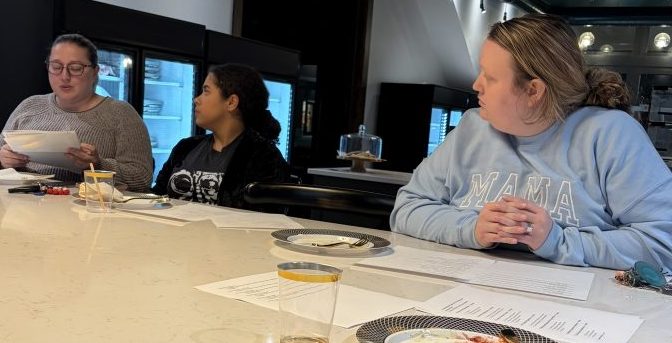
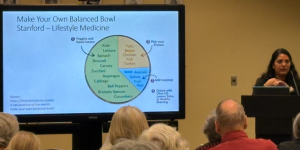
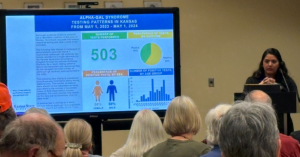
Fort Scott, KS — March 23, 2026 — Nearly 60 community members joined K-State Extension for the program “Beyond the Bite: Understanding Ticks and Alpha-Gal” last Monday evening at the FSCC campus. This event highlighted how K-State Extension – Southwind District is addressing emerging health issues with timely, research‑based education. An Alpha‑Gal–friendly baked potato bar was provided by Great Western Dining.
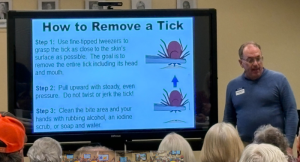
Raymond Cloyd, PhD, KSU Professor and Extension Specialist, presented on tick identification and life cycles, strategies for preventing tick bites, proper removal techniques, and recommended steps to take after spending time outdoors. Ticks are typically found just a few inches above the ground on vegetation. To remove a tick, individuals should use fine‑tipped tweezers to grasp the tick as close to the skin as possible and pull upward with steady, even pressure to remove the entire tick—including the head and mouthparts. After removal, the area should be cleaned with rubbing alcohol, an iodine scrub, or soap and water.
Priscilla Brenes, MPH, PhD, KSU Assistant Professor and Nutrition Specialist, discussed how Alpha‑Gal affects the body and shared nutritional strategies for managing life with Alpha‑Gal Syndrome (AGS). While there is currently no cure for AGS, individuals can reduce symptoms by carefully avoiding foods and products that may trigger reactions. Many people are surprised to learn that rotisserie chicken or turkey sausage may be seasoned or processed with beef‑derived ingredients. Some individuals with this allergy may also react to wearing leather boots, and others may need to carry an epinephrine auto‑injector.
Alpha‑Gal Syndrome is an allergy to red meat and mammal‑derived products that is becoming increasingly common across Kansas, particularly in rural areas. According to the U.S. Centers for Disease Control and Prevention, AGS can develop after a bite from the Lone Star tick. When an infected tick feeds on a human, alpha‑galactose (alpha‑gal) enters the body and triggers the immune system to produce antibodies. If the body later encounters alpha‑gal—through red meat or mammal‑derived products—a potentially life‑threatening allergic reaction can occur. Fish and poultry do not contain alpha‑gal antigens, making them safe options for those affected.
Symptoms of AGS may appear after eating red meat or being exposed to mammal‑derived products (including leather) and can include hives or itchy rash, nausea or vomiting, severe stomach pain, heartburn or indigestion, diarrhea, cough, shortness of breath or difficulty breathing, a drop in blood pressure, swelling of the lips, throat, tongue, or eyelids, and dizziness or faintness.
To request handouts from the program to be emailed or for additional information about Alpha‑Gal Syndrome, please contact Sandy Haggard, Southwind Extension Nutrition, Food Safety, and Health Agent, at [email protected] or 620‑365‑2242.
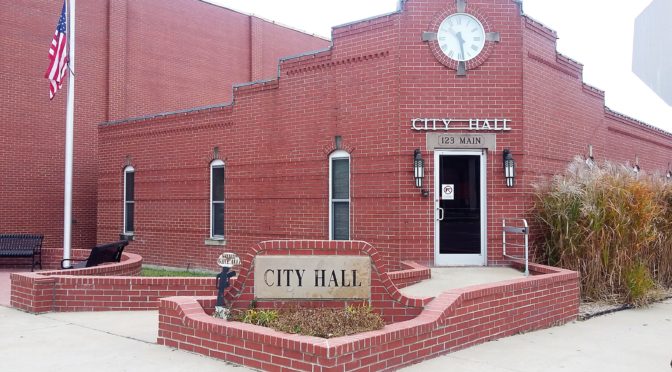
A meeting of the Fort Scott City Commission was held in the City Commission Meeting Room at City Hall, 123 S. Main Street, Fort Scott, Kansas. The meeting was streamed live on YouTube.
The meeting was called to order at 6:00PM. Roll call was taken. Commissioners Matthew Wells, Tracy Dancer, Tim Van Hoecke, Julie Buchta and Mayor Kathryn Salsbury were present.
In Attendance – Brad Matkin/City Manager, Bob Farmer/City Attorney, Chief Dave Bruner/FSFD, Chief Jason Pickert/FSPD, Leroy Kruger/Codes Enforcement, Lisa Lewis/City Clerk, Lisa Dillon/Housing & Neighborhood Revitalization Coordinator, Jason Dickman/Earles Engineering & Inspections LLC, Ben Hart/BakerTilly (by phone), Darrin Petrowski/KDOT, Michael Hoyt, Patrick Wood, Geoffrey Marr, Dilynn Marr, Anita Walden/Freeman, Kevin Allen, Doug Eden .
SALSBURY led the Pledge of Allegiance and BUCHTA said a prayer asking God for guidance for the City, the Citizens, our Government and City officials.
Approval of Agenda
MOTION: VAN HOECKE moved to approve the agenda with the amendment of removal of Unfinished Business/Item A Consideration to Initiate Contractor License. DANCER seconded.
MOTION CARRIED 5-0.
Consent Agenda
– Approval of Appropriation Ordinance 1404-A – Expense Approval Report–Payment Dates of February 25, 2026 – March 10, 2026 – $1,270,095.98
– Approval of Minutes: Regular Meeting of March 3, 2026
– February Financials
Public Comment
Geoffrey Marr addressed the Commission regarding the airplane hangar currently owned by the City. He would like to lease or purchase it and fix it up and negotiate a long lease instead of it being torn down.
ACTION: MATKIN will meet with MARR regarding an arrangement.
Anita Walden addressed the Commission to introduce herself as the Chief Administrative Officer at the new Freeman Hospital. She also thanked the City for their continued support.
Kevin Allen addressed the Commission in hopes to comment on the KDOT maintenance agreement specifically on Wall Street.
Appearances
Garth Herrmann/Gilmore & Bell – HERRMANN could not be present. HART presented Resolution No. 17-2026 Authorizing and Providing for the Construction Sanitary Sewer Pumping Station Improvements and Providing for the Payment of the Costs. He stated that there will be another Resolution in the future.
MOTION: WELLS moved to approve the Resolution. SALSBURY seconded.
MOTION CARRIED 5-0
Darrin Petrowski/KDOT – PETROWSKI addressed the Commission regarding KDOT Maintenance Agreement on Hwy 69 and Hwy 54.
New Business
Public Hearing:
Vacation of Street and Alleys – Doug Eden – Consideration of Petition to Repeal Ordinance No. 3579 and Approve Ordinance No. 3796 – Vacation of Street and Alleys
MOTION: VAN HOECKE moved to open the public hearing. DANCER seconded.
MOTION CARRIED 5-0
FARMER left the meeting at 6:58PM and returned at 7:00PM.
EDEN presented his petition to vacate the north-south alley. It was recommended that the prior ordinance (No. 3579) be repealed and replaced with Ordinance No. 3796 addressing the vacation of Durkee Street, the east-west alley and the north-south alley for clarity.
MOTION: WELLS moved to close the public hearing. VAN HOECKE seconded.
MOTION CARRIED 5-0
MOTION: DANCER moved to approve the vacation. After having heard all the testimony on said petition on the 17TH day of MARCH, 2026 and all necessary information in order to fully understand the true nature of this petition, the City Commission of the City of Fort Scott, upon motion of DANCER and seconded by BUCHTA, passed and approved to repeal Ordinance No. 3579 and the petition of the Petitioner to and vacate the platted Durkee Street located between Lots 2, 4, 6, 8, 10, 12, 14, 16, 18, 20, 22, 24, 26, 28, Block 4 and Lots 1, 3, 5, 7, 9, 11, 13, 15, 17, 19,21, 23, 25, 27, Block 2, all in Durkee and Stout’s Addition to the City of Fort Scott, Bourbon County, Kansas; AND the alley running East and West through Lots 1-28, Block 2, Durkee and Stout’s Addition to the City of Fort Scott, Bourbon County, Kansas; AND the alley running North and South along the East side of Lots 27 & 28, Block 2, Durkee and Stout’s Addition to the City of Fort Scott, Bourbon County, Kansas. BUCHTA seconded. (Excerpt of Minutes of the same but separate document was submitted to Bourbon County Deeds for recording of the vacation).
MOTION CARRIED 5-0
Action Items:
Consideration of Resolution No. 16-2026 and MELPA – Firetruck Financing
MOTION: WELLS moved to approve Resolution No. 16-2026. SALSBURY seconded.
MOTION CARRIED 5-0
Consideration of Proposals for Fire Station Exhaust system
BRUNER stated that they received an Assistant to Firefighters Grant (AFG) last year for $106, 571.42 to be used for the exhaust systems in both fire stations. He went out for proposals (RFP) and received (2) back. The first was from Air Clean for $101,750.00, the second from MagnaGrip that submitted (3) options however their lowest option was $106,913.00. BRUNER requested that the Commission approve the proposal from Air Clean.
MOTION: BUCHTA moved to approve the recommendation to accept the proposal from Air Cleaning for $101,750.00. WELLS seconded.
MOTION CARRIED 5-0
Consideration of 2026 Ground Lease Bids
MATKIN stated that (3) bids were received: $15,700.00, $13,160.00, and $11,776.00.
MOTION: VAN HOECKE moved to approve the bid for $15,700.00 from Mike Fritter of Richards, MO for the Ground Lease Bid of 94-acres. WELLS seconded.
MOTION CARRIED 5-0
Consideration of 2026 Cape Seal Program Proposal
MATKIN stated that we received (1) proposal from Vance Brothers for $388,948.00 and recommended that the Commission accept their proposal for the 2026 project.
MOTION: BUCHTA moved to approve the 2026 Cape Seal Program proposal as it’s been presented. WELLS seconded.
MOTION CARRIED 5-0
Consideration of Ordinance No. 3795– AN ORDINANCE AMENDING ORDINANCE NO. 3782 for CLG
DILLON stated that SHPO and the National Parks Service requested amendments to the ordinance for the CLG. She drafted what they asked for and FARMER approved to form. She requested that the Commission approve the ordinance so it could be submitted and the City could receive its CLG status.
MOTION: WELLS moved to approve Ordinance No. 3795. DANCER seconded. BUCHTA, WELLS, DANCER and SALSBURY voted yes. VAN HOECKE voted no.
MOTION CARRIED 4-1
Consideration of Amendment to Zoning Regulations – Connex Boxes – L. Dillon
DILLON stated that the Planning Commission has viewed the City Commission’s initial request and is returning it to the City Commission to make the decision.
MOTION: VAN HOECKE moved to approve to table until April 7, 2026. DANCER seconded.
MOTION CARRIED 5-0
Reports and Comments
City Engineer:
– Davis Lift Station update
– Railroad permit
– Survey scheduled for Wall St.
– E. National utility plan sent out
City Attorney: No Comment
City Manager:
– Moody building update
– Railroad dialogue and spur system talks happening
– Homeless situation in town
Commissioner Wells:
– Fort Scott Greyhounds going for title
Commissioner Van Hoecke:
– Homeless situation
Commissioner Dancer:
– SLA draft and 5-year lifecycle management plan for IT – April 7th
ACTION: MATKIN will email all Commissioners prior to next meeting.
Commissioner Buchta:
– Shop local to help with sales tax
Commissioner Salsbury:
– Fish Fry until Good Friday at St. Mary’s
– 8th & Eddy intersection open
Adjourn
MOTION: VAN HOECKE moved to adjourn the meeting at 7:51PM. DANCER seconded.
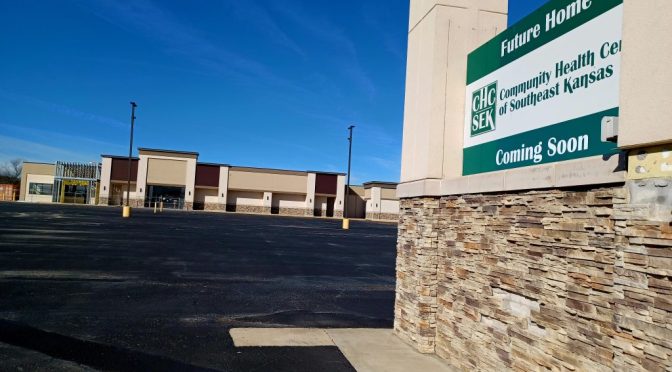
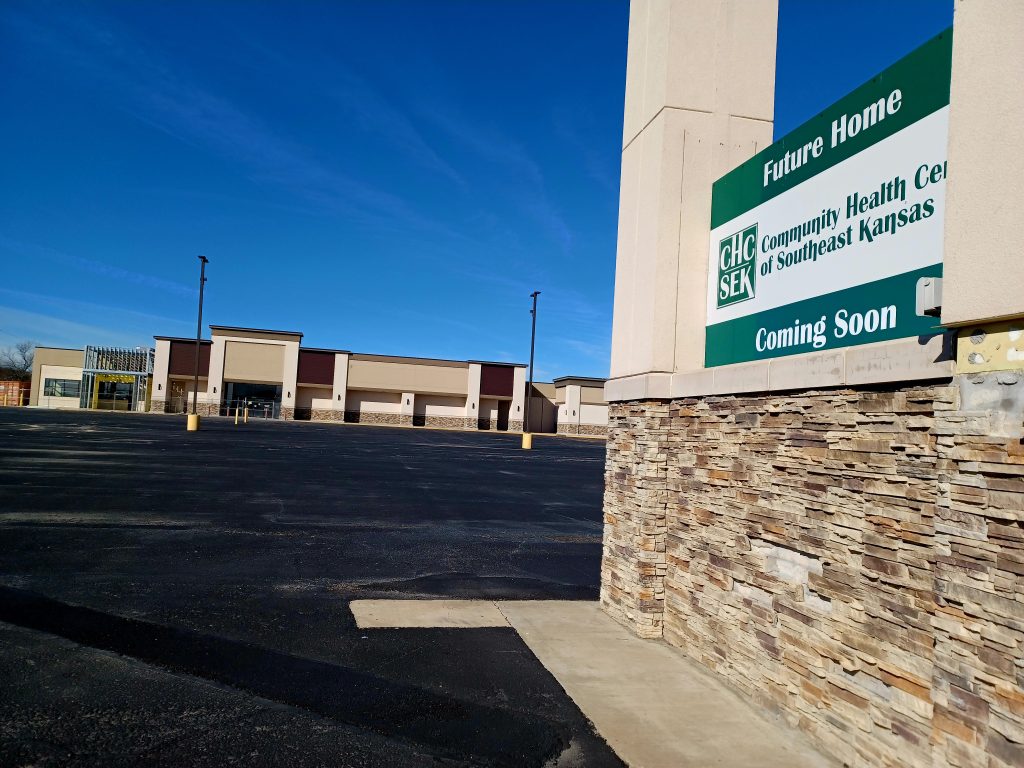
Kansas students in grades 7-12 can receive their sports physicals for the upcoming school year at the Community Health Center of Southeast Kansas (CHC/SEK), starting April 1, 2026.
“We encourage student-athletes to complete their physicals early,” said Linda Bean, DO, CHC/SEK Chief Clinical Officer. “By getting it done now, you can avoid the summer rush and ensure you’re ready for the upcoming season.”
Physicals are offered at all CHC/SEK Walk-In Care locations—no appointment needed. Families should bring the school’s form with them.
CHC/SEK offers walk-in care at the following locations:
Coffeyville
Columbus
Fort Scott
Iola
Miami, OK
Parsons
Pittsburg
Pleasanton
Parents can also request a sports physical during their child’s well-child visit with their primary care provider. At the appointment, parents should let the provider know that their child plans to participate in sports during the upcoming school year.
About Community Health Center of Southeast Kansas The Community Health Center of Southeast Kansas (CHC/SEK) serves as a healthcare hub for communities in Kansas and Oklahoma. CHC/SEK delivers quality, integrated care to nearly 90,000 patients each year with a goal of improving health, sustaining rural communities, and providing purpose-driven work to 950 staff members. Beyond healthcare, CHC/SEK finds innovative ways to improve lives by focusing on education, housing, and transportation. Regardless of income or insurance status, CHC/SEK ensures everyone receives the care they need. For more information, visit chcsek.org.
This email and any attachments may contain confidential information subject to protection under the Federal Standards for Privacy of Individually Identifiable Health Information (45 C.F.R. Parts 160 and 164). If you or your organization is a “Covered Entity” under the above mentioned regulations, you are obligated to treat such information in a manner consistent with the regulations.
Topeka, KS — Today, Senate President Masterson issued a statement on Governor Kelly’s veto of SB 368.
“Laura Kelly has deliberately chosen to drive up the cost of healthcare for the many Kansans that choose to use healthcare sharing ministries with her veto of SB 368. This bi-partisan bill simply provides a tax deduction for Kansas taxpayers that use these important sharing ministries to cover healthcare costs for their families. The Senate will override this ridiculous veto and provide relief to Kansas families dealing with high healthcare costs,” said Masterson.
TOPEKA – Governor Laura Kelly today vetoed Senate Bill 368.
The following veto message is from Governor Kelly regarding her veto of Senate Bill 368:
“There’s a reason that regulators across the country are taking action against these so-called health care ministries because too often, everyday people are left with huge medical bills. These health care ministries aren’t regulated, which opens the door to all sorts of fraud and abuse.
“Let me be clear, this is not about limiting anyone’s ability to practice their faith freely, it’s entirely about ensuring that Kansans are in a health care system that’s reliable and actually covers their medical expenses.
“Therefore, pursuant to Article 2, Section 14(a) of the Constitution of the State of Kansas, I hereby veto Senate Bill 368.”
Kansas Joins National ‘A Home for Every Child’ Initiative to Bolster Access to Foster Homes
~~Kansas Becomes 7th State to Join Nationwide Initiative Aimed at Improving Ratio of Homes to Youth in Foster Care, 1st State with Approved Plan~~
TOPEKA – Governor Laura Kelly on Thursday announced that Kansas has joined the United States Department of Health and Human Services’ Administration for Children and Families’ (ACF) ‘A Home for Every Child’ initiative to improve the ratio of foster homes to children in Kansas and across the country. Governor Kelly made the announcement alongside federal officials from ACF and the Kansas Department for Children and Families (DCF). Kansas is the first state to receive ACF approval for its ‘A Home for Every Child’ plan.
“This initiative underscores my administration’s work to strengthen Kansas’ child welfare system by expanding support for foster children and families,” Governor Laura Kelly said. “By taking steps to eliminate barriers to safe, reliable foster homes, we’re setting more Kansas children up for long-term success and empowering them to live full, thriving lives in comfortable and supportive environments.”
‘A Home for Every Child’ reinforces Governor Kelly’s longstanding commitment to making Kansas the best state to raise a family. According to ACF, nationwide there are only 57 homes for every 100 children entering foster care. The ‘A Home for Every Child’ initiative aims to achieve a foster-home-to-child ratio of at least 1:1 nationwide through effective collaboration with states, which includes cutting bureaucratic red tape, improved data collection and reporting, new incentives, support for kin-first placements, and more.
“The Administration for Children and Families is grateful for the bipartisan support behind A Home for Every Child, and we are confident Governor Kelly’s leadership will continue to deliver meaningful reforms to child welfare that protect children and keep families together when possible,” said Assistant Secretary Alex Adams, Administration for Children and Families. “By joining A Home for Every Child, Kansas is focusing on what matters most while allowing its caseworkers to spend more time actually serving children and families across the state rather than filling out federal paperwork.”
ACF offered states the ability to voluntarily transition from existing Child and Family Services Review Program Improvement Plans into the ‘A Home for Every Child’ pilot framework. This shift enables Kansas to become more outcome focused and relies on data-driven accountability. As the 7th state to join ‘A Home for Every Child,’ Kansas has the opportunity to engage early, contribute to federal learning, and modernize performance improvement efforts while maintaining accountability for safety, permanency, and well-being.
“We’re proud to partner in this opportunity to further achieve meaningful outcomes for Kansas families. This effort provides flexibility for innovative approaches alongside families through targeted, practical measures that reflect our state’s goals to prevent and reduce the need for foster care,” said Secretary Laura Howard, Kansas Department for Children and Families. “Every child deserves safety, stability, and a sense of community—and every family deserves the support needed to thrive.”
Additional information about ACF’s ‘A Home for Every Child’ initiative can be found here.
Photos from today’s event are available for media use below:
What’s Happening in Fort Scott March 26th Edition!
Tuesday, March 31st
📱 Google Business 101
This 1-hour Business Builder Workshop is a great fit for local businesses and retailers looking to improve visibility, local search results, and customer trust.
Fort Scott Area Chamber of Commerce Chamber Coffees
Every Thursday at 8am
UPCOMING CALENDAR OF EVENTS
________________
Fort Scott National Historic Site
Visit your National Park! Visitor Center and historic buildings are open Friday through Tuesday, 8:30 am – 4:30 pm. The grounds continue to be open daily from ½ hour before sunrise until ½ hour after sunset
Click here to see all the FUN classes at The Artificers, classes for ALL ages!
BINGO hosted by the American Legion Post 25 every 1st and 3rd Thursday of each month unless it falls on a holiday. Doors open at 6pm and Bingo starts at 7pm at Memorial Hall. (Taking the month of August off for BINGO & will start again in September)
KANSASWORKS in Fort Scott
Every Tuesday 9am-4pm
Office located at the Healthy Bourbon County Action Team, 104 N. National Ave.
The next Bourbon County Coalition General Membership meeting will be next Wednesday, April 1st at 1:00 p.m. in the Conference room at the Scottview Apartments, 315 S. Scott Ave.
Bourbon County Inter-Agency Coalition
General Membership Meeting Agenda
April 1, 2026 1:00 PM
Scottview Conference Room
315 S. Scott Ave
Welcome:
Member Introductions and Announcements:
Program: Winter Moore & Rachel Eden, SparkWheel
Open Forum:
Adjournment: The next General Membership meeting will be May 6, 2026.
TOPEKA – (March 26, 2026) –Kansas Attorney General Kris Kobach today issued a consumer alert warning Kansans about a growing scam involving fraudulent “Notice of Hearing” notices for alleged traffic violations.
Scammers are sending fake notices via text message and email that mimic official court documents. These notices often include realistic details such as court headings, case numbers, statute citations, and a QR code or link directing recipients to pay a fictitious fine and associated costs.
“Courts do not serve legal documents on individuals via text or email,” Kobach said. “Kansans should not respond to unsolicited messages or emails containing purported legal documents from courts requesting payments. Kansans should also avoid interacting with texts or emails that include alleged notices or direct the consumer to scan any QR code within them. If you receive any of these notices, please report it to my office so we can investigate.”
How to Spot and Avoid the Scam
Unsolicited delivery: Real court notices for traffic violations or hearings are never sent by text or email.
Pressure to pay: The notices urge quick payment via QR code or link to “resolve” the matter and avoid further penalties.
Professional appearance: They often feature official-looking formatting to appear legitimate.
What to Do If You Receive One
Do not reply, call any provided number, scan the QR code, or click any links. Interacting with the message could introduce malware to your device.
Verify any claim independently: Contact the clerk of the relevant court directly using a phone number from the court’s official website (never one listed in the suspicious message).
Think before you act: Pause and double-check before responding to any unexpected legal communication.
Kansans who receive these fraudulent notices are encouraged to report them to the Kansas Attorney General’s Public Protection Division at www.ag.ks.gov or by calling (785) 296-3751 or 1-800-432-2310.
About the Kansas Attorney General’s Office
The Kansas Attorney General’s Office protects Kansas consumers through enforcement of the Kansas Consumer Protection Act, investigation of fraud and scams, and education to help residents avoid deceptive practices. For more information, visit www.ag.ks.gov.
The State of Kansas has filed criminal charges against Mika Milburn-Kee in Bourbon County District Court. The complaint, filed on March 24, 2026 by Assistant Attorney General Olivia R. Higdon of the Criminal Division’s Economic Crimes unit, stems from an incident that allegedly took place on October 25, 2025 in Bourbon County.
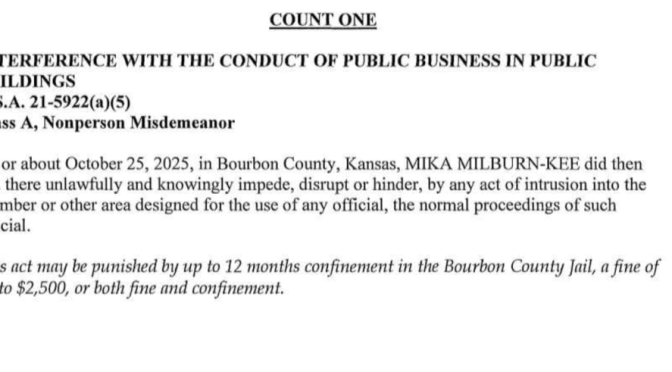
Count One charges Milburn-Kee with Interference with the Conduct of Public Business in Public Buildings under Kansas statute K.S.A. 21-5922(a)(5). This law makes it a crime to knowingly disrupt, impede, or hinder the normal work of a government official by intruding into a chamber or area set aside for that official’s use. This charge is classified as a Class A Nonperson Misdemeanor and carries potential penalties of up to 12 months confinement, a fine of up to $2,500, or both. This appears to be related to areas designated for use in the election that was underway at the time.
Count Two charges Milburn-Kee with Disorderly Election Conduct under Kansas statutes K.S.A. 25-2413(c) and K.S.A. 25-2432. The complaint alleges that she unlawfully and willfully approached or remained closer than three feet to a table being used by an election board without the admitted purpose of voting or without the authority of the supervising judge, contrary to the form of the statutes in such case made and provided against the peace and dignity of the State of Kansas. This charge is classified as a Class B Nonperson Misdemeanor and carries potential penalties of up to 6 months confinement, a fine of up to $1,000, or both. Additionally, under K.S.A. 25-2432, if convicted of this offense, the defendant would be required to forfeit any public office or public employment.
The case is being prosecuted not by the local county attorney, but by an assistant attorney general out of the state office in Topeka.
Witnesses
The State has identified 15 witnesses in this case:
Jacqueline K. Beatty – Special Agent, Office of the Kansas Attorney General
Daryl Ludolph – Former Assistant Special Agent in Charge, Office of the Kansas Attorney General
James Birket, #137 – Detective, Fort Scott Police Department
Brian Thurston, #112 – Detective Sergeant, Fort Scott Police Department
Susan Walker – County Clerk, Bourbon County
Amber Page – Deputy County Clerk, Bourbon County
Shane Walker – Employee, Bourbon County
Lora Holdridge – Register of Deeds, Bourbon County
Dianne Keating – Early Voting Supervisor, Bourbon County
Anthony George – Advance Polling Supervisor, Bourbon County
Clay Barker – Chief Counsel, Office of the Kansas Secretary of State
Bryan Caskey – Kansas Director of Elections
Brandi Ross
Joan Page
Patty Holman
This case is in its early stages. The complaint has been filed and assigned case number BB-2026-CR-000079, but the court process is just beginning. Being charged with a crime is not the same as being found guilty. The defendant is presumed innocent and has the right to legal representation and to contest the charges through the court system. What follows from here will likely include an initial court appearance, and the case may ultimately be resolved through trial, a plea agreement, or dismissal.
Commissioner Mika Milburn-Kee was asked if she had any comments on this case, but no reply has been received at this time.