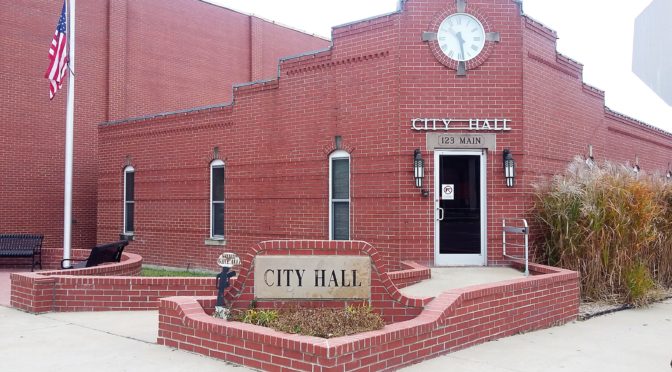
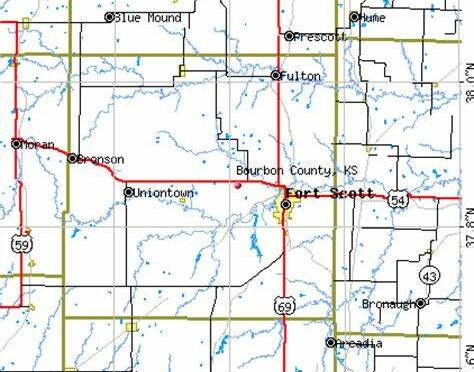
The Fort Scott Planning Commission will meet on Monday, February 22nd, 2021 at 4:00 p.m. at City Hall, 123 S. Main Street, Fort Scott, Kansas. This meeting will be held to consider a Conditional Use Permit for the property located between the 1500 and 1600 block of Scott Avenue to construct a storage unit facility. Another case will be held to consider a change of zoning from R-1 (Residential) to C-3 (Commercial) for the property at 600 N. Crawford.
This meeting is open to the public. This meeting will be made available via the City’s you tube channel at City of Fort Scott.
Governor Laura Kelly Urges Kansans to do Their Part, Continue to Conserve Energy
TOPEKA – Governor Laura Kelly continues to urge Kansans to do their part and conserve energy to help ensure a continued supply of natural gas and electricity throughout the state.
“Kansans are known for pulling together and taking care of our neighbors,” Governor Kelly said. “Conserving energy during these frigid temperatures is necessary to ensure our neighbors have enough electricity to weather this cold spell. We all must come together and do our part to get us through this critical time.”
Governor Kelly issued a State of Disaster Emergency on Feb. 14, which authorizes the use of state resources and personnel to assist with response and recovery operations in affected counties that meet certain criteria. The declaration allows for such things as providing generators to hospitals or long-term care facilities that lose power, transportation of supplies such as personal protective equipment, etc.
“Temperatures are forecast to start warming up this week, but we are not out of the woods yet,” Governor Kelly said. “There are a few simple measures we all can take to help limit our usage.”
The Southwest Power Pool (SPP) is a regional transmission organization which includes Kansas, Missouri and 12 other states. It monitors power flow through its footprint and coordinates regional response in emergency situations. At the direction of SPP, utilities are managing available resources using rolling blackouts to periodically reduce the load and conserve energy. These measures are taken preemptively so to prevent long-term power outages.
Here are some things each household can do to help in the conservation effort and slow down the increases in energy bills due to high usage:
Keep your thermostat at 65-68 degrees Fahrenheit. Bundle up with sweaters and blankets instead of turning up the thermostat.
Seal leaks around doors and windows. Apply weather stripping or caulk to seal gaps and cracks around windows and doors to stop air leaks and prevent energy loss. If that is not an option, you can also cover windows with towels, sheets or plastic to help keep the warm air in your house.
Reduce the temperature on your water heater to 120 degrees Fahrenheit or put it on the “warm” setting. Take shorter showers and only use hot water when necessary.
Close blinds and curtains. This helps keep warm air inside, especially if the sun is not shining.
Change or clean filters. A clean filter on your furnace can lower your energy consumption and efficiency of your equipment.
Hold off on doing chores. Doing laundry and washing dishes can both use natural gas to heat the water and your dryer. If you can, wait until the extreme cold weather passes to complete these activities. If you cannot wait, use the cold setting where possible.
Install foam gaskets on electrical switches and outlets. Electrical switches and outlets can account for up to 10 percent of your home’s energy loss.
Unplug unused electronics and turn off lights when not in use.
Don’t heat up your oven. Use the microwave, crock pot or toaster oven. A microwave takes 15 minutes to do the same job as one hour in an oven.
Walgreens, at the corner of Hwy. 69 and 23rd Street, has the vaccine but is awaiting directions from the corporate office, said Pharmacy Technician Keely Gooderidge.
Community Health Center of Southeast Kansas, 403 Woodland Hills Blvd.
Community Health Center in Bourbon County
“We have gotten a limited number of vaccines and have focused first on emergency and medical personnel….we’re also collaborating with area health departments to get school staff vaccinated including Bourbon County,” Krista Postai, CEO and president of Community Health Center of Southeast Kansas said. “We are also working with them to vaccinate child care providers.”
“The shots we have given have been in assistance with county health departments using their vaccine allotments,” said Rob Poole, CHC Communication and Marketing Director.
Last week, CHC was able to call in patients from a list run from their electronic health records, as well as a waiting list from those who have called in over the last few weeks, Postai said.
“According to information announced last week, health centers across the county should begin receiving vaccine directly in addition to any allocations through the state,” Postai said. “We heard priority was going to those health centers with more than 2,000 patients over 65. We have well over 7,000 so we’re thinking we may be at the head of the line, which means, fingers crossed, we should start seeing more vaccine by early March,”
Poole said a recent Biden Administration press release stated that 250 health centers around the country would begin receiving vaccines directly from the federal government.
“There is not an exact timeline, but I can assure you we’ll spread the word as soon as it happens,” Poole said.
Biden Administration Announces Another Foreclosure Moratorium and Mortgage Forbearance Deadline Extension That Will Bring Relief to Rural Residents
USDA Extends Evictions and Foreclosure Moratorium to June 30, 2021 and Provides Additional Guidance for Servicing Loans Impacted by COVID-19
WASHINGTON, Feb. 16, 2021—The U.S. Department of Agriculture announced an extension of eviction and foreclosure moratoriums on USDA Single Family Housing Direct and Guaranteed loans through June 30, 2021.
The actions announced today will bring relief to residents in rural America who have housing loans through USDA.
“USDA recognizes that the COVID-19 pandemic has triggered an almost unprecedented housing affordability crisis in the United States. That’s why USDA is taking this important action today to extend relief to the hundreds-of-thousands of individuals and families holding USDA Single Family Housing loans,” USDA Deputy Under Secretary for Rural Development Justin Maxson said. “While today’s actions are an important step for them, we need to do more. The Biden Administration is working closely with Congress to pass the American Rescue Plan to take more robust and aggressive actions to bring additional relief to American families and individuals impacted by the pandemic.”
A recent Census Bureau survey showed that 8.2 million homeowners are currently behind on mortgage payments, and of that 8.2 million, 3 million homeowners behind on payments were Black or Hispanic.
This effort underscores a commitment by USDA to bring relief and assistance to farmers, families and communities across the country who are in financial distress due to the coronavirus pandemic
. In January, USDA took action to bring relief to more than 12,000 distressed borrowers of USDA farm loans by temporarily suspending past-due debt collections, foreclosures, non-judicial foreclosures, debt offsets or wage garnishments, and more. Learn more here.
Visit www.rd.usda.gov/coronavirus for additional information on USDA’s Rural Development COVID-19 relief efforts, application deadline extensions and more.
USDA Rural Development will keep our customers, partners and stakeholders continuously updated as additional actions are taken to bring relief and development to rural America.
Homeowners and renters can also visit www.consumerfinance.gov/housing for up-to-date information on their relief options, protections, and key deadlines from USDA, the Department of Housing and Urban Development, the Department of Veterans Affairs, the Federal Housing Finance Agency, and the Consumer Financial Protection Bureau.
BACKGROUND:
Foreclosure Moratorium Extension
The actions announced today make it possible for the foreclosure and eviction moratorium announced by USDA, Single Family Housing Direct Loan Program (SFHDLP) and the Single
Family Housing Guaranteed Loan Program (SFHGLP) on Jan. 20, 2021, to be extended until June 30, 2021. The moratorium does not apply in cases where USDA or the servicing lender has
documented the property is vacant or abandoned.
Forbearance Options
Lenders may continue to provide impacted borrowers relief by offering forbearance of the borrower guaranteed loan payment for up to 180 days.
In addition, the initial forbearance period
may be extended up to an additional 180 days at the borrower’s request. Lenders may approve the initial 180-day COVID-19 forbearance no later than June 30, 2021
.SFHGLP borrowers that received a COVID-19 forbearance prior to June 30, 2020, may be granted up to two additional
three-month payment forbearances. Lenders should outline potential solutions that may be available at the end of the forbearance period and explain to borrowers that a lump sum payment of the arrearage will not be required.
During the forbearance options outlined above, no accrual of fees, penalties or interest should be charged to the borrower beyond the amounts calculated as if the borrower had made all
contractual payments in a timely fashion.
Post Forbearance Options
Upon completion of the forbearance, the lender shall work with the borrower to determine if they can resume making regular payments and, if so, either offer an affordable repayment plan or term extension to defer any missed payments to the end of the loan.
If the borrower is unable to resume making regular payments, the lender should evaluate the borrower for special relief measures, which include Term Extensions, Capitalization and Term Extensions, and a Mortgage
Recovery Advance.
Questions regarding program policy and this announcement may be directed to the National Office Division at [email protected] or (202) 720-1452.
USDA Rural Development provides loans and grants to help expand economic opportunities and create jobs in rural areas. This assistance supports infrastructure improvements; business
development; housing; community facilities such as schools, public safety and health care; and high-speed internet access in rural areas. For more information, visit www.rd.usda.gov.
TOPEKA – The Kansas Department of Health and Environment (KDHE) and the Kansas Maternal Mortality Review Committee (KMMRC) announce the release of the first annual report for maternal mortality including severe maternal morbidity. The report is available on the KMMRC website. The goal of the report is to identify statewide trends in maternal mortality and provide recommendations to prevent maternal mortality and improve the health of Kansas mothers.
The KMMRC is tasked with reviewing all maternal deaths that occur in Kansas. Over the last two years, the KMMRC reviewed cases that occurred during 2016-2018. Approximately one in four maternal deaths that occurred during 2016-2018 were determined by the KMMRC to be pregnancy-related. Twelve (92.3%) of the 13 pregnancy-related deaths were determined to be preventable with seven deaths indicating a good chance of prevention and five deaths indicating some chance. Racial and ethnic minority women were disproportionately affected. The proportion of pregnancy-related deaths that occurred among non-Hispanic Black women, Hispanic women, non-Hispanic women of other races far exceeded their representation among the population of women giving birth in Kansas. Obesity contributed to more than half of the deaths. Substance use disorder contributed to nearly one in four.
The recommendations included in this report focus on five primary categories: women and their families, health care providers, hospitals/facilities, system of care, and community. Each set of recommendations addresses specific areas of concern based on the KMMRC’s findings and proposes actions which, once implemented, are expected to prevent and reduce maternal mortalities.
The key KMMRC recommendations for pregnancy-related deaths are:
Screen, provide brief intervention, and referrals for:
Comorbidities and chronic illness
Intimate partner violence
Pregnancy intention
Mental health conditions (including postpartum anxiety and depression)
Substance use disorders
Increased communication and collaboration between providers, including referrals
Patient education and empowerment
The KMMRC and the Kansas Perinatal Quality Collaborative (KPQC) function together to improve maternal and perinatal health. Investing in the mother’s health leads to a healthier birth. The KMMRC focuses on reviewing pregnancy-associated deaths to identify gaps in health services and make actionable recommendations to prevent future deaths, improving maternal and perinatal health. The Kansas Perinatal Quality Collaborative (KPQC) utilizes the KMMRC’s recommendation to implement and support efforts intended to strengthen perinatal systems of care for mothers and infants, creating a culture of safety.
KDHE and the KPQC are planning to launch the Fourth Trimester Initiative, a stakeholder-driven public health quality improvement project to address maternal health needs in the state, especially during the postpartum period (up to 1 year after delivery). The initiative will focus on improving attendance at the postpartum visit as well as appropriate screening, referral, communications, and collaboration amongst a woman’s care team. More information about the KPQC and the Fourth Trimester Initiative can be found at https://kansaspqc.org.
“We appreciate those who have contributed to this report,” said Rachel Sisson, Director for KDHE’s Bureau of Family Health. “Members from the KMMRC contributed their time and expertise to reviewing deaths and information for this report, and we hope it will be useful to providers and communities as we all work together to combat maternal morbidity and mortality.”
Governor Laura Kelly Announces ACA Marketplace Reopens for Kansans to Enroll in Health Insurance for 2021
TOPEKA – Governor Laura Kelly today announced that the enrollment for 2021 health insurance has re-opened.
Kansas residents have access to a Special Enrollment Period to sign up for Affordable Care Act (ACA) insurance plans between February 15, 2021 and May 15, 2021, in addition to Medicare and Medicaid benefits. The Special Enrollment Period was opened by a January executive order signed by President Joe Biden, opening the federal health insurance marketplace for three months starting today.
For all Kansans who are uninsured or underinsured, this is an excellent opportunity to secure coverage as Kansas fights through the pandemic.
“This is an incredible and urgent opportunity for Kansans to ensure they have the health care they need. I strongly encourage every Kansan who can to sign up for insurance,” Governor Kelly said. “I appreciate the Biden Administration’s efforts to expand access to coverage, particularly as Kansans potentially face long-lasting health complications caused by COVID-19.”
All U.S. citizens and nationals are eligible to enroll in health insurance through Marketplaces using the HealthCare.gov platform. Plans of a variety of premiums, deductibles, and services are available. These plans are private insurers made available to the public through the ACA. All Kansans may apply for personal health insurance, as well as for spouses and children. Individuals need a valid social security number or document certifying qualifying immigration status to apply. Kansans can check to see if they are an eligible immigrant here.
Between February 15, 2021 and May 15, 2021, Kansans can apply through the HealthCare.gov marketplace here.
“One thing we’ve learned during the pandemic is that this virus spares no one,” said Wilson County Health Officer Dr. Jennifer McKenney. “This special open enrollment period is a much-needed step in the right direction for the physical and emotional well-being of the people of Kansas. Throughout the pandemic, we’ve seen health care costs go beyond the cost of getting tested or purchasing necessary medications. Without health care coverage, people have a more difficult time treating their chronic conditions and, thus, become more vulnerable to the effects of this virus.”
Many Kansans might also be eligible for subsidized coverage through the Medicare and KanCare, Kansas‘ Medicaid programs as well. All Kansans are encouraged to take advantage of either this Special Enrollment Period, KanCare, and Medicare to gain access to affordable health coverage.
The Arctic weather has brought possible outages to the region.
The City of Fort Scott personnel has worked to provide a place for people, should they need it.
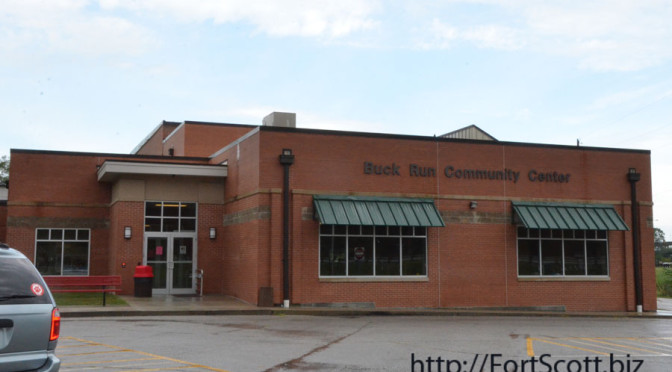
“The warming center/station that is being established at the Buck Run Center is a location that we have identified as suitable for emergency warming needs,” Fort Scott City Manager Jeremy Frazier said in an email interview. “This location will not include service.”
Buck Run Community Center is located at 735 Scott Avenue.
“That means that, at this time, we do not anticipate serving drinks or food,” he said. “However there is significant space and we do have 50 cots available for immediate access and additional cots available as needed off-site that can be brought to the location. Additionally, we would provide as many blankets as are needed.”
Frazier noted that even though the Buck Run Community Center is scheduled to close at 9 p.m. this evening, if needed, individuals can contact the Fort Scott Police Department dispatch at 911 non-emergency and a staff member will be available to allow immediate access.
“We have been advised that there will be rolling blackouts,” Frazier said. “This means that the Southwest Power Pool and its partners which include Evergy, will institute phased outages to manage electricity and utility demand as necessary. If and when this occurs we ask that residents allow 30 minutes to 1 hour BEFORE they consider relocating to Buck Run if they determine that a need to relocate to a warmer location/facility is necessary.”
“In the event of power blackouts the majority of the facility will be without power with the exception of the northernmost basketball court area,” Frazier said. “This area will serve as the room reserved for heating purposes. Therefore all other operations and uses will be suspended during an electric blackout.”
Senate Bill (SB) 22, also referred to as the RELIEF Act, would allow Kansas taxpayers to keep more of their hard earned money. The bill addresses unintended tax increases that resulted from the 2017 federal tax cuts. The two main items dealing with the federal tax cuts would allow Kansas taxpayers the option to itemize, whether they itemize on their federal return or not and would lower business taxes on offshore earnings brought to Kansas, encouraging businesses to invest in Kansas. The bill also has provisions making it clear that you would not owe income tax on money that was paid to someone who stole your identity, or on paycheck protection money, and business meals would be 100% deductible. It also would allow small businesses to expense some deductions, something corporations in Kansas can do. During debate the bill was amended to remove all income tax on Social Security benefits, and on employment retirement programs (including self-employment), and to increase standard deductions by approximately 20%. The bill passed on a vote of 24 to 15. I voted Yes. The Governor called the bill “irresponsible” and it appears would veto the bill. It is responsible to decrease the burden of taxpayers, especially with the hardships they face.
SB 70 would exclude sales tax on manufacturers coupons and vehicle manufacturer rebates. Currently, you pay sales tax on money you didn’t spend with these coupons. The vehicle manufacturer rebates was sunset after three years and SB 70 would remove the sunset. The bill passed the Senate 26 to 11. I voted Yes.
Expanding Education Options
A unanimous vote sent Senate Bill (SB) 32 to the House for consideration. The bill would expand the option so all high schools could pay a student’s tuition to take college courses. It would also waive the cost for foster care students, allowing them to participate even in a school district that requires the student to pay for all or a portion of any college courses.
SB 61 was somewhat more controversial. It passed the Senate on a vote of 23 to 14. The bill expands the Tax Credit Scholarship Program to include any student (elementary thru high school) qualifying for free and reduced lunches in Kansas the option to participate. Current law only allows participation of students from the 100 lowest preforming elementary schools, which leaves many students out. The Program allows for donations, capped at $10 million, to provide scholarships for students to attend non-traditional schools, like private schools. Donors receive a tax credit for their donation. No government funds are used for the scholarships. One concern with the bill is the auditing, or lack of, on free and reduced lunches because the federal government requires less than 3% of participants be audited. That is correct – less than. It is obvious they do not want accuracy with the lunch program. It is early in the legislative process and the good in the bill far outweighs the questions. The legislation would provide an opportunity for students to attend education institutions that would not be an option and might better suit their needs. I voted Yes on SB 61.
It is an honor and a privilege to serve as your 12th District State Senator.
Buck Run to be used as a community warming center in the event of widespread power outage.
The City of Fort Scott is currently experiencing dangerously cold temperatures that will continue throughout the week. Extreme weather conditions are creating both high demand for electricity and stress on power production.
Beginning on February 15 at 12:15 p.m., Evergy will begin to turn off electricity to blocks of customers for approximately 30 – 60 minutes. Once the period has concluded, power will be restored to the impacted area. The emergency outages will then rotate to another portion of Evergy’s service area. Power will cycle off and on periodically until the reduction is no longer required by the Southwest Power Pool.
If you are impacted by an emergency electricity reduction, you do not need to report your outage. Rather, check Evergy’s outage map and www.evergy.com/outageinfo for more information. All customers should be prepared for the potential for these periodic outages. If you experience an outage that lasts longer than an hour, report your outage at www.evergy.com or call 888-544-4852 or 800-544-4857,for Kansas Central customers.
Regional power management officials are asking all customers to conserve energy as much as possible to avoid potential widespread outages.
In the event of a widespread power outage, the City of Fort Scott has identified Buck Run Community Center as a warming center for the public. This warming center is not staffed to provide services but is a safe place to get warm.
Buck Run Community Center is located at 735 Scott Avenue.
Sign up for local emergency alerts at fscity.org. Please stay safe and stay warm.
Evergy customers affected as regional electric utilities begin intermittent outages to combat effects of bitter cold on energy supply.
Kansas City, MO – February 15, 2021 – Due to extended extreme temperatures affecting the regional power supply, the Southwest Power Pool (SPP) has asked member electric utilities, including Evergy, to implement controlled, temporary emergency electricity reductions in order to help avoid larger uncontrolled and extended power outages throughout the region.
Beginning on February 15 at 12:15 p.m., Evergy will begin to turn off electricity to blocks of customers for approximately 30 – 60 minutes. Once the period has concluded, power will be restored to the impacted area. The emergency outages will then rotate to another portion of Evergy’s service area. Power will cycle off and on periodically until the reduction is no longer required by the SPP. With these extreme cold temperatures, equipment may not operate as intended. As a result, outages could last longer than 30 – 60 minutes.
If you are impacted by an emergency electricity reduction, you do not need to report your outage. Rather, check Evergy’s outage map and www.evergy.com/outageinfo for more information. All customers should be prepared for the potential for these periodic outages. If you experience an outage that lasts longer than an hour, report your outage at www.evergy.com or call 888-544-4852 or 800-544-4857, for Kansas Central customers.
Evergy asks customers to continue to conserve energy to help reduce stress on the power grid, potentially reducing the ongoing need for emergency reductions.
Turn thermostats a little cooler (65-68 degrees). Avoid the use of electric space heaters.
Close blinds and shades to reduce the amount of heat lost through windows.
Turn off unnecessary lights and appliances
When possible, delay non-essential uses of energy washing drying clothes, washing dishes and bathing to non-peak hours, between 10 p.m. and 5 a.m.
Use low-temperature cooking methods and avoid opening the oven door if it’s on.
Evergy is also working with its large commercial and industrial customers to reduce energy usage this week. The company has reduced electricity use at Evergy facilities, implemented cold-weather procedures, and adapted operations at its power plants to keep equipment working and fuel available to generate electricity for customers.
Evergy is a member of the Southwest Power Pool, which coordinates the regional transmission grid and wholesale energy markets for a 17-state region across the central United States, including Kansas and Missouri. The SPP monitors power flow through its footprint and coordinates regional response in emergency situations.
In addition to the SPP call for reductions, its peers in Texas and the upper Midwest are also facing electricity shortages and are asking customers to conserve.
About Evergy, Inc.
Evergy, Inc. (NYSE: EVRG) serves approximately 1.6 million customers in Kansas and Missouri. We were formed in 2018 when long-term local energy providers KCP&L and Westar Energy merged. We are a leader in renewable energy, supplying nearly half of the power we provide to homes and businesses from emission-free generation. We support our local communities where we live and work and strive to meet the needs of customers through energy savings and innovative solutions.
Kari D. West
Lead Customer Solutions Manager Evergy
Sen. Marshall Calls on Kansans to Conserve Energy Following Recent Spike in Natural Gas and Propane Prices
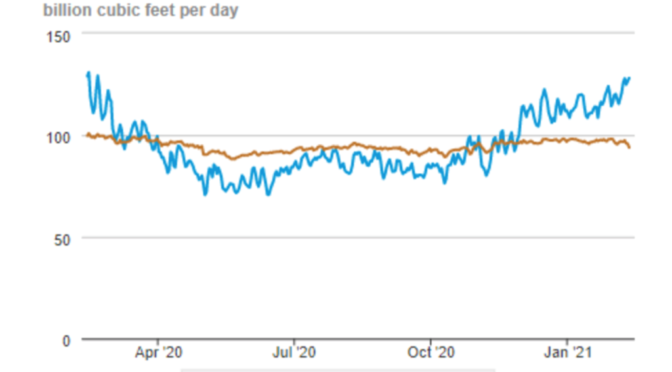
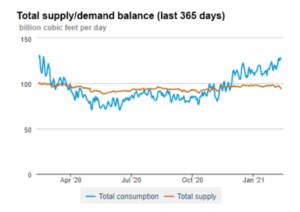
(Washington, D.C., February 15, 2021) – This morning, U.S. Senator Roger Marshall, M.D. spoke with Kansas utility officials and community leaders about the recent spike in natural gas and propane prices impacting communities and residents. Prolonged and extreme cold temperatures across much of the Midwest have contributed to unprecedented demand for natural gas and propane, which has pushed prices to more than 100-times their average costs.
“I appreciate the dedication of officials in Kansas to ensuring our businesses and residents have the natural gas and propane needed to continue powering their homes and businesses through this cold weather,” said Senator Marshall. “We will be doing all we can at the federal level to confirm no foul play or price gouging has occurred and continue to support our utility companies and community leaders as they work diligently to keep Kansans warm. In the meantime, I urge my fellow Kansans to do everything they can to conserve energy and keep energy costs low.”
Background:
The current cold weather impacting much of the Midwest and eastern U.S. has put extreme pressures on the nation’s natural gas and propane supply. Natural gas is the state’s largest energy source, accounting for more than 30 percent of the state’s portfolio. Kansas maintains a robust natural gas storage system, which has been tapped to fill elevated demand. Additionally, freezing conditions have prevented new energy generation in many sectors, putting further pressure on the state’s utility companies. Energy costs are expected to increase in the coming days as demand continues to outpace supply. Utility companies and community leaders are asking all Kansans to do their part to conserve energy and keep their own energy costs low by doing the following:
Keep warm, not hot When possible wear additional layers of clothing, consider turning down your thermostat and check your programmable settings.
Seal leaks around doors and windows Apply weather stripping or caulk to seal gaps and cracks around windows and doors to stop air leaks and prevent energy loss. If that is not an option, you can also cover windows with towels, sheets or plastic to help keep the warm air in your house.
Reduce the temperature on your water heater Set the temperature on your water heater to 120 degrees Fahrenheit or put it on the “warm” setting. If your home will be vacant for two days or more, set the dial to the pilot position for even more savings.
Close blinds and curtains This helps keep warm air inside, especially if the sun is not shining.
Change or clean filters A clean filter on your furnace can lower your energy consumption by 5% to 15%. Dirty filters cost more to use and overwork the equipment.
Hold off on doing chores Doing laundry and washing dishes can both use natural gas to heat the water and your dryer. If you can, wait until the extreme cold weather passes to complete these activities. If you cannot wait, use the cold setting where possible.
Install foam gaskets on electrical switches and outlets Electrical switches and outlets can account for up to 10% of your home’s energy loss.
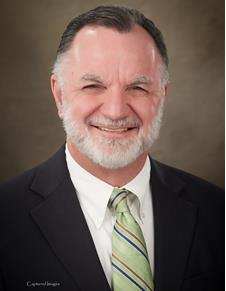
Greg Motley. President of the Bourbon County Economic Development Council. Submitted photo.
Bourbon County Economic Development Council, Inc. is a not-for-profit started in 1992.
The council “reconstituted” in 2020.
“The bylaws were amended, and the board reconstituted in 2020, to make economic development functions a county-wide effort again, and to reestablish cooperation and trust amongst the disparate geographies in our county,” he said. “We can no longer afford to go it alone, and must work together.”
In the last few months, the council began a search for an economic development director.
Their goal for this month is to hire an economic development director to move the county forward.
“The Human Resource Committee (of BEDCO) is currently running the process of hiring an executive director,” Motley said. “We had 13 applications from all over the United States, and one from overseas.”
Through a qualifications matrix, six applications were selected, and each of the six has completed a test to measure skills and temperament suitable for the job, he said.
The committee will reduce the number of applicants based on their scores, and begin interviewing the finalists soon, Motley said.
Composition of BEDCO
“The board of trustees consists of appointees by the…seven incorporated cities, one each from USD 234, USD 235, Fort Scott Community College, the Fort Scott Area Chamber of Commerce, and two at-large members,” Motley said.
The group is comprised of:
Bourbon County Commissioner Lynne Oharah, City of Fort Scott Commissioner Josh Jones, Jess Ervin representing Uniontown, Mike Blevins-Mapleton, Michael Stewart-Bronson, (Treasurer) Mary Pemberton-Redfield, Misty Adams-Fulton, Ted Hessong-USD234, Bret Howard-USD235, (Vice President) Jim Fewins-Fort Scott Community College,(President) Greg Motley-Fort Scott Area Community Foundation, (At-Large) Mark McCoy and (At-Large) Heather Davis.
“Our goal is to be a trusted vehicle whereby we can act as a catalyst for economic development and any other function that might integrate well on a county-wide basis,” Motley said. “Right now, our most valuable assets are lots in the Fort Scott Industrial Park; in conjunction with the county, we are currently working with an active prospect on a land deal in that vicinity that would bring a new business to town.”
“The main board only meets when there is something of substance to consider,” Motley said.
In addition to the human resource committee, the operations committee is meeting regularly.
Operations Committee
The operations committee met on Feb. 11, and worked on logistics of onboarding the economic development director, including office space, phone, etc., Motley said.
That committee is comprised of Mark McCoy, Lynne Oharah, Mary Pemberton, Misty Adams, and Josh Jones.
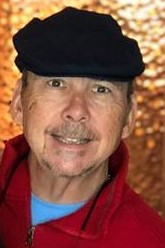
Mark McCoy. Taken from Facebook.
“We discussed office locations,” McCoy said. “Cost is number one, we have very limited funds.”
Two locations were discussed: the BWERC ( Bourbon County Workforce and Entrepreneur Resource Center) office above the new Star Emporium Downtown General Store on Main Street and an office inside Landmark Bank, also on Main Street.
“Both of these offer the potential of the first year, no cost,” McCoy said.
Also discussed was the equipment needed for the job.
“Telecommunication is an important part of the job,” McCoy said. “We want to make sure BEDCO has appropriate information technology access.”
The position is being funded by the Bourbon County Commission who committed $130,000 for the total package of salary, benefits, equipment, supplies, transportation expenses, association expenses, and office space, McCoy said.
“The goal is to save taxes in Bourbon County,” McCoy said. “My goal in the future is to have one economic director representing the county.”
Currently, the City of Fort Scott and the Bourbon County Commission both have an economic director.
The city and county recently agreed to share the finance director position, held by Susan Bancroft.