Get A Big Game Hunting Permit
Application Period Open for Coveted KDWP Commission Big Game Permits
PRATT – Local chapters of nonprofit organizations based or operating in Kansas – that actively promote wildlife conservation and the hunting and fishing heritage – have a special opportunity waiting for them with the Kansas Department of Wildlife and Parks (KDWP) Commission. The Commission Big Game Permit program allows eligible organizations a chance to draw one of seven special big game permits, which can then be sold to raise funding for conservation-based projects. The official drawing will take place at the Commission’s January 13, 2022 public meeting. Applications, which can be obtained from Commission secretary Sheila Kemmis at [email protected], must be submitted no later than January 1, 2022. Organizations are not eligible to receive a Commission Big Game Permit more than once in a three-year period.
One elk, one antelope or up to seven deer permits are issued each year, depending on applicant preference. Deer permits are either-species/either-sex and are valid statewide during any season with legal equipment for that season; and, they do not count against other big game permits the license holder is eligible for.
Once the permit is sold, the cost of the permit, plus 15 percent of the total sale price, is subtracted and kept by the organization, while the remainder is remitted to KDWP with a proposal for a conservation project. When the project is approved, the money is returned to the organization to complete the project. An exception to this procedure would occur if Kansas Hunters Feeding the Hungry (KHFH) is drawn. In that case, KHFH keeps 85 percent of the funds to help pay for processing donated deer.
For more information, contact Kemmis at [email protected] or (620) 672-0702.
FSHS Swim Team Fundraiser: Fall Extravaganza
Shopping Extravaganza On Nov. 22
Monday, November 22nd is the VIP Fall Extravaganza that will be held at the Fort Scott Middle School in the Gymnasium & Commons Area from 5-8 p.m.
This is a one-stop shopping and dining experience.
Pick up baked goods for your Thanksgiving dinner, purchase holiday gifts, and hear holiday music – all in one great evening.
Donated items from vendors will be available as raffle prizes.
Participating Vendors:
*2 Southern Ladies / Jessica Cullen
Baked Goods / Hunter Parker
*Bids & Dibs / Angela Simon
*Color Street / Heather Geiger
*Cowboy Christmas Store & Murphy Boys / Jaymie Murphy
*Crystal’s Jewelry / Carolyn Crystal
*Custom Jewelry / Laura Howard
*Desert Bloom / Jimmie Hughes
Dixie’s Lilla Rose / Dixie Jackson
*Down Home Country Crafter / Cindy Hall
*Flying P Ranch / Abbie Powell & Jolynne Mitchell
FSHS After Prom 2022 / Amy Harper
FSMS Technology Products / Adam Feagins
*Funky Junktiques / Jennifer Cox
*Happy Little Candle Factory / Lori Craig
*Home Sewn Items / Micki Kraft
*Laree + Co. / Rachel French
*Locust Hill Lamanchas / Sue Reinecke
Mixed Media Mosaics / Cindi Lipe
*Paul L. Milks Photography / Paul L. Milks
*Plain Jane’s Soap / Heather Mace & Pamela Walters
*Redbud Farms & Nurseries / Tara Allen
*Shirt Shack / Billy Webster
*Sugar Bakery / Jessie Combs
*Sunshine Boutique / Georgia Brown
*The Purse Lady / Nancy Crawford
*The Spurred Mule Creations and Décor / Jessica Norwood
*Tiger Threads / Morgan Sage
*Tupperware / Shawn O’Brien
*Uppacreek Ranch / Doug Simpson
*Well Spring Acres / Penny Moore
*Wood Crafts & Art / Wilbur Fleming
*These vendors will be donating items to be raffled that evening.
Tickets may be purchased for $0.25 each. Winners need not be
present to win.
Monday, November 22nd
Fort Scott Middle School
Gymnasium & Commons Area
5:00 p.m. – 8:00 p.m.
Parking is available on the east, west, and south sides of the school.
Hedgehog Story Time: Dec. 4
Use Antibiotics Wisely
Governor Kelly and KDHE Ask Kansans to Use Antibiotics Wisely
TOPEKA – Governor Laura Kelly proclaimed Nov. 18–24 as Use Antibiotics Wisely Week in Kansas. The Kansas Department of Health and Environment (KDHE) is asking health care providers and Kansans to use antibiotics wisely to help protect from the threat of growing resistance. This one-week observance led by the Centers for Disease Control and Prevention (CDC) promotes awareness of antibiotic resistance (AR) and the importance of appropriate antibiotic prescribing and use across the United States.
“It will take everyone to do their part in ensuring the proper use of antibiotics,” said Secretary Lee Norman, M.D., Kansas Department of Health and Environment. “Utilizing antibiotics only when appropriate will help decrease the amount of antibiotic resistance infections across the state, further protecting all Kansans.”
Antibiotic awareness does not mean stopping the use of antibiotics; it means improving the way antibiotics are prescribed and used – when necessary and appropriate.
Since the 1940s, antibiotics have been used to treat patients with bacterial infections, significantly reducing the number of related illnesses and deaths. But now, more than 75 years later, antibiotics have been overused and misused to the point that the bacteria the antibiotics are designed to kill have adapted to them, making the drugs less effective, according to the CDC. In fact, some organisms have become so resistant that there are almost no medications that can successfully treat the infections.
The CDC finds that more than one-third of all antibiotics prescribed or otherwise used in the U. S. are either not needed or the antibiotic does not match the germ. Antibiotics are not effective for viruses, such as colds, most sore throats and many sinus infections.
Antibiotic resistance is an ongoing major threat to public health, creating limitations on available treatments for bacterial infections and jeopardizing the ability of healthcare professionals to fight infectious diseases. Additionally, AR increases 4-fold or more when antibiotics are misused for viral infections such as COVID-19 giving this pandemic the potential to kill many more Kansans indirectly by driving antibiotic resistant infections.
Each year, more than 2.8 million people in the United States contract AR infections and more than 35,000 of those people die. Kansas is the 8th highest antibiotic prescribing state with 904 antibiotic prescriptions per 1,000 population, and in the bottom three states in the nation for implementing antibiotic stewardship programs in our healthcare facilities. Antibiotic stewardship (AS) is the effort to improve prescription and use of antibiotics. It is critical that not only health care providers include AS in their practice, but also that all of become stewards of appropriate use.
Here are ways Kansans can help:
- Do not request that your doctor prescribe antibiotics.
- Antibiotics may have side effects. When your doctor says you do not need an antibiotic, taking one may do more harm than good.
- Only take antibiotics that are prescribed for you and take the whole course as described. Do not share or use leftover antibiotics. Antibiotics treat specific types of infections. Taking the wrong medicine may delay correct treatment and allow bacteria to multiply.
To learn more about antibiotic resistance, visit UseAntibioticsWisely.com.
FS Future Farmers of America Students Selling Hay Rings
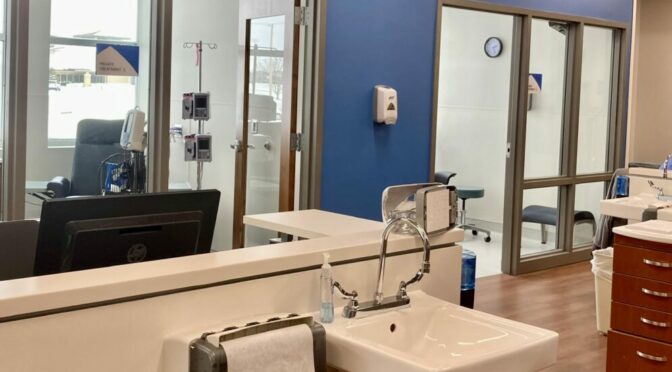
Former Mercy Hospital Building Reopening Process Moves Forward
Noble Health Corporation announced yesterday that in the near future they will be deciding whether it is feasible to reopen a hospital at the former Mercy Hospital facility, according to Rob Harrington, Director of Bourbon County Regional Economic Development Inc.
“There will be two more meetings with the (Bourbon County) Commission and then they will begin talking with the public about the outcome of the feasibility study,” Harrington said.
Noble Health Corp. announced in June 2021 that it would explore the possibility of reopening the acute care hospital facility in Fort Scott, according to a previous press release from the corporation.
The corporation, a Kansas City company, engaged in a cooperative agreement with Bourbon County to conduct a feasibility study that could lead to the reopening of the former Mercy Hospital building, located at 401 Woodland Hills Blvd., according to the press release.
The building is located just off Hwy. 69 on Fort Scott’s south side.
Mercy Hospital Fort Scott closed in December of 2018.

Since that time Community Health Center of Southeast Kansas has leased a portion of the building, and Ascension Via Christi Hospital, Pittsburg, has leased the emergency department. Those leases end in December 2022. Fort Scott Community College has leased the western part of the building for student housing.
To view the prior features on Nobel Health in Fort Scott:
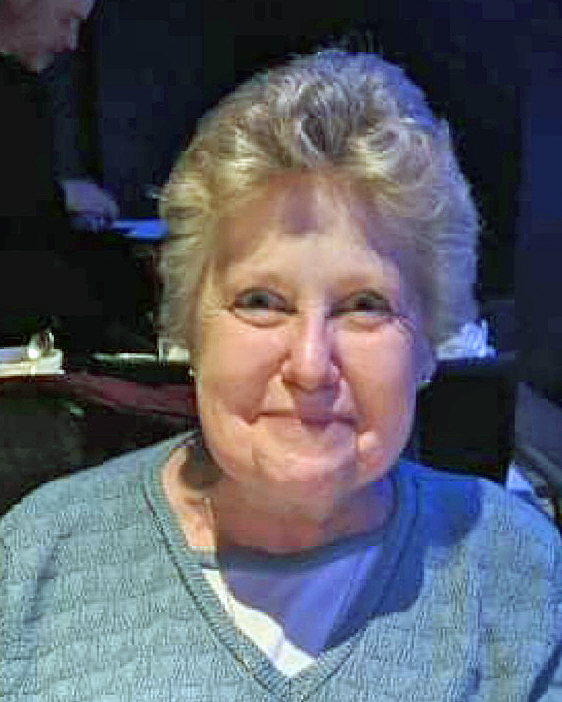
Obituary of Janet Ryan
COVID-19 Booster Shots Available
Governor Laura Kelly Announces COVID-19 Booster Shots Available to All Fully Vaccinated Adults
~All fully vaccinated Kansans over the age of 18 who are 6 months past Pfizer or Moderna vaccination, or two months past Johnson & Johnson vaccination, are now eligible for COVID-19 booster shot ~
TOPEKA – Today, Governor Laura Kelly and the Kansas Department of Health and Environment (KDHE) announced all fully vaccinated Kansans over the age of 18 are now eligible for COVID-19 booster shots.
“The COVID-19 vaccine is free, safe, effective, and the best way to keep our communities protected from this virus,” said Governor Laura Kelly. “Expanding access to booster shots will help us put an end to this deadly pandemic. Whether you are considering your first shot or signing up for a booster, I urge everyone to get the facts and get vaccinated.”
All Kansans who meet the below criteria are now eligible and encouraged to receive a booster dose of the COVID-19 vaccine:
- The patient is at least 18 years old and has met the 6-month time period following the primary vaccination series for the Moderna or Pfizer vaccine, or it has been at least 2 months since their Johnson & Johnson vaccine.
- The patient’s assessment of risk exposure may include, but is not limited to, those who work with the public or live with someone who works with the public, live or work with someone at high risk of severe impact of COVID, live in geographic areas that have been heavily impacted by COVID, reside in high transmission areas, live in congregate setting, experience social inequity or other risk conditions as assessed by the individual. Currently, there is a high risk of community transmission in all Kansas counties. Vaccine providers should allow patients to self-determine their risk of exposure.
“As we move into the winter months, Kansans will increasingly be indoors, putting themselves at greater risk of contracting the virus,” said Secretary Lee Norman, M.D., Kansas Department of Health and Environment. “Allowing Kansans to self-determine their risk of exposure to COVID-19 ensures that every tool is available to protect themselves and reduce the possibility of a winter COVID-19 surge.”
Available data right now show that all three of the COVID-19 vaccines approved or authorized in the United States continue to be highly effective in reducing risk of severe disease, hospitalization, and death, even against the Delta variant. Vaccination remains the best way to protect yourself and reduce the spread of the virus and help prevent new variants from emerging. To find a COVID-19 vaccine clinic visit Vaccines.gov.
Kansas Economic Outlook Continues to Improve
State of Kansas Pays Off Long-Standing Debt Two Years Ahead of Schedule
TOPEKA – Governor Laura Kelly today announced the State of Kansas has paid off the long-standing Pooled Money Investment Board (PMIB) “Bridge Loan.” In 2017 the Legislature took out this loan to fill budget holes due to poor fiscal management of the previous administration.
“Government, just like every Kansan, has to balance its checkbook,” Governor Laura Kelly said. “Thanks to three years of fiscal responsibility, we’ve paid off this debt, continue to fund our schools and roads, and we can afford good policy – like axing the state’s food tax – to provide tax relief to Kansas families.”
The Pooled Money Investment Board (PMIB) is a state board that manages and invests the money available from the State General Fund (SGF) and the hundreds of other state and local funds deposited with the State Treasurer.
In 2017, as a result of poor fiscal policy from the previous administration, the state was forced to borrow a “bridge loan” – a loan of over $300 million from the Pooled Money Investment Board to fill budget holes. The budget had to meet cash flow requirements per state law.
“Because of Governor Kelly’s leadership and due to her prudent fiscal decisions, the budget has not only stabilized – but reenergized the economy,” Budget Director Adam Proffitt said. “Kansas is now in a position to pay off the loan two years ahead of its original schedule – and that’s no small task, especially during uncertain economic times.”
Even with paying off the loan two years ahead of schedule, Governor Kelly has been able to:
- Fully fund Kansas’ schools 3 years in a row;
- Create over 30,000 jobs;
- Bring in over $7 billion business dollars invested in Kansas;
- Implement a statewide bipartisan infrastructure program that created more than 130 infrastructure projects to improve our roads, bridges, and broadband accessibility.