The Bourbon County Democrats are canceling their February 20th regular meeting.
Instead, it’s a good time to familiarize ourselves with Cannabis in Kansas by watching the three YouTube videos from Inspire: Cannabis in Kansas–on the history of cannabis, medicinal uses, and the economy of cannabis in Kansas.
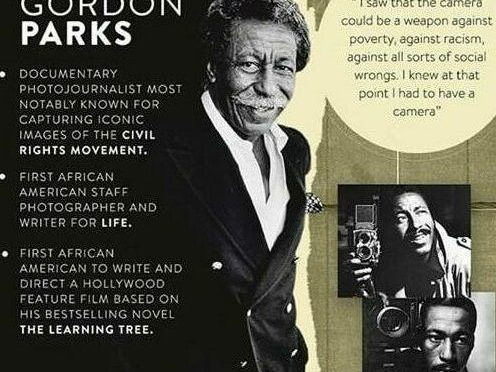
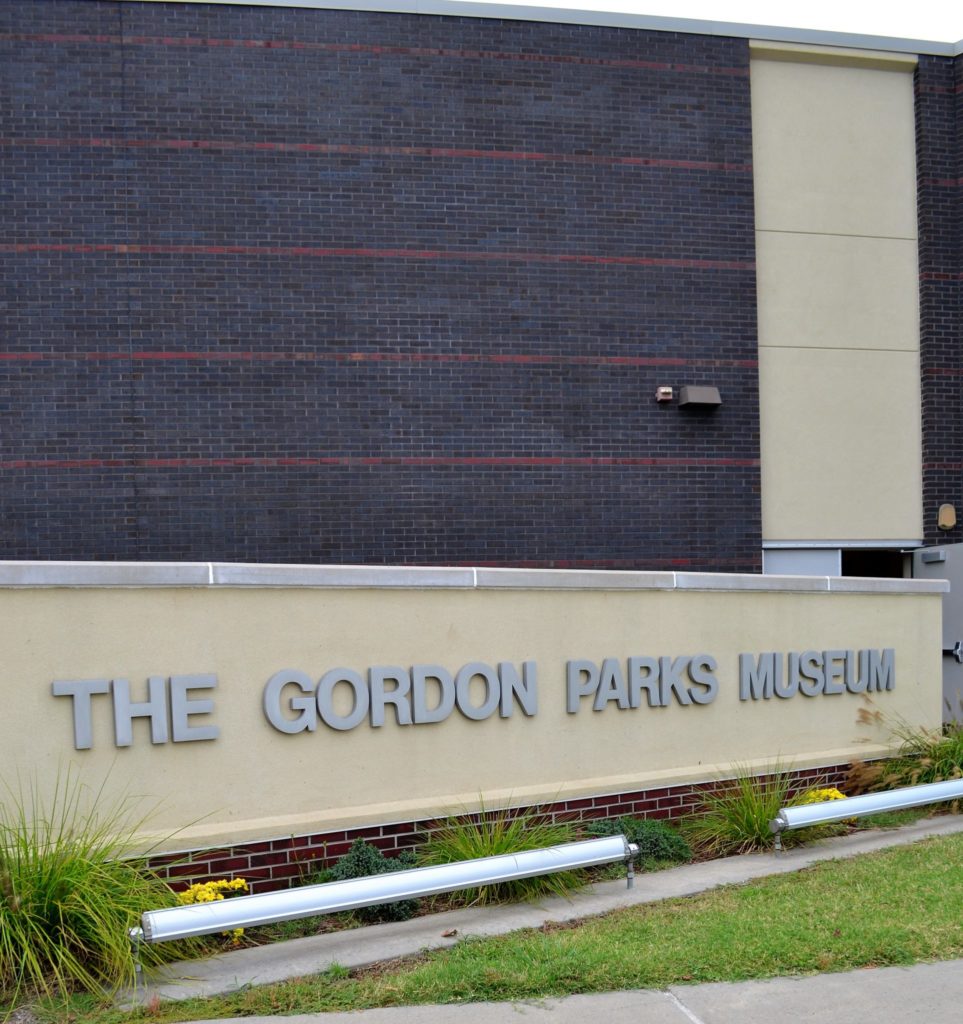
Gordon Parks Museum Black History Month Celebration: Featuring Film Screening: Many Fires This Time: We The 100 Million and Open Mic Afternoon Event
Fort Scott-The Gordon Parks Museum in celebration of Black History Month, will feature a film screening of
the film Many Fires This Time: We The 100 Million and an open mic event. The open mic afternoon event will start at 2:00pm and the film screening will start at 3:30p.m at the Danny and Willa Ellis Family Fine Arts Center on Sunday, February 20th, 2022. This event is supported in part by the Fort Scott Community College Endowment Foundation.
Gordon Parks Museum is located on the campus of Fort Scott Community College.
The film Many Fires This Time: We the 100 Million is an award-winning documentary film that received the Gordon Parks Black Film Excellence Honorable Mention Award at the Tallgrass Film Festival in Wichita, KS. Directed by Jason R.A. Foster, and produced by Michael “Quess?” Moore and Jeremy Liu, Many Fires This Time: We The 100 Million is a poetic documentary about the 1 in 3 Americans, and counting, living in economic insecurity. It follows the journey of poet and activist A Scribe Called Quess? as he connects with fellow activist poets and the communities they represent, from Oakland to Chicago to Kentucky to his hometown of New Orleans.
The open mic afternoon event will take place prior to the film screening and is for any poets, rappers, musicians, or artists of all ages to read their work. Bring your friends, your poetry, your instruments, your beats, your inspirations, your creativity, and your talent! No sign-up necessary, just hop on the mic when you’re ready! Filmmakers Jason R.A. Foster and Michael “Quess?” Moore will be here in Fort Scott to showcase their film and visit with the audience and also M.C. the open mic event. Both the open mic event and film screening is free to attend and participate.
“We are thrilled and fortunate to be able to have both of these very talented filmmakers and artists, Jason and Quess? here in Fort Scott to showcase their award winning film and to help host the open mic event for current and inspiring artist and enthusiasts. ” said Kirk Sharp, Gordon Parks Museum Director.
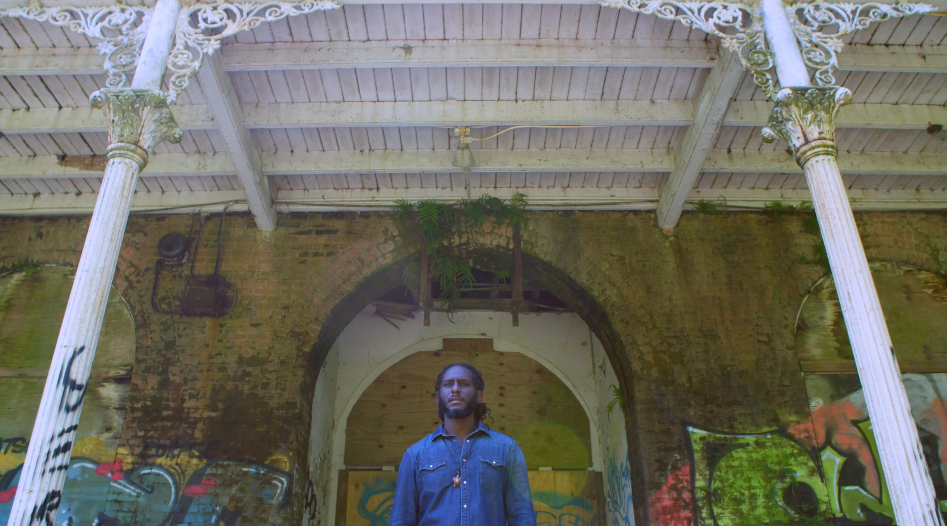
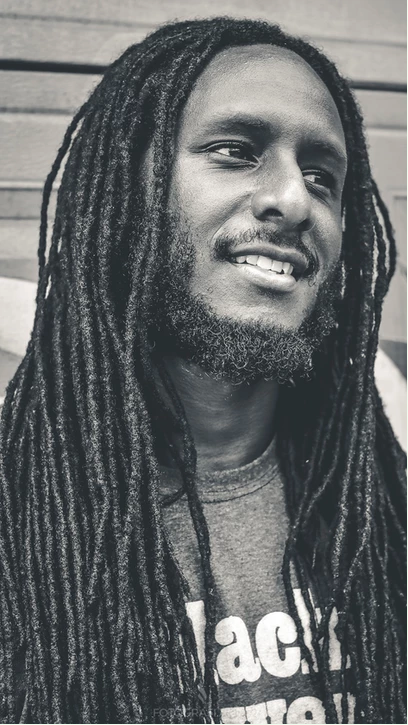
Jason R.A. Foster. Submitted photo.
Jason R.A. is an actor, filmmaker and photographer born in Kingston, Jamaica, and has lived the majority of his life in the American South. He has had roles in films Hot Tub Time Machine 2, Get Hard, and 22 Jump Street. He is the co-founder of FosterBear Films. His short documentaries and films include: Seeing Sounds, Requiem for a Season, Alfred Marshall, A Conversation with John O’Neal , Greater than the Sum (Rethink), Rethink: Restorative Justice. Residual, Neegro’s: And What Happened After That?, and Explanation. Jason’s music videos’ include: Tank and the Bangas: Quick, Sunni Patterson; Black Back, Come Home, Modern Romance, and Brighton Beach: Marce’ Reazon Ft. Ro Ransom.
Jason has taught film classes to the New Orleans community through the New Orleans Video Access Center
and Kids Rethink New Orleans Schools. His nomadic lifestyle has contributed to his ability to tell stories
and connect with people from all walks of life.
A Scribe Called Quess. Submitted photo.
A Scribe Called Quess? Aka Michael “Quess?” Moore is a poet, educator, actor, playwright, activist, and
organizer in that order. He is a two-time national poetry slam champion and founding member of Team SNO
(Slam New Orleans), New Orleans’ three-time national poetry slam championship team. His poetry has been
published or featured by Pluck!, Nike, Congo TV, Balcony TV, Button Poetry, Write About Now Poetry, Spotify,
Mic, Redbull, and other platforms, and has earned him honors from the mayor and city council of New
Orleans. His words led him to the classroom where he served for 11 years as an educator. His work as an
educator has been highlighted on NPR in the Voices of Educators series as well as taken him to Oxford
University to speak on school reform.
For more information about the events contact the Gordon Parks Museum by phone (620) – 223-2700, ext.
5850 or by email [email protected].
The renovation of the Ascension Via Christi Cancer Center is now complete, giving Pittsburg-area patients who are battling cancer close-to-home access to advanced technology in a patient- and family-friendly environment.
The outpatient cancer center opened 26 years ago, funded entirely by donations to the Mount Carmel Foundation’s “Legacy of Hope” campaign.
The $1 million renovation also was funded entirely by
community donations, this time to the “Legacy of Hope II” campaign led by Johnna Norton, the foundation’s executive director.
“I am so proud to live and serve in such a giving community and with a team that throughout the pandemic has continued to provide exceptional care to our patients,” said Charlotte Russell, director of
operations for the Ascension Via Christi Cancer Center and Ascension Medical Group Via Christi physician practices in Pittsburg.
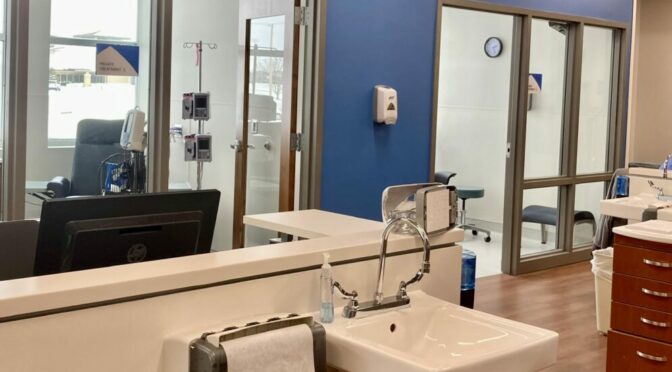
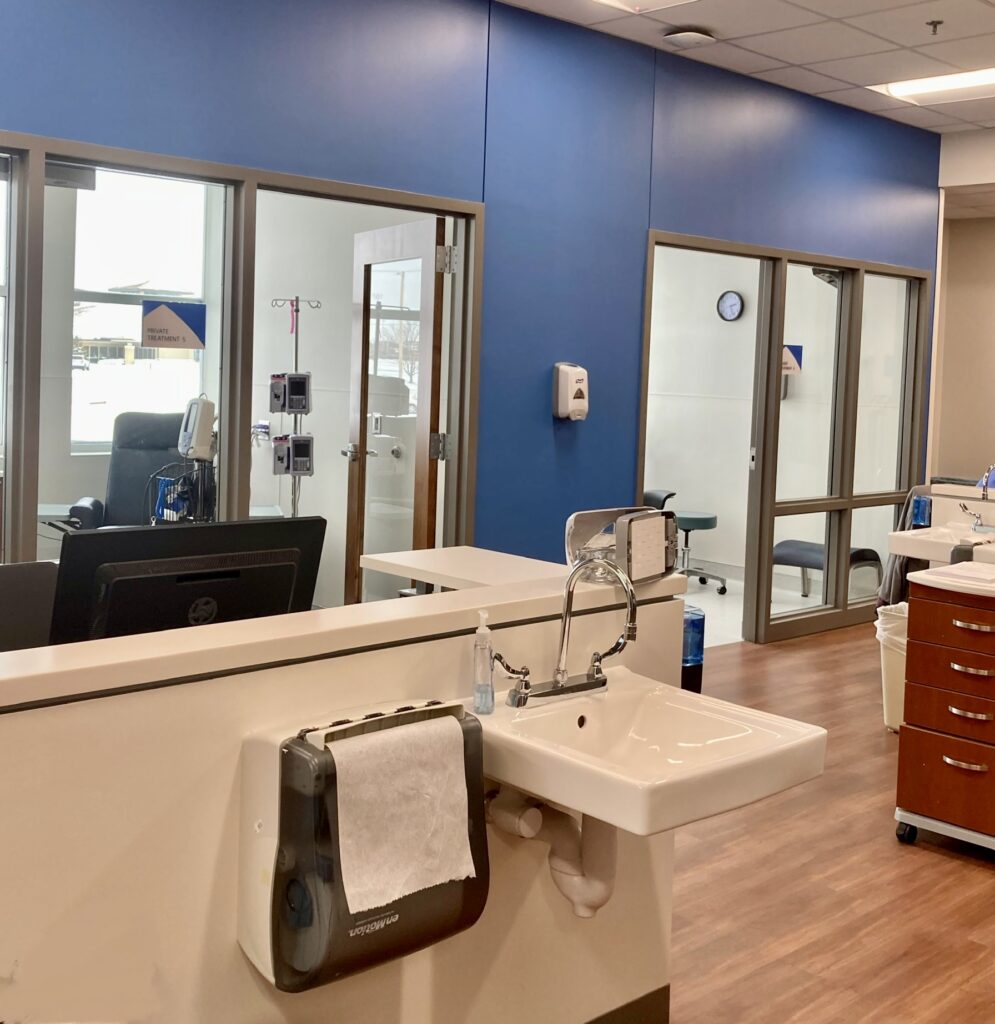
Through the community’s generosity, the chemotherapy area now has seven private treatment suites and the entire cancer center was updated to create a brighter and more welcoming environment. The patient and family resource room was also refurbished, providing a comfortable space for the patient and family education, nutritional counseling and spiritual and emotional support services.
Ascension Via Christi Hospital also made a significant investment in the cancer center, spending $1.5 million to acquire a new state-of-the-art TrueBeam linear accelerator, allowing patients to receive highly precise radiation therapy in a shorter period of time.
In January, the hospital added medical oncologists James Moore, MD, and Michael Cannon, MD, to its medical staff. Drs. Moore and Cannon, both with Cancer Center of Kansas, join medical oncologist Mickey Xun, MD, with Ascension Medical Group Via Christi, and radiation oncologist Duane Myers, MD, with Radiation Oncology Associates, in providing southeast Kansas residents ready access to comprehensive cancer care.
“We now have a beautiful space, an outstanding team of physicians and the advanced technology we need to continue our legacy as the community’s cancer care partner,” said Drew Talbott, president of
Ascension Via Christi Hospital in Pittsburg. “Like Charlotte, I am tremendously grateful and proud of our community and staff.”
For more information about Ascension Via Christi in Pittsburg, visit ascension.org/PittsburgKS.
Via Christi Cancer Center Chemotherapy Bays. Submitted photo
About Ascension Via Christi
In Kansas, Ascension Via Christi operates seven hospitals and 75 other sites of care and employs nearly
6,400 associates. Across the state, Ascension Via Christi provided nearly $89 million in community
benefit and care of persons living in poverty in fiscal year 2021. Serving Kansas for more than 135 years,
Ascension is a faith-based healthcare organization committed to delivering compassionate, personalized
care to all, with special attention to persons living in poverty and those most vulnerable. Ascension is the
leading non-profit and Catholic health system in the U.S., operating more than 2,600 sites of care –
including 145 hospitals and more than 40 senior living facilities – in 19 states and the District of
Columbia. Visit www.ascension.org.
2
Barbara Stockebrand. K-State Extension Agent. Submitted photo.
If you were going to invest now in your future best self, where would you put your time and energy? Research has shown that most would answer this question with activities that would bring success and wealth. Our worldly pressures push us to work harder so we can achieve more to reach those successes to have a better life.
I would challenge you to think about successful and wealthy vs. happy and healthy. For over 75 years, The Harvard Study of Adult Development has tracked the lives of 724 men — following their work, their home lives, and their health. Sixty of the 724 still live with most of them in their 90’s.
One group of the men studied finished the Harvard college, and most of those went on to serve in World War II. The second group consisted of a group of boys from the poorest neighborhoods in Boston, specifically chosen because they were from some of the most disadvantaged families in that city in the 1930’s.
Whole families were interviewed at the beginning of the study. These men entered adulthood in all walks of life. Some climbed the social ladder all the way to the top. Some went the opposite direction.
Follow-up continues with the remaining men, with interviews taking place in their own homes with them individually and with their families, studying their medical records, and questioning their doctors. What they have discovered so far, is that having a good life doesn’t have anything to do with wealth or fame or working harder, but simply that good relationships keep us happier and healthier.
Here are three main lessons learned:
Firstly, social connections are really good for us, and loneliness stifles. Those more socially connected to family, friends, and their community are happier, healthier, and they live longer. Loneliness is toxic. They are less happy, their health declines earlier in mid-life, and their brain function declines sooner.
Secondly, the quality of close relationships matters. Living in the midst of conflict is bad for our health. Living in the midst of warm relationships is protective. When the men had been followed into their mid-80’s, a look-back into the two groups was done to see if at age 50, a prediction could be made as to how they would grow old. It wasn’t their mid-life cholesterol levels that forecasted how they were going to age, it was how satisfied they were in their relationships. Those most satisfied with their relationships at 50 were the healthiest at 80. Good relationships add a protective factor from other life crises.
Thirdly, good relationships protect our brains in addition to our bodies. Being in a securely attached relationship to another person in your 80’s — where one can really count on the other person in times of need, is protective. Memories stay sharper longer. Bickering aside, when things got tough, they knew they could still count on that other person, and those arguments would not take a toll on their memories.
This isn’t new information. We are human and all like a quick fix. However, relationships are built over time. They require dedication, can be complicated, and take work over a lifetime to achieve meaningful relationships.
In the study those that were happiest going into retirement were those that replaced their friends from the work place with new friends in retirement. What might that look like? Replace screen time or being holed up in your home environment with spending time with people. Doing something new together with your spouse or a special someone, or reaching out to someone you haven’t spoken to in years. Feuds take a toll on those who hold grudges.
While acquaintances and friendships of all kinds are important, meaningful relationships can provide an increased sense of satisfaction and well-being. For more information on relationship building, contact a Southwind District Extension Office with locations in Erie, Fort Scott, Iola and Yates Center.
K-State Research and Extension is an equal opportunity provider and employer.
On a warm fall afternoon, I was relaxing while reading in the pergola. I was totally focused on the book, and not paying a lick of attention to my surroundings, when I heard the pitter-patter of feet on the flooring. I looked up just in time to see a groundhog quickly trot right by me. He was as cute as he was fat — I guess he’d been stocking up on lard so he could hibernate nicely through the winter. This wasn’t the first time I’d spotted him on my property, but I’d never laid eyes on him this close. While visiting with my daughter about my pet groundhog, I mentioned that I wanted to name him. She suggested Fatty Jacky (a nutty character from the crazy Jerry Lewis movie, “The Disorderly Orderly.“) Since we both guffawed, I knew that was the perfect name for him!
As believers, being asleep at the wheel (not paying attention to our spiritual walk) is very dangerous. God’s Word warns us to stay alert and keep a sharp lookout. Since I wasn’t paying attention to what was going on, Fatty Jacky was able to sneak up on me from “out of nowhere.” However, if I’d been keeping a close watch, I would have seen him coming way before he arrived at the pergola. “Stay alert! Watch out for your great enemy, the devil. He prowls around like a roaring lion, looking for someone to devour. Stand firm against him, and be strong in your faith” (1 Peter 5:8,9 NLT). Just as lions go after the feeble, the young, and the stragglers, the devil looks for those who are isolated, weak, or totally unfocused on God so he can devour/destroy them.
The author of the Book of Hebrews gives Christians practical ways to stay alert. “Our great desire is that you will keep on loving others as long as life lasts, in order to make certain that what you hope for will come true. Then you will not become spiritually dull and indifferent“ (Hebrews 6:11,12 NLT). We’re reminded that loving people will help guard against growing disinterested and becoming spiritual sluggards in our Christian walk. Jesus doesn’t call believers to be passive followers, He calls us to be passionate followers.
There are so many distractions in today’s world. When I fire up my computer, all kinds of stuff pops up. If I’m not determined to stay focused on my goal, I can get side-tracked looking at junk I don’t even want to see or read. The same thing can happen to believers in their spiritual life. It’s imperative not to just go with the flow, ignore God’s Word, or disregard plain ol’ common sense. “This is why it is so crucial that we be all the more engaged and attentive to the truths that we have heard so that we do not drift off course” (Hebrews 2:1 TPT).
“We must keep our eyes on Jesus, who leads us and makes our faith complete” (Hebrews 12:2 CEV). The hymn, “Turn Your Eyes Upon Jesus,” composed by Helen H. Lemmel bears the truth of this scripture with these lyrics: “Turn your eyes upon Jesus; look full in His wonderful face. And the things of earth will grow strangely dim in the light of His glory and grace.”
The Key: Keep your eyes peeled so you won’t be devoured by the devil or get run over by a groundhog.
Gregg Motley. President of the Regional Economic Development, Inc. Submitted photo.
The last two years have been difficult for Bourbon County, along with most of rural America, especially for the 45 residents we lost to COVID19 and their families.
According to the Kansas Statistical Abstract (“Abstract”) released in September, the pain is economic as well as personal. Perusing the Abstract, here are some notable trends that indicate the stress under which we have all lived in the last two years:
Beginning with money and banking, our nationwide economy has been awash in cash due to the stimulus checks and deficit spending coming out of Washington D.C.
Accordingly, bank deposits grew by 15.9% in Kansas during 2020; by comparison, Bourbon County bank deposits grew by only 9.1%. This is indicative of how Federal spending disproportionately favors urban areas.
Another important indicator of economic success is spending within our county, primarily indicated by a measure called Trade Pull Factor. This measures the amount of money spent in Bourbon County compared to the income earned by its residents.
Over the last six years, we have hovered around the 70% level, meaning that for every dollar earned by a resident, 70 cents are spent in our county; this includes nonresidents who spend their money here while visiting. This measure dropped to 68% in 2020; the logical explanation is that we have had fewer visitors. The number also indicates that we have an opportunity to evaluate our own spending habits, and consider spending more of our disposable income in our county; it benefits us all.
Employment numbers continue to be difficult for us. The Bourbon County unemployment number jumped from 4.2% in 2019 to 5.6% in 2020.
Why did we have so many help wanted ads alongside so many unemployed people? One can only conclude that some decided that they could live off stimulus money. Hopefully, our unemployment numbers will move in the right direction when the money out of Washington D.C. slows down to a gush. Current numbers indicate we are a still a net importer of workers.
After making some significant gains in per capita personal income in prior years, the Bourbon County growth rate in 2019 slowed to 2.4% compared to a statewide number of 4.2%. Given our continued demand for additional workers, I am hopeful the growth in personal income in the county will get back on track.
One positive trend that continued into 2019 is the drop in the county’s poverty rate. This rate peaked in 2017 at 18.3% of Bourbon County residents; that rate has continued to fall to 15.4% in 2019. It will be interesting to see how COVID19 affects this number in 2020 and 2021.
These numbers can be difficult to wade through, but it is important for us to understand the trends in order to propose effective solutions. Bourbon County REDI is committed to staying informed in order to be a part of the solution.
The Southwind Extension District will host a free information meeting on Old World Bluestem at the Bressner Hall on the Woodson County Fairgrounds on February 16, 2022 at 2:30 p.m..
Old World Bluestems are a group of introduced grasses into the United States in the late 1920’s as improved grasses. While these grasses are called bluestems they are not closely related to Big Bluestem or Little Bluestem. Old World Bluestem are survivors of centuries of overgrazing. They are drought tolerant, aggressive, and prolific seed producers which sounds great until you add they are unpalatable to livestock in relation to our desired native grasses. They can become invasive anytime our natives species are stressed.
Dr. Walt Fick, Kansas State University Range Specialist, will discuss identification and control of Old World Bluestem. Also on the program will be Jarrod McVey, Woodson County Noxious Weed Director, discussing ways his department can help you with your noxious weed problems.
Beef/cow/calf Risk Management
The Southwind Extension District will be hosting Beef Cow/Calf Risk Management meeting on February 23, 2022 , at 5:30 at two locations. This is a hands-on evening workshop that will teach principles of determining cost of production for a cow/calf operation. Learn strategies for cattle marketing, and insurance products for price risk management. Participants will work with a case farm to apply these topics to a real-world cattle operation. The goal is for participants to acquire risk management skills they can apply directly to their own operations.
Registration fee is $15, payable that night. To guarantee a meal and informational packet call the Southwind Extension in Yates Center 620-625-8620 to register.
The Iola location is at the Southwind Extension Office at 1006 N. State Street in Iola. Fort Scott location is at Healthy Bourbon County Action Team Office at 104 N. National Ave in Fort Scott. Dinner will start at 5:30 pm with the program starting at 6:00. Program is scheduled to end at 8:30 pm
Submitted by Fort Scott City Commissioner Pete Allen.
When a group of about 70 people comes in for a family reunion, take the trolley ride and the thing that sticks out most in their mind is the bumpy streets, something is wrong!
When 3 people from out of town do a survey of FS for a group called “First Impressions” and when asked what you will remember most about FS after 30 days, the answer of 2 out of 3 is “the bumpy streets”, something is wrong! That is unless you like bumpy streets.
General
This summary is a brief and concise summary of the findings, conclusions, and recommendations for a proposed City of Fort Scott Street Multi-Year Special Maintenance Plan.
Findings
The city operates and maintains approximately 83 miles of streets. Most of the streets are beyond their life cycle and require moderate to major maintenance to prevent further deterioration and require major construction for correction.
Funding for street work is projected to come from a recently enacted one
percent County sales tax, a 1% City sales tax (1986) and a half percent City
sales tax along with a State Gasoline Tax. This is supplemented by
connecting link payment of approximately $12,500.
With the cost of street improvements (rebuild) estimated to be in the $140
M range, the overall time frame for those improvements would be 62
years.
There is no ordinance preventing us from applying the asphalt mixture to
existing brick streets. In fact, it has become common practice.
Fort Scott’s brick streets have been laid over existing soil consisting of black
dirt, clay or clay/rock mixtures with about a 1” layer of sand and these
streets do not meet the requirements for present day traffic loads.
It was recently learned, by me, that in the 1990’s an attempt to discover
the cost of rebuilding (major reconstruction) of our brick streets was
undertaken. A section of Eddy Street south of 9th Street was chosen for the
study. As reported to me, the bricks were removed, curb and gutter was
poured, and a concrete base was installed. Then the bricks were re-laid.
Detailed job costs were kept, and the consensus result was that it would be
cost prohibitive to rebuild them. No other attempt was made to rebuild. I
believe that it was then decided on the procedure of overlaying the brick
streets.
No further attempt should be made to overlay with asphalt, any of the
remaining unpaved brick streets.
Typical base under existing Brick Streets
Total cross section is approximately 5”
Typ. cross section of modern engineered roadway for comparative
purpose
6” of compacted earth
8” of AB-3 Base Rock
10” of hot mix asphalt
Total cross section thickness is 24”
• Generally, these brick streets have failed as the result of heavy loads being
driven over them and they would fall into a classification as “unrepairable” with
75 to 80 percent of our streets falling into this classification.
• On a scale of 1 to 10, with 10 being the highest, our streets would rate (PCI) at
about a 3.5 average meaning they are full of potholes, sunken areas, and other
conditions that would make them nearly impassable.
• Each year with the continued infiltration of moisture and heavy loads they
continue to deteriorate and each year at an accelerated rate over the previous
year.
Recommendations
A decision now must be made to shift from the street re-construction
schedule to a more proactive maintenance program, performing low to
moderate cost, high impact maintenance activities which increase the
Pavement Condition Index (PCI) on streets requiring minimal to moderate
maintenance to gain service life.
While maintenance projects and activities are not as glamorous, these
efforts will provide an economical means of extending the life to major
investments in the street network.
As a result of that shift, improvements will be made to the driving surfaces
in the overall street network.
This proactive maintenance program should continue, as the most
economical means to maintain and improve the street network with the
available funding.
The rebuilding of streets should not be suspended, only scaled back to
properly fund needed maintenance to protect the community’s previous
investments in street infrastructure.
This plan attempts to provide a balanced approach and cost-effective
measures to increase the PCI score and improve our street drivability.
With implementation, all classifications of streets will meet or exceed an
average PCI goal of 5 over the next seven to ten years.
Examples of maintenance activities include pothole repair, sections of
nonrepairable asphalt and bricks replaced with asphalt, skim patching,
alligator cracking repairs, crack filling, chip sealing, and broken concrete
repairs.
It is imperative that we make our existing streets as “drivable” (min. PCI of
5) as possible at the lowest cost, as they must be used by the motorists
until such time as they can be reconstructed.
We do not have the financial resources to rebuild the nearly 700 blocks of
our unrepairable streets. At the average rate of even $200K per block, that
sum equals $140M dollars.
With the advent of our pothole patching machine, using proper aggregate
and asphalt emulsions and training in the proper techniques, we are now
able to use the machine for performing the above-described process.
The downtown historical district would be designated for complete brick
street restoration, as well as selected other isolated areas, such as 5th
Street by the Old Church and 3rd Street by Eugene Ware School, with other
areas deemed historic by the governing body.
These areas would not be included in this Street Maintenance Program but
would be funded from a Brick Street Fund taken from the sales tax revenue.
A $200,000 yearly fund would be established for that purpose.
Note that areas outside the historic district could remain brick by the
establishment of a benefit district upon approval by 80% of adjoining
property owners.
City would be responsible for standard reconstruction with adjoining
property owners responsible for additional cost for replacing bricks. No
particular priority would be given these streets to fit in the 62 years rebuild
program.
All other areas would be included in the Street Maintenance Program
subject to maintenance procedures as described above.
This would include the buildup of missing and sunken areas with the
pothole patching machine and materials.
Standard chip seal would be used as part of street maintenance for streets
such as Liberty Bell Road and sections of Horton Street.
Following the improvement methods described above, standard chip seal
methods would be utilized for additional leveling and preservation. County
has equipment for chip sealing and is available for cost sharing.
Mill and overlay would be classified as street maintenance and would
include Broadway and 6th Streets. Such streets would be reconstructed if
grants would become available.
The “like for like” “materials as described in Ord. 12.12.090 – Restoration to
original condition” would be discontinued and the installation of hot-mix
asphalt in excavations in streets listed in the “unrepairable” classification
with cold-mix as a temporary material when hot-mix would be unavailable.
Continuance of the requirements in Ord. 12.12.090 would be enforced in all
street and alley excavations (excavation and backfill).
Approximate cost of treatment is estimated to be $5,000 per block on
average with the goal of 100 blocks treated per year ($500,000). This
would compare to an estimated cost of $200,000 per block, or $20M for
the 100 blocks.
Yearly material usage requirements would be approximately 14,000 gallons
of emulsion and approximately 600 tons of ½” chips ($48,000).
A heated upright 7,000-gallon emulsion storage tank would need to be
purchased and erected at the City Facility. Note: This tank was authorized
and ordered at the commission meeting of Feb. 1, 2022. This tank
compliments the initial purchase of the Total Patcher machine at the cost of
$68,000 and will allow us to manufacture our own patching material for the
above-mentioned maintenance activities. Training in the use and proper
care of the machine was performed in May of 2021. Nine public works
employees were trained
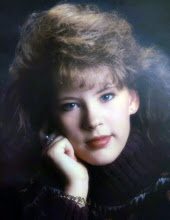
Melissa Lynn Hays-Mitchell, 48, left our world unexpectedly on Dec 21, 2021. Melissa was born on July 4, 1973, to James Hays and Joann Sipe Hays in Fort Scott, Kansas. She graduated from Fort Scott High School in 1991, and continued her education at Pittsburg State University, earning her bachelor’s degree in social work.
She was preceded in death by both of her parents.
Melissa’s beloved spouse, Dean Zimmerman also left our world on December 21, 2021.
Continued prayers for both families are appreciated.
She was previously married to Jerald Mitchell (Fort Scott) for 18 years, they raised three children together. Dayton, Dawson, and Katelynn Mitchell were always their mother’s world. Please keep them in your thoughts and prayers while they navigate through this difficult time.
Left behind are her three children: Dayton Hays (Jessica Powers) Mitchell, Dawson James Mitchell, and Katelynn (Taylor Harrison) Mitchell. She also leaves behind a brother Jason Hays, and sister Sheila Hixon (Robert Hixon).
Besides her own children, Melissa’s pride and joy lay with her grandchildren. This Mimi never missed a beat and will be missed by them all: Bryant, Bentley, Kinsley, Hayden, Brayden, Kase, and Dylynn. She also leaves behind several nieces and nephews.
As a caring mother, wife, and grandmother, Melissa never knew a stranger and lived on her own terms. Her funny wit, intelligent comments, and unique personality are what those who knew her will miss the most. She was one of a kind, unapologetically being herself when it came to what she believed in.
A celebration of Melissa’s life will be at Buck Run Community Center on Saturday, February 26th, 2022, at 1:00 PM. Please feel free to stop by and share your memories of Melissa with her family and close friends.