A local couple has started a new coffee bean roasting business.
Crooked Cactus Coffee Co. owners Randy and Tanya Glessner
started their new venture on July 3, 2023.
“We sell small farm, single origin coffee beans from around the world and roast them locally here in Fort Scott, with love,” Randy Glessner said.
Randy and Tanya Glessner. Submitted photo.
They have a Facebook page where the current coffee menu is posted at the top, he said.
“Menu selections vary by season,” Randy Glessner said.
The current coffee menu is:
light-Mexican
medium- Nicaraguan
dark-Sumatran
decaf-Medium Timor
The business is located at 408 Jefferson Street on Fort Scott’s east side, inside of Upper Cut Salon, a beauty shop operated by Tanya.
“We both have a passion for coffee and wanted a way to enjoy it in the freshest, purest way possible,” he said. “So we started looking into the best coffee beans and wanted to support small coffee bean farms around the world. After that, we started mastering our coffee roasts and knew this was something we had to share with others! “
The coffee costs $15 for a 12 ounce bag. When ordering, please specify whether whole beans or ground beans are desired.
They accept cash, credit/debit card or cashapp.
Orders can be placed by calling or texting 620-224-6704.
Submitted graphic.
Tanya is an ordained minister.
“She doesn’t work for any church,” he said. “She volunteers her own time and money to help women in prison and recovering addicts.
Ten percent of all proceeds goes to the prison ministry/mentoring and local community mentoring for recovering addicts.”
PRATT – The Kansas Department of Wildlife and Parks (KDWP) is conducting a five-year review of the lists of Kansas species that are endangered, threatened or Species In Need of Conservation (SINC). Endangered is the most imperiled category of the three, and species on the SINC list are deemed to require conservation measures to prevent them from becoming threatened or endangered. A five-year review is required by the Kansas Nongame and Endangered Species Conservation Act of 1975. Any individual or group can petition KDWP to propose an addition, deletion, or modification to the current lists by providing pertinent scientific information required within the petition form.
KDWP relies on the Threatened and Endangered Species Task Committee to assist with the review process. The task committee consists of seven members representing various disciplines, and include staff from state and federal agencies and state universities. To determine if a full review is warranted, the task committee examines updated scientific information and research for any species petitioned for a listing change. Species experts are consulted and all available data is evaluated during the full review. These recommendations, and any amendments to them, are published in the Kansas Register for public comment for at least 90 days. After a full review is completed, the task committee makes recommendations to the KDWP Secretary and any changes to the lists must be approved by the KDWP Commission following a public hearing.
At the last five-year review completed in 2019, the Arkansas darter was removed from the threatened list and added to the SINC list. The Wabash pigtoe mussel was removed from the SINC list, and the cylindrical papershell mussel was added to the endangered list.
The state endangered list currently includes 11 invertebrates, five fish, two amphibians, two birds and two mammals. The state threatened list includes six invertebrates, 10 fish, six amphibians, three reptiles, one turtle, two birds and one mammal. The state SINC list includes 82 species.
A recent survey conducted by Responsive Management – an internationally recognized research firm specializing in natural resource and outdoor recreation issues – found that conservation of threatened and endangered wildlife remains important among Kansans. Some interesting findings included:
A majority of Kansas residents (94 percent) agreed that the KDWP should continue to identify and protect habitat critical to threatened and endangered species.
A majority (84 percent) of residents agree with the statement, “Wildlife that is threatened and endangered in Kansas yet abundant in other states should still be protected in Kansas.”
Kansas: National Leader in Economic and Income Growth in First Quarter of 2023
~~Bureau of Economic Analysis Report Reflects Success of Kelly Administration Efforts to Create Jobs, Support Businesses~~
TOPEKA – A report recently released by the Bureau of Economic Analysis (BEA) shows that, in the first quarter of 2023, Kansas ranked fourth in the nation for personal income growth and seventh in the nation for economic growth. The report highlights the Kelly administration’s success in recruiting and supporting businesses that grow the state’s economy and increase wages for workers.
“This report is further proof that the work my administration is doing to create good-paying jobs, grow the economy, and balance the budget is benefiting Kansans,” Governor Laura Kelly said. “The days of Kansas making headlines for failure and mismanagement are long behind us. Now, we are leading the nation in creating a strong economy.”
Kansas’ real gross domestic product (GDP), or the market value of goods and services produced in the state, grew by 6.0% from the fourth quarter of 2022 when adjusted for inflation, triple the national average of 2.0%.
Personal income in Kansas grew by 8.4% over the same period, surpassing the national rate of 5.1%.
“This report demonstrates the resiliency and strength of the Kansas economy,” Secretary of Administration and Director of Budget Adam Proffitt said. “The state has placed in the top 7 for both GDP and Personal Income in the aggregate and across multiple sectors of the economy, showing that our economy is not overly dependent on any one sector. Our state’s fiscal health is strong, and the outlook remains promising.”
The report showed that agriculture, forestry, fishing, and hunting were the lead contributors to growth in states including Kansas – a testament to the Kelly administration’s efforts to reinvigorate the state’s economy across multiple sectors.
“The Kansas Department of Wildlife and Parks and residents have worked hard to build a reputation for the Sunflower State as one of the top states in the nation for outdoor recreation, and our six percent rise in real GDP this quarter certainly reflects that,” Secretary of Wildlife and Parks Brad Loveless said. “By prioritizing sustainable practices and collaboration with private landowners, I’m confident we’ll continue to develop our great tradition of hunting, fishing, hiking, and camping for many more generations, and visitors, to come.”
“Agriculture has always been at the heart of the Kansas economy, and the growth we’ve seen in agriculture and agribusiness across the state shows the entrepreneurial spirit of Kansans,” Agriculture Secretary Mike Beam said. “Innovative approaches in technology, science, and sustainability will keep Kansas agriculture at the forefront of producing the food, fiber, and fuel that are needed in the future.”
PAWHUSKA, Okla.—When researching Osage history for Wahzhazhe: An Osage Ballet, co-creator Randy Tinker-Smith, founder of Osage Ballet, spoke with around 50 elders. Tinker-Smith is Osage, and she knows that some things are not meant to be shared onstage.
“While doing research for the ballet, I spoke with around 50 Osage elders,” she said. “I did not want to do one thing without permission. I met with some of them numerous times, and by the end of that year we had lost three of them. Now looking back, I am just so thankful that I had that time with them.”
With Martin Scorsese’s film Killers of the Flower Moon being recently filmed in the present-day Osage Nation, Osage history is on the minds of many people. Visitors to Fort Scott, KS have three opportunities to experience 400 years of the rich history of the Osage through artistic dance when Wahzhazhe: An Osage Ballet is presented at Ellis Family Fine Arts Center on the campus of Fort Scott Community College, July 21 and 22.
Ellis Fine Arts Center on the campus of Fort Scott Community College, 2401 S. Horton.
The production is the work of Osage Ballet, a nonprofit organization which seeks to preserve and share the history of the Osage people through dance.
The first half of the ballet depicts life in the Osages’ ancestral homelands, which encompassed much of the middle of the United States, including the entirety of what is now Missouri. One of the earliest diaries chronicling the Osage people describe them as the “happiest people in the world.” Family and ceremony were at the center of culture and moving with the seasons was a way of life. With the arrival of Europeans, many of the ceremonies and the complex Osage clan system were almost decimated by war and disease. Like many Indigenous people, the mighty Osage were forced west onto smaller and smaller pieces of land. Eventually, the Osage bought their own reservation in Indian Territory and settled there in what is now Osage County, Oklahoma.
Tinker-Smith said her own family’s history was on her mind as she researched.
“When our tribe left Kansas in 1871, there had been so much death because of smallpox and starvation and other diseases,” she said. “The buffalo had been slaughtered. Fences had been put up. Everything had changed drastically. Because of that, the elders put away our ceremonies because they did not have the animals, plants, and implements they needed to do them properly. We are a highly organized people: You have a purpose, you learn how to do it, and you pass it on, but that could not be done anymore. My great-grandfather was born at St. Paul Mission in Kansas. I read a diary that said 600 Osage people died in one week while he was living there. This history touches our family so deeply.”
The first act of the ballet chronicles what was lost, while the second act portrays how the Osage survived and continue to thrive despite so much trauma.
“When I started meeting with these elders, I wanted to have permission about what I could tell in the story,” she said. “As long as I am alive, for example, you will never see our sacred ceremonial ways on our stage, but what you will see are the things we still have: Fire, feathers, water. Songs. There is a lot that we can share, and it is exceptionally beautiful.”
The Osage Ballet, Wahzhazhe was created by a predominately Indigenous team with choreography by Jenna LaViolette (Osage) and original music by Osage composer Lou Brock. Dr. Joseph Rivers, chair of the film department at the University of Tulsa, composed original music and arranged the score. Osage artists Wendy Ponca, Alexander Ponca Stock, and the late Terry Wann, designed the costumes and backdrops. Shawnee Peoria artist Roman Jasinski, Jr. served as artistic adviser. (Jasinski is the son of Moscelyne Larkin, one of five Indigenous ballerinas from Oklahoma to gain international fame in the 20th century.) Professional dancers for the production are from ballet companies around the US. Joining the professional dancers are students of Dance Maker Academy in Pawhuska, Oklahoma, representing 19 Native nations.
For tickets and information on the July 21 and 22 performances in Fort Scott, KS visit their website, www.osageballet.com/events and watch for posts
Kansas – A Friend AsKS youth suicide prevention app now available in Spanish
TOPEKA – (July 6, 2023) – Kansas Attorney General Kris Kobach today announced a significant update to the Kansas – A Friend AsKS youth suicide prevention app that makes the resource available in Spanish.
The app was released in September 2022 and was developed in partnership with The Jason Foundation, a national suicide prevention organization. The app is available for free in both the Apple and Google Play Stores.
“When we released the English language app for young people, mental health counselors, school administrators, and law enforcement, I quickly learned that a Spanish translation should be the next step. Now Spanish and English-speaking families have these resources available that, along with other things we are doing in Kansas, will help prevent suicide,” said Laura Moore, Kansas Youth Suicide Prevention Coordinator.
Kansas – A Friend AsKS is designed to be a resource for youth who are personally dealing with a mental health crisis or helping their friend walk through a mental health issue. The app provides information about suicide warning signs, gives suggestions for how to communicate about and discuss suicide with a friend as well as what NOT to say when supporting a friend during a mental health crisis.
A valuable asset in the app is the direct link to 988. Users can directly connect to the national suicide and crisis lifeline through the app. With the Spanish translation update, now all of the valuable resources are available to users in both Spanish and English.
The need for such resources has never been more evident, as both youth and young adult completed suicide numbers in Kansas continue to be at an all-time high.
Suicide was the second leading cause of death for Kansas early adolescents age 10-14 and youths age 15-24 in 2016-2020. Source – Kansas Health Institute
2020- 26 suicide deaths, eight of which were age 14 or younger. 22 were male, four were female. Source -2022 State Child Death Review Board annual report
The rate of suicide deaths in the 15-17 age category more than doubled between 2016 and 2017 and has remained high the past three reported years. Source – 2022 State Child Death Review Board annual report
In addition to the number of youth that die by suicide, many more across Kansas struggle with suicidal thoughts and/or attempts. In 2019, there were 6,170 Hospital Admissions for Suicidal Ideation for Kansans aged 10-18 years. Suicide ideation, attempt and completion rates have each increased in our state. Source – Kansas Department of Health and Environment
If you or a loved one is contemplating suicide or dealing with a mental health crisis, please connect with the suicide and crisis lifeline through the Kansas – A Friend AsKS app or by dialing or texting 988.
The Youth Suicide Prevention Coordinator was established in the Office of the Attorney General following the recommendation of the Youth Suicide Prevention Task Force. The position was created by statute in 2019 to identify, create, coordinate and support suicide awareness and prevention efforts throughout Kansas.
The coordinator develops and promotes multidisciplinary and interagency strategies to help communities, schools, mental health professionals, medical professionals, law enforcement, and others work together to prevent and address youth suicide. Development of the A Friend AsKS is a key part of the overall strategy.
More information about the Office of the Attorney General’s youth suicide prevention efforts and links to download the app are available at https://ag.ks.gov/asKS. To learn more about the Jason Foundation visit https://jasonfoundation.com.
The Fort Scott Area Chamber of Commerce announces a Downtown Meet & Greet will be held Tuesday, July 11th from 8:30-9:30 a.m. at Lyons Realty Group, 8 E. Wall St.
These informal, quarterly meetings are hosted by the Chamber for downtown business owners, representatives, and community members to network and share ideas on events, promotions and anything related to downtown. Coffee, juice and light refreshments will be served.
Contact the Chamber at 620-223-3566 with any questions.
Fort Scott Area Chamber of Commerce | 231 E. Wall Street, Fort Scott, KS 66701
Neranjan “CU” Ramdial, age 60, resident of Fort Scott, KS, died Wednesday, June 21, 2023, at his residence. There was cremation. Graveside services will be held at 10:00 AM Saturday, July 15th, at the West Liberty Cemetery. Words of remembrance may be submitted to the online guestbook at cheneywitt.com.
Melissa Guns, 43, was recently selected to serve on the Fort Scott City Commissioner, replacing Josh Jones, who moved outside the city limits.
She was sworn in directly after being selected on June 18.
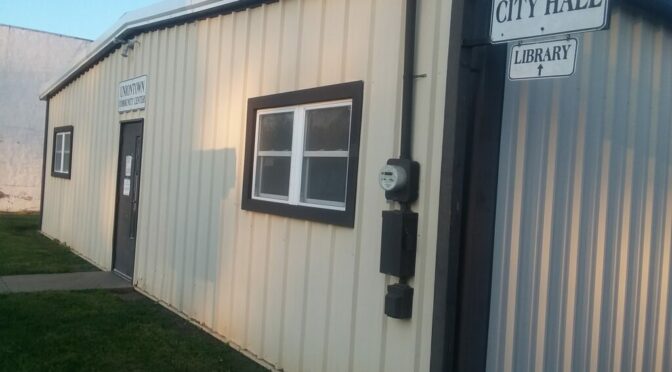
Fort Scott City Hall.
“The duties of the position include working with other council members to make fiscally and ethically sound decisions, closely reviewing and monitoring the budget and expenditures, creating the budget, passing ordinances that will benefit the greatest number of citizens possible, ensuring city policies do not harm vulnerable populations, bringing concerns and needs regarding the day-to-day operations to the attention of the City Manager, listening to citizens’ concerns and viewpoints, passing policies that will help the growth of the city’s economy, working to reduce or minimize the tax burden of citizens whenever possible, and collective oversight of the City Manager,” she said.
Citizens may contact Guns with concerns or comments by emailing mguns@fscity.org or calling City Hall and leaving a message with the City Clerk.
Background
Guns graduated from Barnesville High School in 1998, then earned a Bachelor of Science in Behavioral Science in 2005 and Master of Education in 2012, both through Wilmington University, New Castle, DE
She is currently employed as a Program Evaluator at Greenbush Education Service Center in the Research, Evaluation and Grants Department.
“In my current role, I have written three grants for 21st Century Community Learning Center (21st CCLC) all of which were funded for $500,000 each over five years.”
She evaluates and writes grants. These grants provided funding for improving literacy by providing training for teachers, access to books, etc.
Guns is part of the Kansas Prevention Collaborative (KPC) evaluating for the Kansas Prevention Collaborative and other coalitions who have received prevention grants from the Kansas Department of Aging and Disability Services (KDADS).
She also evaluates the Kansas Prevention Collaborative trainings, events, and workforce.
“I also build surveys and other evaluation tools, most recently supporting the State Opioid Response, Certified Community Behavioral Health Centers, Community Mental Health Centers, Assisted Outpatient Treatment, and the KS Heart Program, and has also written smaller grants outside of Greenbush.
Prior to moving to Kansas in 2016, she was an administrative assistant for Bradco Services, a small construction company, putting together bids and familiarizing herself with the International Building Code Standards, learning federal payroll compliance, developing marketing and media to promote the business.
In her youth, she taught Bible classes to younger children, went on mission trips within the U.S. and Honduras, cared for the elderly at an assisted living home, and participated in AmeriCorp/VISTA as a Volunteer Coordinator for a summer reading and nutrition program in Parkersburg, WV.
Philosophy
Guns believes good citizenship is a duty.
She loves the area in Ohio where she grew up and learned first-hand that there is a need to have ” a broad enough industry to provide jobs to people from all walks of life and education levels. I believe that if a town is not moving forward to ensure jobs, housing, infrastructure, and financial stability it will slowly die.”
“I want to ensure Fort Scott retains small town values while expanding enough that no matter what path our children take when they graduate high school, Fort Scott is a thriving desirable community where they will not have to choose between making their own homes in Fort Scott or having to move away in order to have a job in their chosen profession,” she said.
“The choices we make now will determine the future,” she said. “It is imperative that Fort Scott makes sound fiscal decisions, grows economically, and repairs infrastructure in a way that supports future maintenance and expansion, while retaining the City’s rich history. That is the reason I submitted my letter of interest for the open position. I want to help Fort Scott achieve these goals and believe my experience will allow me to examine the decisions that need to be made from multiple perspectives to determine the best course of action.”
“I am working on creating a public Facebook page by which citizens may also contact me,” she said. “Please note that the ability to post on my page will be limited as this is meant to be a method of contact and not a public forum. Any questions, information, or issues that are appropriate for the City Manager to handle will be forwarded to him. I will respond to let you know the issue has been brought to his attention and any actions that are taken as a result. If citizens would like to share their viewpoint on an issue, I am happy to listen. I will not and cannot comment regarding personnel issues or instruct city personnel, as the only city employee under the direct purview of the committee is the City Manager.”
“Issues or concerns regarding employees other than the City Manager should be directed to Brad Matkin,” she said. “I will however, listen to and confer appreciation and accolades for city staff. ”
Family
Doug and Melissa have five children. Doug Jr. lives in Virginia. Their son Zander and daughter Emma attend Fort Scott High School, son John attends FSMS, and youngest son Lincoln attends Winfield Scott Elementary School.