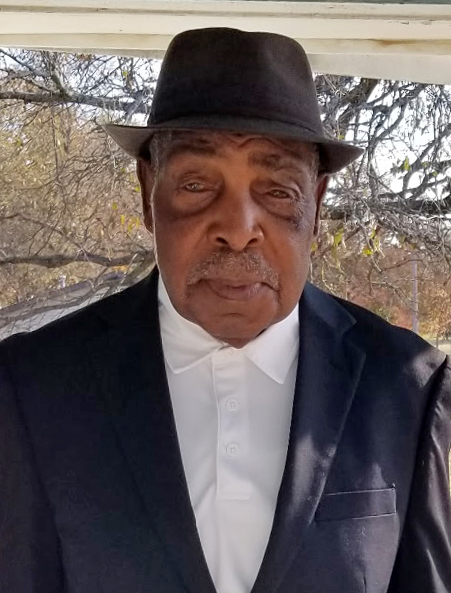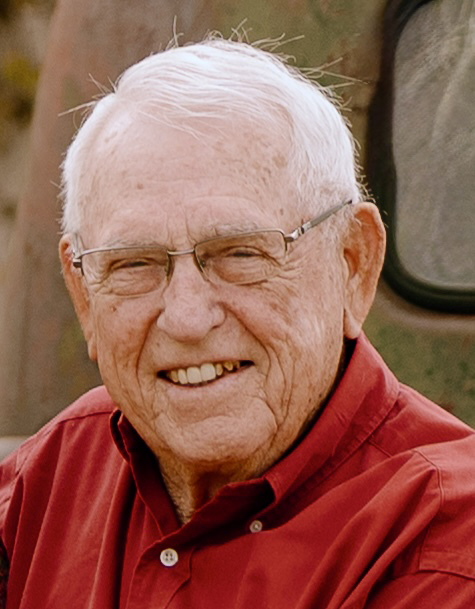
William George Province, 77, of Fort Scott, passed away at his home on March 16, 2026. He was born April 1, 1948, in Carthage, Missouri, the son of George and Barbara Province. He graduated from Fort Scott High School with the class of 1966. He married Penelope “Pennie” Sue Hudson on December 18, 1971, in Fort Scott, and she preceded him in death in 2014.
Bill was a First Lieutenant in the U.S. Army during the Vietnam Conflict.
Bill is survived by a son, Ryan and wife, Stacie Province of Shawnee, Kansas; a daughter, Brooke and husband, Mike Sebbert, of Olathe, Kansas; and 2 grandsons, Cael and Ian Province. In addition to his wife, Pennie, he was preceded in death by his parents and a sister, Cheryl Butler.
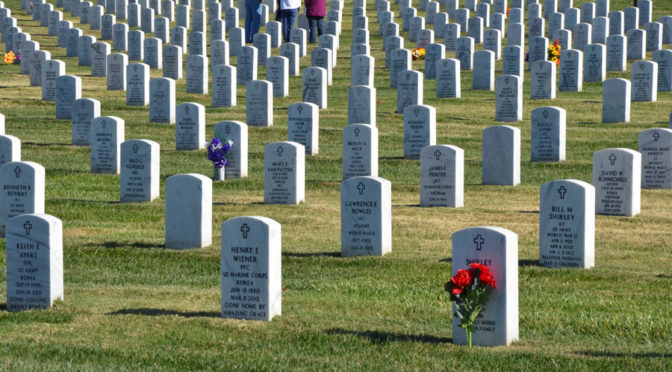
Bill will be buried in the Fort Scott National Cemetery with his wife Pennie. A private graveside service will be held for family. The family would like to offer a special thank you to the wonderful staff of Caring Hearts Home Health and Harry Hynes Hospice who provided kind and compassionate care to Bill in his final days.
In lieu of flowers, the family requests that memorial contributions be made to Harry Hynes Memorial Hospice, 3 Medical Center Circle, Pittsburg, KS 66762. Memorial contributions may also be left in the care of the Konantz-Cheney Funeral Home, 15 W. Wall Street, P.O. Box 309, Fort Scott, KS, 66701. Friends and family may sign the online guest book and share memories at www.konantzcheney.com.
The north wing, east side of the Bourbon County Courthouse.
Bourbon County Commission Meeting Agenda
Date: March 23, 2026 | Time: 5:30 PM Location: 210 S National Avenue, Fort Scott, KS 66701
Meeting Agenda Outline
I. Call Meeting to Order (Page 1)
II. Pledge of Allegiance (Page 1)
III. Prayer (Page 1)
IV. Approval of Agenda (Page 1)
V. Approval of Minutes (March 16, 2026) (Page 1)
VI. Approval of Accounts Payable (March 20, 2026 – $500,393.76) (Page 1)
VII. Executive Session (K.S.A. 75-4319 (b)(1) – Teri Hulsey) (Page 1)
VIII. Public Comments (Page 1)
IX. Department Updates (Page 1)
a. EMS Update – Teri Hulsey
X. Old Business (Page 1)
a. Sewer issue
b. Audit RFP
c. Salary Resolution – Gregg Motley
d. CIC Hardware Support
XI. New Business (Page 1)
a. ADM Agreement
b. Culvert Application
c. Tax Corrections
d. Property Tax Relief – 1111 Beech
e. Title IV-E County Reimbursement Opportunity
XII. Future Agenda Topics (Page 1)
XIII. Commissioner Comments (Page 1)
XIV. Adjournment (Page 1)
Meeting Information Packet Summary
Previous Meeting Minutes (March 16, 2026)
The packet includes detailed minutes from the March 16 meeting. Key highlights include:
Accounts Payable Transparency: Discussions regarding the accurate labeling of settlement payments versus commissioner wages (Page 3).
Public Comments: Statements from County Clerk Susan Walker regarding office transparency and allegations of criminal conduct. Citizens also spoke on commissioner salary structures and audit plans (Pages 3-4).
Department Updates: Concerns were raised regarding the lack of a formal hard surface road plan for the 1% road tax (Page 4).
Salary Resolution: The commission voted (4-1, with one abstention) to maintain current commissioner compensation levels while establishing official salaries for the Road and Bridge, Appraiser, EMS, and County Counselor positions (Pages 4-5).
KORA and Operations: Discussion on centralizing Kansas Open Records Act requests through the Clerk’s office and switching emergency alert systems from Code Red to Genesis for significant cost savings (Pages 5-6).
Financial Reports (March 20, 2026)
The packet contains a comprehensive “Open Invoices By Department Summary” totaling over $500,000.
General Fund: Includes standard payroll clearing and insurance payments (Page 8).
Employee Benefit Fund: The largest single department total at $82,742.91, covering worker’s compensation and retirement contributions (Page 10).
Sheriff & Correctional: Expenditures totaling $77,505.65 for inmate transport, medical supplies, and facility maintenance (Pages 12-13).
Landfill and Road & Bridge: Detailed lists of commodity purchases including fuel, equipment repairs, and operational supplies (Pages 11, 13).
Contractual and Maintenance Agreements
Beneficial Reuse Agreement: Documentation regarding environmental non-feed use and amendments to existing reuse agreements (Page 47).
Environmental Permits: Information regarding the Bourbon County Transfer Station and waste management points of contact (Page 47).
Aging with Attitude Regional Expo Set for April 24th
It’s taking place every day, for everyone….aging that is, and it is an opportunity! Let’s come together to learn and ensure we can all thrive as we age, on Friday, April 24th, for the Aging with Attitude Regional Expo.
The expo aims to promote positive attitudes about aging and educate on issues that support physical, mental, and financial health. K-State Extension along with community partners invite you to connect with others for information and resources on April 24th. The event includes presentations, activities, prizes, a resource fair, and lunch from 9:00a.m.-1:00p.m. at ICC West, 2615 W. Main Street, Independence, KS. Registration fee is $15 per attendee. Register by calling 620-244-3826.
Keynote Presentations include:
Paying for Long-Term Care While Preserving The Family Inheritance
Gadgets That Get It Done: Everyday Tools to Make Life Easier
Make the most of your life by attending this year’s regional expo! For more information you may contact [email protected] or 620-244-3826.
For more information contact:
Tara Solomon-Smith
Family and Community Wellness Agent, Southwind Extension District [email protected], 620-244-3826
When Armyworms Attack: Evaluating Brome Fields After a Tough Year By Lonnie Mengarelli, Extension Agent – Crops and Natural Resources
This past year proved challenging once again for forage producers across eastern Kansas. In 2025, fall armyworms arrived in late July and overstayed their welcome through a long, warm fall. Many producers reported partial or complete loss of smooth brome stands, leaving fields that range from lightly affected to areas that appear completely dead.
The level of damage varied widely from field to field. In many cases, the hardest-hit areas were fields that had been harvested in mid-to-late July. Those freshly cut fields created the perfect environment for fall armyworm moths to lay their eggs. Armyworm moths are not particularly picky — they will lay eggs on nearly any foliar material available. Once the larvae hatch, they begin feeding and can quickly move in large numbers across a field in search of food.
Smooth brome is a cool-season grass, which means it does not perform well during hot summer conditions. When a field is cut in late July, the plant is already growing under stress from high temperatures that often reach into the 90s. After cutting, very little leaf material remains, leaving the crown only a few inches tall and exposed. When armyworm feeding occurs under those conditions—especially if rainfall is limited—the result can be rapid browning of the field.
Some fields showed signs of recovery after late-season rains, but others never fully greened back up. With the warmer temperatures we’ve experienced moving into this spring, many producers are asking the same questions: Are the brome plants still alive? Is there potential for regrowth?
Unfortunately, a quick drive-by assessment may not provide an accurate answer. Dormant perennial grasses can sometimes look similar to annual weeds that died over winter. The only reliable way to know is to examine the plants directly.
One method is to check for living rhizomes. Dig up a clod of grass and examine the underground stems. If the rhizomes are alive, new tillers should begin emerging as temperatures warm and precipitation returns. Signs of life include firm roots holding soil and green tissue beginning to develop near the crown.
Another useful method is what many call a “bag test.” Collect several plant samples from the field and rinse the soil from the roots. Trim the shoots to about an inch above the crown and remove most of the roots. Lightly moisten the crowns with tap water and place the samples in a sealed plastic bag. Leave the bag at room temperature, out of direct sunlight, for two to five days. Living plants will typically begin producing small shoots or roots. If there is no growth after about six days, the plant is likely dead.
If stands are severely damaged, producers will have several management options to consider.
In a typical year with stable input costs, the recommendation might be to prepare a seedbed and reseed brome at 10 to 15 pounds of pure live seed per acre. Poor seedbed conditions may require seeding rates closer to 20 pounds per acre. As always, soil sampling should guide fertility programs so that lime and nutrients such as nitrogen, phosphorus, and potassium are applied appropriately.
However, with rising costs for seed, fertilizer, and other inputs, spring reseeding may not always be the most economical option. Spring plantings also tend to face heavier weed pressure and typically cannot be harvested until the following year.
Some producers may instead consider alternative forage crops to help fill the gap. Summer annual forages such as pearl millet, sorghum-sudangrass, forage sorghum, or crabgrass can produce between 4,000 and 8,000 pounds of forage per acre under good conditions. Cool-season options like spring oats, triticale, or cereal rye may provide 1,500 to 4,000 pounds of forage and can be useful for early-season grazing or hay production.
Another option is patience. If immediate forage production is not essential, waiting a few weeks to monitor stand recovery may help producers make a more informed decision. This approach allows time to evaluate plant health, watch input costs, and observe market conditions. Of course, there is always some risk if the stand fails to recover and forage yields fall short.
For producers who depend heavily on brome hay sales and have fields that clearly did not survive the winter, reseeding may ultimately be the best path forward. When reseeding is necessary, determining the exact acreage affected and planning for seed, fertilizer, herbicide, and potential insect management will help reduce surprises later.
The important thing to remember is that every field will be different. A neighbor’s plan may not be the right solution for your operation. Taking time to evaluate each field, inspect the plants, and weigh the available options will help determine the best path forward for your forage system.
After a year like 2025, one thing is certain: careful field evaluation this spring will be the key to making sound management decisions for the season ahead
Lonnie Mengarelli is a K-State Research and Extension Agriculture agent assigned to Southwind District. He may be reached at [email protected] or 620-223-3720
Patty LaRoche. 2023. Author: A Little Faith Lift…Finding Joy Beyond Rejection www.alittlefaithlift.com AWSA (Advanced Writers & Speakers Assoc.)
Scripture tells me not to be angry. But I am. It’s spring break, Dave and I spent two days driving to Nevada (the state) to visit our grandkids and great grandkids, and I have spent much of my day, trying to contact Walmart here in Henderson, Nevada, to ask what time tomorrow I am to bring my vehicle in to have my tires checked. Twelve calls with no response. For the first five or six, I was fine. But now? I am upset.
This morning, I pulled up to the Automotive area at Walmart. Three bays were empty, and four employees were standing/sitting, doing nothing. A female employee turned me over to a male employee who announced that it was his time for a break. “Not until you service this woman,” she responded. Although pleasant, the young man was not happy. He checked my tires and said that nothing was wrong, but when I told him that one tire continues to go flat, he said that I would need to set up an appointment.
“What about now?” I asked (since there were no other vehicles being serviced). He said that they were full (i.e., it was time for his break) but set up an appointment tomorrow. He would send me the time via text. Which he did not do.
Twelve calls later (“Dial two for the automotive department”) to find out what time I am supposed to show up, my frustration is increasing. No one answers the phone, and when I call Walmart’s customer service representative, she tells me that there is nothing she can do except forward my call to the auto service area…the same area I have called twelve (now 13) times. I tell her that and she gives me a choice: “Either I forward your call, or I hang up.”
Each call to the automotive department is answered by a robot who says that they are “experiencing unusually high volumes of calls at this moment.” This does not happen in Fort Scott. There, someone answers the phone. I am used to Fort Scott. Am I asking too much?
As much as I hate to admit it, I need an attitude check. I find it much easier to say “If only…” “If only Walmart could get its act together.” “If only that customer service agent wasn’t so abrasive and actually showed a little compassion” (you know, what I did not show her).
For all I know, she was trying to keep food on her table for her five kids after her husband left her for another woman. Maybe she was working two jobs to help pay the medical bills for her ailing father. Possibly she had been yelled at by ten other customers, trying to contact the automotive department. Did I show her compassion? Tell her that I would pray for her? Even ask if she was okay?
We all know the answer to that. Actually, had I told her that I was a Christian, she probably would have started laughing. I demonstrated none of the qualities (fruits of the spirit) we are told to exhibit (love, joy, peace, patience, kindness, goodness, faithfulness, gentleness and self-control (Galations 5:22-23 NIV).
Yesterday evening, I received the text with the time of my appointment. By then, I had decided to go elsewhere for my service and tried to text back to cancel. A large “X” appeared on my screen. Under it were these words: “Sorry…We’re having technical issues, but we’ll be back in a flash. Try again.”
This time, I had to laugh. Clearly an improvement. I think that Jesus would be proud.
Nevada Regional Medical Center (NRMC) Foundation is set to host the 23rd annual Caring with Pride Golf Classic on Friday, May 8th at the Frank E. Peters Municipal Golf Course. Proceeds from this annual tournament help fund needed patient care equipment or services throughout the hospital.
“We’re truly grateful to continue hosting this popular fundraiser in support for our hospital,” said Foundation Director Jennifer Eaton. “The many individuals who return year after year – some for all 23 years – are a testament not only to the quality of this event, but also to their shared commitment to the continual improvements for the health of our community.”
The tournament is open to the first 40 teams who register and will be scored with a first, second and third place team in three flights. This year, as in recent years, prizes awarded will be in cash, totaling more than $4,000.
“The tournament will begin with a 9 a.m. shotgun start,” Eaton said. “This format gives participants time to gather beforehand, enjoy a grab and go breakfast, connect with one another, and learn more about the day’s games and prizes.”
A 50/50 cash drawing will once again highlight the event, alongside a variety of popular on-course contests. Golfers will have multiple chances to win in side-event challenges, including the coveted hole-in-one competitions on the par-3 holes. This year’s grand prize raises the stakes even higher, offering a $10,000 hole-in-one opportunity.
There are many opportunities for sponsorships of the Golf Classic. The deadline to register to play in the tournament is Friday, May 1st. For more information or to register, call the NRMC Foundation office at (417) 448-3710 or visit www.nrmchealth.com/golf.
The Mount Carmel name has been synonymous with quality healthcare in Southeast Kansas for over 100 years. When the Mount Carmel Foundation ceased operations in 2024, it transferred its assets to the Community Foundation of Southeast Kansas to establish the Mount Carmel Foundation Legacy grant cycle. During the inaugural grant cycle in 2025, $214,000 was granted for healthcare projects in Southeast Kansas.
The Mount Carmel Foundation Legacy grant committee is proud to announce the awarding of this year’s grants, totaling $180,559 in support of 10 organizations in Southeast Kansas for 14 projects.
“The diversity of this year’s projects, from an autism clinic expansion to veteran suicide prevention, demonstrates the amazing impact the Mount Carmel legacy continues to have in Southeast Kansas,” said Devin Gorman, CFSEK Executive Director. “We are proud to partner with these great organizations as they work on the front lines to improve healthcare in our region and provide essential services to our community.”
2026 Mount Carmel Foundation Legacy Grant recipients:
Community Health Center of Southeast Kansas – CHC/SEK’s Victim Services Program
Families and Children Together Inc. – Tools for Tomorrow
Family Resource Center, Inc. – Employee Health Helping Hand Fund
Hospital District 1 Crawford County Foundation – Enhancing Cardiac Diagnostic Capacity at Girard Medical Center
Inspire Health Foundation, Inc. – Pathways of Possibility: The Inspire Health Camp Scholarship Fund
CFSEK congratulates the recipients and thanks them for their work supporting healthcare projects in Southeast Kansas.
The Community Foundation of Southeast Kansas awarded over $2.8 million in grants from all foundation funds in 2025 and has facilitated over $28 million in total granting to Southeast Kansas since its inception in 2001. CFSEK serves the region by providing donors with various charitable interests and encouraging charitable giving, which addresses present and future needs in our area. The Columbus Area, Fort Scott Area, and Girard Area Community Foundations are affiliates of CFSEK. More information about CFSEK is available at SoutheastKansas.org.
Grant Applications Open to Expand Rural Registered Apprenticeship Programs
TOPEKA – Lieutenant Governor and Secretary of Commerce David Toland today announced $500,000 in Rural Apprenticeship Innovation for a Strong Economy (RAISE) funding to support the expansion of Registered Apprenticeship programs across rural Kansas.
This new grant opportunity is administered through the Kansas Office of Registered Apprenticeship and is available to the state’s educational institutions, businesses, nonprofit organizations, joint apprenticeship training councils and workforce boards seeking to attract and retain skilled employees through registered apprenticeships in rural areas.
“We have been purposeful in attracting new businesses to all areas of the state to advance economic opportunities for all,” Lieutenant Governor and Secretary of Commerce David Toland said. “These grants will support further expanding Registered Apprenticeship programs in rural areas so we can continue to build our workforce, provide skill building and job opportunities for more Kansans and keep pace with our historic growth.”
Applicants can receive up to $100,000 in funding to support technical instruction, outreach, staffing, partnerships and administrative costs. A dollar-for-dollar match is required, and funded projects must be completed within a 12-month period.
“This grant ensures rural Kansas isn’t left behind,” Kansas Office of Registered Apprenticeship Director Shonda Anderson said. “By expanding high-wage, high-demand registered apprenticeships in rural communities, we’re creating strong workforce pathways and supporting long-term economic vitality close to home.”
Registered Apprenticeship programs interested in applying must meet the following criteria:
Must be a registered apprenticeship program in Kansas or commit to developing a new program within three months of receiving funding
Must demonstrate a plan to engage existing or potential employers and apprentices residing in counties with populations under 50,000
Must provide a 1:1 matching contribution
For more details and additional requirements, visit the webpage here.
Eligible Kansas Registered Apprenticeship programs are encouraged to apply. Applications will be accepted through April 17. To apply, click here.
About the Kansas Department of Commerce:
As the state’s lead economic development agency, the Kansas Department of Commerce strives to empower individuals, businesses and communities to achieve prosperity in Kansas. Commerce accomplishes its mission by developing relationships with corporations, site location consultants and stakeholders in Kansas, the nation and world. Our strong partnerships allow us to help create an environment for existing Kansas businesses to grow and foster an innovative, competitive landscape for new businesses. Through Commerce’s project successes, Kansas was awarded Area Development Magazine’s prestigious Gold Shovel award in 2021, 2022, 2023 and 2024, and was awarded the 2021 and 2022 Governor’s Cup by Site Selection Magazine.
About the Kansas Office of Registered Apprenticeship:
The Kansas Office of Registered Apprenticeship was established by Governor Laura Kelly on Sept. 6, 2022, through Executive Order #22-07. The Office supports apprenticeships across multiple industries to provide a highly skilled source of labor for employers and ensure occupational proficiency for career-seekers. The program incorporates on-the-job learning, technical instruction and mentorship to create long-term employment opportunities in Kansas.
Turnaround has happened in the Kansas Legislature so now a large part of our time is being spent by the two houses hearing and voting on the other houses bills. Because of that I am happy to report that the Senate has heard and approved Benny’s Bill (HB 2412) unanimously 40-0. It will now come back to the House for concurrence on a technical amendment before it goes to Governor Kelly’s desk for her approval. Again, for those who don’t know the background behind this legislation it strengthens the penalties for child endangerment and aggravated child endangerment when the victim is under the age of six. I am sponsoring it because of the case of Benny Cannon who suffered lifelong disabilities after a daycare incident when he was four months old. Two daycare workers were found responsible after pleading guilty in court but received light sentences in my opinion considering the damage that was inflicted.
HB 2368 is a bill that I mentioned before that would allow for the licensure of Anesthesiology Assistants (AA) in Kansas. I have repeatedly opposed this bill because Kansas is already served by Certified Registered Nurse Anesthetists who possess a higher degree of training than their AA counterparts. The bill was voted down once this year but it was revived to be shot down with a motion to return it to committee. The motion pretty much kills the bill because the last day for committees to meet has passed.
Another nursing related bill that we just voted on was SB 334 which lowers the minimum education level required to be an instructor in Kansas nursing schools. I have heard from people in the nursing profession who don’t like this bill because it doesn’t make for better trained nurses and that it could potentially jeopardize accreditation of their institutions. I was a no vote on that but it did pass by 81-43.
On to other news I am planning to hold some town hall meetings this spring with the first one being in Mulberry on April 13th at 6:30. More details will be coming but I hope to see you there or at another event. Until next time, Ad Astra Per Aspera.