Black History Month Tribute

Gordon Parks Museum is located on the campus of Fort Scott Community College.

Gordon Parks Museum Celebrates Black History Month with

Tribute Panel Exhibit and Daily Quotes

Fort Scott, Kan. Jan. 28, 2026 – The Gordon Parks Museum at Fort Scott Community College is proud to celebrate Black History Month with a powerful and educational Black History Month Tribute Panel Exhibit, on display February 1–28, 2026, in the Danny and Willa Ellis Family Fine Arts Center.

The exhibit features more than 100 posters, photographs, and informational panels highlighting influential Black innovators, leaders, artists, and change-makers whose contributions have shaped history and continue to inspire future generations. Visitors will also encounter a thoughtfully curated selection of inspiring and moving quotes that encourage reflection, dialogue, and deeper understanding.

In addition to the exhibit, the Museum will present a Black History Month “Quote of the Day” throughout February. Each daily quote will spotlight a different historical figure or contemporary voice, offering moments of inspiration and learning for visitors.

“This exhibit and daily quote series provide meaningful opportunities to highlight untold stories, celebrate achievement, and connect history to the world we live in today,” said Kirk Sharp, Executive Director of the Gordon Parks Museum. “It invites thoughtful discussion about the relevance of Black history in our daily lives and shared future.”

The Black History Month Tribute Panel Exhibit is free and open to the public during regular building hours.

For more information about the exhibit and contact the Gordon Parks Museum at 620-223-2700 ext.5850 or by email at [email protected].


###

International Holocaust Remembrance Day

On International Holocaust Remembrance Day, ARTEFFECT honors the lives lost and the courage of all those who stood for humanity.

You are invited to explore a list of over 30 Unsung Heroes of the Holocaust in the ARTEFFECT Directory. Unrecognized during their lifetimes, these Unsung Heroes, including Irena Sendler, Dr. Eugene Lazowski, and Pavel Weiner, demonstrated extraordinary heroic actions in service to others as survivors, activists, and fighters. Their stories of resilience and courage remind us of the enduring power of humanity in the face of unimaginable adversity.

Explore Holocaust Unsung Heroes
Remembering the Holocaust Session
Wednesday, February 18, 2026
4:00-5:15 PM Pacific Time
All educators are invited to join the next ARTEFFECT online session. Led by 2020 Nebraska Teacher of the Year and 2021 LMC Fellow Megan Helberg, this session explores the stories of Unsung Heroes from the Holocaust. Learn best practices for guiding students in the creation of visual artworks representing the Holocaust and other genocides. All registrants will receive the lesson plan and recording. Attendees to the live session will receive a Certificate of Participation. Free to join—registration required. Learn more about the session and instructor.
Register Now
Unsung Heroes & STEAM 
Session Recording and Lesson Plan
Full STEAM ahead! This session, led by 2021 LMC Fellow and ARTEFFECT Mentor Jennifer Braverman, explored an interdisciplinary STEAM framework for divergent and creative thinking. The lesson plan provides turn-key resources, strategies, and creative approaches to connect students with STEAM innovators through the visual arts.
View Recording
STEAM Lesson Plan
The 2026 ARTEFFECT Competition for middle and high school students is open through April 21, 2026! To learn more and download a digital poster, visit 2026 ARTEFFECT competition.
For inquiries, contact: [email protected]
ARTEFFECT Facebook
ARTEFFECT Instagram
ARTEFFECT
ARTEFFECT YouTube
X
Copyright © 2025 Lowell Milken Center, All rights reserved.
You are receiving this email because you either subscribed on our website or expressed interest in receiving updates while visiting us.

Our mailing address is:
1250 Fourth Street
Santa Monica, CA 90401

Phone: 310-570-4859
Email: [email protected]

KS Public Broadcasting Grant Announced

Commerce Launches Grant to Promote Rural Opportunities in Kansas

TOPEKA – Lieutenant Governor and Secretary of Commerce David Toland today announced the launch of the WorKS: Public Broadcasting Grant. The new grant opportunity has $500,000 available for Kansas public broadcasting stations to produce original, educational content highlighting rural workforce opportunities, remote work readiness, and emerging technologies that are transforming how Kansans live and work in rural communities.

“We’re growing our workforce and bringing new technologies and opportunities to all parts of the state — with a special emphasis on our small, rural communities,” Lieutenant Governor and Secretary of Commerce David Toland said. “Part of that focus means creating opportunities for our public broadcasting stations to bring awareness to available tools and promote the innovation happening all across the state.”

Eligible applicants are licensed public broadcasting radio or television stations that serve Kansas communities.

The grant funding will support projects that create educational or documentary-style content that address one or more of the following themes:

  • Emerging technologies in rural economic development
  • Remote work readiness; or
  • Youth and the future of workforce in rural communities

The goal of this new initiative is to create at least one broadcast-quality program or series on television, radio or other digital format — accompanying digital content that can be shared online on podcasts, online series or social media shorts. Successful projects also will have a public engagement plan and be able to generate a brief impact summary after the program is released.

The WorKS program will be administered by the Office of Rural Prosperity at the Kansas Department of Commerce. The application window will be open until 5:00 p.m. Friday, March 20, with award announcements expected in April.

For interested parties, a virtual webinar about the specifics of the program is scheduled for 10:00 a.m. Thursday, January 29. Registration is required. A Zoom link will be provided once registration is complete. To register, click here.

The Office of Rural Prosperity will host office hours from 10 to 11 a.m. every Wednesday from February 5 through March 19. To register for the office hours, sign up here.

For additional information about the WorKS Public Broadcasting Grant program, click here.

About the Kansas Department of Commerce:

As the state’s lead economic development agency, the Kansas Department of Commerce strives to empower individuals, businesses and communities to achieve prosperity in Kansas. Commerce accomplishes its mission by developing relationships with corporations, site location consultants and stakeholders in Kansas, the nation and world. Our strong partnerships allow us to help create an environment for existing Kansas businesses to grow and foster an innovative, competitive landscape for new businesses. Through Commerce’s project successes, Kansas was awarded Area Development Magazine’s prestigious Gold Shovel award in 2021, 2022, 2023 and 2024, and was awarded the 2021 and 2022 Governor’s Cup by Site Selection Magazine.

About the Quality Places Division:

Established in 2024, the Quality Places Division at the Kansas Department of Commerce exists to improve quality of life in communities across the state through various programs and services. The Kansas Department of Commerce understands the immense role played by strong communities in economic development and prioritizes investments in people and communities as major contributors to the overall strength of the Kansas economy. To learn more, click here.

##

Rural Kansas Downtown Revive and Thrive Grants Announced

Commerce Launches Grant to Support Innovation, Incubator Spaces in Small Communities

TOPEKA – Lieutenant Governor and Secretary of Commerce David Toland today announced the launch of the Downtown Revive & Thrive: Rehabilitation for Innovation and Incubator Spaces program. There is a total of $500,000 available in funding for Kansas communities with populations of 5,000 or less for projects that result in functional business incubator spaces or facilities designed for temporary retail or restaurant operations.

“Rural communities are hubs of innovation and entrepreneurship but often do not have enough financial resources to maximize their economic potential,” Lieutenant Governor and Secretary of Commerce David Toland said. “This program will support the rehabilitation of spaces, especially in our state’s historic downtown buildings, for communities to activate underutilized assets and boost their local economies.”

Rural downtowns are experiencing an increase in vacant and underutilized properties, many of which are historic buildings in dire need of rehabilitation. At the same time, there is a strong demand for spaces that entrepreneurs can use to test products, develop commercial concepts and pilot new retail or restaurant ventures.

The program is designed to support projects that repurpose existing infrastructure to create spaces and provide equipment for pop-up retail and restaurants that drive economic growth and contribute vibrancy to communities.

The Revive & Thrive grant program is administered by the Kansas Office of Rural Prosperity at the Department of Commerce. The application window will be open until 5:00 p.m. Tuesday, March 10. Grant awards will be announced in April.

For those interested in applying for funding, a virtual webinar about the specifics of the program is scheduled for 3:00 p.m. Thursday, January 29. Registration is required and a Zoom link will be provided once registration is complete. To register, click here.

The Office of Rural Prosperity will host office hours from 10:00 a.m. to 11:00 a.m. every Thursday, January 29 through March 5. To sign up, visit here.

For additional information about the Downtown Revive & Thrive program, click here.

About the Kansas Department of Commerce:

As the state’s lead economic development agency, the Kansas Department of Commerce strives to empower individuals, businesses and communities to achieve prosperity in Kansas. Commerce accomplishes its mission by developing relationships with corporations, site location consultants and stakeholders in Kansas, the nation and world. Our strong partnerships allow us to help create an environment for existing Kansas businesses to grow and foster an innovative, competitive landscape for new businesses. Through Commerce’s project successes, Kansas was awarded Area Development Magazine’s prestigious Gold Shovel award in 2021, 2022, 2023 and 2024, and was awarded the 2021 and 2022 Governor’s Cup by Site Selection Magazine.

##

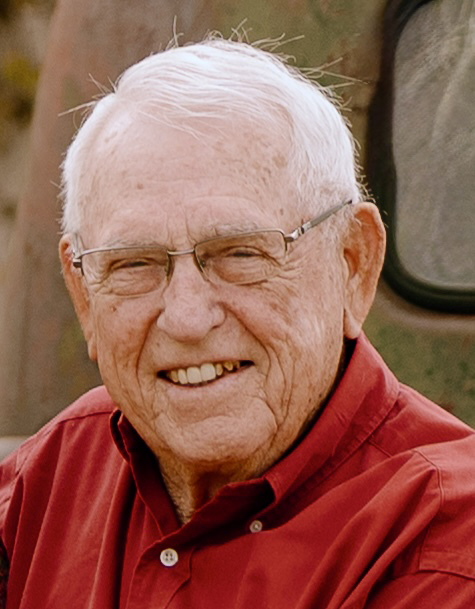
Obituary of Robert Dean Griffiths

Robert Dean Griffiths, age 72, a resident of rural Bronaugh, Missouri, passed away Monday, January 26, 2026, at the Freeman West Health Center in Joplin, Missouri following a brief illness. He was born September 11, 1953, the son of Harold Griffiths and Betty Wunderly Griffiths. Bob grew up on the family farm near Bronaugh where he learned to love farm life and the hard work that came along with that lifestyle. After graduating from Bronaugh High School, Bob married Shanna Ruth Culp on February 15, 1975, at Ft. Scott, Kansas. Bob owned and operated his own trucking company. In earlier years, he drove all over the United States; later he settled into making short runs, hauling cattle and grain. Bob hauled his last load of cattle the day before he became ill. In addition to trucking, Bob also maintained his own farm and cattle operation. He wasn’t afraid of hard work and constantly kept busy tinkering on some sort of project. Bob’s wife, Shanna, passed away on March 4, 2022. After her death, Bob began a relationship with Glenda Leer. Bob and Glenda enjoyed his last years together.

Survivors include his two children, Doug Griffiths (Priscilla) of Fouke, Arkansas and Lisa Peterson (Shane) of Albany, Missouri; seven grandchildren, Emily Workman (Brett), October, Tatum, and Kutter Peterson, Jorja and Barrett Griffiths and Beau Hendershot and three great-grandsons, Jayce and Wade Workman and Augustus Peterson. Also surviving are his dear friend, Glenda, a brother, David Griffiths and two sisters, Carol Claflin and Joyce Agee, several nieces and nephews and a sister-in-law, Sarah McCully (Les). In addition to his first wife, Shanna, he was preceded in death by his parents, a brother, Bill Griffiths and a sister-in-law, Sheri Daniels.

Following cremation, a gathering for friends and family will be held from 5 to 7 P.M. Friday, January 30th at the Cheney Witt Chapel. Bob and Shanna will both be laid to rest at the Worsley Cemetery west of Bronaugh at a later date. Memorials are suggested to Farm Aid and may be left in care of the Cheney Witt Chapel, 201 S. Main, P.O. Box 347, Ft. Scott, KS 66701. Words of remembrance may be submitted to the online guestbook at cheneywitt.com.

Register of Deeds Obstructs County Commission Meeting

The north wing, east side of the Bourbon County Courthouse.

January 26, 2026 at 5:30 PM
Bourbon County Commission Meeting

Three commissioners attended the meeting: David Beerbower, Mika Milburn, and Greg Motley.

During the opening of the meeting, Commissioner Mika Milburn made several modifications to the agenda, including removing the discussion of courthouse space.

After the public hearing for the vacation of a road, in which the owner of the property on the road asked that it be vacated as the county had done nothing with it in the 15 years she had lived there, Resolution 08-26 was approved.

After approval of the minutes from the Jan. 12 meeting and the consent agenda and tax corrections, the citizen comments portion of the meeting began.

Citizen Comments

Lora Holdridge, Register of Deeds, addressed the commission. Before she began her comments, vice-chairman Beerbower reminded her that her comments had to be to the commission as a whole and not to a specific commissioner.

Holdridge asked what statute that was under and Beerbower said it was part of what he learned in commissioner training.

Holdridge said that without a statute she would challenge it. Beerbower gave her three minutes.

Milburn interupted Holdridge and asked for a break.

Beerbower announced a three minute recess.

After three minutes, Milburn returned and then left again on a phone call.

Beerbower then told Holdridge that they had had this discussion several times, and in the last meeting, the board announced the plan to look into what spaces are available in the courthouse and take input from each department to divide it up appropriately.

He said he has heard several different claims for dispatch’s old space, but the commission has not made any decisions yet.

Beerbower said they were not going to discuss it tonight.

Milburn returned and said that the county’s counselor, Bob Johnson, advised to remove the public comment.

Holdridge said she would not leave and would stay and talk.

Beerbower asked her to leave and she again refused. He said they were having a county commissioner meeting, not a register of deeds meeting.

Milburn then moved to adjourn the meeting , Beerbower seconded, and it was ended. Motley did not vote.

The commission did not complete the remainder of their agenda including:

1. Executive Session K.S.A. 75-4319 (b)(1) – Motley
2. Department Updates
a. Payroll update – Milburn-Kee
b. Inventory – County Clerk
c. Commission Minutes – County Clerk
d. County Clerk Procedures
e. 2025 End of Year Financials – County Clerk

3. New Business
a. Strategic Planning – Motley
b. Commission Calendar – Motley
c. EOC Access
4. Create Agenda for Next Meeting
5. Commission Comments

Greg Motley: New Bourbon County Commissioner

Gregg Motley. Submitted.


Gregg Motley was sworn in as commissioner on January 12 during the regularly scheduled Bourbon County Commission meeting.

To learn more https://fortscott.biz/news/new-commissioners-sworn-in

The Bourbon County Commissioners are the chief elected officials of the county, according to the county’s website https://www.bourboncountyks.org/contact-us/. They set policy and procedures for the running of the courthouse and set the budgets for all taxing entities of the county.

Motley represents Bourbon County Commission District #4, which includes most of Southwest Fort Scott, which runs down 69 Highway to Grand Street, then west to about 150th Street, then north to the Marmaton River and back to Fort Scott, he said.

His education

“I have a B.A. in Accounting and Economics from Greenville University and a graduate degree in Bank Management from the University of Virginia.  I am a Lee’s Summit High School graduate.
“My faith informed my decision to run.
” I am a strong believer in our civic responsibility to serve our community and this opportunity seemed to fit my experiences and skill sets.”
His priorities
“Aligned with my business experiences, my priorities are financial stability and responsibility, operational management and economic development. I am also interested in better coordination and cooperation with other government entities in Bourbon County.”
Regularly scheduled meetings are on Mondays at 5:30 p.m. at the commission meeting room in the north wing of the Bourbon County Courthouse at 210 S. National Avenue, Fort Scott.
There are five commission districts in Bourbon County.
Here is a map of the districts:
The five districts in Bourbon County. Submitted graphic.
To contact your commissioner:
District 1 Commissioner Samuel Tran’s office phone: 620.215.5954
District 2, David Beerbower: 620.215.5821.
District 3, Joe Allen, none yet, as per the county clerk’s office.
District 4, Gregg Motley: 620.215.7125.
District 5, Mika Milburn-Kee: 620.215.5880.
The north wing, east side of the Bourbon County Courthouse.

Letter To The Editor: Christa Horn


One Consistent Adult Can Change Everything: Why Our Community Needs More CASA Volunteers

By Christa Horn

The little boy sat in a plastic chair that was too big for him, his feet dangling inches above the floor. He was three years old and had already lived in four different homes. When the judge asked if anyone had anything to add before the hearing ended, one person spoke up.

His CASA volunteer.

She didn’t use big legal words. She talked about how he finally sleeps through the night now. How he runs to the door when he sees his foster dad’s truck. How he is learning his colors. How he still hides food in his pockets because he once didn’t know when his next meal would come.

That moment didn’t make headlines. But it changed the direction of that child’s life.

Court Appointed Special Advocates — CASA volunteers — are everyday people who step into extraordinary circumstances. They are trained community members appointed by judges to advocate for children who have been abused or neglected. In the middle of court hearings, case plans, placements, and uncertainty, the CASA volunteer becomes the one constant adult whose only job is to ask: What is truly best for this child?

In our community, too many children enter the child welfare system each year through no fault of their own. They lose their homes, their schools, sometimes their siblings, and often their sense of safety — all at once.

A CASA volunteer can’t fix everything. But they can do something powerful: show up.

They attend court hearings. They visit the child regularly. They talk with teachers, therapists, foster parents, and biological families. They make sure the child’s voice is heard in a system that can feel overwhelming and impersonal.

And the impact is real.

Children with CASA volunteers are more likely to receive needed services, succeed in school, and find safe, permanent homes sooner. But beyond the statistics, there is the human impact — a child who finally believes someone is paying attention.

I think of a teenage girl who once told her volunteer, “You’re the only adult who didn’t give up on me.”

I think of a sibling group who asked if their CASA could come to their adoption day because “she’s part of our family now.”

I think of a toddler who learned to trust again because one person kept their promise to come back.

Right now, there are more children in need of CASA volunteers than there are volunteers available. That means some children walk into courtrooms with no one whose sole focus is their well-being.

We can do better.

You don’t need to be a lawyer. You don’t need a social work degree. You just need compassion, reliability, and the willingness to stand beside a child when their world feels unstable.

If you’ve ever wondered how to make a meaningful difference — not in theory, but in one real child’s life — this is it.

One consistent adult. One steady voice. One advocate.

Sometimes, that is enough to change everything.

To learn more about becoming a CASA volunteer, contact Program Director Christa Horn at 620-215-2769 or email [email protected] of Form


Nevada Welcomes New Child and Adolescent Psychiatrist

NRMC Welcomes Child Psychiatrist

Nevada Regional Medical Center (NRMC) is pleased to welcome Dr. Janell Tabora to our team of specialty physicians.  Dr. Tabora is a Board Certified Psychiatrist, specially trained in Child and Adolescent Psychiatry.

Focusing on a holistic approach to treatment, Dr. Tabora enjoys listening to a patient’s life journey to select the right path toward mental health and wellness.  Some common conditions that Dr. Tabora can evaluate are the following:

  • ADHD
  • Anxiety disorders
  • Attachment disorders
  • Autism
  • Bipolar disorder
  • Depression
  • Disruptive Mood Dysregulation Disorder
  • Early Onset Schizophrenia
  • Eating disorders
  • Obsessive-Compulsive Disorder (OCD)
  • Oppositional defiant disorder
  • Panic disorder
  • Personality disorders
  • Post-traumatic stress disorder


Dr. Tabora is accepting new patients, ages 5 to 25, via convenient telehealth visits.  When on-site, her office is located within the Primary Care Clinic.  Appointments can be made by calling 417-448-3600.


From the Bleachers-747 by Dr. Jack Welch

FROM THE BLEACHERS-747

BY DR. JACK WELCH

 When College Football Became Professional

The national title game between Miami and Indiana will be remembered not just for the final score, but for what it represents. Indiana, a program long respected for basketball stands as the national champion for the first time in history. This would have been unthinkable just a few years ago. In today’s college football landscape, it makes perfect sense.

Indiana didn’t stumble into a national championship. They built it the modern way, through the transfer portal and NIL. This was not a slow build; multi-year plan defined by redshirts and recruiting classes growing together. This was a rapid transformation fueled by money, movement, and immediate results.

College football has abandoned tradition, it has become professional sports. The programs willing to change and invest accordingly have a chance to win. That is what Indiana did.

College football is no longer amateur athletics. Indiana’s football roster reportedly carried roughly $21.1 million in NIL spending, with marquee players like quarterback Fernando Mendoza earning more than $2 million. When you factor in total football operations expenses surpassing $61 million, the scale begins to resemble professional franchises more than traditional college programs.

Miami was in the same boat. Both teams took the field with rosters assembled less like college depth charts and more like professional free-agent lists. These weren’t freshmen growing into men within a system. These were proven players, recruited nationally and internationally, placed into schemes designed to win now.

History will judge today’s college coaches differently than those of the past. Yesterday’s great coaches were measured by how they built programs, developed players, and mastered the game itself. Today’s coaches are increasingly evaluated by how well they build rosters, manage NIL, navigate the portal, and assemble talent. The question for the future won’t be whether one era was better than the other, but whether coaching greatness can still be defined by teaching and leadership in a game now driven by acquisition and economics.

Indiana’s national championship is not an anomaly. It’s a blueprint. Spend wisely. Win the portal and raise the necessary funding. If done correctly, history can be rewritten in a single offseason.

College football didn’t die, it evolved into the professional ranks. Make no mistake, what we watched between Miami and Indiana wasn’t amateur athletics. It was professional football wearing college uniforms.

Thought for the week, “Change is inevitable. Those who adapt thrive, those who resist get left behind.”  Jack Welch

Dr. Jack Welch serves as President of Fort Scott Community College. With a career spanning professional sports, public education, and rural community development, he brings a servant-leader mindset and a passion for building trust-driven cultures that empower people to thrive in the classroom, on the field, and in life. He is also the author of Foundations of Coaching: The Total Coaching Manual.

Bourbon County Local News