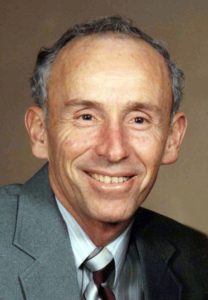
Donald Lee McDaniel, age 88, resident of Fort Scott, KS passed away Saturday, December 28, 2024, at Medicalodge of Fort Scott. He was born September 17, 1936, in Fort Scott, the son of Andrew Galen McDaniel and Donna May Stephens McDaniel.
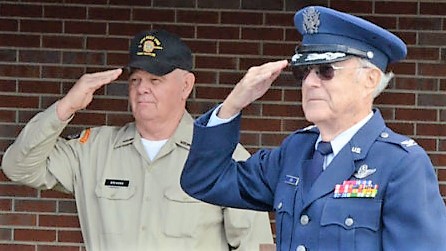
Don served in the U. S. Army from 1959 until 1961. He married Barbara Wolfe on December 23, 1959. She preceded him in death on May 21, 2013. Don retired from the Postal Service after 28 years of service. Because of his evening work schedule, Don cherished morning breakfasts and late-night bowls of ice cream with his family. He enjoyed farming, working on cars, and watching PGA golf on tv. He had great affection for all animals, especially the family dogs. He liked walking in Walmart and catching up with friends. He also helped care for many foster children over a 10-year time span while adopting 2.
Survivors include 3 sons, Randall McDaniel, Carthage, MO, Ricky McDaniel, Fort Scott, KS, and Ronald McDaniel, Pittsburg, KS; 3 daughters, Patricia Flanigan, Carthage, MO, Jeanise Malone, Fort Scott, and Tanya Lockwood, Fort Scott; 16 grandchildren; 24 great-grandchildren, with one on the way; and several nieces and nephews. Besides his wife, he was preceded in death by a son, Mark McDaniel; 2 brothers, Andrew “Junior” McDaniel and Robert McDaniel; 2 sisters, infant Rosalee McDaniel, and Silva May Modica; and his parents.
Pastor Ben Heffernan will conduct funeral services at 1:00 PM on Friday, January 3rd, at the Cheney Witt Chapel. Burial will follow in the Evergreen Cemetery. The family will receive friends from 12:00 until 1:00 prior to the service at the funeral home. Memorial donations are suggested to the Bethel Church Building Fund and may be left in the care of the Cheney Witt Chapel, PO Box 347, 201 S. Main St., Fort Scott, KS 66701. Words of remembrance may be submitted online at cheneywitt.com.
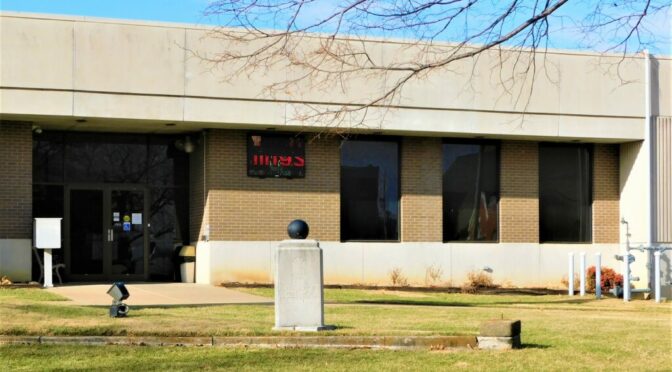
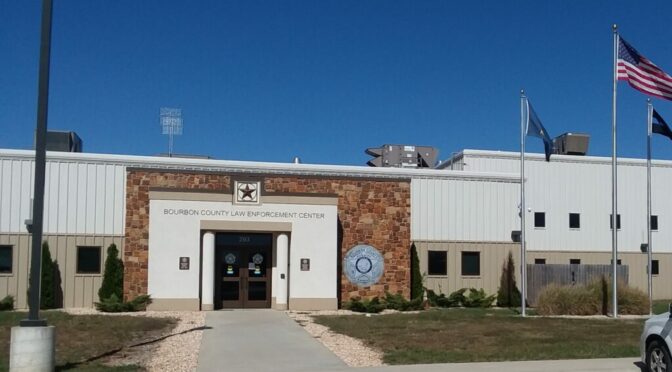
The north wing, east side of the Bourbon County Courthouse.
Freeman of Ft. Scott and funding for a Sheriff’s Department Financial Advisor top commissioner meeting activity on Dec. 23.
The commission dealt with several business items related to the re-opening of a hospital in Bourbon County and the county’s relationship with Freeman of Fort Scott. The approved a memorandum of understanding between Bourbon County and Freeman Fort Scott. This is to understand the way they’re going to spend the sales tax dollars they receive and let the county know how their going to spend it. Commission voted to sign in.
An agreement for equipment list that Freeman of Ft. Scott wanted from the hospital building was approved and signed.
The commission also approved and signed a letter to the IRS on behalf of Freeman of Ft. Scott, explaining that the hospital is committing to be open by June 1, 2025 and asking for patience regarding paying taxes.
Sheriff Bill Martin, presented his request for funding for a financial advisor again. Since the Dec. 19 commission meeting, financial information for the county was collecting showing $21,800 from county counselor’s budget that could be moved to the Sheriff, and $64,000 in the courthouse maintenance fund which could also be moved, as well as $50,000 in the commissioner contingency fund. This protects the $250,000 cash carryover from 2024 going into 2025.
Mr. Hart from the firm of Baker Tilly explained his approach to financial advising and how he can help the Sheriff’s office.
Beth made motion to transfer $36,000 to pay Baker Tilly from the commissioners contingency fund and that if the funds are not available, the money be moved from the county counselor or courthouse maintenance fund. The agreement is for $3000 per month. Beth and Harris voted for it, Wisenhunt against.
During the public comments section of the meeting, Heather Ethridge, president of West Plains and Centerville cemetaries presented an issue regarding recording deeds of burial sites. She presented a thick stack of deed papers and asked if there is a way to have them scanned in to the county’s records for future reference. “They don’t need to be registered,” she said, just recorded for access by those who purchased them, should they loose their own records. No taxes are paid on the deeds, but the current cost is $23 to register each deed, and the cemeteries don’t have the budget for that. Taxes for maintenance of cemeteries are paid by residents of towns served by cemeteries. Some donations as well as perpetual care funds help with improvements and maintenance such as surveys and maps.
The commissioners are in favor of waiving the fees, but will have to research it to be sure to follow all regulations before taking any further action.
Deb McCoy brought up her concern regarding California Legacy Healthcare’s tax abatement situation. McCoy claims the county doesn’t have a standard policy and procedure when it comes to submitting applications for tax exemptions and so should follow the state guidelines. California Legacy Healthcare completed the tax exemption application and had it notarized on March 11, 2024. State statutes provide for tax exemptions for hospitals. However, the building and land was not a hospital from 2022-23 and Legacy has not paid the $400,000 tax bill for that time. McCoy maintains that Legacy has taken advantage of the community “at every twist and turn,” and asked the commission if they are going to allow Legacy to walk away from their outstanding tax bill. Her main contention was that the county doesn’t have it’s own procedures for filing for tax exemptions.
Legacy was helpful in getting KRI and Freeman to begin re-opening a hospital in Bourbon county, claim commissioners Beth and Harris. Harris also stated that the state has forgiven the $400,000. “Legacy did a good job,” said Harris.
“It’s not an opinion, actually. KRI is here strictly because of Legacy and only because of Legacy. That’s the facts,” claimed Beth.
Anne Dare stated, “My main concern is that county funds are being doled out so quickly at the end of the year.”
She also mentioned payments made to REDI, per her records request: in 2021, $174,500; in 2022, $300,500; in 2023, $155,000. All of which is well over the $130,000 promised at the beginning. “I would implore you to defund or not use REDI anymore.”
Beth responded that regarding the funding the county gave REDI, “A large portion of that went for grants.” It didn’t go directly into REDI’s pocket.
Another citizen asked if the county budgeted to fund REDI in 2024. Commission Beth answered they did budget for it by putting the money in the commissioner contingency fund.
Kelly Perry, a small business owner in the Bronson area, asked that regarding REDI, the commissioners would install some “checks and balances.” Regarding her own business, she said she hasn’t received any services from REDI but has done all her own grant writing and searching for help for her small business.
She also mentioned that in order for REDI to maintain its charitable status, it cannot bill for services.
Perry concluded that she has been afraid to speak up because of backlash and consequences for her family business. She claimed there are other violations of rules that REDI has committed, but because she served on the REDI board in the past and signed a non-disclosure agreement, she cannot give particulars. She ended by asking the commissioners to do their research before going further with REDI and received applause from citizens at the meeting.
Michael Hoyt presented letters of interest received over the last weeks after he was asked to head a citizen’s committee on redistricting. Hoyt expressed that he did not wish to chair the committee anymore due to negative feedback from the community.
Beth reminded everyone that the company SAM has been hired by the county and is in the process of creating the three maps that the commission will then select from for the new 5-commissioner-district county. Harris expressed the desire for the citizen’s committee to get together and weigh in on the redistricting decision.
A citizen asked for a town hall meeting about the redistricting. Commission states that citizens can come to the commission meeting on Dec. 30 to discuss it at that time.
The committee members are: for District. 1: Kelly Perry, Jim Sachet, Ron Miller; district 2: Josh Jones, Don Tucker, Jean Tucker, Pete Allen, and district 3: JD Handley. Katie Bowers, who was at the commissioner meeting, asked to be added to the committee and was.
TOPEKA —Governor Laura Kelly on Monday, in accordance with Executive Order 20-30 and the proclamation signed by President Joe Biden, has ordered flags throughout Kansas be flown at half-staff starting immediately until sunset on Jan. 28, 2025 to honor the passing of President Jimmy Carter.
“Former President Jimmy Carter was a truly moral man,” Governor Laura Kelly said. “His innate humanity, his humility, his devotion to serving his community and his country, and his belief that the world could live in peace is the remarkable legacy he leaves behind.”
President Carter was the 39th President of the United States and was awarded the 2002 Nobel Peace Prize for his work to find peaceful solutions to international conflicts, advance democracy and human rights, and promote economic and social development. President Carter and The Carter Center led the near eradication of the Guinea worm that infected millions in the 1980s. As a result of their work, today, new infections total roughly a dozen worldwide. He and his wife, Rosalynn, helped build, renovate, and repair more than 4,000 homes as ambassadors for Habitat for Humanity.
I would like to respond to a question that was thrown at me at the last county commissioner meeting. “Do you want a Hospital?”
Let me tell you my story on how I became involved with the Legacy Saga. There was an investigative reporter, with Kaiser Health News from California who began following the closures of small rural hospitals. She was a native from our area. She had just completed several articles that were published on the Fort Scott BIZ web site regarding the Noble Health Corporation saga that included the devastating closure of the Audrain, Missouri hospital and the Calloway Hospital in Mexico, Missouri. This Noble Private Equity Investors firm had very little knowledge or healthcare experience. “Noble had received nearly $20 million in Federal Covid relief money in the 18 months before it closed the hospitals – funds whose use is still not fully accounted for.“
This Kaiser Health News reporter from California was in Fort Scott to research the possible closure of Mercy Hospital and was interviewing people. We struck up a spontaneous conversation at a local restaurant about the closures of so many rural hospitals. We discussed the fact that Missouri and Kansas placed themselves in a vulnerable state by not taking advantage of the expanded Medicare funds being offered, which affected many of the rural hospitals that eventually included the closure of our hospital in 2018. Because of my conversation with the investigative reporter, it sparked an interest and I decided to follow the journey of Noble turned Legacy when these same Private Equity Investors were introduced to our city and county officials. Yes, the Directors of Noble were the same people who called themselves the “Progress Mexico Amigos” who had never run a hospital or navigated the regulatory demands of a hospital. In fact one of them was charged with Medicare fraud, just months before he became one of two directors for Noble. “Meanwhile the three men who ran Noble were shopping for more hospitals to buy” and we were their victims with a sales pitch heavy on charm.
I have records of the Noble litigations that occurred over the closures of the two Missouri Hospital. Once they took over The Callaway and Audrain Hospitals they stopped paying their bills. Noble sold both Hospitals for $2 to a Texas based company. There are multiple court litigation cases pending in Missouri.
I have records turned into timelines of the Fort Scott Tribune Newspaper articles that covered the Legacy Saga.
We used ARPA funds in the transaction fund given to Noble Health who under the newly founded LLC Access Medical Advisors, charged us One Million Dollars for the feasibility study. When the president of Noble’s real estate company told the county in late March of 2021 that “An incredible finding from the study. Fort Scott’s hospital building was worth $19.6 million, which could present the borrowing basis of the bonding basis for a really great viable community project to move forward.” That should have been an indicator that profit was the factor not healthcare.
I have a list of all of the companies that were registered on the California, Missouri, and Kansas State Business Websites that did their bidding and due process, only to let the business be forfeited after their gains were met. Access Medical Advisors was one of those LLCs as well as Legacy Strategies LLC.
I have created timelines from documents of all of the people who have been involved in the process leading up to the donation of the hospital building and who continue to be involved.
I wrote a synopsis of my documented findings titled “SOS – Sold Our Soul (Red Flag Alert)”. I shared my concerns and observations with our Kansas State Governor with hopes that another county in our state would not become another victim of the Legacy saga. Kansas State Governor Kelly did respond to my information provided to her.
A hospital setting is always an asset to a community. I had a 45 year career working in healthcare that began at Mercy Hospital. People made generous donations when the new Mercy Hospital was built, because they knew how important having a hospital was to the community. But circumstances changed. The Medicare expansion bill was once again voted down. Covid hit. We donated the building, land and property assets, with a contractual agreement for a hospital, just like what happened in Missouri. Again I am going to say, if Legacy was truly serious about a signed contract to provide us with an Acute Care Hospital and ER why did it not happen? Once we relinquished the building, should the process of providing that acute care hospital have been the burden of Legacy’s organization as the owner who signed the Donation Agreement? What happened?
It appeared that there was a conflict of interest among some of our city and county officials who became much intertwined with Legacy by accepting employment with Legacy and those who were involved in business transactions with Legacy. In addition, funds and taxes were implemented, placing the burden of expenses back upon the community for a donation contract that was not fulfilled.
Yes, I am skeptical, but hopeful that things will be different. It will be nice to have an organization with CEOS and administrators who actually have experience and understanding regarding the importance of oversight in navigating a healthcare system and its regulatory demands to provide our community with the healthcare we deserve.
It was my first podiatrist appointment and I was patiently waiting in the exam room. The doctor entered and we exchanged the usual pleasantries. Then he dropped a bombshell and asked, “What kind of shoes do you wear?” That was a loaded question — I had no idea how to begin to describe all the happy shoes in my closet! I was dumbfounded, plus I knew he wouldn’t approve of 90% of my high heels, mules, sandals, flip-flops, slides, slingbacks, water shoes, knee-high boots, ankle boots, sneakers, and walking shoes. I’m a shoe lover on steroids.
So here’s another loaded question: “What kind of Christian are you?” How would you answer that if you were put on the spot by someone? Would all the color drain from your face as you changed the subject in order to get out of answering the question? Or would you sidestep by answering with the name of your church denomination? Or would you do a song-and-dance and respond, “I regularly attend church and take communion?” Hey, I could go sit in a tree all day and eat a nut but that wouldn’t make me a squirrel.
If we want to cut to the chase, an adequate answer to the proposed question would be, “A biblical one.” When Christians base our faith walk on the truth of God’s Word, that means we think and act like the Bible is true. So let’s review a few scriptures regarding what kind of Christian we should be.
Christ followers must grasp the fact that God loves us as much as He loves Jesus. Although this is nearly too much to wrap your head around, it’s still the truth. God’s love for us is unconditional and timeless. Here are the words of Jesus’ evening prayer with His disciples before His crucifixion: “I am in them and You (God) are in Me (Jesus). May they experience such perfect unity that the world will know that You sent Me and that You love them as much as You love Me“ (John 17:23 NLT). God created us to experience love, faith, hope, peace, and abundance, so we should gratefully receive what He offers.
Believers are to desire to please God rather than ourselves. “Don’t forget to do good things for others and to share what you have with them. These are the kinds of sacrifices that please God” (Hebrews 13:16 GW). Always choose the high road over the low road, even though the low road is easier. In order to please God, we must also live by faith and trust Him every day (see Hebrews 11:6).
The following scripture is certainly not a convoluted explanation of what a Christian is: “No, the Lord has told us what is good. What He requires of us is this: to do what is just, to show constant love, and to live in humble fellowship with our God” (Micah 6:8 GNT).
A man asked Jesus to explain the most-important commandment. His answer was simple yet profound: “You must love the Lord your God with all your heart, all your soul, and all your mind. This is the first and greatest commandment. A second is equally important: Love your neighbor as yourself“ (Matthew 22:37-39 NLT). After all these thousands of years, His answer remains the same for Christians today.
The Key: So, what kind of Christian are you? Hopefully the kind who practices love.
This time of year, typically it is pretty slow in the ag industry. The two main activities are livestock care and equipment maintenance. These everyday runs of the mill things that seem like just another day in the life of farmers and ranchers can be dangerous at times. As your Extension Agricultural Agent, I feel that we all need to be reminded every now and then to please be careful as you tend to your livestock and as you work on your equipment.
According to the 2022 census the average age of Kansas farmers is now 58.2 years of age. This means that slips, trips, and falls become a main concern for producers. I know this warm dry weather helps but at some point, this winter we could see some moisture and freezing temperatures that will increase the likelihood of falling while tending to your livestock. Examples include but not limited to are:
Slipping in the mud or on ice
Slipping on the steps getting in and out of the truck or tractor
Tripping over frozen clods of dirt
Losing your balance when carrying buckets of feed
Getting knocked down by livestock trying to get to the feed source
One reason the probability increases is due to freezing temperatures we tend to layer up to stay warm which is necessary when working in winter conditions. The problem with this is the more layers and heavier the clothing you have on the more it will decrease your range of motion and restrict your ability to maintain your balance.
Working in the shop on equipment requires producers and employees to be more proactive when it comes to safety. A wise investment for anyone working in a shop is the proper Personal Protective Equipment (PPE). We all know how expensive hospital visits can be. Spending a couple hundred dollars on PPE is less expensive than a trip to the emergency room. PPE items I strongly encourage producers to wear when working in the shop are:
Safety glasses
Leather gloves
Long sleeve shirts
Jeans
Solid toe boots with slip resistant soles
Ear plugs that do not need to be smashed or earmuffs
Along with proper PPE a clean shop is a safe shop. Pick up slip and trip hazards such as spills, extension cords and hoses when not in use, and put tools away when finished. Keep all hot work like welding and cutting away from flammable materials (oil, fuel, cleaners, etc.). OSHA standard is a minimum of 50ft and in a flammable storage cabinet. You also need to check to make sure all electrical equipment is properly grounded and all cords are free from any rips and tears that may expose the wires and all an operator to get shocked or electrocuted.
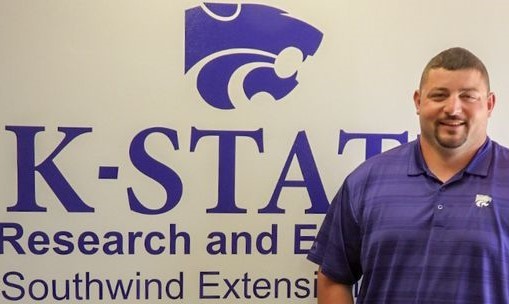
As the 2024 calendar year ends, I hope everyone had a wonderful Christmas this year. Coming up after the first of the year, K-State Research and Extension will be very active in putting on several programs throughout the southeast area. In January, I will be hosting a 4-day coffee shop discussion in 4 different locations across the Southwind District that will be producer led. It is called Growers’ Grind. I would love to sit down and visit with you all and answer any questions you may have. Feel free to reach out for more information.
On a final note, we in the ag industry know how precious life can be. One second everything is good, and the next tragedy can strike. Do your part to stay safe out there.
Lonnie Mengarelli is a K-State Research and Extension Agriculture agent assigned to Southwind District. He may be reached at [email protected] or 620-223-3720
K-State Research and Extension is an equal opportunity provider and employer.
The north wing, east side of the Bourbon County Courthouse.
Bourbon County Commissioners meeting of Dec. 19, 2024 opened to a packed citizens’ section.
Redistricting was one topic that dominated the meeting.
Commissioner Brandon Wisenhunt started the redistricting discussion by apologizing: “We dropped the ball on the 3 to 5 thing. We should have been working on it as soon as it was on the ballot.” We originally thought the clerk and secretary of state was working on it.” After last meeting Wisenhunt did some more research on the issue. “I want to start off by apologizing to Mr. Hoyt. This is not something that should be citizen-lead.” Wisenhunt went on to explain that it is the “most litigated topic in Kansas, and I would not want to put individual citizens at risk for litigation.”
It is the sole responsibility of the commission to redistrict based on KSA19-204. The current commission must vote in the new districts, per Kansas law. Redistricting is to be completed by January 1, 2025. After consulting with other counties, Wisenhunt says, “We are so far behind in our process it’s almost embarrassing.”
After explaining that there has been distrust between the public and the commission leading to this situation [around the 48 minute mark], the commissioner made several motions to remedy the situation and move the county toward compliance with the law regarding redistricting.
He then made motions to hire SAM, a survey and mapping company, to create three different maps of possible new districts, based on the population of the county and keeping the voting wards and precincts intact. The commission would then choose from those maps to create the 5 districts.
Commissioner Clifton Beth spoke about the citizen’s committee created at the previous county commissioner meeting. He said that it was intended to be an advisory committee, “they have no say in what happens, just advice.”
All committee meetings would be open to the public.
County employee stated that the county cannot produce the needed maps themselves, because the census data is produced in blocks, but the county is divided into precincts and wards. It is in the best interest of the public to pay somebody to do this, so as do avoid any charges of malfeasance. The company, hired by the county will “go in and break the [census] blocks, figure the blocks to fit into the wards because the wards cannot be separated. Precincts can’t be separated.”
He went on to explain to the commission that creating the new districts was beyond his capability, especially within the timeline, “so if we want to get it done in a timely manner we need to use SAM.” He predicted that if the county hired SAM, they could probably get the redistricting done by the end of the following week, Dec. 27.
The commission voted to hire SAM to create the three maps of 5 commission districts of Bourbon County on the motion of Commissioner Beth. SAM’s services will cost $7,600 and the maps will be ready by Dec. 30.
Mark McCoy, chairman of Bourbon County REDI gave an overview of key activities and accomplishments of REDI including conducting several targeted studies to inform strategic planning and decision making. These studies covered labor market trends; data shared with state officials to assist in site selection projects for potential business locations; information to several local business to support HR teams in marketing their companies to prospective employees; and retail selection performance.
REDI also supported several businesses including The Kitchen Collective, Bibs and Dibs, the Artificers, and Bourbon County Clay. REDI’s data was instrumental in grant applications resulting in multiple successful awards.
REDI also conducted housing needs assessment used by external and local developers to promote housing initiatives, as well as sales tax revenue analysis. They made business retention efforts, conducting three years of visits since 2021.
REDI claims that their assistance allowed for the securing of more than $2 million in competitive grant funding with $200,000 already being disbursed.
“REDI distributed more than $150,000 in community grants to fund critical development projects across the county.” These funds provided by the county have been invested in baseball field upgrades in Redfield and Bronson, park improvements in Uniontown, Fort Scott, and Mapleton, a new playground at Kansas Rocks, and $17,000 for Bourbon County EMS to purchase AEDs (defibrillators).
REDI has played a roll in community based projects demonstrating its commitment to partnering with local organizations. Projects include the splash pad and the First Kansas Mural, and the new pavilion down town, promoting civic pride.
Housing developments, REDI is actively engaging developers to address critical housing needs with ongoing initiatives totaling more than $5 million. Working to expand single and multi-family housing options.
REDI organized a county-wide strategic planning session including school districts, Fort Scott Community College, community organizations,and local businesses to identify and address regional challenges.
REDI’s ongoing efforts include the areas of housing, child care, tourism, and health care.
When asked by the commission about the idea of REDI being self-sufficient three years from its formations, McCoy answered that REDI’s previous chairman stated that the goal for REDI was to be self-sufficient in three years from 2020, but the REDI board didn’t vote on that. McCoy went on to answer Wisenhunt’s questions regarding REDI’s expectation of funds from the county by stating that he has had conversations with the commissioners on 3 previous occasions regarding funding for REDI. He also said that $130,000 was set aside for REDI at the end of 2023 and beginning of 2024 for services rendered and services being paid.
Another citizen claimed that the things REDI is taking credit for helping with in Bourbon county could have been done without their assistance. He then went on to ask how much funding REDI is receiving outside of the city and the county.
McCoy says that he is unaware of REDI receiving any funds from anything outside of the county and city. “If we don’t get funded, that is your choice,” he told the commission. “We’re here to provide services and are listed on the Bourbon County website as the county’s economic development entity.”
A former REDi board member asked what the county had asked REDI to do. Expressed concern about the county’s funding limitations and the precedence set by continuing to fund REDI indefinitely.
Deb McCoy presented detailed information she had collected about the history of REDI and its relationships with the city of Fort Scott and Bourbon County. REDI was formed in August of 2021. However, she could produce no signed contracts between Bourbon County and REDI.
Her information stated that the county paid Bourbon Co. REDI between 2021-2023, per expenditure reports, $774,751, that the county didn’t include REDI in the 2024 budget. The city drew up a contract with REDI signed April 8, 2024.
Combined with payments from the city, REDI received $849,918 during that time period.
McCoy asked how the commission to explain these payments and services rendered without signed contracts, pointing out that the expenditures exceed the amounts in those contracts.
Commissioner Beth said that the county did their business via a motion, no contract, but a motion made to create a city/county entity (REDI) for economic development in 2021 and fund it for 3 years at $130,000 per year. Contracts with the city are seperate. The county was paying a one time annual payment per their motion. There were no contracts considered by REDI.
One citizen spoke up, “I’m asking the county, please, you fulfilled your promise, please do not fund this.”
Rob Harrington spoke to the commission about REDI as well, explaining his involvement in REDI: “I’ve given my heart and soul to this community.” Enumerated numerous activities that REDI took part in, including getting health care back in Bourbon County by bringing in KRI, helping revive downtown Ft. Scott by getting viable businesses into unoccupied buildings, and keeping the Artificer’s building stable.
He went on to explain that his children have been harassed on the street asking if they know their dad’s a fraud, and he has received 2 a.m. phone calls saying he should be killed or run out of town.
“Our job at REDI is to bring in new revenue so we can decrease [tax] rates,” he said.
Wisenhunt said he wanted to wait to decide about funding REDI to “see how much money we have left.”
The commissioners voted to table it for a few weeks until they get final numbers for their finances for the year.
The meeting also included a public hearing for budget amendments. Several funds amended by county due to revenue that has come in that exceeds the budget in various categories for a number of reasons by $1.3 million: Road and Bridge, Appraisers, Bridge and Culvert, Election, Employee Benefits, Landfill, and Emergency Services sales tax ( The new sales tax fund)
Susan Walker explained that the purpose of the budget hearing is amend to budget to spend un-budgeted extra revenue by the end of the year. However, unspent funds will carry over. Even though the cash is available, a hearing and amendment to the current budget must be made to keep the county from violating budget laws.
Susan went on to answer several questions from the citizens at the meeting explaining the following:
It is ideal to have 3 months of funds carry over every year, but the county usually spends it down to zero, especially in the road and bridge department. The county currently has no plan for a three month carryover for 2025, but they are “working towards that” by building cash reserves.
The county cannot always budget for inflation.
Commissioner Jim Harris said, “Everyone has to keep in mind that we assisted in funding health care. That money could have easily been called carryover because it was in an account and it could have been moved to any cash fund by this commission. For us spending a half million dollars assisting with healthcare, it would strain anyone’s budget, any time any where.”
However, the commission is making steps toward creating a carryover amount, “With Susan’s help, for 2025, we budgeted $450,000 extra cash to help carry over the cash and start building cash reserves again.”
“We are way behind on pay raises (for employees),” said Susan, then she explained that the commission has increased wages for county workers, changing the base pay to $15 and hour and giving them 40 hours a week, up from $13 an hour and 35 hours a week.
In order to keep taxes down, the changes the commission made forced the spending of reserves, “We knew it wasn’t sustainable,” said Susan, “and so now you’re at a rebuilding phase.”
She mentioned the importance of talking about the county’s priorities when building the budget: “I’ve always said, ‘If your going to cut expenses, you’re going to cut services…People need to understand that.”
The county’s budget was decreased by $300,000 for road and bridge in 2024. “That hurts,” said Susan. The county tried to do as much as they possibly could but “it hit them really hard.” Roads and Bridges is also awaiting reimbursement from FEMA for the repairs required by the floods earlier this year, which will help that department rebuild its reserves.
Commissioner Harris prefaced the public comments section of the meeting by reminding those present that the purpose of this section of the commissioner meeting is to discuss county business. He said that if people make personal comments or get insulting, he will end the meeting at that time. He also said that no one can discuss solar or wind farms due to litigation.
Anne Dare said the commission should give clear direction to the citizen’s committee, created for the purposed of advising the commission in the Dec. 12 commissioner meeting, and not allow Michael Hoyt to run it without their direction. She referred to the solar committee the commission created in the past.
Mary Pemberton stated that a committee will just bog the redistricting down. She also stated that REDI should not receive extra funding. They went into the year knowing they weren’t receiving funding, so presenting a bill for work they did isn’t right.
Brian Allen asked for permission to have a public hearing on the new flood plane maps. on Jan. 13 at 5:30pm
Sherriff Bill Martin brought the commission a financial adviser request. He asked that Ben Hart with Baker Telly, which firm also works for the city of Ft. Scott, be hired as a financial adviser for his department to look through the budgets to find money for pay raises and equipment, as well as big ticket items anticipated in the new future. He was asking the county to pay $34,000 for the services as the Sheriff’s budget has already been approved. This would be a one year contract.
Commissioner Beth said he was in favor of the hire because, “I think you’re going to need it.” Then he moved to fund it from the general fund, starting Friday, Dec. 20. Susan advised to fund it out of the VIN account or tabling it for a week to get a better idea of the funds available. Sheriff read the statute regarding use of VIN funds stating they are for law enforcement purposes and not to supplement the department’s budget.
Vote was to table it and add it to the next week meeting.
The Ft. Scott hospital equipment agreement and a memorandum of understanding with Freeman Ft. Scott Hospital was presented and tabled until Monday, Dec. 23 meeting to give commissioners time to read over.
The commissioners voted to encumber $50,000 to cover attorney fees for the lawsuits filed against the commission regarding solar panels.