Kansas HPV Vaccine Rates Improve Significantly


TOPEKA – Today, the National Immunization Survey regarding Teens released its annual report for 2018 which shows Kansas is improving in vaccine rates for HPV and MenACWY and remaining consistent with Tdap. This report is available in the Morbidity and Mortality Weekly Report from the Centers for Disease Control and Prevention.

The survey, which is conducted among teens ages 13 to 17, monitors the vaccines received by adolescents, specifically HPV, MenACWY and Tdap.*

“In 2014, Kansas had the lowest coverage in the nation for the HPV vaccine with only 34.4 percent of respondents reporting one or more doses received,” said KDHE Secretary Lee Norman, MD. “I’m very pleased to report that Kansas is now at 62.3 percent coverage in 2018, up significantly from 52.4 percent in 2017.”

Activities that have contributed to the increase in HPV Vaccination coverage, include:

  • Education for vaccine providers throughout the state during Vaccines For Children program site visits
  • Education provided at Kansas Immunization Conferences
  • Development of HPV Toolkit by the Immunize Kansas Coalition funded by the KDHE
  • Multiple partner organizations conducting efforts to increase awareness and importance of the HPV vaccine
  • Focus on the importance of provider recommendation to patients to receive the vaccine

Kansas has seen an average increase in HPV coverage of 6.3 percentage points annually since 2014 while the national average increase has been 4.4.

“One of the most significant factors to successful vaccination against HPV cancer appears to be a recommendation from a medical provider,” Secretary Norman said.

The survey demonstrates that, in Kansas for 2018, of those who received the recommendation from a medical provider, 69.5 percent received the vaccination while only 35.8 percent received the vaccination without a provider recommendation.

The Advisory Committee on Immunization Practices (ACIP) routinely recommends HPV vaccination at age 11 or 12. In addition, ACIP has recently updated their recommendation to include some adults up to age 45 based on the safety and effectiveness of this vaccine against some HPV cancers.[1]

The MenACWY vaccine coverage increased from 72.1 percent in 2017 to 75.3 percent in 2018. This school year, MenACWY has just become a required vaccination for school entry.

*Vaccine Description:


  • Tdap – protects against tetanus, diphtheria and pertussis. Recommended for ages 11-13. Healthy People 2020 target is 80 percent coverage. Kansas 2018 rate is 89.4 percent.
  • MenACWY – protects against certain strains of meningococcal disease. Recommended for ages 11-13 with a booster dose at age 16. Healthy People 2020 target is 80 percent. Kansas 2018 rate is 75.3 percent.
  • HPV – protects against HPV related cancers. Two dose series recommended for ages 11-13. Doses administered six months apart. If first dose is not given before 15th birthday, a three-dose series is needed. Healthy People 2020 target is 80 percent. The Kansas 2018 rate is 62.3 for one or more doses, 40.7 percent.
 

Work Ready Students Is Goal of New Program: Employers Cooperation Needed

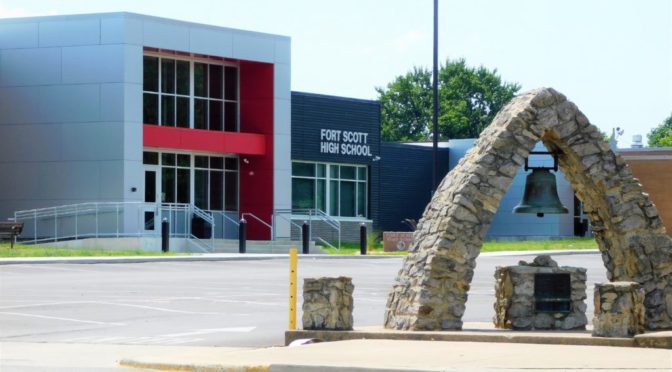
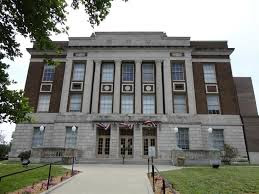
Fort Scott High School.

Workers are needed across the state to fill workforce needs.

The Kansas State Board of Education, working with Kansas legislators, are providing the opportunity for juniors in high school, including Fort Scott, to take assessments to help fill those workforce needs.

The title of the program is ACT Work Ready Community and is paid for by Kansas legislators in collaboration with the state board of education.

Students are offered two assessments for the program and can either take the ACT, or ACT WorkKeys, or both.

The program facilitators are hoping to fill job vacancies in Bourbon County.

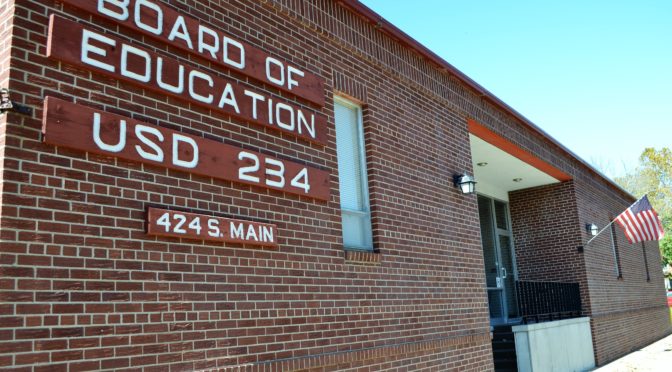
“An opportunity was seen to provide a connection for local Bourbon County employers to gain understanding of the ACT and the ACT WorkKeys assessment to help fill and build their workforce,” USD 234 Superintendent Ted Hessong said.  “The opportunity for juniors to take the ACT assessments will continue this school year and for years to come.”

A career readiness certificate can be earned, after taking an assessment, which will help to evaluate future employees for the workforce skills needed.

The program allows employers to use it as a tool to see if the skills set will work for their need.

“ACT Work Ready Community is a program to provide Bourbon County the distinction of a county where the employers recognize the ACT WorkKeys National Career Readiness Certificate earned upon completion of taking the ACT WorkKeys assessment, as a tool to evaluate future employees,” Hessong said.

The basis of the certification: current and future workers earn the certificate and the employers recognize the credential.

“Employers can be the fuel to drive successful state and county Work Ready Communities initiatives simply by recognizing the ACT® WorkKeys® National Career Readiness Certificate®. And in doing so, they will have a more qualified workforce ready to fill their jobs,” according to the ACT Work Ready Communities website.

“The foundation of a community’s certification is based on individuals at the county level across the current, transitioning and emerging workforce, earning an ACT® WorkKeys® National Career Readiness Certificate®…and employers recognizing the ACT® WorkKeys® NCRC®,” Hessong said. “(It) is a portable, industry-recognized credential that clearly identifies an individual’s WorkKeys® skills in workplace documents, applied math, and graphic literacy.”
A collaboration of local entities and employers will have two years to start reaching goals for the program.
“The Fort Scott Chamber of Commerce in conjunction with Bourbon County Economic Development, USD 234, Fort Scott Community College, and Bourbon County employers will have two years to attain goals set by ACT Work Ready in order to be recognized as an ACT Work Ready Community,” Hessong said.
For more information: workreadycommunities.org

New FSHS Math Teacher: Bill Hall

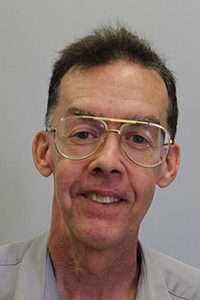
Bill Hall. Submitted photo.

William Hall is a new math teacher at Fort Scott High School, whose hometown is Manhattan, KS.

Hall earned a bachelor of science degree in secondary math education from Kansas State University and has previously taught math at Hugoton High School.

His family consists of his father, brother, and sister, who still live in Manhattan, another brother in Las Vegas, and another brother in Sydney, Australia.

” I’ve always been interested in working with students,” he said. And his students inspire him, he said.

Hall is looking forward to getting to know the students at Fort Scott High School, he said.

His greatest challenge in teaching math is working with technology.

“I am what you would call ‘technology challenged,” he said.


American Legion Post 25 Fundraisers

Post 25 is raffling a Taurus G2C 9 mm pistol with two 10 rounds magazines. The money generated on this raffle will support 1 full scholarship for a Boys/Girls State/Cadet Law Program delegate PLUS will cover half the costs of a 2nd scholarship.
Tickets are $10 each or 3 for $25. Only 100 tickets will be sold.
Winner must be legally able to own a pistol and is responsible for the cost of any background checks.
Reply to this email with your phone number and I’ll put a member with tickets in touch with you.
I can also make arrangements to purchase raffle tickets for those persons who live out of town but wish to support Post 25 programs.
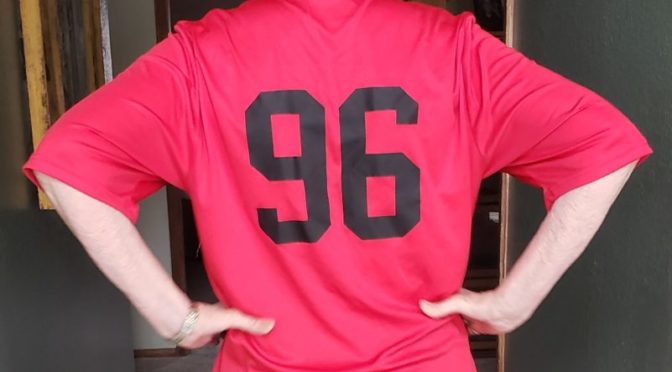
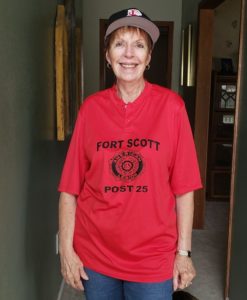
We have an opportunity to purchase T-shirts with the Post 25 Legion logo and you can add on the back of the T-shirt your branch of service, name, office held such as Chaplain. Cost per T-shirt  is $20 and can be ordered in sizes Small – 2 XL. T-shirts will ordered through a Fort Scott supplier.
These T-shirts are red are the baseball shirts worn by  Fort Scott Post 25 baseball team. The shirts can also be worn on to support RED shirt Fridays as well. RED stands for Remember Everyone Deployed.
In order to order T-shirts, there is a minimum order of 12.
If you wish to order a T-shirt, just reply to this email with your name, T-shirt size and lettering on the back, if any.
Photos of the Taurus and the T-shirts are attached.
Don’t hesitate to contact me with any questions you may have,
Carl Jowers. Post 25 Commander.

KCC launches investigation into Hutchinson earthquakes


The Kansas Corporation Commission (KCC) is collecting data and analyzing recent injection well activity in Reno County in an effort to uncover the cause of a series of earthquakes in the Hutchinson area. Amid damage reports and a concern for public safety, the KCC is conducting an investigation and will evaluate whether additional action is needed to safeguard Kansans.


In 2015, the KCC issued an order reducing injection rates in portions of Harper and Sumner counties after the number of earthquakes in that area began to trend upward. In 2016, the Commission issued a second order limiting injection in additional areas of Harper and Sumner as well as parts of Kingman, Sedgwick and Barber counties when earthquake activity there started to rise.


The area currently under study in Reno County focuses primarily on Arbuckle Formation depth wells and involves both Class ll oil and gas industry injection wells regulated by the KCC and Class l wells regulated by the Kansas Department of Health and Environment (KDHE).


Class ll wells are used to inject fluids associated with oil and natural gas production into deep confined rock formations. There are two types of Class ll injection wells: disposal wells and secondary/enhanced recovery injection wells. Disposal wells are used to inject produced fluids into rock formations that do not produce oil or gas. Typically, the injection formations are isolated from usable quality groundwater and are sealed above and below by cementing steel casing into the unbroken and impermeable well bore and rock formations within the well. Secondary/enhanced recovery injection wells are used to inject produced fluids back into formations/reservoirs that contain oil or gas. These formations are also isolated from usable quality groundwater. The injection of produced fluid back into potentially productive formations often allows for the increased recovery of oil or gas reserves.


Class l wells are used to inject hazardous and non-hazardous industrial and municipal wastewater into deep, confined rock formations. Disposal typically occurs thousands of feet below the lower most underground source of drinking water (USDW). Industries that utilize Class I wells include: refining, metal production, chemical manufacturing, pharmaceutical industry, commercial disposal, food production and municipal wastewater treatment.[1]  Nearly all Class I disposal wells in Kansas inject into the Arbuckle Formation.[2]


To fully evaluate all injection activity in Reno County, the KCC staff is working with other state agencies to collect information regarding well construction, depths, injection volumes, pressures, maintenance practices and any new injection well activity in the area.   This investigation and evaluation process is ongoing and dependent upon the complexity of the evolving fact finding process.  Accordingly, a precise timeline for completing the investigation has not yet been determined.


[1] http://www.kdheks.gov/uic/

2 Id.

Burns-Wallace Named Chief IT Officer

Governor Laura Kelly names Secretary DeAngela Burns-Wallace as  new Chief Information Technology Officer


Governor Laura Kelly today announced that Kansas Department of Administration Secretary DeAngela Burns-Wallace will be the new Chief Information Technology Officer for the Kansas Office of Information Technology Services (OITS). The appointment is effective immediately, with the OITS duties done in addition to her work leading the Kansas Department of Administration.


“Secretary Burns-Wallace has the leadership skills and executive experience necessary for a successful Chief Information Technology Officer to possess,” Governor Kelly said. “Our state’s computer systems are vulnerable to both domestic and international security threats. Secretary Burns-Wallace understands these threats and will ensure that our state’s infrastructure is prepared to handle them and keep Kansans’ information secure.”

Prior to joining the Kelly administration earlier this year, Burns-Wallace served as vice provost of undergraduate studies at the University of Kansas. Previously, Burns-Wallace was assistant vice provost for undergraduate studies at the University of Missouri. She earned a bachelor’s degree in international relations from Stanford University, a master’s degree in public policy and international affairs from Princeton University and a doctorate in higher education management from the University of Pennsylvania.

“I’m honored to be selected by Governor Kelly to serve in this important role,” Secretary Burns-Wallace said. “I believe in public service and I look forward to working with Governor Kelly, the Legislature and the OITS and Department of Administration teams to serve the people of Kansas. We must ensure that the state has the IT systems in place to conduct its daily business and maintain the safety and security of our data in today’s ever-changing and interconnected world.”


OITS was created under Governor Sam Brownback. Previously, OITS was known as the Division of Information Systems and Communication (DISC) and was a division of the Kansas Department of Administration. OITS is an independent agency, but the two agencies still maintain close operational relationships in several areas because the transition was never completed.


Governor Kelly went on to say: “The relationship OITS has had with the rest of state government has been challenging, and communication between the agency and its customers has been difficult. This was not the fault of the agency’s previous leadership. It is, however, a direct result of the fact that the previous administration split OITS from the Department of Administration and then failed to properly support the move, convey its mission and get buy-in from the rest of state government.”


Burns-Wallace replaces Lee Allen, who has decided to leave the agency.


“I appreciate the work Lee has done for OITS, and thank him for his service to the State of Kansas,” Governor Kelly said.


KDOT requesting comments on STIP amendment


The Kansas Department of Transportation (KDOT) requests comments on an amendment to the FFY 2019-2022 Statewide Transportation Improvement Program (STIP) document.

The STIP is a project specific publication that lists all KDOT administered projects, regardless of funding source, and includes projects for counties and cities as well as projects on the State Highway System. The list of projects being amended to the STIP can be viewed at http://www.ksdot.org/bureaus/burProgProjMgmt/stip/stip.asp

The approval of the STIP amendment requires a public comment period, which concludes Sept. 4. To make comments on the amendment, contact KDOT’s Bureau of Program and Project Management at (785) 296-2252.

This information is available in alternative accessible formats. To obtain an alternative format, contact the KDOT Office of Public Affairs, (785) 296-3585 (Voice/Hearing Impaired-711).

Tri-Valley Fall Golf Classic Sept. 14

Save the date:
September 14, 2019
2019 Friends of
Tri-Valley Foundation Fall Golf Classic
Save the Date:
2019 Friends of Tri-Valley Foundation Fall Golf Classic
When: Saturday, September 14, 2019
What: 4-Person Scramble
Where: Woodland Hills Golf Course, 2414 Horton St., Fort Scott, KS 66701
Cost: $200 per team, includes green fees, golf cart & lunch
Deadline to enter: September 6, 2019
Why: To help the Friends of Tri-Valley Foundation to support programs for our neighbors with intellectual/developmental disabilities in Allen, Bourbon, Neosho and Woodson Counties.
For more information, contact Tricia at 620-431-7401, ext. 230,

Shannon Meyer Takes Reins at Lansing Correctional Facility

Familiar Face to Replace Retiring Lansing Correctional Facility Warden

Topeka Correctional Facility Warden Shannon Meyer returning to Lansing


The Kansas Department of Corrections (KDOC) announced Tuesday that Topeka Correctional Facility Warden Shannon Meyer will take the reins at Lansing Correctional Facility effective August 25.


Meyer, who began her correctional career at Lansing in 2002, will replace Warden Ron Baker who is retiring after 35 years with the KDOC.


“Shannon calls Lansing her home away from home and is excited to return to Lansing as the first woman to be appointed warden of this facility,” said Corrections Deputy Secretary of Facilities Management Joel Hrabe. “Shannon’s long-time connection and her experience make her the best choice to lead the state’s oldest and largest correctional facility.”


As one of her first major undertakings, Meyer will oversee the ongoing reconstruction project at Lansing which is scheduled for completion in early 2020.


Meyer, who started as a corrections counselor at Lansing, steadily rose through the ranks before joining the agency’s reentry division in Topeka. Beginning in 2006, she served as the division’s assistant director where she was responsible for implementing evidence-based programs and services throughout the state. She was named the director of community corrections in 2011 before returning to Lansing as the East Unit administrator in 2013. Meyer then was named a Lansing deputy warden in 2014. In 2016, Meyer was appointed to her current position as warden at Topeka Correctional Facility, the state’s only correctional facility for women.

Bourbon County Local News