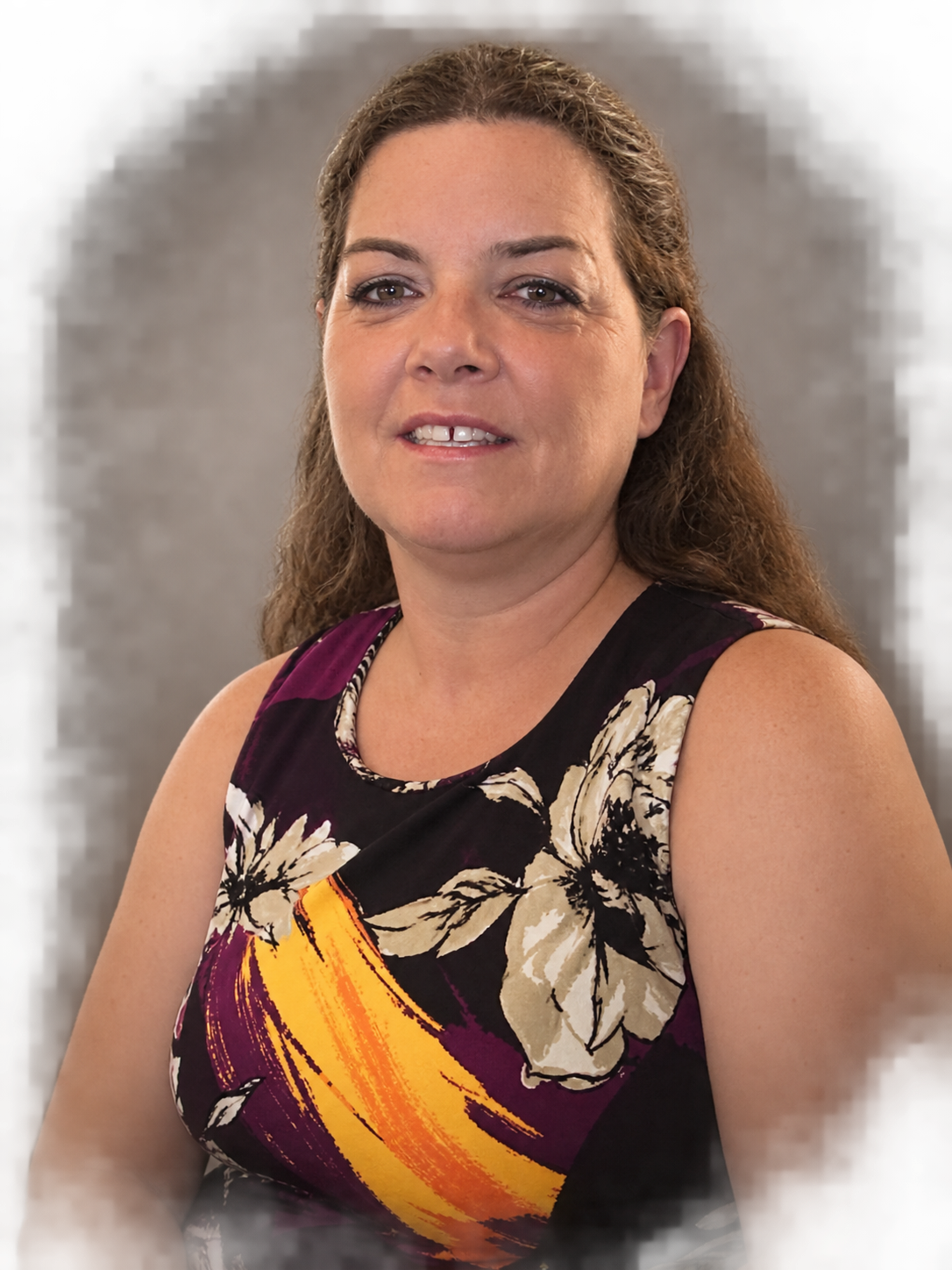
Tara Soloman-Smith, Family and Wellness Agent, Sunflower District of Kansas State University’s Extension Office. Submitted photo.
Don’t Get Fooled: Spot Scams Before They Cost You
Scams are more common than ever. Scammers use emails, text messages, social media, phone calls, and fake websites to trick people into giving away money or personal information. Many pretend to be someone you trust, such as a bank, business, government agency, or even a family member.
There are several warning signs that a message may be a scam. Be cautious if you receive an unexpected email, text, or phone call asking for personal information or money. Scammers often create a sense of urgency, claiming you must act immediately to avoid a problem. Requests for payment through gift cards, wire transfers, cryptocurrency, or payment apps are also major red flags.
One of the most common scams is phishing. In a phishing scam, criminals send emails or text messages that appear to be from a trusted company. The message may ask you to click a link, update account information, or verify a password. These links often lead to fake websites designed to steal personal information. Misspelled words, generic greetings, outdated logos, and unexpected requests for sensitive information can all be signs of phishing.
To protect yourself, never click on links or download attachments from unexpected emails or text messages. Instead, visit the company’s official website or call the organization directly using a verified phone number. Use strong passwords that are different for each account, and turn on two-factor authentication whenever possible. Regularly checking bank statements, credit reports, and online accounts can also help you spot problems early.
If you think you have been targeted by a scam, contact your bank or financial institution right away. You should also report the scam to the Federal Trade Commission at ReportFraud.ftc.gov and the FBI’s Internet Crime Complaint Center at IC3.gov. Acting quickly may help reduce financial losses and prevent others from becoming victims.
Information for this article came from the Office of the Comptroller of the Currency (occ.gov). For more information, contact Tara Solomon-Smith, Family & Community Wellness Agent, at 620-244-3826 or [email protected].
Preparing for Preserving: Check Your Equipment and Use Safe Recipes
As gardens begin producing and farmers markets fill with fresh produce, many southeast Kansans are preparing for another food preservation season. Before canning begins, it’s important to take a few steps to make sure equipment is safe and working properly.
One of the most important checks involves pressure canners. The Southwind Extension District offices in Erie, Yates Center, Iola, and Fort Scott offer free pressure canner gauge testing. The process can help ensure home-canned foods are processed safely. Contact your local office to arrange to leave your pressure canner lid or make an appointment for it to be checked while you wait.
Pressure canning is required for low-acid foods such as vegetables, meats, and soups. An accurate gauge is critical because improper processing can allow the growth of harmful bacteria, including Clostridium botulinum, which causes botulism—a serious and potentially deadly foodborne illness.
Pressure canners use either a dial gauge or a weighted gauge. Weighted-gauge canners do not require testing. However, dial gauges should be tested annually for accuracy. Southwind Extension offices use the Presto Testing Unit from National Presto Industries and can test gauges from National, Presto, Maid of Honor, and Magic Seal pressure canners.
According to the USDA Complete Guide to Home Canning, consumer gauges that test two or more pounds above or below the master gauge should be replaced. A gauge that reads incorrectly can result in food being under-processed and unsafe to eat. Until a replacement gauge is obtained, adjustments can be made to reach the correct pressure. For example, if a recipe calls for 11 pounds of pressure and the gauge reads one pound high, the canner should be operated at 12 pounds of pressure.
In addition to accurate gauges, those who use canners should carefully evaluate the condition of any pressure canner they plan to use. While older canners are often available at garage sales and auctions, replacement parts for some discontinued models may be difficult—or impossible—to find.
When purchasing or inspecting a used pressure canner, consider the following:
Is the gauge attached and in good condition?
Is the petcock safety valve complete and functioning?
Are the threads on the opening undamaged?
Does the canner require a gasket, and is it in good shape?
Is the canner perfectly round, with no bulges or distortion?
Is the bottom flat and level? Canners with recessed or rounded bottoms should not be used.
On wing-screw models, are all screws and matching lid slots in good condition?
Many replacement parts, such as gaskets, handles, and knobs, can still be purchased through manufacturers and hardware stores. Although replacement parts may not look exactly like the originals, they often serve the same purpose and can safely extend the life of the canner.
Safe equipment is only one part of successful home food preservation. Using a current, research-tested recipe is equally important. While many families treasure canning recipes passed down through generations, some older recipes may not meet today’s food safety recommendations. Changes in research have led to updated guidelines for acidity levels, processing methods, and processing times.
For the safest results, always use research-based recipes from trusted sources, including:
USDA Complete Guide to Home Canning
So Easy to Preserve from the University of Georgia Extension
Kansas State University Food Preservation resources
Other university Extension publications and research-based sources
By using a well-maintained pressure canner, having an accurate gauge, and following up-to-date, tested recipes, home canners can confidently preserve food that is safe, nutritious, and enjoyable for their families throughout the year.
For more information about food safety and nutrition programs, contact Sandy Haggard, Nutrition, Food Safety, and Health Agent, Southwind District, at [email protected] or 620-365-2242.
From the County Fair to the Classroom: Wrapping Up Summer and Looking Ahead
As the last ribbons are handed out, the livestock trailers head home, and the fairgrounds grow quiet once again, another memorable county fair season has come to an end. Across the Southwind Extension District, our county fairs brought together youth, families, volunteers, sponsors, and community members to celebrate the hard work and accomplishments of our 4-H members. While the excitement of fair week may only last a few days, the skills and experiences gained throughout the year leave a lasting impact.
County fair is often viewed as the highlight of the 4-H year, but it represents much more than a week of exhibits and competitions. Behind every project displayed in the exhibit hall and every animal shown in the ring are months of planning, learning, practicing, and dedication. Members spend countless hours caring for livestock, perfecting recipes, creating woodworking projects, taking photographs, sewing garments, growing gardens, and exploring STEM, arts, and countless other project areas. Along the way, they develop responsibility, confidence, problem-solving skills, time management, and perseverance.
The fair also provides opportunities that extend beyond project work. Members practice public speaking while visiting with judges, learn how to accept constructive feedback, and experience both the excitement of success and the lessons that come with disappointment. Whether a project earns a purple ribbon or simply represents a personal accomplishment, every participant has something to be proud of. Success isn’t measured only by awards—it’s measured by the knowledge gained, friendships formed, and personal growth achieved throughout the journey.
None of this would be possible without the incredible support of our communities. We extend our sincere appreciation to the volunteers who dedicate countless hours, the judges who provide thoughtful evaluations, the superintendents who organize exhibits, the parents and families who encourage their youth every step of the way, and the local businesses and sponsors whose generosity helps make our fairs possible. County fairs truly are community events, and they continue to thrive because so many people are willing to invest their time and talents in the next generation.
As summer draws to a close, another season begins. Soon school hallways will once again be filled with students carrying backpacks instead of fair supplies, and calendars will quickly fill with classes, sports, music programs, and other activities. While summer may be ending, the opportunities to learn certainly are not.
One of the greatest strengths of 4-H is that it encourages youth to learn by doing. Members are challenged to set goals, try new things, work through setbacks, and celebrate accomplishments. These experiences build confidence and prepare young people to become leaders in their schools, communities, and future careers. The friendships formed through club meetings, camps, and community service projects often become some of the most meaningful memories youth carry with them.
As families settle into new routines this fall, we encourage you to consider becoming involved in your local 4-H program. New members are always welcome, and volunteers are an important part of making these opportunities possible. Whether you have a few hours to help with a project meeting or would like to become more involved with your local club, there are many ways to make a difference. If you are interested in joining 4-H, go to the Southwind Extension District website under the 4-H Youth Development tab, Jennifer Terrel and Kendal Henson will answer any questions you may have.
As we reflect on another successful fair season, we celebrate not only the accomplishments displayed during fair week but also the dedication, hard work, and growth that took place throughout the entire year. Congratulations to every 4-H member for your achievements, and thank you to everyone who played a role in making this year’s county fairs a success.
We wish all students, teachers, school staff, and families a safe, successful, and rewarding school year. We look forward to another exciting year of learning, leadership, service, and fun through 4-H, and we can’t wait to see what our youth accomplish in the months ahead.
Kendal Henson is a Kansas State University Extension 4-H & Youth Development agent assigned to the Southwind District. He may be reached at [email protected] or 620-625-8620. Kansas State Extension is an equal opportunity provider and employer.
I write in response to the recent letter urging yes on the “Vote for Supreme Court justices” amendment. Let’s unpack what the reasoning seems to be in the letter and in some of the supporting follow up responses.
The writer implies a cabal of attorneys are making nefarious back room deals regarding choosing a justice. The Supreme Court Nominating Committee has a lawyer from each congressional district selected by a vote of peers in their district. Do we really think the politics of Dodge City lawyers mirrors the politics of Johnson County? Yet, each politically different congressional district has equal representation on the committee. Doesn’t sound like a conspiracy to me. (Know also that other states, including Missouri, use commissions with lawyer majorities.)
Read what non-lawyer commissioner Frances Graves, whose career is with K-State Research and Extension Community Vitality, reported 7-28-26 in the Kansas Register: “Regardless of who appointed us or how we came to serve, politics simply wasn’t part of our work together…. Our discussions focused on experience, integrity, judicial temperament, legal ability and leadership….Commissioners spent hundreds of volunteer hours reviewing extensive application materials, legal writing samples, public comments before conducting hours of public interviews.” This certainly describes a nonpartisan and extremely thorough vetting process. No mention of millionaire attorneys influencing the process.
Senator Ty Masterson, conservative Republican gubernatorial candidate, is quoted in the letter. Here is another perspective on his agenda. He has made it clear that electing Supreme Court justices is a way to overturn issues already decided democratically by Kansas voters. He especially targets two issues. He targets the right of women to make their own health care choices, an issue voters supported overwhelmingly in 2022, and voter supported legislation funding public education. The Marion County Record quotes Masterson: “If we elect our Supreme Court they won’t force you to spend money on schools.” Funding our children’s education and teacher salaries is important and without our impartial Supreme Court rulings Ty Masterson would have left schools underfunded.
Finally, your decision to vote for or against the amendment must be based on agreeing with one of these three decision categories. First, no justice has ever lost a retention vote so knowledgeable Kansas voters are retaining justices based on the facts of the decisions they have made, not on campaign promises. Therefore the merit-based commission selection process is justified and working. (That’s a definite No Vote on the amendment.) Second, you believe Kansas voters are not knowledgeable, and are just checking the retention box, but, on the other hand the same voters are knowledgeable and well informed enough to choose a Supreme Court justice based on campaign promises and campaign ads supported by political party money, wealthy donors, and probably outside dark money PAC funds. So, this choice is made on what campaigning justices say, not what they have done. Third, you believe, as Senator Masterson does, that an elected justice will serve your own political agenda and is a back door to undermining the democracy of already decided voter issues. The last two options, of course, completely politicize the court and eliminate judicial impartiality. The court would now be in the business of making law based on campaign promises instead of being a check and balance on the legislative and executive branches.
While our current selection system may need tweaked, it is not broken and our Supreme Court is serving its constitutional purpose.
VOTE NO
Randy Nichols
Note: FortScott.biz publishes opinion pieces with a variety of perspectives. If you would like to share your opinion, please send a letter to [email protected].
The following is a news release issued July 31, 2026 by the office of U.S. Sen. Jerry Moran (R-Kan.), originally headlined “Sens. Moran, Smith Introduce Bipartisan Legislation to Strengthen Rural Hospitals.” It is reprinted in full, unedited. View the original release.
REH 2.0 makes changes to bolster & improve the original REH Designation
WASHINGTON – U.S. Senators Jerry Moran (R-Kan.) and Tina Smith (D-Minn.) this week introduced the Rural Emergency Hospital Designation Improvement Act (REH 2.0), bipartisan legislation to expand access to federal resources for rural hospitals through the Rural Emergency Hospital (REH) Medicare designation. This legislation would allow more Critical Access Hospitals (CAH) and rural hospitals at risk of closure to sustain health care services in rural communities, and it would make technical improvements to the designation. The legislation is cosponsored by Sens. Tommy Tuberville (R-Ala.), Katie Britt (R-Ala.), Shelley Moore Capito (R-W.Va.), Cindy Hyde-Smith (R-Miss.) and Roger Marshall, M.D., (R-Kan.).
“I have visited every hospital in Kansas numerous times, and these conversations help guide my efforts to make certain health care providers across our state have the support they need to provide critical services to patients in their communities,” said Sen. Moran. “During these visits, providers shared with me their recommendations for strengthening the Rural Emergency Hospital designation so it can better support the struggling facilities it was originally intended to serve. The legislation I am introducing with Senator Tina Smith is the direct result of what we have heard from rural hospitals and health care providers in our states, and it makes needed improvements to the program to help make certain patients can continue to access critical health care services in their communities for years to come.”
“Rural hospitals are vital for families in small towns and rural communities. These hospitals not only provide care close to home, they’re also economic engines for their region,” said Sen. Smith. “But many rural hospitals face increasingly dire financial strain and workforce shortages, forcing them to cut services or even close down altogether. This important legislation is just one tool in the toolbox to help rural hospitals on the verge of closure keep their doors open. Make no mistake, much more is needed to ensure the health and wellness of rural hospitals and families.
“The Rural Emergency Hospital designation has already created new opportunities to preserve health care access in rural Kansas, but experience has also shown where additional flexibility is needed,” said Chad Austin, President and CEO of the Kansas Hospital Association. “The Rural Emergency Hospital Improvement Act represents the next step in strengthening this model by removing barriers that have prevented certain hospitals from participating and by providing commonsense improvements that will help more rural communities maintain access to essential services. We appreciate Senator Moran’s leadership and longstanding commitment to ensuring hospitals have the tools they need to care for their patients today and well into the future.”
“Healthcare access across rural Kansas is at a critical tipping point, with our state facing one of the highest numbers of at-risk rural hospitals in the nation,” said Tripp Owings, CEO of Ascension Via Christi. “The reality is that the needs of rural communities continue to evolve, and hospitals need the flexibility to adapt how they deliver care so they can preserve access and remain sustainable for the long term. When the Ascension Via Christi Emergency Department in Wellington opened in March 2021 to restore emergency services after the local hospital closed, we missed the initial federal REH cutoff by mere months, leaving our facility without a pathway to qualify. We thank Senator Moran for his continued support for rural hospitals in Kansas and we believe that REH 2.0 would provide important flexibilities to ensure more hospitals across Kansas and the country to adapt, stabilize, and maintain 24/7 emergency care close to home.”
“As the first Rural Emergency Hospital in Kansas, SCK Health has seen firsthand how the REH designation can preserve access to high-quality care in rural communities,” said Margaret Grismer, CEO of SCK Health. “The Rural Emergency Hospital Improvement Act builds on that success by providing the flexibility hospitals need to better serve their patients while strengthening the long-term sustainability of rural healthcare. We applaud Senator Moran’s leadership in advancing practical solutions that help ensure rural Kansans continue to receive the care they deserve, close to home.”
“In the fall of 2015, the hospital located in Independence, Kansas closed. Labette Health located 35 miles east of Independence worked with local leaders, KDHE, the USDA, and Senator Moran to open an off-campus Emergency Room, Observation Unit, and Rural Health Clinic on July 4, 2017, in Independence. This REH 2.0 will provide two paths to sustainability for Independence Healthcare Center as either an REH or as a ‘REH like’ facility,” said Brian Williams, President and CEO of Labette Health.
“REH 2.0 will provide needed updates to the Rural Emergency Hospital model by allowing those REH hospitals in America’s most rural and vulnerable areas to provide Swing Bed Skilled services for their communities, along with other vital legislative updates, such as Medicaid payment parity,” said Aaron Herbel, Administrator of Mercy Hospital. “Rural Emergency Hospitals across the U.S., including Mercy Hospital in Moundridge, Kansas, are grateful for the continued support that Senator Moran has showed by authoring this essential legislation.”
The REH Designation Improvement Act is also supported by the National Rural Health Association.
The provisions in the REH Designation Improvement Act are the result of numerous conversations Sen. Moran held with rural health care providers and CEOs of hospitals that are eligible for the REH designation. Originally created with the support of Sen. Moran as part of the Consolidated Appropriations Act of 2021, REH is a Medicare provider designation that offers certain rural hospitals the opportunity to convert and continue operating with limited services rather than closing.
The Rural Emergency Hospital Designation Improvement Act would:
Allow previously closed rural hospitals to re-open and apply for the Rural Emergency Hospital designation if they can demonstrate they met all eligibility requirements between Jan. 1, 2015, and Dec. 27, 2020.
Direct the Secretary of Health and Human Services (HHS) to create a waiver program for facilities operating similarly to an REH in order to convert to an REH.
Allow REH facilities to maintain or create a unit for inpatient psychiatric care, obstetric care and allow for limited inpatient rehabilitation services.
Require the Centers for Medicare & Medicaid Services to provide additional funding for laboratory services.
Clarify that REH facilities are eligible for Small Rural Hospital Improvement grants.
Direct the Secretary of HHS to allow an REH to be eligible as a National Health Service Corp site.
Authorize REH facilities to transfer patients from acute care to a Skilled Nursing Facility without leaving the hospital, in accordance with the Social Security Act.
Allow an REH facility to revert back to a Critical Access Hospital (CAH) to regain necessary provider status, only if the facility was designated a necessary provider prior to converting to REH.
Clarify state Medicaid agencies can pay REH facilities as hospitals.
Shop Fort Scott Sales Tax Holiday Weekend Returns August 7–8
The Fort Scott Area Chamber of Commerce is excited to announce an opportunity for shoppers to save money while supporting local businesses. Friday, August 7th and Saturday, August 8th, select retailers will participate in the Shop Fort Scott Sales Tax Holiday Weekend by offering shoppers a 9.65% discount while continuing to collect and remit all applicable sales tax.
Participating merchants include 110 South Main Mercantile, Barbed Wire & Roses, Be The Light Boutique, Better In Bourbon, Blissful Meadows Boutique, Eternal Grace Boutique, Hedgehog Books, Laree + Co., Midwest Runway, Papa Don’s Pizza, Ruddick’s Furniture, Shirt Shack, Sunshine Boutique, and The Market at 23 Main. Special considerations include that the discount at Ruddick’s Furniture applies to the first $500 of a purchase, while the discount at The Market at 23 Main applies to apparel only.
Shoppers may also enter to win $50 in Chamber Bucks. To qualify, shoppers must spend at least $5 at three participating businesses and have their event rack card marked at each location. Completed cards should be turned in at the third participating business visited to be entered into the drawing.
Participating businesses offer a wide variety of merchandise, including apparel, home décor, new and repurposed furniture, school supplies, pizza, and much more. With most participating businesses located in Fort Scott’s Downtown Historic District, shoppers can enjoy a convenient weekend of shopping while supporting local businesses throughout the community.
Save money. Shop local. Shop Fort Scott.
The Shop Fort Scott Sales Tax Holiday Weekend is organized by the Fort Scott Area Chamber of Commerce. For more information, contact the Chamber at (620) 223-3566 or visit fortscott.com.
Special Program at Miners Hall Museum: “The Tables that Built Us” — Sunday, August 2
Join us Sunday, August 2 at 2 pm for a special program at Miners Hall Museum, “The Tables that Built Us.” Doors open at 1:30. Free admission.
Chuckie Hessong from Laughing Rooster Eats will celebrate the flavors, traditions, and stories that helped shape Southeast Kansas. Guests will have the opportunity to sample a few of the recipes in Chuckie’s new book being published this year in honor of Pittsburg’s 150th Anniversary! Refreshments will be served.
We would appreciate a call if you will be attending in order for us to provide adequate seating: (620) 347-4220.
Participants will explore the rich culinary heritage passed down through generations of immigrant families, miners, settlers, and community builders.
This program is presented in conjunction with the quarterly exhibit, “Blueprints of American Grit: McNally and 150 Years of Pittsburg Progress,” on display July 1–September 26. The exhibit is hosted by Celebrate Pittsburg/Pittsburg 150, Sarah Runyon, President.
Food has always been more than nourishment—it tells the story of who we are. From treasured handwritten recipes to family traditions brought from around the world, this program celebrates the diverse cultures that helped build our communities. It honors the immigrants and families whose heritage contributed to the remarkable cultural tapestry of Southeast Kansas, where more than 50 languages were once spoken. This event is also part of 2026 programming commemorating Pittsburg 150, the 250th Anniversary of the United States, and the enduring spirit, determination, and heritage of our region.
Bring your friends and discover the stories behind the meals that brought generations together. After the program, guests are invited to view the special quarterly exhibit.
My connecting flight from Fayetteville to Dallas was late, and if you know Dallas Airport, you know that it is not an airport in which you want to be short on time. Blessings came in different ways. The flight attendant asked all passengers who were not running late to stay in their seats so that those of us who were going to have to run to their gates could exit the plane rapidly. A courteous act that many attendants neglect.
According to my ticket, my second leg to Nashville was on the same concourse (praise Jesus), so I was better off than those who had to lope to a different terminal. I had landed at Gate Four and needed to get to Gate Ten. So close—a miracle! Right after I exited, I saw the sign “Gates 8-28” with an arrow pointing straight ahead. Still, I needed to sprint if I intended to make my flight.
I’m always surprised at how quickly I am out of breath when I attempt to move quickly, and it did not help that the gates were in reverse order. They started with 28 and moved down to 8. I had much farther to go than I expected. Fortunately, a drinking fountain was on my path; unfortunately, it was broken. Only a tiny squirt allowed per person. After four or five attempts, I gave up. I had lost precious time.
By the time I got to Gate 24, I needed oxygen, but as I chugged past 23, the announcement was made for that area: “Flight 1500 to Nashville is in its final boarding process at Gate 23.” Say what? My ticket said Gate 10. My ticket was wrong. Had I not fought with that drinking fountain, I would have been past that gate and would have missed the announcement as well as my flight. Did God tinker with that spigot to get me on that plane, the last plane of the evening to my final destination? Hmmm…
We love reading the Bible and learning of the many major miracles, and I know that my life has had not a few of them, but I wonder how many of the little “dailies” are God’s providential hand, making our lives easier. We drive to the store without a car accident or a thief accosting us in the parking lot or bare shelves to greet us. All five of our senses work, some better than others, as do our washing machines, lawn mowers and toilets (well, most of the time). Even if they don’t, could it be that, like the Dallas Airport drinking fountain, God is working from above the scenes? Saving us from a much more serious situation? After all, He is in charge, the Writer of our stories. If we don’t get the job or the mate or the gender of child we desire, could it be that, even though God’s ways are not our ways, they are intended to mature us to be examples to others?
If we pray for the highway drivers who cut us off instead of raging at them, will we be more likely to have peace in our car? Absolutely. If we mess up and need to apologize, is God glorified when we ask for forgiveness? Absolutely. In Isaiah 55:8-9, God declares:
For My thoughts are not your thoughts, nor are your ways My ways. As the heavens are higher than the earth, so are My ways higher than your ways and My thoughts than your thoughts. (NKJV)
Are you dealing with something right now that is not going the way you planned? Are you out of breath, chasing after an elusive desire? If so, stop. Remember, God is in charge. Maybe it’s time to pray for a broken water faucet.
Bourbon County Sheriff’s Office Daily Report – July 31, 2026
Arrested
Palmer, Neal Gilbert (Age 31) — Arrested 7/30/2026 3:30 AM by Fort Scott Police Department. Charge: Warrant Bourbon County (Failure to Appear). Bond: $0.00 No Bond.
Guffin, Augaio (Age 40) — Arrested 7/30/2026 3:54 AM by Fort Scott Police Department. Charge: Criminal Trespass; Unknown Circumstance. Bond: $0.00 No Bond.
Creek, Brookelynn Marie (Age 20) — Arrested 7/30/2026 9:21 PM by Bourbon County Sheriff’s Office. Charges: Veh Liability Insurance Req, Basic Rule Governing Speed, DUI; Misdemeanor, Possession of Certain Hallucinogenic Drugs, Possession or Attempt to Poss Tobacco; <18 YOA, Use/Poss Drug Paraphernalia/Human Body. Bond: $0.00 No Bond.
Rowden, Leslie Gean Jr (Age 54) — Arrested 7/30/2026 10:35 PM by Fort Scott Police Department. Charges: Possess Opiates/Opium/Narc Drug and Certain Stim, Use/Poss Drug Paraphernalia/Human Body. Bond: $0.00 No Bond.
Mercer-Kent, Sandra Jane (Age 55) — Arrested 7/31/2026 7:07 AM by Fort Scott Police Department. Charge: Criminal Damage to Property; Misdemeanor. Bond: $0.00 No Bond.
Released
Barnard, Jody Lea — Released 7/30/2026 12:39 PM via Surety Bond (Able Bonding).
Cornelius, Leon Lamont — Released 7/30/2026 6:40 AM via Transferred Out (MDOC).
Stubbs, Jacob Wayne — Released 7/30/2026 5:29 PM via Surety Bond (Able Bonding).
Williams, Joella Marie — Released 7/30/2026 5:53 PM via Surety Bond (Able Bonding).
Fort Scott’s city commission spent about 35 minutes on Monday, July 27, on a proposed 2027 budget that closes a projected shortfall: on paper, it balances. How it balances is what commissioners kept circling back to.
According to the budget presentation filed with the meeting agenda, the plan holds the general fund levy flat at 35.023 mills — the largest piece of a city property tax rate that totalled 43.382 mills in the 2026 budget and moves the general fund from a projected $231,000 deficit to a $40,000 surplus. It gets there partly through belt-tightening — holding two police positions and one fire position vacant, and limiting capital purchases — and partly by applying $500,000 it hopes to raise from selling lake lots to debt — which the city scores as $134,733 of recurring relief a year, not as $500,000 of operating money. It also funds a 3% wage increase and absorbs a 15% jump in health insurance.
The plan in the city’s own words. Source: City of Fort Scott 2027 budget presentation, filed with the July 27 agenda.
That $500,000 is money the city only gets once, and Baker Tilly financial advisor Ben Hart, who presented the budget, was direct about why he wants it spent on debt rather than daily operations.
The thinking behind the lake lots, he told commissioners, is that the money has to go to retiring debt — it cannot pay for day-to-day operations. “It’s also a one-time revenue source. And that’s it. You only get it once. You match that up with a one-time expense that would benefit the general fund, what that does is eliminate $134,000 in debt service payments out of the general fund.” (watch)
City Manager Brad Matkin said the lots are already surveyed: “The lake lots that he’s talking about are the five that have already been staked out. … It’s on the east side at the very end, be the north end.” (watch)
The city’s own diagram of the plan: a one-time $500,000 land sale retires fire truck debt, which the city says cuts debt service by $134,733 every year. Source: City of Fort Scott 2027 budget presentation.
What if the lots don’t sell
Mayor Kathryn Salsbury asked the obvious question: “What if we don’t sell any lots like that?” (watch)
Hart said the city would fall back on money coming from Bourbon County for dispatch services — using part of that payment to cover the shortfall. Earlier he had said that would have to “take place for the next three or four years” (watch) (watch), for as long as the debt is outstanding.
That county payment isn’t in the budget at all. “Keep in mind, what we try to do is keep the dispatch payment from the county out of the general fund entirely,” Hart said. “Right now it’s not accounted for anywhere in the 27 budget.” (watch)
It also isn’t spare change. Hart described it as “reserved for future, well, really economic development,” pointing to the rodeo initiative the commission had announced as the sort of thing that might offset falling sales tax. (watch) So if the lake lots don’t sell, the trade-off isn’t free: money the city has been holding for possible future economic-development priorities would go to old debt instead.
Commissioner Julie Buchta pushed on whether early payoff actually saves anything. “What are we paying in interest? I mean, if we pay off those debts, are we trying to remember what our interest rate is?” she asked. (watch) Hart said the two trucks involved — a fire pumper and a ladder truck, according to the presentation — are near the end of their payment schedules, so the interest avoided would be roughly $75,000 in total over the remaining term. That is a separate figure from the recurring saving: the city puts the annual debt service reduction at $134,733 a year.
The other flashpoint was the municipal golf course, which the city pulled into its own fund to see whether it makes money. It doesn’t, and the 2027 budget sets aside nothing to cover its losses — only the annual golf cart lease (watch). We will look at the golf course, and how Fort Scott came to own it, in a separate story.
Where general fund money comes from, and where it goes. Source: City of Fort Scott 2027 budget presentation.
Where the money comes from
Per the presentation, about 33% of general fund revenue is property tax and about 30% is sales tax, with franchise taxes at 14%. Personnel is roughly 69% of general fund spending — Fort Scott is, as Hart described it, a “service driven industry.” The plan assumes sales tax falls about $118,930 and franchise taxes about $134,944, including roughly $75,000 less in electric franchise tax.
The general fund should end the year with about $1.2 million in reserve — around 17.7% of spending, or about 65 days of operating money. “That’s if all revenue stopped and ceased to exist,” Hart said, “you’d have 65 days operating reserve to continue to maintain services.” (watch)
What’s next
Commissioners asked for a 2026 year-end forecast, a list of contractual services above about $10,000, and a clearer comparison of paying cash versus borrowing. Hart reminded them the choices are theirs. “This is the city administrator’s budget. You come up with what priorities look like. Our job is to set them up for you and give you the data necessary to make that decision.” (watch)
The budget calendar filed with the agenda sets the next work session for August 18, with the public hearing and adoption on September 15.
Based on the city’s published recording of the July 27, 2026 budget work session and the budget presentation filed with that meeting’s agenda.
Bourbon County Sheriff’s Office Daily Report – July 30, 2026
Arrested
Stubbs, Jacob Wayne (Age 44) — Arrested 7/29/2026 5:08 PM by Bourbon County Sheriff’s Office. Charges: Driving on Right Side of Roadway Required, Expired Registration, Veh Liability Insurance Req, DUI; Misdemeanor, Transporting an Open Container. Bond: $0.00 [No Bond].
Barnard, Jody Lea (Age 51) — Arrested 7/29/2026 11:05 PM by Fort Scott Police Department. Charge: Criminal Damage to Property; Misdemeanor. Bond: $0.00 [No Bond].
Palmer, Neal Gilbert (Age 31) — Arrested 7/30/2026 3:30 AM by Fort Scott Police Department. Charge: Warrant Bourbon County (Failure to Appear). Bond: $0.00 [No Bond].
Guffin, Augaio (Age 40) — Arrested 7/30/2026 3:54 AM by Fort Scott Police Department. Charge: Criminal Trespass; Unknown Circumstance. Bond: $0.00 [No Bond].
Discovering Unsung Heroes from our own backyard to every corner of the globe.
From local changemakers to global trailblazers, the stories of Unsung Heroes continue to grow.
This summer, we’re introducing new exhibits featuring Kansas and local heroes while preparing to celebrate the remarkable stories uncovered by students through the 2026 Discovery Award competition. Together with hundreds of national and international Unsung Heroes featured throughout the Center, these stories remind us that one person can make an extraordinary difference.
Discovery Award Semi-Finalists Announced August 27
The countdown is on!
After receiving more Discovery Award entries than ever before, judges are reviewing outstanding student projects from around the world.
The 2026 Discovery Award Semi-Finalists will be announced on August 27.
Follow us on social media to celebrate these incredible student researchers and educators.
The stories of Unsung Heroes know no borders. From our own community to countries around the world, the Lowell Milken Center shares the remarkable stories of ordinary people whose extraordinary actions changed history.
NEW! Kansas Unsung Heroes Exhibit Opens in Unsung Hero Park
Visitors can now explore our newest outdoor exhibit featuring remarkable Kansas Unsung Heroes.
Celebrating Kansans whose courage, innovation, and determination helped shape our state and nation, this exhibit was made possible in part by an AARP grant.
Located in Unsung Hero Park at 1 S. Main in Fort Scott, the exhibit is free and open to visitors of all ages.
Coming Soon: Interactive Local Unsung Heroes Exhibit
Work is underway on an exciting new interactive exhibit that will introduce visitors to the stories of local Unsung Heroes from Fort Scott and Bourbon County.
Through engaging digital displays, visitors will be able to discover the remarkable individuals whose courage, compassion, and leadership helped shape our community.
This project is made possible in part through a grant from Freedom’s Frontier National Heritage Area, and we look forward to welcoming visitors when the exhibit opens later this year.
Visitors Continue to Discover Unsung Heroes
Every week, visitors from across the United States and around the world discover the inspiring stories of Unsung Heroes at the Lowell Milken Center.
We recently welcomed guests from Japan and many states across the country, adding new pins to our visitor map and reminding us that these stories truly have a global impact.