As we all are, I am mindful of the on-going conflict with Iran, and I continue to receive briefings on our progress and look for a successful and speedy conclusion. Kansans serving our country have my complete support.
This past week, it was great to meet with Kansans both in Washington and back home in the Second Congressional District.
Earlier in the week, the Department of Homeland Security cleared for release security-related funding for FIFA World Cup host cities, including Kansas City. I was pleased to join Congressman Mark Alford (MO-04) to urge the speedy release of these funds, and appreciate President Trump ensuring host cities receive the needed funding.
On Thursday, the Senate voted down another attempt to fully fund the Department of Homeland Security. There have been at least four attacks on U.S. soil in the past two weeks, each with indicia of radical Islamic terrorism: Texas, New York, Virginia, and Michigan. Americans dead, more injured. It is beyond irresponsible for Chuck Schumer, Hakeem Jeffries, and their followers to continue blocking funding for the Department of Homeland Security, which was created after 9/11 to keep our homeland safe. Congressional Democrats need to stop stalling, and fund DHS now.
ABC Announces Statewide Enforcement Action Against Alcoholic Beverages Sold at Unlicensed Premises
TOPEKA – The Kansas Department of Revenue’s Alcoholic Beverage Control Division (ABC) today announced the results of a multi‑county enforcement operation targeting the unlawful sale of alcoholic products disguised as kratom extract “shots” in retail stores across the state. The action underscores ABC’s commitment to protecting public health and safety, educating consumers, and ensuring businesses comply with Kansas law.
The investigation began in September 2025 following a formal complaint alleging that O.P.M.S. Kratom Extract liquid products—commonly marketed as “shots”—contained alcohol and were being sold without proper licensing. These products were available in small bottles, intended for human consumption, and sold in stores not authorized to sell alcoholic beverages.
ABC enforcement agents initiated a comprehensive investigation, locating the products in multiple Kansas retail locations and purchasing samples of O.P.M.S Black Kratom Extract liquid and O.P.M.S. Gold Kratom Extract liquid. The products underwent field testing and were submitted to a federal forensic laboratory for chemical analysis. Laboratory results confirmed that the products contained between 15.7% and 16.1% ethanol alcohol, classifying them as alcoholic beverages under Kansas law.
The investigation determined that these unlicensed alcoholic products were being sold primarily in vape shops and similar businesses lacking the required alcoholic beverage licenses.
Working in coordination with county attorneys, ABC agents obtained search warrants for 12 business locations across Kansas, including:
Cowley County: El Dorado, Arkansas City
Crawford County: Pittsburg
Ellis County: Hays
Geary County: Junction City
Johnson County: Lenexa, Olathe, Overland Park
Saline County: Salina
Shawnee County: Topeka
At 11:00 a.m. on March 11, 2026, ABC agents simultaneously executed the search warrants. A total of 1,006 bottles of the illegal alcoholic products were seized. All 12 businesses were found to be in possession of the unlawful beverages.
Criminal charges will be submitted to the respective county attorney’s offices for review and prosecution.
“Sales of unlawful alcoholic beverages by unlicensed businesses pose a clear risk to consumers and undermine the integrity of Kansas’ regulated marketplace,” said ABC Director Debbi Beavers. “This operation demonstrates our ongoing commitment to safeguarding the public and ensuring that all businesses follow state law.”
ABC encourages consumers to report suspected violations to help protect Kansas communities from unsafe or unlawfully sold products.
Property Tax Relief: A historic opportunity is in Topeka to provide real property tax reform and certainty, but the clock is ticking. While the Senate and House worked in good faith toward a comprehensive solution, a key piece of the puzzle, SCR 1616, the CAP Amendment, whichwould cap individual assessment increases at 3% per year, providing the predictability homeowners have been pleading for, stalled in the House and was sent back to the Tax Committee. The Senate passed the CAP Amendment with a strong bipartisan vote of 30 to 10. However, despite ongoing negotiations, the House has yet to pass the measure, favoring a revenue limit instead. We need both to truly “reign in” an out-of-control system.The Assessment Cap (The Senate Plan): Protects individual homeowners from “valuation shock” and ensures transparency by requiring local governments to explicitly raise the mill levy if they want more revenue. The Revenue Limit (The House Plan): Would help control overall government spending. While helpful for the big picture, it doesn’t protect the individual homeowner from being priced out of their home. Last year, a Constitutional Amendment was passed in the House using a rolling average, but that unfortunately locks us in at today’s record-high valuations. We need the CAP Amendment to provide a real ceiling. Because of how the Kansas tax code is structured, the CAP Amendment is a Constitutional change. Passing it doesn’t make it law—it simply puts it on the ballot, allowing the people of Kansas to vote on it.
We have a powerful precedent for this:In 1975, Kansas voters amended the Constitution to change how agricultural land is valued (moving from market value to “ag use” production value). This saved countless farmers and ranchers from losing their land to high taxes. Today, Kansas families are facing that same threat. Polls show that 75% of Kansans support a 3% assessment cap. While the House and Senate continue to negotiate, the goal remains clear: protect our homes and provide lasting relief. There is still time to pass both the assessment cap and the revenue limit. Let’s finish this and give Kansans the protection they deserve.
Ethanol Fuel Tax Credit would be established in SB 498, for the sale of E-15 or higher blends for three years. The bill was amended on the Senate floor to create a tax credit on the purchases of lockable gun and ammunition storage for tax years 2026 through 2028. It also repealed some unused tax credits. It passed 38 to 1. I voted yes.
Active Shooter Drills would be established in schools if SB 263 is law. It passed 38 to 1. I voted yes.
Mandatory Recess for K-8 grade students if SB 339 becomes law. It would prohibit withholding recess for disciplinary reasons. It’s one of those bills you can see both sides. After consideration, I voted yes. It passed 24 to 15.
Cattle, Horse, and Ag Equipment Theft would be become a level 5 nonperson felony and forfeiture of contraband property used in the theft. It would result in significant penalties, including imprisonment, depending on the thief’s previous record. HB 2413 passed unanimously.
Grain and Hay Theft penalties would become a level 6 nonperson felony if HB 2422 becomes law. Punishment will depend on the thief’s criminal history. It passed unanimously.
Wildlife and Parks would be allowed to set fees through rules and regulations if HB 2568 becomes law. It was controversial and only passed 23 to 16. I voted no.
Governor Emergency Powerswould be expanded during the World Cup (soccer) in Sen Sub for HB 2212. The state gave $28 million for infrastructure changes for the World Cup and now they want emergency powers to suspend our laws for security concerns. Where will it end? I voted no. It passed 38 to 2.
It is an honor and a privilege to serve as your 12th District State Senator.
I fondly remember the fun I had as a young girl after the summer sunsets. With my older brother or a childhood friend, I would run barefoot all over the yard catching lightning bugs. As they blinked their pretty golden tail lights, I’d carefully place them into the fruit jar. Dad would, of course, punch holes in the lid so they could breathe. I wouldn’t trade my simple, country, growing-up years for a ranch in Texas!
I don’t know if God created lightning bugs just so kids could have summer fun or not. But I’m sure glad He did. I recently saw a coffee mug with the following imprinted on it: “If God can make a bug’s butt light up, just think what He can do for you.” I thought this was hilarious, plus it was a pretty good theology too!
Sometimes Christ followers settle for dry crumbs out of the toaster instead of a loaf of hot bread out of the oven. Apostle Paul’s prayer for spiritual growth in believers is a vital tool in order for us to believe and receive. We, too, can say this prayer: “I pray that from His glorious, unlimited resources He will empower you with inner strength through His Spirit. Then Christ will make His home in your hearts as you trust in Him. Your roots will grow down into God’s love and keep you strong” (Ephesians 3:16-17 NLT). God is not limited in what He can do, but we sometimes limit Him with our little faith.
Paul continues his prayer: “And may you have the power to understand, as all God’s people should, how wide, how long, how high, and how deep His love is. May you experience the love of Christ, though it is too great to understand fully. Then you will be made complete with all the fullness of life and power that comes from God” (Ephesians 3:18-19 NLT). The fullness of life and power that believers desire and require is not found in self-help books or autobiographies of famous dead people. The abundant life only comes from God through Christ Jesus.
This is a life-changing prayer — and Paul isn’t finished yet: “Now all glory to God, who is able, through His mighty power at work within us, to accomplish infinitely more than we might ask or think (Ephesians 3:20 NLT). Amazingly, God’s power is working in His followers to accomplish above and beyond anything we can even imagine. God has unlimited resources, but we need to pray and tap into all that’s available to us as His children. God can do everything Himself, but He chooses to work through His followers. We need big faith that’s rooted in God’s love if we want to “let our little light shine” in real time.
In His Sermon on the Mount, Jesus taught: “You are the light that shines for the world to see. You should be a light for other people. Live so that they will see the good things you do and praise your Father in heaven” (Matthew 5:14,16 ERV). A little later, He then rhetorically asked the crowd, “So why do you worry about clothing? Consider the lilies of the field, how they grow: they neither toil nor spin…will He [God] not much more clothe you, O you of little faith?” (Matthew 6:28,30 NKJV). We ought to thank God every day that He has given believers unlimited resources to help us live victoriously.
The Key: Consider the lightning bug and just think what God can do for you!
The Commission reviewed the minutes from the March 9 session. Key highlights included:
New Transparency Measures: Commissioner Tran introduced a process where all commissioners review check packets and expenditures before meetings to ensure collective oversight.
Public Comments: Residents discussed several high-profile issues, including requests for an independent forensic audit and concerns regarding commissioner compensation and potential recalls.
Executive Sessions: The Commission held multiple closed sessions to discuss non-elected personnel matters, specifically regarding code enforcement and a neighborhood septic system dispute.
Salary Resolution Debate: A motion to maintain current salary levels for commissioners (while allowing for voluntary donations back to the county) failed in a 2-3 vote. The discussion was tabled for one week.
Forensic Audit: The Commission voted 3-2 to engage an independent firm for a forensic audit of county transactions to maintain public confidence. (Pages 2–7)
Departmental Updates & Reports
Valuation Compliance: Preliminary 2026 property valuations show a projected 7% increase for residential properties and a 4% increase for commercial properties.
Neighborhood Revitalization Program (NRP): Officials addressed software issues that affected 34 properties, resulting in incorrect bond and interest processing. Manual corrections are underway.
County Clerk: Deadlines were announced for candidate filing (June 1) and voter registration (July 14). A recent KPERS audit of $10.7 million in payroll showed a near-perfect accuracy rate (0.0009% error). (Pages 4–5)
Financial Summary: Open Invoices by Department
The packet includes a detailed breakdown of accounts payable. Significant departmental totals include:
General Fund: $0.00 (Standard payroll clearing entries)
Landfill: $10,101.90 (Includes equipment repairs and waste processing fees)
Sheriff / Correctional: $11,126.70 (Includes vehicle leases, medical care, and training)
Road and Bridge: $39,463.89 (Largest expenditure category, including equipment parts, fuel, and road maintenance supplies)
County Treasurer Motor Fund: $1,603.25 (Pages 8–14)
New Business & Resolutions
Building Access: The Commission discussed security concerns regarding key card access for employees and the need for a comprehensive audit of building security.
Infrastructure Approvals: Recent approvals were granted for a picnic area at the Sixth Judicial District, a CMB license for Sugar Valley Home Lake Association, and culvert/water line installations on Unity Road and Eagle Road. (Pages 6–7)
KORA Guidelines (Kansas Open Records Act)
The packet contains educational material regarding KORA, emphasizing that most county records are public. It outlines:
Response Times: Counties must typically respond to records requests within three business days.
Fees: Charges for staff time and copying must be “reasonable.”
Exemptions: Specific records (medical, certain personnel files, attorney-client privilege) may be legally withheld. (Pages 36–37)
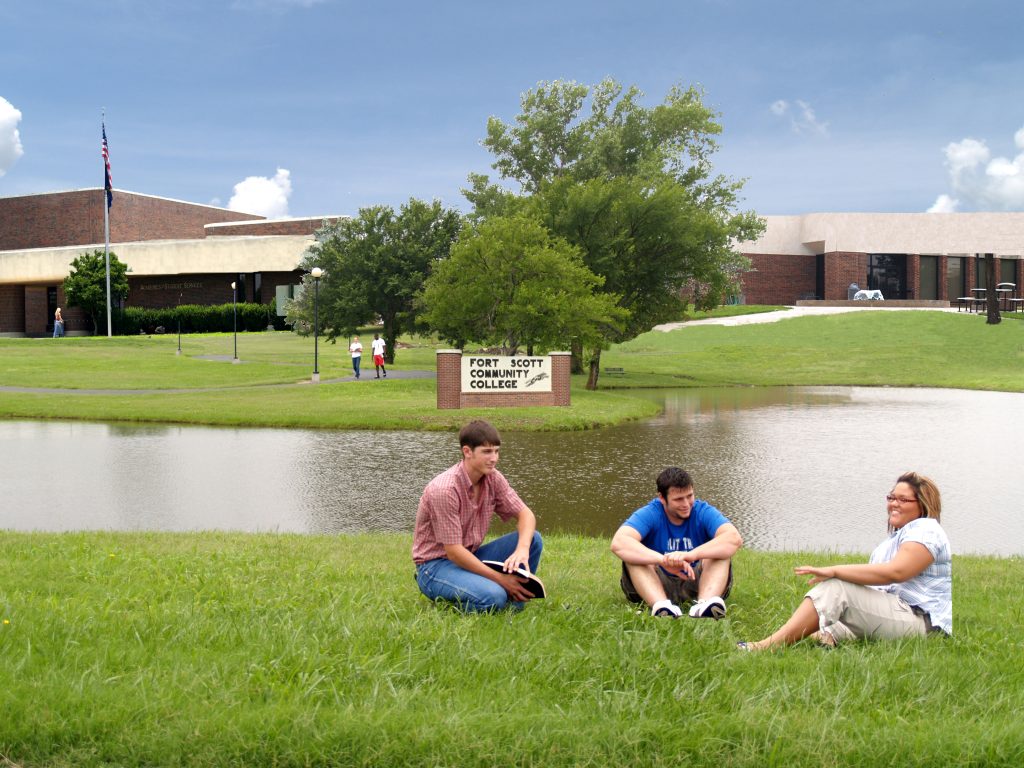
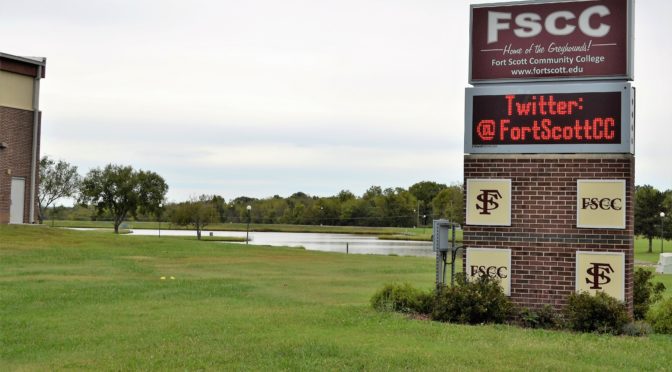
Looking for a college that gives you options? At Fort Scott Community College, students can choose from associate degrees in Arts, Science, Applied Science, and General Studies, along with a variety of certificates that lead straight to rewarding careers. Whether you’re interested in healthcare fields like Certified Medication Aide, Nurse Aide, EMT, Home Health Aide, Manicuring, or Phlebotomy, or want to take on a technical challenge with certificates in Ag Technology (John Deere), Construction, Cosmetology, Criminal Justice, Environmental Water Tech, Farm & Ranch Management, Harley-Davidson Technology, Heavy Equipment Operation, HVAC, Masonry, or Welding we’ve got you covered!
But college isn’t just about the classroom. FSCC offers plenty of ways to get involved through music and performance opportunities (band, choir, theater), student clubs and organizations (like Collegiate Farm Bureau, Phi Theta Kappa, SkillsUSA, STEAM Club, FSCC Media Team, and more), and even competitive judging teams in livestock and meat.
If athletics is more your thing, FSCC is home to intercollegiate sports for both men and women. Compete in basketball, baseball, softball, volleyball, rodeo, track & field, or cross country, all while building friendships and representing the Greyhounds.
And the best part? We’re still growing. New programs, degrees, certifications, and athletic opportunities are on the horizon! There’s never been a better time to join FSCC!
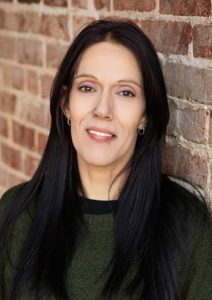
Tara Soloman-Smith, Family and Wellness Agent, Sunflower District of Kansas State University’s Extension Office. Submitted photo.
Read, Talk, Play: Simple Steps for Smarter Kids
Helping children build early literacy skills is one of the most important things parents and caregivers can do. Long before a child enters school, their brain is rapidly growing. The way adults talk, read, and play with young children shapes how they learn, communicate, and form relationships.
Birth to 12 Months: Early Language Growth
Babies begin learning language by listening to voices and watching faces. They coo, babble, and explore books by touching and looking at them. Caregivers can support learning at this age by talking about daily activities, reading books with simple, high-contrast images, and responding to a baby’s sounds as if they were in a real conversation. These interactions build early brain connections that support later reading skills.
12 to 24 Months: Building Vocabulary
Between the ages of one and two, toddlers start to understand more words. They may point to pictures, mimic sounds, and say a few words. Reading books with short phrases and rhymes, labeling everyday objects, and singing together all help toddlers build vocabulary and confidence.
24 to 36 Months: Early Reading Skills
By age two to three, children begin recognizing letters, noticing rhymes, and retelling simple stories. Caregivers can ask questions like “What do you think will happen next?” or point out letters on signs and labels. Pretend play also helps them understand stories and use their imagination.
Use Everyday Moments to Teach
Everyday outings are great chances to learn. At the grocery store, children can hear new words, see colors, and practice counting. At the park, they build motor skills and interact with others. These real-world experiences are more valuable for learning than screen time.
Create a Simple Nightly Routine
A simple routine can also make literacy a habit. The “Brush, Book, Bed” approach—brush teeth, read a book, then go to bed—helps families build reading into their daily routine. Even 15 minutes of daily reading helps children grow their vocabulary, build strong bonds, and enjoy books.
Watch for Early Delays
Caregivers should also watch for early signs of delay, such as limited babbling, failure to respond to voices, or little interest in books by age three. Early support can make a big difference.
Information from today’s article came from the K-State Extension Fact sheet, Early Literacy: Building the Foundation for Lifelong Learning. Please contact Tara Solomon-Smith at tsolomon@ksu.edu or 620‑244‑3826.
Patty LaRoche. 2023. Author: A Little Faith Lift…Finding Joy Beyond Rejection www.alittlefaithlift.com AWSA (Advanced Writers & Speakers Assoc.)
A foolproof way to find out if you are a true, authentic friend is if you are thrilled when others have success. No matter what happens to you. No matter if they got the promotion you wanted, they got the book deal you prayed for, they were healed and you were not, they have perfect kids and yours spend more time in detention than in the classroom. No matter what!
This, of course, works both ways. You will know if your friends are authentic if they celebrate your accomplishments when they themselves are struggling. I have some friends who meet that description, but I wonder if I don’t have “a little” work to do in this area.
In Genesis 4, we read that Adam and Eve had two sons, Cain and Abel. Now Abel kept flocks, and Cain worked the soil. In the course of time Cain brought some of the fruits of the soil as an offering to the Lord. And Abel also brought an offering—fat portions from some of the firstborn of his flock. The Lord looked with favor on Abel and his offering, but on Cain and his offering he did not look with favor. So Cain was very angry, and his face was downcast.
Many of my Christian author friends admit they struggle with envy when they cannot manage to carve out time to write their second or third book, yet their fellow authors post about their 40th book going to print or how a respected publishing company has offered them a huge endorsement. We (yes, I fall into that category) understand Cain’s frustration.
Frustrations over God’s generosity towards others aren’t a new concept. In fact, the idea that we are entitled to God’s blessings coupled with our irritation over God’s generosity to others is at the heart of the first recorded murder in Scripture. Big brother Cain is one unhappy camper when little bro Abel got the “atta boy” from God and he didn’t.
God does not comfort Cain. He lets him know that if he does what’s right, he also will experience God’s favor. Cain has a choice. He can accept God’s sovereignty—even though he might not agree with it—or he can allow his jealousy and pride to rob him of what little peace he has. We all know which he chose, ultimately ending with him murdering Abel.
Granted, no one I know—including me—has ever murdered because another author’s book received more accolades. God does not suffer from limited generosity. He blesses as He sees fit, meaning He blesses me in different ways than He does my friends. Who am I to think that I deserve a blessing He has not given me? God is limitless in His ability to love, show grace and mercy, and bless. I should do likewise.
So, if you find yourself disappointed when others are the benefactors of something that you had hoped for, maybe even prayed for, God understands your feelings. Nevertheless, like Cain, we have a choice to trust in God’s decisions to bless others (and be happy for them), or we can allow sin to take root and be consumed with a bitter heart.
PRESS RELEASE – Fort Scott Community College Special Board Meeting
March 13, 2026
The Board of Trustees of Fort Scott Community College met in special session at 12:00 p.m. on Thursday, March 12, 2026, in Burris Hall.
Vice Chair Chad McKinnis opened the meeting.
Leadership reports were shared by the following:
Dr. Larry Guerrero, Vice President of Academic Affairs, presented information on academics, including Farm & Ranch Management certificates, the addition of an Equine Management & Production program, and adding a Pharmacy Technician Certificate.
Lindsay Hill, Dean of Advancement, provided updates on the facilities master plan; the fleet management plan, which includes the disposal of some vehicles; and Foundation updates, including fundraising for soccer field enhancements, Hall of Fame Alumni Weekend taking place May 1–2, the annual scholarship dinner, and a scholarship drive aimed at establishing new endowed funds.
Dave Wiemers, Athletic Director, celebrated that the men’s basketball team has advanced to the National Tournament, with its first game on Monday at 9:00 a.m. He also provided an update to the board on the 2026 Athletics Hall of Fame inductees, who will be honored at a ceremony on May 2 during Hall of Fame Weekend.
Gina Shelton, CFO/Vice President of Finance & Operations, updated the board on ongoing accounting work, audit progress, student refunds issued, and the upcoming rodeo weekend, noting the positive economic impact these activities have in the community.
Vanessa Poyner, Vice President of Student Affairs, presented an update on the Strategic Plan work being done through committee efforts. Mrs. Poyner reviewed the six goals established by the committee, as well as the work to be done on tactics and measurable outcomes. She also reviewed changes to the employee scholarship.
Dr. Jack Welch, President, shared an update on visits to school districts over the last few weeks and the feedback being received about FSCC through that outreach.
The board reviewed agenda items for the March 13, 2026, regular meeting. The remainder of the time was spent on board training on goal setting, guided by Dr. Michelle Hubbard with KASB.
Haley Dawn Merriman, age 42, passed away peacefully at her home, surrounded by family on March 11, 2026, in Fort Scott, KS.
Haley was born in Fort Scott, KS on July 18, 1983, to Don and Terri Shelton. She was raised in the Fort Scott and Uniontown area. Haley was best described as energetic and fun. She was voted “most mischievous” in the 3rd grade. Haley always saw fun in even the smallest things. She was given the nickname “Hula Hopper” by her dad when she was very young, due to her high energy and enthusiasm. She was lovingly called “MacGyver, Jr.” by some family members because of her ingenuity and ability to problem solve, while others lovingly called her “Halo.” Haley was the life of the party and could light up any event with her laughter and fun-loving spirit. She graduated from Fort Scott High School in 2001. She graduated from Fort Scott Community College Nursing Program in 2004.
Haley was married to her teenage sweetheart, Timothy Merriman. Haley married Tim on March 22, 2011, in Portland, TX. Haley and Tim also repeated their marriage vows on January 25, 2026. Haley loved traveling with Tim and her family, exploring new places and enjoying hiking whenever possible. She loved camping, canoeing, cookouts, and hiking. She also became a certified scuba diver. Haley loved trying out new recipes that she could cook for her family. She loved animals. She had many pets throughout her life, but she especially loved her Great Danes, Loki and Pig.
Haley was a supervisor at First Source Insurance for over 10 years. She was employed at Kansas Renewal Institute at the time of her passing.
Survivors in the home include her husband Tim Merriman, a son, Kolton Merriman, and her daughter, Kylea Merriman. Also surviving are her son Kaidon Shelton of Fort Scott, bonus daughter Krista Spurgeon of Salt Lake, UT, bonus son Jayce Stewart of Fort Scott, parents Don and Terri Shelton of Fort Scott, brother, Heath Shelton (Ashley) Uniontown, KS, sister Shanon Byrnes (Tony) of Melissa TX, nephews Brayden and Jacob Byrnes of Melissa, TX, Gage Shelton of Springfield, MO, Jaxon Shelton of Uniontown, KS, one niece Alyssa Shelton also of Uniontown, two grandchildren, Paxton and Parker of Salt Lake, UT, father and mother-in-law, Kenny and Liz Merriman, and brother -in-law Josh Merriman, as well as numerous aunts, uncles, and cousins. She was preceded in death by her grandparents, Leroy and Shirley Harris, John Shelton, uncle, John Kruger, and mother-in-law Beverly Merriman.
Rev. Virgil Peck will conduct funeral services at 11:00 AM Monday, March 16th, at Fort Scott Church of the Nazarene. Cremation will follow. The family will receive friends from 10:00 AM until service time Monday at the Church. Memorials are suggested to Care to Share and may be left in care of the Cheney Witt Chapel, 201 S. Main St., Fort Scott, KS 66701. Words of remembrance may be submitted online at cheneywitt.com.
CARSON, LOWELL HILTON, 74 Arrested: 3/12/2026 11:10 AM Agency: Fort Scott PD Charges: – Burglary; Unknown Circumstance ($1,000 cash/surety) – Theft Of Prop/Services; Misdemeanor (CASH/SURETY) Bond Total: $1,000
STANFORD, ANTWON D, 41 Arrested: 3/12/2026 2:28 PM Agency: Fort Scott PD Charges: – Dws – Possession Of Certain Hallucinogenic Drugs – Use/Poss Drug Paraphernalia/Human Body Bond Total: $2,500
KNAVEL, STEPHANIE RENEA, 46 Arrested: 3/12/2026 9:49 PM Agency: BCSO Charges: – Possess Opiates/Opium/Narc Drug And Certain Stim (NO BOND) – Use/Poss Drug Paraphernalia/Human Body (NO BOND) Bond: $0
Inmate Released List
CARLSON, CAMRON DEAN, 20 Booked: 03/11/2026 Released: 3/12/2026 at 2:53 PM Type: Transferred out Released to: Wilson Co
STANFORD, ANTWON D, 41 Booked: 03/12/2026 Released: 3/12/2026 at 3:18 PM Type: Own recognizance Released to: Self
When a child enters foster care, everything changes — their home, their school, their routines… and often the adults in their life.
A CASA Volunteer may be the only consistent adult showing up just for them.
Be the steady voice.
Be the one who shows up.
Bourbon County CASA is currently in need of volunteers who are willing to make a difference in a child’s life. Your time and compassion can provide stability, advocacy, and hope when it matters most.
If you feel called to serve, we would love to visit with you about how you can get involved.