Click below:
Bourbon County Commission Meeting Today Changed to Commission Room, Broadcasted on Facebook
Agenda
Bourbon County Commission Room
1st Floor, County Courthouse
210 S. National Avenue
Fort Scott, KS 66701
Tuesdays starting at 9:00
Date: May 26, 2020
1st District-Lynne Oharah Minutes: Approved: _______________
2nd District-Jeff Fischer Corrected: _______________
3rd District-Nick Ruhl Adjourned at: _______________
County Clerk-Kendell Mason
DUE TO WEATHER THE COMMISSION MEETING IS MOVED INTO THE COMMISSION ROOM AND WILL BE BROADCAST LIVE ON FACEBOOK
9:00 – 9:45 Jim Harris
9:45 Discuss Re-opening of the Courthouse


Obituary of Nadyne Walker
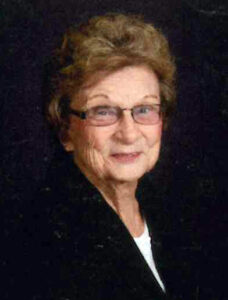
Nadyne Marie Walker, age 92, resident of Ft. Scott, KS, died Sunday, May 24, 2020, at her home.
She was born August 25, 1927, in Uniontown, KS, the daughter of Herbert and Beulah Neth Holt. She graduated from Uniontown high school with the class of 1946.
She married Don Walker on April 28, 1963, in Uniontown.
He preceded in death in 2000.
Nadyne worked for Western Insurance Company for several years. She then worked in the office for Key Industries for 38 years. She was a member of the Community Christian Church and more recently attended Rinehart Christian Church in Richards, MO.
Survivors include a son, Kenneth Campbell and wife Vicki, Flora, IL; a stepdaughter, Donna Wray and husband Harry, Columbia, MO; 2 granddaughters Nichole McFarland and Lisa Sampley; 2 step-grandsons; 1 step-granddaughter; numerous nephews and 1 niece; and special friend Jim Henning.
Besides her husband Don, she was preceded in death by a nephew, Brad Holt; a brother, George Holt; and a sister, Marilyn Brown.
There was cremation.
Private burial will take place in Memory Gardens Cemetery, Ft. Scott.
Memorials are suggested to Rinehart Christian Church and may be left in care of the Cheney Witt Chapel, PO Box 347, 201 S. Main St., Ft. Scott, KS 66701. Words of remembrance may be submitted to the online guestbook at cheneywitt.com.
The Fort Scott Police Department Daily Reports May 22-24
Click below:

Elder Abuse and What You Should Know
No one is immune to elder abuse – it can happen to anyone, at any time, and anywhere. Often a silent problem, elder abuse can rob older adults of their dignity and security and leave them feeling fearful, depressed, and alone.
Sadly, 10 percent of Americans over the age of 60 have experienced some form of elder abuse in the last year, and many researchers expect this number to rise with the growth of the aging population. Yet, it is a topic we are not readily willing to talk about. We “don’t want to think about it,” or we “don’t want to admit that it happens.”
Elder abuse (sometimes referred to as elder mistreatment) is an intentional act, or failure to act, that causes harm to an adult. Abuse can be categorized as physical, emotional or psychological, sexual, neglect, abandonment, or financial exploitation.
A majority of abuse victims are older women who are vulnerable. They may be socially isolated, may have a mental impairment, or other disability. Often the abuse victim is dependent on others for help with activities of everyday life. People who are frail may appear to be easy victims.
The warning signs of abuse can be different for individuals depending on the type, frequency, and magnitude of abuse. Warning signs can include unexplained bruises or welts, withdrawal from normal activities, trouble sleeping, depression or confusion, or weight loss for no reason. Signs of trauma, such as rocking back and forth, poor hygiene, the unexpected absence of a caregiver, or a sudden change in financial situation can be other signs of abuse.
Here are some things to keep in mind to help prevent elder abuse.
- If you are a caregiver, ask for help when you need a break. Caregiving for a loved one is very rewarding, but can be challenging, very demanding and stressful.
- Remain involved in your loved one’s care at care facilities and at home.
- Be attentive to sudden changes in mood, appearance, and health, especially if a decline in mental ability (dementia) is taking place.
- Educate your loved ones on what scams and schemes can look and sound like and what to do if they feel uncomfortable in a situation reflecting pressure or scare tactics.
- Encourage your loved one to be cautious with their financial affairs. Monitor financial accounts if necessary, and avoid making rash spending decisions.
- Encourage your loved one to create financial and health care-related advance planning documents.
- If you suspect or see elder abuse, report it immediately.
If someone is in immediate danger, call 911. For domestic or community abuse, contact Kansas Department for Children and Families Adult Protective Services at 1-800-922-5330. For suspected abuse in a care facility, contact Kansas Department for Aging and Disability Services at 1-800-842-0078.
For other resources or questions related to elder abuse, contact the Yates Center Southwind Extension District office at 620-625-8620.
Rep. Owens: Spread Unity and Hope
Letter to the Editor
Submitted by. Stephen Owens, 74th House District, www.rethinkkansas.com
In her daily briefing (on Friday), the Governor chose to use her pulpit to further divide the people of Kansas in lieu of UNITING us as a Leader should. She chose to use such words in describing the session of the Legislature as a Joke and Spectacle while using adjectives such as Embarrassing, Irresponsible and Indefensible implying legislation was rammed through the process. Let me add a bit of context for your consideration:
1) Legislators worked tirelessly for 24 hours straight to ensure legislation was passed to provide scholarships for Kansas high schoolers trying to get a college education, created a low cost loan program for struggling Kansas businesses shut down by the Governor, provide free ACT exams for students, create a foster care report card to hold DCF accountable for children, create at “Truth in Taxation” bill creating transparency in your property tax bill, give property owners an extension of time to pay their property taxes without penalty, ensure routine maintenance on your property doesn’t increase your taxes, and put common sense checks and balances on the Governors authority to shut down businesses and put folks out of work. When is the last time you can say you worked 24 hours straight (God Bless our first responders that do regularly)? EVERY (Rep and Dem alike) legislator deserves a pat on the back for working diligently to represent the nearly 3 Million Kansans they were elected to represent.
2) While I have been clear in my desire to have worked for a week or two to get even more legislation passed, there are 165 members of the Kansas Legislature. Better than 60% fall into the HIGH risk category for COVID illness. Many simply were not willing to come for more than one day. Five (5) refused to show up period. I respect and appreciate our leadership for their desire to protect our members yet still get an enormous amount done in 24 hours for the people of Kansas.
3) 24 Hours is a bit of a misnomer. We have been working for more than two weeks having committee meetings in Appropriation, Judiciary, Tax, Commerce and others in preparation for this day. There have been dozens of online and in person committee meetings in both the House and Senate in preparation for Sine Die. To imply it was all done in 24 hours is simply not the truth.
4) Marathon Days in the legislature are not uncommon. While it is unusual to go a full 24 hours and on Sine Die, each year, there is generally at least one day we work WELL past midnight to get the work of the people done. This is not uncommon and the Governor (as a former Senator) knows this. We are proud to put our wants and needs aside for the people of Kansas.
Any time only one side of a situation or story is represented, you hear only what you are told to hear. The Governor had a very specific message and it is obvious that with her choice of words, her desire was to make Republican Leadership look bad and to politicize the work of the Legislature. The Governor can choose to lead with a message of unity or continue to use her daily press briefings & messaging to score political points.
The State of Kansas is represented by some fantastic individuals; none of which are perfect. The Governor is as apt to make mistakes as is our leadership as am I. We can all see in hindsight how things can be done better. However, the funny thing about hindsight is that a 20/20 view of past only stands to improve our vision of the future.
I implore the Governor and each Legislator to open the doors of communication and spread a message of UNITY and HOPE! We all have the same goal in mind: to make Kansas a great place to live, work and raise our families.
Ad Astra per Aspera
Stephen
VFW Avenue of Flags Cancelled Due to Rain
The traditional VFW’s Avenue of Flags placement on East National scheduled for 7 am on Memorial Day has been cancelled due to rain.
The Memorial Day Remembrance Ceremony scheduled for 10 am will be held at the Bourbon County Courthouse. The backup plan is to move the Remembrance Ceremony to Memorial Hall in the event of rain.
The Remembrance Ceremony will last about 20 minutes and has been extended to include some portions of the ceremony previously held at the National Cemetery,
Post 25 members will be handing out poppies at G and W from 11 am – 5 pm on Memorial Day. Volunteers still needed for 11 am and 1 pm. Reply to this email if you are able to help your Post.
Persons attending the Remembrance Ceremony should plan on practice social distancing.
I hope to see you at the Remembrance Ceremony.
Carl Jowers. Post 25 Commander.
Obituary of Shelly Guder Collier

Shelly Kay Guder Collier, age 47, a resident of rural Bronson, Kansas, passed away Friday, May 22, 2020, at the home of her parents in rural Bronson.
She was born August 14, 1972, in Ft Scott, Kansas, the daughter of Russell R. Guder and Wanda D. Carson Guder. Shelly graduated from Uniontown High School and Allen County Community College.
She married Marc Collier. They later divorced.
Shelly had been employed by F. & S. Supply in Iola for seventeen years. She later worked for Herff Jones. and Twin Motors. She enjoyed camping and cutting wood.
Survivors include her son, Joe Collier, of Bronson and her parents, Russell and Wanda Guder, also of Bronson; a granddaughter, Nova Julian and a sister, Windy Ballinger. Also surviving is her long-time companion, Troy Driscoll.
Private services with burial in the Bronson Cemetery will take place on Friday.
Memorials are suggested to the Pancreatic Cancer Action Network (PanCAN) and may be left in care of the Cheney Witt Chapel, 201 S. Main, P.O. Box 347, Ft. Scott, KS 66701. Words of remembrance may be submitted to the online guestbook at cheneywitt.com.

Who Did You Used To Be? By Pastor James Collins

“Then said Jesus unto his disciples, If any man will come after me, let him deny himself, and take up his cross, and follow me. For whosoever will save his life shall lose it: and whosoever will lose his life for my sake shall find it.” Matthew 16:24-25
I will never forget when Jefferson spoke to me for the first time. It was my first day of active duty. I was supposed to go to Fort Benning in Georgia for Army Basic Training, but there was a clerical error and instead, I was sent to Fort Knox, Kentucky.
I was bused to Fort Knox with a group of recruits. As soon as we stepped off the bus, we were escorted by screaming Drill Sergeants to a large warehouse building. We were told to take off our civilian clothes and put them in a bag. As we stood there in our underwear, a corporal came by and handed us a uniform.
After we dressed, we were marched to get a haircut from barbers whose only cutting tools were electric shavers. We left the barbershop hairless as an egg and marched to our barracks. One of our sergeants yelled, “All you maggots stink! Get in the showers now!” After an ice-cold shower, we were herded into a small room with instructions to sit and wait.
We were sitting on a cold tile floor, dressed in the same uniform, our heads bald, our bodies blue from an icy shower, and afraid to move a muscle without being told to do so.
It was then, Jefferson spoke. He was sitting on the floor beside me when he nudged me and asked, “Who did you used to be?” His question made me laugh and we became lifelong friends.
When Jefferson asked, “Who did you used to be?” he was asking, “Who were you in your life before the army?” Army life is designed to break down your individuality and build you up as part of a team. When I enlisted in the army, I began a training process to become a soldier.
It’s the same in the Lord’s army. When I gave my life to Christ, I began a training process to become a Christian. Jesus said, “If any man will come after me, let him deny himself, and take up his cross, and follow me.” The Lord’s life was one of self-denial and suffering, which is difficult to follow. But to be His disciple, we too are called to put aside selfish desires and pick up spiritual burdens every day – serving others first instead of ourselves, for example – as we closely follow Him.
The point is: Like an army recruit, Jesus calls us to put away who we used to be and follow Him. The task is great, but it’s eternally rewarding. When you lose your life for Christ, you start really living.
Do you need a new you? Are you willing to take up your cross and follow the Lord in self-denial? Let Jesus recruit you into His army. Put your faith in Christ and follow Him as Lord. Who knows? Perhaps someone will notice the change in you and ask, “Who did you used to be?”
James Collins is the pastor of Fort Scott’s First Southern Baptist Church. For more information on his ministry, go to the website www.fortscottfsbc.com.
Enjoy Kansas Parks On Memorial Day
How To Safely Enjoy Kansas State Parks During Memorial Day Weekend
PRATT – Kansas’ 28 state parks, 63 state fishing lakes, and more than 100 wildlife areas remain open to the public and will be popular destinations over the Memorial Day holiday weekend. From camping and horseback riding, to boating and disc golf, there’s no shortage of fun to be had at Kansas Department of Wildlife, Parks and Tourism (KDWPT) areas, but visitors must remain steadfast in practicing social distancing, among other safety measures, to ensure these special places remain open and accessible to all.
“We want visitors to enjoy themselves, so long as social distancing is practiced,” Kansas State Parks director Linda Lanterman said. “Our staff have done an incredible job maintaining our parks, and ensuring that facilities remain open, but it’s ultimately up to the public to look out for each other and practice social distancing so we can all remain in good health and continue having these beautiful places to recreate.”
Here’s how visitors can safely enjoy their time at Kansas state parks over the holiday weekend and throughout the summer:
Practice social distancing, even on the water – While six feet is the standard measure for effective social distancing, maintaining a safe distance may look different while on a trail or on the water. Boaters – especially those recreating in or around coves – can practice social distancing by refraining from tying up to other vessels and instead anchoring vessels individually. Boating passengers should also refrain from moving between vessels.
Allow for ample time at boat ramps – Launching a vessel may take a little longer than normal. Plan ahead by having everything ready and packed on your boat before backing down the ramp. Many state park reservoirs and fishing lakes have multiple access points – visitors can benefit from knowing them ahead of time by referencing area maps at ksoutdoors.com. If a desired boat ramp is congested, consider launching at an alternate ramp or parking at a distance until the area clears.
Make reservations and purchases online – While state park staff are on duty to ensure Kansas’ state parks are safe, and that park facilities are regularly cleaned and disinfected, visitors are encouraged to conduct reservation and license purchase needs through KDWPT’s free mobile apps – CampIt KS and HuntFish KS. Campsite reservations can also be made on ReserveAmerica.com, and license purchases made on KSHuntFishCamp.com.
Keep to your camp – KDWPT-managed campsites are perfectly-suited to space visitors a safe distance apart. Visitors should use these designated areas to their advantage and keep family and friends safe by refraining from visiting other campsites or combining sites.
The wild spaces and fun places managed by KDWPT are intended to be enjoyed by all – help KDWPT keep these areas open by practicing social distancing and refraining from gathering in large groups.
For more on outdoor recreation opportunities in Kansas, visit ksoutdoors.com.
For more information on COVID-19 in Kansas, visit covid.ks.gov.
USDA March Margin Triggers Payments to Dairy Producers
March Margin Triggers Dairy Margin Coverage Program Payment
Income-over-feed margin for March triggers first payment for 2020
WASHINGTON, May 20, 2020 – The U.S. Department of Agriculture’s Farm Service Agency (FSA) announced this week that the March 2020 income over feed cost margin was $9.15 per hundredweight (cwt.), triggering the first payment of 2020 for dairy producers who purchased the appropriate level of coverage under the Dairy Margin Coverage (DMC) program.
“This payment comes at a critical time for many dairy producers,” said FSA Administrator Richard Fordyce. “It is the first triggered DMC payment for 2020, and the first payment to dairy producers in seven months.”
Current projections indicate that a DMC payment is likely to trigger every month for the remainder of 2020, a different expectation from last July when some market models had forecast no program payments for 18 months.
Authorized by the 2018 Farm Bill, DMC is a voluntary risk management program that offers protection to dairy producers when the difference between the all-milk price and the average feed price (the margin) falls below a certain dollar amount selected by the producer. Over 13,000 operations enrolled in the program for the 2020 calendar year.
Although DMC enrollment for 2020 coverage has closed, dairy producers should look for FSA to open sign up for 2021 coverage in July.
USDA Service Centers, including FSA county offices, are open for business by phone only, and field work will continue with appropriate social distancing. While program delivery staff will continue to come into the office, they will be working with producers by phone and using online tools whenever possible. All Service Center visitors wishing to conduct business with the FSA, Natural Resources Conservation Service or any other Service Center agency are required to call their Service Center to schedule a phone appointment. More information can be found at farmers.gov/coronavirus.
For more information, visit farmers.gov DMC webpage or contact your local USDA service center. To locate your local FSA office, visit farmers.gov/service-locator.
FSA Expands Set-Aside Loan Provision for Customers Impacted by COVID-19
Set-Aside Delays Loan Payments for Borrowers
WASHINGTON, May 21, 2020– USDA’s Farm Service Agency (FSA) will broaden the use of the Disaster Set-Aside (DSA) loan provision, normally used in the wake of natural disasters, to allow farmers with USDA farm loans who are affected by COVID-19, and are determined eligible, to have their next payment set aside. In some cases, FSA may also set aside a second payment for farmers who have already had one payment set aside because of a prior designated disaster.
“This immediate change of the Set-Aside provision can provide some welcome financial relief to borrowers during this current crisis,” said FSA Administrator Richard Fordyce. “FSA recognizes that some customers may need this option to improve their cash flow circumstances in response to the COVID-19 outbreak.”
FSA direct loan borrowers will receive a letter with the details of the expanded Disaster Set-Aside authorities, which includes the possible set-aside of annual operating loans, as well as explanations of the additional loan servicing options that are available. To discuss or request a loan payment Set-Aside, borrowers should call or email the farm loan staff at their local FSA county office.
The set-aside payment’s due date is moved to the final maturity date of the loan or extended up to twelve months in the case of an annual operating loan. Any principal set-aside will continue to accrue interest until it is repaid. This aims to improve the borrower’s cashflow in the current production cycle.
FSA previously announced it was relaxing the loan-making process and adding flexibilities for servicing direct and guaranteed loans to provide credit to producers in need. Direct loan applicants and borrowers are encouraged to contact their local FSA county office to discuss loan making and servicing flexibilities and other needs or concerns. Customers participating in FSA’s guaranteed loan programs are encouraged to contact their lender. Information on these flexibilities, and office contact information, can be found on farmers.gov/coronavirus.
FSA will be accepting most forms and applications by facsimile or electronic signature. Some services are also available online to customers with an eAuth account, which provides access to the farmers.gov portal where producers can view USDA farm loan information and certain program applications and payments. Customers can track payments, report completed practices, request conservation assistance and electronically sign documents. Customers who do not already have an eAuth account can enroll at farmers.gov/sign-in.
USDA Service Centers are open for business by phone appointment only, and field work will continue with appropriate social distancing. While program delivery staff will continue to come into the office, they will be working with producers by phone and using online tools whenever possible. All Service Center visitors wishing to conduct business with the FSA, Natural Resources Conservation Service or any other Service Center agency are required to call their Service Center to schedule a phone appointment. More information can be found at farmers.gov/coronavirus.