Category Archives: Government

Legislative Update by State Senator Caryn Tyson

Caryn Tyson

March 6, 2026


Budget Overspending continues.  As with any budget, there seems to always be good, bad, and just downright ugly.  This budget wasn’t as bad as we have seen in the past, but it still spends more than is projected to be collected in taxes.  The legislature must pass a budget, and doing so responsibly means confronting an uncomfortable truth: there is a pattern of spending increases that outpaced taxes to be collected, especially in discretionary programs that lack clear performance metrics.  Some of this spending is a result of the billions of federal COVID dollars that we were assured were one time spends and would not burden Kansas taxpayers.  The budget passed the Senate 21 to 19.  I voted no on this government growth.  The Senate and House budget committee leaders will now meet to work out differences for a final budget.


Welfare benefits were established to help those in need.  The fraud and abuse of these programs is occurring at a staggering rate.  Just look at Minnesota, where billions of dollars were fraudulently stolen.  Kansas is acting to stop fraud and abuse by strengthening the eligibility rules and work requirements of programs such as SNAP (food stamps), Medicaid, TANF and other programs.  Another provision in SB 363 makes it so people who are permanently disabled would only have to file once, not annually as they do now.  Kansans support safety net programs to be preserved for those who truly need them, and SB 363 does that.  It passed the Senate 25 to 13.  I voted yes.


An Emergency Declaration for the wildfires in south central and southwestern Kansas.  There were some counties in the 12th Senate district also included in HCR 5033, allowing for exemptions on weight limits and other such restrictions to transport hay and items needed because of the fires.  It passed the Senate unanimously.


Elections would be more secure by verifying signatures of mail-in ballots.  While it may seem obvious that such a safeguard should already be standard practice, legislation is needed to codify it.  SB 394 would also allow another individual to sign a voter’s ballot envelope when the voter is unable to sign personally.  It passed 26 to 11.  I voted yes.


Electronic devices would be prohibited in Kansas schools by requiring each district to adopt a policy that removes cell phones, tablets, smart watches, and other personal communication devices from classroom use.  Senate Substitute for HB 2299 would also require district policies governing social‑media platforms. Limited exceptions would be permitted.  For example, when a student needs a device to remind them to take medication or when a school‑issued device is required for instructional purposes.  Research consistently shows that reading on paper yields better comprehension and retention than reading on most electronic devices.  The legislation was drafted to avoid excessive bureaucracy while delivering safety benefits by restricting non‑educational electronic devices use at school.  Parents, school administrators, and other stakeholders can help refine the policy at the local level.  It passed 32 to 4.  I voted yes.


Federal Law Enforcement and their vehicles would be treated as Kansas law‑enforcement officers if SB 452 becomes law. The bill also creates a new misdemeanor that prohibits anyone from approaching within 25 feet of a police officer, EMT, or firefighter after being given a visual or audible signal to stay back.  Proponents say the measure closes gaps between state and federal policing authority, while critics argue it could impinge on civil liberties because it criminalizes proximity to officers who are performing their duties. Although individuals may still be present in the vicinity and may record the activity, they must remain at least 25 feet away once an officer signals them to do so.  The bill passed 31 to 7.  I voted yes.


It is an honor and a privilege to serve as your 12th District State Senator.

Caryn
Newsletter of U.S. Congressman Derek Schmidt

Rep. Derek Schmidt's header image

Friends,

As you are aware, the United States military began operations in Iran at the end of last week. As a member of the House Armed Services Committee, I have been closely following reports and briefings and remain mindful of the military personnel who call Kansas home and are currently serving our country. With developments continuing to unfold, I recently shared a statement. You can view my full comments here.

This week in Washington, I participated in the House Judiciary Committee hearing focused on oversight of the Department of Homeland Security with Secretary Kristi Noem testifying. During the hearing, I discussed with Secretary Noem the security needs of FIFA World Cup host cities, like Kansas City, as well as providing more and timely information to local communities regarding immigration enforcement actions.

Rep. Derek Schmidt (KS-2) questioning Department of Homeland Security Secretary Kristi Noem during this week’s House Judiciary Committee hearing. Click above to view full remarks.

I also met with President Trump’s Border Czar Tom Homan this week to discuss reshaping our country’s priorities and tactics for enforcing our immigration laws in a targeted and transparent manner. I respect both Mr. Homan’s toughness and his professionalism. President Trump chose wisely in asking him to go to Minnesota to refocus illegal alien removal operations.

Earlier this week, President Trump announced his decision to appoint a new Secretary of the Department of Homeland Security. I commend the president for this decision. I believe these leadership changes will help our country reset its approach to enforcement and removal operations, and I look forward to working closely with both Secretary-designate Markwayne Mullin and Mr. Homan to enforce the law, remove criminal illegal aliens to make our country safer, and restore America’s confidence in the dedicated men and women in federal law enforcement whose professionalism and commitment to the rule of law make these important America First deportation operations sustainable.

On Wednesday, I attended a hearing held by the Armed Services Subcommittee on Readiness to discuss a variety of issues within our country’s military installations. I made a point to highlight Fort Riley’s needs during the hearing, particularly the issue of transporting equipment when our personnel are deployed. I appreciate leadership from the Department of Defense testifying at the hearing and look forward to further collaboration.

Rep. Derek Schmidt (KS-2) questioning Assistant Secretary of Defense for Energy, Installations, and Environment during House Armed Services Subcommittee hearing. Click above to view full remarks.

For most of Thursday, the House Judiciary Committee held a markup to consider H.R. 7640, the Shut Down Sanctuary Policies Act. The bill asserts federal supremacy over enforcement of immigration law by pre-empting “sanctuary” jurisdictions from interfering with enforcement of immigration law. Simply put, immigration, in general, is a federal function and is constitutionally vested in the federal government. States do not have the authority to impede the federal government from enforcing federal law, and this bill is aimed at addressing that problem. I was proud to vote for this bill and look forward to its arrival on the House floor.

Also on Thursday, the House of Representatives voted 221-209 to once again pass the final annual appropriations bill to fully fund the Department of Homeland Security. The House passed this bill once before, but it has been blocked by Democrat members of the Senate. As this bill makes its way to the Senate once again, it is my sincere hope my congressional colleagues pass this final funding bill. Without final approval, those working under DHS and most of its adjacent agencies are continuing to work without pay on behalf of our country.

Around the District

Recently, I visited the Bunge facility in Emporia to receive an update on their operations within the soybean industry. Thank you all for the opportunity to come visit.

Kansans in Washington

I also enjoyed meeting with many Kansans in my office this week during their visits to Washington:

  • FIFA World Cup – KC2026
  • Kansas Association of Broadcasters
  • Leavenworth Waterworks
  • Kelly Hills Unmanned Systems

Ken Collins Kansas State Representative-Second District Newsletter

Thoughts From Under the Dome

Ken Collins

Kansas State Representative-Second District


Thie week started out somber in the Kansas Statehouse with the unexpected death of a friend and colleague,  Representative John Resman of Olathe. I sat next to John on the House floor during my freshman term an got to know him well. He didn’t speak up much but when he did I knew that what he had to say was worth listening to. Condolences to his family


Benny’s Bill (HB 2412) has been passed favorably by the Senate Judiciary Committee so it will soon be voted on by the whole Senate. They did make one technical amendment changing the effective date after the Governor’s approval but I believe that was done so it would go to a conference committee to be bundled with other related legislation. For those who don’t know the background behind this legislation it strengthens the penalties for child endangerment and aggravated child endangerment when the victim is under the age of six. For those who might not be familiar with the bill I am sponsoring it because of the case of Benny Cannon who suffered lifelong disabilities after a daycare incident when he was four months old. Two daycare workers were found responsible after pleading guilty in court but received light sentences in my opinion considering the damage that was inflicted.


In my last update I mentioned HB 2368 which allows for the licensure of anesthesiologist assistants in Kansas, As I mentioned before the bill was voted down but it has been brought up again and could possibly be voted on again this year. I voted against it the last time and I intend to vote that way again because I believe that it is a model that doesn’t work well for healthcare in Kansas.


HB 360 deals with PBM reform. PBMs or Pharmacy Benefit Managers are the middlemen between drug manufacturers and retail pharmacies. Currently many of the big drug chains and the PBMs are owned by the same companies which creates an unfair advantage to locally owned pharmacies like Richey’s in Erie, Mathis in Girard or Cardinal in Chanute. The bill is awaiting a committee hearing in the House where I will be voting in favor.


That is it for now. I’m hoping the best for everyone as we approach Spring even though it has been a mild Winter. Feel free to reach out with any questions or concerns that you might have. Ad Astra Per Aspera.

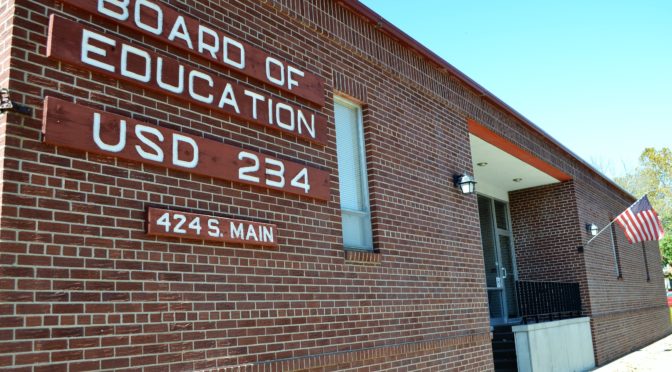
USD234 Board of Education Agenda for March 9

Unified School District 234
424 South Main
Fort Scott, KS 66701-2697
www.usd234.org
620-223-0800 Fax 620-223-2760
DESTRY BROWN
Superintendent
BOARD OF EDUCATION REGULAR MEETING
March 9, 2026 – 5:30 P.M.
AGENDA
1.0 Call Meeting to Order David Stewart, President
2.0 Flag Salute
3.0 Approval of the Official Agenda (Action Item)
4.0 Approval of the Consent Agenda (Action Item)
4.1 Board Minutes
02-09-2026
02-11-2026
4.2 Financials – Cash Flow Report
4.3 Check Register
4.4 Payroll – February 20, 2026 – $1,842,624.59
4.5 Activity Funds Accounts
4.6 USD 234 Gifts
4.7 Food Service Fundraiser
4.8 Archery Club Fundraiser
4.9 Boys Golf Fundraiser
5.0 FSHS Theatre Students presentation – March – Theatre in Our Schools Month
6.0 Leadership Reports (Information/Discussion Item)
7.0 New Business
7.1 Health Insurance Refund
7.2 Cost Containment Planning
7.3 10 Passenger Van Purchase
7.4 Approval of 2026-2027 School Calendar (Pending negotiations)
7.5 Approval of Graduation Requirements
7.6 High School Activity/Athletic Director Mentor Contract
7.7 KASB Membership Renewal 2026-2027
7.8 KASB Legal Assistance Fund Renewal 2026-2027
7.9 Sparkwheel Memorandum of Understanding
8.0 Public Forum
9.0 Other Business – Personnel Matters
9.1 Enter Executive Session – Personnel Matters
9.2 Exit Executive Session
9.3 Approval of Personnel Report
10.0 Adjourn Meeting David Stewart, President

USDA Approval of SNAP Soda and Candy Waiver Announced

Governor Kelly Announces USDA Approval
of SNAP Soda and Candy Waiver


TOPEKA
– Today, Governor Laura Kelly announced that the United States Department of Agriculture (USDA) has approved Kansas’ Supplemental Nutrition Assistance Program (SNAP) Food Restriction Waiver.

“Today, Kansas joins 21 other states in implementing restrictions on candy and soda purchases with SNAP dollars,” Governor Laura Kelly said. “I have always supported policies that incentivize healthy eating, including axing the state sales tax on food to put more money back in Kansans’ pockets. Going forward, I would encourage the USDA to develop a nationwide eligibility strategy to reduce confusion and uncertainty for retailers and recipients alike.”

The approved waiver, which will go into effect February 15, 2027, will exclude all candy and soda beverages (also known as soft drinks) from the definition of eligible foods under 7 CFR 271.2 for purchase with SNAP benefits. Candy and soda are defined by the state’s food and sales tax laws within the state retailer tax:

  • Candy is defined as a preparation of sugar, honey, or other natural or artificial sweeteners in combination with chocolate, fruits, nuts, or other ingredients or flavorings in the form of bars, drops, or pieces. Candy does not include any preparation containing flour and shall require no refrigeration.
  • Soft drink beverages are defined as nonalcoholic beverages that contain natural or artificial sweeteners. Soft drinks do not include beverages that contain milk or milk products, soy, rice, or similar milk substitutes or beverages that are greater than 50% vegetable or fruit juice by volume.

During the approval process USDA recommended an implementation date of February 15, 2027. USDA provided this recommendation based on feedback from retailers in other states that have similar approved waivers and avoids concerns with implementing restrictions over and through the 2026 holiday season.

The Kansas SNAP Food Restriction Waiver is made up of four plans that focus on communicating information to SNAP Food Assistance recipients and authorized retailers, as well as detailed evaluation, monitoring, and compliance plans.

DCF released a request for proposals (RFP) which closed on February 17, 2026. This RFP is to bring on a contracting partner to help DCF manage the implementation plans and process. The proposals received are under review and a contract is expected to be in place by April 2026.

###

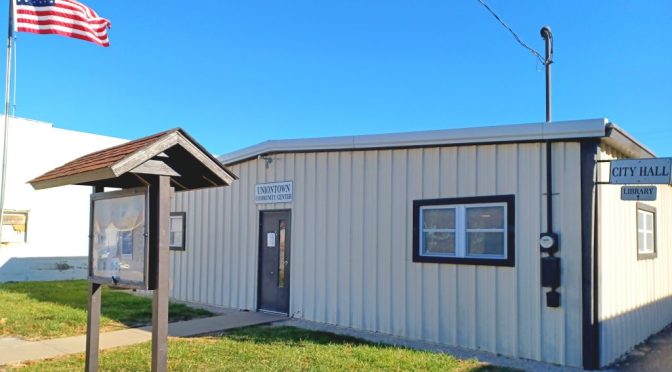
Uniontown City Council Meets on March 10

The Uniontown City Council will meet on March 10, 2026 at 7 p.m. at city hall.

Attachments:

02102026 Regular Meeting

ORDINANCE No. 209-Sewer Rates 26

ORDINANCE NO. 208-Water Rates

2026 Sewer Rate Adjustments

2026 Water Rate Adjustment

ORDINANCE NO. 208-Water Rates eff 03262026

ORDINANCE No. 209-Sewer Rates 26

2026 Financials-February

CAll TO ORDER AT ________ by _____________________________

ROLL CALL:  ___ Kyle Knight ___ Amber Kelly ___ Mary Pemberton ___ Savannah Pritchett

___ Bradley Stewart


SPECIAL CONSIDERATIONS/PROJECTS


CITIZENS REQUESTS


FINANCIAL REPORT

Sally Johnson – Financial reports


APPROVE CONSENT AGENDA

  1. Minutes of February 10, 2026 Regular Council Meeting
  2. Treasurers Report, Monthly Transaction Report & Accounts Payables


DEPARTMENT REPORTS

Superintendent:  Bobby Rich


Clerk Report:  Haley Arnold  

Upcoming Days City Hall Closed

Spring and Fall Citywide Cleanup

Town Wide Garage Sales?


COUNCIL & COMMITTEE REPORTS

Councilman Knight –

Councilman Kelly –

Councilwoman Pemberton –

Councilwoman Pritchett –

Councilman Stewart–

Mayor Jurgensen –


OLD BUSINESS

FEMA Flooding–


Water and Sewer Rate Adjustments


NEW BUSINESS


ADJOURN Time ____________ Moved by ______________, 2nd ___________________, Approved ___________

Extension Given to Wild Horse/Burro Program at Hutchinson Correctional Facility

Kansas Department of Corrections and Bureau of Land Management Announce Extension of Wild Horse and Burro Program at Hutchinson Correctional Facility

~Temporary extension ensures the program remains active through May 31, 2026~

HUTCHINSON, Kansas. – The Kansas Department of Corrections (KDOC) and the Bureau of Land Management (BLM) have reached an agreement to extend the Wild Horse and Burro Program at the Hutchinson Correctional Facility (HCF). This extension ensures the program remains active through May 31, 2026, while both agencies work toward a long-term contract to secure the program’s future.

The decision directly prevents the immediate closure of a program that has been in operation for over 25 years. By extending the partnership, both agencies are prioritizing the following:

  • Animal Welfare: Approximately 300 wild horses and burros will remain at HCF under the care of experienced handlers, avoiding immediate relocation to long-term holding facilities.
  • Workforce Retention: The extension saves the specialized roles of resident horse handlers, allowing these individuals to continue gaining vocational skills in animal husbandry and training.
  • Program Continuity: The additional time allows both the BLM and KDOC to negotiate sustainable funding and operational model to keep this rehabilitative program active indefinitely.

Since its inception in 2001, the Wild Horse and Burro program at HCF has been a cornerstone of the BLM’s adoption efforts, providing halter and saddle training to wild horses to make them suitable for private ownership. The program also serves a critical role in the rehabilitation of residents, offering emotional growth and professional skills that aid in successful reentry into society.

###

Community Arts Grant Program Announced

KAC Grant Applications Now Open to Support Community Arts

TOPEKA – Lieutenant Governor and Secretary of Commerce David Toland today announced that applications are being accepted for three Kansas Arts Commission (KAC) grant programs that support a wide range of arts and cultural activities across the state.

The grant programs, which are designed to foster community pride, economic growth and cultural heritage, include:

  • General Operating Support Grant: Provides funding for day-to-day operations of established arts organizations
  • Arts Everywhere Grant: Supports specific projects and initiatives and is open to both arts and non-arts organizations
  • Public Art & MuralsGrant: Funds permanent and semi-permanent public art installations

“Communities across Kansas are experiencing the positive impacts that the arts provide — strengthening culture, vibrancy and economic vitality statewide,” Lieutenant Governor and Secretary of Commerce David Toland said. “The Kansas Arts Commission will continue to support organizations that are enriching communities, boosting local economies, and connecting Kansans with meaningful arts and cultural experiences.”

KAC has awarded more than 130 grants to organizations in 38 counties this fiscal year — distributing more than $1.25 million to support museums, arts education, music, dance, visual arts, theatre, murals, poetry and more. Award funding is made possible through appropriations by the Kansas Legislature, federal support from the National Endowment of the Arts (NEA), and fees collected from the Kansas “State of the Arts” license plate program.

“The arts are prevalent across Kansas — across every county and every town, brilliant artists, dedicated organizations, leaders, educators and volunteers are actively bringing vibrancy and creativity to our state,” Kansas Arts Commission Director Curtis Young said. “We are excited to see what this next round of applications will bring to Kansas.”

Eligible applicants include Kansas-based 501(c)(3) nonprofit organizations, units of local government (e.g., schools, universities, libraries, art agencies, etc.) and federally recognized tribal communities. All applicants must have at least one fiscal year of completed arts programming.

The deadline for all three KAC grant applications is 11:59 p.m. Monday, March 23. The grant period runs from July 1, 2026, through June 30, 2027, and all grants require a one-to-one match. For details, guidelines and eligibility, click here.

Applications must be submitted through the Kansas Commerce online application portal. To apply, click here.

About the Kansas Arts Commission (KAC):

The Kansas Arts Commission stewards the state’s investment in the arts by empowering creativity, fostering innovation, and strengthening the economy to enhance the vitality of every Kansas community. The Kansas Arts Commission is a division of the Kansas Department of Commerce. To learn more about KAC, click here or contact Ben Stanton at benjamin.stanton@ks.gov or (785) 213-5959.

About the Kansas Department of Commerce:

As the state’s lead economic development agency, the Kansas Department of Commerce strives to empower individuals, businesses and communities to achieve prosperity in Kansas. Commerce accomplishes its mission by developing relationships with corporations, site location consultants and stakeholders in Kansas, the nation and world. Our strong partnerships allow us to help create an environment for existing Kansas businesses to grow and foster an innovative, competitive landscape for new businesses. Through Commerce’s project successes, Kansas was awarded Area Development Magazine’s prestigious Gold Shovel award in 2021, 2022, 2023 and 2024, and was awarded the 2021 and 2022 Governor’s Cup by Site Selection Magazine.

##

U.S. Senator Jerry Moran Newsletter


March 2

Hello,

Welcome to “Kansas Common Sense.” Thanks for your continued interest in receiving my weekly newsletter. Please feel free to forward it on to your family and friends if it would interest them.

U.S. Military Operations in Iran
I am praying for the safety of our military men and women engaged in operations against Iran and who are stationed in the region. My prayers are also with the families of the six American heroes who were killed in action and the troops who were wounded as part of the military operations in the region.

For years, Iran has terrorized its own people, funded terror networks, supported proxy militias that undermine regional stability, threatened Israel’s security, and demonstrated ambitions that put American interests at risk.

Our Constitution vests the decision to take our nation to war in Congress. When American forces are engaged or may be further committed, the administration should provide full, timely briefings to Congress so that we can understand the objectives, risks and costs for continued or expanded military action.

Update on ROTOR Act
This week, the U.S. House of Representatives failed to pass aviation safety legislation that I introduced alongside Senator Ted Cruz (R-Texas), the Rotorcraft Operations Transparency and Oversight Reform (ROTOR) Act. The ROTOR Act was introduced six months after the tragic midair collision that occurred over the Potomac River on January 29, 2025, and it included many aviation safety measures that the National Transportation Safety Board (NTSB) has been recommending for years. This legislation was the result of months of bipartisan negotiations and passed unanimously in the Senate. The final product was supported by the Department of Transportation (DOT) Secretary, the NTSB, the families of the Flight 5342 victims and even the Department of Defense until its last-minute reversal the day before the House was scheduled to vote.

The NTSB’s yearlong investigation found that lives could have been saved on January 29, 2025, if the policies in the ROTOR Act had been in place. The failure to pass this legislation is disappointing, and my thoughts are with the families of the victims who turned their grief into advocacy by championing this legislation. Despite this week’s, I remain committed to working to pass the ROTOR Act and making certain it is signed into law. We cannot afford to delay.

Learning from Veterans at Joint Veterans’ Affairs Committee Hearing 

On Tuesday, the Senate and House Committees on Veterans’ Affairs held the first of three yearly joint hearings to hear directly from veterans service organizations (VSOs). During these hearings, the committees received the legislative presentations of Disabled American Veterans, Military Officers Association of America, Blue Star Families, Vietnam Veterans of America, National Congress of American Indians, Service Women’s Action Network, Gold Star Wives of America and the Black Veterans Project.

Every day, in every state and district, veterans bring a wealth of skills, leadership, experience and values from the military into their communities. It is our responsibility to make certain that federal programs and policies – at the Department of Veterans Affairs (VA) and in every other department and agency – help veterans translate those strengths into long-term stability, health and opportunity. I appreciated hearing from representatives of these eight organizations at this past week’s hearing and visiting with veterans who came all the way from Kansas to attend the hearing, and I look forward to leading the next two hearings later this week to hear more from veterans across the country about the issues that are most important to them.

You can watch my full opening remarks here.

Image

Good News for KS Ag: Delisting Lesser Prairie-Chicken
I applaud the recent announcement by the U.S. Fish and Wildlife Service (FWS) that it has removed the lesser prairie-chicken as endangered under the Endangered Species Act (ESA), after a federal court ruling. For more than a decade, I have worked to delist the lesser prairie-chicken from the endangered species list. Kansas producers have long been committed to protecting the bird’s habitat through voluntary, locally-driven conservation efforts. In August, the U.S. District Court for the Western District of Texas ruled that the listing should be withdrawn, and FWS is taking steps to reduce burdensome federal regulations that have placed significant strain on Kansas farmers, ranchers and rural communities. I will continue to support these local initiatives to make certain there are voluntary solutions and adequate resources available to protect the lesser prairie-chicken and promote long-term conservation.

You can read more about this from the Hays Post here.

Supporting Modernized and Reliable Weather Forecasting
This week, I introduced the Weather Research and Forecasting Innovation Reauthorization Act of 2026 with Sens. Ted Cruz (R-Texas) and Maria Cantwell (D-Wash.) to bolster weather forecasting and emergency communications capabilities at the National Oceanic and Atmospheric Administration (NOAA). Kansans and Americans, especially farmers and ranchers, rely on access to timely and reliable weather data every day, and this legislation seeks to improve both the accuracy and delivery of that data. This legislation also includes parts of my other legislation, the Federal Operational Resilience in Emergency Conditions and Storm Tracking (FORECAST) Act, which makes certain that NWS offices remain staffed 24/7 to provide lifesaving weather forecasting.

The Weather Research and Forecasting Innovation Reauthorization Act of 2026 is co-sponsored by Sens. Dan Sullivan (R-Alaska), Lisa Blunt Rochester (D-Del.), Brian Schatz (D-Hawaii), Tim Sheehy (R-Mont.) and Jacky Rosen (D-Nev.). I look forward to working with my colleagues in Congress to pass this legislation.

Reaffirming U.S. Support for Ukraine on 4th Anniversary of Russia’s Invasion
This past Tuesday marked the fourth anniversary of Russia’s unprovoked invasion of Ukraine. I spoke on the Senate floor to commemorate the anniversary and reaffirm that the U.S. and allies must remain committed to supporting the Ukrainian people in their fight for freedom. Because of the bravery and innovation of the Ukrainians, aided by American and European support, Vladimir Putin’s objective to conquer and control the Ukrainian government remains unobtainable. His war is a strategic failure.

You can watch my full remarks on the Senate floor here.

Image

Hays
1200 Main St.,
Suite 402
P.O. Box 249
Hays, KS 67601
Phone: (785) 628-6401
Manhattan
1800 Kimball Avenue,
Suite 270
Manhattan, KS 66052
Phone: (785) 539-8973
Fax: (785) 587-0789
Olathe
23600 College Blvd.,
Suite 201
P.O. Box 1154
Olathe, KS 66061
Phone: (913) 393-0711
Fax: (913) 768-1366
Washington, D.C.
Dirksen Senate Office Building
Room 521
Washington, D.C. 20510
Phone: (202) 224-6521
Fax: (202) 228-6966
Wichita
100 North Broadway,
Suite 210
Wichita, KS 67202
Phone: (316) 269-9257
Fax: (316) 269-9259

Garden City
312 N. 8th Street, Suite B
Garden City, KS 67846
Phone: (620) 260-3025

Pittsburg
306 N. Broadway, Suite 125 (rear entrance of bank)
P.O. Box 1372
Pittsburg, KS 66762
Phone: (620) 232-2286
Fax: (620) 232-2284

image

Legislative Update by State Senator Caryn Tyson

February 27, 2026


The Property Tax Cap Assessment Protection (CAP) Amendment (SCR 1616) would limit annual assessment increases to 3% or less, a measure that cleared the Senate 30 to 10 and now moves to the House. Today there’s no cap, so rising county appraisals can dramatically raise tax bills even when mill levies stay flat.  Residential values have jumped over an average of 40% in four years, with Linn County up 91%.  The amendment would limit the assessment value used to calculate taxes to 3% or less growth, transfer that cap when a property changes owners, and year 2022 is the baseline because of the recent surge in values.


In 1989, the Kansas Constitution was amended to protect agriculture by moving to the current use-value system, instead of market value.  This helps ensure farmers aren’t taxed off their land.  SCR 1616 simply provides protection and predictability to homeowners, businesses, and agriculture.  If approved by the House, voters will decide if the CAP Amendment becomes law at the ballot box on August 4, 2026.  I voted yes.


Seniors In Need and Disabled Veterans property tax relief is expanded in SB 402.  It passed the Senate 39‑1.  I voted yes.  The bill consolidates the Homestead I and II (Property Tax Freeze for seniors and disabled vets) applications into a single form. It raises the maximum home value from $350,000 to $375,000 for both programs.  SB 402 updates the Homestead I household income definition to match Homestead II, Kansas Adjusted Gross Income (KAGI), which excludes Social Security so more people will qualify.  The bill also makes changes to the SAFESR program, another Kansas property tax refund program.  To qualify for SAFESR, taxpayers must have an income below $25,380 (adjusted each year for inflation) and be born before January 1, 1961.  The bill also ensures that once a taxpayer qualifies, they cannot be kicked off the program if the homes valuation should exceed the programs’ limit.


It is an honor and a privilege to serve as your 12th District State Senator.

Caryn