|
|
|
|
|
|
|
|
|
|
|
|
|
|
|
|
|
|
|
|
|
|
|
|
|
|
|
|
|
|
|
|
|
|
|
|
|
|
|
|
|
|
|
|
|
|
|
|
|
|
|
|
|
|
|
|
|
|
|
|
|
|
|
|
|
|
|
|
|
|
|
|
|
|
|
|
|
|
|
|
|
|
|
|
|
|
|
|
|
|
|
|
|
|
|
|
TOPEKA – Governor Laura Kelly announced 40 rural Kansas communities will receive Community Development Block Grants (CDBG) totaling more than $17.6 million to help support critical community development projects.
“These grants will help our communities improve public safety, revitalize vital infrastructure and maximize economic opportunity for our Kansas families,” Governor Laura Kelly said. “It’s further proof that investments like this are critical to positively impact lives of Kansans living in rural parts of the state.”
The awards are administered by the Kansas Department of Commerce and granted from the U.S. Department of Housing and Urban Development’s Small Cities CDBG program. Eligible CDBG public improvement projects help fund water and wastewater projects, housing rehabilitation and other community facilities and services.
“Community Development Block Grants strike at the core of what we all want to achieve for Kansas: strong communities, healthy families and a high quality of life,” Lieutenant Governor and Commerce Secretary David Toland said. “The investments announced today will create better living conditions for Kansans, which in turn drives new economic opportunities and promotes new growth across our state.”
Cities and counties, their award amount and project type are as follows:
|
City of Atchison |
$370,000 |
Sidewalk improvements |
|
City of Arkansas City |
$300,000 |
Housing rehabilitation |
|
City of Auburn |
$330,765 |
Stormwater street improvements |
|
City of Augusta |
$260,000 |
Purchase fire engine |
|
City of Burr Oak |
$330,000 |
Water system improvements |
|
City of Bushton |
$530,000 |
Water system improvements |
|
City of Caldwell |
$300,000 |
Housing rehabilitation and demolition |
|
City of Cawker City |
$454,250 |
New water tower |
|
City of Cedar Vale |
$300,000 |
Housing rehabilitation and demolition |
|
City of Concordia |
$560,000 |
Purchase of a fire ladder truck |
|
City of Dodge City |
$300,000 |
Housing rehabilitation |
|
City of Douglass |
$99,000 |
New playground equipment |
|
City of Emporia |
$750,000 |
Street replacement with curbs and gutters |
|
City of Fort Scott |
$700,000 |
Water system improvements |
|
City of Fulton |
$270,000 |
Water system improvements |
|
City of Girard |
$600,000 |
New lift stations and improvements to the sanitary sewer system |
|
City of Glasco |
$323,530 |
Improvements to the lift station and sanitary sewer system |
|
City of Hiawatha |
$600,000 |
Improvements to the lift station and sanitary sewer system |
|
City of Highland |
$600,000 |
Street improvements |
|
City of Humboldt |
$492,086 |
Street improvements |
|
City of Leon |
$616,000 |
Water system Improvements |
|
City of Lincoln Center |
$300,000 |
Housing rehabilitation and demolition |
|
City of Linwood |
$499,586 |
Replacement of remaining cast-iron water lines throughout town |
|
City of Lucas |
$600,000 |
New water tower and water supply improvements |
|
City of Lyndon |
$501,111 |
Construction of a new community center |
|
City of Lyons |
$300,000 |
Housing rehabilitation and demolition |
|
City of Mankato |
$600,000 |
Wastewater collection system repairs and improvements |
|
City of Marysville |
$600,000 |
Sanitary sewer treatment facility improvements |
|
McPherson County |
$250,000 |
Water system improvements |
|
City of McPherson |
$500,000 |
Housing rehabilitation and street improvements |
|
City of Medicine Lodge |
$480,000 |
Rehabilitate/re-purpose existing building for a non-profit daycare |
|
City of Miltonvale |
$383,000 |
Wastewater collection system and treatment facility improvements |
|
City of Moran |
$450,000 |
Water supply improvements |
|
City of Oberlin |
$466,598 |
Sanitary sewer treatment facility improvements |
|
Osage County |
$260,000 |
Sanitary sewer systems improvements |
|
City of Russell |
$360,300 |
Street improvements |
|
City of Saint Francis |
$600,000 |
Street improvements |
|
City of Timken |
$170,000 |
Water system improvements |
|
City of Valley Falls |
$600,000 |
Sanitary sewer systems improvements |
|
City of Wellington |
$634,706 |
Water system improvements |
The CDBG program, administered by the Community Development Division, provides federal funds to local governments for the development of viable communities by addressing their housing, public facilities, and economic development needs. To receive funds, the local government units must meet at least one of three national program objectives:
The Small Cities CDBG program is one of the Community Development Division’s primary tools in supporting the state’s small, predominantly rural communities.
Photos and video from the CDBG Awards Ceremony are available here.
USD 234 Board Meeting
February 14, 2022 – 5:30 p.m.
Fort Scott Middle School
For those who love to shop and LOVE chocolate, get your walking shoes on.
This Saturday, Feb. 12, is the Love Local Chocolate Crawl shopping event, sponsored by the Fort Scott Chamber of Commerce.
This is the second annual Fort Scott Chocolate Crawl, according to Executive Director Lindsay Madison.

Stores festooned with red and white balloons and with the chocolate crawl poster in the window are participating and many will be offering drawings and store give-aways.
The majority of the retailers are in Fort Scott’s Downtown Historic District, but there are others also.
Downtown retailers are Angie Dawn’s Boutique, Bartlesmeyer Jewelry Store, Better in Bourbon Boutique, Bids and Dibs resale clothing and more, Hare and Crow Barbershop, Hedgehog INK Bookstore, Iron Star Antiques, and Such, Laree + Co. clothing store, Main Street Gallery and Gifts, Sunshine Boutique, The Beauty Lounge hair salon and spa, and Treasure Hunt Flea Market.
Other retailers participating are Museum of Creativity, Shirt Shack clothing store and Varia clothing store.
Customers are invited to shop at local retailers and sample chocolate treats.
It’s been a rough two years for education in the COVID-19 Pandemic.
Because of the pandemic, the U.S. Government has given money to school districts to support kindergarten through grade 12 schools to open and sustain their safe operations.
USD 234 will receive over $4 million in school funding and is seeking input to identify needs for the school district from the community.
The district is offering meetings to the community to gain ideas in moving forward in the education of their students.
“The expected outcome of these meetings is to gather information from our community stakeholders that will be used to compile our ESSER III (Elementary and Secondary School Relief) plan and application,” USD234 Business Manager and Board Clerk Gina Shelton said. “Part of the ESSER III plan calls for informed decisions based upon a variety of stakeholder input.”
“We have surveyed and held several meetings with our staff to gather their input,” she said. “Our community is another key factor in the success of our schools. We seek information from our parents on needs they see to help their child(ren) be successful with their education.”
“We seek information from our community members even if they do not currently or previously have had students in our district,” Shelton said. “Education is all about providing opportunities for kids. I firmly believe our future as a community is impacted greatly by our students. They are our future workforce, our future community leaders, and our future parents. These conversations will allow us to develop a plan to hopefully address as many needs as we can.”
The first batch of ESSER funds allowed them to continue providing education during the shutdown, she said.
“The second batch was a key part of us being able to remain in person,” Shelton said.
“This last batch is all about providing services to help provide a quality education for our students,” she said. “Ten years down the road, we want to be able to say that those funds made a big impact on our students’ successes.”
Five Sessions for the Community Input
The info gathering sessions will be in the different buildings in the school district, for the community to see where the learning happens, she said. And the different time sessions are to give parents options to attend.
There are evening sessions and a Saturday morning session for parents to find one time period that fits with the family’s schedule.
“One is scheduled at the high school during parent/teacher conferences, we hope they find this convenient for them,” she said
Another of the meetings is at the school board meeting.
“We’ve had ESSER III funds as a recurring item at our board meetings for several months now, but we know sometimes it is hard for people to attend,” Shelton said. “Our hope is that even if they can’t attend in person, they are able to watch the streamed board meeting. Then if they have questions or ideas, they can reach out to us if they would like more information.”
“We really want this to be an active conversation that leads to some very positive results,” she said.
The district encourages the community to take it feedback survey:
More information can be found at this website,
https://www.usd234.org/o/USD%20234/page/esser-funds
The district has divided the input sessions into groups at five different scheduled times: the Fort Scott Preschool is the first session on Thursday, Feb. 10 starting at 5:30 p.m. at the preschool center at 409 S. Judson.

The next is at Winfield Scott Elementary School, 316 W. 10th, on Feb. 16 at 5:30 p.m.
Saturday, Feb. 19 is the next one at 8 a.m. at the Fort Scott Middle School, 1105 E. 12th as is the next one on Monday, March 7 at 5:30 p.m. at the middle school as well.
The last session is on Tuesday, March 8 from 5:30 to 8 p.m. at the Fort Scott High School Auditorium, 1005 S. Main.
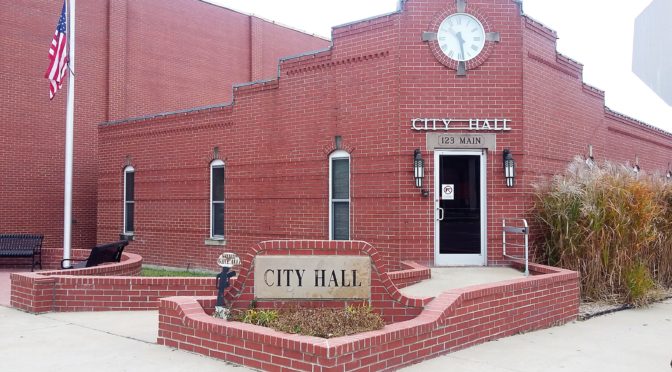
The Street Advisory Board will meet on Thursday, February 10, 2022, at 4:00 p.m. at the City Commission Meeting Room at 123 S. Main Street. This meeting is open to the public.
This meeting will be made available via the City’s you tube channel at City of Fort Scott.

A fundraiser to help pay for the funeral costs of Kennedy Bosley-Leihsing is on Feb. 13 from 8 a.m. to noon at the Empress Event Center, 7 N. Main.
It is a free-will donation pancake feed that includes two pancakes with sausage links, butter, and syrup. One can dine-in, or take to-go.
For more information call Lori Brown, at 620-215-3600.
“We’re hopeful that our community does what it normally does and comes together to support a family that’s going through a very difficult time,” said Bill Michaud, owner of Sleep Inn, whose staff is hosting the pancake benefit feed.
About Kennedy
Leihsing, 15, was a sophomore at Fort Scott High School who died unexpectedly on January 25 from COVID-19 in the Ascension Via Christi Emergency Department.
A great aunt, Iris Byrd, started a GoFundMe for the family as there was no insurance to pay for the funeral, according to the GoFundMe page.
“She was raised along with the other grandchildren by her grandparents, both of whom are on disability for various medical conditions. This is yet another reason why help is so desperately needed,” Byrd said on the GoFundMe page.
“Kennedy was so smart and kind, and she loved life and always put others before herself. She was beautiful in all respects,” Byrd said on the fundraising page.
Kennedy’s best friend Elizabeth has a mom, Lori Brown, who works at the Sleep Inn Hotel in Fort Scott. The Sleep Inn team is hosting a pancake feed to benefit the family because the GoFund Me goal to help with funeral expenses has not been met yet.

Kennedy’s funeral was on February 4.

The Fort Scott City Hall telephone system will be non-operable for maintenance on Tuesday, February 8, 2022 from 11:00 AM-3:00 PM.
All other city phone systems (including fire and police) will be operable as usual.
Should you have a city hall emergency between 11 AM-3 PM tomorrow please call Mark McCoy, (620) 215-0039.
Submitted by Fort Scott City Commissioner Pete Allen.
When a group of about 70 people comes in for a family reunion, take the trolley ride and the thing that sticks out most in their mind is the bumpy streets, something is wrong!
When 3 people from out of town do a survey of FS for a group called “First Impressions” and when asked what you will remember most about FS after 30 days, the answer of 2 out of 3 is “the bumpy streets”, something is wrong! That is unless you like bumpy streets.
General
This summary is a brief and concise summary of the findings, conclusions, and recommendations for a proposed City of Fort Scott Street Multi-Year Special Maintenance Plan.
Findings
The city operates and maintains approximately 83 miles of streets. Most of the streets are beyond their life cycle and require moderate to major maintenance to prevent further deterioration and require major construction for correction.
Funding for street work is projected to come from a recently enacted one
percent County sales tax, a 1% City sales tax (1986) and a half percent City
sales tax along with a State Gasoline Tax. This is supplemented by
connecting link payment of approximately $12,500.
With the cost of street improvements (rebuild) estimated to be in the $140
M range, the overall time frame for those improvements would be 62
years.
There is no ordinance preventing us from applying the asphalt mixture to
existing brick streets. In fact, it has become common practice.
Fort Scott’s brick streets have been laid over existing soil consisting of black
dirt, clay or clay/rock mixtures with about a 1” layer of sand and these
streets do not meet the requirements for present day traffic loads.
It was recently learned, by me, that in the 1990’s an attempt to discover
the cost of rebuilding (major reconstruction) of our brick streets was
undertaken. A section of Eddy Street south of 9th Street was chosen for the
study. As reported to me, the bricks were removed, curb and gutter was
poured, and a concrete base was installed. Then the bricks were re-laid.
Detailed job costs were kept, and the consensus result was that it would be
cost prohibitive to rebuild them. No other attempt was made to rebuild. I
believe that it was then decided on the procedure of overlaying the brick
streets.
No further attempt should be made to overlay with asphalt, any of the
remaining unpaved brick streets.
Typical base under existing Brick Streets
Total cross section is approximately 5”
Typ. cross section of modern engineered roadway for comparative
purpose
6” of compacted earth
8” of AB-3 Base Rock
10” of hot mix asphalt
Total cross section thickness is 24”
• Generally, these brick streets have failed as the result of heavy loads being
driven over them and they would fall into a classification as “unrepairable” with
75 to 80 percent of our streets falling into this classification.
• On a scale of 1 to 10, with 10 being the highest, our streets would rate (PCI) at
about a 3.5 average meaning they are full of potholes, sunken areas, and other
conditions that would make them nearly impassable.
• Each year with the continued infiltration of moisture and heavy loads they
continue to deteriorate and each year at an accelerated rate over the previous
year.
Recommendations
A decision now must be made to shift from the street re-construction
schedule to a more proactive maintenance program, performing low to
moderate cost, high impact maintenance activities which increase the
Pavement Condition Index (PCI) on streets requiring minimal to moderate
maintenance to gain service life.
While maintenance projects and activities are not as glamorous, these
efforts will provide an economical means of extending the life to major
investments in the street network.
As a result of that shift, improvements will be made to the driving surfaces
in the overall street network.
This proactive maintenance program should continue, as the most
economical means to maintain and improve the street network with the
available funding.
The rebuilding of streets should not be suspended, only scaled back to
properly fund needed maintenance to protect the community’s previous
investments in street infrastructure.
This plan attempts to provide a balanced approach and cost-effective
measures to increase the PCI score and improve our street drivability.
With implementation, all classifications of streets will meet or exceed an
average PCI goal of 5 over the next seven to ten years.
Examples of maintenance activities include pothole repair, sections of
nonrepairable asphalt and bricks replaced with asphalt, skim patching,
alligator cracking repairs, crack filling, chip sealing, and broken concrete
repairs.
It is imperative that we make our existing streets as “drivable” (min. PCI of
5) as possible at the lowest cost, as they must be used by the motorists
until such time as they can be reconstructed.
We do not have the financial resources to rebuild the nearly 700 blocks of
our unrepairable streets. At the average rate of even $200K per block, that
sum equals $140M dollars.
With the advent of our pothole patching machine, using proper aggregate
and asphalt emulsions and training in the proper techniques, we are now
able to use the machine for performing the above-described process.
The downtown historical district would be designated for complete brick
street restoration, as well as selected other isolated areas, such as 5th
Street by the Old Church and 3rd Street by Eugene Ware School, with other
areas deemed historic by the governing body.
These areas would not be included in this Street Maintenance Program but
would be funded from a Brick Street Fund taken from the sales tax revenue.
A $200,000 yearly fund would be established for that purpose.
Note that areas outside the historic district could remain brick by the
establishment of a benefit district upon approval by 80% of adjoining
property owners.
City would be responsible for standard reconstruction with adjoining
property owners responsible for additional cost for replacing bricks. No
particular priority would be given these streets to fit in the 62 years rebuild
program.
All other areas would be included in the Street Maintenance Program
subject to maintenance procedures as described above.
This would include the buildup of missing and sunken areas with the
pothole patching machine and materials.
Standard chip seal would be used as part of street maintenance for streets
such as Liberty Bell Road and sections of Horton Street.
Following the improvement methods described above, standard chip seal
methods would be utilized for additional leveling and preservation. County
has equipment for chip sealing and is available for cost sharing.
Mill and overlay would be classified as street maintenance and would
include Broadway and 6th Streets. Such streets would be reconstructed if
grants would become available.
The “like for like” “materials as described in Ord. 12.12.090 – Restoration to
original condition” would be discontinued and the installation of hot-mix
asphalt in excavations in streets listed in the “unrepairable” classification
with cold-mix as a temporary material when hot-mix would be unavailable.
Continuance of the requirements in Ord. 12.12.090 would be enforced in all
street and alley excavations (excavation and backfill).
Approximate cost of treatment is estimated to be $5,000 per block on
average with the goal of 100 blocks treated per year ($500,000). This
would compare to an estimated cost of $200,000 per block, or $20M for
the 100 blocks.
Yearly material usage requirements would be approximately 14,000 gallons
of emulsion and approximately 600 tons of ½” chips ($48,000).
A heated upright 7,000-gallon emulsion storage tank would need to be
purchased and erected at the City Facility. Note: This tank was authorized
and ordered at the commission meeting of Feb. 1, 2022. This tank
compliments the initial purchase of the Total Patcher machine at the cost of
$68,000 and will allow us to manufacture our own patching material for the
above-mentioned maintenance activities. Training in the use and proper
care of the machine was performed in May of 2021. Nine public works
employees were trained
The Fort Scott Area Chamber of Commerce announces a Love Local & Chocolate Crawl shopping event will take place on Saturday, February 12th.
Most stores in the Downtown Historic District and several additional locations will be participating in the fun.
Customers are invited to shop local retailers while sampling a variety of chocolate treats along the way, and many will also be offering drawings and promotions.
Locations included in the event will have a Chocolate Crawl poster and red and white balloons displayed at their entrance.
The Chamber encourages the community to shop local, love local and join the Chocolate Crawl on February 12th to celebrate Valentine’s Day.
“You can’t buy love, but you can buy local!”
Contact the Chamber for more information at 620-223-3566
There will be a Special Meeting of the Fort Scott City Commission held at 5:00 p.m. on Monday, February 7th, 2022. This meeting will be held to hold an Executive Session.
This meeting will be held at 123 S. Main Street in the City Commission meeting room and will be broadcast on the City’s you tube channel. The meeting is open to the public but the Executive Session is not.