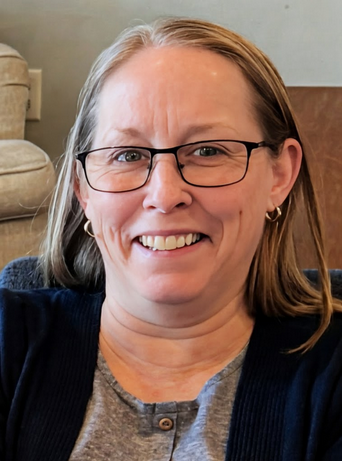
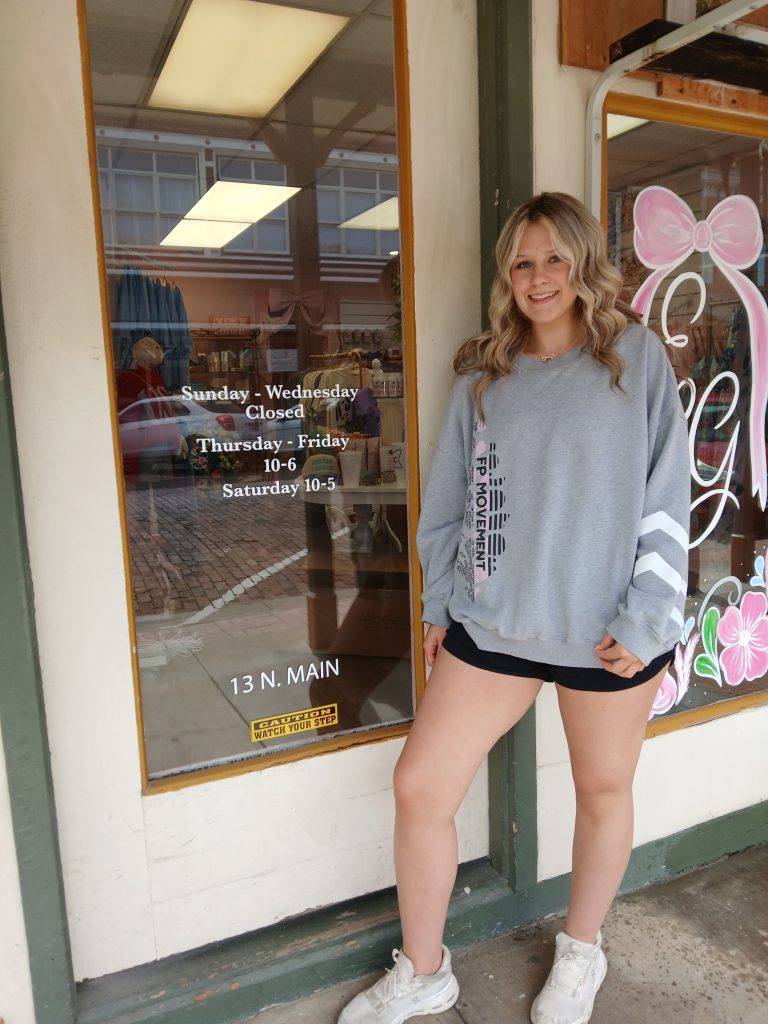
Ella Grace Townley is the new owner of Eternal Grace Boutique in downtown Fort Scott.
Ella Townley, 18, graduated from Spring Hill High School last week, and tomorrow she will open her new business venture, Eternal Grace Boutique LLC, in Fort Scott’s Historic Downtown District.
The store is located at 13 N. Main Street.
Ella is the daughter of the owners of Be The Light Boutique, Susan and Ed Townley, just across the street.
“I didn’t know what I wanted to do after graduating,” she said. “I will attend Pittsburg State University, majoring in management and marketing, in the fall.”
In the future, Townley plans to have her own brand of clothing.
“I always wanted to own my own clothing store and bring ideas to life,” she said.
The products she sells are clothes for girls of all ages, she said
“In addition to young women’s clothing (ages 14-25). I sell two lines of jewelry, collegiate ware, home decor items, Bibles, prayer journals, devotionals, and hats.”
The store opens today, May 28, at 3 p.m., and there will be a ribbon-cutting and grand opening at 5:30 p.m. sponsored by the Fort Scott Chamber of Commerce.
The hours of operation for the store will be Thursday to Friday, 10 a.m. to 6 p.m., and Saturday from 10 a.m. to 5 p.m. Sunday through Wednesday, the store is closed.
For information, contact the store at: 913-827-2574.
The Fort Scott Area Chamber of Commerce invites members and guests to a Chamber Coffee this Thursday, May 21st at 8am hosted by Chamber members Heartland Rural Electric Cooperative and Heartland Propane. The coffee will take place at the Heartland Propane bulk plant and shop located at 2161 Osage Rd, just north of town on Old 69.
Guests traveling west on Highway 54 should turn north at Durossette’s onto 215th Street (Old 69 Highway), continue north for approximately two miles, then turn east onto Osage Road. The facility will be visible immediately after turning onto Osage Road and will be located on the left-hand side.
Coffee, juice, and light refreshments will be served along with a door prize drawing.
Guests will have the opportunity to learn more about Heartland Rural Electric Cooperative and Heartland Propane, their shared commitment to serving local communities, and the important role they play in providing dependable energy to homes, businesses, and rural areas across Southeast Kansas. Representatives will share information about how the electric grid works, how rural electric cooperatives fit into the larger energy network, and how Heartland Propane supports the cooperative’s mission by expanding reliable energy options for members and customers.
Heartland Propane recently reached an exciting milestone of 4,000 routed delivery customers, reflecting the company’s continued growth and service throughout the region. Heartland REC has served the area for decades with safe and reliable electric service, while Heartland Propane continues expanding dependable propane options for homes, farms, and businesses across Southeast Kansas.
Contact the Chamber of Commerce at (620) 223-3566 for more information. Visit the Events Calendar and category of Chamber Coffees on fortscott.com for upcoming locations.
Tuker Ross (left), Janna Trotter (right), submitted photo.
Two best friends started a mobile coffee business in Nevada, Missouri, in September 2025, and will soon have a physical location in Fort Scott to serve this community.
The name that owners Janna Trotter and Tuker Ross chose for their business is Holy Grounds Jesus & Coffee.
“Coffee is what we do, but it’s never been the full story behind Holy Grounds Jesus & Coffee,” said Ross.
“It has grown into something so much bigger than we anticipated. Our hearts have always been simple: serve our community well and share Jesus with every cup we serve.”
“The Beauty Lounge Salon & Barbershop will be making a location change at the beginning of June, to 1621 S Main St. (previously the Baker Clinic),” Ross said. ” Holy Grounds Jesus & Coffee will be located inside part of the salon, as well as Dr. Press, the audiologist, will be remaining inside the building to continue his work.”
“Holy Grounds Jesus & Coffee has an estimated open date of mid-June. Holy Grounds will be offering hot and iced lattes with scripture written on every cup, as well as non-caffeinated drink options.”
Tentatively, operating hours will be from 9 a.m. to 5 p.m. Tuesday – Friday, and Saturdays 9 a.m. to 2 p.m.
To contact the business, use their Facebook page.
“We will be looking to hire soon. To reach out to us about a job opportunity, please Facebook message us.”
The Why of the new business
“From the very beginning, this business was built on faith. Before the menu, before the logo, before we ever served our first drink— God placed this dream on our hearts,” Ross said. “Long before we felt equipped, He continued to remind us that He doesn’t call the equipped, He equips the called.”
“Now, seeing God open the door for us to continue serving Nevada while also opening our very first physical location in Fort Scott feels surreal. Time after time, He has continued to make a way where we couldn’t see one ourselves.”
“Every cup we serve is more than just coffee to us. It’s an opportunity to place truth into someone’s hands right when they need it most. We may be the ones writing the verses on the cups, but we truly believe God places them exactly where they’re meant to be.”
“If someone walks away with a drink in their hand and hope in their heart, then we’ve done what we were called to do. This is our why”.
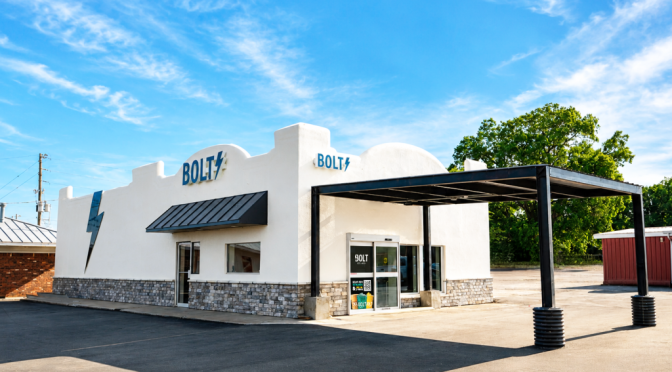
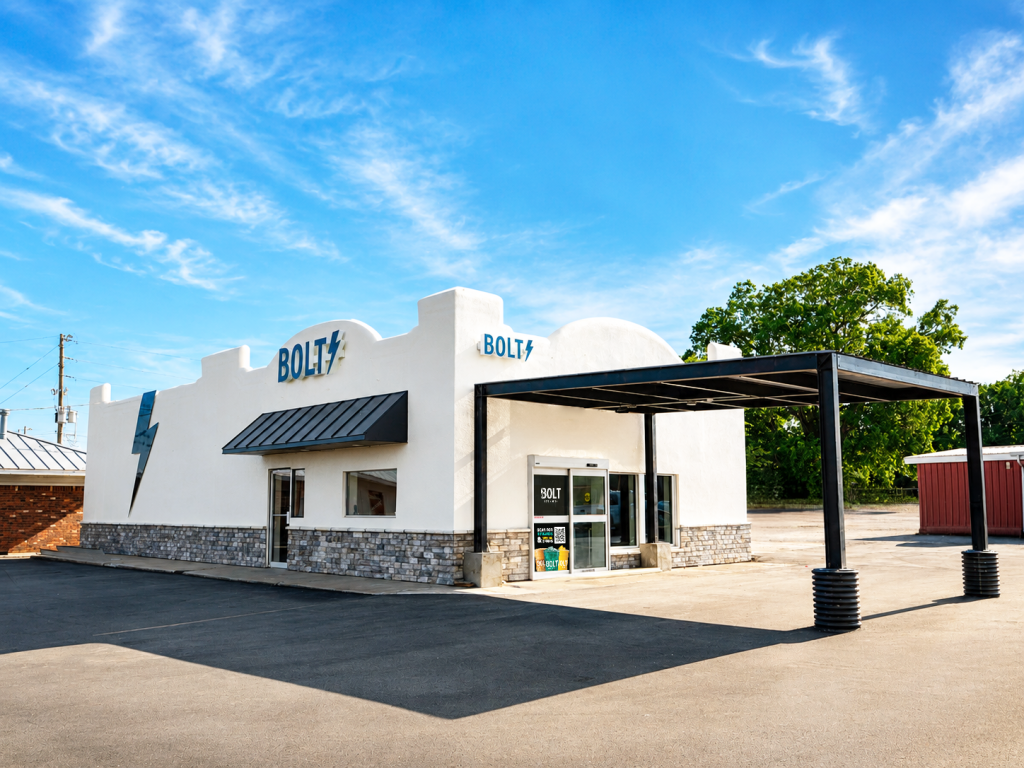
A long vacant property on National Avenue has new life.
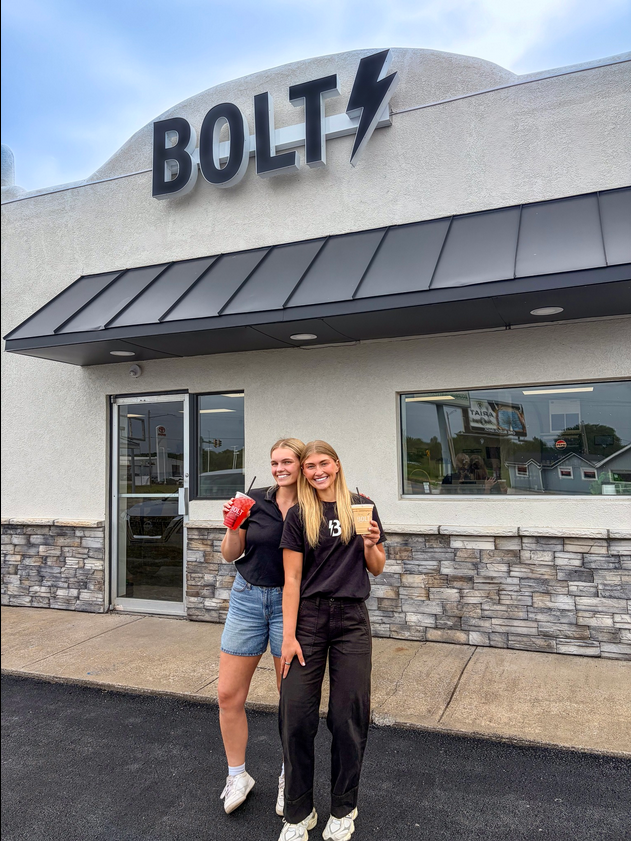
Bolt Bevs and Bites at 1808 S. National Avenue has been remodeled into a drink and snack business.
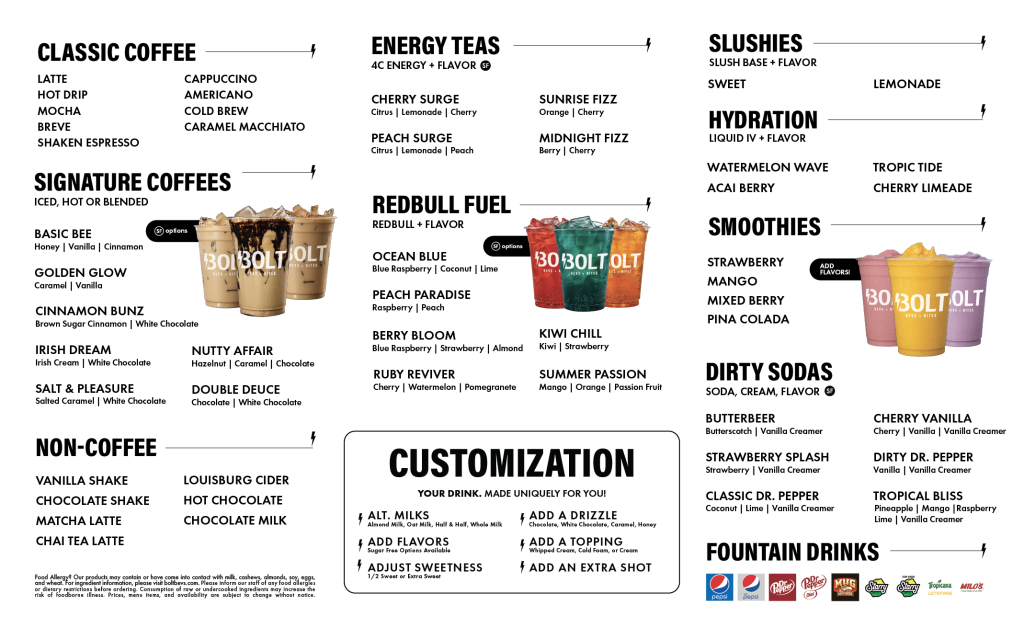
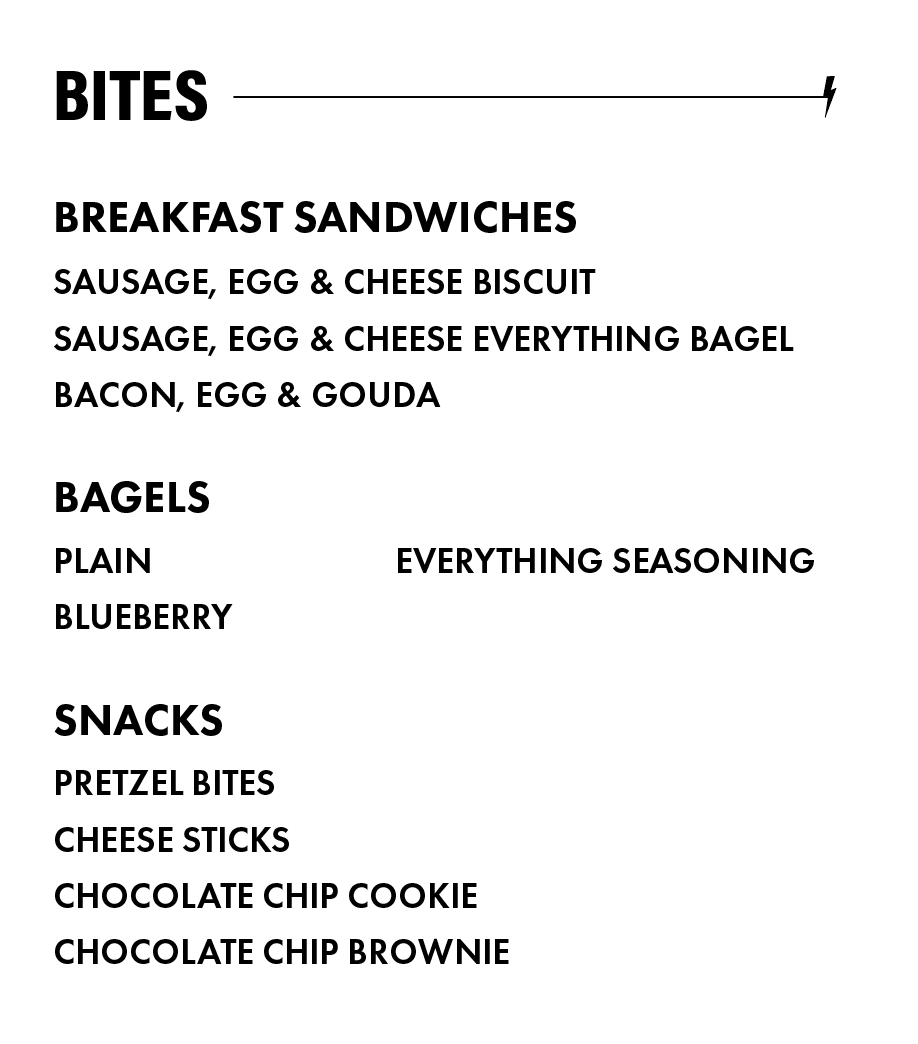
Bolt offers coffee, energy drinks, kids’ drinks, breakfast items, snacks, sweet treats, and more.
The dress rehearsal before the grand opening of the business starts tomorrow, May 22, with hours of 6 a.m. to 6 p.m. and continues on Saturday from 6 a.m. to 6 p.m. then 8 a.m. to 2 p.m. on Sunday.
They will be closed for Memorial Day.
Following the soft opening this weekend, regular hours will be 6 a.m. to 9 p.m. Monday through Saturday and 8 a.m. to 8 p.m. on Sundays.
Co-manager Claire Bradshaw said, “We are from PIttsburg. We like the small town feel, the community connection, and were able to purchase a building here in Fort Scott.”
The owner of the business is Mick Marietta.
The building is the former Taco Tico restaurant. “It’s been vacant for a long time,” Bradshaw said.
“It’s been gutted, with remodeling starting last fall,” said Co-Manager Emery Kafka.
The remodeling includes a drive-through with a canopy on the front of the building.
Currently, the staff includes 20 people ranging from high school age up, and they are still accepting applications, Bradshaw said.
Menu. Submitted graphicSubmitted graphic.
Claire Bradshaw, right, and Emery Kafka are the co-managers of Bolt Bevs and Bites. taken from Bolt’s Facebook page.
Vickie and Larry Shead from their farm’s Facebook page.
Vickie and Larry Shead work diligently every year to have a homestead festival at their farm, located near Garland in Bourbon County. They do this to encourage the community in homesteading.
Alongside them are their children, grandchildren and community members who share in their enthusiasm for the homestead lifestyle.
According to Webster’s Dictionary, homesteading is “the act or practice of living frugally or self-sufficiently, especially by growing and preserving food.”
Over the years, the Sheads have widened the scope of their farm festival to include locals and a festival that includes events, entertainment, and vendors, making it a fun family day.
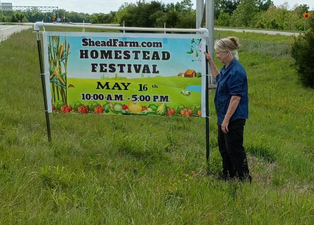
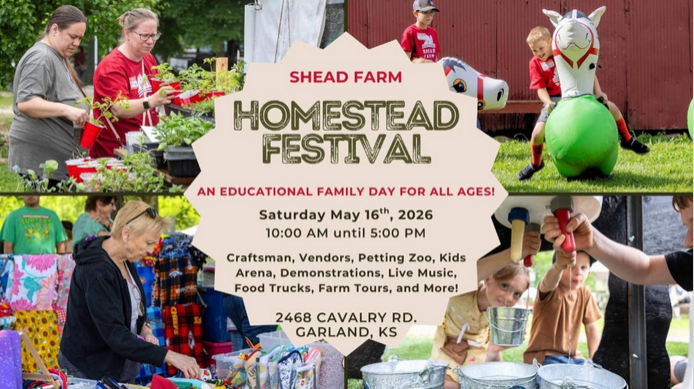
The Shead Farm Festival is this Saturday from 10 a.m. to 5 p.m. at 2468 Cavalry Road, Garland. Tickets are $5 or for a family of five or more members $25. For more information 620.224.4149 or www.sheadfarm.com.
From their Facebook page.
Vickie Shead said there are new events added this year and some new vendors.
“Laura James from Lucky Horse Ranch will be bringing her miniature horses for young children to ride.
“Also, Steve William, from Redfield, will be at the festival with wagon rides pulled by his giant draft horses.
“Other new vendors include: chicken tractors, canning shelves, herb/spices, birdhouses, books, baskets, fudge, pork rinds, sourdough items, and more!” she said.
Information booths will include the National Resources Conservation Service, explaining their grant program to help people farm and garden.
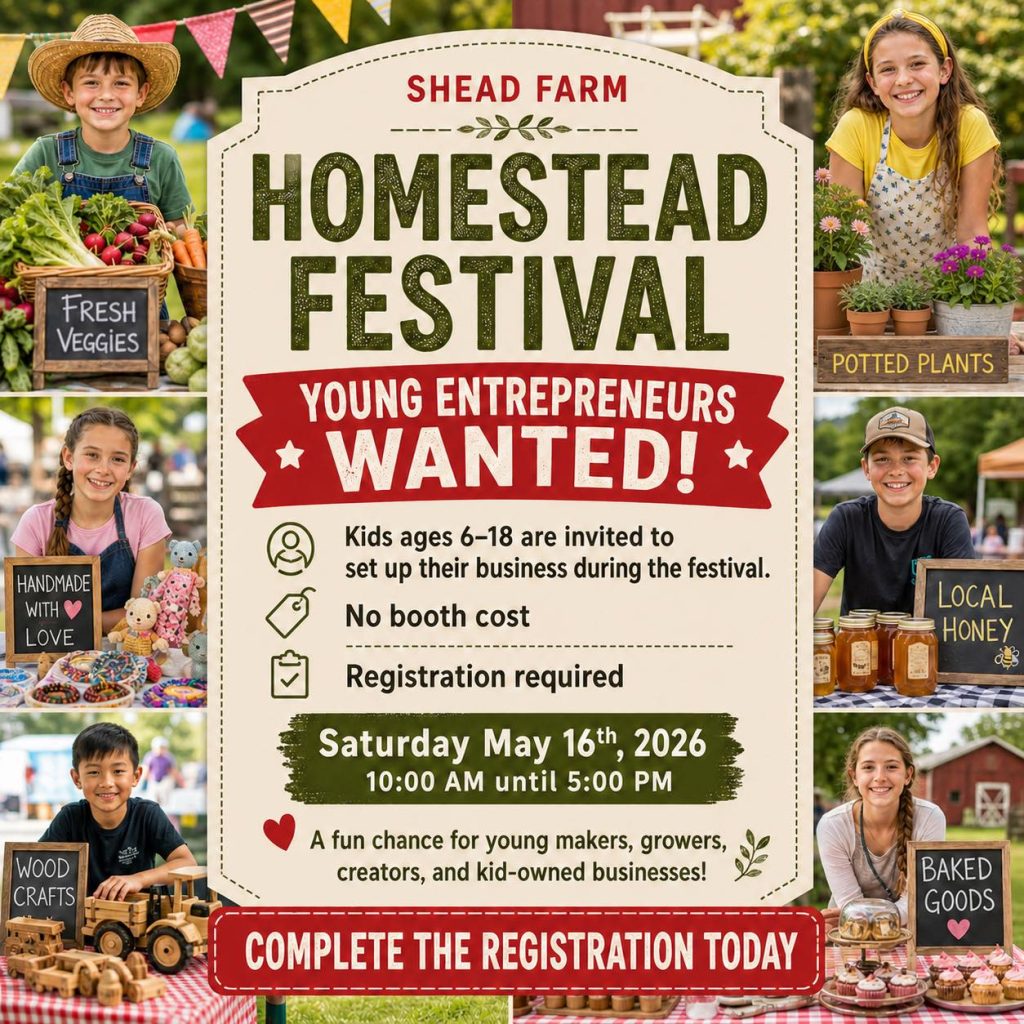
The Shead Farm Homestead Festival is offering kids vendor booth spots for young business-minded kids who would like to sell their products or services.
If you have a young business minded child and you have been looking for an opportunity to sell their product or service, you have found it. Sign up for a spot at the Shead Farm Festival kids vendor booths. We look forward to hosting your young vendor and shopping their business booths.
Sign up for a kids (ages 6-18) vendor booth spot for FREE today by clicking HERE!
Sending on behalf of the Fort Scott Area Chamber of Commerce
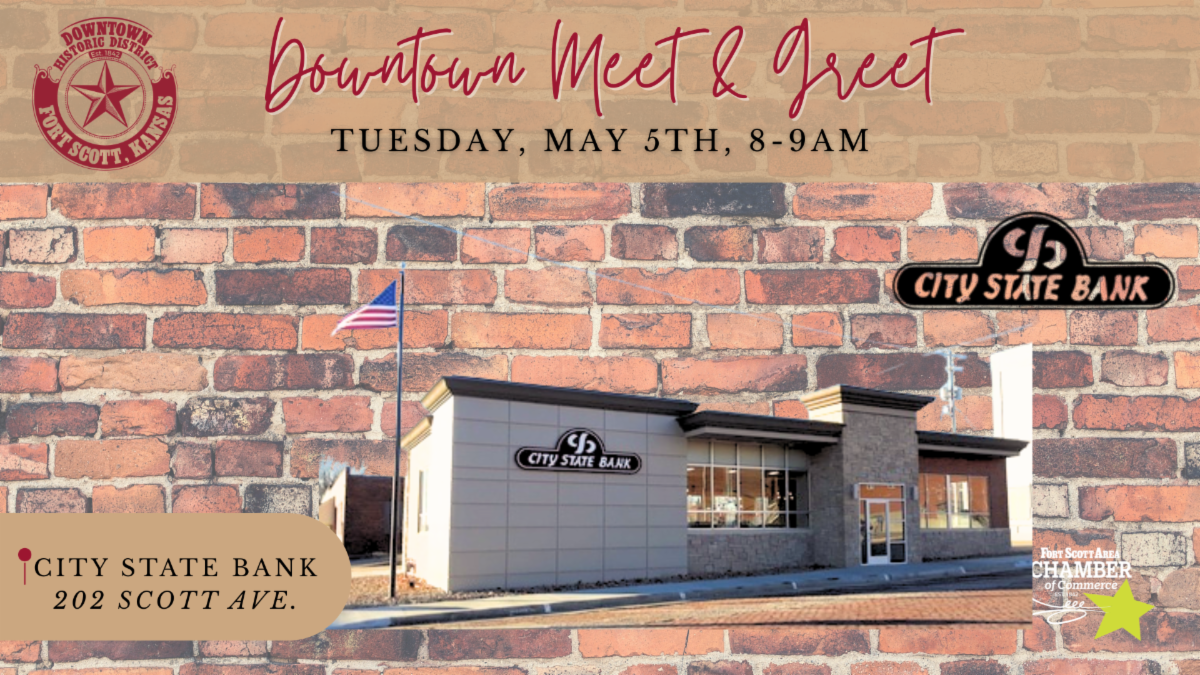
Quarterly Downtown Meet & Greet scheduled for May 5th!
The Fort Scott Area Chamber of Commerce invites downtown business owners, representatives, and community members to attend:
Downtown Meet & Greet
Tuesday, May 5th 8am–9am @ City State Bank, 202 Scott St.
These quarterly informal gatherings provide an opportunity to network, collaborate, and share ideas regarding downtown events, promotions, and other topics impacting our downtown district. Coffee, juice, and light refreshments will be provided.
For more information, please contact the Chamber at (620) 223-3566.
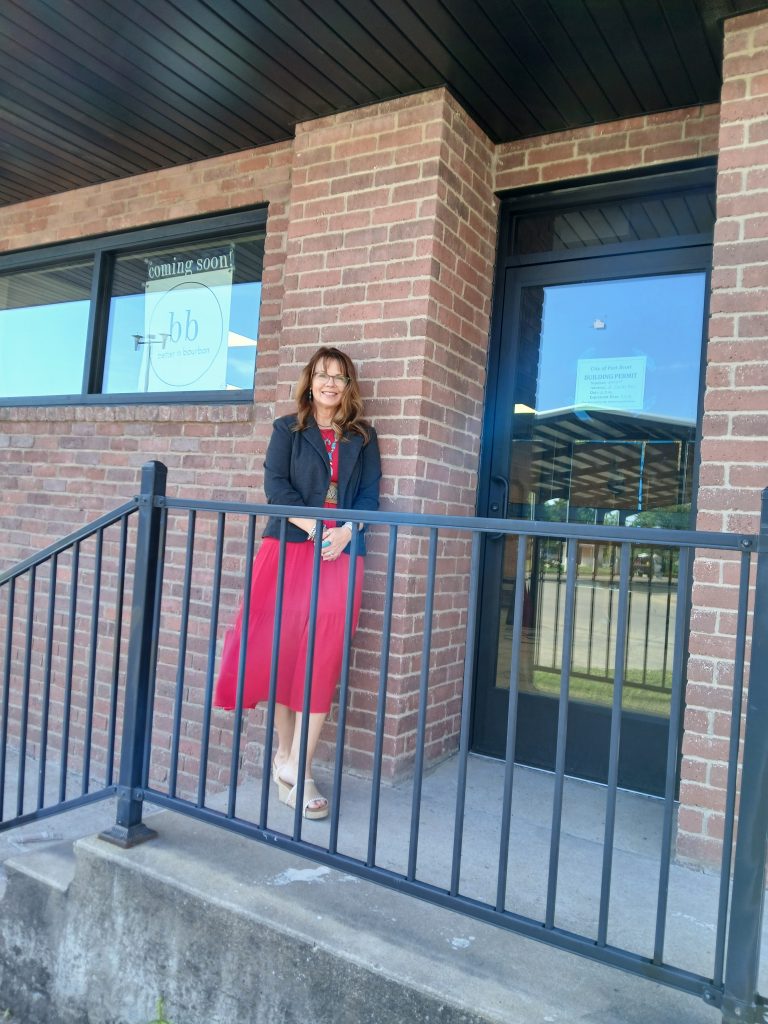
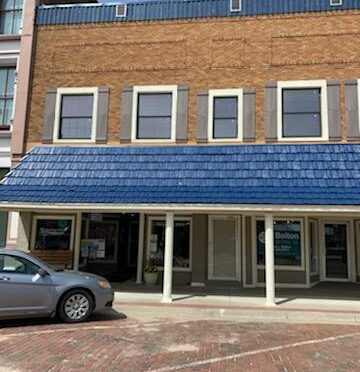
Rachel Pruitt stands in front of her new location for her business in downtown Fort Scott.
A downtown boutique will be moving in the near future to a bigger location one street over, with more parking availability.
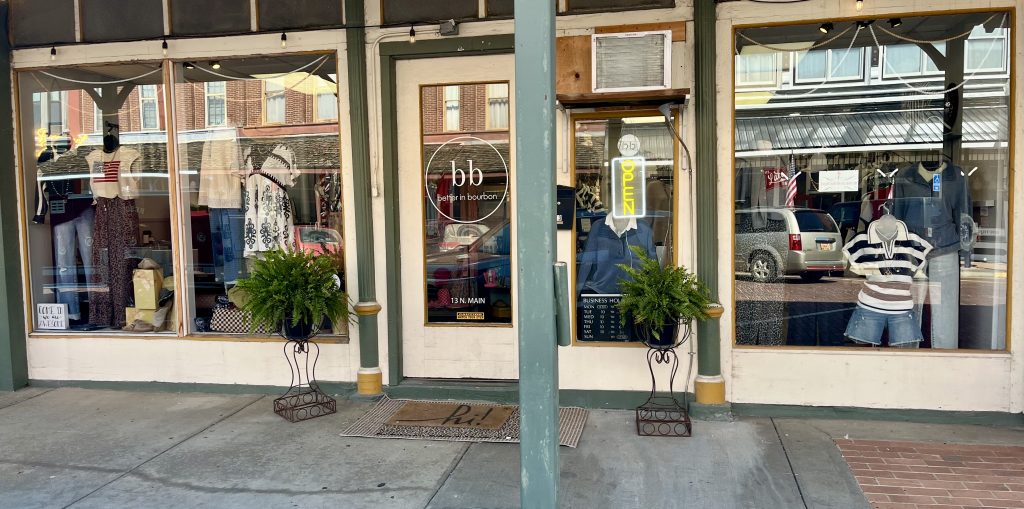
Better in Bourbon is owned by Rachel Pruitt is currently located on North Main Street but will be moving to a location on National Avenue.
“Better in Bourbon, the independently owned boutique known for its curated items (selected best styles for the season) AND personalized shopping experience, is expanding,” Pruitt said.
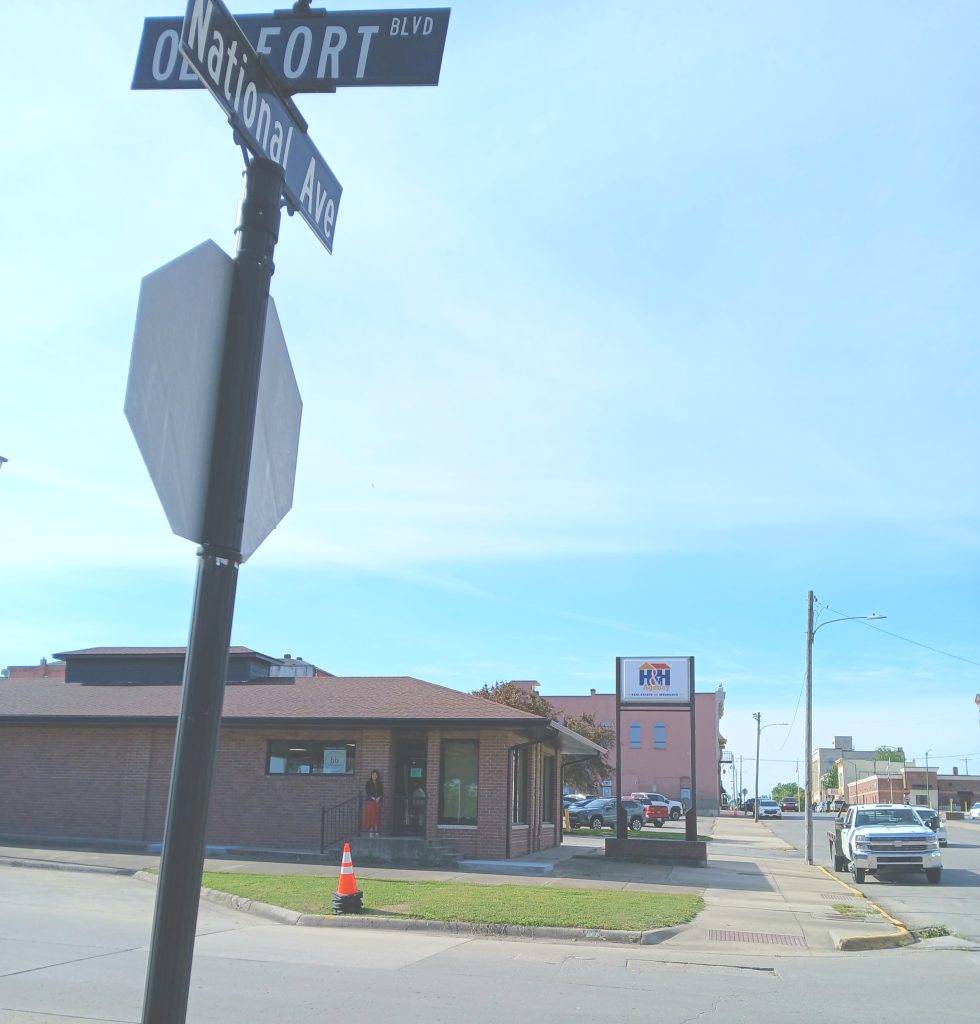
The newly renovated space at 2 Old Fort Blvd., in the former H&H building, offers customers more room to shop and a major upgrade in convenience with dedicated parking.
Pruitt says the move marks an exciting new chapter for the business, which began as a small pop-up and quickly became a staple in the Fort Scott retail scene.
“This expansion is about creating a better experience for our customers,” Pruitt said. “We’ve outgrown our current space, and this new location allows us to offer more of what people love—more inventory, more styling options, and an easier, more comfortable way to shop.”
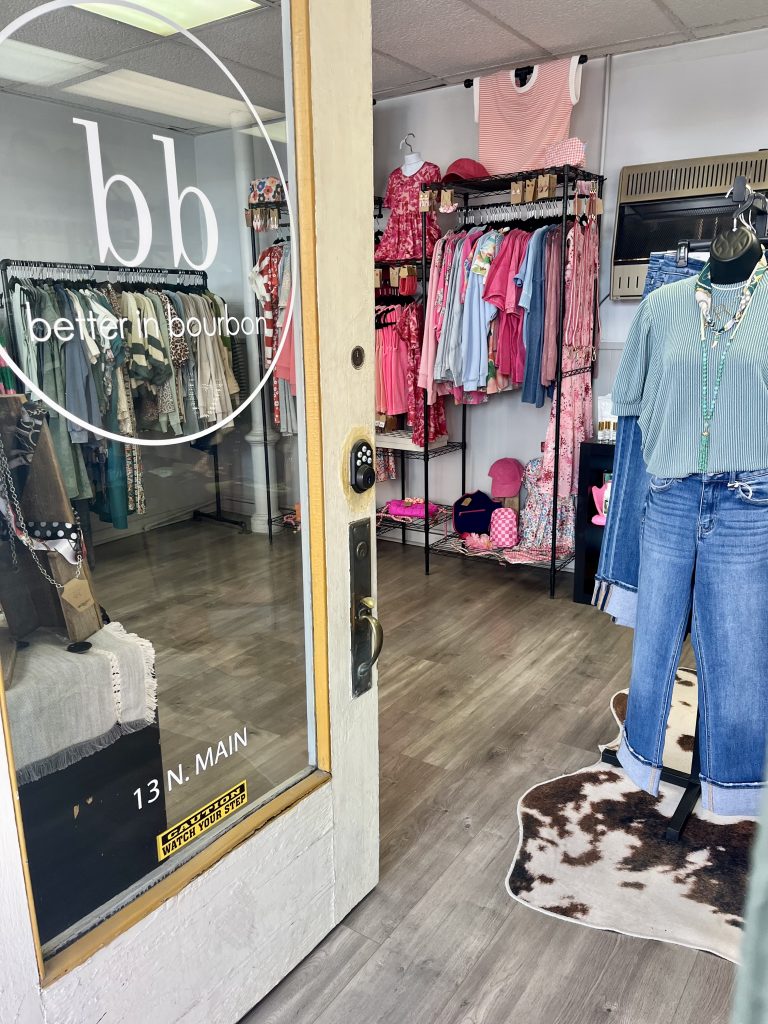
The new location will feature increased floor space for apparel, accessories, and the boutique’s popular permanent jewelry offerings. The additional room will also allow for more curated, head-to-toe outfit displays—an approach that has set Better in Bourbon apart with its “solution-based shopping” model, according to a press release from Pruitt.
The expansion is part of a larger renovation effort aimed at breathing new life into a prominent Fort Scott property, while also supporting small business growth in the community, according to the press release.
Pruitt will be offering other businesses places to lease.
As part of the renovation, three unique spaces will also be available for lease. These turn-key spaces are suitable for a variety of business types and include all amenities. For more information, contact Nancy Pruitt at 620-224-9480.
Spring items are in stock at the current location on North Main Street, Fort Scott. Submitted photo.
Better in Bourbon plans to continue operating during the transition, with new arrivals and customer-favorite services still available as the move progresses.
The current site of Better in Bourbon on North Main Street, Fort Scott. Submitted photo.
An official opening date for the new space is expected to be announced soon. In the meantime, Pruitt encourages the community to stay tuned and stop in to see what’s new.
Pruitt also expressed gratitude to the loyal customer base that made the expansion possible. “We are so thankful for our customers—near and far—who have supported us every step of the way,” she said. “This growth wouldn’t be possible without you.”
“We’re excited to grow right here in Fort Scott and continue bringing something unique to local shopping,” she added.
The Better in Bourbon boutique is located at Old Fort Blvd. and National Avenue on the southeast corner.
FORT SCOTT, KANSAS — The Healthy Bourbon County Action Team recently held two Employer Insight Collaborative sessions on February 17 and February 19 to address workforce challenges in Bourbon County. The events brought together 44 employers and partners across healthcare, manufacturing, hospitality, banking, and more.
Supported by the Pathways to a Healthy Kansas initiative, the collaborative provided a dedicated space for community partners to identify practical strategies for strengthening the local workforce.
Key Workforce Insights
While industries varied, the challenges reported were remarkably consistent. Employers identified the following as the most difficult positions to fill:
Leadership and management roles
Information technology (IT)
Skilled trades
Healthcare and helping professions
Technical occupations
Addressing the “Soft Skills” Gap
A significant portion of the discussion focused on foundational workplace behaviors. While technical skills can often be taught on the job, employers noted critical gaps in:
Reliability and attendance
Professionalism and workplace expectations
Communication skills, including customer interaction and writing
Initiative and problem-solving
Teamwork and critical thinking
Leadership capacity
“While industries may differ, the workforce challenges employers are experiencing are remarkably similar. By bringing employers and community partners together, we can focus on practical solutions that support both our businesses and our workforce.” — Jody Love, President and CEO of the Healthy Bourbon County Action Team
Strategic Opportunities for Improvement
The collaborative identified specific areas where different sectors can coordinate to improve workforce readiness:
For Employers: A focus on stronger onboarding, mentorship, and internal leadership development.
For Educators: Strengthening connections between students and employers while expanding real-world learning.
For Community Organizations: Improving awareness of resources and connecting education to support services.
Next Steps & Action Plan
To build on the momentum of these sessions, partners have committed to several immediate actions:
Weekly Social Media Series: Increasing the visibility of workforce resources.
Lunch & Learn Sessions: Strengthening collaboration with Fort Scott Community College.
Training Coordination: Working with Pittsburg State University’s Kelce Center for Business & Talent Development.
Strategic Initiatives: Exploring the “Work Ready Communities” initiative and pursuing pilot program funding.
About the Partners
Pathways to a Healthy KansasThe largest community grant initiative funded by Blue Cross and Blue Shield of Kansas, providing tools to improve active living, healthy eating, and economic opportunity. Visit bcbsks.com/pathways.
Blue Cross and Blue Shield of KansasAn independent licensee of the Blue Cross Blue Shield Association and the state’s largest insurer, serving all Kansas counties except Johnson and Wyandotte. Visit bcbsks.com.
Hedgehog Bookstore is preparing to celebrate Independent Bookstore Day this Saturday, April 25th and would love for you to join us! We’ll have special activities and promotions from 10 am to 5 pm.
Golden Ticket Hunt – Find the golden ticket hidden somewhere in the store and win 12 FREE audiobooks from Libro.fm!
Giveaways – Every $10 you spend gets you a ticket for a chance to win book bundles and gift certificates!
Mystery Book Bundles – We’ll be offering wrapped bundles of books in specific genres. These are great if you love a surprise or want to broaden your horizons!
Make Your Own Bookmark – Kids & those who are young at heart will have a chance to create their own bookmark!
If you aren’t able to come in but still want to support the store, you can:
* Make a purchase at the Hedgehog Books shop on Bookshop.org. A portion of each purchase supports Hedgehog Books, and Bookshop is offering free shipping all weekend!
* Purchase an audiobook on Libro.fm. A portion of your purchase supports Hedgehog Books. From April 20th thru the 26th, Libro is offering customers who start a new one credit per month membership two free audiobooks with code BOOKSTOREDAY. And, they’ll have bestselling audiobooks on sale all week long!
“Thanks for your continued support of Hedgehog Books! We appreciate you and value your continued input on ways we can serve you better. Hope to see you soon,” said Janet Miller, co-owner of the store.
Rob and Lisa Dillon purchased Main Street Gallery on April 9 and reopened the store on April 14 as The Market at 23 Main.
“We bought the inventory and historic building, the Von Fossen Building, at 23 S. Main,” Rob said. “We have always enjoyed flea market shopping, and we were looking to start a business with another downtown merchant, and that didn’t work out. This came available, and we jumped on it.”
The products they sell are consignment items, antiques, home decor, clothes, collectables, and knick-knacks on the multi-level booth areas.
Along with Lisa and Rob and their children, they have hired an employee, Madi Collins, who worked for the previous owners, the McClellans.
The current hours are 10 a.m. to 5 p.m. Tuesday through Saturday.
The store’s phone number is 620.223.2210.
They currently have over 30 consignors and 28 vendors who sell items at the store. “Each booth is based on square footage,” he said. “We are looking for more vendors.”
Lisa is the Housing and Urban Development coordinator for the City of Fort Scott, which includes the Land Bank and the Certified Local Government designation.
Rob has been a locksmith for 15 years and can make duplicate keys for the public. He is hoping for the future of the business to add leather works to the store and an engraving business (on wood, slate, and leather).
TOPEKA – Lieutenant Governor and Secretary of Commerce David Toland today announced the Kansas Department of Commerce is accepting nominations for the 2026 To The Stars: Kansas Business Awards. The increasingly popular annual award program recognizes companies and individuals around the state for the positive impact they make on the Kansas economy and on their local communities.
During the event, Commerce also will announce the prestigious Governor’s Award of Excellence, the 2026 Governor’s Exporter of the Year, The Randi Tveitaraas Jack International Business Award and two new inductees of the Kansas Business Hall of Fame. This year’s gala will be held Oct. 8 at the Fiorella’s Event Space in Overland Park.
“Kansas businesses are fueling real economic growth — creating jobs, opening new markets, and building communities worth investing in and calling home,” Lieutenant Governor and Secretary of Commerce David Toland said. “Our state’s continued economic success isn’t possible without them, and To The Stars is the highlight of my year because it puts a spotlight on the companies and individuals leading the charge. Nominate the businesses that are moving Kansas forward — they’ve earned it.”
Companies, organizations and individuals can be nominated in the following award categories:
AgriBusiness – Companies that stand out in the agribusiness industry – including agricultural production, agri-tourism or products and services
Apprenticeship Champion – Companies and other entities that excel in providing registered apprenticeship programs in Kansas
Business Innovation – Companies from any sector incorporating innovative technologies in their business
Healthcare/Nonprofit – Noteworthy services provided by either healthcare facilities or nonprofit organizations
Main Street Momentum – Businesses revitalizing main streets or neighborhood commercial districts through growth or engagement
Manufacturing/Distribution – Outstanding achievement for companies of all sizes involved in manufacturing and distribution
Non-Traditional Talent Pools – Companies that have gone above and beyond to hire those with prior involvement in the justice system, youth, seniors or individuals with disabilities
Small Business Champion – Corporate Partner Award – Honors one corporation statewide that has demonstrated exceptional commitment to small business growth in Kansas through investment and partnerships
Under 30 Entrepreneur – Young entrepreneurs, under the age of 30, who are achieving business success
Welcome Back – Entrepreneurs and businesspeople who once left Kansas but have returned to make their mark in the Sunflower State
“Businesses are investing in Kansas at unprecedented levels statewide — and small businesses play a leading role in how our communities are growing and building for the future,” Commerce Deputy Secretary Joshua Jefferson said. “It’s local businesses that keep our state attractive and vibrant, and their momentum sets the stage for even more business wins throughout Kansas.”
Award nominations will be accepted until Monday, June 15. To learn more, view past winners and submit nominations, click here.
About the Kansas Department of Commerce:
As the state’s lead economic development agency, the Kansas Department of Commerce strives to empower individuals, businesses and communities to achieve prosperity in Kansas. Commerce accomplishes its mission by developing relationships with corporations, site location consultants and stakeholders in Kansas, the nation and world. Our strong partnerships allow us to help create an environment for existing Kansas businesses to grow and foster an innovative, competitive landscape for new businesses. Through Commerce’s project successes, Kansas was awarded Area Development Magazine’s prestigious Gold Shovel award in 2021, 2022, 2023 and 2024, and was awarded the 2021 and 2022 Governor’s Cup by Site Selection Magazine.
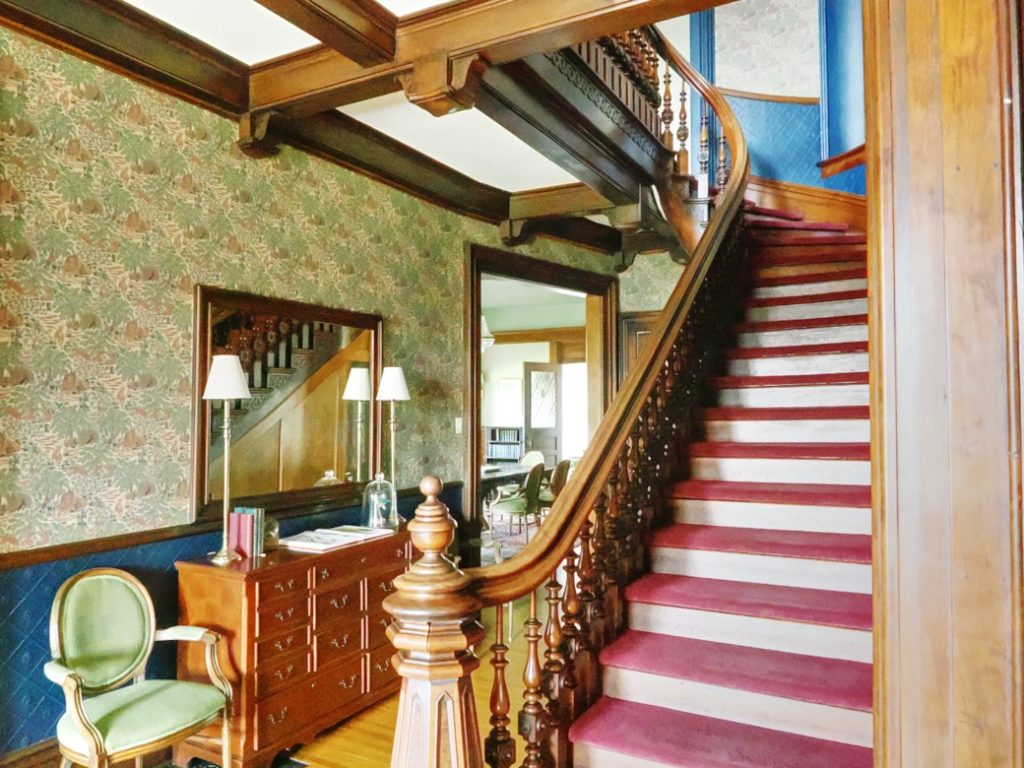
Inside the Kingfisher Inn, 742 S. National Avenue, Fort Scott. From its Facebook page.
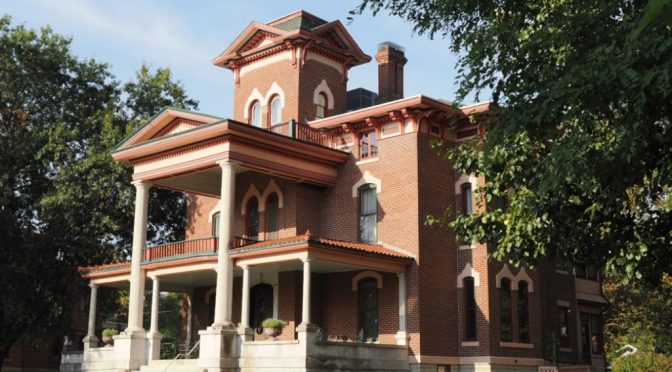
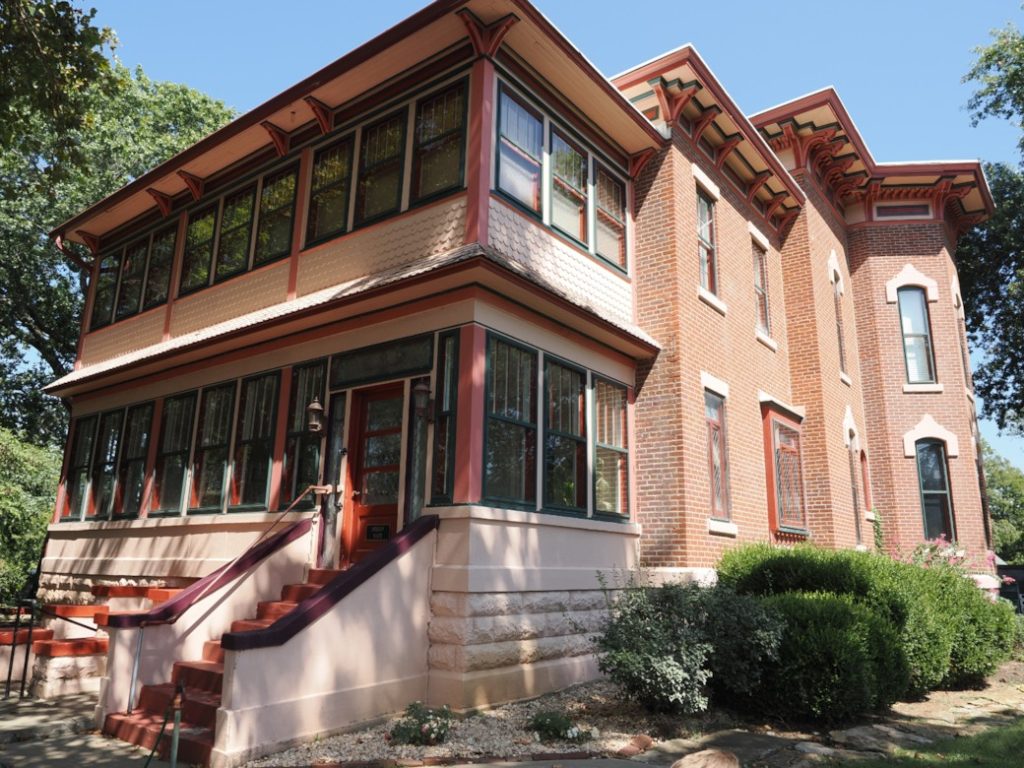
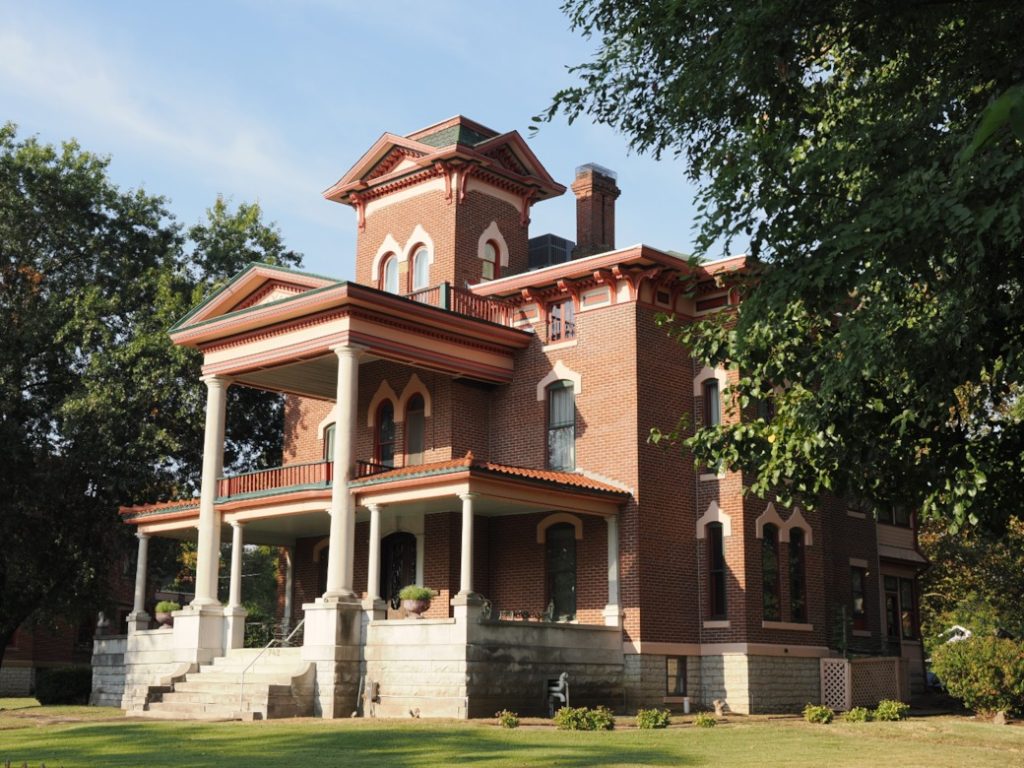
The two historic mansions on South National Avenue are back to business.
Following a couple of changes of ownership since they were known as The Lyons Mansions, the north mansion is ready for travelers once again, and the south mansion is currently rented for office spaces.
Daniel Kerr is the owner of Kingfisher Properties LLC and owns the two mansions, plus a small house on the property that faces Judson Street.
“In December, I was hired as the manager,” said Mindy McDonald. “We offer boutique lodging, more upscale. We are just now starting to get the word out that we are open.”
Mindy McDonald is the manager of the Kingfisher Inn in Fort Scott. Submitted photo.
One can rent the entire mansion or a single room.
Single use allows usage of the common areas in the building: living area, billiard room, sun room, she said.
The east side of the Kingfisher Inn. One can see the sun room available for guests. From its Facebook page.
“To rent the entire mansion, prices start at $600 per night,” she said. “It will sleep 16 people.”
There is a full kitchen with various coffee makers, stove, oven, full fridge, and dishwasher available for guest use.
The single room starts at $130 per night, excluding the cleaning fee and taxes.
“There is a family suite on the third floor that starts at $210, with two bedrooms and two baths and a sitting area. It sleeps 8 people, with three beds in one room and one bed in another.”
“The Kingfisher Inn stands out as a piece of history in Fort Scott,” she said. “It’s pretty important to keep these historic buildings alive. It’s unique to stay in an historic building. My husband and I stayed in the Lyons Mansion when visiting Fort Scott, when Miss Pat was the host and owner.”
“We operate like an Airbnb, through me,” she said. “They self-check into their room and contact me with any issues during their stay.”









 Golden Ticket Hunt – Find the golden ticket hidden somewhere in the store and win 12 FREE audiobooks from
  Giveaways – Every $10 you spend gets you a ticket for a chance to win book bundles and gift certificates!
 Mystery Book Bundles – We’ll be offering wrapped bundles of books in specific genres. These are great if you love a surprise or want to broaden your horizons!
 Make Your Own Bookmark – Kids & those who are young at heart will have a chance to create their own bookmark!