|
|
|
|
|
|||
|
|
|||||
|
|
||||||||||||||||||||||
|
||||||||||||||||||||||
|
NORTH CENTRAL KANSAS TO BE NEXT BKRT HOSTS
On the last day of the 2022 Big Kansas Road Trip in Bourbon, Cherokee and Crawford counties, Marci Penner of the Kansas Sampler Foundation announced that the 2023 Big Kansas Road Trip (BKRT) will take place in Jewell, Republic, and Smith counties in North Central Kansas on May 4-7.
The BKRT is a multi-day event that feels like a tri-county open house of communities and their attractions and locally-owned shops and restaurants, and it’s a time to travel back roads and take in short activities that help locals tell their story. Penner said, “All we ask is that communities be good at being themselves. The public wants to have first-hand experiences in our rural communities and countryside to get to know them.”
A menu of things to see and do is presented in a variety of ways from a printed piece to a web site, with updates and encouragement on social media. Each person, family or group attending can choose where they want to go and make their own schedule. It’s adventure ala carte at your own pace.
Penner said, “It’s impossible to know how many attend the BKRT each year because everyone is spread out over three counties. No one gets overloaded but everyone gets more traffic than usual.”
Visitors to the 2022 event in southeast Kansas came from every region of Kansas and sign-in sheets showed that there were many people from out-of-state as well.
Fort Scott (Bourbon County) Public Relations and Tourism Director, Jackson Tough said “the Big Kansas Road Trip was excellent. We heard from many local businesses and area visitor attractions that said they saw increased traffic. Some said they had visitors from neighboring states like Missouri, Arkansas, Nebraska, Oklahoma and even Colorado. Others came a greater distance like Minnesota, Iowa, and Nevada, among other states. Of course, we also hosted a large number of in-state visitors too. The event was great exposure for Bourbon, Cherokee and Crawford Counties. After visiting with Big Kansas Road Trip organizer Marci Penner, I also believe we will see residual effects for years to come!”
County seats in the 2023 showcase are Mankato (Jewell County), Belleville (Republic County) and Smith Center (Smith County). A few highlights are the Home on the Range cabin (near Athol) and the geographic center of the 48 contiguous states (Lebanon) in Smith County; a WPA-built courthouse (Mankato) and Lovewell Lake and State Park in Jewell County; and the Pawnee Indian Village state historic site (near Republic) and the National Midget Auto Racing Museum (Belleville) in Republic County.
“Belleville is the biggest city in the three counties with a population of 1,900,” said Penner. The 2023 road trip will have a different feel than this year which is what makes it exciting. These counties will provide visitors many intriguing ways to get to know them.”
The mission of the Kansas Sampler Foundation is to preserve and sustain rural culture. For more information on the BKRT, go to www.bigkansasroadtrip.com.
Submitted by Jackson Tough, Fort Scott Public Relations and Tourism Director.
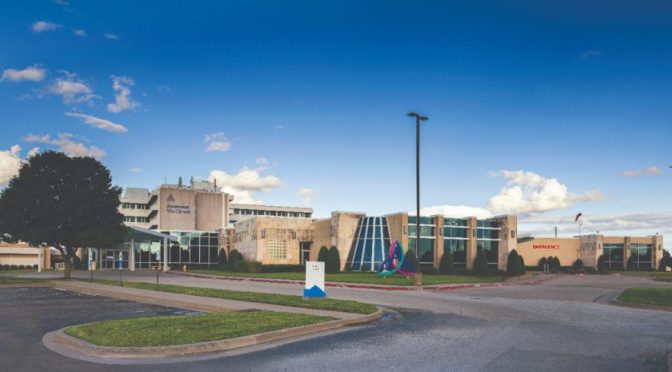
Nuclear Medicine tech now PACS administrator at
Ascension Via Christi in Pittsburg
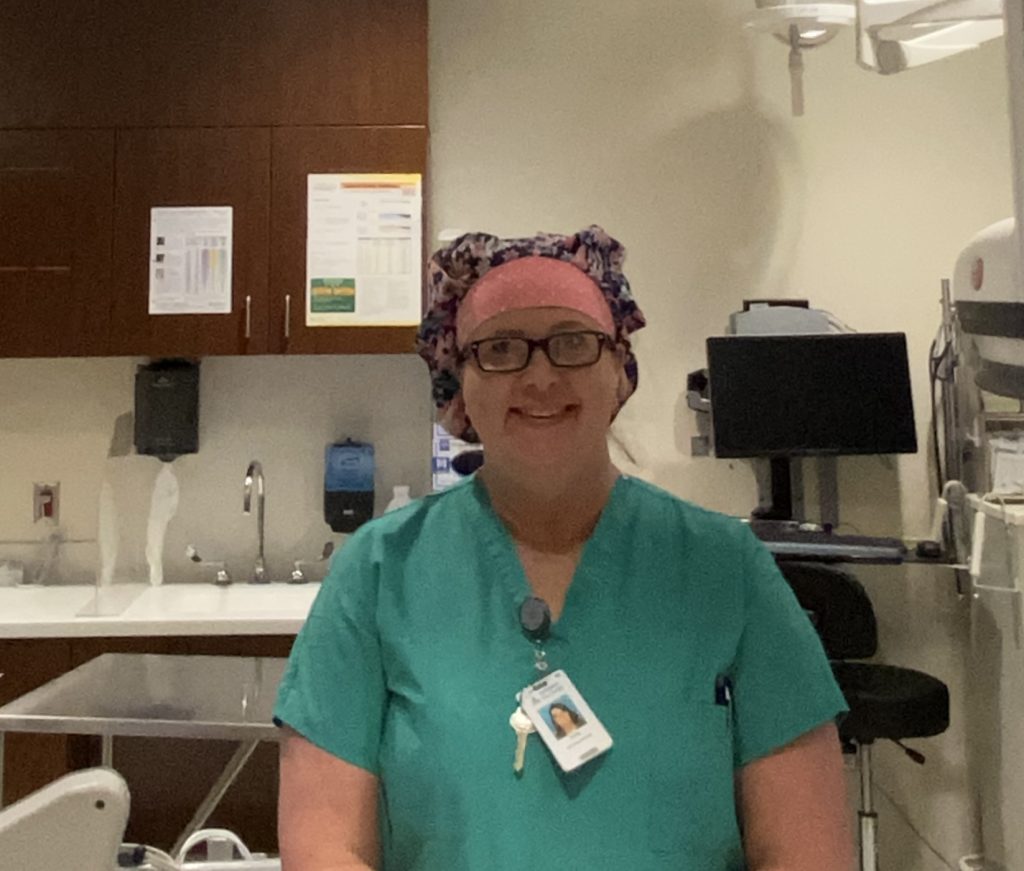
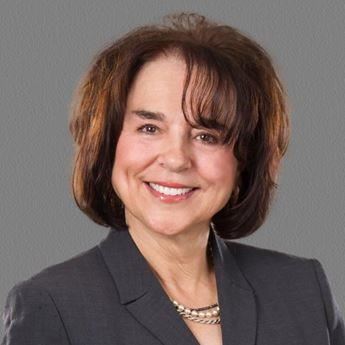
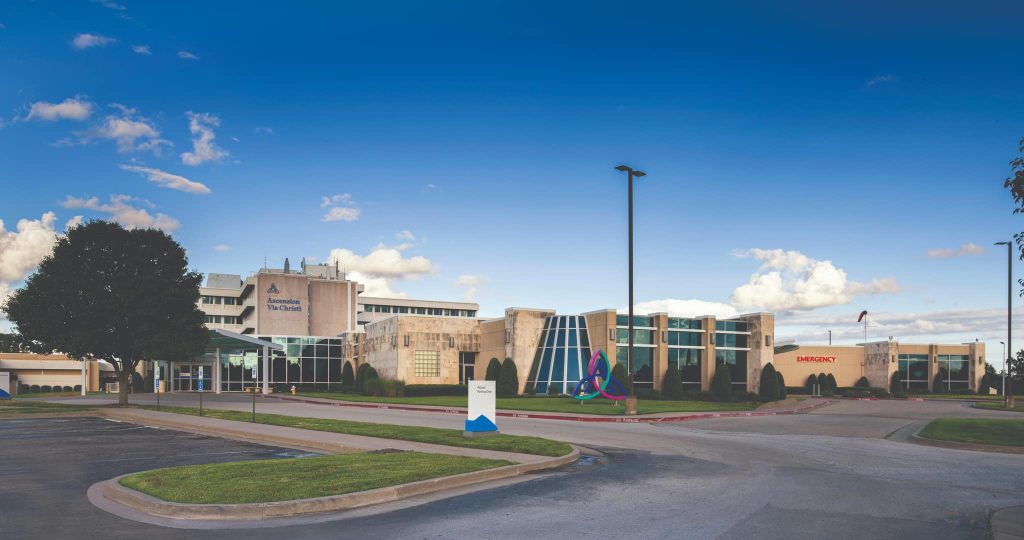
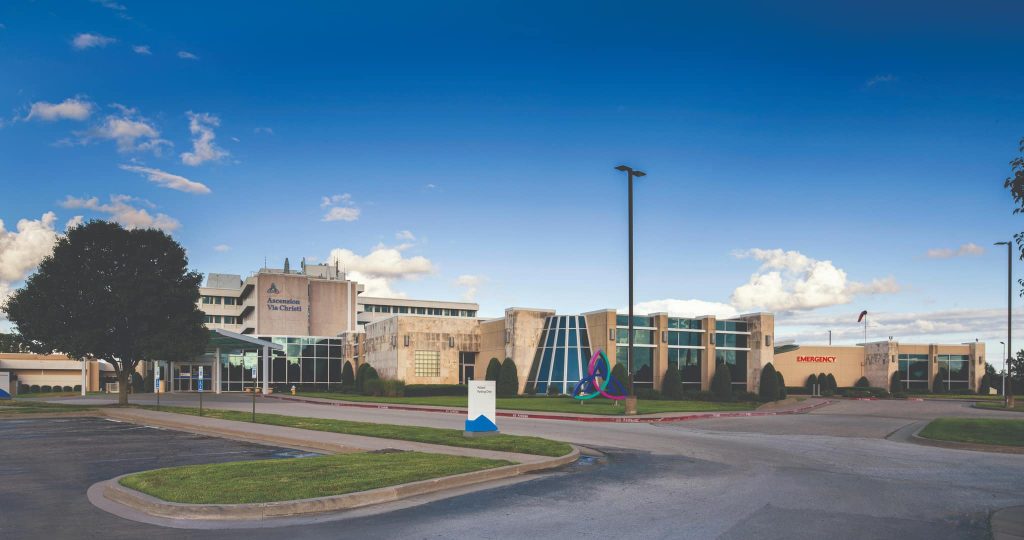
Ann Ogle, who began her career with Ascension Via Christi in Pittsburg 18 years ago as a Nuclear Medicine tech, is the newly named administrator of its Picture Archiving and
Communication System, or PACS.
Ogle found her love for the medical field during high school. “When I was 17, I had a study done on my gallbladder and I just remember that technologist being so kind and caring to me, “ she
says. “At that time, I had never heard of Nuclear Medicine.
Afterward, I did my research and that’s what led me to this line of work!”
That line of work involves performing tests for diagnosis and medical research.
Ogle’s new additional role is to provide local support and guidance to the hospital team in using the image-archiving technology.
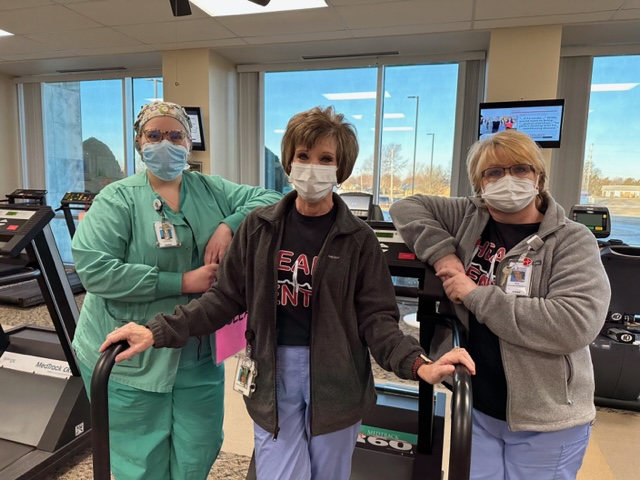
“Ann is dedicated to her career and puts patient care as a top priority,” says Travis Battagler, director of Heart Center and Imaging Operations. “She continues to look for ways to improve
patient satisfaction and at the same time accommodate the needs of our medical staff.”
Ogle says her new role came after taking a liking to the IT and imaging world of Radiology.
She enjoys the variety and challenges that come along with her job and says it helps to keep her sharp.
“Someone once told me, ‘Act like your patients are your family members. Each patient is someone’s dad, mom, grandpa, grandma…’ I know I would want my family members to be taken care of,” says Ogle. “So that is the way I try to approach every patient.”
If you are interested in growing your career with Ascension Via Christi in Pittsburg, browse opportunities at https://ascn.io/3wl1GJO.
###
About Ascension Via Christi
In Kansas, Ascension Via Christi operates seven hospitals and 75 other sites of care and employs nearly 6,400
associates. Across the state, Ascension Via Christi provided nearly $89 million in community benefit and care of
persons living in poverty in fiscal year 2021. Serving Kansas for more than 135 years, Ascension is a faith-based
healthcare organization committed to delivering compassionate, personalized care to all, with special attention to
persons living in poverty and those most vulnerable. Ascension is the leading non-profit and Catholic health system in
the U.S., operating more than 2,600 sites of care – including 145 hospitals and more than 40 senior living facilities –
in 19 states and the District of Columbia. Visit www.ascension.org

An annual Kansas tourism promotion is coming to our portion of the state today, May 6 and tomorrow, May 7. The event is promoting Bourbon, Cherokee and Crawford Counties.
“We’ve had a steady stream of visitors,” Lindsay Madison, Executive Director of Fort Scott Chamber of Commerce said on Thursday. She and her staff are welcoming them and giving info about the event. The Chamber is located at 231 E. Wall.
The Big Kansas Road Trip is designed to encourage people to explore different parts of our state by visiting it, with the hope of bolstering Kansas communities, according to their website.
To learn about agri-tourism sites, events and other things to do, visit:
Those of us who live in Bourbon County are encouraged to explore with tourists on these days as well.
The Big Kansas Road Trip is promoted through the Kansas Sampler Foundation whose mission is to preserve and sustain Kansas culture by educating Kansans about Kansas and networking/supporting local communities, according to its website.
There are some great eating places in Bourbon County, to choose one see the BKRT listing: EAT IN LOCAL CAFES
If you want to explore our county, check out the places that are listed in the Big Kansas Road Trip website:

The two-story wooden structure just outside the fort’s entrance was built around 1864 to help Fort Scott (town and post) defend against anticipated Confederate advances. Fortunately, no attacks occurred.

Built of red brick and limestone in the Modern Eclecticism style, the 1930 Bourbon County courthouse stands with solid authority on the square at 210 S. National. Visitors are welcome to go to the third-floor courtroom (if court is not in session) to view the 1929 D.H. Overmeyer mural Justice Enthroned. A Civil War cannon, war memorials, and a GAR monument guard the front lawn. Mon-Fri 8:30am-4pm.

On the west side of this 103 acre state fishing lake you’ll find a good place to cast your line for channel cat and largemouth/spotted bass. Also find several fishing piers, boat ramp and a floating dock. The waterfall usually runs a short period during the spring from early April through the end of June. You’ll find the waterfall on the north end of the lake, about a quarter mile from Ivory Rd. For detailed directions, click on Read More below, which takes you to Keith Stokes (Kansas Explorer #4392, Kansas Travel website.) Photo courtesy Keith Stokes.

In the early 1900s a large brick plant here produced 100,000 bricks every 10 days. The bricks cost two to four cents each, and a daily shipment filled approxi-mately a dozen rail cars. Fort Scott bricks were used in the construction of the Panama Canal and for the Indianapolis Motor Speedway (nicknamed the Brickyard when its track was bricked in 1911). More than 10 miles of brick streets remain in Fort Scott. They are included in the Downtown Fort Scott National Register for Historic Places designation. https://tinyurl.com/FortScottBrickStreets

Charles and Spruce (City Park). Posed in the middle of the park is one of only four white-bronze (cast zinc) Civil War statues in the state. Dedicated in 1907, this sentinel style soldier is more commonly seen in northern states.

A small blue sign on the east side of town tells you that Bronson was home to the first horseshoe pitching tournament in the world! Although not the same horseshoe pits as those in the 1909 tournament, the pits in City Park at Charles and Spruce welcome you to bring your own horseshoes and play.

Listed on the National Register of Historic Places. Three members made up the total congregation of this church when it was formed in 1859. When the 1888 church was razed, many of the bricks and materials were reused to build the present 1924 church. The auditorium, which seats 1,000, held the funeral for famed photographer and native son Gordon Parks in 2006. Church will be open 9am-4pm daily. Sunday services at 10:30am.

Oak to Third and Scott to National. Despite fires, including the most recent in 2005, and the federal urban renewal project in the 1960s that demolished 85 historic buildings, the downtown still boasts 58 contributing buildings to the historic district designation. https://tinyurl.com/FortScottHistDist

The driving tour brochure describes 46 sites and provides an excellent overview of the town, particularly of the architectural history of downtown buildings. Brochures are available at the Visitor Information Center, 231 E. Wall or visit their website and download the brochure.

The trolley guided and self-guided tours point out gravestones for U.S. Colored troops, Native American soldiers, buffalo soldiers, Confederates from the 1864 Mine Creek battle, and memorials to those who never came home from various wars. A large glacial stone marks the grave of illustrious poet Eugene Ware (1841-1911) who also was an editor, Civil War soldier, author, and founder of the first Fort Scott public library. In 1862 President Lincoln designated these grounds a national cemetery. A historic rostrum and an 1870 brick home also are within the cemetery.

Named for General Winfield Scott, the fort originally was established in 1842. Soldiers garrisoned here until 1853 to maintain peace between indigenous and relocated Indian tribes. In 1855 the government auctioned the fort structures to newly arriving settlers, and the area became the nucleus of the town of Fort Scott. During the Civil War, soldiers returned to Fort Scott and it became the supply and logistical center for the Union Army of the West. Today this restored post, administered by the National Park Service, showcases 20 historic structures with excellent exhibits inside the buildings and on the grounds. Open daily, ½ hour before sunrise until ½ hour after sunset. This attraction was voted as one of the top eight in the 8 Wonders of Kansas History category, sponsored by the Kansas Sampler Foundation. Visitor Center open daily, 8am-5pm (summer); 8:30am-4:30pm (winter hours).

Built in the Beaux Arts style, the 1904 two-story red-brick Carnegie library (NRHP) still operates as the Fort Scott library. Thu-Fri 9:30am-5:30pm; Sat 9:30am-1:30pm.

From Fort Gibson, Oklahoma, through Fort Scott, and north to Fort Leavenworth, this byway follows the old military road established between 1838 and 1845 to connect these forts. Supporters of both the free-state and proslavery causes also used this road during our state’s territorial period. Interpretative signage located in front of the fort along Old Fort Boulevard.

Three distinct eras and architectural designs are apparent in the former Fulton School, listed on the National Register of Historic Places. The red-brick two-story school building was built in 1917, the stone gymnasium was a 1936 WPA project, and the brick one-story cafeteria was added in 1964. Closed as a school in 1978, the building is now a community center. Photo courtesy KSHS.org.

Fulton is located about 20 minutes north of Fort Scott along Old U.S. 69. Since 1927 traffic has crossed the Little Osage River on the sturdy Marsh rainbow single-arch bridge. In Fulton, from E. Spruce, go ½ mile north on 215th and drive over the bridge.

From 23rd, 1½ miles south on U.S. 69, then ½ mile west on Indian. Look for a black vertical stone in the cemetery’s north end (section 7) by the road. On either side of the stone is a Parks’ poem, “Homecoming” and “A Sign by the Road.” His flat gray gravestone is behind this marker.

Gordon Parks, born in Fort Scott in 1912, was a pioneer for blacks in the fields of photography, filmmaking, and writing. His photos depicting poverty and racism, among other subjects, were potent pictures in Life magazine for 20 years. Impressive exhibits and artifacts are on display to help you know Parks and the topics he cared about. See his writing desk, a film camera and tripod, and some of his iconic photographs including those of the Tuskegee Airmen, Muhammad Ali, and American Gothic. The museum will be open extra hours for BKRT visitors. Gordon Parks was voted as one of the top eight in the 8 Wonders of Kansas Art category, sponsored by the Kansas Sampler Foundation. Thu-Fri 9am-5pm; Sat 10am-4pm.

In 1910 W.C. Gunn donated the land for Gunn Park and some 20 years later the WPA added the main lake and stone shelter houses and walls. Newer additions include an 18-hole disc golf course, numerous biking and hiking trails, a dog park, and a second lake stocked with trout.

For years Gunn Park had its own caretaker who lived on site with his family. In 1927 caretaker E.V. Kelley built two doll houses for his young daughters Nadine and Jenny. Quite unique, they are more like miniature houses, built outdoors and made of stone. In 2016 the local Kiwanis Club restored and rebuilt the wee buildings, and as you enter Gunn Park you’ll see them to the south. The abandoned caretaker’s home is nearby.

Some say it’s like being in the Ozarks! Opened in 2003, Kansas Rocks Recreation Park provides trails for mountain bikers, hikers, utility vehicles, and four-wheel-drive vehicles (5 mph speed limit). As you might expect, you’ll come across plenty of rocks! What you might not expect is the 200-foot elevation change in these 400 acres. Kanrocks, as the park is known, is a wonderful getaway to enjoy the outdoors in a beautiful rocky terrain. Sat 8am-7pm, Sun 8am-5pm. Admission charge.

Stop by and see the impressive, state-of-the-art LaRoche Baseball Complex. The Dave Regan Stadium inside the LaRoche Baseball Complex features 500 stadium seats, 500 bleacher seats, and room for 2500 on the grassy berms. The complex was funded by major league baseball star, Adam LaRoche, who graduated from high school in Fort Scott. “In the majors, LaRoche played for the Atlanta Braves, Pittsburg Pirates, Boston Red Sox and Arizona Diamondbacks before joining the Nationals in 2011. He had his best season in 2012, winning a Gold Glove and hitting 33 home runs with 100 RBIs in leading Washington to its first National League East Division title.”

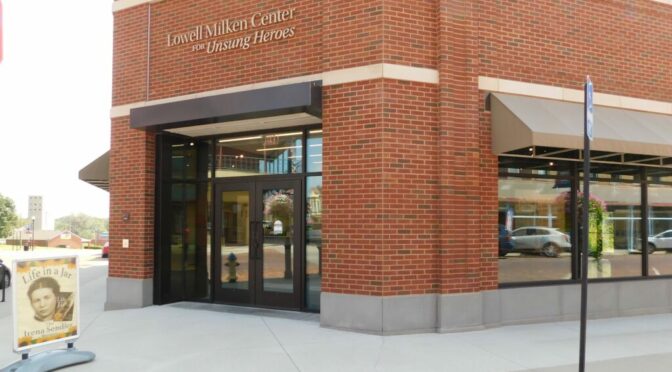
This state-of-the-art exhibition space recognizes unsung heroes who stood up for others, often at great risk to themselves. Their compelling stories are told through inter- active kiosks and displays. Two of these brave heroes are Irena Sendler, a Polish social worker who rescued more than 2,500 Jewish children during WWII; and Ken Reinhardt, who befriended the first black students to attend his high school in Little Rock, Arkansas, in 1957. Additional heroes are recognized every year. The center is named for international philanthropist and education supporter Lowell Milken. Mon-Fri 10am-5pm; Sat 10am-4pm.

Named the National Avenue Bridge and painted bright rust orange, the 1933 Marsh rainbow single-arch bridge stands out as it spans the Marmaton River. From 1st, ½ mile north on National. Learn more about Marsh Arch bridges in Kansas by clicking on Read More below.

Pine Lawn Cemetery was established circa 1869 by the Jewish burial society as the interment grounds for the Jewish community that thrived in Fort Scott in the 1880s and 1890s. From E. Wall, 3 miles south on U.S. 69/K-7, ½ mile west on Ironwood, then ¼ mile south on 215th. Photo courtesy Diana Staresinic-Deane, read Diana’s blog: https://tinyurl.com/53r2rsa3

“Border Gateways”, a 1937 oil on canvas by Oscar E. Berninghaus, depicts pioneers in covered wagons coming into the newly established Kansas Territory in 1854. This New Deal (Depression era) Section artwork can be viewed by entering the Post Office lobby and take the elevator to 2nd floor. Section Art was a finalist for the 8 Wonders of Kansas Art contest. Click on Read More to learn more!

The 50 acre Rock Creek Lake is an integral part of the city and rural water reserve system. Located on the Marmaton River, and surrounded by deep woods, Rock Creek serves as a habitat for wildlife as well as a quiet haven for fishermen, canoeists and campers. Discover the Rock Creek Falls during rain season! Drive west on 18th Street. The street name will change to Kansas Road and after an unpaved stretch, will turn south becoming 195th Street, which runs along the east side of Rock Creek Lake. Pull into the park at the north end of Rock Creek Lake and follow the narrow gravel road across the dam to the turn around next to the falls.

The fall of 1968 in Fort Scott, Kansas, marked a historical time when the first major Hollywood motion picture was directed by a black film director, Kansas’ native son, Gordon Parks. The Learning Tree, released in 1969, is based on a semi-autobiographical novel that Gordon Parks wrote in 1963. Several of the scenes were filmed on location in and around Fort Scott and Mound City. Hundreds of people from both Fort Scott and Mound City area were a part of the film as extras, with a few having speaking roles in the film. The Learning Tree Trail is a series of signs located at the different scene locations where the filming of The Learning Tree took place. The signs will also include QR codes along with a virtual tour of the identified scene locations of the film. Click on the Read More link for more information.

The trolley driver doubles as guide offering an informative 50-minute tour around town in an old-fashioned trolley. You’ll learn about the national cemetery, “painted ladies,” the horse race track, Mark Twain’s secretary’s studio, Pill Hill, and all sorts of intriguing Fort Scott history. It’s a marvelous starting point for your Fort Scott explorations. $6 for adults; $4 for kids (12 & Under); Free for kids under 3. Find the trolley at the Fort Scott Visitor Information Center. Thu-Fri 11am, 12pm, 1pm, 2pm, 3pm; Sat 10am, 11am, 12pm, 1pm, 2pm, 3pm; Sun 1pm, 2pm.

Vinedo Del Alamo is the first winery in the world to bottle Arandell grapes, from Cornell University in Ithaca, New York, without the use of other blends and varieties. We have been actively growing and harvesting grapes since 2011. Take a relaxing self guided tour of the vineyard which will be in full bloom. The winery is an actual working farm that includes camping, wine tastings and much more! A free tasting with the purchase of one bottle of wine.
[Topeka, Kansas] A deck of playing cards – each including information about an unsolved crime in Kansas – will soon be distributed in state prisons and county jails across the state.
The Kansas Department of Corrections (KDOC) and the Kansas Bureau of Investigation (KBI), in partnership with the Kansas Association of Chiefs of Police (KACP), the Kansas Sheriff’s Association (KSA) and the Kansas Peace Officers Association (KPOA), have developed the Cold Case Playing Cards as a way of generating tips that may help resolve cases of unsolved homicides, missing persons or unidentified remains.
Each card in the deck includes brief information about an unsolved crime along with a phone number for anyone with information to call: 1-800-KS-CRIME. These cards highlight case details in the hope that a person or persons familiar with a case will come forward with information leading to its resolution. The Cold Case Playing Cards will replace current decks of standard playing cards available in prisons and county jails. Decks will be placed in dayrooms and other common areas, and available through the commissary for purchase by KDOC residents.
“Our agency and our state’s criminal justice community have a commitment to the victims of crimes,” said Kansas Secretary of Corrections Jeff Zmuda. “Our staff members see the unresolved pain experienced by the many families we work with. Hearing the responses from surviving family members when notified that their loved one’s case has been selected for the deck has been powerful and humbling. These families have waited a long time for answers, and this brings some hope.”
“Every call or tip that is shared with law enforcement will be vetted by investigators assigned to the case,” said KBI Director Kirk Thompson. “No matter how small, each tip has the potential of being the missing piece of information needed to finally provide justice to crime victims and their families.”
Other states have solved multiple cold case homicides, missing person cases and suspicious deaths by making these cards available.
“Not every tip received leads to resolution of a case, but someone usually knows something,” Secretary Zmuda said. “Within Kansas correctional facilities and jails, we have segments of our population who want to do something good, perhaps atone for past mistakes, and they may have information about unsolved cases. Our hope is that we receive actionable intelligence that leads to solving cases.”
Development of the project began in March 2021 and included law enforcement partners, representatives from victim services, facility-based programs, private industry, media and families whose lives have been impacted by homicide. Through a submissions process that began in December 2021, local law enforcement from across Kansas provided 81 cases to be highlighted. A selection committee with representatives from KDOC, KBI, the Kansas Attorney General’s Office and local law enforcement prioritized 59 cases to highlight on the first deck of 52 cards.
The oldest case is from 1976 and the most recent case is from 2020. Unsolved homicide cases are from Cherokee, Dickinson, Doniphan, Finney, Ford, Franklin, Geary, Johnson, Leavenworth, Mitchell, Montgomery, Osage, Saline, Sedgwick, Shawnee and Wyandotte counties. Missing person cases are from Leavenworth, Lincoln, Pottawatomie, Saline and Sedgwick counties. The unidentified remains case is from Geary County.
“For many of these cases even after years of investigative work has occurred, questions still remain that need answers before a perpetrator can be held accountable,” Director Thompson said. “It’s our hope that by distributing this deck more attention is drawn to these cases, and that someone comes forward with details that will move us one step closer to providing justice.”
|
||||||||||||||||||
|
Operation Prevention is designed to inspire
conversation and equip youth with knowledge and
refusal skills to steer clear of substance misuse.
DCCCA is offering mini grants to
support youth opioid prevention
using the Operation Prevention
curriculum.
$250 -$750
GRANTS AVAILABLE
CURRICULUM EASILY TAILORED FOR
YOUR COMMUNITY
Crystal Dalmasso [email protected]
If you know a teen or adult willing to
provide youth opioid prevention
training, ask for more information:

Patty LaRoche is a former Fort Scott High School teacher and a regular contributor to FortScott.Biz and other media outlets.
For the past decade, she has been writing and re-writing a Christian book: A Little Faith Lift…Erasing the Lines of the Enemy.
The book is directed toward those who doubt their worth and encourages them to take risks and was initiated while working with teens as a school teacher.
The school of life has also prompted LaRoche to write.
Married to major league baseball pitcher Dave LaRoche in 1973, Patty spent most of her adult life in the world of professional baseball where wives are subject to much of the same public scrutiny and comparison as their husbands, she said.
“My 30+ moves in 48 years of marriage have given me van loads of humorous illustrations for this ‘Rejection-Collection,'” she said.
“Using humor and candor, no doubt from teaching high school for 20 years, I share not only my spiritual journey,” she said. “One mapped by faithfulness—yet detoured by faithlessness, while also retelling many individual stories of those who have, and have not, refused to let their circumstances or others’ opinions have any power to destroy who they are in Christ.”
The humor in her book has a serious message and is written for all age groups, she noted.
“A Little Faith Lift is for everyone who doubts their worth, to help them move past the pain caused by others that has left them insecure or bitter, to teach them to accept the potential (that) humor has over rejection,” LaRoche noted. “My objective is to convince them to take risks and refuse to give anyone or anything the power to make them less than God desires, to know that He’s the C.E.O. of the ‘Beauty from Ashes’ business.”
“My intended audience is adult women, the majority of people I meet, who have memories of betrayal by teachers, coaches, family members, friends or bullies who used them as their personal punching bag,” LaRoche said. “They have a hard time understanding that hurt people hurt people, thanks to a spiritual enemy who passes out stogies any time he can manipulate their self-worth.”
“These individuals measure themselves against others who have the looks, talents, or personality traits they think they lack,” she said. “Walking into a room full of strangers produces enough sweat to frizz their hair, and if asked to spearhead the church social, they hyperventilate.”
“I taught public speaking to high schoolers for 20 years, but when a group of senior girls asked if I would lead them in a Bible study, the message became clear: if my students could recognize from Whom their value came—challenging in a public-school setting—and not from what others thought of them, their lives forever would be changed. An organizing principle of A Little Faith Lift focuses on the teens in that study,” she stated.
“Nearly one in three teens meet criteria for an anxiety disorder by age 18, and 70% of them describe anxiety as a major problem for people their age, a number exacerbated by Covid,” LaRoche said. “My counselor friends tell me that, because of the pandemic, they are overwhelmed by young adults who feel hopeless. But it’s not only our youth who are affected. Too many people go to the grave never feeling like they were valued or used the talents God gave them, all because they never bought into the truth of how precious they are to their Creator.”
When will the book be ready?
“Probably when my social media numbers impress a publisher,” she said. “Right now, I have a very respected agent who will be pitching it to different Christian publishers.”
To support LaRoche in this new venture of book publication go to her Instagram posts patty_laroche, which is called PATTY’s PITCH
PATTY’s PITCH will appear on Instagram on Mondays and Fridays.
|
|
|
|
|
|
|
|
|
|
|
|
|
|
|
|
|
|