All posts by Submitted Story

Japanese Beetles – Be on the Lookout for this Destructive Pest

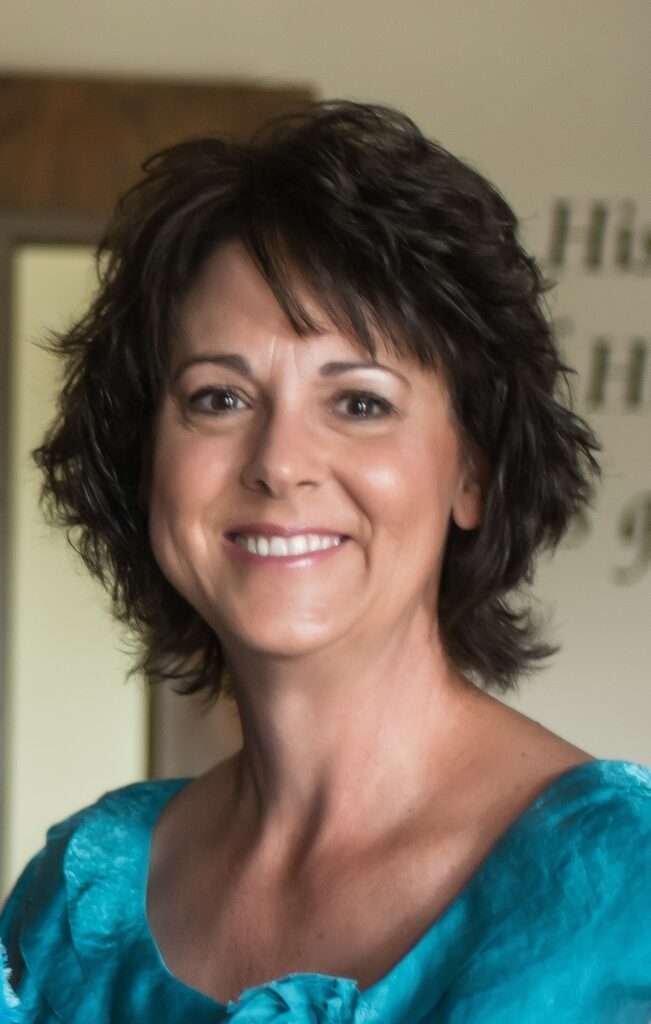
Krista Harding
District Extension Agent, Horticulture
Southwind Extension District
111 S. Butler
Erie, KS 66733
Office: 620-244-3826
Cell: 620-496-8786

Japanese beetles have become a yearly pest. They were first reported in the United States in 1916 and have since become established in many states – including Kansas. The adult beetle is one of the most destructive insect pests we face. I have recently found them attacking my rose bushes and crabapple tree.

The adult beetle is the most troublesome for the homeowner as it feeds on a wide variety of plants including rose, crabapple, birch, grapes and a whole host of other plants. They feed on leaf surfaces and will cause holes and in some cases, they will feed on the leaf tissue between the veins causing a lacelike or skeletonized appearance. However, it is the Japanese beetle larvae that is a major problem in the home lawn, golf courses, athletic fields and other turfgrass locations. They feed on the roots of turfgrass causing the grass to be unable to uptake water and nutrients.

We typically start seeing Japanese beetles in June and they feed through late August. Japanese beetles are 3/8 to ½ inch long. They are metallic green with coppery-brown wing covers and dark green legs. One distinguishing identifier is the white tufts around the abdomen area. These tufts actually look like white dots. The larvae are a white grub that looks very similar to other grubs commonly found in our area. It is actually very hard to tell the difference and would require looking under a microscope.

Japanese beetle adults are active on warm days and prefer feeding on plants that are in full sun. They begin feeding at the top of plants and gradually move down as they consume more and more leaf tissue. Fortunately, most well-established plants can tolerate some feeding damage without causing significant harm to the plant. But the plants will look rather tough after Japanese beetles have worked them over. A light fertilization will help with plant recovery.

The earlier we can implement management of the Japanese beetle, the less plant damage we will see. As for control, there are several routes that can be taken – cultural, physical and insecticidal.

Cultural control includes such things as proper watering, fertilization, mulching, and pruning. Keeping plants healthy will help them tolerate minor infestations better. Weeds should be removed.

Physical control is nothing more than removing the beetles from the plant by hand. The best time to collect beetles is early in the morning or late evening when they are less active. To remove, knock the beetles off by hand into a bucket containing soapy water. The soapy water will kill them. This works fairly well because adult beetles actually fold their legs when disturbed and will fall. Also, Japanese beetles often feed in clusters so knocking them off in masses is easy.

Chemical spray options are available. All plant parts should be thoroughly covered to be most effective. Insecticides including cyfluthrin and bifenthrin can be used. However, they will need to be applied every few weeks during the feeding period. The downfall to using insecticides is the killing of beneficial insects that can actually control other pests such as spider mites.

There are trapping systems on the market but if not used correctly they can actually increase the number of Japanese beetles! The traps contain a lure or scent that draws the beetles to the area. Therefore, they are not recommended.

Now is the time to scout your plants every few days to see if insects have moved in and started feeding. If you have questions or need help identifying a particular insect, please contact me.

Krista Harding is a K-State Research and Extension agent assigned to Southwind District.  She may be reached at [email protected] or 620-244-3826.


K-State Research and Extension is an equal opportunity provider and employer.


Grants Available To Help Farmer’s Plant Cover Crops

In partnership with ADM and the U.S. Department of Agriculture’s Natural Resources Conservation Service (NRCS), the National Fish and Wildlife Foundation (NFWF) today recently announced the Kansas Association of Conservation Districts (KACD) as a recipient of a grant to help farmers plant cover crops across Kansas. Awarded under NFWF’s Midwest Cover Crop Initiative, this grant will support implementation of this beneficial agricultural practice on 100,000+acres. Kansas conservation districts will assist with implementation. Conservation districts will be taking applications for farmers to receive $10 per acre for planting cover crops on their farm. This program is eligible for farmers new to planting covers and those that are veterans to using cover crops in their crop rotations.

Farmers who implement cover-crop systems may see improvements in long-term profitability through reduced input costs and higher yields. By accelerating the adoption of this practice, this grant will help enhance soil health, reduce atmospheric greenhouse gases, improve water resources, and support wildlife while providing economic benefits to participating farmers.

For more information about this new opportunity please contact the Bourbon County Conservation District at 1515 S. Judson Ste. B Fort Scott, KS. or 620-223-3170 ext. 3.

Obituary of Harry Carpenter

Harry Dee Carpenter, age 86, a resident of Ft. Scott, Kansas, passed away Wednesday, July 13, 2022, at his home.  He was born January 2, 1936, in Pleasanton, Kansas, the son of Harry F. Carpenter and Emogene McCoach Carpenter.  Harry attended Pleasanton schools and graduated in 1954.

He joined the U. S. Navy that same year.  Harry married Janet Rae Hurd on May 23, 1961, in Ft. Scott.  Following their marriage, Harry and Janet made their home at various military bases throughout the United States including Hawaii.  Harry received numerous medals from serviced performed as a Hospital Corpsman while serving with the United States Marines on his second tour of Vietnam.  Harry retired after twenty years of service in 1974, as a Hospital Man First Class serving with both the U. S. Navy and the U. S. Marines.  He later returned to Ft. Scott and graduated from the Ft. Scott Community College in 1978.  He was later employed by Mayco Ace Hardware, Tri-Valley Developmental Services and as a driver for Mercy Hospital.

Survivors include his wife, Janet, of the home; two sons, Jon Carpenter (Kim) of Ft Scott and Jim Carpenter (Diane) of Olathe, Kansas; nine grandchildren, Jana Johnson (Michael) of Ft. Scott, Kyle Carpenter (Anna), of Erie, Kansas, Jon Thomas Carpenter (Rachel), of Ft. Scott, Kelsey Young (Drew) of Bentonville, Arkansas, Crystal Haro (Jamin) of Overland Park, Kansas, Mark Feagins of Joplin, Missouri, Adrian Ariana and Jayden Carpenter, all of Olathe, Kansas and five great-grandchildren, Randell and Liam Johnson, Evelyn Carpenter, Macy and Micah Haro.

He was preceded in death by his parents, a sister, Louise Licklider and a brother, Larry Carpenter.

According to Harry’s wishes, there was cremation.  No services are planned at this time.

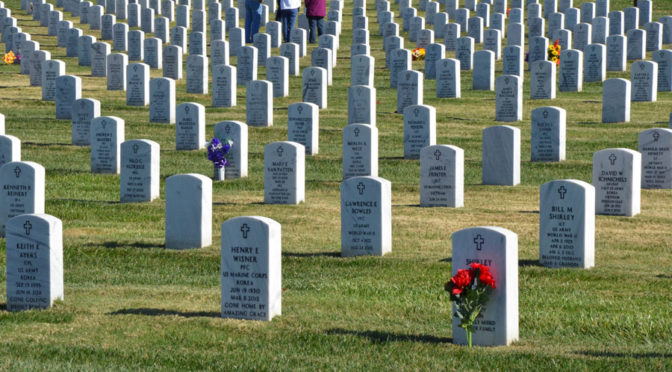
Burial with military honors will take place at a later date in the U. S. National Cemetery in Ft. Scott, Kansas.

Memorials are suggested to the Bourbon County Sheriff’s Department, the Ft. Scott Police Department or the Paralyzed Veterans of America and may be left in care of the Cheney Witt Chapel, 201 S. Main, P.O. Box 347, Ft. Scott, KS 66701.  Words of remembrance may be submitted to the online guestbook at cheneywitt.com.

Friday Night Free Concert: DJ Brown and Bourbon County Revival

Ralph Carlson introduces the Friday Night Concert musicians May 2019.

DJ Brown and The Bourbon County Revival will be the featured entertainment at this week’s Friday Night Concert. The local four-piece band plays classic rock, country, and Red Dirt.  Band members are Danny Brown on acoustic guitar and vocals, Robert Uhler on drums, Jerry Bahr on banjo, electric, acoustic and bass guitars, and vocals, and Randy Brasuell on mandolin, fiddle, bass and electric guitars, and vocals.


“These talented guys have been playing together for quite some time and are a crowd favorite,” concert-series organizer Ralph Carlson said. “We’re pleased to welcome them back to perform in our downtown pavilion. Bring a friend and join us for a great show.“


The concert begins at 7 p.m. at the Heritage Park Pavilion at First and Main streets. The shows, sponsored by the Fort Scott Area Chamber of Commerce, are free and open to the public. Dave Oas and Jim Butler provide the sound each week. Due to limited seating, attendees are encouraged to bring lawn chairs.


In the event of inclement weather, the concert will be moved to the Loading Dock at Common Ground Coffee Co., 12 E. Wall Street.

Fort Scott Area Community Foundation Opens Annual Grant Process

Gregg Motley tells about the Fort Scott Area Community Foundation before the awarding of the grants in 2021. At right is Carla Farmer, chairperson of the foundation.

The Fort Scott Area Community Foundation (FSACF) is now accepting applications for the 2022 General Funds Grant program.  Applications will be accepted through August 31, 2022.

The mission of FSACF is to serve the region by encouraging charitable giving benefiting the common good and improving the quality of life. The Foundation is committed to making a making a meaningful contribution in the areas of civic improvements, arts and humanities, health, education, human and social services, and the conservation and preservation of cultural and environmental resources.

In 2022, up to $59,000 will be available to fund grants to local 501(c)(3) public charities, schools, government agencies, and religious institutions.  The Foundation considers proposals based on how they improve the quality of life for residents, and is particularly interested in projects that are sustainable in the future. Collaborative projects are strongly encouraged.

In 2021, the Foundation awarded $40,345 to 15 non-profit recipients through its General Funds Grant cycle. Awards averaged $2,600 and ranged from $500 to $4,500. Projects in Fort Scott and Uniontown received funding.  A history of funded projects can be viewed at https://fsacf.com.

This year’s grant applications will be accepted through an online submission process.  Interested organizations can find the grant application at https://www.grantinterface.com/Home/Logon?urlkey=southeastkansas .

###


Drainage Pipe To Be Installed at 17th and Crawford on July 18

The City of Fort Scott Water Distribution Department will be relocating a section of water main at 17th & Crawford on Monday July 18th, 2022. This is to accommodate the installation of new storm drainage pipe being installed. Customers on Crawford Street between 15th Street and 18th Street will be out of water during this time. The outage will start sometime between 7:00 a.m. & 8:00 a.m. The Water Distribution crew will work to restore water and water service as soon as possible, but customers should expect to be without water for the better part of the day.

We apologize for any inconvenience this may cause. If you have any questions or concerns, please call 620-223-0550 and ask for Water Distribution.


Obituary of Bettie DuVall

Bettie Lou Crays DuVall, age 91, resident of Lockwood, MO, formerly of Ft. Scott, KS, died Tuesday, July 12, 2022, at the Good Shepherd Nursing Home in Lockwood.

She was born October 11, 1930, in Hiattville, KS, the daughter of Harold I. and Audrey M. Loudenback Crays.  Bettie moved to Ft. Scott around the age of 16 to attend high school and work part time.  During her senior year, she met Herbert “Gene” DuVall.  They would be married on September 4, 1949, in Ft. Scott.  He preceded her in death on May 10, 2015.

Besides being a full-time homemaker, Bettie also became proficient with home renovation and decoration. She was a self-taught seamstress and a master gardener.  She helped with the Bourbon County Extension Office, participated in the Homes for the Holidays tours, and was a member of P.E.O. and the First United Methodist Church.


Survivors include a daughter, Tanya DuVall-Haubein and husband David, Lockwood, MO; a sister, Helen Davenport and husband Jim, Aurora, NE; a granddaughter, Ann Owen and husband Brady, Lockwood, MO; 4 nieces, Lori Barrett, Debra Masur, Marilyn Gilstrap, and Carolyn VanSantan; and several cousins.

Besides her husband, she was preceded in death by a bother Harold Crays, Jr., and his wife Dorothy; a nephew, Justin Davenport; and her parents.


Rev. Christopher Eshelman will conduct funeral services at 10:30 AM Monday, July 18th, at the Cheney Witt Chapel.

The family will receive friends Monday from 9:00 AM until service time at the funeral home.

Burial will take place at 9:00 AM Tuesday, July 19th, at the U. S. National Cemetery.

Memorials are suggested to either the First United Methodist Church or American Legion Post #25 and may be left in care of the Cheney Witt Chapel, PO Box 347, 201 S. Main St., Ft. Scott, KS 66701.  Words of remembrance may be submitted to the online guestbook at cheneywitt.com.


Business Health Coverage Webinar July 14

Interested in learning more about the Chamber Blue of Kansas?


Join us for a webinar:

Thursday, July 14, 2022 at 2PM


Blue Cross and Blue Shield of Kansas (BCBSKS), in partnership with the Chamber of Commerce Executives of Kansas (CCEKS) and local Chambers across the state have created an association health plan (AHP) – Chamber Blue of Kansas. This AHP offers member businesses access to health insurance savings associated with large group medical coverage.


Join us as Andrew Gutierrez, group sales consultant at Blue Cross, discusses information about this health plan, including eligibility, benefit, and enrollment information.


Register now!

If you are unable to attend, a recording of the webinar will be posted on the Chamber Blue of Kansas website following the event.

Click here for Webinar Registration

Thank you to our Chamber Champions for all of your support!

Facebook  Twitter  Instagram

KS Infrastructure Summit Meets In Wichita For Grant Opportunities

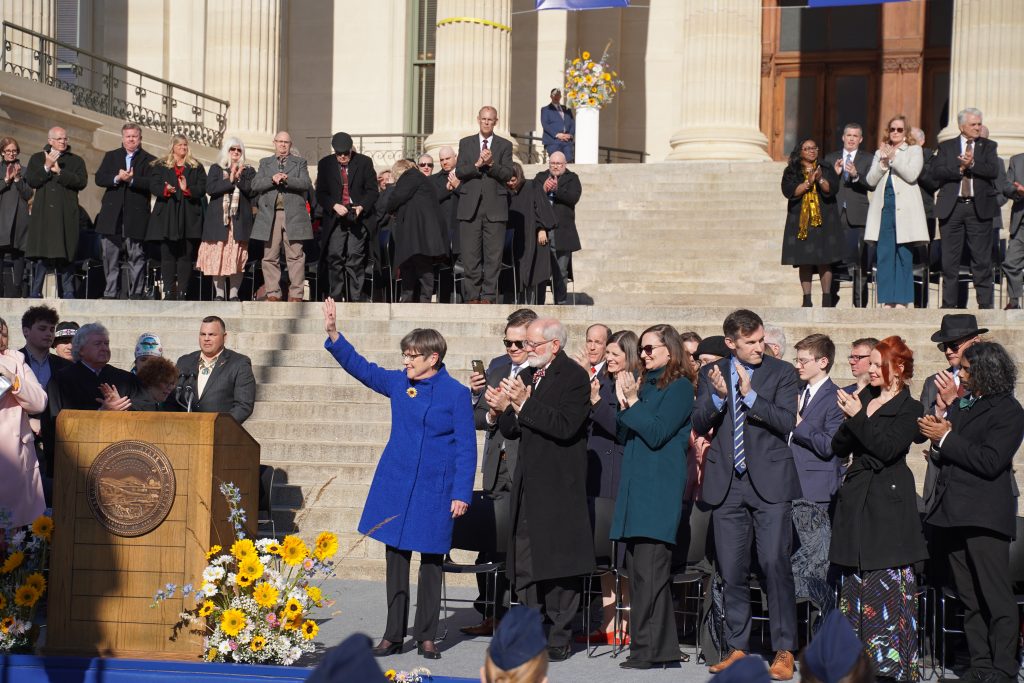
Governor Laura Kelly Welcomes Local Governments and Business Leaders to Kansas Infrastructure Summit

~~Attendees at Wichita Summit Strategize How to Maximize Impact of Over $3.8B Investment in Infrastructure~~ 

WICHITA – Governor Laura Kelly today welcomed Kansans to the first-ever Infrastructure Summit hosted by the newly formed Kansas Infrastructure Hub. At the Summit, which takes place July 13 and 14 in Wichita, more than 650 people from across the state are learning more about the grant opportunities available under the federal Bipartisan Infrastructure Law (BIL), discussing strategies for preparing winning grant applications, and sharing input on infrastructure priorities in Kansas.

“Local governments are on the frontlines providing the quality infrastructure that we all rely on to meet our most basic needs and generate long-term prosperity,” said Governor Kelly. “I’m grateful we could bring together infrastructure leaders from across the state to strategize how we can strengthen Kansas for years to come.”

Under BIL, Kansas will receive close to $3.8 billion in direct funds over the next five years for transportation, water, energy, and broadband projects.  Kansas could potentially receive more by applying for competitive grants.

Kansas is one of the first states in the nation to convene conversations at the local level about how federal, state, and local governments and the private sector can better work together to better leverage the dollars to maximize their impact and mitigate challenges associated with delivering these infrastructure improvements.

“These dollars present a tremendous opportunity for Kansas, but with that opportunity also comes a responsibility to deliver,” said Kansas Department of Transportation Secretary Julie Lorenz. “Whether it’s workforce shortages, inflation, or red tape, we know there will be challenges to achieve the improvements taxpayers deserve, which is why collaboration at all levels of government and the private sector will be critical. I’m so pleased that Kansans from all every region are here to strategize how we can better work together.”

Summit attendees are hearing from subject matter experts about resources available for transportation, water systems, broadband, energy, resilience, and cybersecurity and are learning how to apply for the various grant programs that will become available over the next five years. During this summit, attendees are sharing how the State could better assist them in meeting their infrastructure needs and help communities prioritize their needs at a regional level.

Secretary Lorenz serves as a Chair of the Kansas Infrastructure Hub. In June, Governor Kelly announced the launch of the Hub, a state agency subcabinet working group comprised of representatives from the Kansas Departments of Administration, Agriculture, Commerce, Health and Environment, and Transportation; the Kansas Corporation Commission; and the Kansas Water Office. The Hub has an advisory group comprised of public and private sector leaders and stakeholders across the state that will help determine funding priorities, identify barriers to distributing funds, and communicate the Hub’s work to community members. To learn more about the Kansas Infrastructure Hub, visit KSHUB.org.

Energy Smart Kansas: Energy Efficiency Help

KCC launches Energy Smart Kansas website devoted to energy efficiency

TOPEKA – The Kansas Corporation Commission (KCC) recently launched Energy Smart Kansas, a website devoted to helping shape the future of energy efficiency opportunities in the state. Kansans are invited to provide feedback about the types of programs and potential rebates they are interested in. They will also find information on current state and federal offerings.

The creation of Energy Smart Kansas is a direct result of efforts by the Kansas Energy Office — funded by the Department of Energy — through the Kansas Corporation Commission, to engage Kansans in the conversation and promote awareness of the ways energy efficiency can save energy and money.

With record-high temperatures and rising energy costs, Kansans are looking for ways to combat high energy bills this summer. The KCC is calling on all Kansans to share their feedback on how energy efficiency can help provide solutions for their energy needs and equip them with the tools to save money and energy in their homes and workplaces.

As the KCC continues to explore possibilities for new energy efficiency incentives, Kansans can learn how to start saving energy and money today and show their support for additional offerings by visiting EnergySmartKansas.org.

About the Kansas Corporation Commission The mission of the Energy Office of the Kansas Corporation Commission (KCC) is to promote energy conservation and efficiency in Kansas and to serve as a clearinghouse for information on alternative energy and other energy topics. In support of this mission, the Energy Office administers programs, promotes public education through outreach activities, coordinates government and private sector activities, and provides objective and up-to-date information on energy-related topics.

About Energy Smart Kansas The creation of Energy Smart Kansas is a direct result of efforts driven by the Kansas Energy Office, funded by the Department of Energy, through the Kansas Corporation Commission to explore the conversation and promote awareness of energy efficiency with Kansans across the state. In 2020, the KCC Energy Office and Utilities Division worked together with the Research Partnership at Wichita State University to survey Kansans on their knowledge of and attitudes towards energy efficiency. A majority of research participants, across all groups, held favorable attitudes about energy efficiency and showed interest in potential rebate offerings on energy efficient appliances. The KCC continues to explore the possibility of working with utilities to create new energy efficiency programs across the state.

About the United States Department of Energy The United States Department of Energy (DOE) is an executive department of the U.S. federal government that oversees U.S. national energy policy and manages the research and development of nuclear power and nuclear weapons in the United States. The DOE oversees U.S. nuclear weapons program, nuclear reactor production for the United States Navy, energy-related research, and domestic energy production and energy conservation. Their mission is to ensure America’s security and prosperity by addressing its energy, environmental and nuclear challenges through transformative science and technology solutions.