All posts by Submitted Story

Obituary of John Younggren

John Oscar Younggren, 78, of Fort Scott, Kansas, passed away on January 3, 2026.
He was born on March 30, 1947, in Hugoton, Kansas, to Jean and Oscar Younggren. In the summer of 1962, the family left their homestead in Hugoton and moved to Redfield, Kansas, where they settled on a new farm to build a lasting family legacy. John graduated from Uniontown High School in 1965 and later attended heavy equipment training in Beloit, Kansas.

A lifelong farmer and cattleman, John also owned and operated a successful heavy equipment construction business providing service primarily to agricultural & water conservation. He had an incredible talent for working with dozers, motor-graders and  scrapers—able to set grade by eye with unmatched precision. His skill and dedication earned him the respect of many, and he took great pride in shaping the land and caring for his herd.

On March 30, 1968, John married Linda Louise Colvin; they had two children Meleesa and Jason. They later divorced. In his later years, John shared his life with Joann Hays, who preceded him in death. Their relationship was meaningful and brought him steady companionship and comfort—a chapter he truly valued.

John was grateful for the help and visits from Jason & Maddi Thorpe, and their kiddos.  Whether it was checking on the cattle, making him a bowl of chili, or grabbing the mail, their thoughtfulness meant so much. He looked forward to their check-ins—catching up on the new calves or getting the latest copy of the Tribune which was most often a fair exchange between he and the kids for a few pieces of candy, was often the highlight of his day.

John deeply appreciated his treasured nurse, Irene, who cared for him not only physically but spiritually as well. Her presence brought him comfort and peace during difficult times. He was also blessed with hospice nurses and attendants who provided exceptional care and companionship—often sitting with him to watch a rodeo or an episode of Ag News. Their kindness and dedication meant the world to him and his family.

John will be remembered for his strength, determination, and love for family and friends. Survivors include his children: Meleesa Grate and husband Dan of Manhattan, KS, and Jason Younggren and wife Monica of Louisburg, KS; four grandchildren: Maddi Pruett, Allea Ruby Davis and Gage (and their soon-to-arrive son), Alec Blayne, and Reece Adlin. He is also survived by his sister Connie Neil, brother Mike Younggren and wife Mary, and many nieces and nephews. He was preceded in death by his parents and brother- in- law, Dwayne Neil and special friend Joann Hays.


John’s legacy lives on in the fields he worked, the land he shaped, and the family he loved. His hands built more than ponds and pastures—they built a life of purpose and pride.

Chaplain Derek Harman will conduct a funeral services at 1:30 p.m. on Wednesday, January 7. 2026 at Cheney Witt Chapel. Burial will follow in the Centerville Cemetery. The family will receive friends Tuesday from 5:00 – 7:00 P.M. at the Cheney Witt Chapel. Memorials are suggested to the Bourbon County Fair and may be left in care of the Cheney Witt Chapel, 201 S. Main, P.O. Box 347, Ft. Scott, Kansas 66701. Words of remembrance may be submitted to the online guestbook at cheneywitt.com.


Revised Agenda for the Bourbon County Commission on January 5

BOURBON COUNTY,
KANSAS
Bourbon County Commission Agenda
Bourbon County Commission Chambers, 210 S National Ave.
Monday, January 05, 2026, 5:30 PM (Revised 01.05.26)
I. Call Meeting to Order
 Roll Call
 Pledge of Allegiance
 Prayer
II. Approval of Agenda
III. Approval of Minutes from 12.15.25 and 12.18.25 (Unofficial until approved)
IV. Approval of Consent Agenda
 Accounts Payable & Payroll 12.24.25 $250,716.54
 Accounts Payable 12.31.25 $234,630.63
 Tax Corrections
V. Public Comments
VI. Ben Hall- Discussion Bitcoin Mining & Evotech
VII. Pursuant to KSA 75-4319 (b)(1) to discuss personnel matters of individual nonelected personnel to protect
their privacy. – Lora Holdridge
VIII. Old Business
 Handbook Review
 Set Public Hearing Date for Road Closure – Daniels
 Sanitation Violation Update – County Counselor
 Moratorium Update – County Counselor
IX. New Business
 Website – approval of access – Milburn-Kee
 Executive Assistant Introduction & Update – Milburn-Kee
 Letter of Support Request (Scott Wheeler)
 Resolution 01-26 Section 125 Plan Document
 Resolution 02-26 Holidays and Paydays
 Resolution 03-26 GAAP Waiver
 Resolution 04-26 Designation of Depositories and Official Publication Carrier
 Resolution 05-26 ROZ participation
 Resolution 06-26 Meeting Date, Location and Time
X. Build Agenda for Following Meeting
XI. Commission Comments
XII. Adjournment _____________
01/12/26 01/19/26 01/26/26
District 4 & 5 Oaths
Reorganization of Board
Board Memberships
EXECUTIVE SESSIONS – FORM OF MOTION
____ Pursuant to KSA 75-4319 (b)(1) to discuss personnel matters of individual nonelected personnel to
protect their privacy
____ Pursuant to KSA 75-4319 (b)(2) for consultation with an attorney for the public body of agency which
would be deemed privileged in the attorney-client relationship
____ Pursuant to KSA 75-4319 (b)(3) to discuss matters relating to employer/employee negotiations whether
or not in consultation with the representatives of the body or agency
____ Pursuant to KSA 75-4319 (b)(4) to discuss data relating to financial affairs or trade secrets of
corporations, partnerships, trust, and individual proprietorships
____ Pursuant to KSA 75-4319 (b)(6) for the preliminary discussion of acquisition of real estate
____ Pursuant to KSA 75-4319 (b)(12) to discuss matters relating to security measures, if the discussion of
such matters at an open meeting would jeopardize such security measures
The subject to be discussed during executive session: ________________________________________
State persons to attend
Open session will resume at _____ A.M./P.M. in the commission chambers.
FUTURE
Economic Development
Juvenile Detention Contract – Spring 2026
Benefits Committee Letters
Elm Creek Quarry
Phone System
Elevator
Stop Sign Removal 205th Overbrook
Handbook
Credit Card Policy

America’s Truck Driver Shortage Is a Workforce Crisis by Dr. Jack Welch

America’s Truck Driver Shortage Is a Workforce Crisis

From the bleachers, the game looks pretty simple. You can draw up all the fancy plays you want, but if you don’t have somebody willing and able to do the hard work in the trenches, you’re going to lose. Right now, one of the biggest problems facing our country isn’t in a boardroom or a tech lab, it’s on the highway.

America has a truck driver shortage, and it’s not just a workforce issue, it’s a supply-chain problem, an economic problem, and a common-sense problem. Nearly everything we use, food, medicine, building materials, fuel, gets to us because a truck driver hauled it there. When there aren’t enough drivers, shelves don’t get stocked, projects slow down, and communities feel it.

The American Trucking Associations tell us we’re already short tens of thousands of drivers, and that gap could grow to more than 160,000 by the end of the decade. A big part of the issue is age. A lot of experienced drivers are nearing retirement, and not enough young folks are stepping in behind them. Trucks move over 70 percent of the freight in this country. Take drivers out of the equation, and the whole offense stalls.

Now, trucking isn’t the only position we need to fill. We’re short in allied health, HVAC, electrical trades, computer technology, welding, you name it. These are all high-demand, good-paying careers that keep our communities running, but trucking is different. Trucking touches every one of those industries. If it can’t move, neither can they.

That’s where community colleges come in. Four-year universities aren’t built to solve every workforce need, and that’s okay. Community colleges, technical schools, and even high schools are. They can train people quickly, affordably, and locally for jobs that are open right now.

A CDL certificate doesn’t take four years. It takes weeks or months. It doesn’t bury students in debt. It puts them to work. For many folks, it’s a straight path to a solid living and a respected profession. Community colleges know their regions, know their employers, and know how to prepare students to be job-ready on day one.

Here’s the bottom line: truck driving isn’t going away. As long as America buys things, builds things, and eats things, we’ll need truck drivers. Investing in CDL programs isn’t flashy, but it’s smart. It’s the kind of investment that keeps the chains moving and the scoreboard lit up.

Thought for the Week, “Every winning team needs people willing to do essential work. When we build clear, affordable pathways into high-demand careers, everybody moves the ball forward.” Gary Welch

Dec. 5 Bourbon County Commission Meeting Agenda Summary

The north wing, east side of the Bourbon County Courthouse.

Bourbon County Commission Meeting Agenda

01.05.26 Revised Agenda

Monday, January 05, 2026 | 5:30 PM Bourbon County Commission Chambers, 210 S National Ave.

I. Opening of Meeting

  • Call Meeting to Order

  • Roll Call

  • Pledge of Allegiance

  • Prayer

II. Approval of Agenda

III. Approval of Minutes

  • Minutes from 12.15.25 and 12.18.25 (Unofficial until approved)

IV. Approval of Consent Agenda

  • Accounts Payable & Payroll (12.24.25): $250,716.54

  • Accounts Payable (12.31.25): $234,630.63

  • Tax Corrections

V. Public Comments

VI. Discussion Items

  • Bitcoin Mining & Evotech: Presented by Ben Hall

VII. Executive Session

  • Personnel Matters: Discussion regarding nonelected personnel to protect privacy (Pursuant to KSA 75-4319 (b)(1)) – Lora Holdridge

VIII. Old Business

  • Handbook Review

  • Set Public Hearing Date for Road Closure (Daniels)

  • Sanitation Violation Update (County Counselor)

  • Moratorium Update (County Counselor)

IX. New Business

X. Administrative & Resolutions

  • Website: Approval of access (Milburn-Kee)

  • Executive Assistant: Introduction and update (Milburn-Kee)

  • Letter of Support Request: Scott Wheeler

  • Resolution 01-26: Section 125 Plan Document

  • Resolution 02-26: Holidays and Paydays

  • Resolution 03-26: GAAP Waiver

  • Resolution 04-26: Designation of Depositories and Official Publication Carrier

  • Resolution 05-26: ROZ (Rural Opportunity Zones) participation

  • Resolution 06-26: Meeting Date, Location, and Time

XI. Closing

  • Build Agenda for Following Meeting

  • Commission Comments

XII. Adjournment


Supplemental Information Summary

Executive Session Guidelines (Page 2)

The second page outlines the legal framework for entering executive sessions under Kansas Law (KSA 75-4319). This includes specific motions for:

  • Personnel matters of nonelected individuals.

  • Privileged attorney-client consultations.

  • Employer/employee negotiations.

  • Confidential financial or trade secret data.

  • Preliminary real estate acquisition discussions.

  • Security measure discussions.

Upcoming Schedule: January 2026 (Page 2)

The commission has several key organizational tasks scheduled for the coming weeks:

  • January 12, 2026: District 4 & 5 Oaths of Office, Reorganization of the Board, and Board Membership assignments.

  • January 19 & 26, 2026: Continued follow-up meetings.

Future Planning Items (Page 2)

The following topics are listed for future discussion or action in Spring 2026 and beyond:

  • Infrastructure & Facilities: Elevator maintenance, Phone System updates, and the Elm Creek Quarry.

  • Policy & Governance: Handbook revisions, Credit Card Policy, and the Juvenile Detention Contract.

  • Community: Economic Development, Benefits Committee letters, and a stop sign removal at 205th Overbrook.

Letter to the Editor: Michael Hoyt

Over the past fifteen plus days, the Bourbon County Commission has failed the citizens it serves—not through complexity or lack of authority, but through inaction.

The Commission could not find ten minutes over the past days to convene a public meeting (in person, by phone or other means) to address year-end looming budget issues. As a result, the county now faces two or more budget violations that will be noted in official financial reviews and audit records. These violations were preventable; the consequences of these violations are somewhat unknown but were certainly unnecessary.

County commissioners are entrusted with stewardship of public funds. When statutory deadlines and fiscal safeguards are ignored—not because of emergencies, but because no open meeting time was scheduled—the cost is borne by taxpayers in the form of compliance findings, diminished public trust, and avoidable administrative consequences.  Moving to five commissioners from three would not have resolved this issue, since at least three commissioners must have been involved to have a quorum to conduct a legal open meeting.

This is not about political disagreement. It is about basic governance. Public bodies exist to act in real time when action is required. If a governing board cannot meet briefly to prevent known violations, then citizens are justified in questioning priorities and accountability.

Bourbon County residents deserve better. Transparency, diligence, and timely action are not optional duties—they are the minimum standard of public service.  I am frequently accused of making light of a problem without providing a solution; I have an easy fix for this issue. At the same time the County Clerk publishes the docket of employee holidays each year, a second list of deadline dates, due by dates for publication or any other deadline date established by State Law to be addressed by the Commission should be published. The seated Commissioners by now should know that Monday every week at 5:30pm an open meeting will be convened.  If you considering the position of County Commissioner, Mondays and any other deadline dates are reserved for County business. If you cannot conform to this schedule perhaps you are applying for the wrong job?

The another that needed addressed was the handling of Ordinance 50-25 Noise Ordinance.  Though I agree the signed Ordinance lacked some structure, a few more situations could have been better defined, but I feel there was enough statutory guidance outlined where a complaint can be presented, the Commission can consider the evidence presented, prepare a Notice of Violation and place the noise source on notice that injunctive relief can be considered and significant fines can be imposes to encourage compliance through the authority of the County Attorney and County Court.  We have some trip wires to stumble over, but nothing that cannot be overcome to reach a conclusion.  There is no such thing as perfect legislation – to this day we argue, debate and litigate the 4th Amendment to the US Constitution which was first officially published December 15, 1791.

There are two unlawful situations that need addressed; the advice provided to the Commission, and the other one falls to inaction by the Commission.  For the County Counselor to provide advice that the Planning Commission be tasked with formulating a solution to the current noise situation in District 1, would have severely slowed the path to a solution and caused an unlawful action by the Planning Commission.  The Planning Commission by State Law is tasked with developing a comprehensive plan. A plan forward thinking, future growth planning and consider where an operation should be located legally and not be in violation of Resolution 30-25 Noise Ordinance; not the reverse.

The other serious situation is the Commission’s in action to replace the County’s Emergency Preparedness Director.  They have taken no action to understand the gravity of this person’s position in our County if the worse thing should happen. In Kansas local government, the County Emergency Preparedness Manager (often called the Emergency Manager or Emergency Management Director) is considered a key position for fulfilling statutory and operational requirements related to disasters and emergencies, even though Kansas law doesn’t use the exact phrase “key position.” Here’s how it functions in practice and under statute:

  1. Counties must establish a disaster/emergency agency.
    Under Kansas law, every county is required to establish and maintain a county disaster agency [not a shared agency] responsible for emergency preparedness, planning, response, and coordination of disaster operations. That agency must prepare and keep current a disaster emergency plan approved by the Kansas Division of Emergency Management. A county must also identify the person who heads that agency and report them to the Division of Emergency Management.
  2. The statutes in Chapter 48, Article 9 (Kansas Emergency Preparedness Act) set out duties for disaster agencies and local officials, and they require county-level planning and coordination. While the statute doesn’t call the manager a “key position,” it makes the function essential by law.
  3. Primary coordinator of emergency functions.
    The Emergency Preparedness Manager is responsible for coordinating all components of          emergency management within the county—mitigation, preparedness, response, and                        recovery—and serves as the liaison between the county and state/federal agencies in          disaster situations. The Emergency Manager coordinates the development and                maintenance of the Local Emergency Operations Plan (LEOP), which Kansas statute             requires. This planning is not optional, it is not sharable with an adjoining county—it’s       necessary to comply with state emergency management standards and makes the     position central to legal compliance.

In many counties, the Emergency Manager may be designated to activate the Emergency Operations Center (EOC) and coordinate county resources during actual or potential emergencies. They often serve as the central coordinator for multi-agency emergency responses.

While Kansas law doesn’t label it with administrative terminology like “key position” (as might be found in corporate or personnel rules), in the context of emergency management and local governance, the County Emergency Preparedness Manager’s role is functionally critical:

  • The position carries statutory responsibilities required by state law.
  • The office is central to compliance with planning and preparedness standards.
  • It serves as the county’s principal point of contact with state and federal emergency agencies.
  • It is essential for lawful emergency declarations and operations.

The Emergency Preparedness Manager is a key operational and compliance role in Kansas county government, even if the statutes don’t label it with that exact phrase.

This is not about political disagreement, I hope. It is about basic governance. Public bodies exist to act in real time when action is required. If a governing board cannot meet briefly to prevent known violations, get good advice from well-paid counsel, and act in the best interests of safety, then citizens are justified in questioning priorities and accountability.

Bourbon County residents deserve better. Transparency, diligence, and timely action are not optional duties—they are the minimum standard of public service.

Respectfully for your consideration,

Michael J. Hoyt


Call for Entries – Bourbon County Arts Council Fine Art Exhibit – 2026

A 2016 photo of the Bourbon County Arts Council Annual Exhibit.


The Bourbon County Arts Council announces its Call for Entries for the 34th Annual Fine Arts Competition and Exhibit, to be held at the Danny and Willa Ellis Family Fine Arts Center on the campus of Fort Scott Community College, Thursday, March 5th, through Saturday, March 14th.

The mixed media competition is open to artists of age 16 and older.  Categories include Ceramics, Drawing and Graphics (Pencil, Pen, Ink), Fiber Art, Glasswork, Jewelry, Mixed Media, Painting (Oil & Acrylic), Pastel, Photography, Printmaking, Sculpture, and Watercolor

A “Theme” category has been added; the theme this year is “Life Inspiring”.  An artist may create a piece in any of the above media categories, as it relates to the theme.

Entry fees are $10.00 per piece for Bourbon County Arts Council members and $20.00 per piece for non-members.

PLEASE NOTE: In the past, artists were permitted to enter a total of five pieces, with 3 pieces allowed in any one category.

Due to space limitations and the growth of this exhibit, artists now may submit a total of FOUR pieces, with 3 of those allowed in a single category. Entry deadline and payment are due by February 27th, 2025.

Cash awards totaling greater than $3500.00 will be made, for Best of Show in 2D and 3D, First and Second Place winners in each category, and a Popular Vote winner.

Entry forms may be requested by contacting Deb Anderson at 620-224-8650 or [email protected], or Deb Halsey at 620-224-0684 or [email protected] .

PLEASE NOTE: We are no longer accepting pieces shipped to BCAC for entry into the exhibit.

The schedule for this year’s Exhibit is as follows:  Entry forms and payment, as stated above, are due by February 27th.

No late entries will be accepted.  Artwork will be received at the Ellis Fine Arts Center on Sunday March 1st, between 1 and 4 pm.  Juror critique of the artwork will occur on Wednesday March 4th; this is closed to artists and the public

. Artists are invited to attend the Chamber Coffee hosted by the BCAC on Thursday March 5th at 8:00 am at the Ellis Cente.

A reception will be held that evening from 6:00-8:00pm for participating artists and the Juror; this reception is open to the public as well.

The Exhibit will be open for public viewing on Thursday March 5th and Friday March 6th, as well as Monday March 9th-Friday March 13th from noon until 7:00pm. It will also be open Saturdays March 7th and March 14th, from 9:00 am until 1:00 pm.

Artists may pick up their work on Saturday March 14th between 1:30 and 3:30pm. The Danny and Willa Ellis Family Fine Arts Center is located at 2108 Horton St., Fort Scott, Kansas.


Determined Woolly Worm by Carolyn Tucker

Keys to the Kingdom

By Carolyn Tucker

Determined Woolly Worm

My son Aaron and wife Emily decided to build a workshop on their property. So the day came to pour the 32×36’ cement floor. Although I didn’t do any hard labor like the rest of the family-and-friends crew, I was given charge of the eating department. Therefore, I  had the opportunity to observe what was happening outside. I was very impressed with everyone’s positive attitude and teamwork. Nevertheless, I was even more impressed with a lone woolly worm. Just after the cement was poured, one of the guys spotted him on the wet cement and tossed him over the side. A bit later, I was looking at the still-wet floor and saw the woolly worm inching his way across the wet cement again! He was struggling and I felt sorry for him, knowing he would soon have so much cement on his feet and furry body that he would clog his cogs and die. Much to my surprise, he never gave up or waved a tiny white flag. He was very determined and just kept making small strides of progress until he made it to the other side and became free.

Against all odds, the little guy made it! God uses everything at His disposal to inspire and encourage a believer’s life. In this new year, let’s be determined to stay strong, keep moving in harmony with God’s direction, and one day cross the finish line.

All types of people are watching the everyday lives of Christ followers. A few may be impressed with us, some may be against us, and some may think we’re nuts. But, against all odds, we’re to press on with joy and confidence that God is for us. “If God is for us, who can ever be against us?” (Romans 8:31 NLT). I appreciate the wording from The Message,  “With God on our side like this, how can we lose? Several years ago I heard a church speaker interpret this verse as, “If God is for us, who cares who’s against us?” I like that perspective for sure.

I was astonished with the determined attitude of the little woolly worm, and this scripture should encourage all believers to keep moving straight toward the finish line: “When I am pressed on every side by troubles, I am not crushed and broken. When I am perplexed because I don’t know why things happen as they do, I don’t give up and quit” (2 Corinthians 4:8 TLB).

I don’t know what goes on in the mind of a woolly worm, maybe he had no thoughts. But in case he did, maybe he was thinking like humans often think. “This is just too hard. I’m all alone. No one cares about my dilemma. I can’t handle this any more — I’m just going to give up.” If we’re tempted to think along these lines, let’s remember this scripture: “I have strength for all things in Christ Who empowers me [I am ready for anything and equal to anything through Him Who infuses inner strength into me; I am self-sufficient in Christ’s sufficiency] (Philippians 4:13 AMP).

With a clean slate of a new year ahead of us, let’s approach every morning with a made-up mind that we can do whatever we need to do. “I am rooted, established, strong, immovable, and determined” (1 Peter 5:9).

 The Key: Be determined not to give up and quit, because God is on your side in 2026.

Herbicide Resistance: What it looks like in Kansas fields—and what to do next by Lonnie Mengarelli

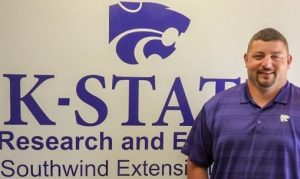
Lonnie Mengarelli. Submitted photo.

Herbicide resistance: What it looks like in Kansas fields—and what to do next

By Lonnie Mengarelli Ag and Natural Resources Agent – Southwind District

Herbicide resistance is one of the most serious and persistent challenges facing Kansas agriculture and crop production worldwide. Since the first documented case of resistance—wild carrot surviving 2,4-D in 1957—the problem has expanded dramatically. Today, 273 weed species worldwide have evolved resistance to 21 different herbicide modes of action, including many species found right here in Kansas.

When weed control fails, it is critical to determine why. If herbicide resistance is the cause, management programs must be adjusted quickly and decisively. Resistance develops through repeated use of herbicides with the same or similar mode of action at the same site over several years. This repeated selection pressure favors survival of resistant individuals within what was once a susceptible population. Timely diagnosis, regular field scouting, and early detection are essential—not only to reduce yield losses but also to slow the spread of resistance across fields and regions. According to the Weed Science Society of America and Take Action on Weeds, there are three broad field indicators that may signal herbicide resistance.

Species-specific survival occurs when a particular weed survives an herbicide application while nearby plants of the same species are controlled.
Spreading patches appear as clusters of surviving weeds that often expand in following seasons through seed movement by tillage, harvest equipment, or wind.
Mixed injury responses happen when a single weed species shows a range of reactions—some plants dead, others injured, and some completely healthy. This uneven response suggests genetic diversity that can drive further resistance evolution.

These warning signs should raise concern, but it is important to remember that not all herbicide failures are due to resistance. In fact, roughly nine out of ten failures are caused by other factors such as unfavorable weather, incorrect application rates, poor spray coverage, improper timing, large weed size, soil moisture conditions, skips, or equipment problems. Producers typically rely on pre-emergence (PRE), post-emergence (POST), or residual herbicides—often in combination—for broad-spectrum weed control. Knowing how these products should perform is key to identifying potential resistance. POST herbicides normally produce visible injury symptoms such as yellowing, burning, stunting, drooping, or plant death. Residual herbicides, by contrast, should suppress new weed flushes for weeks after application. When weeds continue to emerge or survive despite proper application and favorable conditions, resistance should be suspected and investigated. Field observations provide valuable clues. For example, kochia surviving ALS inhibitors without any stunting, waterhemp emerging weeks after a residual Group 15 herbicide under moist conditions, or horseweed showing no injury following a glyphosate application are all documented red flags.

Field patterns can also hint at the type of resistance involved. Target site resistance often produces uniform, healthy survivors with little or no visible injury. Non-target site resistance tends to show patchy survival and partial injury and is generally more difficult to manage because it may confer resistance across multiple herbicide groups. While laboratory confirmation is needed for certainty, these field-level observations help guide immediate management decisions. If herbicide resistance is suspected, quick action is essential. Post-spray scouting should occur soon after application to assess weed responses. Survivors should be compared across species and field areas. When possible, re-sprays should include multiple effective herbicide modes of action. However, if weeds are too large, a second application may fail, and mechanical control such as cultivation or hand removal may be necessary. Scouting should continue through harvest to identify escapes and inform future crop and herbicide rotations. Producers are encouraged to contact their local extension agent, input supplier, commercial applicator, or weed science specialist if resistance is suspected.

Herbicide resistance continues to threaten effective weed control in Kansas and beyond. While herbicide failure is a major warning sign, other agronomic and environmental causes must be ruled out first. Understanding herbicide modes of action and recognizing when weeds do not respond as expected are critical steps in early detection. Watch closely for dead plants next to live ones, increasing weed populations that were once controlled, and patches or trails of survivors after application. Early detection and rapid response remain the most powerful tools to prevent the spread of herbicide resistance and protect long-term crop productivity.

 Lonnie Mengarelli is a K-State Research and Extension Agriculture agent assigned to Southwind District. He may be reached at [email protected] or 620-223-3720

References

Switzer, C. M. 1957. The existence of 2,4-D–resistant strains of wild carrot. Proc. Northeast. Weed Control Conference. 11:315-318.

Weed Science Society of America (WSSA), & Take Action on Weeds. (2015). Field identification and control of suspected herbicide-resistant weeds. United Soybean Board. Retrieved from https://iwilltakeaction.com/uploads/files/Field-Identification-of-Suspected-Herbicide-Resistant-Weeds.pdf

Yasir Parrey, Assistant Scientist, Weed Extension Lab
[email protected]

Sarah Lancaster, Extension Weed Management Specialist
[email protected]

Patrick Geier, Weed Scientist, Garden City
[email protected]

       Gordon Parks Museum celebrating the life of Martin Luther King Jr.on January 15

Submitted.

Fort Scott, Kan. – The Martin Luther King Jr. Celebration events will be held in Fort Scott. All of the events will take place at Ellis Fine Arts Center (2108 Horton Street) and are open and free for the entire community to attend.

The events will start on Thursday, January 15, 2026, at the Danny and Willa Ellis Family Fine Arts Center with a free (Lunch and Learn) event that will be held at 12:00 p.m., featuring Fort Scott Community College Students and Pittsburg State University Students for a Tribute Reading of the Letter From the Birmingham Jail” a written letter by Dr. King. Tomato soup, dessert, birthday cake and drinks will also be provided by Great Western Dining Services.

submitted.

The celebration will wrap up on Monday, January 19th, with a film showing of the PBS home video documentary In Remembrance of Martin., (Lunch and Learn) event and Canned and Non-perishable Food Drive. Food items will be collected at the museum from 9:00am – till 2:00p.m. The film In Remembrance of Martin will be shown at 10:30a.m. The (Lunch and Learn) Speaker Presentation Event “The Dockum Drugstore Sit-In” by Dr. Prisca Barnes is will be held at 12:00p.m. – till 1:00p.m. Gumbo soup, drinks and desserts will be provided by Great Western Dining Services.

Submitted.

“The Dockum Drugstore Sit-In” is part of Humanities Kansas’s Speakers Bureau and “21st Century Civics,” a collection of resources that invite Kansans to participate in community discussions and learn more about the history of American democracy and the shared responsibilities of citizenship. “21st Century Civics” is made possible with support from “A More Perfect Union: America at 250,” an initiative of the National Endowment for the Humanities.


More information on the events can be found at https://www.gordonparkscenter.org/events. For more information call the Gordon Parks Museum at 620-223-2700 ext. 5850.


Tough Tasks Require a Friend by Patty LaRoch

Patty LaRoche. 2023.
Author: A Little Faith Lift…Finding Joy Beyond Rejection
www.alittlefaithlift.com
AWSA (Advanced Writers & Speakers Assoc.)

Stu Webber, a pastor and author, writes of his experience in the U.S. Army Ranger School at Fort Benning, Georgia in 1967.  Young men were exhausted, trying to survive the heat, humidity and painful rigors of camp, knowing that their final destination, Vietnam, was a very real possibility.

Webber writes of the day the raspy voice of the drill sergeant barked out his first, passionate speech. “We are here to save your lives,” he told the young men headed for combat. “First, we’re going to see to it that you overcome all your natural fears. … And second, we are going to show you just how much incredible stress the human mind and body can endure. And when we’re finished with you, you will be the U.S. Army’s best! America’s best. You will be confident. You will survive, even in combat. And you will accomplish your mission!”

The sergeant gave Webber and his fellow recruits their first assignment. These guys were ready for anything. They had prepared for a 10-mile run in full battle gear. They’d already envisioned rappelling down a sheer cliff. So, what would be the tough guy’s first tough order?

“Find yourself a Ranger buddy,” he growled. “You will stick together. You will never leave each other. You will encourage each other, and, as necessary, you will carry each other.” As brusque as the sergeant was, he realized that tough tasks require a friend.

In the Introduction to Education class I am teaching this year, I have invited a myriad of individuals to speak to my students.  Few are classroom teachers.  Most are individuals who, like teachers, make a difference in the lives of others.  Katie, a federal parole officer, addressed my students a few weeks ago.  Not only does she work with felons, she also has joined forces with my son’s anti-sex-trafficking foundation to teach recovered women how to turn their lives around.

Ahead of time, the students prepare questions for the guest speaker, but they struggled with this assignment…until Katie shared her mission of making a difference.  When Trent asked if she believes there is hope for everyone, no matter how evil they are, Katie did not hesitate.

“Absolutely!” she answered.  “I believe that there is good in everyone.  Sometimes, it’s just a little harder to find it.” She continued, sharing that as a Christian, she believes that God creates everyone with a purpose.

I’ve thought of Katie’s comment and wondered how many potential “friends” I failed to “find the good in.”  People with irritating or unkind or “unforgiveable” traits.  How much of my time has been devoted to encouraging them to be less irritating or less unkind or less unforgiveable?  Granted, I’m not going to find myself in a fox-hole with that person, and my life may never depend on them, but as a Christian, aren’t I called to invest in their lives?  To see the good in them as opposed to dwelling on the bad?

Jesus did that.  He chose twelve, but only one stayed near him at his crucifixion, and that was John, the apostle who later wrote about one of the others, Thomas. Thomas deserted Jesus and the other disciples and was not present when Jesus appeared to them after his resurrection.  When the disciples told Thomas they had seen Jesus, he said that he would not believe until he could see the nail prints on Jesus’ hands and put his finger in Jesus’ side.  Eight days later, Jesus gave Thomas that opportunity.

Except for loyal John, Jesus could have ousted all his “close friends” who ran for the hills as he hung, dying on the cross, but Scripture gives no indication that happened.  If Jesus could see good in those who failed him so miserably, what’s my excuse?