Click below:
All posts by Submitted Story

Obituary of David Bird Ashcraft

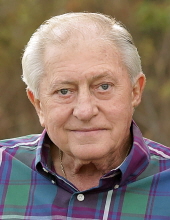
David Bird Ashcraft, age 72, a resident of Ft. Scott, Kansas, passed away Tuesday, April 16, 2019, at his home following a brief cancer illness. He was born April 23, 1946, in Wichita, Kansas, the son of Jay Ashcraft and Helen Ashcraft. He married Sharon Colvin on January 25, 1978. Dave owned and operated his own business, Ashcraft Pest Control, for over fifty years and which continues on today. Dave grew up in Silverton, Colorado where he participated in cowboy reenactments for tourists and loved all things western and Native American including collecting arrowheads and Indian artifacts and watching old westerns on tv. He also enjoyed hunting, especially elk hunting during his many trips to Silverton and Durango, Colorado. Dave was known for his kindness, generosity and friendly personality. He loved people and never met a stranger. Dave especially loved his family and spending time with them. We will miss our dear Papa.
Survivors include his wife, Sharon, of the home; five children, Margie O’Dell, of Pittsburg, Kansas, Jocie Clary and husband, Tim, of Smithton, Missouri, Shelly Shelton and husband, Dale, of Ft. Scott, Kansas, Tammy Pruitt and husband, Terry, also of Ft. Scott and David Allen Tauber and wife, Casey, of Rogers, Arkansas; thirteen grandchildren and seven great-grandchildren. Also surviving are two brothers, Dan Ashcraft, of Wichita, Kansas and Richard Ashcraft, of Topeka, Kansas and his loyal canine companion, Tug. He was preceded in death by his parents and two sisters, Becky Tauber and Ruth Ann Ashcraft.
Following cremation, a memorial service will be held at 1:30 P.M. Monday, April 22nd at the Cheney Witt Chapel. A graveside service will be held at a later date in the Centerville Cemetery near Devon, Kansas. Memorials are suggested to Care to Share and may be left in care of the Cheney Witt Chapel, 201 S. Main, P.O. Box 347, Ft. Scott, KS 66701. Words of remembrance may be submitted to the online guestbook at cheneywitt.com.
Car Wash Fundraiser April 20 For FSHS Golf
|
|

|
|

|
|
|

|
|
|
|
|
|
New Assistant Secretary for Kansas Wildlife Department
Miller Appointed KDWPT Assistant Secretary
TOPEKA – Mike Miller has been selected to be Assistant Secretary for Wildlife, Fisheries and Boating for the Kansas Department of Wildlife, Parks and Tourism (KDWPT). He replaces Keith Sexson, who retired last December after more than 50 years with the department. Miller will assume his new duties on Monday, April 22, 2019.
“Mike has been an invaluable member of our team for more than three decades. He has been involved in almost every aspect of the department and has a wealth of knowledge and experience to bring to his new role,” said Brad Loveless, KDWPT Secretary. “He is a great communicator and is well-respected by all who know him. I am looking forward to working closely with him as we grow our programs and serve our constituents.”
“I am humbled and excited to be a part of Secretary Loveless’ vision for KDWPT’s future,” Miller said. “Current Wildlife, Fisheries and Boating staff are as talented and dedicated as any I’ve seen, and I look forward to working with them to carry on the amazing legacies of previous assistant secretaries.”
Miller has worked for KDWPT for more than 35 years. He grew up in Greensburg and graduated from Kansas State University with bachelor’s degrees in Journalism and Graphic Design in 1982. After a short stint with the El Dorado Times newspaper, he was selected to be the wildlife illustrator for the Kansas Fish and Game Commission and Kansas Wildlife magazine.
He went on to serve as the magazine’s associate editor, editor, and his current position of chief of the Information Production Section, overseeing production of the magazine, all hunting and fishing regulation pamphlets, atlases and brochures and social media presence. In addition to his information duties, Miller also served as a special assistant to the Assistant Secretary, managing various special programs and committees, including Pass It On, a hunter recruitment and retention program.
Miller is an avid angler and hunter. He and his wife of 37 years, Lisa, make their home in Pratt where he will continue to work in the KDWPT Pratt Operations Office.
—30—
Ron Kaufman
Director of Information Services
Kansas Department of Wildlife, Parks & Tourism
1020 S. Kansas Ave., 2nd Fl
Topeka, KS 66612
785-296-2870
Note my new email address – ron.kaufman@ks.gov
KDOT requesting comments on STIP amendment
The Kansas Department of Transportation (KDOT) requests comments on an amendment to the FFY 2019-2022 Statewide Transportation Improvement Program (STIP) document.
The STIP is a project specific publication that lists all KDOT administered projects, regardless of funding source, and includes projects for counties and cities as well as projects on the State Highway System. The list of projects being amended to the STIP can be viewed at http://www.ksdot.org/bureaus/burProgProjMgmt/stip/stip.asp
The approval of the STIP amendment requires a public comment period, which concludes May 1. To make comments on the amendment, contact KDOT’s Bureau of Program and Project Management at (785) 296-2252.
This information is available in alternative accessible formats. To obtain an alternative format, contact the KDOT Office of Public Affairs, (785) 296-3585 (Voice/Hearing Impaired-711).
Creative Art Industries Webinar April 18
Webinar Highlights KCAIC Events and Grant Opportunities
Topeka, Kan. – The Kansas Creative Arts Industries Commission (KCAIC) will conduct a webinar hosted by the Kansas PRIDE program on April 18 from 12 – 1 p.m. Peter Jasso will give an overview of current grant categories, partnership programs, and upcoming events as well as answer questions from participants.
The webinar will also be recorded for those who cannot attend at the initial time.
To join the Zoom Meeting
https://ksu.zoom.us/j/803629794
Dial by your location
+1 669 900 6833 US (San Jose)
+1 646 876 9923 US (New York)
Meeting ID: 803 629 794
About Kansas PRIDE program
The Kansas PRIDE program is a volunteer, grassroots effort to improve the quality of life in local communities. Each Kansas community is unique and shares a common bond: a rich heritage based on self-reliance and community pride. Since 1970, the Kansas PRIDE program has assisted and encouraged communities to prepare for the future by building on their past and forming a vision of the future. The goal of PRIDE is to help maximize community and economic development efforts by encouraging all groups to coordinate and work collaboratively for community betterment.
For more info: https://kansasprideprogram.k-state.edu/
Charlie Barrale and Julia Parsons At Liberty Theatre May 4
|
|
|
|

|
|
|
|
|
|
Long Term KDOT Employees Acknowledged
The Kansas Department of Transportation expresses its appreciation for employees celebrating state years-of-service anniversaries in May. KDOT is proud to acknowledge them for the long-term dedication they have provided to the state of Kansas.
Those celebrating 40 years:
- Charles Baker, Highway Maintenance Supervisor, Hepler
- Thomas Weishapl, Highway Maintenance Supervisor, Oberlin
Those celebrating 30 years:
- Deallon Wildeman, Right of Way Property Appraiser Supervisor, Topeka
Those celebrating 20 years:
- Matthew Bleier, Engineering Technician Specialist, Topeka
- James Fetters, Equipment Operator Senior, Council Grove
- Martin Harrington, Highway Maintenance Supervisor, Norton
- Jonathan Houpt Equipment Operator, Olathe
- David Rush, Equipment Operator Specialist, Ottawa
- Steven Schmidt, Equipment Mechanic Senior, Salina
Hiring A Limo or Party Bus?
KCC offers tips on what to look for when hiring a limo or bus service
TOPEKA – Limousines and party buses are popular modes of transportation for proms, weddings and other special events. If your spring or summer plans call for limo or bus transportation, the Kansas Corporation Commission (KCC) encourages you to do a little research before booking.
The KCC, the agency that regulates motor carriers in the state, recommends that you check to be sure the transportation company you are considering has operating authority. That means they meet the applicable federal and state requirements for safety, insurance, operations and driver training. Services operating within the state are also required to file their current tariffs or rates with the KCC. Those can be found on the KCC’s website.
“Planning your next limousine, party bus or charter bus trip is an important decision. Take a moment to ensure the company you select has the appropriate State and/or Federal operating authority and a safe operating history. Looking before you book will help you have a safe and satisfying experience,” said Mike Hoeme, KCC Transportation Director.
There are several places to obtain more information about passenger carriers. Here are a few helpful links:
Find rates – http://kcc.ks.gov/transportation/transportation-quick-links/passenger-tariffs
Check safety record – https://safer.fmcsa.dot.gov/ (see company snapshot)
Verify Insurance coverage –
https://li-public.fmcsa.dot.gov/LIVIEW/pkg_carrquery.prc_carrlist
Passenger carrier and bus safety information –
https://www.fmcsa.dot.gov/safety/passenger-safety/passenger-carrier-and-bus-safety
Chamber Coffee at Presbyterian Village April 18
Join us for Chamber Coffee
Hosted by:
Fort Scott Presbyterian Village
Location:
2401 S. Horton
Thursday, April 18th, 2019
Visit Fort Scott Presbyterian Village’s web
page
by clicking
here.
Chamber members and guests are encouraged to attend for networking, community announcements, and to learn about the hosting business or organization.
Members may pay $1 to make an announcement about an upcoming event, special/sale/discount, or news of any kind.
Upcoming Coffees:
April 25 – Peerless Products
May 2 – National Day of Prayer Breakfast (Pioneer Kiwanis and
Cheney Witt)
May 9 – Woodland Hills Golf Course (City of Fort Scott)
May 16 – Fort Scott Paws & Claws
Confederate Memorial Service April 27
The 2nd Annual Confederate Memorial Service will be held at the National Cemetery at 10 am, Saturday, April 27.
Members of Sons of the Confederate Veterans (SCV) Major Thomas J. Key Camp #1920, will conduct the memorial service.
A joint Sons of Union Veterans (SUV) and SCV honor guard will present colors at the service
There are 14 Confederate Soldiers interred at the Fort Fort Scott National Cemetery. All were POW’s at Fort Scott and the majority were captured at the Battle of Mine Creek.
April has been recognized as Confederate History month throughout the South. While Kansas does not recognize Confederate History month, special permission was given by the National Cemetery Administration to conduct a memorial service for the Confederate dead in the Fort Scott National Cemetery.
This year’s memorial service was scheduled to coincide with Civil Wars Days at “The Fort.”
The memorial service is open to the public. Persons attending the memorial service can wear period clothing as desired.
American Legion Auxiliary Unit 25
There will be a rechartering of the American Legion Auxiliary Unit 25 on May 3, 2019 at 7 pm. This milestone event will take place in Fort Scott’s Memorial Hall.
The American Legion Auxiliary is a standalone organization and offers programs to support Veterans and the community. For more information about the American Legion Auxiliary visit their national website at https://www.alaforveterans.org/
Any female who has an ancestor who served in the United States military is eligible for the American Legion Auxiliary. Additionally, female family members of Veterans and active duty military may also be eligible for the American Legion Auxiliary.
There is not an age requirement to join the Auxiliary Unit. Some Legion members have enrolled their daughters or granddaughters at birth to become an Auxiliary member.
Females interested in joining the American Legion Fort Scott Auxiliary Unit should call Myra Jowers at 620.215.1286 or email her at myrajowers#ymail.com about joining or to clarify their membership eligibility.