


All posts by Submitted Story

Telephone/Broadband Available to Low-Income Kansans

Lifeline Awareness Week promotes telephone and broadband resources available to help low-income Kansans stay connected

Topeka Access to local emergency services and community resources is vital to all residents. Lifeline offers discounts to help low-income consumers connect to the nation’s voice and broadband networks, find jobs, access health care services, connect with family, and call for help in an emergency.


The Kansas Corporation Commission wants to create awareness of the Lifeline program during National Lifeline Awareness week, September 10-14. Under the federal Lifeline Program, low-income consumers can receive up to $9.25 per month off their monthly bill for phone, broadband, or bundled phone and broadband service.  Some may also be eligible for the state Lifeline program that provides an additional $7.77 monthly discount. Forty-eight companies currently offer Lifeline services in Kansas.

Residents enrolled in any of the following assistance programs are eligible: Supplemental Nutrition Assistance Program (SNAP), Medicaid, Supplemental Security Income (SSI), Federal Public Housing Assistance (FHPA), Veterans Pension & Survivors Pension Benefit, Bureau of Indian Affairs General Assistance, Tribally Administered Temporary Assistance for Needy Families, Head Start Tribal Programs (only those meeting its income qualifying standard), the Food Distribution Program on Tribal Lands.  Those at 135% of the federal poverty level also qualify. Participants must provide three consecutive months of statements as documentation of income, or provide a copy of their tax return for the previous year. Recertification is required each year.

Since 1985, the federal Lifeline program has provided a discount on phone service for qualifying consumers. In 2016, the program was extended to include broadband.

More information on program eligibility, enrollment and annual recertification is available on the KCC’s website: http://kcc.ks.gov/telecommunications/lifeline. For a list of Kansas providers, go to https://data.usac.org/publicreports/CompaniesNearMe/State/StateOption/KS.

Death Notice of Mary Alice Foulk

Mary Alice Foulk, resident of Winfield, MO, died Monday, September 10, 2018, at her home. 

Graveside services for Mary Alice Foulk will be held at 1:00 PM Friday, September 14th, in the Sheffield Cemetery, Arcadia, KS. 

The family will receive friends from 5:00 until 7:00 PM Thursday evening at the Cheney Witt Chapel, 201 S. Main, Ft. Scott, KS. Words of remembrance may be submitted to the online guestbook at cheneywitt.com.

Droughts Effect Livestock

Summer Droughts Have Lingering Effects for Cattle after Recent Rains

According to Bob Weaber, Kansas State University Extension Cow-calf Specialist, drought-stressed pasture issues linger after rain. For many producers in Kansas, the last couple of weeks have brought much-needed rain to our r rangeland and helped fill ponds on which we depend for watering livestock. Undoubtedly, the rain was welcomed by many and does much to relieve the short surface water supplies. The spring and summer of 2018 will be remembered by many cattle producers due to the hot and dry conditions that persisted. The lack of rain resulted in subpar forage production for both cool and warm season grasslands. As a result, cattle producers will face a wide range of lingering effects of the drought over the coming months and perhaps years.

The lingering effects of a drought can be broadly classified into cow nutritional effects, cow reproductive effects, calf performance effects and rangeland/forage effects. All will take time for recovery but in each case, careful management can hasten the progression of recovery.

In some cases, the reduced forage supply has resulted in cows losing substantial body condition after calving. If calves have not been weaned, consider weaning them to reduce nutritional demands of the lactating cows. Weaning calves will help extend feed resources in short supply and help stop the slide in body condition. Remember cows should be in BCS 5-6 at calving. The interval immediately following weaning of spring-born calves provides the best chance of correcting body condition in cows as inexpensively as possible. Spring-calving cows at this time are in their second or early third trimester and, without the demand of lactation, are at their lowest point of nutritional needs during the production cycle.

Each body condition score that needs to be replaced represents approximately 80 lb. of body weight. Getting cows to gain 2 lb. per day for 90 to 100 days is easy and can be done inexpensively. Seek out your local extension professional for assistance in developing a low-cost supplementation strategy. Two pounds per day gain for 90 days can improve flesh on a BCS 4 cow and account for the growth of the fetus. Neglecting recovery of BCS in the thinner cows will result in extended postpartum intervals and decreased lactation performance in 2019. Worse yet, if these cows don’t recover adequate condition by the 2019 breeding season, conception rates will suffer, and the 2018 drought effects will carry on into 2020. Correcting BCS in drought-affected cows should be a high priority.

The 2018 drought has resulted in reduced fertility or increased embryonic mortality in some cases. Several reports suggest the excessive heat in late June and early July many have stressed cows sufficiently to cause early embryonic losses. A timely preg check by your veterinarian can help uncover the effects of the drought on reproduction in your herd. Embryonic losses may have resulted in cows returning to estrus and settling late in the breeding season and shifting the expected calving distribution for 2019. Knowing that shift now may allow producers to adjust feed supplementation and labor needs for the coming calving season to more appropriately align with demands. The drought may result in a larger than typical number of open cows in your herd. The timely preg check can help find these open cows and assist in developing either a strategy for culling or shifting them to a fall calving system. If feed resources are extremely tight, culling opens can extend feed availability for the reproductive herd.

The substantial recent rains don’t alleviate the short supply of standing forage available for grazing in many areas or the short hay supply. Careful range management and rest following the recent rains can help the grass stands regenerate root resources preparing them for the next spring growing season. If producers have tillable crop acreage, winter annuals or cover crops can help take the burden off pastures. The recent rains should make for good planting and germination conditions. Hay prices are likely to remain high in many parts of Kansas so seeking alternative forage or energy sources for cows is worth exploring. Corn remains fairly inexpensive and can be used as an effective energy source for cows.

Cow-calf producers are encouraged to critically evaluate their cow herd and forage conditions over the next few weeks to devise strategies to mitigate the 2018 drought effects. The clock is ticking on the options available. Don’t let the recent rains and green up of pastures be an excuse for inaction.

Obituary of Carlene Rinehart

Carlene Marie Kruger Rinehart, 82, formerly of Fort Scott, more recently of Rusk, Texas, passed away at Christus Mother Frances Hospital in Tyler, Texas. She was born January 19, 1936 in Fort Scott, Kansas the daughter of Carl William and Mary Inez Shinn Kruger. She married Edward Cale Rinehart April 20, 1953 in Platt City, Missouri, he preceded her in death August 29, 2012.

Carlene was a Sales Secretary serving Sears’, JC Penny’s, and Montgomery Ward’s totaling 50 years, and lived in Kansas, Florida and Hawaii during the decade of the 1950’s, in California during the 1960’s, back to Kansas during the 1970’s and Texas during the 1980’s and 1990’s. She returned to Fort Scott for a few years in the 2010’s but recently moved back to Texas to be near some of her children and grandchildren. Carlene was a member of the Grace Baptist Tabernacle while she lived in Fort Scott.

She is survived by two daughters, Jeanann Sumner and husband, Greg of Elkhart, Texas and Carrie Baker and husband, Mike of Trinity, Texas, a son, Gregory Rinehart and wife Violet of Rusk, Texas, a brother, Gary Kruger and wife Carla of Montgomery, Texas. She was also blessed with an abundance of loving grandchildren and great grandchildren. In addition to her husband, Edward, she was preceded in death by her parents, Carl and Mary (Shinn) Kruger and a son, Eddie Rinehart.

Funeral services for Carlene M. Rinehart will be at 11:00 am, Monday, September 17, 2018 at the Fort Scott National Cemetery #1 under the direction of the Konantz-Cheney Funeral Home with the Rev. Pastor Paul Rooks officiating. The family will receive friends from 9:30 am until 10:45 am on Monday, September 17, at the Konantz-Cheney Funeral Home before leaving for the Cemetery. The family suggests memorials to the Grace Baptist Tabernacle, donations may be left in the care of the Konantz-Cheney Funeral Home, 15 W. Wall St., P.O. Box 309, Fort Scott, Kansas 66701. Condolences may be submitted to the on-line guest book at konantz-cheney.com.

Public Input Needed Sept. 25 for Trail/Bicycle Network

“The Healthy Bourbon County Action Team is working with our neighbors (Allen and Crawford Counties) to develop a plan for a regional trail system to be presented to each of the county’s governmental entity,” Jody Hoener, Healthy Bourbon County Action Team, said. “There are plans already put in place for US Bicycle Routes (ex. current route 76 and future route 55), unfortunately, each avoiding Bourbon County.”

” This will give our community a chance to make recommendations on connections to existing regional trail networks, highlight local trail networks already in place, and brainstorm new ideas to encourage tourism, enhance the quality of life, and access to outdoor recreation with hiking, trail running, or mountain biking,” she said.


“Either directly or indirectly, these larger trails will be beneficial for all, not just those who value an active lifestyle,” Hoener said.

The Bourbon County Commission Agenda for Sept. 11

Agenda

Bourbon County Commission Room

2nd Floor, County Courthouse

210 S. National Avenue

Fort Scott, KS 66701

Tuesdays starting at 9:00

Date: September 11th, 2018

1st District-Lynne Oharah Minutes: Approved: _______________

2nd District-Jeff Fischer Corrected: _______________

3rd District-Nick Ruhl Adjourned at: _______________

County Clerk-Kendell Mason

9:00-9:45-Jim Harris

9:00-Jeremiah Hill-Roads-245th

10:00-10:15-2019 Budget Hearing

11:00-12:00-Justin Meeks

Executive Session-Privileged in the attorney-client relationship-10 min.

NRP-15 min.

12:00-1:30-Commissioners gone to lunch

1:30-2:00-Justin Meeks

2:00-2:30-Flu Shots

2:30-3:00-Bill Martin

3:00-3:15-Prayer Rally

3:15-David Neville-Flooring

Justifications for Executive Session:

          Personnel matters of individual non-elected personnel

          Consultation with an attorney for the body or agency which would be deemed privileged in the attorney-client relationship

          Matters relating to employer-employee negotiations whether or not in consultation with the representative(s) of the body or agency

          Confidential data relating to financial affairs or trade secrets of corporations, partnerships, trusts and individual proprietorships

          Preliminary discussions relating to the acquisition of real property

          Matters relating to the security of a public body or agency, public building or facility or the information system of a public body or agency, if the discussion of such matters at an open meeting would jeopardize the security of such public body, agency, building, facility or information system

Kansas Anti-Human Trafficking Manager Named

Secretary Meier-Hummel Announces Anti-Human Trafficking Program Manager

Kent Bauman brings wealth of experience to DCF

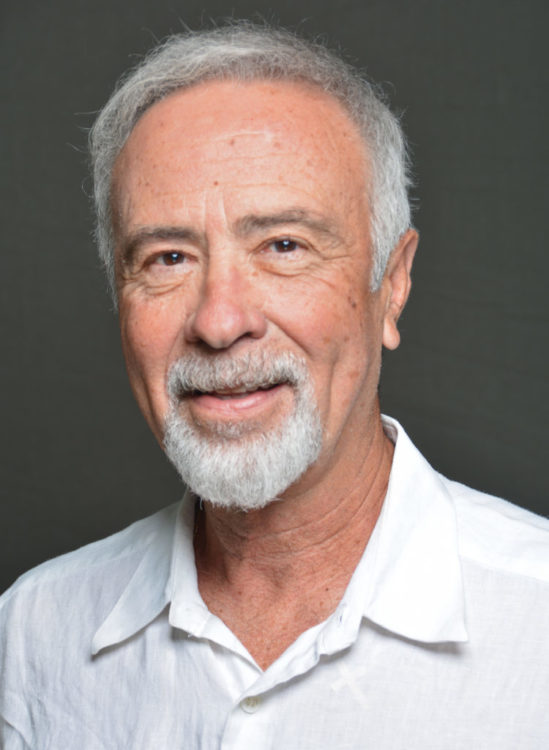
TOPEKA – Kansas Department for Children and Families (DCF) Secretary Gina Meier-Hummel is pleased to announce Kent Bauman as the Human Trafficking Program Manager. This is a new position created to help coordinate Anti-Human Trafficking efforts across the state.

Prior to serving the agency, Bauman served at the Wichita Police Department, where he had been employed since 1987. Most recently, he was assigned to the Exploited and Missing Children Unit (EMCU). While at the EMCU, he regularly partnered with DCF to investigate cases of missing children, runaways, human trafficking and Commercial Sexual Exploitation of Children (CSEC). Since 2006, Bauman was involved in the investigation of more than 200 CSEC cases, and he was the first investigator to charge and convict a human trafficker in the state of Kansas.

“Kent has extensive knowledge about human trafficking and we are excited and grateful to have him at the agency,” said Secretary Meier-Hummel. “We purposefully created this position because we wanted to strengthen DCF’s approach to preventing human trafficking, and I believe Kent’s impressive background will serve him well as he leads DCF anti-human trafficking efforts across the state.”

In addition to serving as the Human Trafficking Program Manager, Bauman will also dually serve as the DCF Law Enforcement liaison, to help improve communication and collaboration between the agency and local law enforcement.

Bauman has a bachelor’s degree in Education from Southwest Baptist University.

“I look forward to working with law enforcement, local community partners and other state agencies to help improve DCF Anti-Human Trafficking efforts in Kansas,” said Bauman. “Trafficking survivors are some of our most vulnerable Kansans, and I am humbled to serve them in this new capacity at DCF. Secretary Meier-Hummel has made preventing human trafficking one of her top priorities, and I am excited to work alongside her in this effort.”

DCF partners with local law enforcement and other state agencies to address human trafficking in Kansas. DCF is statutorily required to conduct an initial assessment of children/youth whom law enforcement reasonably believes are victims of human trafficking to determine “safety, appropriate and timely placement and appropriate services to meet the immediate needs of the child.”

If you believe you are a victim of human trafficking or may have information about a possible trafficking situation:

  • Call 911 if there is risk of immediate harm
  • Contact the National Human Trafficking hotline: 1-888-373-7888 Or text “befree” at (233733)
  • If the possible human trafficking victim is a minor, also call the Kansas Protection Report Center (KPRC) at 1-800-922-5330.


Kansas’ Own Little Jerusalem Badlands Park

America’s State Parks Directors Honor The Nature Conservancy of Kansas


TOPEKA – The National Association of State Park Directors (NASPD) recently honored The Nature Conservancy of Kansas (TNC) with its 2018 President’s Award.


In 2016, TNC bought a 330-acre tract of land in Logan County that encompasses 250 acres of Niobrara chalk formations. The property adjoins the Smoky Valley Ranch which is owned by TNC.


In 2018, the Kansas Legislature formally designated the chalk formations as Little Jerusalem Badlands State Park. The park is projected to be opened by summer 2019.


The Kansas Department of Wildlife, Parks and Tourism (KDWPT) and TNC are collaborating to design access to the park and build trails to protect the fragile formations and unique ecology of the area.


The Niobrara chalk formation is a layer of rock deposited about 85 million years ago. It is composed of a chalk-like sediment that settled at the bottom of an inland ocean called the Western Interior Seaway which covered most of central North America roughly 140 to 70 million years ago. The rock was exposed and eroded over time, creating the tall pillars and rugged canyons that characterize the Little Jerusalem badlands.


In addition to breathtaking views, Little Jerusalem is also home to wildlife – from bats and ferruginous hawks to snakes, toads and lizards – and plants found nowhere else in the world.


“Without the help of the Conservancy staff, Kansas would not have this beautiful landscape as a part of its state park system,” said Linda Lanterman, NASPD president and Kansas state parks director. “TNC and KDWPT are committed to making this property accessible to visitors, while ensuring that the fragile terrain is protected.”


Prominent members of The Nature Conservancy of Kansas who have worked especially diligently to protect and make the Little Jerusalem badlands accessible include Rob Manes, Kris Knight and Matt Bain.


Life Expectancy Estimates Available by Neighborhood in Kansas


Census Tract-Level Data can help leaders, advocates, residents create healthier communities


TOPEKA – The Kansas Department of Health and Environment’s (KDHE) Office of Vital Statistics, Bureau of Epidemiology and Public Health Informatics, has partnered with the National Center for Health Statistics (NCHS) to produce life expectancy estimates in each census tract in the United States. Six years of data was used, through 2015, for the calculations of this indicator. Kansas-specific geographic health statistics.


“These census tract-level life expectancy estimates—based on state death records and population estimates from the U.S. Bureau of the Census—have previously been unavailable nationwide,” said Lou Saadi, Ph.D., State Registrar and Director of the KDHE Bureau of Epidemiology and Public Health Informatics. “Access to estimates like these helps public health experts quantify how people living just a few miles apart can have vastly different opportunities for a long life. With this kind of information, community leaders can examine the factors that may be influencing differences in longevity—such as access to health care, safe and affordable housing, educational opportunities and other factors that impact the health of community members—and target solutions more effectively.”


In Kansas, the dataset includes “life expectancy at birth” estimates for 723 Kansas Census Tracts. Life expectancy at birth ranges from 62.5 years in Census Tract 041800 (in Wyandotte County) to 89.7 years in Census Tract 962600 (in Gray County).


Although county-, city-, and ZIP code-level data have provided similar information, they often don’t tell the full story as neighborhoods right next to each other—located within the same ZIP code, city or county—can provide drastically different opportunities for health and well-being. Census tract-level data offer information on a much smaller and targeted group of people making it easier to create a more complete picture of health at a local level. Census tracts cover an average of 4,000 people who typically have similar characteristics, such as social and economic status. Data available at this very granular level can help to more effectively target efforts to remove the barriers standing in the way of health and opportunity.


Hospitals, for example, can use the data to help create community health assessment plans that will identify areas most in need. Community development financial institutions can use these data to help decide which neighborhoods most need their investment dollars to fund health clinics, schools and other projects. Community members can use the data to guide conversations about what is causing life expectancy disparities in their neighborhood and what changes they want to address those challenges, such as better public transportation, access to healthy food or job training opportunities.


For more information on the United States Small-Area Life Expectancy Project (USALEEP) and to access life expectancy estimates for your neighborhood, please visit www.naphsis.org/usaleep and http://kic.kdheks.gov/LifeExptncy.html#top.The County Health Rankings’ What Works for Health is a searchable tool that provides evidence-informed policies, programs, systems and environmental changes that can make a difference locally. CDC’s Division of Community Health website also provides examples of communities taking action to improve the health of their residents.