Click below:
All posts by Submitted Story
Loaded Baked Potato Fundraiser Wednesday, November 13
|
|

|
|

|
USD 234 Minutes of Nov. 11
Members of the USD 234 Board of Education met on Monday November I l, 2019, at
the Board of Education office for their regular monthly me€ting.
President David Stewart opened the meeting. The board approved the official agenda.
The board also approved the consent agenda as follows:
A. Minutes
B. Bills and Claims
C. Payroll, October I8, 2019: 51,407,823 .37
D. Financial Report
E. Bond Proceeds Reconciliation
F. Activity Fund Accounts
G. Parent/Teacher Conference statistics
H. Extended Trip request
Stephanie George reported on the Tenth Annual VIP Fall Extravaganza that will be held
on Monday, November 25, from 5:00 to 8:00 p.m. at the Fort Scott Middle School Gymnasium
and Commons Area.
Board members heard the following reports:
o Audit report from Terry Sercer with Diehl, Banwart, Bolton
o KNEA report from Stephanie George, KNEA President
o School report – Mike Trim, SRO Officer
o Administrators’ reports
Superintendent Ted Hessong welcomed the newly-elected board members who were in
attendance and then provided information on the following items:
Bus safety meeting
o Framework for Growth for Southeast Kansas workshop
o Special Education update .
Early Release activities
o Community Foundation awards that were given to USD 234 teachers and students o Kansas Recognition Program o Academic calendar
o District website
Gina Shelton, Business Manager, discussed the audits, gym equipment bids, open
enrollment sign-up, and benefits language.
Board members approved a roof payment, the purchase of high school gym bleachers,
and the 2020 audit contract with Diehl, Banwart, Bolton.
Board members shared comments and then went into executive session to discuss
personnel matters for nonelected personnel and returned to open meeting.
The board approved the following employment items:
A. Early retirement request from Russ Gordon, Winfield Scott art teacher, effective
June l, 2020
B. Leave of absence request from Andi Heckman, preschool teacher
C. Leave of absence request from Glenda Cooper, Winfield Scott cook
D. Leave of absence request from Angela Christy, Winfield Scott paraprofessional
E. Employment of Michelle Johnson as a Eugene Ware paraprofessional for the 2019-20
school year
F. Employment of Mary Chapman as a middle school paraprofessional for the 2019-20
school year
G. Employment of Erica Clark as high school assistant cheer sponsor for the 2019-20
school year
H. Employment of Lane Bohlken as high school assistant softball coach for the 2019-20
school year
I. Adjustment in a work agreement for Moriah Dillow, Winfield Scott paraprofessional,
from a five-hour workday to a six-hour workday for the remainder of the 2019-20
school year
J. Employment of two additional high school team leaders for the 2019-20 school year
The board adjourned.
The Bourbon County Sheriff’s Office Daily Reports Nov. 12
Obituary of Eugene E. Grimes

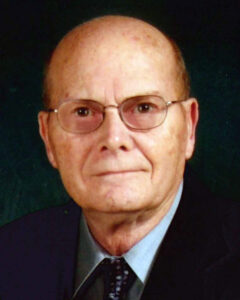
Eugene Edward Grimes, age 87, resident of Ft. Scott, KS, died Monday, November 11, 2019, at Freeman West Hospital, Joplin, MO.
He was born on January 28, 1932, in rural Ft. Scott, the son of Jesse Bowman Grimes and Grace Blanch Morgan Grimes.
He served in the United States Army from 1952 to 1954 and contributed to the construction of the Korean Demilitarized Zone.
Gene graduated from FSCC with an associate degree in printing.
He married Norma Elder on May 26, 1957, in Redfield, KS.
Gene worked for Norvell, Buell Cabinet Company, and Ward-Kraft Inc. until his retirement in 1998. He then continued to work part-time until 2001 for a total of 26 years.
He was a member of Grace Baptist Tabernacle since 1958, serving as a deacon for 35 years and as an assistant treasurer for 24 years.
He was a past member of V.F.W. Post #1165, and the Old Forters Camping Club.
Survivors include his wife Norma of the home; a daughter, Marlene Willis and husband Mike, Pittsburg, KS; two grandchildren, Mackenzie and Duncan Willis; and several nieces and nephews. Gene was preceded in death by five brothers, Melvin, Don, Glen, Claude, and Kenneth Grimes; three sisters, Louise Baker, Thelma Reel, and Opal McKay; and his parents.
Rev. Paul Rooks will conduct funeral services at 10:00 AM on Thursday, November 14th, at the Cheney Witt Chapel.
Burial will follow in the U. S. National Cemetery. Military honors will be provided by the Olson Frary Burkhart Post #1165 V.F.W.
Memorials are suggested to either the American Cancer Society or the American Parkinson Disease Association and may be left in care of the Cthe heney Witt Chapel, PO Box 347, 201 S. Main, Ft. Scott, KS 66701. Words of remembrance may be submitted to the online guestbook at cheneywitt.com.
The Fort Scott Police Department Daily Reports Nov. 11
Click below:
Chamber Coffee at Integrity Hospice Nov. 14
The Chamber Coffee for Thursday, November 14, 2019 will be hosted by Integrity Home Care & Hospice located 902 S. Horton St. Please use the main entrance off Horton Street, next to the VA Clinic on the main floor.
Integrity Home Care + Hospice is where proactive care and seamless solutions thrive, which is why we offer additional services to help you even more.
The Chamber opens the floor and encourages members to make an announcement about their business, organization, or the community of upcoming events by donating a $1.00.
If you are not a member but would like to explore and experience the community support that is developed at the weekly Chamber Coffee, you are welcome to come and talk to our Executive Director Lindsay Madison for more information. We offer member pricing from just Community supporters to Executive Business Owners and Organizations!
American Legion Motorcycle Association Charter Nov. 16
American Legion Fort Scott Thompson-Harkey Post 25 will receive its American Legion Riders charter on Saturday, November 16. The charter ceremony will be held at Fort Scott’s Memorial Hall at 10 am.
The Kansas American Legion Riders as a motorcycle association shall:
· Promote motorcycle safety while providing a social atmosphere for members of The American Legion family who share common interests in serving veterans, their communities and motorcycling.
· Promote, support and participate in the programs and ceremonies of The American Legion including calling for a full accounting of all prisoners of war and those missing in action; and honoring our nation’s fallen soldiers, sailors, airmen and marines, and to support their families.
To join the American Legion Riders (ALR), you must own a motorcycle of at least 250 cc’s and be a current member of the American Legion, American Legion Auxiliary or the Sons of the American Legion. A spouse of a motorcycle owner can join the ALR provided they belong the one of the Legion family organizations.
Any Legion family member from any American Legion Post can join ALR Chapter 25. You do not have to be a member of Post 25.
The good news is that you can also join the American Legion, Auxiliary or Sons at this time and still join the ALR next Saturday.
To join the
American Legion. Have served at least one day on active duty since December 7, 1941 and be honorably discharged. This includes those Veterans who may have been medically discharged before completing their tour of duty.
Auxiliary. The Auxiliary welcomes female family members of Veterans plus spouses of female Legionnaires. If you had a family member who served in one of the US armed forces, you are probably eligible for the American Legion Auxiliary.
Sons of the American Legion. The Sons welcomes the male descendants of Veterans. You are eligible for the Sons, if you had a parent, grandparent or great grandparent who served in the US armed forces.
If you would like to check your Legion family eligibility in order to join the ALR, email carljowers@gmail.com or call Carl Jowers, Post 25 Commander, at 620-215-1688.
If you have received this email and will be at the charter ceremony or will bring a prospective ALR member, please reply to this email. I need to get a head count of the number of persons attending.
If you wish to join the ALR, but cannot attend Saturday’s meeting, let me know that as well.
Don’t hesitate to contact me with any questions you might have.
Carl Jowers. Post 25 Commander.
American Legion Post 25 Updates
November 11. Today’s Veterans Day service has been moved from the National Cemetery to Memorial Hall. The service starts at 11 am.
November 11. VFW Post 1165 is hosting a Veterans Day lunch at their Post home after the Veterans Day service.
November 14. American Legion Auxiliary Unit 25 meets in Memorial Hall at 6 pm. All female descendants of Veterans are invited to attend. Also, spouses of Legionnaires can also join Auxiliary Unit 25
November 14. American Legion Color Guard meets in Memorial Hall at 7:30 pm. All Post 25 family members are invited to join our Color Guard.
November 16. Fort Scott American Legion Riders Chapter 25 chartering ceremony in Memorial Hall at 10 am. Anyone who owns a motorcycle of at least 250 cc’s and is a member of the American Legion, American Legion Auxiliary or Sons of the American Legion can join the American Legion Riders. Any Legion family member from any American Legion Post can join the Post 25 Riders. You do not have to be a member of Post 25 to join the Post 25 Riders.
If you are eligible for membership in an American Legion family organization, you can join the Riders by joining the American Legion family. Call Post 25 Commander Carl Jowers at 620-215-1688 or email him at carljowers@gmail.com for more information.
The Fort Scott Police Department Daily Reports Nov. 8-10
Click below:
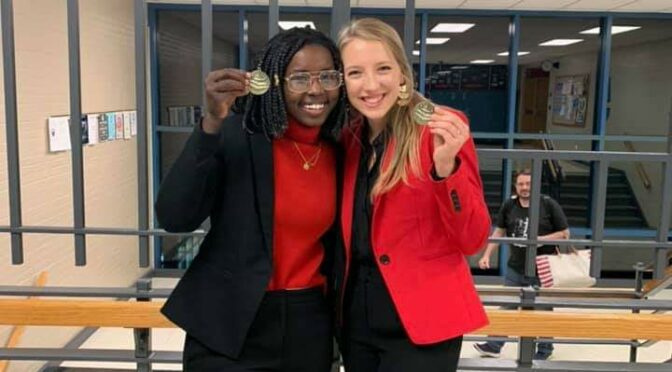
Self/Ngatia Take First in Debate
This weekend Fort Scott took a small group of six debaters to Shawnee Mission East High School and did quite well.
Zoe Self and Elizabeth Ngatia had an 8-0 record and took first place in the KDC division.
Hannah Vann and Kinsley Davis had a 2-3 record and learned a lot from being up north and debating bigger schools.
Shekhar Gugnani and Neil Gugnani also went 2-3 and gained some great experience.
Submitted by Angella Curran
No County Commission Meeting Nov. 12
There will be no Bourbon County Commission meeting on Tuesday, November 12.
The next commission meeting is scheduled for Thursday, November 14 beginning at 1:30 pm.