|
|||||||||||||||||||||||||||||||||||||||||||||||||||||||||
|





|
|
|
|

 |
|
|
|
|

 |
|
||||||||||||||||||||||||
|
|
|||||||||||||||||||||||||||||||||||||||||||||||||||||||||
|
|
|
|
|
|
|
|
|
|
|
|
||||||||||||||||||||||||
|
GriefShare is a non-denominational 13-week seminar
support group.
Professionally developed videos and a workbook give you
practical suggestions from counselors, pastors and experts
in grief recovery, along with group participation.

We all grieve differently.
There are no rules nor measurements such as time.
For more than 25 years GriefShare has helped over
1 million people heal from the pain of grief.
All materials are FREE, Snacks provided.
Contact Us Today
Mondays 5:00pm—7:00pm
January 5, 2026 through March 30, 2026
Mary Queen of Angels, Room 203
705 S Holbrook
Fort Scott, KS 66701
GriefShare.com/Find a Group or
Text/Call Laura at 740 317-6379
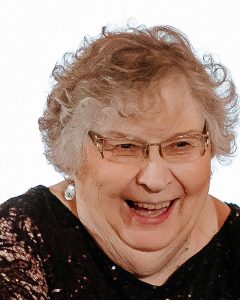
Sue Ellen Hoskin, a former resident of Ft. Scott, Kansas, and more recently of Olathe, Kansas passed away Thursday, Dec. 4 at Olathe Medical Center surrounded by loved ones. She was born on Feb. 28, 1941, to Jessie Ellen Ford Harris and James Harris in Greenfield, Missouri. As a young girl, she moved with her family to Ft. Scott, Kansas where she lived the majority of her life. Sue was the youngest of six children and the first in her family to graduate from high school. She graduated from Ft. Scott High School in 1959. Sue valued education but more than that she strived to reach the goals she set for herself. She passed on this combination of moxie and grit to her daughters, grandchildren, and great-grandchildren. As a teenager, Sue met and fell in love with David Hoskin, of Ft. Scott. They married on Oct. 7, 1961, after he returned to the United States from service abroad in the Army.
Sue and David had four daughters, eight grandchildren, and nine great-grandchildren. Her family was the most important thing in her life. Sue worked at The Western, Whitesides East, and Ace Hardware before retiring at age 65. Later in life she discovered a love of travel taking trips with her husband, children, and grandchildren. Sue also loved to play cards, bake pumpkin bread, and find discounts. She was an avid reader. Faith was an important part of Sue’s life. She and David were charter members of West Park Church of the Nazarene and the two later attended the First Baptist Church. Sue carried her faith with her until the end.
Survivors include three daughters, Shelly Henry (Larry) and Melissa Hoskin, all of Olathe, Kansas, and Marla Miller (Kirk) of Nevada, Missouri. Also surviving are eight grandchildren, Lerin Combs, Taylor Rodriguez, Arley Hoskin, Tempest Lane, Breanna Morrison, Amory Maley, Payton Miller, and Jansen Lang, and nine great-grandchildren, Aidan, Tristan, Landon, Brynlee, Halle, Roman, Althea, Ryder, and Breckan. Sue was preceded in death by a daughter Micah Denise Hoskin, her husband David Hoskin, as well as her parents and siblings David Harris, Leroy Harris, John Harris, Emma Hall, and Katherine Rector.
There was cremation. Chaplain Dave Armstrong will conduct a memorial service at 11:30 a.m. on Friday, Dec. 12 at Cheney Witt Chapel. The family will receive friends on Friday from 10:30 a.m. until the funeral service starts. Burial will follow in the U.S. National Cemetery. Memorials are suggested to the Alzheimer’s Association and may be left in care of the Cheney Witt Chapel, 201 S. Main, P.O. Box 347, Ft. Scott, Kansas 66701. Words of remembrance may be submitted to the online guestbook at cheneywitt.com.

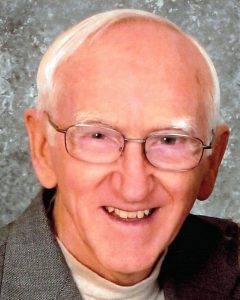
Melvin Eugene Barker, age 83, went to be with the Lord on Wednesday, December 3, 2025. He was born on May 24, 1942 in Hume, MO to Alfred “Leon” Barker and Betty Ruth Anderson. He married Marilyn Margaret Tarvin on June 1, 1968, and together they had three children, Mark Eugene Barker (Renea) of Bettendorf, IA, Paul Leroy Barker (Tammy) of Peculiar, MO, and Ruthanne Renee Barker of Kansas City, KS.
He served in the U.S. Army from 1963-1966 during the Vietnam War, before he earned an Associates degree in Drafting from Pittsburg State University. He retired in 2004 from Superior Industries. Melvin was devoted to his family; loved fishing, listening to music, target shooting, and Chevy Corvettes. His Christian faith was very important to him, and he served as a Deacon at various churches he attended over the years.
Melvin is survived by his two sons and one daughter, four grandchildren, Ethan William Barker, Ellie Elizabeth Barker, Tessa Margaret Barker, and Isaac Eugene Barker, a brother, Raymond Barker (Marie), and numerous nephews and nieces. He was preceded in death by his parents, wife, and sister, Mary Allen (Larry).
Funeral services will be held at Community Christian Church, 1919 Horton Street, Fort Scott, KS on Monday, December 15th, 2025. The visitation will be from 10:30-11:30 a.m., with a Celebration of Life Service immediately following the visitation at 11:30 a.m. Interment with military honors will follow at the U.S. National Cemetery.
Memorial contributions for the Honor Flight may be left in care of the Cheney Witt Chapel, P.O. Box 347, 201 S. Main, Fort Scott, KS 66701. Words of remembrance may be submitted to the online guestbook at cheneywitt.com.
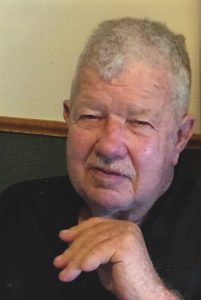
Bourbon County Inter-Agency Coalition
General Membership Meeting Minutes
December 3, 2025
Coalition Board News: There is an open seat on the Coalition Board. Reach out to Nick if you are interested.
Stephanie England & Rachel Jones, KVC 2 Gen Prevention
2Gen connects families with resources and empowerment. They are a community-based service program. 2Gen can connect clients with workforce development. They walk alongside families and individuals and help navigate various systems. 2Gen’s Goal is to keep families together. They will conduct a needs assessment, then provide the support needed. 2Gen meets families where they are and helps with whatever families may need. Support is offered 1-on-1. 2Gen’s goals are healthy families, healthy communication, and financial literacy. 2Gen receives referrals from DCF and advocates and works with individuals of all ages.
TOPEKA – Governor Laura Kelly announced today that the National Telecommunications and Information Administration (NTIA) has approved the Kansas Office of Broadband Development’s (KOBD) $166.6 million final proposal for the Broadband Equity, Access and Deployment (BEAD) program. The approval represents a significant milestone toward delivering high-speed internet access to the 26,673 eligible households and businesses across Kansas.
“The NTIA’s approval of Kansas’ proposal brings our state one step closer to connecting every home, farm, business, and community with access to reliable internet,” Governor Laura Kelly said. “This historic investment will yield essential infrastructure, bringing 21st century tools and broadband opportunities to connect all parts of Kansas in the digital era.”
Kansas’ final proposal builds on volumes one and two of the initial proposal and is revised in alignment with NTIA’s 2025 BEAD Restructuring Policy Notice. The notice, issued June 6, 2025, required all states to run a new application round with additional guidance eliminating the Kansas technology preference for fiber projects. The approved plan outlines the state’s comprehensive subgrantee selection process and implementation strategies designed to ensure efficiency in the deployment of high-speed internet.
“This milestone is the direct result of shared goals and positive negotiations between our industry partners and the NTIA,” said Lieutenant Governor and Secretary of Commerce David Toland. “By securing competitive bids for every eligible location, and working cooperatively with applicants, Kansas continues to prove what is possible when we prioritize transparency and public investment — and focus on building a stronger and connected economy.”
KOBD received competitive bids for 100% of the eligible homes and businesses, ultimately selecting 14 subrecipients. The approved plan includes private contributions of $61.3 million and achieved a 63% reduction in federal allocation through Kansas’ Benefit of the Bargain Round. The average BEAD cost per location stands at $6,791 with technology solutions spanning fiber (30%), fixed wireless (67%), and Low Earth Orbit (LEO) satellite service (3%).
With NTIA’s approval, Kansas is positioned to push out the optimal technology solutions available and lead the state toward future-ready connectivity for generations to come.
“Our office has been hard at work with the many moving pieces of this program — and it’s because of different roles involved in the approval process that we’re able to keep moving Kansas forward,” said Bill Abston, Executive Director, Kansas Office of Broadband Development. “Our commitment to connecting Kansans, amid changing federal guidance and priorities, has been relentless — and I cannot wait to see the impact on our Kansas communities.”
KOBD will begin the next phase of BEAD implementation, including finalization of subgrantee contracts, oversight and compliance, and continued technical assistance, with anticipated groundbreaking during the second half of 2026.
For more information on the Kansas Office of Broadband Development and the BEAD program, visit here.
###
The Kansas Department of Transportation has continued to improve enhancements to its KanDrive road and weather website/mobile app. KanDrive is a one-stop gateway for current highway and weather conditions that are available 24/7.
“Informed drivers can make better decisions about which routes are best for them,” said Shari Hilliard, KDOT Project Manager. “Upgrades to the KanDrive app, such as sending and receiving alerts hands-free, are timely and useful benefits for travelers as we head into winter and the holiday season.”
The KanDrive features were first introduced in 2024 and have been fine-tuned for a better user experience. They were developed as part of the U.S. 83 Advanced Technology Project, which extends from the southern Finney County line to the northern Thomas County line. While some KanDrive enhancements are corridor-specific to U.S. 83, most are available for use statewide.
Some of the new features include:
The KanDrive website has served motorists since 2009. It provides real-time travel information such as road conditions, closures, construction updates, camera/video feeds and detour information.
Since the first round of enhancements were released in December of 2024, KanDrive has logged 3.7 million sessions and nearly 75,000 app downloads on iOS and Android.
For more information about the new KanDrive features and the U.S. 83 Advanced Technology Project, visit https://www.ksdot.gov/us-83-
KDOT encourages motorists to plan ahead and “know before you go,” by visiting the KanDrive website at KanDrive.gov or downloading the app in the App Store or Google Play.
###
Culture Always Tells the Truth
Leadership books and boardrooms spend an enormous amount of time talking about strategy: five-year plans, organizational charts, metrics, and benchmarks. Ask anyone who has truly led a family, a college, a business, or a team, and they’ll tell you the same truth: culture defeats strategy every single time. Strategy may write the script, but culture performs the show.
Every organization, whether a Fortune 500 company, a community college, a small-town high school, a football team, or even a household, is “culturized.” They all project an image to the public, a polished face meant to inspire confidence. The real culture isn’t found in the mission statement or the social-media post. It shows up in daily habits, quiet interactions, and in how the people inside that group treat others when no one is watching.
Families are the clearest example. You can dress up for church on Sunday, take a perfect Christmas picture, and speak politely in public. The true culture of a family shows itself in how members support one another during a crisis, how they speak to each other at home, and how they treat guests, or strangers. Love, patience, generosity, and respect can’t be faked for long. The real culture always rises to the surface.
Businesses and teams operate the same way. Leaders can talk about excellence, teamwork, and service all day long, but the organization’s actual behavior will reveal whether those values are real or just words on a wall. Employees know when leadership is authentic, just as players know when a coach’s message is consistent. If the team’s actions contradict the message, the culture cracks, and once culture cracks, strategy collapses with it.
Yet even in strong organizations, there are always a few team members, especially ones in leadership positions, who quietly work against the mission. They stir emotions, whisper how they would have done things differently, and try to present themselves as the “real” supporter of their coworkers. On the surface, they appear helpful, but beneath it, they are promoting themselves at the expense of the team’s unity. These back-door critics rarely rise to the top of their profession, not because they lack talent, but because they fail to understand that leadership requires loyalty, humility, and alignment. When someone spends more time undermining others than supporting the direction of the organization, they reveal why they have never advanced to their desired position. Culture exposes the truth about people just as clearly as it exposes the truth about teams.
For a college, business, family, or team to earn respect, it’s not enough to build a great strategic plan. Respect is built through how people act, how they serve others, and how well they follow through on the values they preach. A strategy may outline where an organization wants to go, but culture determines whether the people inside it actually want to take the journey together.
That’s the leadership challenge: Are you building a culture where the majority is committed to the mission? If you aren’t, even the most polished plan will fail. If you are, if you create a culture of trust, service, and shared purpose, then even an imperfect strategy can succeed.
Thought for the week, “In leadership, strategy may guide the path, but culture decides whether you ever reach the destination.” Wade Phillips, Former Head Coach of the Dallas Cowboys and San Antonio Brahmas.
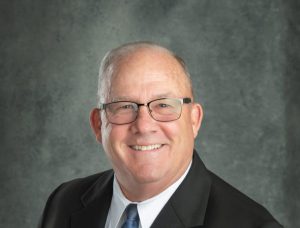
Dr. Jack Welch serves as President of Fort Scott Community College. With a career spanning professional sports, public education, and rural community development, he brings a servant-leader mindset and a passion for building trust-driven cultures that empower people to thrive in the classroom, on the field, and in life. He is also the author of Foundations of Coaching: The Total Coaching Manual.
In October, I wrote a piece about how the commissioners had passed a resolution to ban running a particular computer program. Ostensibly, they were trying to make it illegal to run loud generators, but instead of writing an ordinance about generators or sound, they issued an ordinance that would include three silent computers that can fit in the palm of your hand without saying a single thing about what they claimed they were trying to address.
Despite having full access to paid legal counsel, despite technologically savvy citizens who are happy to provide advice for free, despite knowing that the issue with a loud generator is, well, the loud generator, the commissioners managed to pass an ordinance that was completely divorced from the actual sound problem. It was written to ban what a tech- and business-savvy middle schooler might run in their bedroom, while being useless when it comes to preventing another identical generator-run installation that uses a different algorithm.
If the commissioners, in an effort to prevent loud, noisy generators, accidentally ended up banning things so trivial, we should be very concerned that when they spend your taxpayer money in lobbing their nuclear bomb of zoning at solar and wind installations, it might not only miss what they say is the mark, but do significant collateral damage. That was my concern back in October. What happened since that silly moratorium made me realize that I severely underestimated just how bad that blast radius could be.
There is a planning committee created by the commissioners to make recommendations on zoning. As usual, this committee contains people who were not elected. They also didn’t go through the normal process of having citizens submit letters of interest. Instead, the members were hand-selected by the commissioners. This isn’t necessarily a bad way to select people and it has a distinct advantage for anyone trying to figure out where the commissioners are trying to take the county. This hand selection means that when the committee passes a resolution, it is being made by the people the commissioners felt most represented their goals for the future.
So with that background, residents should be paying very close attention when the planning committee votes on a resolution. We got a very insightful glimpse on page 7 of the agenda packet for the commissioners meeting on 11/17. There was a resolution, passed unanimously by the planning committee, that said:
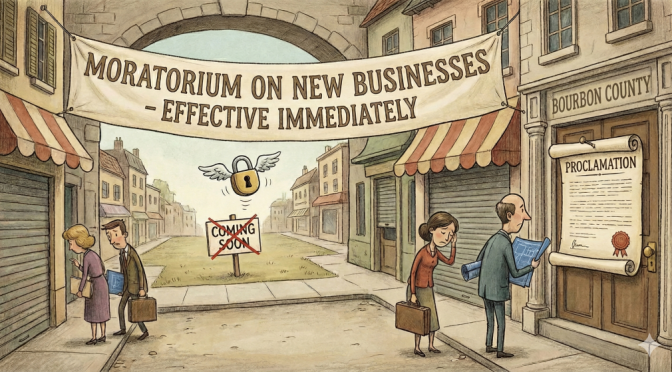
The Planning Committee, passes unanimously. recommends that the Bourbon County Board of Commissioners enact a moratorium, effective immediately, requiring that any new business—specifically, commercial or industrial—that is not agricultural in nature and located in unincorporated areas of the county, be required to obtain a special use permit prior to commencing operations. This moratorium should reference the existing Bourbon County zoning (taxation) map as the basis for determining current land use designations.
The purpose of this moratorium is to protect the county and its residents while the Planning Committee continues the process of developing more detailed and comprehensive zoning regulations.
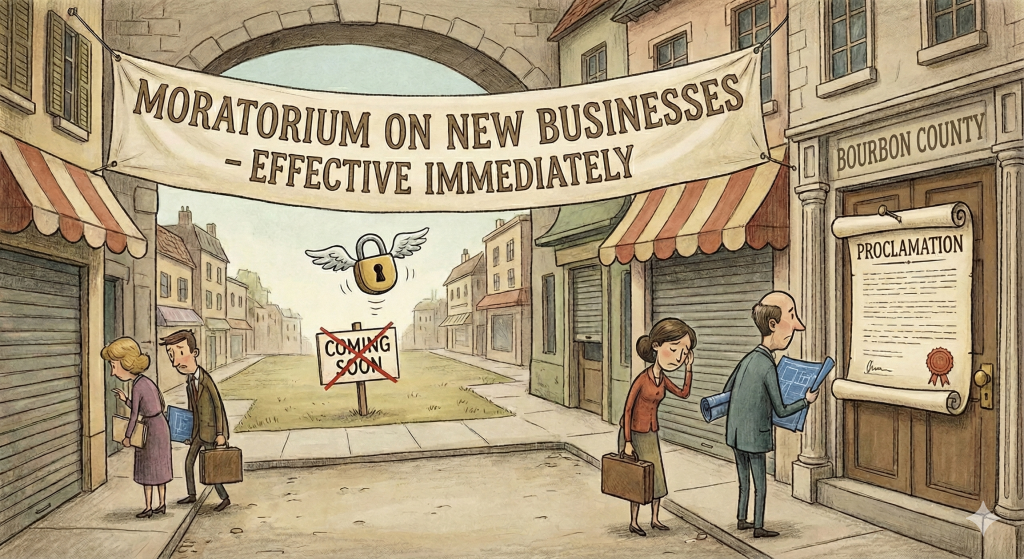
There were some legal issues with the recommendation, so the commissioners didn’t end up discussing it, but even if they couldn’t put a moratorium on all businesses worded in this way, it doesn’t diminish the desired goal. We can clearly see what the committee (and the commissioners who appointed them) see as a desired future. The planning committee, that hand-selected group the commissioners thought were the best people in the county to accomplish their zoning goals, unanimously resolved to recommend a moratorium on all new non-agricultural businesses in the county. It didn’t pass by a small margin; it wasn’t just discussed. They unanimously passed a resolution to make this recommendation, and that is a very big deal.
Some might say it was just the political back and forth and doesn’t really mean anything, that some of the people voting for it didn’t think it would pass, etc. But consider the actual implications: If you want to start a commercial lawn mowing business and you are outside the city limits, they want you to have to get special permission from the commissioners. If you want to start a business doing small manufacturing of high-end telescopes, the resolution recommends that your business should be illegal until the commissioners give it their blessing. If you want to start exercising your skills as a mechanic, start a printing company, create an LLC to make furniture, or anything else in the rural county areas, every single person on this committee voted that you should be required to come hat in hand to the commissioners and answer all their questions about your business and beg them to make an exception to the moratorium to allow you to pursue your business idea.
This desired change by the planning committee is a fundamental shift. We currently live in a county where the default position is that you are allowed to start any legal business and move forward with it. You might have a good idea and do well. You might have a bad idea and go bankrupt. Either way, you are free to pursue your capitalistic endeavors without being subject to the whims, biases, and the sometimes general confusion of the commissioners.
For an average member of the community, voting for a resolution to recommend such an action would have come with a huge reputational risk. Would you really want to be on the record as having voted to move from a default of saying yes to business to a default of saying, “you have to get permission from the commissioners first”? Somehow, not a single person on the committee, who I might remind you, were hand-selected by the commissioners, looked at the resolution and said, “I’m not sure I want my name on something that does this to our local economy.” Instead, every single one voted for it.
As I’ve said before, the issue with zoning is not whether there is a hypothetical way to implement it that would do no or only minimal harm. The question is how likely we are to get a future where the damage from zoning isn’t egregiously worse than whatever the commissioners think they are trying to attack by this massive expansion of their powers. This unanimous resolution from the planning committee gives us a peek into the future we are headed toward, a future that further increases the probability that the “cure” of zoning will turn out to be worse than the “disease.”
Mark Shead
Note: FortScott.biz publishes opinion pieces with a variety of perspectives. If you would like to share a perspective or opinion, please send a letter to news@fortscott.biz.
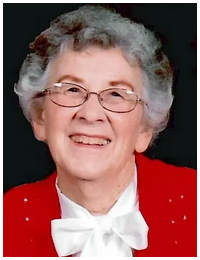
Clarice E. Russell, formerly of Redfield, KS, passed away on December 5, 2025, at the age of 90, in Fort Scott, Kansas, due to natural causes. Born on October 19, 1935, in Mapleton, Kansas, Clarice was the embodiment of a life well-lived, filled with love, laughter, and unwavering faith.
Clarice was the daughter of Alvin and Lucy Needham. She attended Blue Mound High School. After graduation, Clarice worked as a dental assistant for Dr. C.M. Cooper before her marriage.
In her personal life, Clarice married her late husband, Paul V. Russell, on June 9, 1957. They shared 61 years together before Paul’s death in 2018, most of those years spent on their farm near Redfield. She transitioned gracefully into her role as a farm homemaker, a title she wore with pride and joy. Clarice was a loving mother to Curtis Russell and his wife Susan of Sugar City, Colorado, and to Marsha Tucker and her husband Ken of Terre Haute, Indiana. She was grandma to Jason Russell of Caddo Valley, Arkansas, Chad Russell of Lincoln, Nebraska, and Russell Tucker of Indiana, as well as two great grandchildren.
Clarice was preceded in death by her parents, her husband Paul, her brothers Arthur and Keith Needham, and her sister Patty Williamson. She is survived by her sisters Hazel Kuhn of Raymore, Missouri, and Helen Long of Fort Scott, Kansas, as well as numerous nieces and nephews.
A lifelong Christian, Clarice’s faith was the cornerstone of her existence. She served as a Sunday School and Vacation Bible School teacher since her high school years. Her commitment to her faith extended to her deep involvement with the Mt. Orum Baptist Church.
Known for her angel food cakes, Clarice’s baking was a staple at church events and family gatherings. Clarice’s passion for gardening was evident in the large vegetable garden she tended annually, with much of the excess produce shared with family, friends and neighbors. She was also a 4-H leader for the Hiattville 4-H Club and a member of the Family and Community Education (FCE) organization.
Her legacy of love, service, and faith will continue to live on in the hearts of her family and the many lives she touched.
Pastor Waylon Ingle will conduct funeral services at 2:00 P.M. Monday, December 15th at the Mount Orum Baptist Church. Burial will follow in the Mount Orum Cemetery. The family will receive friends from 3 to 5 P.M. Sunday at the Cheney Witt Chapel. Memorials are suggested to the Mount Orum Baptist Church and may be left in care of the Cheney Witt Chapel, 201 S. Main, P.O. Box 347, Ft. Scott, KS 66701. Words of remembrance may be submitted to the online guestbook at cheneywitt.com