Governor Kelly Vetoes Eight Bills


TOPEKA
– Governor Laura Kelly has vetoed eight bills.

The following veto message is from Governor Kelly regarding her veto of Senate Bill 254:

“America’s immigration system is broken, but this is not the way to fix it. This bill targets Kansans who were brought to the United States as children. To punish these kids for decisions their parents made years ago is not only cruel, but also not in the best interest of the state. Kansas needs these young people to be educated and trained so they can enter our workforce and contribute to our state’s economy.

“Therefore, under Article 2, Section 14(a) of the Constitution, I hereby veto Senate Bill 254.”

The following veto message is from Governor Kelly regarding her veto of House Bill 2468:

“After years of neglect and budget disasters before I took office, we’ve worked hard to make sure Kansas’ public schools are fully funded and back on track. We must prioritize meaningful increases in Special Education funding over expanding the private school tax credit program. I will continue to fight for the full funding of our public schools.

“Therefore, under Article 2, Section 14(a) of the Constitution, I hereby veto House Bill 2468.”

The following veto message is from Governor Kelly regarding her veto of House Bill 2727:

“Kansans have made it clear that they want the government to stay out of women’s private health care decisions. This bill is another attempt by politicians to involve themselves in these private decisions, this time by trying to intimidate health care providers. At some point, I hope the politicians in Topeka will recognize that Kansans want them out of their doctors’ offices, but until they do, I’ll continue to veto bills like this.

“Therefore, under Article 2, Section 14(a) of the Constitution, I hereby veto House Bill 2727.”

The following veto message is from Governor Kelly regarding her veto of House Bill 2729:

“This bill requires the state to put false medical information out that has no scientific basis and only serves to mislead women. Kansans have made it clear that they want the government to stay out of women’s private health care decisions. This bill does the opposite.

“Therefore, under Article 2, Section 14(a) of the Constitution, I hereby veto House Bill 2729.”

The following veto message is from Governor Kelly regarding her veto of House Bill 2603:

“I’ve always believed that local elected officials are best suited to make these types of policy decisions for their constituents. Local leaders and law enforcement officials, not the state government, should determine how these types of security fences are used in their communities.

“Therefore, under Article 2, Section 14(a) of the Constitution, I hereby veto House Bill 2603.”

The following veto message is from Governor Kelly regarding her veto of Senate Bill 30:

“This bill would require updates to existing occupational licenses or new licenses to be reviewed and approved by the legislature. This is another inappropriate power grab inserting legislators without the technical knowledge to appropriately judge. Not only do they lack the required expertise, but this process would simply add bureaucratic red tape and bloated administrative busy work. It is the role of the legislature to solve big problems only it can, not micromanage the state agencies with technical expertise for these professions.

“Therefore, under Article 2, Section 14(a) of the Constitution, I hereby veto Senate Bill 30.”

The following veto message is from Governor Kelly regarding her veto of Senate Bill 375:

“The process by which this bill came to my desk was one of political games.  A bill of this magnitude needed much further vetting and a full debate in the House. Kansans expect their laws to be considered and written in a thoughtful manner that allow their elected officials in both chambers the opportunity to represent them. Not whatever this process was.

“Therefore, under Article 2, Section 14(a) of the Constitution, I hereby veto Senate Bill 375.”

The following veto message is from Governor Kelly regarding her veto of House Bill 2719:

“While I appreciate the Legislature’s efforts to clean up a bill that should have not been passed in the first place, this bill further confuses the rule-making process and makes state government less efficient and cost effective, not more. It is a blatant attempt by the Legislature to undermine the separate, but equal, authority of the executive branch by micro-managing state agency functions.

“Therefore, under Article 2, Section 14(a) of the Constitution, I hereby veto House Bill 2719.”

###

KS Combats Sexual Extortion

Governor Kelly Signs Caleb’s Law to Strengthen Protections Against Sexual Extortion


TOPEKA
– Governor Laura Kelly today announced she has signed House Bill 2537, known as Caleb’s Law, which expands and strengthens Kansas law to better combat sexual extortion and protect victims. The legislation is named after Caleb Moore, a 14-year-old from El Dorado, Kansas, who died by suicide after being targeted by an online sextortion scheme.

“Protecting Kansas children means staying ahead of the evolving threats they face, especially in an increasingly digital world where exploitation can happen in an instant,” Governor Laura Kelly said. “By prioritizing education and awareness, Caleb’s Law ensures that young people, families, and educators have the tools to recognize sexual extortion and seek help before it’s too late. By signing this bill, we’re honoring Caleb’s life by shining a light on this growing danger and taking meaningful action to prevent future tragedies.”

House Bill 2537 enhances criminal penalties and establishes new offenses to expand the types of exploitation that are covered by Kansas law. It also broadens the definition of sexual extortion and requires statewide education efforts to help students, parents, and educators recognize and prevent exploitation. The bill requires the attorney general to work with the Kansas State Board of Education and law enforcement agencies to prepare and provide educational materials and information regarding sexual extortion.

“Our kids are our future and protecting them from online predators, who are increasingly dangerous and sophisticated, must be a top legislative priority,” said Representative Bob Lewis, District 123. “I’m therefore pleased that the governor is signing Caleb’s Law, which I introduced and received unanimous, bipartisan support in both legislative chambers. What happened to Caleb is tragic and must be stopped. I look forward in the next legislative session to continuing to work across the aisle to protect our kids from online threats.”

House Bill 2537 strengthens existing Kansas statute by expanding the definition of sexual extortion to include threats involving explicit images, increasing penalties when an offender is 18 years of age or older and the victim is less than 18 years of age or a dependent adult.

“Sexual extortion in any form should never be tolerated, but children under the age of 18 are particularly vulnerable,” said Representative Dan Osman, District 48. “Thank you to the family and friends of Caleb Moore who championed this legislation. It’s because of your effort that Kansas can help protect our young people against future attacks.”

In addition to House Bill 2537, Governor Kelly also signed the following bipartisan bills:

House Bill 2574: Removing the expiration on certain cybersecurity requirements, modifying the duties of chief information security officers and cybersecurity programs, and requiring assessment of executive branch agency compliance with cybersecurity requirements.

House Bill 2602: Establishing requirements for a portable benefit plan for independent contractors, determining types of contributions to such plans, and providing a subtraction modification for Kansas income tax purposes.

House Bill 2618: Requiring the state board of education to report to the legislature on federal moneys received by the state, ending certain educational reporting requirements and applying expiration dates to other educational reporting requirements.

House Bill 2644: Requiring a county appraiser to adjust the value of residential and commercial property upon final determination or obtain a fee simple appraisal if the appraised value exceeds 5% increase over three years.

House Bill 2737: Enacting the taxpayer agreement act to provide for an alternative method of tax increment financing of municipal economic development projects through taxpayer agreements.

House Bill 2747: Specifying that courts shall consider certain factors in determining whether a prior violation of law is comparable to any act described in certain driving under the influence crimes when calculating a person’s criminal history score under the Kansas sentencing guidelines act.

House Bill 2769: Requiring members of governing bodies of subordinate service taxing areas to be residents of such taxing areas.

House Bill 2781Authorizing the state historical society to acquire the junior officers’ quarters at Fort Dodge and provide for the use, preservation, improvement, control and maintenance thereof.

###

Freedom’s Frontier NHA grant awarded to The Gordon Parks Museum


The Gordon Parks Museum received $1,000 in grant funding from Freedom’s Frontier National Heritage Area. This award will help to support a project focused on enhancing visitor experience, accessibility, and engagement through expanded promotional materials, interactive elements, and interpretive resources.

The grant will fund the production of 4,000 rack cards promoting the Wayman Chapel A.M.E. Church Commemorative Park, helping visitors better understand its historical significance. Additional improvements include the purchase of heavy-duty metal easels (8–12 inches) for exhibit displays and four large “Museum Open/Welcome” feather-style flags to increase visibility and guide visitors to the museum.

“We are very honored to be selected as a recipient of the Freedom’s Frontier NHA grant,” said Gordon Parks Museum Executive Director Kirk Sharp. “We are excited to begin this project and further enhance the visitor experience both in our museum and during our events.”

The museum anticipates having the rack cards, easels, and welcome flags installed and available for visitors by May 29, 2026.

For more information about the Gordon Parks Museum, visit gordonparkscenter.org


###

Freedom’s Frontier National Heritage Area (FFNHA) is a federally funded nonprofit organization and affiliate of the National Park Service dedicated to building awareness of the struggle for freedom along the Missouri-Kansas border. Established by Congress in 2006, its nationally significant themes are the settlement of the frontier, the Missouri-Kansas Border War and Civil War, and the enduring struggle for freedom. These diverse, interwoven, and nationally important stories grew from a unique physical and cultural landscape. FFNHA inspires respect for multiple perspectives and empowers residents to preserve and share these stories. We achieve our goals through interpretation, preservation, conservation, and education for all residents and visitors.

KS Bill Expands Opportunities For Rural Attorneys

Governor Kelly Signs Bipartisan Bill Expanding Opportunities for Attorneys in Rural Areas


TOPEKA
– Governor Laura Kelly has signed Substitute for House Bill 2595 (Sub for HB 2595), establishing the Attorney Training Program for Rural Kansas Act to encourage and expand opportunities and incentives for licensed attorneys or Kansas law students to practice in rural areas. The bill also establishes the Attorney Loan Repayment Program for Rural Kansas.

“Increasing access to attorneys in rural areas is key to ensuring that all Kansans have access to the well-qualified representation they are legally entitled to,” Governor Laura Kelly said. “By signing this commonsense bill, we are supporting law students and addressing our current shortage of attorneys in rural areas to build stronger, thriving Kansas communities.”

Sub for HB 2595 increases opportunities and incentives for licensed attorneys or those pursuing a law degree at the University of Kansas or Washburn University to practice law in rural Kansas, specifically in counties other than Douglas, Johnson, Sedgwick, Shawnee, and Wyandotte. The bill also establishes the Law Student Training and Stipend Program for Rural Kansas, which will be administered by the Department of Commerce in coordination with Washburn University and the University of Kansas for law students at those respective universities. Preference will be given to students who are Kansas residents.

“This bill takes meaningful, long-term steps to address the shortage of attorneys in Kansas’ rural areas, which has been decreasing as older attorneys retire,” said Representative Ken Rahjes, District 110. “Access to legal representation is a fundamental pillar of our justice system. Now more than ever, it is critical that we have qualified legal representation to preserve the economic and civic health of rural Kansas.”

The bill will provide a stipend of up to $3,000 per school year for up to three years to each student entering the Law Student Training and Stipend Program. The stipend can be used for tuition, books, supplies, or other school expenses. Students would be required to practice law in a rural area for a minimum of one year for each year they receive the stipend. Additionally, Sub for HB 2595 establishes the Attorney Training and Loan Repayment Program for Rural Kansas, providing loan repayment of $20,000 per year for attorneys who live and practice in a qualifying area for up to five years.

“Sub for HB 2595 is a good example of what the legislature can do when it sets aside partisanship and focuses on what is best for Kansans. The lack of attorneys in rural areas has put the state on the verge of a constitutional crisis,” said Representative Linda Featherston, District 16. “Sub for HB 2595 will help avert this crisis by encouraging legal practices in rural Kansas. This will help ensure justice for all Kansans.”

In addition to Sub for HB 2595, Governor Kelly also signed the following bipartisan bills:

House Bill 2444: Providing that jail credit when consecutive sentences are imposed shall not apply to more than one case and creating special sentencing rules and requiring certain minimum bonds when a felony is committed by certain offenders while on probation, parole, or post-release supervision.

House Bill 2467: Prohibiting past convictions or sanctions for failure to comply with a traffic citation that are more than five years old from being considered by courts and the division of vehicles in determining suspended or restricted driving privileges and eliminating certain notice requirements for the division of vehicles.

House Bill 2470: Providing that certain municipalities may designate the entire municipality within a neighborhood revitalization area under the Kansas neighborhood revitalization act.

House Bill 2487: Defining teacher and paraprofessional for purposes of eligibility for a scholarship under the Kansas education opportunity scholarship program.

House Bill 2520: Increasing the number of allowed residents in a home plus facility from 12 to 16.

House Bill 2539: Requiring that the members of the Eudora community library district board of directors be elected to such positions.

House Bill 2552: Requiring criminal presentence investigation reports and journal entries to be completed and submitted in the form and manner prescribed and approved by the Kansas Sentencing Commission.

House Bill 2562: Permitting the issuance of a special license plate or permanent or temporary placard for a person with a disability based on documentation of satisfactory proof of disability from a physical therapist.

Senate Substitute for House Bill 2571: Increasing the cost threshold for when a county shall use the public bidding process in awarding a construction contract.

###

From the Bleachers by Dr. Jack Welch

FROM THE BLEACHERS-758
BY DR. JACK WELCH

Opportunity Still Matters

There is something special about watching a man get a second chance. This past weekend, as the United Football League kicked off its spring schedule, you could feel it. The games were crisp. The effort was real. The hunger was undeniable.

These weren’t just games. These were opportunities. You saw players flying around the field with something to prove, not because they were already stars, but because they were chasing the chance to become one. That’s what makes this league special.

When opportunity meets preparation, special things happen. Austin Reed stepped in as a rookie quarterback and, in his very first game, set the UFL regular-season single-game passing record, throwing for 376 yards in a 36–17 victory. He completed 26 of 40 passes with three touchdowns and no interceptions, making the most of his moment from the start.

That kind of effort comes from knowing this opportunity may not come again. That’s what opportunity does. It reveals who you really are. Watching those games brought to mind junior college and NAIA athletics. In many ways, the UFL feels like junior college and NAIA football. It’s about giving someone a second chance. Maybe they were overlooked. Maybe they needed time to grow. Whatever the reason, junior college and NAIA have always said, “Come prove it.”

At the major college level, things have changed. With the transfer portal and NIL, many programs now build rosters like professional teams. Free agency has made its way to campus. While players cannot be blamed for taking advantage of opportunities, the system has shifted and, in my opinion, failed student-athletes.

Development has taken a back seat to acquisition. Loyalty has become temporary. Rosters turn over year to year. Graduation is not a consideration. That’s the reality.

That reality is why leagues like the UFL, and levels like junior college and NAIA matter more than ever. They remind us what the game is supposed to be about: opportunity, growth, and earning your way. As a college athlete, these levels are still about receiving an education.

Not everyone starts as a five-star recruit. Some have to fight for it. Prove it. When they finally get their shot, something special shows up. That’s athletics at its purest form. From where I sit, that’s still worth watching.

Thought for the Week, “Opportunity does not guarantee success, but without it, success is impossible.” Jack Welch

Dr. Jack Welch serves as President of Fort Scott Community College. With a career spanning professional sports, public education, and rural community development, he brings a servant-leader mindset and a passion for building trust-driven cultures that empower people to thrive in the classroom, on the field, and in life. He is also the author of Foundations of Coaching: The Total Coaching Manual.

Legislative Update by KS Senator Caryn Tyson

April 3, 2026
2026 Session There were 237 bills introduced in the Senate and 507 in the House.  Most of the bills didn’t get a hearing because there just wasn’t time.  Since this session was compressed, even more than previous years, it was intense.  Over 150 bills were sent to the Governor in the last week of session.  So far, thirty-four of those were signed into law, three vetoed, and one became law without the Governor’s signature.
 Nursing Instructors will only be required to have one degree higher than the students they are teaching.  “Additional or more advanced credentials for faculty shall not be required by the board.”  There is a shortage of healthcare providers, but how will lowering the requirements to be a teacher help?  SB 344 passed 38 to 2.  I voted no.  The Governor let it become law without her signature.
Vetoed Bills so far this year include SB 244, requiring multi use showers, bathrooms, and other such facilities in public buildings be designated for use by only one sex; SB 368, enacting income tax deductions for participants of health care ministries; and HB 2635, an act to protect the ability of private pregnancy centers to provide life-affirming care.  All three vetoes were overridden to become law.  I voted for each override.
Moving or Disposing of Human Remains with the intent to conceal a death or crime is now explicitly a criminal offense as HB 2331 was signed into law.  The original bill addressed unclaimed remains, allowing coroners to authorize burial after three years.  I was able to offer an amendment on the Senate floor to also make it a crime to move or dispose of a body with the intent to conceal a death or crime.  After Senators learned of the tragedy in Linn County, they unanimously supported adding this provision. The bill then went to conference committee, and following negotiations, it passed both chambers before being signed into law.
Vehicle Tags purchased at the County Treasurers office can be cumbersome and time-consuming in some counties.  Most Treasurers have said they do not receive enough of this money to cover their costs, although there are billions collected that goes to fund other aspects of local government.  CCR 325 creates a temporary group tasked with studying problems and recommending an updatedsystem.  The task force report will be due January 2028.  Meantime, a fee that is normally $5, will be allowed for the locals to increase to $10 for the next three years, until a new system can be implemented.  These funds must be used only for vehicle-related staffing, equipment, and operations.  County treasurers will also report back to the legislature on the increase in fees and how the money is being used.  It passed the Senate 33 to 7.  I voted yes as this has been a major issue in some counties and the process could be simplified for all Kansans.  CCR 325 was sent to the Governor.
Chief’s Stadium in Kansas continues to move forward.  There doesn’t appear to be any way to stop it.  Especially after CCR 2466 establishes the Kansas Sports Facilities Authority, an 11-member board to oversee the development and operation of the new stadium for the Kansas City Chiefs.  Most of the members are appointed by the Governor, Senate President, Speaker, Majority and Minority leaders.  It doesn’t give me comfort that the appointees may not have experience in building a multi-billion-dollar facility.  I didn’t vote for the STAR bond bill in 2024 that started this effort and I did not vote to continue it.  If these STAR bonds projects were so helpful, why does Wyandotte have some of the highest property taxes?  Maybe because these developments usually do not pay property taxes and sales tax goes to pay off the bonds for the project – can you say NASCAR?  It will be the same for the Chiefs stadium.
All legislation can be found at www.KSLegislature.gov.
 
It is an honor and a privilege to serve as your 12th District State Senator.
Caryn

FSCC Board of Trustees Meet on April 6

FORT SCOTT COMMUNITY COLLEGE

BOARD OF TRUSTEES REGULAR MEETING

ELLIS FINE ARTS CENTER

APRIL 6, 2026 – 11:30 P.M.

PUBLIC AGENDA


1.0 CALL MEETING TO ORDER – CHAIR

2.0 FLAG SALUTE & INVOCATION

3.0 RESCIND APPROVAL OF RFP                                              (ACTION)

4.0 DISCUSSION OF FRAME GRANT NEXT STEPS         (POSSIBLE ACTION)

5.0 FLEET DISPOSAL                                                                        (ACTION)

6.0 ATHLETIC TRAINER DISCUSSION                      (INFORMATION)

7.0 INSTITUTIONAL UPDATE                                         (INFORMATION)

8.0 PERSONNEL

8.1 Enter Executive Session – Personnel Matters                                                                                                                     (ACTION)

8.2 Exit Executive Session – Return to Open Session                                                                                                      (INFORMATION)

8.3 Employment Matters of Nonelected Personnel                                                                                                                     (ACTION)

9.0 ADJOURN                                                                                       (ACTION)


Three Nails and Three Days by Carolyn Tucker

Keys to the Kingdom By Carolyn Tucker

Three Nails and Three Days

Countless hymns and songs have been composed regarding the account of Jesus’ crucifixion, tender burial, and miraculous resurrection. Although I can’t remember one message I’ve heard on Resurrection Sunday (that’s not to say they weren’t good) I certainly remember the hymns and songs. Music has always greatly impacted me – it’s simply the way I was created by my Maker. One day, I stumbled across a YouTube video featuring Dolly Parton singing “He’s Alive.” Written by Don Francisco, this song has been performed by numerous recording artists. We can only imagine those three days when Jesus was on trial, scourged, nailed to the cross, was buried, and rose again. Thankfully, once in awhile a songwriter and vocalist will team up and present a song that will ignite and fervently burn its message into our hearts.

Biblical Greek scholars and historians agree that death by crucifixion was one of the cruelest and most barbaric forms of punishment. Josephus, the Jewish historian, described crucifixion as “the most wretched of deaths.” The grueling act of crucifixion was entirely in the hands of the Roman authorities and was reserved for the most-serious offenders. (And we know Jesus was innocent.) This type of death was the most humiliating, debasing, shameful, and painful method. During the scourging, Jesus’ flesh was ripped to shreds and His body was bruised from head to toe. He was wounded for our transgressions and bruised for our iniquities. At the cross a Roman soldier drove a five-inch iron nail through each of His wrists into the crossbeam. Then a long nail was driven between the bones of His feet. Jesus’ precious blood streamed from His head, hands,  feet, and side, and from the cuts and gaping wounds caused by the scourging.

Believers should reverently take time to ponder what Jesus went through because we never want to treat our salvation cheaply. We mustn’t overlook the high price Jesus paid on the cross for the whole world (John 3:16). Because of Jesus’ sacrifice and resurrection, we can celebrate every day knowing that Sunday’s on the way! As followers of Christ, our hope is built on the firm foundation of Jesus’ powerful and miraculous resurrection. He’s alive! He’s no longer in the garden tomb! The lost world needed a risen Savior and that’s exactly what we got! Joseph of Arimathea had no idea that Jesus would only borrow his tomb for the weekend.

After witnessing Jesus’ horrific circumstances, the grieving Mary Magdalene approached the tomb. When she and Jesus spoke by the garden tomb very early that first resurrection morning, we can only imagine her rapturous joy when she finally realized who He was! It was more glorious than when Jesus had previously cast the seven tormenting demons out of her! King Jesus didn’t waste any time giving Mary Magdalene a most-important assignment.

“Don’t cling to Me,”Jesus said, “for I haven’t yet ascended to the Father. But go find My brothers [disciples] and tell them, ‘I am ascending to My Father and your Father, to My God and your God’” (John 20:17 NLT). Mary Magdalene quickly found the disciples and excitedly told them,”I have seen the Lord!” Then she delivered Jesus’ message to them.

Earlier in the Book of John, Jesus prophetically spoke to the Jewish leaders about His upcoming crucifixion and resurrection. “Jesus answered and said to them, Destroy this Temple, and in three days I will raise it up” (John 2:19 WBT). They did and He did.

The Key: Three nails and three days changed everything.
Growing the Next Generation of Entrepreneurs by Amanda Clasen

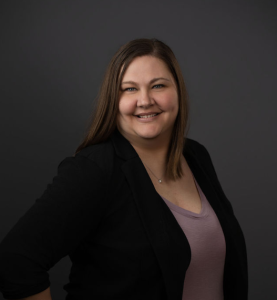
Amanda Clasen- Community Vitality Agent    

March 2026

Entrepreneurship isn’t just something that happens in big cities or corporate boardrooms; it’s alive and growing right here in our local communities. Through youth entrepreneurship programming, local students are discovering that their ideas, creativity, and hard work can turn into real opportunities.

Over the past several years, we’ve seen an exciting increase in young people who are interested in starting their own businesses or learning how businesses operate. Youth entrepreneurship programs give students the opportunity to explore these ideas in a supportive environment while building important life skills. One of the most rewarding parts of youth entrepreneurship programming is watching students gain confidence as they present their ideas to community members, local business leaders, and judges. Events like the Youth Entrepreneurship Challenge (YEC) allow students to showcase their creativity while receiving valuable feedback and encouragement from people who understand the importance of innovation and small business development in rural communities.

This year, local competitions in Allen, Neosho, and Bourbon Counties highlighted the creativity and innovation of youth across our area. Students presented a wide range of ideas, from handmade products and specialty foods to service-based businesses and creative solutions to everyday problems. While awards and prizes are part of the competition, the true goal of the Youth Entrepreneurship Challenge is to help young people build confidence and realize that their ideas have value. Many students leave the experience with a stronger understanding of how businesses operate and what it takes to turn an idea into reality.

Participants learn how to develop a business concept, identify customers, calculate costs, and create a basic business plan. Along the way, they also gain valuable experience in communication, problem-solving, and financial decision-making, skills that will benefit them no matter what career path they pursue.

Programs like this would not be possible without the support of local businesses, volunteers, and community partners who invest their time and resources in supporting our youth. Their encouragement helps students see that their ideas matter and that their community believes in their potential.

Entrepreneurship is about more than starting a business; it’s about developing the mindset to identify opportunities, solve problems, and think creatively. By helping young people build these skills today, we are investing in stronger communities and local economies tomorrow.

If you are interested in supporting youth entrepreneurship efforts, whether by volunteering, mentoring, or encouraging a young person with a business idea, we would love to connect with you. Together, we can continue empowering the next generation of innovators and leaders right here at home.

For more information about upcoming youth entrepreneurship programs or events, please contact Community Vitality Agent Amanda Clasen at any Southwind District office or at [email protected].
Having A Healthy Gut for Physical and Emotional Health by Sandy Haggard

Having A Healthy Gut for Physical and Emotional Health

 A healthy gut plays a major role in overall well‑being, yet many people are unaware of its importance. Gut health influences the immune system, weight, chronic disease risk, and even mental health. The gut’s impact comes from the trillions of microorganisms living in the digestive system. These microbes work together to keep digestion in balance. When this balance is disrupted—a condition known as dysbiosis—it can lead to many health concerns.

The gut and brain communicate directly through the gut–brain axis, allowing gut conditions to affect both physical and emotional health.

Understanding gut health begins with understanding the gut microbiota. At any time, trillions of microbes live in and on the body, roughly equal to the number of human cells. Most live in harmony with the body and provide many benefits, though they can cause problems if they become unbalanced. The largest concentration of microbes lives in the gut, which has a surface area roughly the size of a tennis court.

Gut microbiota support the immune system, help break down food, and produce essential nutrients such as short‑chain fatty acids, vitamins, and amino acids. They also communicate with the nervous system through the gut–brain axis, influencing mood, cognition, and overall health.

Gut health begins early in life, as microbiota start developing even before birth. For individuals looking to improve gut health, increasing fiber intake is one of the most effective strategies. Fiber comes from plant foods, including fruits, vegetables, beans, nuts, seeds, and whole grains.

Many people who follow a typical Western‑style diet consume too little fiber. This diet often contains large amounts of processed foods and simple carbohydrates such as white bread, sugary snacks, and fast food. As a result, it has been linked to higher rates of chronic disease and increased risk of mental health challenges.

The Mediterranean diet, by contrast, contains more fiber‑rich foods such as fruits, vegetables, legumes, nuts, seeds, and whole grains. It also includes healthy fats and antioxidants. This dietary pattern provides significantly higher amounts of fiber and essential nutrients.

Most U.S. adults eat only 10–15 grams of fiber per day—far below recommended levels of 22-28 grams a day. Research shows that fiber can:

  • Lower the risk of obesity
  • Reduce heart disease
  • Lower cancer risk
  • Help regulate blood sugar
  • Act as fuel for gut microbiota, helping beneficial bacteria thrive and function effectively.

Probiotics also support gut health. These live, helpful microorganisms form naturally during the fermentation of foods and beverages. Fermented foods have existed for thousands of years, but interest in probiotics has grown as research continues to show their potential health benefits. Today, probiotics appear in many foods, drinks, and dietary supplements and may help support immune function, maintain a healthy balance of gut bacteria, and assist in managing certain conditions.

However, probiotic supplements are not regulated by the U.S. Food and Drug Administration (FDA) before reaching the market. This means manufacturers are not required to prove the microorganisms are alive or present in the listed amounts. For this reason, healthcare providers recommend consulting a medical professional before taking probiotic supplements. Providers may suggest probiotics during antibiotic treatment, as antibiotics kill both harmful and beneficial bacteria.

Many fermented foods naturally provide probiotics. Fermentation may occur naturally or through the use of a starter culture. Common probiotic‑rich foods and beverages include sauerkraut, sourdough, yogurt, kimchi, kefir, and kombucha.

During recent Gut Health programming in the Southwind District, participants sampled kefir and kombucha. Among the options provided, blueberry kefir and peach kombucha—both available at local grocery stores—were the most preferred flavors.

Prebiotics also play an important role. Prebiotics are types of fiber that feed beneficial gut bacteria and help them grow. While not all fibers are prebiotics, all prebiotics count toward daily fiber intake. Prebiotics should be consumed daily to support a balanced gut microbiome. Prebiotic‑rich foods include bananas, apples, blueberries, asparagus, jicama, leeks, leafy greens, artichokes, nuts, seeds, legumes, beans, and whole grains.

The gut microbiome affects digestion, immune function, chronic disease risk, and emotional well‑being. Fiber, probiotics, and prebiotics all play key roles in supporting gut health. A balanced diet and healthy lifestyle habits help beneficial bacteria thrive—and support overall health.

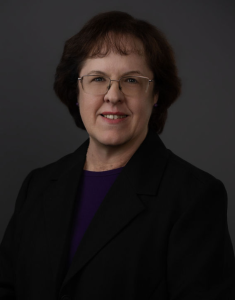
For further information on nutrition programming such as Gut Health, Cooking for 1-2, Dining with Diabetes or Planning Family Meals, please contact Sandy Haggard, Nutrition, Food Safety, and Health Agent, Southwind District, [email protected] or 620.365.2242.

Bourbon County Local News