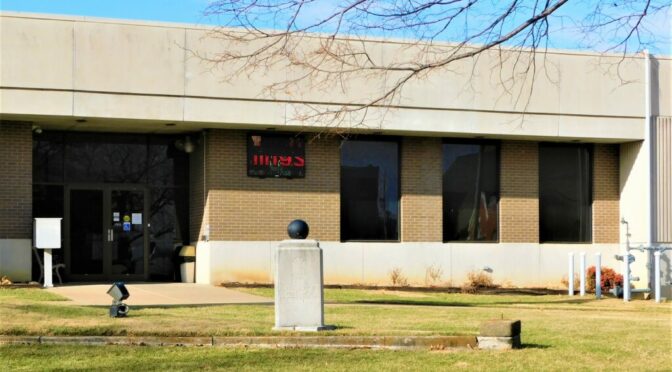
The north wing, east side of the Bourbon County Courthouse.
Bourbon County Planning Committee Agenda for Wednesday April 15th, 2026
1. Pledge
2. Roll
3. Approval of Agenda
4. Approval of minutes from February 11th and April 1st
5. Review Comprehensive Plan RFP submissions with Mel
6. New Business
7. Public Comment
8. Next Meeting and Agenda
9. Adjournment
The 2026 regular legislative session in Kansas has now come to an end and I am happy to say that Benny’s Bill is now Benny’s Law. Those of you who are regular followers of the local news in Southeast Kansas are more than likely familiar of the story of Benny Cannon who now suffers from permanent disability due to the negligence of daycare workers. The persons who were found to be responsible for that incident received very light sentences considering the severity suffered by Benny and his family. This new law elevates child endangerment charges from a misdemeanor to a felony if the victim is under the age of six.
Another crime and sentencing related bill that I sponsored along with other legislators this year is HB 2444 which provides among other things that jail credit when consecutive sentences are imposed shall not apply to more than one case, The Governor signed it into law on April 6th.
The Pharmacy Benefit Manager bill that regulates the middlemen who operate between drug manufacturers and local pharmacies has been signed into law by Governor Kelly. This was much needed regulation which puts limits on what is virtually a monopoly.
On the subject of property tax relief we voted on HCR 5008 which would allow for a constitutional amendment allowing legislative limits on property valuations. The resolution did not pass and I was a no vote because I don’t believe that if enacted that it would have been effective in lowering property tax.
That’s just about it for now. I would like to invite anyone who is interested to come out to Galesburg Community Center on Monday the 20th of April at 6:30 PM for my Legislative Update. I will have some other events in the future so be sure to check your local papers or my page on Facebook page for updates. Ad Astra Per Aspera.
VI. Approval of Minutes: 03.31.26 & 04.06.26 (Page 1)
VII. Approval of Accounts Payable: $445,485.34 (Page 1)
VIII. Approval of Tax Corrections (Page 1)
IX. Approval of February 2026 Financials (Page 1)
X. Public Comments (Page 1)
XI. Executive Session: K.S.A. 75-4319 (b)(4) – Motley (Page 1)
XII. Stronghold: Project Update (Page 1)
XIII. Emergency Services Sales Tax Oversight Committee: Motley (Page 1)
XIV. Executive Session: K.S.A. 75-4319 (b)(1) – Job Performance – Allen (Page 1)
XV. Department Updates (Page 1)
a. Payroll – Motley Sponsoring Walker
b. Accounts Payable – Motley Sponsoring Walker
c. Lora Holdridge
XVI. Old Business (Page 1)
a. SEK Juvenile Detention Center Termination Letter
b. Auction – Allen
c. Special Improvement District – Motley
XVII. New Business (Page 1)
a. NRP Participation – Approval of Chairman Signature
b. Meeting Resolution – Milburn
c. KCCA Membership
XVIII. Commission Comments (Page 1)
XIX. Future Agenda Topics (Page 1)
XX. Adjournment (Page 1)
Information Packet Detailed Summary
March 31, 2026 – Special Meeting Minutes Summary (Pages 2-3)
Excavator Purchase & Financing: The Commission discussed financing for a new excavator. While there was interest in an RFP for local bank financing, the board ultimately voted 3-1 to proceed with a 4.99% interest rate and sign the purchase contract to avoid delays and rising repair costs on existing equipment.
Budgeting Concerns: Commissioner Milburn-Kee expressed concerns regarding proper budgeting procedures and the need for a formal purchasing policy for future large acquisitions.
April 6, 2026 – Regular Meeting Minutes Summary (Pages 4-8)
Financial Approvals: The board approved accounts payable totaling $104,217.64. This included discussions on IT budget miscategorizations for electrical work and phone updates.
Elections Update: County Clerk Susan Walker announced filing deadlines (June 1st) and primary dates (August 4th) for upcoming commissioner and township positions.
Internal Controls: A detailed accounts payable process was presented to strengthen internal controls, including a request for commissioners to sign reviewed vouchers.
Sheriff’s Department Audit: Public comment was received regarding discrepancies in past sheriff’s department audits. There was a suggestion to include the department in future external audit scopes.
Sewer Code Enforcement: Discussions continued regarding the difficulty of enforcing current sewer codes. A new, more stringent code is being reviewed, though staffing for enforcement remains a challenge.
Basement Cleanup & Surplus Property: Plans were discussed to clean up clutter in the courthouse basement. Department heads will be asked to mark any items they wish to keep before the rest is disposed of or auctioned.
Juvenile Detention Contract: The commission reviewed a drafted termination letter for the SEK Juvenile Detention Center contract. Withdrawal would be effective January 1, 2027.
Financial Reports & Open Invoices (Pages 9-14)
Invoice Summaries: The packet includes a line-item breakdown of open invoices by department, covering the General Fund, Appraisers, Elections, Landfill, and Sheriff/Correctional services.
Department Totals: Notable totals include $15,651.73 for Landfill operations and significant payroll clearing entries across multiple funds.
Revenue and Expense Tracking: Detailed reports as of February 28, 2026, show YTD budget remaining for departments such as the County Attorney, Register of Deeds, and Courthouse Maintenance.
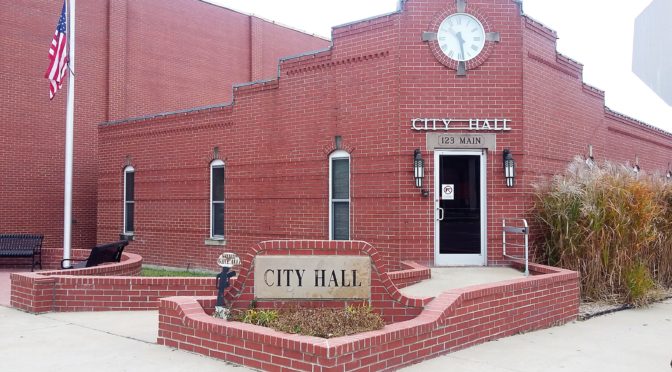
A meeting of the Fort Scott City Commission was held in the City Commission Meeting Room at City Hall, 123 S. Main Street, Fort Scott, Kansas. The meeting was streamed live on YouTube.
The meeting was called to order at 6:00PM. Roll call was taken. Commissioners Matthew Wells, Tracy Dancer, Tim Van Hoecke, Julie Buchta and Mayor Kathryn Salsbury were present.
In Attendance – Brad Matkin/City Manager, Bob Farmer/City Attorney, Deputy Chief Mike Miles/FSFD, Chief Jason Pickert/FSPD, Leroy Kruger/Codes Enforcement, Lisa Lewis/City Clerk, Lisa Dillon/Housing & Neighborhood Revitalization Coordinator, Mary Wyatt/Planning, Housing & Business Development Director, Jason Dickman/Earles Engineering & Inspections LLC, Daniel Wilson/Owner-Repair Guy, Alex Swank, Kathy Dancer, and Jess Milburn/JCM Restoration.
SALSBURY led the Pledge of Allegiance and BUCHTA said a prayer asking God for guidance for the City, the Citizens, our Government and City officials.
Approval of Agenda
MOTION: DANCER moved to approve the Amended agenda as presented. SALSBURY seconded.
MOTION CARRIED 5-0.
Consent Agenda
– Approval of Appropriation Ordinance 1405-A – Expense Approval Report – Payment Dates of
March 11, 2026 – April 12, 2026 – $763,783.28
– Approval of Minutes: Regular Meeting of March 17, 2026
– Request to Pay – Application No. 1 – Jeff Asbell Excavating & Trucking, Inc. – Davis Lift Station – Mobilization Costs for Bond Expenses and Materials – $28,596.00
MOTION: VAN HOECKE moved to approve the Consent Agenda as presented. DANCER seconded.
MOTION CARRIED 5-0.
Public Comment – No comments
Appearances
Alex Swank – addressed the Commission to purchase a parcel owned by the City at approximately 101 Clark. Leasing option was discussed because the City maintains it will not sell property.
MOTION: DANCER moved to open the process to solicit bids for a (5) year lease with the stipulation to include something to legally cover any liability.
FARMER added a point of reference that even though the motion is made, nothing happens until it’s written, the Commission has seen it, (the winning bidder) sees it, and it’s signed.
BUCHTA seconded. BUCHTA, WELLS, DANCER and SALSBURY voted yes.
VAN HOECKE voted no.
MOTION CARRIED 4-1.
ACTION: FARMER will write the lease document.
Kathy Dancer – addressed the Commission to inform them that the tasks placed upon the CLG board will require a budget and she is requesting they consider that in the upcoming 2027 budget planning. The FSHRPC is exploring grants but the ordinance that was approved did include the establishment of a Preservation Fund and briefly explained how that money would be used. DANCER also stated the fine frequencies outlined in the approved ordinance. Currently in the enforcement section, the wording only addresses the demolition of a building or does any kind of improvements without getting the proper permitting and proper approvals, then it’s enforceable. She does not see provisions to enforce outside of that. Also, the wording is incorrect. It was approved as per week but the ordinance states per day. She explained that violations demolition by neglect, gross neglect of a building or safety hazards are a different category and are not in the current ordinance. She asked the Commission to revisit that and the frequency of fining, with safety issues being of the greatest concern.
Discussion was had about the fining process as it relates to enforcement through the municipal court and addressing additional definitions to be included in the ordinance.
KRUGER stated that anything that is going to be enforced must be paired with a K.S.A. and the state sets the fine schedule per class of crime, the maximums and the minimums. He stated that Class B Misdemeanor does not go up to $1000.00, the maximum is $500.00 and the minimum is $50.00. Currently no fine amount is put on a citation only a Notice to Appear (in court) and the prosecutor will set the fine amount. He explained how the multiple (day to week) fines currently work in our municipal court and what is able to be fined and what is not.
Executive Session:
MOTION: DANCER moved that the City Commission recess into Executive Session for the purpose of discussing personnel matters of non-elected personnel pursuant to K.S.A. 75-4319(b)(1). In the meeting will be the (5) City Commissioners, City Attorney and City Manager. The open meeting will resume in the City Commission Room at 6:43PM. SALSBURY seconded.
MOTION CARRIED 5-0.
MOTION:DANCER moved to come out of Executive Session. WELLS seconded.
MOTION CARRIED 5-0.
Unfinished Business
Consideration of Ordinance No. 3799-Contractor License –Tabled from March 17, 2026
Discussion was had about the implementation of contractor licenses. BUCHTA read a letter she received from Tim Barasa/General Contractor and Licensed Realtor.
WILSON/Owner of Repair Guy addressed the Commission to inform them that he is in favor of a licensing program but has concerns about the contractor board that is being considered and where the money collected for licenses will go and suggested background checks for community safety.
BUCHTA read a text message she received from another contractor (who wanted to remain anonymous) regarding the licensing.
Further discussion was had on the intent of the license to protect citizens and support all local businesses and whether the Commission is in agreement with the proposed ordinance.
MOTION: BUCHTA moved to table the ordinance.
VAN HOECKE requested to amend BUCHTA’S motion to have the ordinance returned to the table at the second meeting of July with a work session prior to that meeting to include all contractors.
VAN HOECKE seconded (the original motion with amendment).
The City Clerk verified that BUCHTA’S motion was as follows:
MOTION: BUCHTA moved to table Ordinance No. 3799 until the second meeting of July. VAN HOECKE seconded.
MOTION CARRIED 5-0.
ACTION: FARMER will draft an ordinance for the interim to enforce that contractors must show proof of insurance when applying for a permit with the Codes office.
DANCER left the meeting at 7:20PM
New Business
Action Items:
Consideration of Ordinance No. 3798 – Disband Design Review Board
DILLON requested by ordinance that the Commission dissolve the Design Review Board since the City has received its CLG status.
MOTION: WELLS moved to approve Ordinance No. 3798 to Disband the Design Review Board. SALSBURY seconded. BUCHTA, WELLS and SALSBURY voted yes. VAN HOECKE voted no. DANCER was not present for the vote.
MOTION CARRIED 3-1.
Consideration to Approve Sale of Fire Truck
MILES requested the approval of the Commission to advertise and sell the 1997 (E-One-American Eagle Top Mount Custom Pumper) Fire Truck which is no longer in service and has been replaced with the newly purchase truck. MATKIN stated the proceeds will be placed in a fire department equipment fund.
DANCER returned to the meeting at 7:23PM
MILES stated that the new engine is at Station One and the Pierce was moved over to Station Two and explained the plan to avoid wear and tear.
MOTION: VAN HOECKE moved to allow the fire department to advertise and sell the 1997 fire truck without equipment with the understanding that the funds will go into a fire equipment fund and report the proceeds to the City Manager who will report it to the Commission.
MILES added that the proceeds are being earmarked for extrication equipment.
MOTION CARRIED 5-0.
Consideration to Approve Purchase of Pumps, Control Panel and Guide Rails for Williamsburg and White Grill Lift Stations – $25,860.00
LEMKE stated that over the past (3) years they have been working on improvements for lift stations. This year, Williamsburg (on Tiffany Land) and White Grill Lift Stations (215th and Hwy 54) were selected. Williamsburg’s control panel is approximately (20) years old and the components are getting harder to find. It currently has one pump that is non-operational. The White Grill station has been underwater several times including the control panel. Currently one of the pumps is bypassing and not pumping water. He is requesting permission to replace the control panels and the pumps for both stations using Haynes Equipment for the price of $25,860.00. Grainger’s quote did not include guide rails and the third contact could only offer a complete lift station which is not needed. The work will be done in house, however Haynes has included a one-day startup time if they need assistance. MATKIN stated it will come from the Wastewater Fund.
MOTION: VAN HOECKE moved to approve the purchase of pumps, control panels and guide rails for Williamsburg and White Grill Lift Stations from Haynes Equipment for a total of $25,860.00. WELLS seconded.
MOTION CARRIED 5-0.
Consideration of Bids for Repair of Retaining Walls at Gunn Park
MATKIN stated there were (2) bids received with the lowest bid coming in at $66,000.00 from JCM Restoration which he is recommending for approval.
MOTION: VAN HOECKE moved to approve the bid from JCM Restoration for $66,000.00 for repairing the retaining wall at Gunn Park. BUCHTA seconded.
MOTION CARRIED 5-0.
Consideration to Extend Hay Rights for (3) Years
MATKIN stated that currently the invitation for bids is for a (1) year awarded contract. He would like to extend that to a (3) year contract beginning with this year’s invitation to bid for Hay Rights at the airport.
MOTION: BUCHTA moved to approve the extension of the hay rights to (3) years at the next bid opportunity. WELLS seconded.
MOTION CARRIED 5-0.
Reports and Comments
City Engineer:
– Davis Lift Station update – Vanessa is supervisor until lift station work, then Gary
– Wall Street – CCLIP update
VAN HOECKE left the meeting at 7:49PM and immediately returned.
– Horton asphalt update
ACTION: DICKMAN will follow up with Heck & Wicker
City Attorney: No Comment
City Manager:
– 8th & Eddy is complete and open
– Groundwork for outdoor fitness park at BRCC
– New Clubhouse Manager at Woodland Hills Golf Course and new tee time system that allows everything, including score keeping by your phone-including POS system.
– Moody Building – owner waiting on title report
– Airport hangar lease – Geoffrey Marr
– Timken building update
– Valu building is sold – cannot disclose information yet
– IT Department at next meeting for update
– Public Works update first meeting in May
– April 16 – City/County Meeting at 6:00PM
– Natalia hired to work with Rachel Carpenter on Public Information
Commissioner Van Hoecke:
– Dragoons Baseball season tickets
– Keep military and first responders in prayers
Commissioner Buchta:
– 8th & Eddy
– Salsbury with KDOT
Commissioner Dancer:
– Non-residential residents situation
ACTION: WORK SESSION – May 5 – Homeless situation
WORK SESSION – May 19 – Contractor licenses
Commissioner Wells:
– Barber Shop (118 E. Wall St.) update
ACTION: Barber Shop on next agenda (April 21)
– Skubitz Plaza meeting at 1:30PM
– Federal government cuts
Commissioner Salsbury:
– Code review sent to MATKIN for Commission action
ACTION: MATKIN will distribute to all Commissioners
– 8th & Eddy intersection open
Adjourn
MOTION: VAN HOECKE moved to adjourn the meeting at 8:27PM. BUCHTA seconded.
I have many fond memories of canoeing in Southwest Missouri during the first six years of our marriage. Jimmy and I would spend time alone or with friends/family floating the various rivers in the “Show-Me” State. These float-trip experiences varied, depending on how much rain the area had recently received. Jimmy would sit in the back of the canoe and I would be in the front. It took teamwork to navigate through the big rocks with the water gushing around them. From the back, my husband would scrutinize the situation ahead and say, “Go right,” etc. Although I couldn’t see him, I knew he was back there giving proper directions and doing his part to get us through safely.
As a country girl, I drank water from the hose, licked the new part of a salt block, ran barefooted on gravel, ate pickled pig’s feet, and drank cold well water from Aunt Pauline’s community dipper. I’d say I had a pretty strong constitution. Part of canoeing involves eating snacks along the way and my favorite was Vienna sausages (where I come from it’s pronounced VI-eenie). Once, with friends Leon and Linda floating behind us, I pulled out my can, opened it and, one by one, I would hold the tasty treat down in the river to rinse off the gelatin before I ate it. Leon was completely flabbergasted and, with eyes the size of saucers, said, “Don’t you know there’s cattle upstream?!”
There are times when believers feel like we’re up a creek without a paddle. But that’s never true. We’re to live by faith, not by our fickle feelings. We can’t trust feelings because they’re up one day and down the next — but we can always trust God and choose to hope. “God is my refuge and strength, an ever-present help in trouble” (Psalm 46:1 NIV). God’s not fickle. He’s the same yesterday, today, and forever – so that means He’s always with us, even when the lying devil tempts us to think we’re all alone.
Sometimes, when there’s a storm brewing and headed our way, we may feel like we’re up a creek without a paddle. But that’s when we simply hold on and trust Jesus to put His hands over ours as we keep paddling along. We can’t see Him but we know He’s doing His part. When we give Him the right of way, Jesus will get us safely through the storm. No one is going to capsize, lose everything, and drown on His watch. No sir!
“Have no fear, for I am with you; do not be looking about in trouble, for I am your God; I will give you strength, yes, I will be your helper; yes, my true right hand will be your support” (Isaiah 41:10 BBE). So, when you’re in trouble, don’t throw away your paddle! Once on a float trip with our church group, one of the guys got so angry (because he and his wife had to pick up their canoe and carry it a lot) he threw his paddle onto the rocks! It was kinda’ like when Moses smashed the first set of Ten Commandments. We have to give God something to work with – don’t throw in the paddle – don’t give up!
Canoeing is comparable to our journey of life. Some parts of the river are smooth and relaxing and some are rough and nerve-racking. No matter the circumstances, Jesus is with us. “And be sure of this: I am with you always, even to the end of the age” (Matthew 28:20 NLT). Jesus will be with His followers to the end of “their” age and then throughout all eternity. Although I’ve got rhythm, I never learned to dance or do cartwheels, but this red-letter scripture promise makes me want to do both!
The Key: Believers need to keep their chin up and keep paddling. It’ll be worth it.
The following letter was provided by the Bourbon County Republican Party.
Bourbon County Republican Party
4/10/2026
Susan Walker
Bourbon County Clerk & Election Officer
Bourbon County Courthouse
210 South National Avenue
Fort Scott, Kansas 66701
Re: Vote of No Confidence in Bourbon County Clerk Susan Walker – Failure to Perform Duties Prescribed by Law
Mrs. Walker,
By direction of the Bourbon County Republican Party’s duly elected precinct committeemen and committeewomen, this letter is to formally convey a Vote of No Confidence in your performance as Bourbon County Clerk and Chief Election Officer. This action was taken following a review of your conduct during and related to the November 4, 2025, General Election. The precinct committee members determined that your actions constitute a failure to perform duties prescribed by law.
Specific Grounds for the Vote of No Confidence:
During advance voting for the 2025 General Election, the official ballots omitted the USD 235 Board of Education candidate options, despite timely notifications from affected residents that the ballots were incorrect while advance voting was actively underway. Although corrected ballots were eventually printed the night before Election Day, the error meant that all early in-person votes and mail-in/absentee ballots had already been cast without the proper school board races included. As a result, numerous USD 235 voters were effectively disenfranchised from participating in the Board of Education election.
Your office attributed the error to the school district for allegedly filing the wrong plan, rather than accepting responsibility for the inaccurate preparation, proofreading, and verification of ballots as required by Kansas election statutes. The County Clerk, as the chief election officer, bears the ultimate responsibility for ensuring that ballots accurately reflect all properly filed candidacies in accordance with state law and the Kansas Election Standards.
Furthermore, the precinct committeemen and committeewomen believe that your actions regarding attempts to influence other elected offices and positions lack integrity, further eroding public confidence in the impartial administration of county government. This incident, along with the broader concerns noted above, undermined public trust in the integrity and accuracy of the electoral process and county operations in Bourbon County.
Party Position:
The Bourbon County Republican Party strongly supports free, fair, and accurate elections in which every eligible voter can confidently participate, as well as the highest standards of integrity and impartiality from all elected officials. We believe that the citizens of Bourbon County deserve election administration and county leadership that meet these expectations. The events surrounding the USD 235 ballot error and related concerns fall short of those standards. This Vote of No Confidence is an expression of the Party’s position and serves as a formal public statement of disapproval.
We urge you to reflect on these matters and take all necessary steps to restore public trust, including enhanced protocols for ballot accuracy, timely and transparent communication, full acceptance of responsibility when issues arise, and a commitment to impartial conduct in all official duties.
A copy of this letter is being provided to local news media outlets for public awareness.
By direction of the Bourbon County Republican Party Precinct Committee,
Wednesday, April 15th
Volunteer Check-in: 3:30-4pm @ Lyons Realty Group, 8 E. Wall St.
Event: 4-7pm @ Downtown Fort Scott
We have many projects planned including painting, leaf blowing, planting, mulching, general trash pickup, and more!
Visit fortscott.com for the volunteer signup link and all the details!
FREE pulled pork sandwich meal following the event for the first 150 confirmed volunteers!
A special thank you to The Elks Foundation for supporting this event!
Organized by the Chamber Board’s Downtown Division, in partnership with the City of Fort Scott, Bourbon County Garden Club, and the Good Neighbor Action Team.
Chamber Downtown Division
Cheryl Adamson, Chair, Courtland Hotel & Spa
Cathy Bishop, The River Room Event Center
Carissa Bowman, Brickstreet BBQ
Kate Freeman, The Artificers
Kinede Jennings, Blissful Aesthetics & Wellness
Karen Wilterding, Lowell Milken Center
James Wood, DBB Inc. & Holmtown Pub
Rachel Carpenter, representing City of Fort Scott
Special thanks to Craig Campbell of GNAT and Barb McCord of Bourbon County Garden Club for all of your assistance with this event, and to Bailey Lyons for use of Lyons Realty Group as the check-in location.
The 2026 regular legislative session in Kansas has now come to an end and I am happy to say that Benny’s Bill is now Benny’s Law. Those of you who are regular followers of the local news in Southeast Kansas are more than likely familiar of the story of Benny Cannon who now suffers from permanent disability due to the negligence of daycare workers. The persons who were found to be responsible for that incident received very light sentences considering the severity suffered by Benny and his family. This new law elevates child endangerment charges from a misdemeanor to a felony if the victim is under the age of six.
Another crime and sentencing related bill that I sponsored along with other legislators this year is HB 2444 which provides among other things that jail credit when consecutive sentences are imposed shall not apply to more than one case, The Governor signed it into law on April 6th.
The Pharmacy Benefit Manager bill that regulates the middlemen who operate between drug manufacturers and local pharmacies has been signed into law by Governor Kelly. This was much needed regulation which puts limits on what is virtually a monopoly.
On the subject of property tax relief we voted on HCR 5008 which would allow for a constitutional amendment allowing legislative limits on property valuations. The resolution did not pass and I was a no vote because I don’t believe that if enacted that it would have been effective in lowering property tax.
That’s just about it for now. I would like to invite anyone who is interested to come out to Galesburg Community Center on Monday the 20th of April at 6:30 PM for my Legislative Update. I will have some other events in the future so be sure to check your local papers or my page on Facebook page for updates. Ad Astra Per Aspera.
Did you know that Hypertension, or high blood pressure, often has no symptoms? Left unmanaged, it can lead to serious health concerns such as heart disease and stroke. April’s K-State Extension OWL Hour will provide practical, easy-to-understand information to help you take charge of heart health!
HAPp Now is part of the Hypertension Awareness & Prevention (HAPp) initiative. This educational program is designed to help adults understand their blood pressure numbers, why hypertension matters, and what steps they can take to protect their heart health.
During the session, participants will:
• Learn what blood pressure is and what the numbers mean
• Discover simple lifestyle strategies for heart health through the art of ‘habit stacking’
• Learn how to accurately measure blood pressure at home
Small changes can make a big difference, and this session gives participants the tools and confidence to get started!
April’s sessions will be:
• Yates Center: 4/13 at the 4H Community Building.
• St Paul: 4/14 at the Graves Memorial Public Library.
• Fort Scott: 4/15 at the Fort Scott Public Library.
• Iola: 4/16 at the Southwind Iola Extension Office.
There is no cost to attend. All sessions begin at 10:00 a.m. For more information, contact Hollie Yoho at 620-625-8620 or [email protected].
TOPEKA – Governor Laura Kelly today announced she has signed House Bill 2365, which amends the Uniform Controlled Substances Act (CSA) to designate 7-OH kratom related substances to Schedule I designation. Schedule I designates a substance to have a high potential for abuse and without a currently accepted medical use.
“The U.S. Food and Drug Administration is in the process of determining whether kratom is a safe and effective means of treating certain medical conditions,” Governor Laura Kelly said. “Until such a time as quality scientific reviews determine positive impacts and minimal health risks, it is wise to safeguard the health of Kansans.”
Importantly, this legislation updates Schedule IV – substances that are defined as drugs with low potential for abuse and dependence – to include Zuranolone, a prescription medication approved to treat postpartum depression.
This bill also adds to Schedule I of the CSA: 11 opioids or synthetic opioids; fentanyl-related substances that are not specifically exempted or listed in Schedules II through V; ethylphenidate, a stimulant; hexahydrocannabinol, a derivative of Delta 9; tetrahydrocannabinol (THC); CUMYL-PEGACLONE, a synthetic cannabinoid.